The Sad and Tragic Tale of Kate Chase Sprague

According to the Ancient Greek dramatists, tragedy requires a fall from great height.

The Tragedy of the Father

Salmon Portland Chase (1808-73), was New Hampshire born. Only nine when his father died, his mother was left with ten children and meager resources, so young Salmon was raised by relatives in Ohio who provided him with a fine education. That included admission to Dartmouth College in New Hampshire, where he was Phi Beta Kappa. 

Salmon P. Chase

Upon graduation, he read law, did well, and returned to Ohio, settling in the Cincinnati area. Considered good looking, smart and gregarious, he married three times, but alas for poor Mr. Chase, all three brides died before they reached thirty-five. During those short lived marriages, he also fathered six children, and alas again, only two lived to maturity. Four died in infancy.

Salmon Chase likely gave up on matrimony, although he was known to escort an attractive woman from time to time.

The Glorious Kate

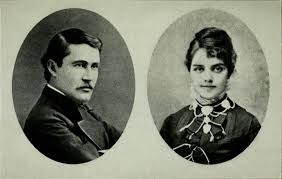
Catherine Jane Chase (1840-1899) was born to the second Mrs. Chase, who died when Kate was five. Perhaps grieving the loss of two young wives, and needing a mother for his daughter, he married again.

Kate was a headstrong girl, destined to grow up tall, slim, and very pretty. And smart as a whip. Unsurprisingly, she did not get on with her new stepmother – and baby sister. To ease tensions, Chase enrolled Kate in a fashionable (and expensive) finishing school in New York City where she thrived. The sophistication, culture and opportunities of cosmopolitan New York appealed to her. She practically inhaled its snobbishness. Between her good looks and good smarts, she insisted on the very best of everything, and her father, growing in stature and wealth, was happy to indulge his elder daughter.

By the time she was sixteen, Kate’s stepmother had died. Her father, wafting and wobbling between being a Democrat and a Free-Soiler, had recently become a member of the newly emerging Republican Party, en route to the Governorship of Ohio. He had also developed an unrelenting ambition to become President.

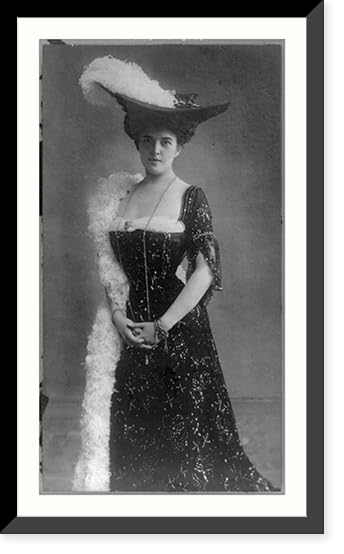
Young Kate Chase

Kate Chase returned home. She was now old enough to assume the role she was trained for.

The Lady, The Role and The Image

When Salmon Chase became Ohio’s Governor, Kate was in the position she was born to fill. She had learned her finishing school lessons well, and was an accomplished hostess from the start. She was also what could be termed 19th century “arm candy.” Her father was proud to escort the beauteous Kate, and equally proud to let her charm the important men who came to his table. While she could be outspoken and opinionated, the men liked her – mostly for her beauty, but she was also very interesting in table conversation.

Salmon Chase and his daughters.

On her part, Kate had developed (or perhaps was born with) the politician’s gift for remembering names and faces, and those tidbits of information that make guests feel important. And she loved sharing her “interesting insights” with her father, who understood their value.

Kate and the Civil War

Salmon P. Chase did not receive the Republican nomination for President in 1860, much to his dismay, and eternal belief that he would have been a better choice than Abraham Lincoln. But as Lincoln’s Secretary of the Treasury, he rented a grand mansion in Washington and installed his charming 20-year-old daughter as his hostess. She was a huge hit with everyone – except Mrs. Lincoln, who immediately saw through the finishing school “ploys” of position. After all, Mary Lincoln went to a finishing school, too. 

William Sprague, the young Rhode Island Governor and scion to a manufacturing fortune, had enlisted in the Union Army, was immediately made a Colonel, and came to Washington, and was enchanted (maybe) by the beautiful Miss Chase. Short, no Adonis, and masking a dissolute and abusive nature, he wooed Kate. She, perhaps, found him more attractive when he stood on his wallet. The Chases needed financing for her father’s future presidential ambitions, and Kate had ambitions of her own. If Papa was President, she would be de facto First Lady. 

William and Kate Sprague

The Spragues married in 1863. It was a splashy bash, with the cream of everyone in Washington in attendance, except for Mrs. Lincoln, who couldn’t stand the bride and couldn’t force the smile. The groom presented Kate with a jeweled tiara worth $50,000.

A Mismatched Misery

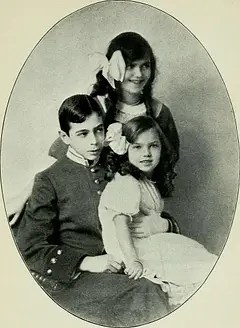
It was a horrible marriage, despite the infusion of money. Sprague was unfaithful, a chronic alcoholic, and not averse to abusive behavior. Or speculation and illegal profiteering. Kate was happy to spend his money, and despite their four children, was not averse to breaking her own marriage vows. 

Roscoe Conkling

A decade later, living mostly apart, she began an affair with the flamboyant and also-married NY Senator Roscoe Conkling, whose presidential ambitions matched her father, now Chief Justice and long-in-the-tooth. The Sprague-Conkling scandals made the newspapers. Sprague eventually imprisoned her in their house, but she escaped (through a window) and filed for divorce in 1882. It was messy, and he refused to support her. 

The Great Fall

Kate was broke, except for her “personal belongings,” which she periodically sold to make ends meet. She mortgaged the mansion left to her by her father. Her only son, dissolute and snarly like his father, committed suicide. One of her daughters was mentally handicapped. Her other daughters left home. She became reclusive, grateful that some old, wealthy friends paid off her mortgages to ease the burdens. 

For the last decade of her life, shortened by Bright’s Disease, then always fatal, the proud Kate Chase, a queen-sans-throne, sold the butter and eggs and vegetables from her property door-to-door to eke out a living – and support her handicapped daughter. 

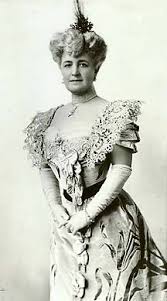
The older Kate Chase Sprague

When she died, only her three daughters attended her funeral. 

Sources:

Goodwin, Doris Kearns – Team of Rivals – Simon & Schuster, 2015

Ross, Ishbel – Proud Kate: Portrait of an Ambitious Woman – Harper, 1953

https://guides.loc.gov/this-month-in-business-history/january/salmon-p-chase

https://www.mrlincolnswhitehouse.org/residents-visitors/visitors-from-congress/visitors-congress-william-sprague-1830-1915/index.html

https://www.nps.gov/articles/000/stalwarts-half-breeds-and-political-assassination.htm

Posted in Abraham Lincoln, American Civil War, Nifty History People | Tagged , , , , , , , , , , , , , , | Leave a comment

Boutwell: A Book Review

According to author Jeffrey Boutwell (a distant collateral descendant), George Sewall Boutwell was an “important public figure hiding in plain sight.” His life was long (1818-1905), and filled with an equally long list of political and governmental accomplishments. According to his publicists, he was one of the most consequential 19th century Americans that nobody ever heard of.

BOUTWELL: Radical Republican and Champion of Democracy by Jeffrey Boutwell

George Boutwell was indeed a litany of Boy Scout virtues: truly good and decent, honest, diligent, hard-working, loyal, kind-hearted and unwavering in his concern for the downtrodden.

The long decades of George Boutwell’s maturity coincide with monumental changes in the country itself. Not only his lifelong passion for abolition and racial equality, but land growth, the Civil War, social turmoil, economic booms and busts, and the mechanics of government leadership. And money. 

Boutwell began his career early. Born and raised on a Massachusetts farm, he worked and clerked, read law (but did not formally engage in its practice for many years), and discovered politics at a very early age. He was a Democratic Massachusetts Governor when he was thirty, a Republican by forty, and seldom without political office, either appointed or elected, for the remainder of his life. He was among New England long-ago political heavyweights, like Charles Sumner, Henry Wilson and Ben Butler, now covered in history’s dust. 

He was pleasantly acquainted with newly elected President Abraham Lincoln, who offered him the position as Commissioner of Internal Revenue, which alone is reason to banish anyone to obscurity! Money administrators are coma-inducing. And George Boutwell was by and large, a diligent, bean-counting money-fellow.

He was also a staunch, sincere abolitionist and defender of the civil rights and economic well-being of former slaves. His passion for social justice was consistent. By the end of the Civil War and the turmoil of Reconstruction, Boutwell was an unwavering Radical Republican, having been elected to Congress during the Andrew Johnson administration. He held a leadership position second only to Pennsylvania Congressman Thaddeus Stevens. 

Boutwell was at the epicenter of managing the Johnson impeachment proceedings, even though he realized that the stated formal charges were flimsy, and the real cause was that the political differences between the implacable and vengeful Radicals and the bigoted and equally implacable Johnson were otherwise insurmountable. Impeachment failed by a single vote.

During the Johnson Administration, Boutwell became close to General Ulysses S. Grant, a man he admired enormously. It was President Grant who appointed the Massachusetts politician as his Secretary of the Treasury, another thankless position, given the non-stop money driven scandals and abuses that saturated Grant’s two terms. Interestingly enough, neither Grant nor Boutwell were ever personally dishonest. But Grant was loyal to a fault – to his friends. And so was Boutwell. He was a pall bearer when the Great General died a decade after he left office.  

Later in his long career of public service, elected to various positions of importance, Boutwell favored civil service reforms, opposed imperialism, and would qualify as a bona fide liberal “something-or-other” today. His views were generally independent and balanced, and always for the benefit of the people in general, and those who needed it most, specifically. And invariably, his positions were usually sensible, fair and with judgement.

Which, of course, prompts the question… “Why has nobody ever heard of him?” 

It has become very popular for historians (related or not) to resurrect long-ago secondary or supporting players, and whip them into a frenzy of importance. And importance, given time, ebbs and flows. And, in the absence of serious personal accomplishments-with-legs, so to speak, biographers turn to life-and-times scenarios to present their subject as a part of the whole. This is fair – and a good thing. Backup singers are important too.

For a man of George Boutwell’s long life in public service, his paper trail was full of paper but thin, and more resume than diary. It reflects precious little of the man himself. This is no fault of Jeff Boutwell’s excellent biography. The author is careful, and obviously well trained to report the life and time facts diligently researched and documented. That part is substantive and welcome. Alas George himself only provides activities: elections, campaigns, votes, political issues – not the stuff of “life.” There is no animation. We have no inkling whether or not his marriage was happy or rancorous. It is barely mentioned. His daughter provides some nice-but-predictable observations on the times they lived in. There is little mention of “hard times overcome,” or challenges that elevated his soul. There are no records of serious rivalries or enmities. His political “confrontations” were barely scuffles. But then again, the age he lived in, for all its divisiveness and rancor, was generally polite. And of course, a person’s privacy was guarded – and respected.

For all his accomplishments, the je ne sais quois we call charisma is lacking. Ol’ George could not wave his hat in the air and raise an army in his wake like an Andrew Jackson. Nor could he rouse a crowd with stirring phrases like a Lincoln or Winston Churchill. Even Boutwell’s friends (and he had many!) considered him a little boring.

But not everyone can be John Wayne. Supporting players are important. They even win well-deserved awards.

Kudos to author Boutwell for his a great service as a writer, family-member and historian in examining a long-ago supporting actor: a man well regarded by his peers, and who served his fellow-man and country honestly, capably and unstintingly. And for a long time. Balanced and with good judgment. An endangered species, in an age when the best of us refrain from coming forward.

In today’s fractious litany of woes, as the song goes (ish)… “Mister we could use a man like George S. Boutwell again.”

Boutwell, Jeffrey, George S. Boutwell: Radical Republican and Champion of Democracy – W.W. Norton, 2025

ISBN-10 ‏ : ‎ 1324074264

ISBN-13 ‏ : ‎ 978-1324074267

Posted in Abraham Lincoln, American Civil War, Andrew Johnson, Nifty History People, Recommended Reading, Ulysses S. Grant | Tagged , , , , , , , , , , , , , , | Leave a comment

Chester Alan Arthur’s Deadly Secret

When Chet Arthur became President, few people knew anything about him.

The Private Chester Alan Arthur

Most of our Presidents were unquestionably ambitious for the office. Some more than others. But Chester Alan Arthur (1829-86), Vermont-born and upstate New York raised, was never interested in elected office.

His ambitions lay in getting a good education, which he did at Union College, and being actively engaged in a thriving law practice. Which he also did. After reading law, he moved to Manhattan, where he made his home. CAA loved The Big Apple, which in turn seemed to return the love. The rural fellow developed a cosmopolitan style and sophisticated taste that would have been unheard of in rural upstate.

Handsome Chet

His acquired poise and natural good looks (he was quite the dude) won the heart of Ellen Herndon, a Virginia belle, whose father was a prominent naval commander. In 1856, they married, but the issues-cum-violence of the pre-Civil War made practically everything political across the country.

The Mentors

When CAA moved to NYC, he quickly found opportunities to grow as an attorney. He had a commanding presence, was a fair speaker, and his Phi Beta Kappa membership all helped. But most of all, he displayed uncommon diligence and attention to details. 

His first opportunity came as a young member of the Erastus D. Culver law firm, and in a relatively short time, was made a partner. The cases were varied, and afforded Arthur the balance of both business and social issues, including important decisions regarding the rights of Negroes and former slaves. It drew the attention of Edwin Morgan, New York’s Republican Governor. He was favorably impressed with the young attorney and kept a close eye on his career.

As the Civil War became reality, President Abraham Lincoln called for 75,000 volunteer troops. New York, as the most populous state, was naturally expected to contribute heavily to that number, which it did. Since these volunteer soldiers needed to be housed, clothed, supplied, fed, transported and a litany of other essentials, someone had to manage the details of those actions. When Gov. Morgan offered Chet Arthur the position as Quartermaster General of New York, it was ideal. He provided an essential service “in uniform” – but as a non-combatant. He would not have to potentially face his in-laws on the battlefield.

His integrity and diligence were apparent to others, and Arthur became acquainted with the man who would become his most important mentor: Congressman (and later Senator) Roscoe Conkling, a man his own age, who was quickly becoming the powerful political “boss” of New York’s Republican Party patronage largesse. CAA was, of course, a Republican, but while he enjoyed the mechanics of politics, he had no interest in elective office. Appointed office was different.

Close friend Roscoe Conkling

Twice Tainted

Politics is a social camaraderie as well as a political one. The affable Chet made friends easily enough, and as a well-paid attorney-on-the-rise, duly participated in the various Delmonico dinners and luncheons and meetings and fund-raising events the GOP was hosting, especially once the Civil War ended – and money was to be made by the wagonloads! He got to know everyone throughout the state and was considered one of the GOP’s most effective administrators. 

Lucrative opportunities and political appointments were forthcoming, including the Collector of New York’s Port Authority in the 1870s. The collector was earning as much as $50,000/year, due to the perks and percentages of the office. 

But while there was never indication or proof that CAA committed any wrongdoing, huge corruption (bribes, kickbacks, no-show jobs, etc.) at the Port took place on his watch. In 1877, President Rutherford B. Hayes summarily dismissed him. His head was on the block and his reputation was tainted.

But in a fluke of fate, political machinations and party infighting, CAA became the Vice Presidential nominee in 1880. In a squeaker of an election, James Garfield and Chet Arthur won.

Only four months into his Presidency, James Garfield was assassinated, and died from his wounds ten weeks later. Charles Guiteau, the certifiable lunatic assassin, declared for all to hear, that he was the Stalwart of the Stalwarts, “and now Arthur will be president.” Once again, with no evidence of wrongdoing, CAA was again tainted and suspect. His spurious “associations” with corruption would linger long.

The assassin

Bright’s Disease

Few people today, other than medical professionals, are familiar with Bright’s Disease, first described by Dr. Richard Bright in the 1830s. It was an eponymous umbrella-term for various kidney ailments, then always fatal. Even today, the now-isolated elements of Bright’s Disease are serious and require regular care. But they are treatable!

Chester Alan Arthur wasn’t diagnosed with the condition until 1882 – after he became President following the assassination of James Garfield. The likelihood that the disease had been incubating internally is not farfetched. There are indications that its symptoms (similar) may have been misdiagnosed as malaria.

Making the most of his leisure.

Within a short time however, symptoms of his disease had manifested: sluggishness, lethargy, and general malaise. His periodic fishing trips provided some respite from the cares of state – and its terminal prognosis. Of course, since his accession to the Presidency was so horribly traumatic to the country, Arthur wanted to keep his health condition secret. If he died in office, it would creat a constitutional crisis. There was no vice president! He was also extremely private by nature. None of his friends or family were aware of his underlying illness.

He went through all the appropriate motions and ceremonies, and actually performed some notable services to the country, albeit alienating many of his former political bedfellows. Despite his health, he had hoped to receive the nomination for reelection in 1884, but it was not to be. He would not have survived anyway. Chet Arthur died in 1886, only weeks after his 57th birthday.

Sources:

Barzman, Sol – Madmen & Geniuses: The Vice-Presidents of the United States – Follett Publishing, 1974

Greenberger, Scott S. – The Unexpected President: The Life and Times of Chester Alan Arthur, De Capo Press, 2017

https://constitutioncenter.org/blog/a-birthday-look-at-chester-alan-arthur-a-forgotten-president

https://pmc.ncbi.nlm.nih.gov/articles/PMC5736392/#:~:text=Arthur

https://lib.arizona.edu/hsl/materials/collections/secret-illness/arthur

Posted in A POTUS-FLOTUS Blog, Chester Arthur, James Garfield, Rutherford Hayes | Tagged , , , , , , , , , , , , , , , , , , , | 5 Comments

A Home for the Great Lady & Me

Ulysses S. Grant was President when the country celebrated its centennial.

The Birthday Bash

A centennial celebration of anything is a momentous occasion. Therefore, when the USA was poised to celebrate its 100th anniversary, President Ulysses S. Grant was delighted to acknowledge, attend and lend his blessing to all who wanted to participate.

President Grant was happy to attend.

Philadelphia: 1776 and 1876

Of course, Philadelphia was the chosen “chief celebrant.” It was Philadelphia where a convention of the best and brightest among the thirteen colonies met to discuss grievances with its Mother Country, Great Britain. It was Philadelphia where the concept of complete independence was first openly supported by a congress of representatives. It was Philadelphia where the Declaration of Independence was conceived and created. And signed. 

Philadelphia was the country’s acknowledged birthplace as a nation. In 1776, it was the largest city in America, with a population between 30 and 40,000 inhabitants. The thirteen colonies collectively had perhaps 2.5 million.

And Philadelphia was also the country’s most cosmopolitan city, and home of the country’s most illustrious citizen, Benjamin Franklin. 

By the Civil War, Philadelphia had grown in population to more than 550,000 but had dropped to second place – eclipsed by New York City, with more than 800,000. (Over a million, if one included the third largest city, Brooklyn.) But it’s reputation for sophistication was intact. It was considered the home of the finest attorneys, medical men and prominent persons in the country. 

Philly planned a great event in 1876 to celebrate, modeled after London’s Great Exhibition in 1851. Every city/state/country in the world was invited to host a pavilion to show off its finest inventions and industrial progress. Dozens of representative cities/states/countries participated in the 6-month “do.”

The Birthday Present

Perhaps the most heralded gift for the United States’ Centennial was a monumental statue (more than 150 feet tall) commemorating its freedom. Nicknamed “Lady Liberty” (among other sobriquets), it rivaled ancient statuary in size. At least, it was purported to do so in 1876. It was a gift from France, in the works for some time, but it hadn’t been completed yet. Sculptor Frederic Bartholdi, and engineer Gustave Eiffel (neither of whom were household words at the time) were still hard at work. 

The torch was ready in 1876.
Sculptor Barholdi

But the torch was finished, shipped and sent to Philadelphia, and displayed prominently. The mere size of the torch “she” was to hold, gave its viewers a fair idea of the enormity of the statue itself. Thousands came to admire it!

Engineer Eiffel

It would be ten years before the Statue of Liberty was completed, and the “country” had decided where she would live. Bedloe’s Island, (now renamed Liberty Island) was a small, unused parcel of land at the entrance to the Hudson River and deemed the perfect location. The growing influx of tired and poor immigrants, which continued to grow for the next thirty years, (and long after) would be welcomed by Lady Liberty as their ship sailed into New York Harbor.

But while France provided the beloved statue, how to “present” her, was our responsibility. She required a pedestal of some kind to raise her prominence and hold the weight. It was also an expensive proposition. Early contributions began to dwindle.

The Pulitzer Connection

Joseph Pulitzer, a Hungarian immigrant, had risen in fame and wealth as the publisher of the New York World, one of the city’s foremost newspapers. It was he who conceived the idea to encourage public funding to complete the pedestal – and in particular, to involve not only citizens across the country, but the children: they needed to be part of this historic event.

Publisher Pulitzer

To encourage participation among school children, he promised that the name of every person who contributed to the pedestal – no matter how small a donation – would be published in his newspaper. 

His efforts raised more than $100,000. 

In 1886, ten years into America’s second century as a nation, the pedestal was complete, rising around 70 feet – about half the size of “Miss Liberty”. The statue itself came in pieces requiring more than 200 packing crates. Finally, the copper plates and rivets were engineered together, ready to proclaim “Liberty Enlightening the World.” Her given name, by the way.

On October 28, 1886, President Grover Cleveland attended the opening ceremonies, which included NYC’s first ticker tape parade.

Interestingly enough, the general public was not permitted on the island itself. That was reserved specifically for dignitaries – hundreds of them. The huddled (and otherwise) masses came later.

Shareholders

If schoolchildren were to be included in the fundraising effort, schools themselves had to be assiduously encouraged to participate. 

In the tired and poor tenements of New York’s Lower East Side, three little girls, between five and nine, lived with their parents (and younger babies). They were in school, tasked with bringing “a penny” for the pedestal the next day. Their teachers hoped everyone would participate – not the least part being, to have their name in the paper.

The children came running home from school that day, demanding that their Ma give them a penny. Of course, she wanted to give a penny for all three. (They could “share.”) No, insisted the children – each one needed a penny! And they would each get their names in the newspaper! 

That was three cents! A lot of money – especially since their father only earned $6 or maybe $7 a week. Three cents could buy six potatoes, or a bag of onions. Or a packet of needles and a spool of thread.

But the three cents was found and given.

My grandmother and her older sisters all told me that story. Nearly a century and a half later, I have a three-cent legacy stake in the Statue of Liberty. God bless her.

Sources: 

https://hsp.org/philadelphia-centennial-exhibition

\https://www.statueofliberty.org/statue-of-liberty/overview-history/#:~:text=Construction%20of%20the%20Statue%20was,pedestal%2C%20and%20construction%20got%20underway.

https://strongsenseofplace.com/2021/09/14/josef-pulitzer-and-the-crowdfunding-campaign-that-saved-the-statue-of-liberty/

Posted in A POTUS-FLOTUS Blog, Grover Cleveland, Nifty History People, Ulysses S. Grant | Tagged , , , , , , , , , , , , , , , , , , , , , , , , | 1 Comment

FDR’s Thanksgiving Muddle

Thanksgiving has been a beloved national holiday since Abraham Lincoln’s time.

Even Earlier…

Of course, American Thanksgiving days have been celebrated in various forms since the earliest colonists first arrived. The Pilgrims have co-opted it of course, but there are some intrepid Virginians who insists that they were the first – by a whole year. No matter…

Between 1620 (or so) and 1863, Thanksgiving days were widely declared and enjoyed, but on a “state” or “local” level. But there is no doubt that Abraham Lincoln was the one who gave Thanksgiving Day its federal status. 

AL made it official.

He was also the one who gave it its place on the calendar: the last Thursday in November.

Into the 20th Century

With the end of the Civil War, the nation enjoyed a rush of invention and industry previously unheard of. Railroads now crisscrossed the country, compressing months of travel into days. Telegraphs, cables and telephones connected people in minutes. The elevator and electric light enabled a workforce more comfort – and the ability for businesses to keep longer hours if they chose. And by the end of the 19th century, a newfangled contraption called a horseless carriage was poised to change the world even more than the railroad. 

With fortunes to be made, new immigrants to pluck the gold-paved streets, and more and more items available to market, the great mercantile department store establishments were prospering across the country. Wanamaker’s. Macy’s. Gimbel’s. Marshall Field’s. Hudson’s.

The big parade

And in the 1870s, a talented newspaper artist was about to change Christmas itself. The various European legends of St. Nicholas, was popularized in the 18-teens by Clement Moore’s poem A Visit From Saint Nicholas. Now Thomas Nast turned the “little elf” into the beloved Santa Claus we know today. Red suit, portly physique, and a merry ho-ho-ho. The people were crazy about Santa. The emerging and incredibly powerful “advertising” trade loved him even more. 

Ho-Ho-Ho!

By the end of the First World War and the start of the booming 1920s, the compression of time, space, and distances, plus prosperity morphed Thanksgiving and New Year’s into “The Holidays.”

With more money in the pockets of the average citizen, no time or effort was wasted promoting “The Holidays.” By the mid-1920s, Thanksgiving Day parades were sponsored by the Great Merchants. The bands played, batons were twirled, enormous balloons were flown… and each Department Store added its own brand of hoopla. But every one of those parades ended with Santa Claus… kicking off The Holiday Season. Shop early. Spend money. Ho-ho-ho.

A Calendar Problem…

The Depression worried everyone!

Thanksgiving Day has no official date, like the 4th of July. Or New Year’s Day on January 1. As the last Thursday in November, the actual dates vary from year to year. And every so often, the month of November has FIVE Thursdays. 

In 1939, November had FIVE Thursdays.

It had been a bad year, and worsening. The Great Depression had not ended. The economy was still troublesome. Herr Hitler had been swallowing up large chunks of Europe, and in September, marched into Poland. That was the last straw for several Western European countries. The Second World War was officially “on.” Meanwhile, in the USA, while precious few liked the German dictator, who was making everyone extremely nervous, huge swaths of the population were ranting about keeping us neutral and not getting involved in another foreign war (with valid reasons). Another huge swath was ranting that the country cannot stand still and let ex-corporal Schickelgruber dictate his brutal world order (also valid reasons).

Needless to say, the Great Merchants were worried about “the holiday season,” and feared that their biggest opportunity to show even a small profit would be lost by “losing a week” of Xmas shopping sales. 

As a trade organization, they asked President Roosevelt to move Thanksgiving Day back a week, allowing more time for shopping and boosting the economy. It seemed reasonable and the POTUS was amenable. But it created another huge problem:

Confusion and Planning

The small town merchants across the country were panicked. Their “success” of seasonal shopping depended on overflow from the Big Merchants – and they could never match the discounts and specials the big guys peddled. The FDR Library has an impassioned letter from the President of Adams’ Hats, a retailer with branches in nearly every mid-sized town in the country. He feared that with extra shopping time, the average citizens would not be as likely to turn to the mom-and-pop stores of middle America.

Then there were the calendar printers. It was a big business – and they planned their projects years in advance. The average citizens planned their time off well in advance. Companies large and small planned their employees’ holiday schedules well in advance. And the parties…

Schools and colleges were in turmoil. They planned their vacation schedules – and even more importantly, their athletic programs and schedules, years in advance! 

Add to the mix the “traditionalists” who wanted Thanksgiving as it had been for nearly eighty years. It had become a very political hot potato.

So in 1939, there were basically two Thanksgiving Days. It was left to the individual states to decide which date they wanted and act accordingly. The upshot was that 22 states opted for the earlier date, 23 for the later date, and three states actually sanctioned two Thanksgiving Days. Pick your own.

Later On

In 1940, the muddle over Thanksgiving Day was still muddled and embattled. And divided. And the world situation was getting no better. But in 1941, the consensus was that Thanksgiving Day would be the FOURTH Thursday in November. Period. Enough time to shop. Enough time for the calendar makers to go to press. Enough time for the colleges to fix their football schedules. And small businesses seemed to be chugging along.

But only a couple of weeks after Thanksgiving ‘41, the world changed for Americans. No one was an isolationist anymore.

Sources: 

Davis, Kenneth – FDR: The War President 1940-43 – Random House, 2000

Freidel, Frank – A Rendezvous With Destiny – Little, Brown & Co, 1990

Shafer, Ronald G. – Breaking News All Over Again: The History Behind Today’s Headlines, 2022

https://www.smithsonianmag.com/history/civil-war-cartoonist-created-modern-image-santa-claus-union-propaganda-180971074/

https://www.washingtonpost.com/history/2021/11/24/franskgiving-fdr-moved-thanksgiving/

Posted in A POTUS-FLOTUS Blog, Abraham Lincoln, Franklin D. Roosevelt | Tagged , , , , , , , , , , , , , , , , | Leave a comment

Archie Roosevelt’s Christmas Surprise

Archie Roosevelt is the boy on TR’s knee.

Christmas a la Roosevelt

Few White House families were as robust and open for fun as Theodore Roosevelt, his wife, six children and a slew of pets. Nevertheless, very few stories, articles or even anecdotes are about how the TR’s celebrated Christmas. How come?

TR, (1858-1919) as he was called by the time he was President, was born and raised in a wealthy New York patrician family. He was Dutch by ancestry, and while Edith Carow Roosevelt, his second wife, was raised Episcopalian, Theodore had been raised in the Dutch Reformed Church. While he was always ecumenical in his religious practices, he basically adhered to the tenets of his upbringing. At home in Oyster Bay, Long Island with fewer options, he attended the Episcopal Church. In Washington, which had become a major city, populated by all sorts by 1900, he usually went to Dutch Reformed services. Nobody seemed to mind. 

But the Roosevelts were Victorians. The old Queen had died only months before TR became President in 1901, and traditions die hard. Christmas was still considered a) a religious holiday, and b) a family holiday. The major festivities were broad: people attended services at the venue of their choice, and usually feasted and exchanged gifts within their family circles. After that, what was put in stockings, served for breakfast, and generally celebrated within the household was up to the individuals.

Queen Victoria gave her name to an age.

To Tree or Not To Tree

Christmas trees, usually some kind of evergreen, decorated with candles, fruit, nuts, pine cones, ribbons and shiny objects and even small presents attached to the boughs, had been popular for nearly a half century by 1900. But not necessarily within the house. And not in every house. And not espoused by all people. And that included the White House and its President in 1901.

The White House documented its first Christmas tree during the Pierce Administration, but it was exclusively in the family quarters. It is said that President Franklin Pierce thought it might cheer his wife, still despondent over the death of their eleven year old son earlier in the year.

The next official Christmas tree “documentation” was nearly forty years later – during Benjamin Harrison’s Administration. And that too, was in the family quarters. It was a private celebration.

President Theodore Roosevelt, it was said, had a dilemma regarding a Christmas tree. He was, and had been since childhood, a ardent amateur natural scientist and believer in conservation.

TR said “No tree.”

Legend had it that he frowned on having a tree cut down merely to decorate the premises and please his children. They had never had one at home, and besides, the POTUS assured his six boisterous children, there would be gifts and festivities aplenty for everyone. No tree. 

Archie Roosevelt

Archie Bulloch Roosevelt (1894-1979) was TR’s 5th child and 4th son. He was seven years old when his father became President, and in short shrift, he and his younger brother Quentin became the leaders of what would be known as The White House Gang – a healthy, rowdy bunch of small boys recruited among their neighborhood schoolmates. They had the general run of the White House, under the watchful eye of Edith Roosevelt, and the hearty approval of their Gangster-in-Chief, President Theodore himself. They were all fine little fellows, but full of mischief and fun, as only single-digit-aged boys can be. 

Archie and Algonquin

In 1902, Archie was eight, and while perhaps the “quietest” of all the Roosevelt offspring, he was also the most willing to disobey – maybe. This Christmas, he decided to disobey on a grand scale. He wanted a Christmas tree. Seeing the one at church, or even the large decorated tree at their Auntie Bye’s (Theodore’s sister) was no longer sufficient. He was determined to take matters into his own hands. There would be a Christmas tree at the White House – even if it had to be secretly sneaked in. 

Fortunately he had some help among the White House staff. It took weeks of conspiracy. First, a suitable location to place/hide the tree. With the aid of one of the stewards and a carpenter, an empty storage closet was found – and shored up. Then an appropriate two-foot high tree was found and smuggled in. 

He personally decorated it – and arranged presents for his parents, his sisters Alice and Ethel, his brothers Ted, Kermit and Quentin – and their pets: Jack the dog, Tom Quartz the kitten, and Algonquin, Archie’s beloved pony. And on Christmas morning, Archie insisted that the entire family traipse over to the closet hiding-place to see the pint-sized tree he arranged for all of them to enjoy.

Courtesy of the W.H. Historical Assn.

According to Robert Lincoln O’Brien, a Washington journalist who wrote an article about it for the Ladies’ Home Journal in 1903, “No one was more surprised than the President himself!”

The Legends of the the Roosevelt Tree

Of course it was a great story – and the LHJ article was reprinted and retold many times over the next few years.

One of the most persistent legends was that TR’s good friend and Chief Forester Gifford Pinchot personally assured the President that forests would not be decimated by Christmas tree traditions. He also insisted that people should opt for the large, older trees: this way it makes room for new tree growth. Whether Pinchot was involved or not, the practice of reforestation – planting trees to replace those that are cut – is now an established way of maintaining our beloved forests. Having our cake and eating it.

Cut a big tree – it leaves room for new growth. – Pinchot

Another legend claims that the TR family was large and encumbered with too much stuff…making it impractical to add an indoor tree to the mix. Maybe.

Another legend (probably true), is that an “Archie” Christmas Tree became an established tradition during the rest of the Roosevelt Administration. And perhaps beyond.

Sources: 

Hagedorn, Hermann- The Roosevelt Family of Sagamore Hill – Macmillan, 1954

Looker, Earle – The White House Gang – Amereon Ltd., 1940

https://foresthistory.org/president-bans-Christmas-tree/

https://www.whitehousehistory.org/photos/christmas-cheer-president-roosevelts-surprise-tree

https://foresthistory.org/president-bans-christmas-tree/

Posted in A POTUS-FLOTUS Blog, Benjamin Harrison, Franklin Pierce, Nifty History People, Theodore Roosevelt | Tagged , , , , , , , , , , , , , , , , , , , , , , , | 2 Comments

James Armistead Lafayette: Revolutionary Spy

James… never in his youth used the surname Armistead.

Trying to Trace the Untraceable Information

It is a nearly impossible job to accurately delve into long-long-ago history when scant records were kept. It is all the harder when the information sought pertains to slave history from more than 250 years ago. Historians do their best…

Starting with Lafayette…

…It is much easier. The Marquis de Lafayette (1757-1834) was an incredibly wealthy and highly placed Frenchman. Espousing the cause of American independence when he was still in his teens, he outfitted his own ship and mini-army, came to a fledgling United States, and contributed mightily to is cause of liberty. He is beloved in the USA – even today. 

The young Marquis deLafayette

It is because of him that we know anything about James “Armistead”… the Black slave who signed on as a double-agent in the American Revolution. 

The Slave James

James (who never used a surname in his early years) is extremely hard to trace. His birthdates are listed as either 1748 or 1760. Twelve years is a big gap! Either 10 years older, or three years younger than Lafayette! He was said to have died in either 1830 or 1832, at aged 70 or 84. Another big gap. 

He was born a slave in New Kent County, Virginia. Or maybe in North Carolina. Nevertheless, he became the property of Col. John Armistead of New Kent, and sometime later became the body servant of his son William – again, either six years younger or six years older! 

While scant information is available about his younger years, it appears that James was favored and well treated – which included the rare benefit of learning to read and write. 

The Trail Begins…

William Armistead (1754-93) had always been a strong proponent of independence, and by 1781, some seven years into a long sloggy war, British strategy had changed. Instead of focusing on New England and the industrial mid-Atlantic states like New York, New Jersey and the “capital” city of Philadelphia, the redcoats opted to come up the southern coast, hoping to separate the colonies from each other.

Almost as obscure a figure as James, William Armistead was currently serving as a commissioner to provide military supplies in Richmond, and had brought his manservant. 

Said to be Lafayette and James

It was easy for a Black slave familiar with the terrain to pass through enemy lines. Most of them who served found work as teamsters or laborers. But a Black slave like James, who could read and write, and who displayed both poise and uncommon intelligence, was a perfect candidate to function as a spy. Even as a double-agent. 

The Lafayette-Cornwallis Connection.

General Lafayette, now a veteran commander at perhaps twenty-three, was tasked by George Washington to create diversions in Virginia, where the British General Lord Charles Cornwallis was wreaking his own havoc. William Armistead suggested to Lafayette that his servant James could be useful. Lafayette, who always abhorred slavery, agreed, and took a liking to the man and saw his potential – as a double-agent!

James found a position waiting tables in the headquarters of General Cornwallis, now entrenched in Yorktown. Naturally the commanding officer and his staff discussed many military strategies around the dinner table, oblivious to those who served them.

James recognized the importance of many of those discussions and reported information back to Lafayette. He also carried important secret messages from the Marquis to American agents behind British lines. It was dangerous. If he had been caught, he would have been hanged at once. 

Concurrently, having won the confidence of General Cornwallis, he was tasked with “aiding” General Benedict Arnold, the notorious traitor who betrayed General George Washington and the Revolutionary cause. James provided him with plausible misinformation.

Perhaps the most valuable information James passed along to the Marquis, was Cornwallis’ decision to remain in Yorktown. He had no plans to withdraw or evacuate. Lafayette thought enough of James and his value to the war effort to mention him in his reports to General Washington.

When the American siege of Yorktown resulted in the complete surrender of Cornwallis’ troops, Lord Cornwallis (with his own poise and humor) recognized his “ex-waiter” among the Americans, and admitted that James had “put one over on him.” No hard feelings.

Freedom Gained, Freedom Denied

In 1782, Virginia passed a manumission act freeing any slave who had fought in the war. Naturally it contained loopholes. It provided freedom only to slaves who had been armed, and served as enlisted soldiers, usually sent as substitutes for their masters. James was spy, however and carried no weapons, and was denied his freedom. He persisted continually, with the support of William Armistead – and the testimony of Lafayette himself,who wrote the following statement for him:

James Armistead Lafayette (c.1759-1830)
Engraving, c.1824, (VA History.org.)

This is to Certify that the Bearer By the Name of James Has done Essential Services to Me While I Had the Honour to Command in this State. His Intelligence from the Ennemy’s Camp were Industriously Collected and Most faithfully deliver’d. He perfectly Acquitted Himself With Some Important Commissions I Gave Him and Appears to me Entitled to Every Reward his Situation Can Admit of.”

Finally, in early. 1787, James was granted his freedom, and it was then that he took the surname “Lafayette’ or “Fayette.” 

Later…

By 1816, James Lafayette was the proud owner of forty acres in New Kent County, with a family – and even slaves of his own. He also had been granted an annual pension for his service.

A decade later, when the elderly Marquis de Lafayette made a highly publicized two-year visit to the USA, he was in Richmond, and recognized James in the crowd. He stopped his carriage, and immediately rushed to embrace his former comrade. 

Sources:

https://virginiahistory.org/learn/james-fayette-revolutionary-spy

https://encyclopediavirginia.org/entries/lafayette-james-ca-1748-1830/

http://www.mountvernon.org/

https://www.battlefields.org/learn/biographies/james-armistead-lafayette

Posted in Nifty History People | Tagged , , , , , , , , , , , , , , , , | Leave a comment

The Lincoln Men: Father and Son

Lincoln’s upbringing was indeed the “annals of the poor.”

But How Poor?

They were definitely not rich, but two generations prior to Abraham Lincoln’s arrival, the Lincoln’s were comfortably fixed, and well regarded by their peers and neighbors. Originally from Virginia, Lincoln’s grandfather (also named Abraham) had moved to Kentucky in the 1780s, and owned substantial property. 

Grandfather Abraham was murdered in an Indian raid. Thomas Lincoln, the father of the Great Emancipator, was only eight, and an eye-witness to his father’s murder. His quick-witted 15-year-old brother Mordecai shot the Native before he could harm the youngster. 

Thomas Lincoln

But the family’s financial situation was complicated due to the law of entail and primogeniture, happily rescinded by later generations of Americans. What it meant was that family property was inherited entirely by the oldest son (i.e. primo-genitive, “first born.”) That meant all of it. That is the entail par. If a man wished to “gift” his other children, he usually found other means: an education, living-gifts of land, dowries to daughters, etc. The practice (eons old, by the way) was meant to keep the great-family money intact – rather than having it watered down by generations of large families.

Thus grandfather Abraham’s property: land, house, livestock and possessions all went to Mordecai, his eldest son. The two younger Lincoln brothers now had to work for their livings. Thomas, the youngest, had little formal schooling – but he had learned carpentry, considered a trade to provide a good living. And when he married, he could afford to buy a good sized tract of land. But land was one of the cheapest of all commodities.

Complications. Always Complications.

We can’t pick our relatives. Some we love, some we can’t stand. Most fall somewhere in the middle. There are those who say Tom Lincoln was illiterate – barely able to scrawl a signature. Others say nay: He had a decent signature. Some insist his carpentry skills were very good, with skilled flourishes. Others say his carpentry was purely basic.

Replica of Lincoln birthplace

Suffice it to say that his son Abraham had a rough upbringing and meager education. While he learned to fell trees and split rails, he was never a carpenter. And his education was all self-taught, with little thanks to his father’s encouragement. According to some lore, Tom Lincoln was a harsh parent, not given to affection. It was his step-mother, Sarah Bush Johnston, who married the widowed Tom Lincoln when AL was around nine, who encouraged young Abe to value learning of all kinds. She would later say that they “understood” each other.

Tom Lincoln forged a stronger bond with his stepson, John Johnston. They understood each other: hunting, fishing, good-ol’-boy pastimes. Bottom line, Abe and his father had little in common. Perhaps the only thing in common was the ability to tell a good story! Tom Lincoln was a popular local raconteur. Abe Lincoln’s way with a good and apropos yarn became legendary.

Abe Moves On…

When Abraham Lincoln reached his majority, he was no longer bound (whether by law or tradition or family tie) to live and work under his father’s roof and rule. He hired himself out on a riverboat down the Mississippi, gaining not only experience, but more knowledge of the world than he had known before. And knowledge of himself. 

Old Lincoln illustration (LOC)

A year later, when he settled in New Salem, IL, a comfortable distance from his family, the seeds of his riverboat experiences took root. He made friends. He took on responsibilities. He read everything he could get his hands on. When the opportunity to “read law” was presented, he leapt at the chance. It was no doubt difficult – but he did it. And found himself elected to the State Legislature, and associated with a higher level of peers than he had known before. 

It was a long struggle for financial security, and perhaps even longer for social acceptance in “polite society.” But he did it.

Father and Grandfather

When Lincoln moved to Springfield, the new capital of Illinois, he was nearly thirty, with a decade of living on his own. His law practice was a slog financially, although his reputation as an attorney was always commendable. Nevertheless, despite outstanding debts from his days in New Salem, he managed to keep an eye on his aging parents – and even purchased some land, so they would always have a home. His step-family lived nearby, which may have eased AL’s mind. But their personal contact was remote, and likely deliberate.

Lincoln married “up,” as the saying goes, at age 33. Mary Todd, a Kentucky belle, educated and socially experienced, was well connected to the governing powers in the new Illinois capital. Lincoln likely believed she was far out of his league, as did most of “societal” Springfield, but Miss T. obviously sensed qualities to admire in her lanky companion.

Composite photos of the Lincolns

They married and had four children. Lincoln, riding the circuit of central Illinois courthouses during the first decade of his marriage, had a couple of rare occasions to visit his parents. Perhaps it was a courtesy call. Perhaps to check up on their welfare. He cared – but it was a mild care, rather than devotion. He never brought his wife or children to meet their Lincoln grandparents. Nor did he ever invite Tom and Sarah Lincoln to visit them in Springfield. 

When Tom Lincoln was on his deathbed, his son did not visit. Their previous contacts had been strained, and AL did not expect any improvement.

Tad and Lincoln (LOC)

Nevertheless, unlike his own father, Abraham Lincoln was an affectionate and lenient parent. He made time to enjoy his children when he could. 

And he named his youngest son Thomas (Tad), in memory of his deceased father.

Sources:

Sources:

Donald, David – Lincoln – Simon & Schuster, 1995

Nicolay, John G. – A Short Life of Abraham Lincoln – The Century Co., 1902

Pryor, Elizabeth Brown – Six Encounters with Lincoln – Penguin Books, 2017

https://www.nps.gov/people/thomas-lincoln.htm

https://www.nps.gov/liho/learn/historyculture/newsalem.htm

Posted in A POTUS-FLOTUS Blog, Abraham Lincoln, Nifty History People | Tagged , , , , , , , , , , , , , , , , | Leave a comment

Theodore Roosevelt: The Boat Heist

Theodore Roosevelt’s time in the Dakota Badlands was some of the most pivotal experiences in his life.

Why The Badlands?

Theodore Roosevelt (1858-1919) was a New York patrician born with many advantages: wealth, a loving family, huge intellect, even huger curiosity, almost limitless opportunities, but unfortunately, poor health. As an asthmatic child, those limitless opportunities were curtailed for several years, and redirected his interest in natural science – a more sedentary pastime. Fortunately, a combination of puberty and physical exercise helped abate much of his condition. In his mid-teens and more robust, he spent a summer in Maine, under the tutelage of bona fide lumbermen, who were amazed by the greenhorn kid, grew to respect his character and aptitude, and became his lifelong friends.

College-age TR

TR senior died when Theodore had just finished his freshman year in college. He was slated for a large inheritance at his majority. He decided to hunting in the Wild West of North Dakota, where reputations had to be earned. He was happy to earn it, and loved it.

When his young wife died in childbirth, TR was only twenty-five. His grief was devastating, all the more because his beloved mother died of typhoid the same day – in the same house. Needing to heal his wounds in private, he went back to the Dakotas. By that time, everyone within a large radius knew – or at least knew about “the four-eyed greenhorn from New York.” But they liked him and respected him. And he loved it. 

TR’s first wife Alice Lee.

The Bad Winter of 1886

Winter wreaked havoc in the prairies of the north in 1886, but by early spring, TR decided to return to the cattle ranches he had previously purchased, and enjoy a little hunting with Bill Sewall and Wilmer Dow, his companions from Maine who he had engaged to help run one of the ranches. The winter weather had been especially brutal, and the spring rains made it even worse. Creeks and rivers that usually contained the runoffs were now flooded – and treacherous. 

TR (center) with Dow (l) and Sewell (r)

On top of that, a cougar had been threatening his cattle, and TR decided that the hunt was on – for the mountain lion first, and then for enough game to keep them fed for a while. He told Bill and Wilmer to provision their small scow, and they would stalk their dangerous prey who likely hugged the shores of the nearby river. Problem was …the boat was missing. It had been stolen.

This was strange. The scow was practically worthless. Ten or twenty dollars at most. Who would steal it? Turns out, there was only one other known ranch-with-a-boat for miles around, and that one was rotted and falling apart. They suspected the boat-thieves to be from that ranch however, led by a nasty fellow named Finnegan, with a reputation for regular mayhem. Arguing with his ranch hand pals, Theodore Roosevelt insisted that theft is theft, period. If they had stolen horses, or rustled cattle, they would have been summarily hung! But to condone the theft would only invite more theft. It was TR’s character, pure and simple.

One of TR’s Dakota cabins.

The three men built another boat and in a couple of days the chase was on! 

Sewall and Dow maneuvered the boat with long poles, and occasionally hunted some game to keep themselves adequately provisioned. Sure enough, a few days later, they saw their old scow tied up along the still-swollen river bank. It was easy for them to take the miscreants by surprise. Especially since the bad guys were surrounded by Roosevelt, Sewall and Dow – with guns.

Justice Prevails

TR borrowed a horse to haul provisions, and he and his companions took the “perpetrators” on foot to the nearest town, to be turned over to the proper authorities. It took four days! It was still freezing cold in March, especially at night. Snow and ice was still on the ground. The upright and humane Roosevelt had no wish to tie them up, thus inviting frostbite or worse. He simply made them remove their boots. No sane person would try to run away in sub-freezing temperatures – barefoot. And where cactus was prevalent. 

And the three “good guys” shared their meager rations with the three “bad guys.” When Sewell and Dow foraged successfully for a couple of guinea fowl, everyone ate. At night, the three bootless “bad guys” shared a buffalo blanket.

Frontier justice was quick and unforgiving in the 1880s. Trials were immediate, legal assistance was rare, and sentences (usually harsh) were proclaimed, administered and effected pronto! 

Theodore would have none of that. He had visions of Dakota’s soon-to-be statehood filled with families and farms and towns. Law-abiding citizens who would build schools and churches and town halls. Justice, to him, must be just. It was his character.

When they reached Dickinson, the nearest town-with-a-sheriff, he turned his prisoners over to the law, where they were sentenced to two years in prison. It is said that when their imprisonment had been completed, Finnegan actually wanted to meet Roosevelt. He had treated him fairly.

TR’s second wife, Edith Carow.

Theodore Roosevelt’s reputation was now nearly legendary in the Badlands, and according to lore, there were some who wanted to elect him as North Dakota’s first congressman once they received statehood. But by then, TR was planning his remarriage, and Edith Carow, his bride-to-be, was not inclined to be a frontier wife. And Roosevelt himself knew his future lay in the East. In New York.

Nevertheless, when he formed the volunteer cavalry unit for the War with Spain, cowboys were the first to enlist in the Rough Riders. And TR always believed he would never have become president if he had not gone out west.

Sources:

Dalton,, Kathlen – Theodore Roosevelt: A Strenuous Life – 2004, Vintage

Roosevelt, Theodore – Ranch Life and the Hunting Trail – Dover Publications (reprint) 2009.

https://www.nps.gov/thri/theodorerooseveltbio.htm

https://www.nps.gov/people/alice-hathaway-lee-roosevelt.htm

Posted in A POTUS-FLOTUS Blog, Theodore Roosevelt | Tagged , , , , , , , , , , , , , , , , , | Leave a comment

Margaret Taylor: Army Wife

“She was just as much a soldier as I was.” – Zachary Taylor

Margaret Mackall Smith

…long forgotten by history, Margaret Smith was a Mackall on her mother’s side. They were a prominent Maryland family, whose distaff members were said to be the belles of Baltimore.

Margaret Smith (1788-1852) alas, was the youngest of a large brood. Her father, Walter Smith, had substantial property, and little Peggy was well on her way to a happy childhood, and hopefully a happy life. She learned her 3-Rs and the necessary housekeeping tasks like all well-bred young girls her age. Then her mother died when she was ten.

The next few years were mostly in care of her Mackall grandparents, including some time at a New York finishing school. But her father died when she was in her mid-teens, and she went to live with a married sister in Louisville, Kentucky.

It is fuzzy how and when she met Zachary Taylor, an enlisted soldier. It was definitely in Kentucky, however. His family, originally from Virginia, had moved to Kentucky when Zachary was still in his teens. Opting against a formal classical education, he decided to become a soldier. West Point had barely opened its doors, and learning by experience was still the best route to a military career. 

Said to be young Mrs. Taylor

The facts of their courtship suggest they had been acquainted for a year before they married. And while there were periodic separations (common to all military spouses) she went with him as an army wife in its true sense: wherever he was sent.

Army Wife Circa 1810:

It was not easy. According to the 1810 census, there were only 17 states. But the new territory of Louisiana (huge), and territories in Indiana, Michigan and Illinois were quickly attracted settlers seeking a better life, and statehood down the road. Settlers required at least a modicum of protection, whether from hostile natives or themselves. 

Younger Zach – in civvies

Zachary Taylor was a young officer (proven viable and capable from the start) who was dispatched to various outposts to maintain law and order. According to lore – and what was commonplace among the regular army at that time, the newlyweds lived in tents, lean-tos, shacks, fortresses, an occasional hotel or private dwelling and periodically out in the open if necessary. 

They traveled on horseback, or occasionally in army wagon trains. Food was cooked out in the open, and consisted primarily on what their foragers could provide in the way of game. It was a hard life. There were few (if any) luxuries or ties to the more “genteel” life that the former Margaret Smith had enjoyed in her younger days. 

The Family Taylor

Zachary and Peggy Taylor had six children: Ann, Sarah Knox (always called Knoxie in the family), Octavia, Margaret, Mary Elizabeth (Betty), and finally a son, Richard. Both Octavia and little Margaret died in early childhood from what was called bilious fever – a malarial-type of disease, usually highly contagious. 

General Zach
Sarah Knox Taylor Davis

Margaret was devastated by the loss of her two small daughters, and became seriously ill herself. It took years to fully recover, and her health would always be compromised. Malarial types of diseases are known to recur from time to time.

Raising small children in military outposts in the 1820s was daunting – and both Taylors wanted the best for their offspring. When the children were small, it was Peggy who taught them their essentials: reading, writing, doing sums, basic sewing and handiwork. Then, when they were around eight, they were brought east, to stay with family, and attend regular schools. Sometimes they came back home (wherever that was) for summer vacation; sometimes they didn’t see their parents for more than a year. 

Peggy, however, maintained her rule as the senior officer’s wife on the military base. Occasionally she was the only female on the base. She tended the sick when needed. She kept chickens and planted a large garden to provide fresh vegetables. She is also said to have churned butter and cheese in the basement – and also kept a fairly impressive wine cellar – for visiting guests. 

Most of All, However…

The Taylors did not want their four surviving children to follow in military footsteps. Living in harsh frontier conditions was hard – particularly on one’s health. 

Betty Taylor Bliss

Despite their fine intentions, each of their three daughters married Army officers. Their middle daughter, Sarah Knox, had the distinction of falling in love with – and later eloping with a young West Point Lieutenant – against her father’s will. After their elopement, Sarah and her bridegroom, young Jefferson Davis, traveled to New Orleans to meet his family. She contracted malaria and died after only a few months of marriage. 

Both Ann and Betty married Army officers as well. Their son Richard, who was sent to Yale and then to Oxford for a superb education, became a General in his former brother-in-law’s Confederacy. It was under General Richard Taylor that the Confederacy fought its last battle. 

So much for parental influence.

Gen. Richard Taylor

The Final Blow

When General Zachary Taylor came to national prominence during the War with Mexico, it was only a matter of time before he was touted for the Presidency. The Taylors had recently purchased a plantation of their own in Baton Rouge, and planned to spend their retirement quietly. When the former General was coerced into candidacy, Peggy Taylor uttered her only known quotation: “It will shorten both our lives.”

During her residence in the White House, she kept mostly to herself, causing gossip that she was coarse (shades of Rachel Jackson) and unfit for public life. She entrusted her youngest daughter, Betty Bliss to serve as hostess.

But she was right. Their lives were shortened. Zachary Taylor died a year and a half after his election. She died two years later.

Sources:

Boller, Paul F. Jr. – Presidential Wives: An Anecdotal History – 1988 Oxford University Press

Caroli, Betty Boyd – First Ladies: An Intimate Look at How 38 Women Handled what may be the most Demanding, Unpaid, Unelected Job in America – Oxford University Press, 1995

https://millercenter.org/president/taylor/essays/taylor-1849-firstlady

http://archive.firstladies.org/biographies/firstladies.aspx?biography=13

https://www.britannica.com/biography/Zachary-Taylor

Posted in A POTUS-FLOTUS Blog, Nifty History People, Zachary Taylor | Tagged , , , , , , , , , , , , , , , | Leave a comment