

Abe Lincoln of New Salem
When Abraham Lincoln was 21, he left the family fold to set out on his own. He jobbed-on with a riverboat to New Orleans, and was exposed to multiple sights and sounds and experiences he had never known before. On the return trip he stopped in the little village of New Salem IL, along the Sangamon River, and got off. He thought it might be a nice place to settle – at least for a while.

Within six months, he had become a “regular.” He had engaged in a wrestling fight with the bullies of Clary Grove, and made them his friends. He had also spend some weeks in the local militia “fighting” in the Black Hawk War. Only there was no fighting.
He also started giving serious thought to his future – particularly once he had become acquainted with John Todd Stuart, a Springfield attorney, en route to becoming a Congressman. It was Stuart who sniffed some substance in the tall and lanky fellow, and suggested that law might provide him a decent profession. He offered to lend him some law books.
That sounded pretty good to the young Lincoln, who had nothing in his life to commend him: no family position or wealth, no education. Not even a real trade. Law seemed promising. Lawyers seemed to be “in charge” of everything. And they didn’t wear overalls or jean pants.
But since New Salem boasted only a couple of dozen families, there was no call for a local lawyer. Politics, however, was full of lawyers – and opportunities. He decided to run for office.
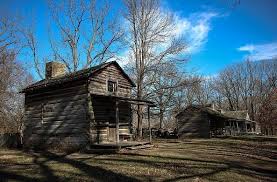
His choice of running for the State Legislature was surprising. Usually a young candidate chooses a local (i.e. winnable) office – like the town constable or court clerk.
Some historians surmise that Lincoln was in a hurry. Seeking/winning/maintaining a local office would keep him tethered to the town. He might have to wait – perhaps for four years – before a higher elected position became available.
The 1832 Campaign
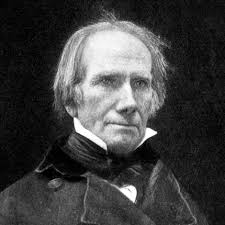
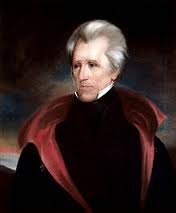
Lincoln was 23. Andrew Jackson, a Democrat, was seeking a second term as President. His opponent was Henry Clay, also a Democrat – but on the other side of the philosophical fence, and with other items on his agenda. The Whigs didn’t become a political “entity” for another eight years!
Lincoln liked Clay. He agreed with the national need for canals and roads and bridges. And easier access to money. And Clay had made his home in Kentucky long before Lincoln was born!
The New Salem “district” was widespread, covering several thousand families. The large area had four seats assigned in the Illinois legislature. The young new candidate filed the proper papers, sought the best advice about how to proceed… and proceeded according to what was the conventional path. He wrote a lengthy “platform,” outlining his position on several issues, sent letters to the area newspapers, and made speeches wherever he could.
He lost. So did Henry Clay.
But it wasn’t as bad as it seemed. There had been thirteen candidates for those four seats, and Lincoln-the-unknown came in eighth. Not bad for a kid’s first start.
But the gratifying thing – and the one that mattered most to him – was that he won 90% of the votes in his village. The folks who knew him liked him enough to vote for him. And Lincoln, young man and older man, was a very likable person.
Lessons Learned
If one loses – whether it is an election, or a job, or even financially – if lessons can be identified and learned, it is no longer a loss: It is an education.
Lincoln realized that he needed to become known in his district – not just on paper. He needed to make the rounds. To talk to the voters and get to known them. He figured if they knew him, they might like him. And trust him to represent their interests.

So for the next two years until the next election, Lincoln managed the town’s general store, served as the village postmaster (which provided a huge amount of information via the various newspapers that were received), and traveled around a much wider area. And continued to read law from the books John Todd Stuart had provided.
He offered no platform. He espoused no political party. He may have realized the old political axiom even then, that “all politics is local.” And country-folks were mostly interested in the needs of their immediate surroundings.
He shook a lot of hands. Went to their picnics or the local fair. Shook more hands and talked about the weather or the distance it was from New Salem, or the price of potatoes. General stuff. It is said that he once saw some fellows in the field bringing in a crop of wheat. Rather than talking politics “at” them, he offered to help bring in the sheaves! He made more friends, and they all voted for him.
There were thirteen candidates for the FOUR seats once again. But this time, a 25-year-old Abraham Lincoln placed SECOND. He easily won a seat in the Illinois State Legislature.
He needed to buy a second-hand suit.
Life-Lessons Learned
Lincoln once said that when his Black Hawk War company “voted” him captain, it was his most gratifying election.
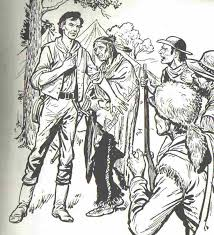
He always counted the regard and good will of those who knew him as one of the most important and pleasurable components of his life.
A decade later, when he “rode the circuit” through Illinois, he seldom returned to Springfield on the weekends. It may have been more to his political advantage to meet and greet, and share a meal – and a couple of good stories – with his fellows.
He had learned early on that the common touch of his personality was perhaps his most important asset. It was valuable and sincere. And it never failed him.
Sources:
Donald, David – Lincoln – Simon & Schuster, 1995
Schenkman, Richard – Presidential Ambition – Harper Collins, 1999
https://apps.legislature.ky.gov/LegislativeMoments/moments08RS/24_web_leg_moments.htm
https://www.nps.gov/articles/000/lincoln-in-the-illinois-state-legislature.htm
 Presidential History Blog