
Ex-Presidents in General: The Early Fellows
It’s lonely at the top. Just about every President has said so. Most come with their own agendas and plans, and all will quickly learn that they can go awry quickly. Some wonderful intentions can be changed in a moment. Think Pearl Harbor, or September 11th. It is imperative to be able to change course, play by ear, or dissolve into analysis-paralysis.
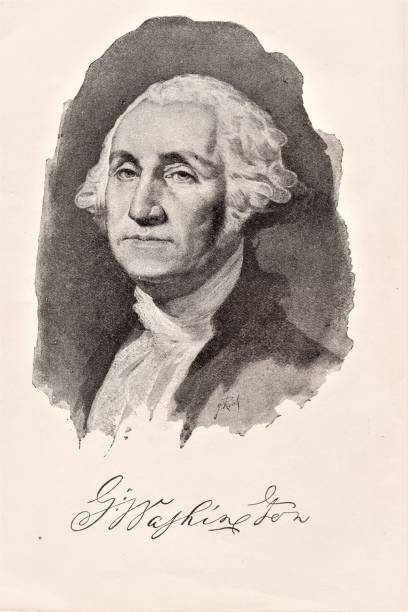
A former President can offer good advice. Or concrete suggestions. Or moral support. If requested. Some sitting POTUSes, like John Adams, actively sought support and input from a somewhat reluctant George Washington (who alas, had no former President to turn to). Nevertheless, GW was happy to oblige – however he could.
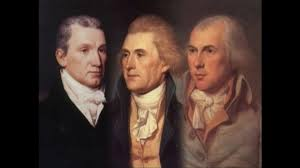
Thomas Jefferson and Adams had fallen out after a long friendship, but later Presidents James Madison and James Monroe, long-time personal and political friends of Jefferson, frequently consulted him on various issues. Mostly as a sounding board. Jeff was more than happy to weigh in as he saw fit. JA was left out.
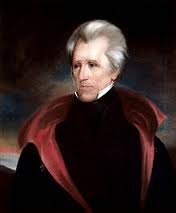
All President are aware of, and usually basically acquainted with their immediate predecessor(s). But some don’t like them – personally or politically. Acerbic John Quincy Adams got along well with Madison and Monroe, his predecessors, but equally testy Andrew Jackson loathed John Quincy Adams, the man who previously sat in his chair. The feeling was mutual. JQA did not even attend Jackson’s inauguration, ostensibly because he did not want to shake his hand. Jax wasn’t wild about Monroe either.
John Quincy Adams was an anomaly. Some time after retiring from the Presidency, he was elected to Congress – a different branch of government – where he served till his death 17 years later. He couldn’t be involved with his successors, and had little regard for any of their abilities anyway.

Martin Van Buren, Jax hand-picked successor, reaped the whirlwind (and blame) for much of Jackson’s banking policies, but the two men remained cordial enough.
John Tyler’s immediate predecessor, William Henry Harrison, died after only a month in office. He might have benefited by some presidential guidance, but the Harrison-Tyler ticket had challenged Van Buren, and there were cool feelings. Tyler also disliked Jackson and JQA – and it was mutual.
James Knox Polk was disinclined to ask anyone for input, except perhaps Andrew Jackson, his lifelong mentor. But Jax was elderly and died shortly after Polk took office. Martin Van Buren, once he got over his miff that he wasn’t chosen as Democratic candidate instead, is said to have vigorously supported Polk, but was re-miffed when he did not receive high appointed office.
General Zachary Taylor did not like his predecessor, period, but Polk died just months after he left office. Then Taylor died, leaving poor Millard Fillmore with only two ex-Presidents to turn to: Martin Van Buren, a fellow New Yorker, and John Tyler. They didn’t even agree with each other, let alone with Fillmore-the-Whig. There was no significant relationship between them. Ol’ Mill was on his own. He no doubt tried his best and meant well…

On the Eve of Civil War
The 1850s were tough times destined to get worse. Franklin Pierce was also on his own and a “dark horse” like Polk. The New Hampshire Democrat had long standing pleasant relationships with both Van Buren and Tyler, but by this time, slavery had become front-and-center on the national agenda. Both Van Buren (now a Free Soil nominee) and Tyler (a Southern slave owner) kept a polite-but-cool distance. Millard Fillmore was pleasant at the inaugural, but his wife died soon afterwards, and MF went abroad for a while.
Aging Pennsylvania Democrat James Buchanan, elected in 1856 mainly because he had spent the last four years abroad in a diplomatic post, had known all Presidents from Monroe forward. Van Buren, Tyler, Fillmore and Pierce were still living. Pierce had gone abroad for a while, as did Van Buren and Fillmore. Buck, with a long political resume, had known Tyler for a long time, but they were not closely allied. Nevertheless, in 1861, prior to Lincoln’s inauguration, a Peace Conference, a last ditch effort to present options to avoid the looming “irrepressible conflict” was held in Washington. Aging Ex-President John Tyler was named Conference President, and met with President Buchanan to present the committee’s recommendations. Buchanan was cordial, but non-committal. He preferred that his successor make those decisions. Tyler was later elected to the Confederate Congress, but died just prior to taking office.

Abraham Lincoln had five living former presidents to advise him. Tyler was still living (briefly), as were Van Buren, Fillmore, Pierce and Buchanan. He made a courtesy call to Buchanan shortly before his inaugural. It was pleasant, but Buck had no advice – other than to suggest that the new POTUS take advantage of a pleasant cottage at the Soldier’s Home a few miles from the capital. It was much cooler in the heat of summer. At least that was good advice.
Lincoln had paid a courtesy call to Fillmore en route to Washington, and Pierce disliked both Lincoln and his policies, and was vocal about it. There is indication he suggested that the living ex-Presidents be summoned to co-run the country. Nevertheless, he did send a heartfelt condolence letter when eleven-year-old Willie Lincoln died. It is very likely that Lincoln sent a graceful acknowledgment, but that letter has never surfaced.

When Andrew Johnson took his subdued private oath of office after Lincoln’s assassination, Tyler and Van Buren had already died. As a long-time Tennessee Senator, Johnson had a poor opinion of aging James Buchanan, who he considered weak and timid. “Buck” died shortly after Johnson’s term. VP-turned-POTUS Fillmore was supportive of Johnson’s reconstruction policies. He would have been happy to meet with him, but there is no indication that AJ ever asked him.
Stay tuned.
Sources:
Gutzman, Kevin R.C. – The Jeffersonians: The Visionary Presidencies of Jefferson, Madison, and Monroe – St. Martin’s Press, 2022
Shafer, Ron G. – The Carnival Campaign: How the Rollicking 1840 Campaign of “Tippecanoe and Tyler Too”: Changed Presidential Elections Forever – The Chicago Press, 2017
https://www.britannica.com/biography/Andrew-Jackson
https://www.britannica.com/biography/James-Buchanan-president-of-United-States

