
There is no evidence that iconic 19th century American authors Walt Whitman and Louisa May Alcott ever met…
But…
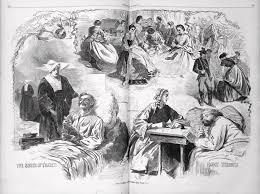
In later years, it is very likely they had heard of each other, to include shared experiences as volunteer nurses in Civil War hospitals in Washington. Men served as nurses as well as women.
Walt Whitman
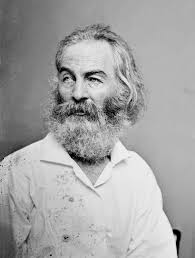
Walt Whitman (1819-1892), New York journalist, newspaper owner and sometime-poet was never a man of strong political opinions. He was a sensitive sort, introspective and in many ways private.
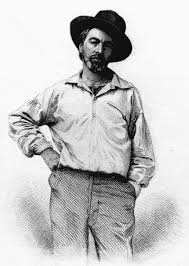
He came from a large family of meager means, forced to end his formal schooling at eleven, and finding a path in his early teens as a printer’s devil. Whitman’s choice of journalism was more a means to a soft living (as opposed to physical labor), than any passionate calling at first. The poetry, however, gave vent to his passions and introspection.
By 1860, the 40–year old journalist had begun writing and publishing abstract and unconventional (free-verse) poetry, acquiring a growing albeit polarized audience of detractors and admirers. His chief and most valuable admirer was Ralph Waldo Emerson.
Once the Civil War erupted, one of Whitman’s brothers was listed in the newspapers as wounded. In those early days, the available military hospitals were overflowing, understaffed, and sorely lacking in record-keeping abilities. Ergo, while family members may have been aware that their loved one had been wounded, very few relatives knew where they had been brought for treatment. Walt Whitman left immediately for Washington.
He volunteered as a nurse rotating between dozens of makeshift military hospitals in the capital. He discovered that his brother’s injuries were minor, but opted to stay on indefinitely, taking a part time clerical position to support himself. He remained as a volunteer nurse throughout the war, and his experiences were seminal, never to be forgotten. That includes occasional glimpses (in passing) of Abraham Lincoln. While the two were never formally introduced, Whitman admitted that the tall President with the impenetrable eyes seemed to recognize him in his bohemian-style clothing. They nodded in pleasantries. And Walt Whitman found a near demi-god to admire.
His most-remembered effort was a three-versed work in traditional meter, rhyme and deeply-felt eugolistic sentiment. “O Captain, My Captain” was his only poem regularly included in poetry anthologies during Whitman’s lifetime. It was, and still is, a classic. Generations of school children had to commit it to memory (including old-me) in the 6th or 7th grade. Memorizing a poem harmed nobody.
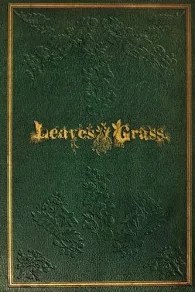
His reputation as America’s greatest poet however, is derived from his printed, amended, expanded and multi-published over a 40-year period, Leaves of Grass, an assortment of free-verse soaring observations on many fronts. Some shunned it as immoral, and some praised it as pure genius. Genius won, and Leaves of Grass, still esoteric, has never been out of print.
In his early 50s, Whitman had a stroke, and his health failed incrementally for the next two decades. He died at 72, in pain, paralyzed and frail.
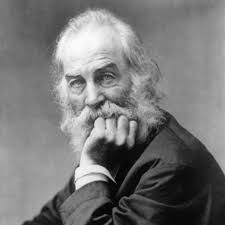
“Uncle Walt” met many famous people during his lifetime, including the transcendental educator Bronson Alcott. But he never met Louisa.
Louisa May Alcott
Louisa, (1832-88) was born into a philosophical family. She grew up in Concord, MA, the daughter of Bronson Alcott, educator, friend and colleague of transcendentalists Ralph Waldo Emerson, Henry Thoreau et al. Philosophy and education do not bode well for high income, and the Alcotts struggled financially throughout their lives.
At the start of the Civil War, Louisa May Alcott was barely twenty, and spurred by a restless soul and desire to escape from a ho-hum life, volunteered as a nurse in Washington DC. The 12-hour days witnessing horrific injuries and pain, plus exposure to the common battlefield illnesses that claimed as many victims as the bullets, cut short her tenure in nursing. She lasted barely two months before she was too ill to continue, and was a shell of herself when she returned to her family. Her health was permanently compromised, and recurrences of war-fevers cropped up regularly.
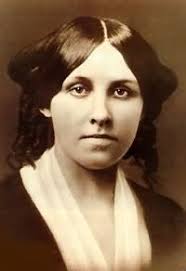
But early in her youth, tall, broad-shouldered and generally plain, Louisa shunned the route to traditional home-and-family life, and turned her hand to writing. She enjoyed some modest success, publishing essays and short stories in some of the popular literary magazines of the 19th century. Now, as a semi-invalid, writing became more than just a pleasant pastime. Louisa May Alcott (and a few of the nom de plumes she utilized) was earning a living, gaining respect and reputation among peers in the literary world.
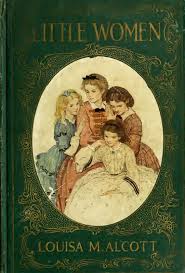
It wasn’t until fifteen years after the Civil War that her publisher suggested she write a “girls” book. Her upbringing among four close-knit sisters was the result. She inserted her own restless persona as Jo March, and Little Women was an instant mega-success. Followed quickly by Little Men, and Jo’s Boys, the stories of the March Sisters has never been out of print, and has been made into several films – all starring the most popular actresses of their times.
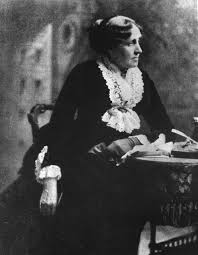
Louisa May Alcott was not destined for a long life. Her Civil War nursing exposure could be said to have claimed her as a victim as well.
Walt Whitman and Louisa May Alcott rank at the top of the pantheon of iconic 19th Century Literary American authors. And both were broadened – and deeply, perhaps eternally scarred – by their Civil War time as volunteer nurses.
Sources:
Robertson, James – After the Civil War: The Heroes, Villains, Soldiers, and Civilians Who Changed America – National Geographic, 2015
https://www.poetryfoundation.org/poets/walt-whitman
https://poets.org/poet/walt-whitman
https://www.penguinrandomhouse.com/authors/277/louisa-may-alcott/
https://www.womenshistory.org/education-resources/biographies/louisa-may-alcott

