Albert Edward, Prince of Wales had always been a concern to his parents, Queen Victoria and Prince Albert.
The Prince and his Parents
Prince Bertie, as his family called him, was a genial, warm-hearted and pleasure-loving fellow, and would remain so, even when he ascended the British throne as King Edward VII. What he was not, however, was studious, intellectually inclined or diligent. His serious parents despaired of his future.

Queen Victoria and Prince Albert were strict parents who expected “perfection” from their oldest son.
Bertie was born to reign; thus his parents were bound to raise him for his eventual position. At seventeen, he had been constantly surrounded by governors, books and tutors, and few companions other than family. It was counter to his personal disposition and as one might expect, he was unhappy. Every effort to please his parents was met with criticism, correction and fault finding.
But when he was eighteen, Her Majesty reluctantly permitted him to travel to Canada, part of the Commonwealth.
Baron Renfrew
Naturally many restrictions, caveats and rules were imposed, the first being that the Prince of Wales would travel incognito, as “Baron Renfrew.” Of course nobody believed the pseudonym story, but that was what the Queen wanted, so who were they to deny it?

Albert Edward, England’s Prince of Wales, traveled to Canada and the US incognito, as “Baron Renfrew.” Nobody was fooled.
The pseudonym served many purposes. It allowed the Prince a much smaller retinue. It allowed him greater freedom from endless protocol and traditions, and possibly the opportunity for some mild entertainment that otherwise might be off limits to royalty.
It also freed the Canadians from the monumental task of formally entertaining a monarch-to-be, a hugely expensive proposition and a logistical nightmare.
So Baron Renfrew it was, and everyone was delighted, especially Prince Bertie.
President James Buchanan
James Buchanan (1791-1867) was our only bachelor President. When Baron Renfrew was about to depart for Canada, Buchanan’s three years as POTUS were considered an abject failure even then, and would never improve. Socially however, his administration was brilliant, thanks in part to his delightful niece and ward, Harriet Lane.

President James Buchanan was a successful Minister to Great Britain in the mid-1850s.
Buchanan had an impressive resume of nearly forty years on the political scene. He was a successful and moderately well-to-do attorney. He had been a state legislator at twenty-five; a congressman for several terms; Minister to Russia; Pennsylvania’s senator for a decade; Secretary of State under James K. Polk, and for a dozen years, short-listed as a Democratic candidate for President.
Perhaps his best position was the years he served as Minister to Great Britain between 1853-56. His gracious manners and experienced diplomatic skills were well received in that land of pomp and circumstance, and both Her Majesty and the Prince Consort were well pleased. They were equally pleased by his charming niece Harriet Lane. Orphaned at nine, Buchanan had assumed her guardianship, and raised her as his own. At twenty-two, she had been groomed and educated to be the perfect escort for her bachelor uncle.
Buchanan was a huge hit overseas, and thus absent from the increasingly fractious political scene at home. It has been suggested that his absence may have been a major factor in his election.
The Invitation
Buchanan’s Presidential record left a great deal to be desired, and in 1860, an election year, he was nearly seventy years old and tired. But he wanted to leave on a “high note.”
As POTUS, James Buchanan was a political equal to Her Majesty. Since he had been well and pleasantly acquainted with her for four years, he was comfortable in making a very special request.

Harriet Lane, niece and ward of James Buchanan, was well regarded by Queen Victoria – and the American people.
If the Prince of Wales made a visit to the United States, he would be the highest ranking British personage to visit its erstwhile colonies. In fact, he would be the highest ranking foreign anybody to visit the United States. (The King of the Sandwich Islands, present day Hawaii, was the first monarch to do so, and that would not be for another dozen years.) It did not matter that the Prince of Wales was called Baron Renfrew; everybody knew who he was. It would be a coup for the Buchanan administration.
The President wrote to Queen Victoria and Prince Albert suggesting that since their son was coming to Canada, perhaps he might spend a few days in the USA. He personally would be delighted to accommodate the young man at the White House.
The British Monarch again reluctantly decided to oblige. Perhaps it was because Buchanan was old enough to be her father, and thus a “grandfatherly” figure for the young man.
So “Bertie” squeezed in a trip to New York and Washington, and is said to have been delighted for the opportunity.
The Prince and the POTUS

The presidency of James Buchanan was a failure – even in his own time. But the “social” Buchanan White House glittered!
Tongues wagged and gossip abounded about a possible “match” between the President’s niece and the young Baron Renfrew, but of course it was foolishness. Harriet Lane was a good ten years the Prince’s senior, and other than pleasantries, had no particular interest in him. But she pulled out all the stops in arranging a lavish banquet in his honor. No dancing, of course. Their Majesties were petrified that their son might indulge in flirtations. (He was already very good at that.)
Only the crème de la crème of Washington were sent special invitations, hand-delivered by messenger. Flowers and confections were plentiful, but the invitations were limited. Later it was said that the crowds were so heavy, that people were climbing in and out of the windows. Maybe just rubber-neckers.
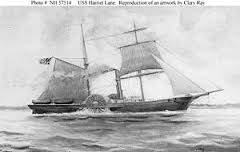
The Prince of Wales was taken on the Coast Guard cutter “Harriet Lane” to visit George Washington’s tomb at Mount Vernon.
Baron Renfrew indeed spent the night in the White House, accommodated in what immediately became the “Prince of Wales Room.” The following day, The President, Miss Lane and specially invited guests took the “Baron” down the Potomac to Mount Vernon, where the great-grandson of George III planted a tree near the tomb of the man who led the former British Colonies to their independence.
Sources:
Caroli, Betty Boyd – First Ladies – Oxford University Press, 1995
Jeffries, Ona Griffin – In and Out of the White House – Wilfred Funk, Inc, 1960
Magnus, Philip – King Edward the Seventh – E.P, Dutton & Co., 1964
http://www.mountvernon.org/the-estate-gardens/the-tombs/famous-visits-to-washingtons-tomb/


Great story, new information. Especially liked the irony of Bertie planting a tree at GW’s grave. sd
Reblogged this on Lenora's Culture Center and Foray into History.