Lincoya: Andrew Jackson’s Indian Son

Andrew Jackson, Indian fighter, with no love lost on his enemies, adopted a Creek Indian baby and raised him as his own.

 Andrew Jackson: Becoming the General

equestrial jackson

A quintessential depiction of “Old Hickory” – Andrew Jackson.

At age forty, Andrew Jackson had been a major figure in Tennessee for nearly two decades. He was a planter, a lawyer, a businessman, a horse racer and breeder, a sometimes Congressman and Senator and full time land speculator.

But it was not until he became General Andrew Jackson that he found his true calling. The generalship itself was an honorary position in the Tennessee militia – but it appealed to Jackson’s powerful (and always quarrelsome) personality enough to claim it in political contest. It would also insure his mark in history.

He had a latent talent for soldiering and took both the title and the position seriously. Although unschooled in formal military tactics and strategies, he learned the basics quickly, and drilled his men regularly.

His first test in battle, which earned his eventual military reputation, was in a series of wars with the Creek Indians, during the War of 1812. The Creeks had allied themselves with the English, and proved to be vicious and tenacious fighters. They also met their match in Andrew Jackson, amateur soldier, but just as vicious and tenacious a fighter.

Lincoya: The Creek Child

https://i0.wp.com/www.historycentral.com/1812/Horseshoe.GIF

The aptly named Battle of Horseshoe Bend was a brutal encounter between Andrew Jackson’s forces and the Creek Indians. Three-year-old Lincoya was found here.

The battle of Horseshoe Bend in central Alabama, was a particularly brutal engagement. Scores of Creek Indians lay dead. One of Jackson’s soldiers discovered a little boy, perhaps three-years-old, wandering around nearby, crying in search of his family – or of anyone familiar.

The soldier brought the child to General Jackson, asking what he should do with him. The militia was on the march. There was no one to care for a little baby. Jackson did not hesitate. “Bring him to Mrs. Jackson,” he instructed. It was the perfect solution.

Rachel Jackson: Adoptive Mother

Rachel Donelson and Andrew Jackson had been married for more than twenty years, but had been childless. It was a very painful omission in Rachel’s life. The Donelsons were a large family (there were ten children), with dozens of little nieces and nephews in their immediate surroundings. But none were born from her body, or from the love between the Jacksons.

composite jacksons

Rachel and Andrew Jackson, middle-aged when they raised Lincoya, were more like grandparents than parents.

A few years earlier, one of her brothers and his wife had twin sons. Theirs was a large family, and the extra mouths to feed were burdensome. The Jacksons’ offer to adopt one of the boys was gratefully accepted, particularly since the warm-hearted Rachel had enough love for an army of children.

Lincoya Becomes a Jackson

Although it may have been more like foster-parentage than formal adoption, the little Indian boy was named Lincoya, nurtured by the Jacksons and raised as their own. He was fed and clothed and educated the same as his “brother” Andrew Jackson Junior – and the other nieces, nephews and wards that the Jacksons raised in guardianship. Lincoya was also tucked in, nursed through illness and loved with the true affection of Rachel’s motherly heart.

Growing up at the Hermitage in Nashville, Tennessee gave Lincoya huge advantages that he would never have enjoyed otherwise. Still, many of his Indian traits-of-genetics were obvious to his adoptive parents. By the time he reached puberty, he had become a gifted horseman, and had natural instincts for the basic survival skills of his Indian heritage, energies that may well have been admired by the rambunctious Jackson himself. But by this time, both Jacksons were past fifty and more like grandparents than parents.

Meanwhile Jackson had become “a great personage,” away from home most of the time. Perhaps the boy needed a firmer hand than was available.

Lincoya never seemed to be able to become the “young master” of the Hermitage like his foster-brother Andrew Jackson, Jr. He tried to run away several times while he was still a young boy, hoping to rejoin his Creek tribe. It does not appear that he faulted either his adoptive mother or father. In the little that is known of him, Lincoya always spoke well of the Jacksons, and admitted that he had only received kindness at their hands. Still, he had an inborn longing for his own people.

The Future of Lincoya Jackson
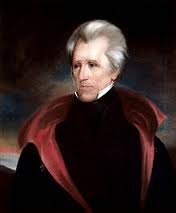
andrew jackson 1

Lincoya Jackson had died of tuberculosis only months before General Jackson, his foster-father, was elected President in 1828.

Andrew Jackson had genuine affection for Lincoya and planned to send him to West Point, which had opened its doors for military training at the start of the nineteenth century. He believed soldiering skills would suit the now-teen aged boy. He also believed that the discipline might be beneficial. But Lincoya did not enjoy formal education or scholarly pursuits. Or discipline. The thought of a military career was not appealing.

He respectfully told his “father” that while he was grateful for the opportunity, he wished to decline. General Jackson did not press. Instead, he suggested apprenticing him to a saddle maker, a trade that was more appealing to the young man. Interestingly enough, Andrew Jackson had also been briefly apprenticed to a saddle maker back in the Carolinas when he was still a teenager.

Those plans would never be fulfilled. Early in 1828, the year Andrew Jackson was elected President of the United States, Lincoya contracted tuberculosis. With primitive medical care, the seventeen year old young man didn’t have a chance. He died only months before his adoptive father became the seventh President.

Rachel Jackson was devastated. She had raised Lincoya since he was three.   More like a grandmother than mother, Rachel at sixty was in poor health herself. She died of a failing heart by the end of the year.

Andrew Jackson came to his inauguration wearing a mourning band for his beloved wife. It is also likely that he felt some fatherly grief for his adopted Indian son, Lincoya.

Sources:

  • Burstein, Andrew – The Passions of Andrew Jackson – Borzoi/Knopf, 2003
  • Remini, Robert V. – Andrew Jackson: The Course of American Empire (1767-1821) (Vol. 1) – History Book Club Ed., 1998
  • Remini, Robert V. – Andrew Jackson: The Course of American Freedom (1822-1832) (Vol. 2) – History Book Club Ed., 1998
Posted in A POTUS-FLOTUS Blog, Andrew Jackson, Nifty History People | Tagged , , , , , , , , , , , , , , , , | 10 Comments

Mrs. Harding and Mrs. McLean

For fifty years, Florence Kling Harding was a lonely woman, with few, if any, real friends.

The Embattled Duchess

Florence Kling (1860-1924) was the daughter of Marion, Ohio’s wealthiest and nastiest businessmen. His tyrannical ways resulted in Florence’s youthful escape into a disastrous first marriage (if indeed there was an actual marriage).  As expected, it did not last.

Her second mismatched marriage, to Warren Harding was more like an armed truce: occasional pitched battles, regular skirmishes, and long cooling-off periods.

FlorenceHarding

A young(ish) Florence Harding. Not bad looking, but definitely formidable!

Her health, however, was a prolonged siege. A chronic kidney dysfunction always loomed, with occasional bouts to the near-death, leaving “the Duchess,” as Warren Harding called her, completely exhausted.

Her one close friendship with a neighbor woman, Carrie Phillips, ended in armageddon, once it became known that Mrs. Phillips was carrying on a torrid romance with Mr. Harding. The two women never spoke again.

Thus in 1914, when Warren Harding was elected to the United States Senate, a lonely middle-aged Florence was looking forward to a brand new life.

Evalyn Walsh McLean

Evalyn Walsh McLean (1886-1947) was a fabulously wealthy woman. Her father, Thomas Walsh, had made a fortune in mining. Evalyn cemented her vast wealth by marriage to Edward (Ned) McLean, also wealthy by huge inheritance, which included ownership of the Washington Post. Evalyn owned the Hope Diamond.

Evalyn MacLean

Evalyn Walsh McLean was twenty-five years younger than Mrs. Harding, and fabulously wealthy. They became unlikely – but sincere friends.

Mrs. McLean was twenty-five  years younger than the Duchess, and her marriage was just as flawed. Ned McLean and Warren Harding were “good ol’ boys” who liked their cigars, poker games, booze and broads.

Mrs. Duchess and Mrs. Hope Diamond

If Florence Harding hoped that a good life would start anew for her in Washington, she was sadly disappointed. She was older than most of the congressional wives and looked it. Poor health takes a sorry toll on beauty.   Her clothes, no doubt the best to be had in Ohio,  were considered dowdy in the sophisticated capital, ditto her social manners. Her calls went unreturned. Her invitations were only to the large events where everyone was invited. The smaller groups shunned her. She was lonelier than ever.

When she was attacked again by kidney blockage, her imminent death was expected. She was bedridden for weeks.

Into this depressed atmosphere came the kind-hearted Evalyn McLean, who had become casually acquainted with the Duchess. Having learned that Mrs. H. was seriously ill, she paid a courtesy call, and the two women bonded.

One never knows exactly what transpired between Evalyn and the Duchess that touched the younger woman’s heart. Perhaps Evalyn sympathized with a sick woman whose philandering husband gave her grief. Perhaps she sensed the Duchess’ loneliness.

Nevertheless, it was a strong bond.  It lasted.  Florence recovered.

“Friendship”

If Ned McLean, errant husband, heavy drinker and poker player had a large circle of friends, so did Evalyn. Being young, attractive, and phenomenally wealthy only helped and added to her draw. Her closest friend at the time was Alice Roosevelt Longworth, daughter of Teddy, wife of Ohio Congressman and Speaker-to-be Nick Longworth, another good ol’ boy.

Friendship itself was obviously important to both McLeans, since they named their huge Georgetown estate “Friendship.” It would become a second home to both Hardings.

Warren Harding fit into this mix hand-in-glove. His good looks and charm, coupled with an easy-going nature made him personally popular throughout his life.

duchess

Florence Harding was sixty when she became First Lady – and looked every day of it.

Now, under Evalyn’s tutelage, Florence bought more fashionable clothes.  She went to more fashionable hairdressers. She was invited to more fashionable parties, including the A-listed “poker games” hosted by Alice Longworth. Alice couldn’t stand either of the Hardings, but Nick liked Warren – an Ohioan – and they had been pals with the McLeans for years. If Evalyn wanted Florence invited, sobeit.

Evalyn also introduced the Duchess to one of the most fashionable “good causes” of that era: wounded World War I veterans. Florence  started visiting VA hospitals regularly, bringing flowers or cookies.  She spent afternoons reading or playing cards with them, keeping them company.

Of course, this new lease on life was a blessing to all. With Florence happily distracted and occupied, Warren Harding could breathe a sigh of good ol’ relief.

The Duchess, Evalyn and Madame Marcia

Warren Harding

Warren G. Harding: The man who looked like a president ought to look!

One of the “fashionable” doors that opened to Florence was that of Madame Marcia, a Washington fortune-teller, who had become popular among the society-set.

Florence had always been a superstitious woman, and the new bond she would now form with Madame Marcia would be prophetic. The psychic predicted that Warren Harding would become president, but would not survive his term in office. This, of course, was ludicrous. Harding was only a mediocre first-term Senator with little national presence. How could he possibly become President of the United States?

But Madame Marcia predicted and the Duchess believed. If she feared for her husband’s early demise, it did not stop her from encouraging his nomination.

First Lady Duchess and Her Best Friend

Warren Harding was elected President in 1920, and the new First Lady’s best friend, Evalyn Walsh McLean, was a frequent White House visitor. The doormen knew to admit her whenever she showed up.

When Florence suffered another near-fatal kidney blockage, her distraught husband, who had come to depend heavily on his politically-savvy wife, sent for Evalyn, who had been vacationing in Bar Harbor, Maine.  She  took the next train to Washington to be near her dear friend. The Duchess recovered.

Meanwhile, the President was besieged and beset by impending knowledge that some of his good ol’ buddies he had put in public office were engaged in gross misconduct, if not out-and-out illegal activities. Harding’s misdiagnosed heart condition could not take the strain, and he died – exactly as Madame Marcia had predicted.

The Duchess went to the McLean estate for consolation after the funeral. And it was in the “Friendship” fireplace that she burned hundreds of Harding documents. We can only guess what they contained.

Florence Harding survived her husband by less than a year. Her failing kidney now failed permanently. But her friendship with Evalyn Walsh McLean had held firm.

Sources:


Posted in A POTUS-FLOTUS Blog, Nifty History People, Warren G. Harding | Tagged , , , , , , , , , , , , , , , , , , , , | 1 Comment

Destiny of the Republic: A Book Review

Its subtitle, “A Tale of Madness, Medicine and the Murder of a President” says it all.

The Assassination of James A. Garfield

Shooting a President, his lingering death, unbelievably incompetent doctors and a deranged assassin makes for a fine and exciting story. Truth is frequently much better than fiction! Author Candice Millard is a skillful and careful historian-narrator, but not a riveting storyteller.

Book Review Destiny of the Republic

Destiny of the Republic: A Tale of Madness, Medicine and the Murder of a President by Candice Millard

James Garfield (1831-81) was definitely a dark horse president, nominated and elected because few people outside the political sphere knew of him. It was also fifteen years post-Civil War, and the bloody shirt was still more attractive as a motivator than real political leadership.

Author Millard is a big fan of President Garfield, and with just cause: James Garfield was decent, articulate and intelligent man, with a good sense of humor, personal character and a disposition that makes him easy to like. Some historians past and present taint him/credit him with being a conniving and ambitious politician and manipulator, and perhaps there are a few grains of truth to that as well. But by and large, the “nice guy” image seems to be universal.

Despite this, only four months into a politically embattled presidency, he was shot by Charles J. Guiteau, a certifiably insane man with an equally insane agenda and axe to grind.

Garfield’s Lingering Death

By any account of modern medicine, Garfield should have survived, recovered and gone on to live a normal lifespan. Even in his own time, Civil War veterans with far worse wounds survived.

Ms. Millard has complete and justifiable scorn and contempt for the team of doctors who were summoned to treat the President, and in particular, D. Willard Bliss, the doctor-in-chief. His overweening ego and overbearing personality precluded any shred of doubt he might be wrong, and he was without a doubt, wrong about everything. He was especially wrong about the value of basic antisepsis, which had been pioneered years earlier by Dr. Joseph Lister. Lister’s methods, by this time, were practiced widely throughout in Europe, but still pooh-poohed in America.

President James Garfield did not die of his wounds. He was poisoned by the rampant infection that erupted throughout his body, induced by medical malpractice, as the doctors probed with unwashed hands and instruments to try to find an elusive bullet. Had they merely left him alone, he would have survived.

The Assassin’s Story

The story of Charles Guiteau is probably the most interesting tale-within-a-tale. Deranged minds usually make for compelling stories. Millard treats him with general sympathy. After all, insane is insane. She is much kinder to him than she is to the doctors. She is certainly kinder than how the American people treated the assassin in 1881-82. By the time Guiteau came to trial, the country would have likely voted for his lynching.

The Alexander Graham Bell Connection

Alexander Graham Bell played a very small part in the Garfield story. The inventor had been designing a metal-detecting device which he hoped might locate the bullet in those days before x-ray. That it did not work does not negate its basically correct premise.  If Bell had not been the great telephone-fellow, the entire metal-device story would have been a footnote.

And it is in telling, and perhaps over-telling the Bell part of the story that the author bogs down. It is as if she had discovered some old diaries and notes, and felt compelled to use them. It does not make for good storytelling – at least not in this story. Millard spends an inordinate amount of time dedicated to Bell and his frantic attempts for a solution. In a book about Alexander Graham Bell, and intended for a different audience, it would certainly be important, and even interesting. Here, it detracts. The author is telling a murder-malpractice story. We do not need physics lessons.

The Politics of the Age

Granted: Civil Service Reform is about as tantalizing a subject as the oatmeal Garfield detested. Meanwhile the politics-of-people, vis-à-vis the Roscoe Conkling and the James Blaine background stories – men who hated each other with passion, were passed over lightly. The true growth of Chester Alan Arthur, the Vice President and President-to-be, is probably a more interesting story than the one about Bell. The delicious and heartwarming correspondence of an invalid woman who befriended him is a wonderful revelation. Here he was, a perceived political hack who no one would have ever considered as Vice President, let alone President, and yet his transformation as an independent thinker was nothing short of remarkable.

In an age where the general population is woefully ignorant about history in general, “people stories” – and the facts that compel interest and sympathy or antipathy – are far more valuable than the minutiae that historians seem to revel in.

Bottom line: Destiny of the Republic, well-researched and well-written to be sure, is a somewhat different aspect about the death of Garfield, but Ken Ackerman’s Dark Horse is a much better “telling.”


Destiny of the Republic: A Tale of Madness, Medicine and the Murder of a President

Candice Millard

Doubleday: ISBN 978-0-385-52626-5


Posted in A POTUS-FLOTUS Blog, James Garfield, Recommended Reading | Tagged , , , , , , , , , , , , , , , , , , | 1 Comment

Mary Lincoln’s Tablecloth: A Metaphor

The Lincoln composite

This is a composite likeness of Abraham and Mary Lincoln. They were never photographed together, since the difference between their heights was so great.

In an apt metaphor, Mary brought the tablecloth and the good dishes to the Lincoln table.    

Mary Lincoln is unquestionably a divisive figure. She was divisive in her own time, and nearly two centuries later, remains so. People either disliked her, or pitied her. Few actually “liked” her for herself.

There are some, then and now, who have insisted that Lincoln married a termagant who made his life a living hell. Others say that while the Lincoln marriage may not have been wedded bliss, it was no more problematic than the next.

Mary Lincoln, Kentucky Belle

young mary lincoln

The young Mary Todd Lincoln was petite and attractive, and considered particularly cultured and mannered.

Lincoln’s humble beginnings are well known. His parents were illiterate, or barely literate. There was no money. There were no opportunities, other than what Lincoln could create for himself.

The polar opposite could be said of Miss Mary Todd, born to Kentucky pedigree (third generation Lexingtonian – and that was in 1818!), with all material comforts except for the fact that her mother died when she was seven, and she would come to dislike her new stepmother.

Mary had an education. She went to finishing school. She learned to speak fluent French. She learned the social graces, which included dancing and fluttering her fan. She was nice looking. She had elegant manners.

She also had an older sister who had married the son of Illinois’ first governor. Elizabeth Todd Edwards disliked her stepmother even more than Mary did, and she was determined to bring her sister to Springfield – permanently, if possible. The possible part, meant marriage.

Abraham Lincoln, Backwoods Lawyer

Both Elizabeth Edwards and her husband had known Abraham Lincoln for some time before Mary became a part of their household. They liked him and respected his ability as an up-and-coming attorney. When it became a distinct possibility that he could become their in-law, their attitude changed abruptly. He was not socially acceptable.

Lincoln had no social graces to speak of. He was clumsy, he could not dance very well, his parlor conversation was awkward. His clothes were shabby and did not fit. His outstanding debts were not a secret.

In short, he was not fit to be Todd.

Nevertheless pretty, cultured, somewhat-snotty Mary Todd did marry poor-but-honest Abraham Lincoln.

The Lincoln House on 8th and Jackson

lincoln house better

The one and only house that the Lincolns owned. It was at 8th and Jackson Sts. in Springfield, IL.

When the Lincolns were married just over a year, with a baby in tow, they purchased their one and only house. It was a small, one-story house on 8th and Jackson Street in Springfield. As their family grew, the house was enlarged to the size it remains today. It is still a small house by most standards.

lincoln parlor

The living room of the Lincoln home in Springfield. The black horsehair furniture was very popular in the 1850s.

lincoln sitting room

Their parlor was an assortment of prints and flowers and fabrics – again, a very popular decor for early Victoriana.

Mary bought whatever furnishings they could afford, and the house is kept much as it was in 1860. Her overspending binges were in the future. In Springfield, Illinois, Mrs. Lincoln ran a tight ship. Their black horsehair furniture and corner what-not was popular fashion in the mid-nineteenth century, and the penchant for Victorian clutter is apparent. So is the penchant for mishmash of fabrics and prints. Taste is taste, of course, and the Lincolns were content with it. Lawyer Lincoln and Presidential candidate Lincoln was happy to bring “the boys” over for a cup of tea or lemonade.

The Tablecloth

Lincoln did not have a long history of social interaction with women, particularly women of breeding. He was past thirty when he met Mary, and she may have been the first well-bred, attractive single woman who ever spoke more than a brief greeting to him. But Lincoln was also no fool. And he was a man who had ambition. Mary was no fool either. He was not, as she would famously say, “very pretty,” but she did like his ambition and his good heart.

Given the fact that Lincoln knew her disposition was high-strung with a quick rapier temper, what did he see in her? What did she bring to the table? It is a legitimate question.

Lincoln knew that if he was going to get ahead, he would need to present a more polished image, including table manners. He would need to have a home where he could entertain his friends and associates. He needed to be “parlorized.” And Mary was the perfect vehicle for it.

It would be Mrs. Lincoln who would make sure Lincoln’s suit and hat was brushed every night (in those days before dry cleaning). It would be Mrs. Lincoln who made sure he had a clean shirt and collar, and that he “blacked his boots” regularly. It was Mrs. Lincoln who taught him to dance a little, to balance a teacup on his gangly knees, to make a fairly acceptable bow, and to improve his table manners. Not that Lincoln was rude, or ignorant. He just lacked polish.

Mrs. Lincoln would also be the one to create a pleasant home for him, in the sense of giving small dinner parties (their house was not large), giving his associates a cordial welcome, along with coffee and cake. In other words, presenting an image that would compare nicely to the homes of prominent people throughout Illinois who exchanged social visits with the Lincolns.

As Abraham Lincoln advanced in his profession and had become well known in political circles, Mary Lincoln was in her glory.  Like all Victorian wives, she was the star of the show in her home, and all indications are that Lincoln was well pleased by his wife’s ability to flit and fuss and do-the-honors.

By the time the Lincolns went to the White House, Mary’s tablecloth had done its job. The President was socially the equal of everyone in Washington.

SOURCES:

Clinton, Catherine –  Mrs. Lincoln: A Life, Harper Collins, 2009

http://www.whitehouse.gov/about/presidents/abrahamlincoln/

http://www.abrahamlincolnonline.org/lincoln/sites/home.htm

Posted in A POTUS-FLOTUS Blog, Abraham Lincoln, American Civil War | Tagged , , , , , , , , , , , , , , , , , | 3 Comments

Thomas Jefferson’s Enlightened Palate

Thomas Jefferson was always a slender man. He ate sparingly – but what he ate was always magnificently prepared from the finest ingredients available.

thomas jefferson

The quintessential portrait of Thomas Jefferson, the most sophisticated and cosmopolitan of our Founding Fathers.

Thomas Jefferson was unquestionably born with a brilliant and curious mind. As the poster  child of The Enlightenment, that 18th century assemblage of fine minds and challenging principles, he was also the most cosmopolitan of all our Founding Fathers. Even today he would have few rivals in the breadth of his varied cultural interests. This devotion to the finest that civilization has to offer also extended to his dining table.

A youthful Jefferson was invited to dine with the Colonial governor at the Governor’s Palace in Williamsburg, VA from time to time.

He was one of the most promising students at the College of William and Mary in the colonial capital of Williamsburg, Virginia, and thus exposed to the most sophisticated culture to be had in the American Colonies.  As such, he came to the attention of Francis Fauquier, Virginia’s Colonial Governor, and had the good fortune to be invited to dine at the Governor’s Palace from time to time. Thomas Jefferson’s innate sense of the finer things blossomed. A decade later, surrounded by the likes of Benjamin Franklin, John Adams, et al, he was included in the highest levels of Philadelphia academic and social society.

TJ:  Discovering the World of Cuisine

When Jefferson was sent to Paris as a diplomatic envoy in the early 1780s, his eyes, mind and disposition were wide open to explore every European custom, culture and nuance he could find.

Delighting in the cuisine that has always made France stand above all others, Jefferson’s palate was treated to the best prepared foods in the world, served in the most elegant style. Ditto the wines and liquors. He  sent for his slave James Hemings and enrolled him in a culinary school where he could learn to prepare the dishes the future President so admired – and the French were so good at inventing. Years later, as President, Jefferson invited a Frenchman named John Souissant to come from Paris to supervise the White House kitchens and table. It is said that it was Jefferson who brought the recipe for ice cream back to America. Maybe. Maybe not. But it makes for a good story.

There is another story that he smuggled back grains of a special type of rice in his pockets, since it was illegal to remove the product from Europe. It is further said that the rice now grown so successfully in the Carolinas comes from Jefferson’s adventures as a smuggler.  Again, it may be apocryphal, but it sounds so much like Jefferson!

He also sent back wine by the barrel and throughout his life, many would claim he had the finest wine cellar in the country.

TJ: The Master Gardener

Jefferson’s interests always included anything benefiting agriculture. He loved farming; he loved the science of farming, and could arguably be considered the country’s first agronomist.  He nursed the budding science along in whatever infancy there was of it. His gardens at his beloved Monticello estate were his lifelong passion. He imported seeds and cuttings of various plants that he felt would grow well in American soil.

Jefferson’s “kitchen” gardens at Monticello are more than a football field in length, and produce dozens of varieties of vegetables.

Jefferson seldom ate meat or game or fowl, and then only sparingly. He preferred fish. But it would be vegetables he craved above all else. His football-field (truly!) kitchen garden at Monticello still is cultivated today with the varieties of vegetables Jefferson so carefully nurtured himself. Dozens of varieties of peas, his favorite vegetable, abound. So do several varieties of squash and lettuce, peppers and even tomatoes – which had been shunned by many as being poisonous. His account books diligently note the month and day of the first plantings, buddings, fruits and pickings of every crop on the plantation.

TJ:  Extraordinary Host

As President and in retirement, the sophisticated Mr. J. preferred the intimacy of the “small” table, rather than the large formal banquets of the European courts. He believed it was easier to engage in conversation with a smaller group.

monticello dining room

Whether at Monticello or the White House, Thomas Jefferson always preferred a dozen or so select guests instead of throngs.

Guests would always be welcome at his Monticello, and many would grace the always-generous Jefferson table every evening. He made certain that every attention was paid to the preparation and elegance of his dining room. To add to the comfort, and reduce the distractions of table service, he designed and installed a hidden dumbwaiter, so that warmed plates could be sent from the kitchens below directly to the dining room via pulleys.

Monticello plantation would and did provide much of the produce for the President’s table at the White House. In the early days of America, the President was expected to provide for his guests personally from what was considered a sumptuous salary. (There was no budget for entertaining.) Wagons filled with the fruits of Monticello gardens were regularly brought to Washington. The wine cellar was a fountain. No expense was spared.

monticello

Jefferson’s magnificent Monticello in central Virginia.

Thomas Jefferson’s gracious hospitality and penchant for living in elegance proved his undoing, and a major cause of his financial woes late in his life. For a man so devoted to meticulous record-keeping – including every expense – he fell painfully short in providing for his own security in old age. He would die nearly bankrupt, and even attempted to raise funds by auctioning his beloved Monticello in a lottery to pay his mounting debts.

For more than a half century Monticello suffered neglect, disrepair and near ruin. During the Civil War, the gracious mansion stabled Confederate horses. Finally it was rescued by private citizens and returned to the glorious estate Thomas Jefferson would be proud to own today. And the opulent and well-tended garden still thrives today. It provides fresh produce for the community, and its income makes it self-sustaining.

Jefferson would be amazed! Then he would be delighted.

Sources:


Posted in A POTUS-FLOTUS Blog, Presidential Sites, Thomas Jefferson | Tagged , , , , , , , , , , , , , , | Leave a comment

Dolley Madison’s Heartache: Payne Todd

Dolley and James Madison had no children of their own. John Payne Todd was the son of her first marriage.  

Dolley and James Madison Are Wed 

The Widow Todd, as she was then called, was helping manage her mother’s Philadelphia boarding house, following the early death of her husband in a yellow fever epidemic. Left with a two-year-old son, she had moved back with her mother.

Dolley Payne Todd was a twenty-five year old widow when she met Congressman James Madison. He was forty-three, and had earned his reputation as “The Great Little Madison,” after he helped shepherd the Constitution of the new United States of America through a fractious convention.

Dolley by Gilbert Stuart

Dolley Madison was a 25-year-old with a two-year-old son when she met and married James Madison, eighteen years her senior.

The shy Madison fell deeply in love with the vivacious young widow, who was earning her own reputation as the most delightful hostess in Philadelphia. It would be a quiet courtship, given the fact that Madison was a reticent man by nature, due in part to his small physical stature. The fact that Dolley was a recent widow was another reason for their discretion: the conventions of mourning need to be upheld. Madison, however, did the one thing he knew would touch Dolley’s heart: when he came to visit, he brought toys or treats for little Payne. Dolley knew he would be a kind protector for her little boy.

James Madison the Stepfather

James Madison, from the beginning, was more like an indulgent grandfather than father. Payne was Dolleys’ son, not his. And after an epidemic that claimed her husband and infant son, he was all Dolley had.

As years passed, with no brothers or sisters to join Payne, Dolley Madison became even more lenient. From the start, Payne was a lazy child, much happier shooting, riding and playing at Montpelier, the Madison plantation, than studying.  His stepfather spared no expense engaging tutors for the recalcitrant student. For a while, he even endeavored to tutor Payne himself. It was not successful.

Educating Payne Todd

idealized madison

James Madison was more of a grandfather than father figure to young Payne Todd. He spent fortunes trying to help his stepson – and paying his debts.

Finally, as the lad approached adolescence with little progress made in his formal education, Madison decided that Payne might benefit in an environment of his peers. He sent his stepson to  St. Paul’s Academy in Baltimore, hoping that Payne would acquit himself well enough to enroll in the College of New Jersey, Madison’s alma mater in Princeton.  It would not happen.

Payne Todd had inherited his mother’s good looks, and even better, her charm and engaging personality. The peer group that Madison had anticipated accepted Payne readily. He was delightful company. But rather than providing a good influence, Payne discovered companions who would teach him habits that would become lifelong vices: wine, women – and wagering. Young Payne Todd was a disappointment scholastically.

Payne Todd, Diplomat

payne

The only known likeness of John Payne Todd. He had his mother’s good looks and abundant social charm, but he was addicted to drink and gambling.

At a loss for how to channel his energies more profitably, a now-president President Madison sent his twenty-year-old stepson to St. Petersburg, Russia, as part a special American delegation – to serve as a clerk or secretary.

Courtiers in Tsarist Russia had little knowledge or understanding of a democratic social system. The nobility indulged the President’s stepson as they would a Crown Prince. His drinking and gambling were encouraged. So was his appetite for high living. He routinely ran into great debt.

Once again, Payne Todd was a failure in any efforts to channel him into a responsible life or vocation. About the only thing he could do, was to send some artwork back to his parents – and write to his stepfather for financial help. He seldom wrote to his mother. Madison, who loved his wife dearly, usually sold off acreage to pay Payne’s obligations. Most of the time, he did so without informing his wife. He knew it would break her heart.

Payne Todd Spirals Into Dissipation

Both Madisons tried desperately to reform Dolley’s wayward son.   His core was not that of a vicious person, rather of a person addicted to vicious habits. They introduced Payne to several eligible young women, hoping that marriage might stimulate the still-young man to responsibility. Nothing seemed to work. Payne preferred the lower-classes.

The Madisons even provided a modest plantation for Payne – a place of his own, which he might manage as a means of self-support. Like everything else, that failed as well. Payne’s attraction to the gambling tables was doom to the plantation. He would even spend time in debtor’s prison on two separate occasions.

Dolley Madison, Her Son, And Congress

payne's grave

Payne died of the effects of his dissipation a few years after his mother died. Dolley’s death and funeral were mourned by all. Payne’s death went unnoticed.

When James Madison died at eight-five, Dolley was nearly seventy.   Payne, by this time, was well into his forties. Montpelier, the Madison plantation in Virginia, had become too much for the former First Lady to maintain. Indeed, it had become too much for the elderly Madison to maintain, and was actively failing largely due to Payne Todd’s improvidence.   Dolley was only partially aware of the extent of the funds expended to pay Payne’s debts over the years.

Perhaps in desperation, Dolley solicited her son to help sell the plantation – and also to help sell Madison’s papers, which the elderly Founding Father had left to her as security for her old age. Payne was a failure at that as well.   His dissipation was well known to everyone – except perhaps, to his mother, who never stopped loving him or hoping that he would change. The doting mother readily admitted that she had spoiled her son, but always said, “His heart is good, and he means no harm.”   When Congress finally agreed to purchase the Madison papers, they arranged payment as an annuity, so that Payne could not further bankrupt his already impoverished mother. He tried, nevertheless to beg, borrow and connive.   Payne Todd died in a pauper’s grave.

Sources:

Allgor, Catherine – A Perfect Union: Dolley Madison and the Creation of the American Nation – 2006 Henry Holt and Company

Angelo, Bonnie, First Families: The Impact of the White House on their Lives – 2005, HarperCollins


Posted in A POTUS-FLOTUS Blog, James Madison, Nifty History People | Tagged , , , , , , , , , , , , , , , , , | 3 Comments

Quentin & Flora: A Roosevelt and a Vanderbilt in Love during the Great War : A Book Review

QF_Cover-2014

Quentin & Flora: A Roosevelt and Vanderbilt in Love during the Great War by Chip Bishop

Quentin & Flora: A Roosevelt and a Vanderbilt in Love during the Great War focuses on two years of a love story – but it is a wonderful love story, family story and coming-of-age story, all against the background of the Great War (as WWI was called at the time).

Quentin Roosevelt was the youngest of Theodore Roosevelt’s cubs, and arguably the most like him, with the most promise. He looked like TR, had his father’s happy faculty of turning a phrase, and embodied the old man’s broadness of interest, intelligence, leadership and plain guts. In essence, Quentin’s was a great loss of life cut short.

At four, Quentin was the youngest son of the youngest President, with the White House as his playground and the movers and shakers of the nation as his part-time playmates. He was great copy for the newspapers.  Author Chip Bishop delights the reader with Quentin stories, where one can see the seeds of leadership-in-situ. He would be a leader if his name were “Smith” and brought up in Hoboken. He was all-boy, with mischief in his soul, and brains in his head.

Flora Payne Whitney the girl who would love him is much fuzzier, albeit with a huge moneyed pedigree. Like all stories of poor-little-rich-girls, she lacked strong parental influence. Harry Payne Whitney, was a mega-industrialist, sportsman and generally absentee father. Her mother, Gertrude Vanderbilt Whitney was a personage in her own right: talented sculptress and generous patroness of the arts, focused on her artsy circles.

Hovering over the story, is the aura of an aging Theodore Roosevelt, who comes across at his finest: an engaged and affectionate father, which he truly was. Quentin’s mother, Edith, as was her nature, is the steady hand on the wheel, foot on the brake, known mainly for claiming that she raised her sons “to be eagles.”

Quentin also had  a gift all his own. Mechanics.  All things mechanical and in particular, aeronautics, dominated the teen-aged Quentin much like natural science dominated his father’s early years. It is refreshing that he had it all to himself. Billeted with a French family during the Great War, Quentin fixed their grandfather clock, which had not worked for thirty years – way before he was even born. Nice!

By the time the First World War began in Europe, the four Roosevelt sons, eager to prove their courage and eagleness, couldn’t wait to enlist – and this was years before the US committed itself as a participant. TR was filled with bully pride, having four sons in uniform. He would have gone himself, but a wiser Woodrow Wilson said no.

Also by the time still-teenaged Quentin enlisted in the French air force he had already met and fallen in love with pretty Flora Whitney. That they loved each other deeply and truly is apparent in their letters and in the memories of their friends. That TR was anxious to stir the romantic pot is also apparent. He tried to pull every string he could to get Flora to Paris, wedded and bedded, so the kids could at least have their “white hour” as the upright Theodore called it. Perhaps his was also a distant memory of his pretty and rich first wife who died young. In this case, TR’s efforts were in vain. Quentin’s great love affair was full of love, but remained unconsummated.

So here he was deployed overseas for his great adventure, flying little more than box-kites with motors, and Bishop’s story now belongs to the groom-to-not-be, with Flora assigned to the eternal role of woman-who-waits. To TR’s credit, he became a better father to Flora than her own. Meanwhile Quentin’s nearly eighteen months in Europe are somewhat marred by two incidents, perhaps roiled by historians who like nothing better than muddying waters. Author Bishop is not roiling; he is merely carefully reporting the murk.

The story goes that perhaps in deference to the age, wisdom and experience of his superior officers, nineteen-year-old Quentin, then stationed in Paris, declined a chance to go to the “front.” Some critics, including his brothers, considered him a embusque, or a “slacker.” This is muck-rakey. “Slacker” and “Roosevelt” cannot be used in the same sentence. Edith Roosevelt raised eagles, not chickens.

The second “controversy” concerns Quentin’s death: in the air, shot down in combat. Some say he was inexperienced (true), insufficiently trained (also true), rash, foolhardy and headstrong (probably true), but high in bravado and hot-dogging (no argument here). On the other side of the equation, is “twenty.” All those qualities apply to any twenty-year-old, including belief in their invincibility. Sum it up as (groan) Quent-essential.

Flora was devastated by the loss, and her fuzziness becomes even fuzzier in withdrawal. She doesn’t really become a “person” herself until well into middle age, when she parlays her modest artistic talents, large fortune and maternal legacy into management of the Whitney Museum of Art in New York. Married twice and mother of four, Flora will always have one foot in the art world, and the other in idle-rich. Her romance with Quentin may have become a distant memory in her long life, but more likely, may have become one of those intensely private memories never to be shared. One can only wonder what might have been…

Author Chip Bishop is a fine writer and he tells a good story. Actually it is a great story. In his hands, Quentin Roosevelt comes to life, boy-to-man, and even the fuzzy Flora is still winsome, warm and worthy of Quentin’s love and the Roosevelt family’s sincere affection.

It is an easy and engaging read.  You will enjoy it!

It would also make a great movie!


Quentin & Flora: A Roosevelt and a Vanderbilt in Love during the Great War

Chip Bishop

CreateSpace Independent Publishing Platform, April 2014


Posted in Recommended Reading, Theodore Roosevelt | Tagged , , , , , , , , , , , , , | 5 Comments

Nellie Taft, Edwardian

  No one wanted to be First Lady more than Helen Herron Taft!

 The Root of Nellie Taft’s Ambition

Nellie Taft (1861-1943) had her eye on the White House from her teens.  Her family was prominent in Cincinnati, Ohio, and her father was a law partner and good friend of Governor (and later President) Rutherford B . Hayes.

young nellie

Young Nellie Herron when she was still in her teens.

When the Hayes’ celebrated their Silver Wedding Anniversary in the White House, the hosted a party for friends and family.  The Herrons we invited to stay at the Executive Mansion as their guests.  Nellie was around fifteen at the time, and it was a seminal experience for her.

She was a bright girl and recognized from the start that the White House was the seat of power, and came with all the trappings.  While Nellie was not a greedy person by nature, and her tastes would always remain moderate, she did like the power part.  And she understood it better than most.

Since her own family’s finances and attitudes were such that education was reserved for her brothers, she also realized quickly that if she were ever to achieve anything, she would have to marry well.  Very well.

Nellie Herron Marries Well.  Very Well.

young will

Willia Howard Taft as a young man. He was big guy from birth – and would only get bigger!

When she was in her early twenties, she met William Howard Taft, a young attorney who had recently graduated first in his class at Yale.  His family was even more prominent in Cincinnati than hers; Taft’s father had served in President Grant’s cabinet.

Will sincerely was attracted to and sincerely liked the young Miss Herron, whose sharp tongue matched her sharp features.  The big man with a sweet disposition had been raised with strong female influences in his life, and expected to marry the same kind of woman.  He did.

Nellie’s marriage to Will Taft was the route she had planned to get to the White House.  Taft’s political ambitions always tended toward the bench; he was a jurist by disposition, and the Supreme Court was at the top of his list.

From the start, she would be the bookkeeper in the family.  As Will rose in his profession, it was Nellie who made sure the party dues were paid, the good causes subscribed to and supported, the people who needed to be entertained were Taft guests, and all advantage would be taken at the see-and-be-seen-occasions. If any skimping was to be done, she tended to skimp on herself.  Taft’s salary was always considered reasonably comfortable, but it was far from affluent – especially considering all the “political dues” that needed paying.

Nellie Taft:  Money is No Object.

In 1908, William Howard Taft was elected President.  His salary was a munificent $75,000 per year – more than five times his annual salary had ever been before.

HelenTaft

First Lady Helen Herron Taft in one of her exquisite Edwardian gowns that she bought for her White House days.

Will Taft, the mountain of a man with the heart of a teddy bear, loved his wife dearly, and knew he never would have achieved the presidency without his wife’s constant eye on the target.  She would no longer need to skimp.  It was he who insisted she treat herself to a nifty new wardrobe, money being no object. He would proudly tell his military aide, Major Archie Butt, how much he loved “to see his wife well dressed.”

Helen Herron Taft

Mrs. William Howard Taft looking stunning with her Edwardian pearl collar and draped gown.

Helen Herron Taft, at forty-eight, was a fine looking woman. She was around 5’4” tall, and had a svelte figure, perhaps 135 pounds. Not too thin, not too fat. If anyone was going to do justice to the glam of Edwardian styles (think early episodes of Downton Abbey), it was Mrs. Taft. She was a knockout!

The elegant new gowns she chose for her brand new life reflected the elegance of her new address. The high-necked collar adorned with jewels, the long sleeves dripping intricate beadwork, the lace, the silks and the fashionable slim lines had been made popular by the slender and graceful Alexandra, Queen Consort of King Edward VII of England. They suited the new First Lady to a tee, and it would be one nifty Nellie who posed for the formal photographs.

Not since Dolley Madison had appeared in a buff velvet gown a hundred years earlier, had the time, the place, the fashion and the woman come together so perfectly.

The Bad, Sad News

nellie after stroke

After her stroke, Nellie Taft was a shadow of her former self. While she would regain a fair amount of her abilities, she would never again display the drive she had exhibited for more than thirty years.

Nellie Taft‘s days as gorgeous model for the First Lady role did not last long.  Only a few months into Taft’s term, Nellie had a stroke, which resulted in aphasia.  While she was not paralyzed, she lost her ability to read, write and speak coherently.  Her mouth drooped.  She could not communicate or make public appearances.  She was only forty-eight, and it would take the next four years before she could regain the better part of her faculties.

Nellie Taft is a big what-if among First Ladies.  She had the dream, the goal, the desire, and the ability make a substantial impact, but a moment’s collapse destroyed everything.

inaugural gown2

Nellie Taft’s inaugural gown was the very first inaugural gown donated by a First Lady. After that, every FLOTUS has donated her gown to the Smithsonian Institution.

Nevertheless, she did manage to contribute.  She was the first First Lady to donate her inaugural gown to the Smithsonian Institution.  Various items of clothing and accessories that had belonged to First Ladies had been donated previously – mostly by the families of the particular First Lady.  But Nellie donated her own gown, and it the basis of what is arguably the most popular and ongoing exhibit in our country’s premier museum.

Sources:

  • Anthony, Carl Sferrazza – Nellie Taft: The Unconventional First Lady of the Ragtime Era – 2005, William Morrow
  • Graddy, Lisa Kathleen and Pastan, Amy – The Smithsonian First Ladies Collection – Smithsonian Books, Washington DC 2014
  • Ross, Ishbel – An American Family: The Tafts – 1964, World Publishing
  • http://www.whitehouse.gov/about/first-ladies/helentaft
Posted in A POTUS-FLOTUS Blog, William Howard Taft | Tagged , , , , , , , , , , , , , , , , | 1 Comment

General Grant Saves General Lee

On April 9, 1865, Ulysses S. Grant became the most popular man in America. Robert E. Lee surrendered at Appomattox Court House

images_207

An artists’ rendition of General Grant and General Lee at Appomattox Court House in April, 1865.

Civil War Victory: The Euphoria

The news was instantaneously carried by telegraph wire across the country – North and South. In the North, within minutes bells rang out, hosannas were sung and cannons boomed in celebration. Flags were raised, bunting decorated the lampposts. The horrific war was over. The Union had been saved.

In the South, the mood was subdued. Their ”cause” was lost. Their lands lay in ruins. Their way of life was destroyed. But their menfolk were coming home. The killing had stopped. The terms of surrender had been generous. Some said magnanimous. The Confederate Army laid down its arms, kept their horses and mules, and were paroled on law-abiding behavior.

General Lee admitted the terms would have a healing effect.

Civil War Victory: The Despair

Only one week was allowed for celebration. Abraham Lincoln, the President who “saved the Union,” was assassinated by John Wilkes Booth. Once again the news flashed by wire throughout the country – North and South. The mood was stunned and shocked. Then it turned to profound grief.

Black crepe now replaced the flags and bunting. Lincoln’s funeral train slowly chugged its way back to Springfield, Illinois, stopping at a dozen or more cities all draped in mourning, and all providing their own final farewells. Millions of Americans came to pay their last respects.

Then the mood turned ugly.

the hero

When the Civil War ended, General Ulysses S. Grant was arguably the most famous man in the country.

Within hours of the assassination, a conspiracy plot had been uncovered. Secretary of State William Seward had been viciously attacked. Plots to assassinate both Vice President Andrew Johnson and General Grant had been somehow aborted. In all the turmoil and confusion, the likelihood that the Confederate hierarchy had been involved (either actively or in tacit agreement) was understandably believed by a large majority of Northerners. (The conspiracy, as it turned out, was limited to Booth and his cohorts.)

The Civil War: Six Weeks Later:

The six weeks following Lincoln’s Assassination were fraught with events.

Andrew Johnson had become President.

General Joseph E. Johnston had surrendered his large army to General William T. Sherman. The war was completely over now.

Jefferson Davis, erstwhile President of the Confederate States of America, had been captured, shackled and incarcerated in Fortress Monroe.

Robert E. Lee had returned to his small rented row-house in Richmond, Virginia, where he took the oath of allegiance to the re-United States, and pondered his future and how he would support his invalid wife and family.

John Wilkes Booth had been found and killed. Four of his co-conspirators were captured, imprisoned and awaiting trial.

The Grand Army of the Republic (as it would henceforth be called) paraded for two days down Pennsylvania Avenue in grand review. Then it was formally disbanded.

The Civil War: The Hanging Mood

The Booth conspirators were sentenced to be hung, and the mood of Congress and a good part of the North believed that the leaders of the Confederacy (civilian and military) should join them in the dock and on the gallows – for starting four years of such misery. Someone must take the blame.

“Hang Jeff Davis from a sour apple tree,” was the song of the day – and few seemed to object. General Lee himself expected to be arrested for treason, and had prepared his family for the inevitable.

The South had lost its best friend when Lincoln died. Now it would have a new best friend – and an unlikely one: Ulysses S. Grant, the Butcher of the Battlefield.

The Future of Robert E. Lee

images_008

Robert E. Lee was in his late fifties and had a heart condition when the Civil War ended.

Congress demanded Lee’s arrest, trial and execution. President Andrew Johnson, on his political honeymoon, was in favor of it.   There was widespread support.

But General Grant was enraged. He had given his word. It was his name on the parole: put down your arms, go home and fight no more. We will not harm you. Robert E. Lee had done just that. His parole had not been violated.

Grant insisted that he was not a politician, and admitted that President Johnson and Congress could do as they liked. But he added that the “parole” came under military law, and that he, as General of the Army, had pledged his word, and he aimed to keep it. He stressed that General Lee had scrupulously kept his word as well.

Then Grant quietly said that if charges were pressed, he would feel compelled to resign as General of the Army. His own sense of honor would be violated. This was a blow to the new President. Ulysses S. Grant was the most famous man in the country, and perhaps the most highly regarded. Johnson, who would face many problems and crises during his tumultuous administration, could not afford to lose the support and good will of the popular General. It was also not a battle he chose to fight.

The matter of a trial for Robert E. Lee was left to lie and eventually die. No further discussion of arresting and possibly executing General Lee was pressed. If Lee ever knew that Grant had put his personal prestige and honor on the line for him, it is unknown.

Instead, the South’s aging General with a bad heart became the president of tiny Washington College in the western part of Virginia. He died in 1870.

At the time of his death, the College was renamed Washington and Lee, and Ulysses S. Grant was President of the United States.

Sources:

Flood, Charles B. – Grant and Sherman: The Friendship That Saved the Union – Farrar, Straus, 2005

Lee, Captain Robert E. – Recollections and Letters of General Robert E. Lee – Konecky & Konecky

Swanson, James L. –Manhunt: The 12-DSay Chase for Lincoln’s Killer – William Morrow, 2006

Posted in A POTUS-FLOTUS Blog, American Civil War, Ulysses S. Grant | Tagged , , , , , , , , , , , , , , , , , , , , , , , | 12 Comments

The Family Feud of the Second Mrs. Harrison

Benjamin Harrison and his second wife, Mary Lord Dimmick created a near-scandal when they married, and the family never forgave them.

The Twenty-Third President’s Menage

bharrison

President Benjamin Harrison, 23rd President, sandwiched between the non-successive terms of Grover Cleveland.

When Benjamin Harrison (1833-1901) came to the White House in 1889, he brought a large extended family: Caroline, his wife of nearly forty years, his grown daughter Mamie and her family, and his grown son Russell and his family. Then Caroline wanted to bring her elderly father along. He was nearly ninety, frail and failing. She worried that hundreds of miles away in Washington, she might never see him again.

The old man was then living with Carrie’s widowed sister, which meant that if Grandpa came, so did her sister. Then there was her sister’s widowed daughter, whose husband had died tragically shortly after their marriage. She would have to come too. All in all, eleven Harrisons came to live in the White House.

Domestic Life of the Harrison White House

Both the Harrison daughter and daughter-in-law had small children, and were occupied with their own households. Carrie’s sister kept busy caring for their aged father. Of all the First Ladies, Caroline was the most domestic.  A whirlwind of activity, and superb housekeeper by nature and inclination, she whipped the mansion into the best shape she could, considering the rats, termites, rot and a host of other damages connected with a nearly-100-year-old building.

imagesCAVO9MHD

First Lady Caroline Harrison. She was a “bustling” woman, a superb housekeeper and talented water colorist.

It would be Carrie Harrison (1832-1892) who provided the impetus for wanting to tear down the old house and rebuild an elegant Presidential Mansion. Congress agreed to look into it, and formed a committee to review architectural designs. Mrs. Harrison was on that committee. The designs were examined, but Congress decided to provide funds to repair the old home of Jefferson and Lincoln, rather than raze the building entirely. Caroline Harrison was again instrumental in its repair, which included having it wired for electricity.

Carrie also kept busy with another project: detailing an assortment of odds-and-ends of Presidential dinner services she had discovered collecting dust in the attic. Since she was a talented china painter herself, she was fascinated by the old crockery, and began the collection that is widely reproduced, and one of the highlights of any visit to the White House.

She had also been invited to become the President-General of the newly formed Daughters of the American Revolution. She had ancestors who had fought, but it was her husband who had the real pedigree. His great-grandfather, another Benjamin Harrison, was a signer of the Declaration of Independence, an early Governor of Virginia, and one of George Washington’s chief adjutants.   Mrs. Harrison was delighted to assume the leadership. She was always a take-charge woman.

The Widowed Niece

mary dimmick harrison

Mary Lord Dimmick was Caroline Harrison’s widowed niece. She became close to her “Uncle Ben” during his presidency.

With the Harrison family pretty well occupied, that only left Mary Lord Dimmick, Caroline’s widowed niece, at loose ends. She was thirty-something, and needed occupation for her time. With her Aunt Caroline constantly busy with White House remodeling, the DAR, her china painting, plus all her First Lady activities, Mary found a niche for herself as an ex-officio social secretary to her busy aunt. She helped with the correspondence and receptions, and occasionally filled in at appointments.

harrisons and grandkids

President Benjamin Harrison was frequently photographed with his grandchildren. It is said that the journalists wanted to make him more “human.”

Benjamin Harrison had a well-deserved reputation for being a “cold fish,” and even his best admirers noted his total lack of warmth and friendliness. Newspaper photographers tried to “humanize” the aloof man by publishing pictures they took of the President playing with his three-year-old grandson. Occasionally they observed Mary Dimmick walking in the gardens with her Uncle Ben, who occasionally needed a brief respite from his duties. Still, he remained a chilly person.

Caroline Harrison Dies

It came as a surprise in early 1892, when Caroline Harrison became ill. She had been a particularly active First Lady, happy to lend her time, name, talents and energy to a long list of worthy causes, but her health deteriorated rapidly. She had consumption – or tuberculosis, as we know it today.

The President, concerned with his wife’s failing health, was extremely lackluster in his efforts to win a second term. Even though Carrie was sent to recuperate in the cool Adirondack Mountains of New York, it did not help.   She died only a month before the Presidential election of 1892. Harrison was not reelected.

A Remarriage and An Estrangement

mary_lord_harrison

Mary Lord Dimmick Harrison, the second wife of Benjamin Harrison. She never served as First Lady.

Former President Benjamin Harrison returned home to Indianapolis to practice law. He was past sixty, and lonely – an odd feeling for a remote type of individual. Mary Dimmick (1858-1948), his late wife’s niece, was also at loose ends. Both her grandfather and her mother had died while they were living in the White House, and she had no close family of her own. In those days, a woman of her station was not expected to work. Or live alone.

Mary Dimmick and Benjamin Harrison had no blood between them, but they had grown fairly close during those White House years. Harrison had a large house, and he did not wish to spend his remaining years alone. For Carrie’s niece to move in as his “housekeeper” or “ward” would have raised many eyebrows. Four years after Caroline died, the former president married Mary Lord Dimmick. He was in his middle-sixties, she in her late-thirities.

Russell and Mamie, Harrison’s children and Mary Dimmick’s blood first cousin, were scandalized. They were furious at their father’s actions, not so much that he wanted to remarry, but who he wanted to marry. They declined to attend the wedding of their father and their cousin, who was now their step-mother. A year later, when Harrison and his new bride had a baby, the estrangement of the family was complete and permanent.

Benjamin Harrison had grandchildren who were more than a decade older than his new baby Elizabeth, who was also their aunt.

Russell and Mamie never spoke to their father again. When Benjamin Harrison died a few years later, they never came to his funeral.  And Mary Lord Dimmick Harrison lived to be nearly ninety.

Sources:

http://www.whitehouse.gov/about/presidents/benjaminharrison


Posted in A POTUS-FLOTUS Blog, Benjamin Harrison, Nifty History People | Tagged , , , , , , , , , , , , , , , , , , | 3 Comments