The Death of Warren Harding

harding funeral

The funeral cortège for Warren G. Harding in August, 1923.

With the possible exception of John F. Kennedy, no president’s death generated more  speculation and controversies than that of Warren G. Harding.

The President Dies

On August 2, 1923, the country was stunned when the news came over the telegraph and telephone wires: President Warren G. Harding had died in San Francisco. He had seemed the picture of health.

Within hours, however, rumors began to circulate. He had been murdered. He had committed suicide. He had been poisoned. It was his wife who killed him. The buzz was further compounded when Mrs. Harding refused to permit an autopsy.

The train draped in mourning bunting made its way back to Washington.  More than nine million people lined the tracks in respect to a man they sincerely liked. Mrs. Harding remained secluded and made no public appearances.

Warren Harding

Warren Harding was the man ‘who looked like a president.” He was the best looking POTUS up to that time.

When they returned to the White House and the body lay in state in the East Room, Florence Harding was said to have sat beside the body, murmuring “Nobody can hurt you now, Warren.”

She vacated the White House quickly, and stayed for a while at the Georgetown home of Evalyn Walsh McLean, her closest friend. Even though it was August, a huge fire was lit in the fireplace, and she began to destroy boxes and boxes of papers. She later claimed they were only personal documents.

But within weeks, indications of scandal, intrigue, malfeasance and out-and-out criminal corruption began to surface. First they dribbled out, then the floods began. Wrongdoing on a grand scale had obviously occurred on Warren Harding’s watch.

Was he murdered to keep him quiet? Was he murdered because he was complicit? And when word leaked out that Harding had fathered an illegitimate child, even more rumors circulated. Did Mrs. Harding do it out of revenge and fury?

The Hardings: A Mismatched Match

Warren G. Harding (1865-1923) was not a bad or corrupt man, but he was a weak one.  He was also good looking, genial, and an easy mixer with literally hundreds of friends.
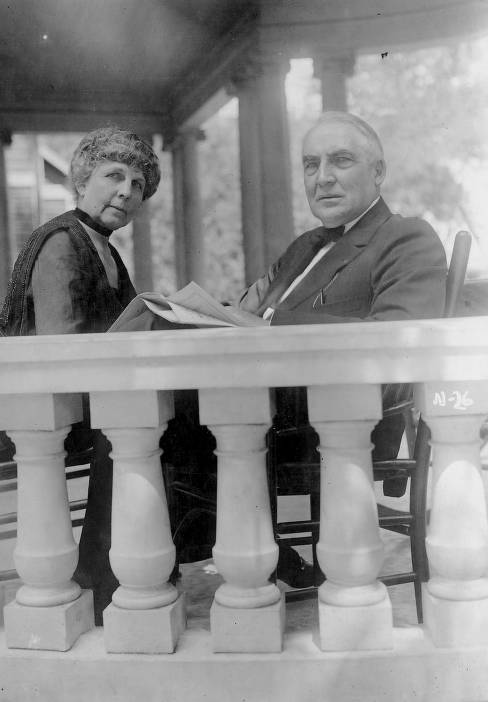
The Hardings

Warren and FLorence Harding on the porch of their Marion, Ohio home.

He was twenty-five when he married Florence Kling (1860-1924) five years his senior and a divorcee. It is easy to understand her attraction to him, but harder to determine what he saw in her. She was nice enough looking, but bossy and domineering, and the obvious pursuer in whatever courtship there was. It may have been exactly what Harding’ father once said about his son: “He can’t say no to anyone.”

From the outset, it was not particularly happy. Florence (who Harding nicknamed “Duchess” for her imperious ways) developed a serious and chronic kidney ailment that necessitated the removal of a kidney in 1905. Because of the nature of her illness, the “marital” part of their marriage was curtailed. They would share a room, but not a bed.

The handsome Harding found his pleasures elsewhere, which manifested in periodic bitter and rancorous arguments. But mostly, the Harding marriage was an armed truce, bound by the Marion Star, their growing-in-influence daily newspaper – and politics.

“Doc” Sawyer

Doc sawyer

Charles “Doc” Sawyer, a homeopathic physician who became Surgeon General during the Harding Administration. He loved his uniform.

Charles Sawyer was a homeopathic doctor in mid-Ohio, and had known the Hardings for many years, both as physician and as family friend.

Sawyer had a thriving practice, which included his own sanitarium. But as a homeopathic doctor, he lacked an academic medical education, which by the late 19th century, was considered essential. Homeopaths may have been scorned by their peers, but they continued to practice.

It was “Doc” Sawyer who treated Florence during her several bouts with failing kidneys. He also treated Warren Harding for vague and various stomach ailments, which may have been exacerbated by emotional strife.

By the time Warren Harding became a U.S. Senator in 1914, “Doc” Sawyer was a permanent fixture in their life. When Harding became President in 1920, the new Commander-in-Chief inducted the sixty-year-old doctor into the Army, and promoted him to Surgeon General. The Ohio homeopath was thrilled by his new title, and took full advantage of appearing “in uniform.” The medical community was horrified at the appointment, but The Duchess insisted she literally could not live without “Doc.”

The Ailing President

candidate and Mrs.

Love of politics was the tie that bound the Hardings the tightest.

On the surface, the Presidency agreed with the affable Harding; physically, however, it was grueling. He knew, and privately admitted that he was “unfit” and unqualified for the office. Now he was learning that some of his best pals and long-time associates, appointed to relieve him from burden, were dipping sticky fingers into the public till.

nan the siren

Nan Britton began an affair with Senator Harding when she was around nineteen – and he was well past fifty. There would be a child.

Harding had put on a fashionable paunch, not uncommon to politicking and presidential entertaining. But Harding had enormous stress as well: presidential, marital, extra-marital (which now included a child), false-friends and financial problems. He developed acute insomnia, chronic indigestion and trouble breathing. He was lethargic and began complaining of chest pains.

“Doc” insisted that Harding’s symptoms were from stress, worry and too much rich food. He counseled a healthier diet, rest and relaxation. Dr. Joel T. Boone, one of the naval doctors assigned to the White House immediately recognized signs of heart problems, and he and his colleagues were alarmed. Sawyer disagreed vehemently and insisted he knew Harding longer and better: stress and diet.

The Fatal Trip

In July, 1923, to fulfill a campaign promise, to escape the growing realization that his best friends were betraying the country, and as a respite for his wife who had recently undergone another bout of kidney blockage, the Hardings took a trip to Alaska.

Harding felt horribly ill.  When he collapsed, “Doc” Sawyer said “food poisoning.” The other doctors were frantic and knew better, but the Surgeon General outranked them, and they were powerless.

A few days later, outside of San Francisco, Harding was having an early night, propped up in his special car. Florence Harding was reading aloud. Then he slumped over.

It was a heart attack. The symptoms had been there for more than a year.

Sources:

Ferrell, Robt. H. – The Strange Deaths of President Harding – University of Missouri Press, 1996

Russell, Francis – The Shadow of Blooming Grove – McGraw Hill – 1968

https://www.whitehouse.gov/1600/presidents/warrenharding

http://blog.constitutioncenter.org/2014/08/after-90-years-president-warren-hardings-death-still-unsettled/


Posted in A POTUS-FLOTUS Blog, Warren G. Harding | Tagged , , , , , , , , , , , , , , , , , , , , , , , | 8 Comments

Lincoln’s General’s Wives: A Book Review

The American Civil War created powerful generals with powerful and sometimes peculiar personalities. In a remarkably intelligent and readable quadography, author Candice Shy Hooper has brought to life four interesting(ish) women who were thrust into a spotlight(ish) because of the men they married years before the spotlight glowed.  Called Lincoln’s Generals’ Wives, her subtitle …For Better and For Worse, is telling.

Lincoln’s General’s Wives: Four Women Who Influenced the Civil War – for Better and for Worse, by Candice Shy Hooper

John Charles Fremont is not a man easy to like; pugnacious, disobedient, insubordinate and being “better than his betters.” On the flip side, his courage, his daring, his vision, and his charm and good looks made him everyone’s hero. Especially Jessie Benton, the fifteen-year-old daughter of Senator Thomas Hart Benton. Defying her father, including long periods of personal estrangement, she fell madly in love with Fremont-the-explorer, a dozen years her senior, and eloped with him. She was smarter than he was, better educated and certainly better politically “placed,” and just as personally brave and daring – but (at least via author Hooper) not as charming or attractive. Lincoln didn’t like her, and he liked just about everyone.

Charming or not, Jessie deserved better. She adored her difficult, egocentric and philandering husband, and spent a lifetime either at his side, or at his back. He was her man, he done her wrong, but he was her god. And she, aptly described by the author, was a tigress, indeed.

Perhaps even outdoing Fremont in the egocentric Savior department, was George B. McClellan. His wife, Mary Ellen Marcy, or “Nelly,” is also a hard lady to figure or like. Author Hooper does the best she can with the dearth of first hand information about her. Few of her letters remain. His, of course, are plentiful and fraught with his sense of self-importance, predestination, and total disdain for the political powers of the time.

Nelly Marcy dodged the pursuant McClellan for several years before she finally agreed to marry him, when she was twenty-five and approaching spinsterhood. She had once been engaged briefly to McClellan’s old West Point roommate, Southern cavalier A.P. Hill, and appears to have adored him. One might conjecture that she married Little Mac because he (and her parents) wore her down.

If Jessie Fremont had her husband’s back, Nelly had his front – as a mirror image and his creation. She adds nothing at all except reassurance for her husband’s viewpoints. She basically distanced herself from disappointment or participation by a consistent detachment and preoccupation with the mundane. She is neither sympathetic nor even interesting. Not Hooper’s fault.

Ellen Ewing, wife of William T. Sherman, is a curious character. Their marriage was pseudo-incestuous, since little “Cump” was a foster-son of the Ewings from the time he was orphaned as a child.

No doubt Ellen adored her tall, lanky and good looking husband, but she had two higher loves. First and foremost, Catholicism. She was half-Catholic via her mother, but that was the half that “took.” Her health issues may have increased her dependence on the Church.  She loved her daily devotions, wore a large and prominent cross, and never ceased efforts to save her husband’s soul. He got tired of it and decided his soul was not up for grabs. The second great love of her life was her own family. The Ewings were a politically powerful Ohio family. Her Senator father had been in Polk’s cabinet; “Cump’s” brother was also a Senator. The Ewing home in Ohio would be Ellen Sherman’s home on and off for most of their lives. It was there that she returned over and over during times of stress.

Being married to Sherman was always stressful, since he was a mercurial sort, subject to depressions and fits of temperament. He loved the military, but couldn’t make a living at it until tested during the Civil War. She backed him consistently, and he became great.

When their beloved son Willy died at only eleven, it affected both Shermans to the core, and bound them tightly together in grief. Some years later, when their son Thomas entered the priesthood, it severed, or at least frayed, the bond. She was thrilled. He was devastated.

The Grants, of course, are the great Civil War love story. Plain as a post Julia Dent was devoted to her unassuming and even more devoted Ulysses. No matter how hard author Hooper tries to give Julia a mind of her own (a little), or feistiness (a little), or thought-provoking influence (a little), the bottom line is that the love between them through thick and thin (and a lot of pre-Civil War thin) was the best influence of all.

Few men who reached Grant’s heights are so dependent on the devotion of a wife. Few generals are such complete “family men.” Even fewer admit to it; Grant was the exception. Julia Grant was a genuinely nice lady. Not overly witty or intellectual. Certainly not good looking. Politically more naïve than prescient, and certainly less savvy than the aforementioned wives. Author Hooper tries to build cases for her, but the cases fall short. Nevertheless, Julia was undoubtedly the most important anything in Grant’s life, and would be until the day he died.

Ms. Hooper adds an interesting back-chapter to her quadography – tying all these ladies to the towering back-figure of Abraham Lincoln. These four women had remote or limited contact with the President, either “social” (McClellan and Grant) or supplicating (Fremont and Sherman). With the exception of Jessie Fremont (whose mutual dislike was well documented), Lincoln liked the others well enough, but they were inconsequential.

But as a conjecture (mine…) one wonders if Lincoln did not feel embarrassed for Julia, who bore the brunt of Mary Lincoln’s vitriolic temper on her worst days. He was there. He would have known. And in that same mode, one wonders if he didn’t envy Grant just a little for the gentle wind beneath his wings.

Candice Hooper has written a dandy book for those who love Civil War stories, people and nineteenth century women in general. Read it! You will enjoy it!

Lincoln’s Generals’ Wives

Kent State University Press, May, 2016

  • ISBN-10: 1606352784
  • ISBN-13: 978-1606352786
  • $26.95


Posted in Nifty History People, Recommended Reading | Tagged , , , , , , , , , , , , , , , , , , , , | 1 Comment

James Buchanan and the Prince of Wales

Albert Edward, Prince of Wales had always been a concern to his parents, Queen Victoria and Prince Albert.

The Prince and his Parents

Prince Bertie, as his family called him, was a genial, warm-hearted and pleasure-loving fellow, and would remain so, even when he ascended the British throne as King Edward VII.  What he was not, however, was studious, intellectually inclined or diligent.  His serious parents despaired of his future.

Victoria and Albert

Queen Victoria and Prince Albert were strict parents who expected “perfection” from their oldest son.

Bertie was born to reign; thus his parents were bound to raise him for his eventual position. At seventeen, he had been constantly surrounded by governors, books and tutors,  and few companions other than family. It was counter to his personal disposition and as one might expect, he was unhappy. Every effort to please his parents was met with criticism, correction and fault finding.

But when he was eighteen, Her Majesty reluctantly permitted him to travel to Canada, part of the Commonwealth.

Baron Renfrew

Naturally many restrictions, caveats and rules were imposed, the first being that the Prince of Wales would travel incognito, as “Baron Renfrew.” Of course nobody believed the pseudonym story, but that was what the Queen wanted, so who were they to deny it?

Young PcofWalaes

Albert Edward, England’s Prince of Wales, traveled to Canada and the US incognito, as “Baron Renfrew.” Nobody was fooled.

The pseudonym served many purposes. It allowed the Prince a much smaller retinue. It allowed him greater freedom from endless protocol and traditions, and possibly the opportunity for some mild entertainment that otherwise might be off limits to royalty.

It also freed the Canadians from the monumental task of formally entertaining a monarch-to-be, a hugely expensive proposition and a logistical nightmare.

So Baron Renfrew it was, and everyone was delighted, especially Prince Bertie.

President James Buchanan

James Buchanan (1791-1867) was our only bachelor President. When Baron Renfrew was about to depart for Canada, Buchanan’s three years as POTUS were considered an abject failure even then, and would never improve.  Socially however, his administration was brilliant, thanks in part to his delightful niece and ward, Harriet Lane.

buchanan

President James Buchanan was a successful Minister to Great Britain in the mid-1850s.

Buchanan had an impressive resume of nearly forty years on the political scene. He was a successful and moderately well-to-do attorney. He had been a state legislator at twenty-five; a congressman for several terms; Minister to Russia; Pennsylvania’s senator for a decade; Secretary of State under James K. Polk, and for a dozen years, short-listed as a Democratic candidate for President.

Perhaps his best position was the years he served as Minister to Great Britain between 1853-56. His gracious manners and experienced diplomatic skills were well received in that land of pomp and circumstance, and both Her Majesty and the Prince Consort were well pleased. They were equally pleased by his charming niece Harriet Lane. Orphaned at nine, Buchanan had assumed her guardianship, and raised her as his own. At twenty-two, she had been groomed and educated to be the perfect escort for her bachelor uncle.

Buchanan was a huge hit overseas, and thus absent from the increasingly fractious political scene at home. It has been suggested that his absence may have been a major factor in his election.

The Invitation

Buchanan’s Presidential record left a great deal to be desired, and in 1860, an election year, he was nearly seventy years old and tired. But he wanted to leave on a “high note.”

As POTUS, James Buchanan was a political equal to Her Majesty. Since he had been well and pleasantly acquainted with her for four years, he was comfortable in making a very special request.

photo posted on post-gazette.com

Harriet Lane, niece and ward of James Buchanan, was well regarded by Queen Victoria – and the American people.

If the Prince of Wales made a visit to the United States, he would be the highest ranking British personage to visit its erstwhile colonies. In fact, he would be the highest ranking foreign anybody to visit the United States. (The King of the Sandwich Islands, present day Hawaii, was the first monarch to do so, and that would not be for another dozen years.) It did not matter that the Prince of Wales was called Baron Renfrew; everybody knew who he was. It would be a coup for the Buchanan administration.

The President wrote to Queen Victoria and Prince Albert suggesting that since their son was coming to Canada, perhaps he might spend a few days in the USA.  He personally would be delighted to accommodate the young man at the White House.

The British Monarch again reluctantly decided to oblige. Perhaps it was because Buchanan was old enough to be her father, and thus a “grandfatherly” figure for the young man.

So “Bertie” squeezed in a trip to New York and Washington, and is said to have been delighted for the opportunity.

The Prince and the POTUS

buchanan

The presidency of James Buchanan was a failure – even in his own time. But the “social” Buchanan White House glittered!

Tongues wagged and gossip abounded about a possible “match” between the President’s niece and the young Baron Renfrew, but of course it was foolishness. Harriet Lane was a good ten years the Prince’s senior, and other than pleasantries, had no particular interest in him. But she pulled out all the stops in arranging a lavish banquet in his honor. No dancing, of course. Their Majesties were petrified that their son might indulge in flirtations. (He was already very good at that.)

Only the crème de la crème of Washington were sent special invitations, hand-delivered by messenger.  Flowers and confections were plentiful, but the invitations were limited.  Later it was said that the crowds were so heavy, that people were climbing in and out of the windows.  Maybe just rubber-neckers.

Cutter Harriet Lane

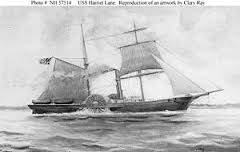
The Prince of Wales was taken on the Coast Guard cutter “Harriet Lane” to visit George Washington’s tomb at Mount Vernon.

Baron Renfrew indeed spent the night in the White House, accommodated in what immediately became the “Prince of Wales Room.”  The following day, The President, Miss Lane and specially invited guests took the “Baron” down the Potomac to Mount Vernon, where the great-grandson of George III planted a tree near the tomb of the man who led the former British Colonies to their independence.

Sources:

Caroli, Betty Boyd –  First Ladies – Oxford University Press, 1995

Jeffries, Ona Griffin – In and Out of the White House – Wilfred Funk, Inc, 1960

Magnus, Philip – King Edward the Seventh – E.P, Dutton & Co., 1964

http://www.mountvernon.org/the-estate-gardens/the-tombs/famous-visits-to-washingtons-tomb/


Posted in A POTUS-FLOTUS Blog, James Buchanan, Nifty History People | Tagged , , , , , , , , , , , , , , , , , , | 2 Comments

Calvin Coolidge and Hell

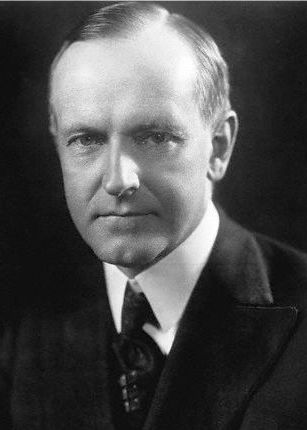
youngcal

Calvin Coolidge, about the time he became Vice President.

In 1920, the office of Vice President was considered a geopolitical accommodation, thus inconsequential.

Calvin Coolidge, Vice Presidential Candidate

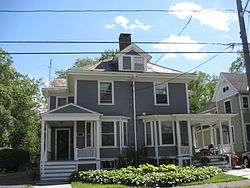
half-a-house

The Coolidges lived in half of this two-family house in Northampton, MA until he retired from the Presidency.

Few vice presidential resumes were more inconsequential than that of Calvin Coolidge (1872-1933). Born in Vermont, he graduated Amherst College and remained in Massachusetts. As our last President to receive a legal education by “reading” law (apprenticeship), he had embarked on a mediocre career as an attorney. To supplement his modest income, he was active in local politics, becoming a state legislator as well as Mayor of Northampton, where he and his wife Grace made their home.

Physically, Coolidge was as unimpressive as his resume. Average in height and build, with thinning reddish hair and a bland, pasty face, he blended into the wallpaper. Personally, he was just as forgettable. He was the antithesis of a spellbinder. Taciturn to the point of mute, it was nearly impossible to get more than a half-dozen words out of him.

But his constituency liked him well enough and re-elected him regularly. Then they elected him to higher office: Lt. Governor, and finally Governor of Massachusetts. It is said that he was interested in serving as governor because he believed it would help his law practice.

Governor Coolidge Becomes Famous

Gov Coolidgeandsoldiers

Governor Coolidge called out the National Guard to assist in the Boston Police Strike.

After World War I, the booming US wartime economy took a huge hit. Returning doughboys we’re finding it hard to get jobs. Governor Coolidge was also faced with a growing crisis in Boston. The police department went on strike for higher wages.

Coolidge-the-lawyer, determined that the situation was a “Boston” problem, not a “Massachusetts” problem, and time and again declined to become involved. Coolidge-the-man usually chose to avoid problems rather than resolve them.

But the Boston police strike refused to go away. Finally Coolidge-the-governor defended Boston’s decision not to rehire the strikers, ordered in the National Guard, and told the head of the American Federation of Labor, Samuel Gompers, “There is no right to strike against the public safety by anybody, anywhere, any time.”

Police Strike

The Boston Police Strike catapulted Calvin Coolidge on to the national stage.

That one electrifying sentence catapulted a never-heard-of governor from unimportant Western Massachusetts (i.e. not the Harvard set) into the headlines – and all eyes were on him for higher office. He was nominated as the Republican Vice Presidential candidate in 1920.

It is said that when he told his wife of the nomination, she was astonished and asked, “But you’re not going to accept, are you? He replied, “I think I have to.”

VP Coolidge, The Best Job

Hardings and Coolidges

President and Mrs. Warren Harding and Vice President and Mrs. Calvin Coolidge. They did not get on very well.

By the 1920s, the office of Vice President had evolved into mostly ceremonial tasks: ground-breaking, cornerstone-laying, funeral-going, and similar easy duties. And, of course, dining out. Since tradition prohibited the President from accepting personal dinner invitations, the Vice President became an official guest-of-honor.  The Coolidges were invited out four and five nights a week. “Gotta eat somewhere,” he remarked. The thrifty V-POTUS also knew it was good for his food budget, since he did not need to reciprocate that often.

For somewhat unfathomable reasons, uber-sophisticated Washington adored the provincial New Englanders. Grace Coolidge was a warm, outgoing woman who slipped effortlessly into whatever company she was with. But it was the Vice President who won the hearts of D.C. with his excruciatingly dry wit and totally unexpected and deadpanned one-liners.  Washingtonians found him hilarious.  His quotes made the rounds immediately!

He was a mega-hit.

Hell

Official Calvin

Even in an oil portrait, Coolidge could not escape his bland looks. But he was immensely popular in his own time.

The one duty constitutionally assigned to the Vice President is presiding over the Senate. Coolidge had been involved in legislative activities for nearly twenty years. He knew how to preside. Besides, books of Parliamentary procedure and Senate regulations are nearby for handy reference.

It was another easy job. No heavy lifting.

But politics being politics, there was an inevitable altercation. The Senate discussions were becoming heated. And more and more strident.

The story goes (one of a few versions, by the way) that one of the argumentative senators had had enough, and in disgust told his opponent to “go to hell.” The incensed recipient of the decree turned to Senate President Coolidge for proper admonishment and adjudication. “Did you hear what he said to me?” the offended Senator barked. “He told me to go to hell! What are you going to do about it?”

VP Coolidge, as usual, was non-plussed by the outburst and replied that indeed he had heard. Then he thumbed laconically through a handy reference book.

“Hmm,” he twanged, “I checked the book, and he does have the right to tell you to go to hell.” Then he paused. “But,” he continued, “you don’t have to go.”

It is said that the senators favored the ruling.

Sources:

Adler, Bill – Presidential Wit from Washington to Johnson – Trident Press, 1966

Coolidge, Calvin – The Autobiography of Calvin Coolidge – University Press of the Pacific, 2004

http://www.history.com/this-day-in-history/the-boston-police-department-goes-on-strike

http://www.smithsonianmag.com/smithsonian-institution/how-office-vice-presidency-evolved-nothing-something-180953302/?no-ist

Posted in A POTUS-FLOTUS Blog, Calvin Coolidge | Tagged , , , , , , , , , , , , , , | 2 Comments

First Lady Nellie Taft and the CSO

Helen Herron Taft had two passions in her life. First and foremost was politics. Then came music.

Nellie Taft: Musician and Politician

young nellie

One of the earliest photographs of Helen Herron, called Nellie from birth.

Piano lessons was practically a given in most nineteenth century middle-class families. Of course, then as now, not all children were musically inclined – or interested. Helen Herron  Taft (Nellie from birth), of Cincinnati, Ohio, was one of those little girls with some noticeable talents – and interest, but it became obvious that while she played nicely, she was not a Clara Schumann. So she focused on playing her best, enjoying music sincerely, and channeling her passion for politics.

The passion for politics surfaced when she was fifteen, and then-Governor Rutherford B. Hayes was elected Republican President. An Ohioan like her own family, Hayes was also a law partner and good friend of her father. Nellie’s social-climbing mother was also a good friend of Lucy Hayes.

Thus when the Hayes went to live in the White House, the Herrons were invited to visit for a week or so. Nellie was enchanted. And determined to “reign” in the White House herself one day.

She announced to her father that she wanted to go to law school and be a lawyer like him. He replied gently that he had no doubt that she would excel in her studies, but she would never be able to earn a living. Then he continued, stating that she would need to make a living, since no man would want to marry a woman lawyer.

He had a point. Then. So Nellie focused her energies on marrying a man who would be her vehicle to the White House. She found one in William Howard Taft, a big teddy-bear of a fellow with a distinguished legal pedigree, Yale education, and the stuff that would get him ahead.

Mrs. Taft: The First Ten Years

When the Tafts married in 1886, it fell to Nellie to channel her political drive into her more placid husband. He had discovered the judicial side of the law, and would forever prefer the “bench” to the nitty-gritty of politics. Nellie nitty and grittied with the best of them, made sure she kept up with the see-and-be-seens, who-is-important, what’s-going-ons, and all the other undercurrents of political life.

nellieandkids

Nellie Taft with baby Helen and toddler Robert, about the time her husband was Solicitor General.

When WHT was appointed Solicitor General by President Benjamin Harrison, Nellie was thrilled beyond belief! They would live in Washington, where everything was happening! She packed up the house and their two small children, and left for the capital city with a smile on her face.

Four years later, an appreciative but defeated President Harrison appointed Taft as Circuit Judge. It was an important position, and Taft was thrilled. They moved back to Cincinnati.

By now, Robert and Helen were old enough to be in school. Nellie Taft (1861-1943) had some time on her hands and needed an outlet.

Nellie Taft: Back to Music

Helen-Taft-hat

Mrs. Taft liked nothing better than being in the midst of activity.

She found her outlet in a small woman’s club devoted to music. Woman’s Clubs had become immensely popular after the Civil War, and ladies from all walks of life were joining eagerly. It afforded them purposes and vehicles to advance their own educations, abilities and interests. Their menfolks were generally approving as well. Woman’s Clubs were devoted to charity. No one could be against charity!

Nellie became active in the club, and was soon elected its President. What would be their goal? Cincinnati had been the Queen City of the Midwest for decades – even when Chicago was a small trading post. Their residents were proud of their culture, their educational opportunities, and all the important people who were happy to visit their city. But they did not have a symphony orchestra.

Nellie at work

Her dedicated hard work for the Cincinnati Symphony Orchestra paid off during her seven years as its driving force.

Nellie’s club undertook to remedy that oversight. It was a monumental task, requiring fund-raising, awareness drives, more fund-raising, choosing venues and locations, building a concert hall, still more fund-raising, finding a maestro of reputation, finding musicians of superlative skills, determining a schedule and programs, and on-going fund-raising drives. In short, it was a job for men to manage, but she held that position for seven years. “I found, at last, a practical method for expressing and making use of my love and knowledge of music,” she said.

Nellie Taft: Executive

With little more than pen and ink, time on her hands and a well-developed list of prominent people to contact, Mrs. Taft began to lay the foundation for one of the finest symphony orchestras in the country, the Cincinnati Symphony Orchestra, then as now, the “CSO.”

MusicHall2

The Cincinnati Music Hall, home of the CSO.

Of course she had help, notably the prominent Taft family. WHT’s eldest brother, Charles Phelps Taft, the owner of an important Midwest newspaper, had married the daughter of a bona fide millionaire. Charley and Annie Taft adored Will, and spent their lifetime helping promote his political career. They also understood and admired Will’s ambitious and extremely intelligent wife. The Taft family was happy to sign on as heavy-duty contributors to the CSO from the start.

1895-program-cover-web

One of the early programs from the CSO – 1895.

But while Annie Taft gets the credit for writing large checks (a vital contribution!) it was Nellie Taft who made the contacts, attended meetings, wrote the letters, followed-up on vague commitments and otherwise moved the “idea” of the CSO into actual reality. Becoming pregnant again with the third Taft child notwithstanding, she never let the mundane interfere with the great dreams.

Her husband was deeply proud of his wife, and enthusiastic about her project. They had always exchanged daily letters when apart, and his letters to her are filled with his encouragement and pride in her abilities.

By the time President McKinley appointed WHT to a diplomatic position in the Philippines, the Cincinnati Symphony Orchestra had become a reality. It still exists today, and is considered one of the finest in the world.

Sources:

Anthony, Carl Sferrazza – Nellie Taft: The Unconventional First Lady of the Ragtime Era – 2005, William Morrow

Taft, Wm. Howard Mrs. – Recollections of a Full Life – Dodd, Mead – 1914

http://www.firstladies.org/biographies/firstladies.aspx?biography=27

http://www.allmusic.com/artist/cincinnati-symphony-orchestra-mn0001354106


Posted in A POTUS-FLOTUS Blog, William Howard Taft | Tagged , , , , , , , , , , , , , , , , , , , , , , , , , , | 1 Comment

Abraham Lincoln and His Father-in-Law

Abraham Lincoln never had a chance to spend serious time with Robert Smith Todd, his father-in-law, but there was a solid bond nevertheless.

Miss Mary Todd, Bride

When Abraham Lincoln married Miss Mary Todd, he was nearly thirty-three. She was just shy of twenty-four.

young mary lincoln

Considered the first photograph of Mary Todd Lincoln, taken shortly after her marriage.

Mary had been living in Springfield, IL with her married sister Elizabeth Todd Edwards for nearly five years. During those years, her contact with her father was limited to affectionate letters. Mary had become “superfluous” in the Todd house. Once her education was complete, there was little to keep her occupied and socially happy in Lexington, KY, particularly since her father, Robert S. Todd and his second wife had eight more small Todds vying for attention. The six Todd siblings from her father’s first marriage were never comfortable with their stepmother. Thus the invitation for Mary to come to Springfield and live with the Edwards’ was more than welcome – by all involved.

betsytodd

Betsy Humphreys Todd, Mary Lincoln’s step-mother. It had always been a strained relationship.

Ninian Edwards, Jr., Mary’s brother-in-law, was not only a lawyer, he was the son of Illinois’ first Governor, and thus one of the leading citizens of the town. His wife (Mary’s sister) came with a Lexington pedigree, as a daughter of one of Kentucky’s upper-crust.

Elizabeth’s intention from the start, was to bring her three younger full-sisters to Springfield, launch them socially, have them marry prominent men, and create a Todd-filled society in the new state capital. She would accomplish this goal, although Abraham Lincoln did not fit into Mrs. Edwards’ plans for her sister: neither pedigree nor money.

The courtship between Mary and Abraham Lincoln was not a smooth one, and even with 150 years of historical lock-picking, the details of the on-again, off-again romance still remain murky. But in November, 1842, Abraham Lincoln and Mary Todd married – in the living room of Ninian and Elizabeth Edwards.

Neither set of parents attended.

Abraham Lincoln, Groom

abraham-lincoln-young

The earliest photograph known of Abraham Lincoln, taken shortly after his marriage.

At thirty two, Abraham Lincoln was a lawyer, trying to make a go of his modest practice.

An early venture in New Salem, a small village not far from Springfield, left Lincoln with debts that would take him years to repay. Part of the opposition of his marriage to Miss Todd by her Edwards’ family was Lincoln’s obvious poverty. Mary was accustomed to having nice things; Lincoln could not afford to give them to her.

lincoln house 4

The Lincoln house at 8th and Jackson Sts., Springfield, IL. The second story was added by the Lincolns several years after their marriage.

Shortly after new Mrs. Lincoln had their first child, who Mary insisted on naming Robert Todd Lincoln, the struggling attorney managed to purchase a small house, the only one they would ever own.

Robert Todd visits the Newlyweds

roberttodd2

Robert Smith Todd, Mary Lincoln’s father.

Robert Smith Todd of Lexington, KY was a prosperous lawyer, state legislator and businessman, with varied financial interests.

Mary had been devoted to her father, always seeking his attention and affection, but the older “paterfamilias,” while dutiful to his parental responsibilities, never appears to have been a particularly affectionate father figure to any of his numerous offspring. Mary may have been the exception.

When Mary married, Robert Todd did an extraordinary thing – for him. He came to visit the newlyweds and his grandson-namesake. He had not come to visit his three other Springfield-based daughters when they married. All indications are that he liked and respected Abraham Lincoln, and would even remark that he believed Lincoln would be a better husband than Mary would be a wife.

He asked Lincoln to represent him in collecting a small debt owed to him in Illinois. The amount was trifling, and Todd indicated that if Lincoln were successful, he could keep the amount as his “fee.” Perhaps he instinctively knew that his son-in-law was proud, and the older man had tactfully found a way to provide some “paternal” assistance.  Todd also purchased several acres in Springfield and gave it to the young couple, along with a promise of $200 per year, as long as he lived – which was only six years. By that time, Lincoln’s law practice was becoming more successful.

Todd also put his daughter on a private “allowance” and arranged for her to receive $120 a year “for herself.” $10 a month in the 1840s was a considerable amount of “pin money,” considering that the rental on their house was $100 per year.

The Lexington Visit

TODD House

The town house of Robert S. Todd in Lexington, KY. The Lincolns and their two sons, Robert and Eddie visited there en route to Congressman Lincoln’s term in Washington.

In 1847, Abraham Lincoln was elected to Congress, and decided to take Mary and their two little boys along to Washington. Robert was four, and little Eddie, still a toddler. En route, they made a prolonged visit the Todds in Lexington. It was the first time Mary had visited her family since she left to live in Springfield.

roberttodd1

A portrait of Robert Smith Todd, Abraham Lincoln’s father-in-law.

According to those family members living there, it was a successful visit on all fronts, despite a crowded house with little privacy or room for the lanky new congressman to stretch out. The Todd half-siblings seemed to like their new brother-in-law, which included a few Todds – much closer to Robert’s age than to his parents. Once again, Mary’s father was able to reassess his son-in-law, and found the new “congressman” very much to his liking. While their actual conversations or time spent together has never been documented, it appears that Lincoln warmed to his father-in-law. He seems certainly to have had more in common with the elder Todd than he ever did with his own father.

Mary also made her peace with the stepmother she did not care for. Once Mary was a wife and mother in her own right, her relationship with the Second Mrs. Robert Todd would improve.

Sadly for all involved however, Robert Smith Todd died in 1849. He was only 58.

Sources:

Berry, Stephen – House of Abraham: Lincoln & The Todds, A Family Divided by War – Houghton Mifflin, 2007

Clinton, Catherine – Mrs. Lincoln: A Life – HarperCollins, 2009

Donald, David H. – Lincoln – Simon & Schuster, 1995

Epstein, Daniel Mark – The Lincolns: Portrait of a Marriage – Ballantine Books, 2008

https://www.jstor.org/stable/40191550?seq=1#page_scan_tab_contents


Posted in A POTUS-FLOTUS Blog, Abraham Lincoln, Nifty History People | Tagged , , , , , , , , , , , , , , , , , , | 1 Comment

Martha Washington: The White House Portrait

The huge portrait of Martha Washington that balances the famous Gilbert Stuart painting of her husband, was painted more than seventy five years after her death.

Martha-Washington-by-Andrews

The full-length portrait of Martha Washington that hangs in the White House East Room.

White House Portraits

Before photography had advanced sufficiently to achieve artistic popularity, a portrait was the only way a person’s likeness could be preserved for posterity. The accuracy of that likeness, of course, was completely dependent on the talents of the artist.

Most early presidents provided their own White House furniture, although many pieces were accumulated for the formal downstairs rooms. This also included art. Few early presidents had many portraits painted, let alone specifically for the house itself.  First Lady portraits, if there were any, were reserved for their families and heirs.

dolley saved gw

The famous George Washington portrait “saved” by Dolley Madison in 1812.

The most famous of the early White House portraits is the one attributed (and occasionally questioned) to Gilbert Stuart, acknowledged as one of America’s premier portraitist of the eighteenth and early nineteenth century. What is definitely unquestioned, is the fact that this was the portrait rescued by Dolley Madison just prior to the burning of Washington in 1812.

It is an heroic painting, in the sense that it is literally larger than life. During Madison’s presidency, it was hung in the state dining room. Following the rebuilding of the White House, it was placed next to the fireplace in the great East Room.

The Hayes Contribution

Eliphalet Andrews

Eliphalet Frazier Andrews, an Ohio artist, had become good friends with President and First Lady Hayes.

After the Civil War, Rutherford B. Hayes, lawyer, Union general and Republican congressman, was elected governor of Ohio. His fellow Ohioan, Eliphalet Frazier Andrews (1837-1902), was engaged to paint the portrait of the popular governor. Andrews and Hayes became good friends.

Once Rutherford Hayes became president is 1877, via a fractious and most likely corrupt election, both the President and the First Lady were dedicated to maintaining an irreproachable image. Mrs. Hayes, the first FLOTUS to have had the benefit of higher education (Wesleyan Female Seminary), loved history. She also loved art.

Lucy Hayes (1831-89) suggested that the White House acquire portraits of former presidents, and efforts were made to solicit “donations” from family descendants. The response was not overwhelming. The families generally wished to retain possession. As a compromise of sort, it was decided that copies of the original portraits would be made. Copying art was a fairly popular medium, and some copies were indeed excellent. Some copy-artists were in great demand.

Eliphalet Andrews, the Ohio artist with a solid reputation as a copyist and artist, would copy portraits of Thomas Jefferson and Andrew Johnson specifically for the White House.

It was Mrs. Hayes who decided that our first First Lady should also be immortalized for the White House. Gilbert Stuart had painted a portrait of Martha Washington in her older years, but it was merely a “head and shoulders” image. The new First Lady wanted a portrait to balance the famous George Washington.  Andrews was summoned.

His thought (perhaps with influence from Lucy Hayes) was not to portray Lady Washington as an elderly woman, a la Stuart. But earlier portraits of a younger Martha left a great deal to be desired. Andrews had a big challenge.

Re-creating Martha

martha_washington_2

The best, and best-known portrait of Martha Washington was painted by Gilbert Stuart when she was in her mid-sixties.

Drawing heavily on the Stuart portrait of Lady Washington in 1796, when she was sixty five, the artist and First Lady determined that they wanted to portray her about ten years younger, when she was about to become the first First Lady. This would not be a “copied” portrait. There was little to copy other than her aging face, but it was a Victorian age, romanticized and elaborate, and liberties were part of that effort.

official portrait

First Lady Hoover placed George and Martha flanking the East Room fireplace, where they have hung ever since.

Martha Washington is indeed larger than life, in a full body portrait. The head does resemble the Stuart portrait; Andrews was a skilled copyist.  And it does appear that a decade was “removed.” The rest, however was all Victorian imagination. Her gown would never have existed in Lady Washington’s time. Nor would the style of the background chair.

This heroic sized portrait of Martha Washington is the only portrait paid for by federal funds. Subsequent President and First Lady portraits have been privately subscribed.

It would fall to First Lady Lou Hoover some fifty years later, to have George and Martha flanking the East Room fireplace, where they remain to this day.

Another portrait courtesy of Mrs. Hayes

First Lady Lucy Webb Hayes was the darling of the Woman’s Christian Temperance Union, a group militantly dedicated to prohibiting the sale and use of liquor. Mrs. Hayes never formally joined the group, although her personal inclinations tended to echo their cause, albeit not militantly. She is credited (maybe, maybe not) with banning spirits in the White House during the Hayes administration. Whether or not it was her influence, the bottom line was that the executive mansion was definitely dry.

Scarlet Lucy

The “heroic” Lucy Hayes was the first First Lady portrait painted expressly for the White House. FLOTUS portraits are now a tradition.

As the Hayes administration was ending, the WCTU wanted to honor her, and asked what type of gift she would like to have. She suggested that her portrait be painted and donated to the White House. It would be the first portrait of a First Lady specifically commissioned for that purpose, and a tradition that continues to this day.

Eliphalet Andrews was not the artist of choice.  Lucy Hayes’ portrait was done by Daniel Huntington, one of the foremost portraitists in the country. It is also an heroic piece, over seven feet high.

Lucy was five foot three.

Sources:

http://longblueline.marietta.edu/node/72

http://www.firstladies.org/biographies/firstladies.aspx?biography=20

Foster, Feather Schwartz – Mary Lincoln’s Flannel Pajamas and Other Stories from the First Ladies Closet’– Koehler Books, 2016


Posted in A POTUS-FLOTUS Blog, George Washington, Nifty History People, Rutherford Hayes | Tagged , , , , , , , , , , , , , , , , , , , , , , , | 2 Comments

Ida McKinley: Congressional Invalid

Ida McKinley had suffered through one of the worst years anyone could imagine. The trauma would be permanent.

anniversary photo

William and Ida McKinley were a devoted, loving couple, despite Ida’s serious – and severe – health issues.

The McKinleys Move to Washington

little katie-mckinley

Little Katie McKinley. The child died before her fourth birthday, and her picture was never far from Ida’s view.

Losing both their small children, and having his young wife’s health permanently impaired by phlebitis and “unnameable” epileptic seizures all in the space of a year was traumatic to William McKinley (1843-1901). Ida’s profound depression combined with uncontrollable fears and hysterical outbreaks was difficult to bear for a man who dearly loved his increasingly frail wife.

Believing that a change of scenery would be beneficial, McKinley ran for a Congressional seat in 1876 – and won. He sold their dear house, with its sad, sad memories. Since housekeeping was much too taxing for Ida, both physically and emotionally, they took residence rooms at the Ebbitt House Hotel in Washington, DC.  A full-time nurse-maid was engaged. At only thirty, Ida could not be left alone. When they needed to return to Ohio, they stayed with her family in Canton.

McKinley served as a popular and well-respected congressman for fourteen years. His ability to make friends easily would never fail him. His colleagues knew little of his home-life, save that Ida McKinley (1847-1907) was a semi-invalid who suffered from some kind of nervous condition. Their private social life was limited to a handful of select friends.

William McKinley Adapts to Ida’s Condition

Most people today would classify William McKinley as a major league enabler. He denied Ida nothing that was in his power to give, whether it was material or emotional. Most of their contemporaries who knew them considered Ida a major league cross to bear. Both estimates are generally accurate.

McKinley gave up everything in the way of personal pleasures to devote himself to his wife. He seldom went to the fraternal organizations he had loved. He gave up his one recreation – horseback riding – to be with Ida. If he wasn’t in his office or on the floor of Congress, he was home. He took special care to let her know if he might be detained; any deviation from a strict schedule made her hysterical with fear. He had learned that if Ida was not assuaged immediately, it could result in some of her worst symptoms.

youngmckinleys

When Ida was up to it, McKinley enjoyed taking her for carriage rides or to the theatre. He was always proud of her petite and attractive appearance.

McKinley had developed a unique method of controlling his own response to her “fainting spells,” responding with such nonchalance that he actually controlled the responses of  witnesses to an episode. If she were standing, she might fall; if seated, her face would freeze in a grotesque mask. If she were eating, she would dribble. Since an attack would be preceded by a few seconds of a strange hissing noise, the always-alert McKinley would throw his handkerchief or napkin over her face to a) shield her from embarrassment and b) shield onlookers from shock. Remarks about these “handkerchief” episodes turned up  in the diaries or letters of their contemporaries.

While it may have been a peculiar and unsettling experience, in its own way it accomplished exactly what McKinley intended: Ida was spared humiliation. When she recovered after a minute or two, she merely removed the handkerchief, blotted her lips and continued as if nothing extraordinary had happened. Those in her company were also spared their own embarrassment. Even more important, they could take their cue from McKinley himself. He had handled those situations so casually that his friends were grateful to follow his lead.

Ida’s medical conditions had spawned a petulant, jealous and strangulating personality disorder. Her world had become increasingly small, centering entirely on herself, her husband and their life together. Her demands were usually petty and insignificant, but they were immediately indulged by her husband.

young wm mik

Congressman William McKinley – R-Ohio.

She had some fine qualities, however. She maintained her delicate and petite looks, and  her husband was always proud of her appearance. If she liked you, she could be caring and generous. Ida was also was sincerely sympathetic to those who were ill or bereaved, and often sent flowers or other tokens – sometimes even to strangers. She had a small circle of friends, mostly wives of McKinley’s colleagues, who were kind to her.  Mainly because they loved him.

Treating Ida

During those years William McKinley served in Congress, Ida’s on-again, off-again health issues were his major concern.  He spared no expense in finding doctors who might be able to help his unfortunate wife, and went so far as to take her to New York and Philadelphia, where it was said, the “best doctors in the country” practiced their profession.

Phlebitis is a medical condition of blood clots, usually in the knee.  It was serious then, and could be fatal.  It is still serious today but it can be treated effectively.  In the 1870s, the only treatment available was rest, elevation, compresses, and a cane if needed.  And pain medication, also if needed.  Ida needed both from time to time.

Epilepsy has been known since Biblical times, but it always bore a stigma.  The doctors who were consulted by the McKinleys no doubt recognized Ida’s affliction immediately, but would never call it by its “rightful name”, sparing her humiliation by couching it in terms like “a nervous condition,” or “fainting spells.”  Again, no treatment other than very rigid adherence to routine (no surprises), and powerful opiates – when and if necessary.

When Ida was up to it, the McKinleys socialized in very controlled environments. When she was not up to it, they stayed in their rooms.  Sometimes they sat in the dark for hours, since the light bothered the frail woman, who had grown to depend completely on her husband.

ida-mckinley1870

Young Ida McKinley – the “prettiest girl in Canton, Ohio.”

For twenty years Congressman William McKinley danced devoted attendance on his wife, who was always “the prettiest girl in Canton, Ohio” in his eyes, and who he still loved deeply.

Sources:

  • Anthony, Carl Sferrazza – First Ladies 1789-1961, William Morrow,1990
  • Leech, Margaret – In the Days of McKinley – Harper & Brothers, 1959
  • Morgan, H. Wayne – William McKinley and His America – Syracuse University Press, 1964


Posted in A POTUS-FLOTUS Blog, William McKinley | Tagged , , , , , , , , , , , , , , , | 2 Comments

Alice Hathaway Lee: The First Mrs. TR

alice's mom
One of the few existing photographs of Alice Hathaway Lee Roosevelt: The first Mrs. TR

Few people know it, but Theodore Roosevelt was married twice. He was married at twenty-two. Three years later, his wife died in childbirth.

Theodore Roosevelt: Suitor

Theodore Roosevelt was home-schooled or privately tutored for most of his youth, partly because of his family wealth and position, and partly because of his delicate health. But his mind was always keen, sharp, and insatiably curious. An easy fit for Harvard. His New York Knickerbocker social status matched easily with the Boston Brahmans. Another easy fit.

Teenaged TR
TR as a young man had overcome a sickly childhood to become the poster child for “the strenuous life”.
as children
Edith Carow (seated on the ground) was a childhood friend of the Roosevelt children. She would become the Second Mrs. TR.

When he was twenty, he met a slim, pretty teenager, considered tall, at 5’6″. Alice Hathaway Lee (1861-1884) was a cousin to Dick Saltonstall, one of TR’s close friends. He was immediately attracted, despite his long-time friendship with Edith Carow, his younger sister’s best friend.

Alice enchanted the young man barely out of his teens. He proceeded to lay siege to her heart, but Alice was only sixteen, full of joi de vivre, eager to explore whatever social opportunities fell in her lap – and there were many. And many suitors as well. Part of TR’s siege efforts focused on winning over her parents. The wealthy Lees couldn’t help but like Theodore. His exuberance was always infectious, and his pedigree and intelligence were never questioned. He was always a welcome visitor. If there was any objection, it was to their obvious youth. But people do get older.

Alice liked Theodore, but she was not head-over-heels in love. He was. And he was enough in love to pursue with his usual ardor and his unusual patience. She finally agreed to marry him. She was nineteen. He had just turned twenty-two.

Alice: The Sweet Wife

Alice Lee was a very wealthy young woman, trained from birth to be lovely, mildly intelligent, and possessed of all the qualities for social acceptance on a high scale of society.

alicehathaway roosevelt l
Pretty Alice Hathaway Lee (notice the hairdo!) enchanted the young Harvard student. He pursued her ardently.

The Boston Brahman slipped effortlessly into the New York Knickerbocker lifestyle. Her pleasant and accommodating personality was a delight to her new mother-in-law, the former Martha Bullock and TR’s discerning sister Anna, always called “Bamie.” They loved her. She loved them. TR loved her. She loved him. Everybody was happy.

For a while they lived with TR’s mother and sister in their West 57th Street townhouse. TR found interesting uses for his time by becoming active in New York City politics, mixing-it-up with assorted riffs and raffs, and getting himself elected to the NY Assembly.

When Albany was in session, TR and Alice took rooms in the capital, but riffs, raffs and mixing-it-up was not an easy adaptation for Mrs. TR. These were new types of people for her, and she was somewhat out of her comfort zone. When she became pregnant, it was an easy excuse for her to return to New York City and the company of her in-laws.

Years later, the former Edith Carow, the childhood friend and second Mrs. TR, remarked that had she lived, she believed that Alice would have bored Theodore to death. It is easy to consider the comment an offhand snipe, which Edith was known to have done on occasion. But in this case, there is a fair amount of truth. Alice was not suited to the rough-and-tumble. She may well have discouraged the husband who loved her dearly to forego active politics.

The Horrible February

All was going well with Alice’s pregnancy – at least on the surface. TR was thrilled at the prospect of becoming a father, and expecting to have a large family, the

baby lee roosevelt
Alice and TR’s daughter (also named Alice) would be called “Baby Lee” for the first four years of her life. She lived with her Aunt Bamie until her father remarried.

young couple had started to build a house on Long Island Sound.

Theodore was in Albany when the telegram came that Alice had begun labor. He was handing out the customary new-father cigars when a second telegram came telling him to come at once – there was trouble. TR took the next train to Manhattan, and was met at the door of the West 57th Street house by his brother Elliott, who sobbed, “This house is cursed. Alice is dying upstairs, and Mother is dying downstairs.”

Alice’s pregnancy had disguised a condition she likely had for some time: Bright’s Disease, a serious kidney ailment, then always fatal. Childbirth shocked her kidneys into acute trauma, and she was dying in a room upstairs.

To compound matters, Theodore’s mother was downstairs in the final throes of typhoid fever. She would succumb in hours.

Theodore Roosevelt barely had time to kiss his wife and hold her hand for a few minutes before he was summoned to his mother’s final moments. She died on February 13.

alice roosevelt
When Alice Roosevelt (the daughter) grew up, she bore a remarkable resemblance to her natural mother.

On February 14, a day after baby Alice was born and named for her mother, Alice Hathaway Lee Roosevelt died. She was only twenty-three. In his diary entry for that date, he wrote simply that “the light had gone out of his life.”

Later, Later and Much Later

Theodore was devastated by the double loss, and went through the motions of funeral arrangements in an understandable daze. He asked his sister Bamie to care for the baby. Then he resigned his Assembly seat, went to the Dakotas, bought a ranch and became a cowboy.

A few weeks after Alice’s death, TR wrote a brief eulogy for his dead young wife, and had it circulated among close family and friends.

He locked Alice’s memory away in a secret compartment of his heart. He never called his daughter “Alice.” Instead, she was “Baby Lee” until she was three or four. Then, after TR remarried and had five more children, she would be forever be called “Sister,” despite the fact that she bore a remarkable resemblance to her natural mother.

He never spoke of Alice Lee again. Not even to his daughter – their daughter. Even when she was grown and asked about the “mother” she never knew, TR refused to comply. It was his memory, and his alone.

Sources:

Brands, H.W. –  TR: The Last Romantic  – Basic Books, 1997

Caroli, Betty Boyd – The Roosevelt Women – Basic Books, 1999


Dalton, Kathleen – Theodore Roosevelt: A Strenuous Life – Borzoi-Knopf, 2002

McCullough, David –  Mornings on Horseback  – Simon & Schuster, 1981


Posted in A POTUS-FLOTUS Blog, Nifty History People, Theodore Roosevelt | Tagged , , , , , , , , , , , , , , , , , , , | 2 Comments

Grace Coolidge in the Kitchen

When Calvin Coolidge wanted to marry Miss Grace Goodhue, her parents were not happy.

younggrace

Young Grace Goodhue was definitely what contemporaries would call “a looker!”

The Coolidge Proposal

Some time after Calvin Coolidge began seeing the pretty Miss Goodhue, he took her to meet his family.  They liked her. Everybody did. His grandmother said, “She’s a likely gal, Calvin, you should marry her.” “Think I will,” Coolidge replied.

Sometime afterwards, the prospective bridegroom told the prospective bride’s father that he wanted to marry Grace.

Mr. Goodhue was astounded. “Does Grace know about this?” he asked. Coolidge said simply, “No. But she will.”

She did.

The Goodhue Objection:

gracesparents

Grace Goodhue’s parents were never happy with their personable daughter’s choice of husband.

There was nothing bad about Calvin Coolidge himself-ish. He came from a good family. He had graduated from Amherst College. He was a practicing attorney. Perhaps not an Adonis, but then again… So far, so good.

youngcal

Calvin Coolidge. Always silent. Even when he was at his funniest.

The Goodhues’ only child, a graduate of the University of Vermont and a teacher at the Clarke School for the Deaf, was a pretty, personable, outgoing woman with a wall-to-wall smile. She was always popular, and had her pick among all the young men in town. Why would she choose such a silent, pasty fellow? You couldn’t get six words out of him!

The Goodhues dearly loved their daughter and wanted her to be happy, and they could not understand (and never would) how she could be happy with such a cold clam.

Nevertheless, Grace Goodhue and Calvin Coolidge became engaged to be married.
Mrs. Goodhue’s Plan

Elviera Goodhue had a “solution.” Grace knew very little about housewifery, and suggested that her daughter resign her teaching position, move back home for a year, and learn to cook and bake and become a proper New England housewife.

“Why, Mr. Coolidge,” she said, “Grace doesn’t even know how to bake bread.” Coolidge was unmoved, and was said to have replied in his distinctive twang, “I can buy bread. I want Grace.”

But Grace was an obedient young woman and daughter, and she duly moved back home. Her parents were hoping that with time and distance, she might change her mind – or perhaps attract a new beau.

Calvin Coolidge was not pleased. After all, he reasoned, he was thirty-two. Grace was twenty-six. Surely they were both old enough to know their own minds. He visited her regularly. She did not change her mind. Nor did he.

Keeping House Circa 1905

When the Coolidges married, Grace “retired” from teaching. Married women did not work. She was now a housewife, and would become mother of two sons in due time.

half-a-house

The Coolidges rented half-a-house in Northampton, MA, and lived there until they went to the White House.

young coolidges2

The Coolidges became parents of two boys, Calvin, Jr. and John.

The newlyweds moved into half of a two-family house in Northampton, MA, and they would stay there even when they moved to the White House and beyond. They were never more than middle-class. Calvin was a mediocre attorney and public servant: mayor of his small town, moderate state legislator. His leadership was as modest as he was.

Grace Coolidge never had servants, even in a day when they were available and affordable. At most she had an occasional day-girl to help with the heavier work.

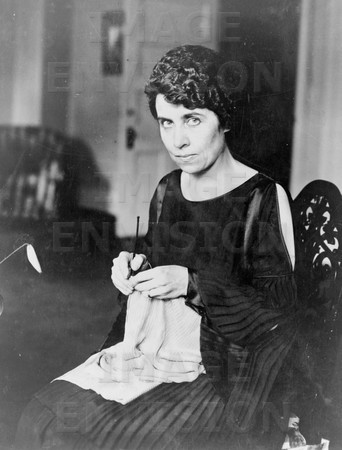
Grace knits

Grace could knit, sew and crochet with fair skills…

But Grace was a warm-hearted mother, neighbor, friend, happy to teach her boys to play baseball on the front lawn. She was equally happy to help at their church functions, and during World War I, like many other women in the country, she joined the Red Cross and became active.

But while she became an avid and competent needle-woman, try as she did, she never did master the kitchen.

Biscuits and Pies

The Goodhues could never understand their daughter’s attraction to the “cold clam,” but Grace would write years later, “He made me laugh.”

It was their shared sense of humor that bound the couple together. His was dry, wry and all the funnier since it was delivered with a devastatingly deadpanned expression. Grace’s humor was teasing and mimicking. It is said she could imitate Coolidge’s New England twang to perfection.

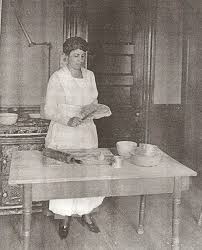
gracecooks

…But cooking was never her strong suit!

Grace was contented as a New England housewife, but was never more than mediocre in its skills. Coolidge loved his pretty wife dearly, and would never criticize her – at least not overtly. But he could make his point.

Biscuits, of course, are supposed to be light and fluffy and melt-in-your-mouthable. Grace’s left much to be desired. Coolidge made his point by “accidentally” letting one drop – and simultaneously stomped his foot on the floor. Grace was not insulted. It is said that the entire family howled.

Then there was her apple pie. It seems that she was never able to master the art of a light and flaky crust. Hers was definitely in the soggy and chewable department.

The family had had it for supper, but there was still a half-a-pie leftover. When a couple of Grace’s lady-friends stopped in that evening, Coolidge surprised her and asked them if they might like to have some of her delicious apple pie and coffee. The women graciously accepted.

The story goes that it was Coolidge who made the coffee, laid the table and sliced the pie. Then, as the ladies were sampling “Grace’s delicious”, Coolidge twanged with a slight twinkle in his eye, “Don’t you think the road commissioner would be willing to pay my wife something for her recipe for pie crust?”

Point made. No offense taken.

Sources.

  • Anthony, Carl Sferrazza –First Ladies 1789-1961, William Morrow,1990
  • Boller, Paul F., Jr. – Presidential Anecdotes, Oxford University Press, 1981
  • Wikander, Lawrence & Ferrell, Robert (eds) – Grace Coolidge, An Autobiography, 1992, High Plains

http://www.calvincoolidge.us/humor.html


Posted in A POTUS-FLOTUS Blog, Calvin Coolidge | Tagged , , , , , , , , , , , , , , , , , , | 4 Comments