The Courtship of Bess and Harry Truman

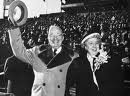
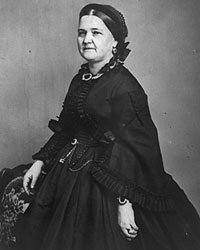
President and Mrs. Truman. Nobody would have thought they’d make it so far!

Bess Wallace and Harry Truman courted (sort of) for nearly thirty years.

Little Boy Harry and Little Girl Bess:

Writing of his courtship many years after his marriage, Harry Truman said he first fell in love with Bess Wallace when they were five – in little-kid dancing school.

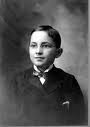
Young Harry Truman from the wrong side of the tracks.

Farm boy Harry S Truman (1884-1972) was born and raised in Lamar, MO,  just outside Independence, not far from Kansas City. While his family were far from poverty-stricken, they were farmers, on the poorer side of the economic scale. Harry was the eldest of three, and from the start, was expected to do farm chores as well as keep up with his school work.

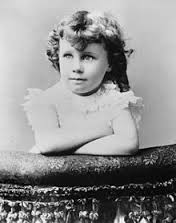
Not so Elizabeth Virginia Wallace (1885-1982). She was the oldest of four born to David and Madge Wallace, but the pedigree of privilege came from her maternal grandparents. Grandpa Gates was the owner of a prosperous flour mill. Considered wealthy, they lived in a fine house on the finest street in Independence, MO. Madge Gates had married David Wallace over her parents’ objections.

Little Bess Wallace – from the better side of the tracks.

Lamar and Independence are not far in distance, and many schooling and related activities were combined. Bess and Harry were the same age, and in the same public school class through high school, but that acquaintanceship was generally superficial, partly because of their youth, and mostly because of the huge gap in their social status. Harry was farmer; Bess was city-swell.

Bess and Harry: Reacquainted

When Bess was eighteen, any hopes she may have had for college or business school were dashed when her father committed suicide. The Wallace marriage had been unhappy for many years; David Wallace was an alcoholic who could never maintain a job for long. Madge Wallace was a difficult woman who could never quite face the truth.

In the early 20th century, suicide was a scandalous stigma. The Wallaces claimed the ubiquitous “business reversals” and moved away for a year to let things die down. When they moved back, they lived with the elderly Gateses. Perhaps realizing that she needed to take charge, Bess stayed home to manage the household and get her three younger brothers educated and out of a toxic environment as soon as possible – for their own good.

Meanwhile, Harry having lost his father, had a farm to run, a mother to support, and two younger siblings to help raise. College was out of the question for young Mr. Truman.

Several years passed before he met up with Miss Wallace again.

The story goes that Harry was in Independence visiting relatives, and one of them mentioned a pie plate that needed to be returned to Mrs. Wallace. Harry volunteered to be the messenger-of-return.

Madge Wallace, Bess’ “difficult” mother – even when she lived in the White House.

Showing up at Bess’ door, pie-plate in hand, was the start of their mature relationship. By that time, both were in their twenties. He was still poor. Bess was still considered well-to-do, thanks to the large house and the Gates’ inheritance.

Their early courtship was sporadic, since Harry had responsibilities at home and very little money. Nevertheless, whenever he came to call, Bess was happy to see him.  Alas, Mrs. Wallace was not thrilled by the attentions of “Farmer Truman,” believing he was well beneath the Wallace social level. Bess did not care. She liked Harry.

For the next decade, they kept company, and talked about marriage – when he could afford it. Problem was, he couldn’t afford it.

Bess, Harry and World War I

Captain Harry Truman, the unlikely soldier.

When World War I finally came to US shores, Harry Truman was 33 years old and extremely nearsighted. He was obviously deferrable. But he wanted very much to serve, and volunteered. Bess may have agreed with her mother on that issue: he had to be nuts! But she made no objection, and even suggested that they marry prior to his going “over there.”

Harry said absolutely not! He might be killed and she would be a widow. Or worse: he might be seriously injured and she would be saddled with an invalid. She agreed to wait.

So he took her photograph, became Captain Harry, served commendably, wasn’t killed or wounded and came home.

By this time, they were both well into their thirties, and if they were going to get married and have a family, they had better get cracking!

Bess, Harry, and Mrs. Wallace

The new Mr. and Mrs. Harry Truman on their wedding day.

Madge Wallace never changed her opinion about Harry Truman – even when he was in the White House. To her, he was always Farmer Truman, not nearly good enough for her daughter.

According to the Trumans’ daughter, when her parents were ready to set the date, they had their first and only big row. Margaret Truman never knew the details, and her parents never discussed them, but their daughter surmised that it was likely because Harry wanted a place of their own. Bess insisted they live with her mother. Madge Wallace could not live alone – and no one other than Bess could live with her.

Margaret concluded that Harry must have loved Bess very deeply. He bought the package.

They were married on June 28, 1919. Mrs. Wallace moved into a smaller room, and the newlyweds took over the large bedroom. Nevertheless, it would always be Mrs. Wallace’s house. Bess had her childhood girlfriends who came to play bridge periodically. Harry went to one of the local hotels one night a week for a poker game with the guys. The Trumans never invited friends to the house. If they socialized, it was “out.”

According to his friends, Truman had “the original mother-in-law from hell.” But the Truman marriage was solid.

Sources:

Foster, Feather Schwartz – The First Ladies from Martha Washington to Mamie Eisenhower – Sourcebooks, 2011

Truman, Margaret – Bess W. Truman, 1986, MacMillan

Truman, Margaret – Harry S Truman – 1972, William Morrow

http://www.firstladies.org/biographies/firstladies.aspx?biography=34

http://www.trumanlibrary.org/bwt-bio.htm

Posted in A POTUS-FLOTUS Blog, Harry S Truman | Tagged , , , , , , , , , , , , , , , , , , , | 4 Comments

Harding and Taft: Making An Old Man Happy

Every so often, dreams do come true. Even in politics

Ex-President Taft: A Public Career

William Howard Taft (1857-1932) spent his entire life in public service: as judge, as Solicitor General, as Governor of the Philippines, as Cabinet member and as President – the only job he claimed to have disliked.

When he retired from the presidency in 1913, he was at loose ends, both personally and financially. The prominent Taft family of Cincinnati, Ohio had always encouraged its favorite son/brother – even to a point of augmenting his pre-presidential salary, which was comfortable, but never opulent.

First Lady Helen Herron Taft shortly after Taft’s election.

In the nineteenth century, public servants, particularly those at a higher level (like a judge), were expected to contribute not only to the party that elected them, but to all the worthwhile civic causes: to wit, the old soldiers’ home, the opera house, the new library. They were also expected to attend all the see-and-be-seen events.

Mrs. Taft’s health curtailed most of her abilities to function publicly during Taft’s administration.

In 1913, there was no presidential pension, and “suitable” post-presidential paying jobs were limited. Taft still had a young son to be educated and a wife to care for. Nellie Taft, at 48, was only First Lady for a few months when she had a severe stroke. While she recovered substantially, incidents and relapses forced her to completely refocus her enormous energies on her health. Taft needed the paying job.

WHT: The Interim Years

Taft’s beloved Yale, the family Alma mater, came to his rescue with the offer of a chair of law. “Judge” Taft was eminently qualified. A professorship at Yale was eminently suitable.  The position was prestigious; the work flexible and easy, and he sincerely enjoyed working with the young students. Taft also had plenty of time for the many speaking engagements that were coming his way. He was amazed that organizations paid $200 or more plus expenses, just to have him eat a chicken dinner and speak for an hour!

In 1915 President Woodrow Wilson appointed Taft to the National War Labor Relations Board.  The two men had gotten along well, and the new part-time position did not interfere with his Yale responsibilities.

It also allowed the Tafts to spend more time in Washington. Mrs. Taft disliked being cooped up in Connecticut, and missed her friends and activities in the capital.

The Harding Connection

Warren Harding (1860-1923) was also an Ohioan, but from central Ohio, and from an undistinguished family. As publisher of the Marion Star, he had gravitated easily into politics, mainly as a popular speaker at various organizations around the state.

Senator Warren G. Harding, the man who looked like a president.

Blessed with the politician’s “glad hand” at the meet-and-greets, he was elected to the Ohio State Legislature, and served a term as Lt. Governor.

His personal connection with Taft-as-President had been casual and limited, even though as a former Lt. Governor, Harding had been invited to the massive gala 25th Wedding Anniversary party the Tafts hosted in 1911. (Since 8000 invitations were issued, the guest list was obviously not select.)

Harding repaid the courtesy by making a nominating speech for Taft’s re-election at the 1912 Republican convention. Taft won the party’s nomination, but lost the election big time!

WHT: Unrequited Love

Not long after William Howard Taft received his law degree, he was appointed to the bench and found his one true love. Being a judge suited his temperament, his disposition, his intellectual leanings and perhaps his outsized girth. A judge’s robe covers a lot of territory. The more he progressed in his career, the more he loved the bench, and his greatest ambition (which was never a secret) was an appointment to the Supreme Court.

Young William Howard Taft became a judge early in his career, and never wavered in his love of the bench.

President Theodore Roosevelt offered him the post three times, and three times he declined – all for substantive reasons. It was a painful decision each time.

Even more privately painful was the odd coincidence that in his single four-year term, Taft appointed six justices to the Court – the most of any one-term president. In essence, he was handing over his lifelong dream to others – including the plum post of Chief Justice.

His chances were slipping away.

Meanwhile Harding…

Handsome Warren Harding had made a solid name for himself throughout Ohio as a popular guest speaker. He loved “bloviating” as he called it, and was happy to help boost Republican colleagues in their election efforts.

Those benevolent chickens came to roost when Harding was elected to the US Senate in 1914.

He went to Washington and glad-handed and bloviated and boosted – this time on a national level. By 1920, while the country at large did not know the small-town newspaper publisher, Republican bigwigs did. He was everybody’s second or third or fourth choice for the nomination. He won that fairly easily.

Women voted for the first time, and liked his easy style and good looks. Harding won the presidency very easily.

WHT: Happy At Last

Not long after his election, Harding invited ex-President Taft for a chat. The conversation covered many subjects, and eventually came around to the Supreme Court.

Chief Justice and Mrs. William Howard Taft. He was a happy man.

Harding admitted being aware of Taft’s desire for the bench; Taft, the always-honest man, admitted his lifelong dream, which by then was an open secret. But he also admitted that as a former President, he could only accept the position of Chief Justice. Three of the sitting justices had been his own appointments – including the Chief Justice himself.

Harding was understanding, but non-committal.

But Chief Justice Edward D. White was in failing health. Within the year, he died, and the seat was vacant. It would be a very short vacancy. President Harding made Taft  joyous by nominating him as Chief Justice of the Supreme Court. He was well past sixty, and had nearly given up all hope of his dream job. The Senate confirmed him unanimously the following day.  To this day, he is still the only man to serve as both President and Chief Justice.  It is said that Taft’s last ten years were his happiest.

Sources:

David J. Danelski and Artemus Ward, editors – The Chief Justice: Importance & Influence – University of Michigan Press, 2016

Ross, Ishbel – An American Family: The Tafts – World Publishing, 1964

http://law.jrank.org/pages/10668/Taft-William-Howard.html

https://www.whitehouse.gov/1600/presidents/williamhowardtaft

Posted in A POTUS-FLOTUS Blog | Tagged , , , , , , , , , , , , , , , , , , , , , | 2 Comments

Edith Roosevelt: Raising Eagles

Edith Carow Roosevelt was a mother of six when she became First Lady in 1901.

The Roosevelt Family of the White House. (l to r): Quentin, TR, Ted, Archie, Alice, Kermit, Edith and Ethel.

The “Other” Mrs. Roosevelt

Over the past seventy-five years or more, First Lady Eleanor Roosevelt has eclipsed the name of the “other” Mrs Roosevelt, her aunt-by-marriage: Uncle Theodore’s wife Edith. In her own time, however, Edith Roosevelt (1861-1948) was considered perfect; the First Lady who never made a mistake. It could not have been easy for a polar opposite of always-exuberant Theodore.

Edith: Wife and Mother

Edith Roosevelt was always one to shun the spotlight.

Edith and Theodore Roosevelt had six children when they arrived at the White House in September, 1901 following the tragic assassination of popular William McKinley. Alice was seventeen, and Theodore’s daughter by his first wife who had died in childbirth. Ted was fourteen, and Kermit, about to turn twelve. Both spent the better part of their White House years in boarding school/college. Ethel was ten, Archie seven, and Quentin not quite four.

From the start of their marriage, Edith was the quiet ruler of the household. She managed their Long Island home at Sagamore Hill, bore, raised, supervised and disciplined their children, handled the finances, and even managed  her “seventh” child, Theodore, himself. Nevertheless, with all her behind-the-scenes responsibilities, she still found time to romp, play, ride, swim and inspect the myriad treasures that find their way into a little boy’s pocket, and enjoy family life thoroughly.

Mrs. TR managed to have some time and place for herself.

Her participation in “fun” once led little Archie to say, “When Mother was a little girl, she must have been a little boy.”

Edith Roosevelt seldom gets sufficient credit for being a “single mother” for a huge portion of their lives. TR, man of a zillion interests and three distinct “careers” (politics, writing and natural history) was frequently away tending to said “careers.” Each year, he spent at least a month hunting, camping or exploring. It would fall to Edith to shuttle the family back and forth between Washington and Sagamore Hill, along with their pets and hundreds of books.

They were permissive parents, in the sense that all their children were given a free hand to be creative, to explore, to try, to achieve (or flop), to make their own friends, choose their own interests and build their own lives. If Edith Roosevelt had qualms or fears for her children, she summed it up in her always-cool way. “I raised my children to be eagles, not sparrows.”

White House Eagle-Raising

First Lady Edith Roosevelt.

Despite Theodore Roosevelt’s presidential demands, he was a devoted father, and part-time playmate. He terminated important appointments in order to keep a promised play-date with Archie and Quentin. He was indulgent with boy-stuff, although he periodically needed to step in and pull POTUS rank. Wipe off the mustaches they drew on famous paintings. No throwing snowballs from the White House roof. But it was Edith, the full-time mother, whose frown, or “now, boys” would have the same effect on the children as it did on their father: They would immediately stop whatever they were doing that gave her pause.

The famous John Singer Sargent portrait of President TR.

Schoolwork was expected to be completed on time. Grades were expected to be up to their individual snuffs. Their behavior in the company of anyone – from menial staff to foreign ambassadors – would be impeccable, no exceptions.

But their annual summer vacations at Sagamore Hill was where they all romped and explored, jumped out of the barn window and whatever else they devised.

The Roosevelt home at Sagamore Hill.

At home, Father and Mother were just that: Father and Mother. One time an aide assigned to the First Family at Sagamore Hill was searching for the President who could not be found. Finding six-year-old Quentin, he asked if he knew where the President was. Quentin is said to have replied, “I don’t know about the President, but Father is taking a bath.”

The Eagles Leave the Nest

TR had become President at only 42; when he retired he was just 50. Too young. He was born to be active, and not stay put.

When World War I erupted in Europe in 1914, TR was eager to participate. He was an ardent internationalist, and had always promoted his vision of the US as a world power. He preached preparedness as a means of strength – and a deterrent to war. In 1914, most Americans did not want to be a world power, and had no desire to fight with anybody.

The four Roosevelt sons were eager to prove their “eagleness.”

But TR’s idealism was genetic. The Eagles itched to prove themselves and their “eagleness.”

In 1915, Ted and Archie had enlisted in a pre-ROTC-style military program in Plattsburgh, NY, and excelled. They both signed on with the American Expeditionary Force, Kermit volunteered with the British Army in what is today Iran, and Quentin, only nineteen, volunteered with the US Army Air Service.

Kermit was their only son who escaped serious injury, although his internal demons were lifelong. Both Ted and Archie were severely wounded, leaving permanent infirmities. Quentin lost his life at twenty.

All were decorated for valor.

Mother Eagle

A rare photograph of Edith and Theodore Roosevelt in their middle years. TR was only 60 when he died.

Theodore Roosevelt died at only 60, Edith at 87, outlived him by nearly thirty years.

Quentin had died decades earlier.

Ted Jr. became a Brigadier General in the Army Reserves, and won the Congressional Medal of Honor for his valor on D-Day. He died shortly after of a heart attack. He was 57.

Kermit pursued various international business and literary interests, but never overcame the alcoholism and depression that he battled throughout his adulthood. He joined the Army during World War II, and was stationed in Alaska when he took his own life. Edith was told it was a heart attack. He was 55.

Archie, despite WWI injuries that were considered permanently disabling, re-enlisted, and served in Australia, where he was injured again. He came home.

The Mother Eagle had outlived three of her eaglets.

Sources:

Hagedorn, Hermann – The Roosevelt Family of Sagamore Hill – Macmillan, 1954

Morris, Sylvia Jukes – Edith Kermit Roosevelt – Coward McCann, 1980

http://www.firstladies.org/biographies/firstladies.aspx?biography=26

https://www.nps.gov/sahi/index.htm

https://www.whitehouse.gov/1600/first-ladies/edithroosevelt


Posted in A POTUS-FLOTUS Blog, Nifty History People, Theodore Roosevelt | Tagged , , , , , , , , , , , , , , , , , , , , , , , , , | 3 Comments

The Tragedies of General James Longstreet

General James G. Longstreet

James G. Longstreet’s reputation has been a controversial yo-yo for more than 150 years.

Pete.

James G. Longstreet (1821-1904) was nicknamed Pete in infancy, and it stuck throughout his long life. Born in SC to a large family of Dutch lineage, he showed sufficient promise to warrant a better education than his parents could provide.

At nine, he was sent to live with relatives in Georgia, where they believed he would thrive more academically. Pete thrived, certainly in the sense of a happy childhood. When his own family moved to Louisiana, he chose to remain with his adoptive relative.

Academically alas, he was not the scholar his parents had hoped. Nevertheless he was accepted into West Point’s class of 1842, where he graduated in the bottom quarter of his class. His demerits were on a par with his academics.

A West Point Academic Aside

“Pete” Longstreet as a young officer.

In the early to mid 19th century, West Point classes were small. A class of 50-60 was the norm. Family social status was important. Military acumen was important. Discipline was important. Academics, perhaps could be more flexible. A gentleman’s “C”.

Some cadets had all the elements in abundance, like Robert E. Lee and George McClellan, who ranked at the top of their respective classes. But academics was not always necessary to future military achievement. Thomas J. Jackson (the future “Stonewall”) was practically dead last when he entered (the year Longstreet graduated), but worked tirelessly to finish mid-range.

Both George Pickett and George Custer were the cellar dwellers of their respective classes. Ulysses S. Grant was also undistinguished, except for his horsemanship.

Ergo, academics alone do not a good soldier make.

The Mexican Crucible

The Longstreets and the Grants would be friends for nearly forty years.

Pete Longstreet’s first assignment post graduation was to Jefferson Barracks in St. Louis, not far from some distant cousins, the Dents. A year later, Longstreet’s underclass pal, Ulysses “Sam” Grant was posted there as well, and eventually married the eldest Dent daughter.

But before that could happen, the War with Mexico thrust West Point classmates and alumni together, tempering in battle the talents that presaged the Civil War fifteen years later. They were all American soldiers then. Some bonds of camaraderie could withstand the strains that would follow. Some could not.

Shortly after the war Pete married Maria Louise Garland, the daughter of his commanding officer. They would be married for 40 years and have 10 children together, five living to adulthood. About that time, his pal Sam Grant married Julia Dent. Pete Longstreet is said to have been a groomsman.

Longstreet’s First Tragedy: a Private Agony

Louise Garland Longstreet and two of their children.

By 1858, Pete Longstreet was a Major with a distinguished service record. By June 1861, the born and raised Southerner made the not-terribly-hard choice of allegiance to the Confederacy. He was quickly promoted to Brigadier General, then to Major General, and eventually Lieutenant General.  Many have considered him one of the South’s best commanders. He was assigned to the Army of Northern Virginia, and accordingly Louise and the children moved to Richmond.

There were five small Longstreets in 1862, along with an epidemic of scarlet fever. General Longstreet was notified that his children were afflicted and raced home. He was barely in time to kiss one-year-old Mary Anne and four-year-old James, Jr. before they died. A week later, 11-year-old Augustus succumbed. Only 13-year old Garland survived.

The parents were devastated. It is said that General Longstreet was never the same. He had gone from being an outgoing and social man to a serious “Gloomy Pete.”

Longstreet’s Second Tragedy: Gettysburg

General Robert E. Lee. He would be a military icon.

The three-day Battle of Gettysburg took place early in July,1863, only weeks after the accidental friendly-fire death of Stonewall Jackson. Longstreet was now Robert E. Lee’s Old War Horse: the one he would come to depend on most.

Battle is battle, and General Longstreet was always in the thick of it.

Gettysburg was unplanned. The Northern and Southern armies literally bumped into each other. The audacious Lee saw it as an opportunity; the cautious Longstreet was hesitant. He shared his concerns with his commander, who acknowledged their validity, but overruled him.

Longstreet’s good friend, General George Pickett.

“Almost” does not count in battle, and the futility of Pickett’s Charge on the third day, despite the valor, was nothing less than a disaster. Longstreet had argued hard against it, foreseeing the catastrophe that awaited. He could not even issue a verbal command to advance. He merely nodded sadly.

Longstreet’s tragedy was not the battle itself. It came long after the war had ended and he wrote his memoirs. He dared to criticize General Lee’s decisions at Gettysburg. General Lee was revered. Old Pete was expendable. The South frowned.

Longstreet’s Third Tragedy: Grant

The General as a civilian after the Civil War.

Pete Longstreet and Sam Grant had been friends since West Point. They had been at Jefferson Barracks together.  They were in Mexico together. Longstreet attended Grant’s wedding. Being “enemies” during the Civil War did not sever the friendship. Many old friends-turned-foes rekindled their old affections. But this old friendship was at the highest level.

After the War, Longstreet and his family moved to New Orleans to rebuild their lives. He entered the private sector to mediocre success. His “citizenship” was reinstated in 1868, the same year Ulysses S. Grant was elected President.

Longstreet registered to vote as a Republican (anathema to the South), voted for his pal Grant, and went to Washington to attend the inauguration.

Elderly General Longstreet

Always a strong believer in old Pete’s abilities, President Grant appointed him surveyor of Customs in New Orleans shortly after he assumed office. Reinstatement and assignment to high military office in the United States Army would follow. In later years, diplomatic posts followed as well.

This apostasy was more than the South could bear. They would acknowledge his valor. They would acknowledge his military excellence.

But they would never forgive him.

Sources:

Botkin, B.A. (ed.) – A Civil War Treasury of Tales, Legends and Folklore – Promontory Press, 1960

Henig, Gerald S. & Niderost, Eric – Civil War Firsts – Stackpole Books, 2001

https://www.civilwar.org/learn/biographies/james-longstreet

http://www.history.com/topics/american-civil-war/james-longstreet


Posted in American Civil War, Nifty History People | Tagged , , , , , , , , , , , , , , , , , , , | 3 Comments

FLOTUS Ellen Wilson: American Impressionist

A statue of Ellen Axson Wilson in her hometown of Rome, Georgia.

While many First Ladies displayed some artistic gifts, Ellen Wilson was arguably the most talented.

Ellen Axson: Child to Woman

Ellen Axson Wilson (1860-1914) was bookended by war: Born just as the American Civil War was about to start, dying just as Europe was about to explode into World War I. She was  Georgian born and raised, and displayed artistic talents at an early age.

Young Ellen Axson

By the time she was in high school, her abilities were readily acknowledged. A teacher who attended the Paris Exposition one summer, brought along some of her students’ art projects for judging. Ellen’s freestyle drawing won a prize. Back in Rome, Georgia, she was becoming well known.

One of Ellen Wilson’s paintings

In Victorian times, women artists, no matter how gifted, were generally considered Sunday painters. Hobbyists. Their opportunities for earning a living at art were very few. Ellen Axson had hoped to continue her studies, and become an art teacher, but when her mother died, Ellen was twenty and her family needed her at home.

She married Woodrow Wilson in 1885, and as expected, her art became her hobby – when she had time to spare. Woodrow’s meager professor’s salary, a kid brother she was raising, three children in five years, and a rotating assortment of Woodrows, Wilsons and Axsons as long-term houseguests assured that time for serious art would be nil.

Nearly two decades would pass before “EAW,” as she would sometimes sign her paintings, would be able to pick up her palette with any regularity.

EAW: The Art Colony Summers

Ellen Axson Wilson, the talented artist

By the beginning of the 20th Century, when Ellen’s daughters were coming to maturity, women artists were beginning to be taken more seriously. Rosa Bonheur and Berthe Morrisette in Paris, and even Mary Cassatt of Philadelphia, were becoming well known artists. They received commissions. Their works hung in galleries.

With more time on her hands, once Woodrow Wilson achieved academic success at Princeton, and her children did not need her constant attention, Ellen could unpack her easel and paints again, and find some uncrowded hours for herself and her art.

In 1905, personal tragedy descended on Mrs. Wilson. The brother she had raised from earliest childhood, his wife and baby son all died in a drowning accident. She was devastated, and sank into a severe depression. As she slowly recovered from her great loss, she found solace and comfort in her art.

Ellen Wilson and her daughters, painted by Robert Vonnoh, one of the master American impressionists.

Lyme, Connecticut is not that far from Princeton, New Jersey. A small summer art colony had formed there where area artists could spend a few weeks painting or sculpting at the Lyme Summer School of Art, sponsored by the Art Students’ League (which Ellen Axson had briefly attended prior to her marriage). More importantly, artists met each other as peers. They worked together; critiqued each other’s projects; compared techniques. They formed friendships and pooled resources. It was ideal for Mrs. Wilson, both professionally and in spirit.

Noted American Impressionist Childe Hassam spent time in the art colony in Lyme. So did Robert and Bessie Vonnoh, a husband-and-wife duo of exceptional skills.

Ellen Wilson’s talents were far superior to just those of a “Sunday” painter.

In 1910, Ellen Wilson and her daughters began staying at Florence Griswold’s Boarding House (now the Florence Griswold Museum); Woodrow, now NJ Governor, came up from Princeton on weekends. Margaret, Jessie and Nell Wilson, now young ladies, formed their own friendships and activities, allowing their mother the time to work and have discussions with her own set.

EAW: The Artist

By Ellen Wilson

Ellen had worked in several media early in her marriage. She had oils. She sketched. She drew portraits in artist-crayon (displayed at the Woodrow Wilson Birthplace in Staunton, VA). She even constructed a clay model of the home they were building in Princeton.

But the mature Ellen, the “EAW” of the artist colony, found her milieu in water colors. She found her subject in nature. Mostly florals and landscapes. She also found increasing confidence in her abilities, especially when her peers considered her “a peer,” and judged her work as worthy.

Another painting by Ellen Wilson

As the Governor’s wife, Ellen acquired an agent, and submitted some of her work for “blind” competitions. (This meant that the identity of the artist would be unknown to the judges.)  She not only entered, but won awards. By the time Woodrow Wilson was elected President, Mrs. Wilson was considered a serious artist in her own right. Her work was hung in galleries and museums, and she had a one woman show in Philadelphia.

EAW: The First Lady

First Lady Ellen Wilson

In 1913 she became First Lady. Now Ellen Wilson was now inundated with dozens of public responsibilities as well as personal ones – the weddings of two of her daughters.  Her time for art was limited once again.  She also changed her summer artist colony visit from Lyme, CT to Cornish, NH, which had the reputation of “hosting” some of the most prominent artists of the early twentieth century. With such notables as Augustus Saint Gaudens, Maxfield Parrish, Daniel Chester French and Frederic Remington, the colony was well known to American artists. President Wilson was happy to bring his talented wife to the Harlakenden House, one of the finest homes in the area, where once again, she could work alongside her peers.

It was the only summer that First Lady Wilson spent there; she died the following year.

Ellen did not live long enough to produce any more than a modest body of work, but even today, her fine artistry has been rediscovered, and judged much better than somewhat.

Sources:

McAdoo, Eleanor Wilson – The Woodrow Wilsons – Macmillan Co. 1937

Miller, Kristie – Ellen and Edith – University Press of Kansas, 2010

Saunders, Frances W. – Ellen Axson Wilson – University of North Carolina, 1985

Home

http://www.woodrowwilsonhouse.org/ellen-exhibition

http://www.firstladies.org/biographies/firstladies.aspx?biography=28


Posted in A POTUS-FLOTUS Blog, Woodrow Wilson | Tagged , , , , , , , , , , , , , , , , , , , , | 2 Comments

Saying Goodbye to FDR

The unfinished portrait of FDR.

Death is always private, but the death of a world figure becomes a public event.

President Roosevelt’s Health

When Franklin Delano Roosevelt died in April, 1945, the world was stunned. He had been US president for twelve years, just recently inaugurated to an unprecedented fourth term.

Television was still experimental, and newsreels and photographs of the President were always carefully staged. Few Americans were aware that FDR had been crippled by polio for nearly twenty-five years, and could not walk without braces, a cane and the arm of a strong man to steady him.

There was a noticeable decline in FDR at Yalta.

Even fewer noticed his visible decline during the past year. The strain of WWII had taken a huge toll. He had lost weight. His face looked drained and haggard. When he returned from his recent meeting in Yalta, he was seated while addressing Congress – something he had never done before. They were all aware of FDR’s disabilities, but this was different. And worrisome.

FDR’s “Little White House” in Warm Springs, GA

They did not know about his dangerously high blood pressure, and his heart condition. His doctors were alarmed and insisted on immediate rest. As usual, FDR pooh-poohed, but agreed to some down time.

FDR: Warm Springs

Young FDR prior to being stricken with polio.

At 39, Franklin D. Roosevelt was stricken with polio, and spent the better part of a decade vainly trying to find a remedy to restore strength to his withered legs. In the 1920s, the most promising treatments demanded warm water exercise therapy.

A rare photograph of FDR showing his withered legs.

In 1924, FDR discovered the buoyant waters in Warm Springs, a depressed rural town about an hour from Atlanta, whose only attribute was a spring of water that maintained its soothing temperature year round. It seemed so beneficial, that Roosevelt purchased the area in 1926, turning it into a viable treatment center for polio patients.

The well-known photo of FDR and another polio patient.

Roosevelt loved Warm Springs and all its residents, whether they were “polios,” local residents or part of the medical therapy team. With his infectious optimism and political gifts of remembering names and faces and all their pertinent information, that love was returned.

Even as President, he periodically came to his “Little White House” to refresh his body and spirit. After Yalta, when his doctors counseled rest, this is where he came.

The President Dies

It was almost fitting that death would come for FDR at Warm Springs. The Little White House was small cottage. It could easily fit inside the White House in Washington a dozen times. He had gone there accompanied by his valet, secretary, two cousins, a few friends, his doctors and personal staff. Most were lodged nearby. He was sitting for a portrait when he complained of a violent headache and collapsed. It was a fatal cerebral hemorrhage.

Headlines all over the world brought the news.

Word was secretly sent to Washington. Mrs. Eleanor Roosevelt, who had been at a speaking engagement, and Vice President Truman were urgently summoned to the White House. Both feared the worst.

Within hours, telephone and telegraph wires had spread the sorrowful news across the country. Cables were sent abroad to heads of state and to the Armed Forces. Mrs. Roosevelt personally wired her sons serving overseas. Then she flew to Georgia to accompany the President’s body back to the capital. By the time she returned to Washington, the White House had been flooded with condolences from all over the world.

The Private Goodbyes, The Public Goodbyes

Warm Springs residents, both patients and locals, were devastated, perhaps more than any other American citizens. They not only lost a President they deeply admired, they lost a dear friend. They knew him in a way no one else did. He was one of them. They saw him in his bathing suit, in the water, his withered legs in view. They alone understood the limitations he had to face, and they alone understood the nearly impossible heights he had reached despite everything.

Graham Jackson, a Warm Springs resident, had frequently entertained at The Little White House.

The following day a funeral cortège lined up outside the Little White House. In front of Georgia Hall, all the residents, on crutches, canes and in wheelchairs turned out to pay their final respects as the hearse and its entourage slowly made its way along the route the President always drove whenever he vacated the premises. Usually everyone waved and smiled. But this time, children and adults sobbed uncontrollably.

Graham Jackson, a local resident played a sorrowful Going Home on his accordion. He had entertained FDR and the other patients dozens of times over the past two decades. The aging Negro had tears running down his cheeks.

The funeral train.

By the time the casket was lifted onto the train to Washington, black-bordered headlines proclaimed the sad news. Flags everywhere flew at half-staff. Houses of worship were filled as prayerful eulogies were offered. Shops and stores were closed. Schools were closed. Congress adjourned.

It is more than 700 miles between Warm Springs, Georgia and Washington, DC. About a 12-hour drive. But the train carrying the President’s body chugged very slowly. All along the way, day and night, people lined up along the tracks, heads bared and bowed, sobbing as if they had lost their best friend. Some even placed pennies on the track to let the funeral train run over it as a souvenir.

The FDR home at Hyde Park, NY

As Commander-in-Chief, FDR was a casualty of war, like the thousands of American servicemen who had already died, and would continue to die before the War ended. His casket laid in state both at the White House, and later at Congress, as people from all stations in life came to pay their respects. . Representatives from every state – and even from foreign countries came to march in his funeral procession along with thousands of military personnel.

A small private funeral was held at Hyde Park, the place where Franklin Delano Roosevelt was born, and the place he loved best.

He had been a part of the American family.

Sources:

Bishop, Jim – FDR’s Last Year – Wm.. Morrow, 1974

Gallagher, Hugh – FDR’s Splendid Deception – Dodd, Mead, 1984

https://www.whitehouse.gov/1600/presidents/franklindroosevelt

https://www.nps.gov/nr/travel/presidents/roosevelts_little_white_house.html

http://www.huffingtonpost.com/michael-zucker/april-12th-the-day-we-los_b_9657572.html


Posted in A POTUS-FLOTUS Blog, Franklin D. Roosevelt | Tagged , , , , , , , , , , , , , , , , , , , , , , | 3 Comments

U.S.Grant and the U.S. Mail

Ulysses S. Grant was one of the first supporters of systematic wartime mail service.

Mail call has always been one of the key ingredients of soldier morale and  frequently the high point of his day.

A Literate War

The Civil War is considered by most historians as the “first modern war” for a variety of reasons. Not the least of those reasons, is because it was the first “literate” war. An estimated 90% of Union soldiers, and more than 80% of Confederates could read and write. This meant an abundance of letters, diaries, reports and newspaper articles. Thus “mail call” was arguably the high point of the average soldier’s day, apart from battle. Receiving and sending letters to loved ones provided incalculable comfort to both the soldiers and their families.

The telegraph had been around for nearly two decades. Both sides used it constantly to transmit messages both internally (among commanders) and externally (to administrative and political leaders).  But personal mail was something else.

US Grant: Correspondent

Ulysses S. Grant never fancied himself much of a writer, yet his correspondence was voluminous, even before the Civil War. His style in personal letters, was unique for his time: singularly lacking in popular Victorian sentimentality and florid prose. He said what he meant, and he meant what he said, directly and to the point.

It is said infrequent letters from Julia made Lt. Grant despondent.

He courted Julia Dent mostly by correspondence during their four-year secret engagement, and wrote frequently, she sporadically. In the 1840s, during Lt. Grant’s service in Mexico, and later, in the California-Oregon Territory, mail delivery was glacial in speed and daunting in difficulty. Weeks and months passed without hearing from his beloved. It made him despondent.

According to author-historian Candice Shy Hooper, it may have been this intensely personal observation that encouraged him to help develop an army postal service branch of the United States Post Office.

Absalom Markland: Childhood Friendship Rekindled

Frequent mail delivery was vital to the morale of Civil War soldiers.

When Ulysses Grant was fourteen, he attended the Maysville Academy in Kentucky, where he met Absalom Markland, a lad three years his junior. While they both had occasion to observe each other, the difference in their ages would likely have precluded any more than superficial acquaintance. Grant went to West Point; Markland became an attorney, and a senior official in the U.S. Postal Service.

In the mid-nineteenth century, the office of Postmaster General was a cabinet position (and would be until the Nixon Administration), and the most political office of all. Hundreds, and even thousands of postmasterships and other positions were at the disposal of the Postmaster General, who could discharge and replace practically at will.

Montgomery Blair, Lincoln’s Postmaster General, arguably had the most political influence of his cabinet members.

At the outset of the Civil War, it became necessary to weed out “disloyal” postal employees, and in late 1861, Absalom Markland was dispatched to undertake the assignment starting in Cairo, IL. Coincidentally, Grant had recently been named Brigadier General, assigned to Cairo.

Two decades had passed before the two met again. As Markland remembered, he was walking past Grant’s office window, where Grant saw and recognized him. Grant summoned his old school chum, and they renewed their acquaintance and became friends for life.

Upon learning of Markland’s position, he and  his old friend discussed the potential of a quick and efficient means of sending and receiving mail to the army. Markland believed such a system was indeed possible, andGrant enlisted Markland as a special agent of the Postal Service – along with an honorary rank of “Colonel.”

Problems.  And Solutions.

Mail call was always the happiest part of a soldier’s day.

By the 1860s, railroads had become a superior means of transportation. The cobbled-together stagecoaches on a simple track between two cities that had begun some quarter-century before had become thousands of miles of steel track connecting nearly every major northern city in the United States – and territories.  Southern railroad capability was substantially less, due to the agrarian nature of the South. Mail delivery via the railroads had been in place for two decades prior to the Civil War, but by 1861, it had matured. Railroad cars resembled today’s counterparts, at least in essence.

Troops no longer had to march and haul wagons vast distances; everything could now be moved by rail directly to the battlefield areas. Markland quickly determined that if troops and supplies could travel quickly by rail, a little ingenuity and organizational procedure  could move the mail likewise.

In-camp post offices allowed soldiers a central place to post their letters home.

There was one important hitch.  There were tens of thousands of Union soldiers from all parts of the country. They originated usually by state, into units, companies, regiments and brigades, and  seldom in one place very long. There were promotions and new companies; reorganized brigades formed regularly. There were also hundreds of thousands of casualties during those four years, which in effect necessitated combining several of those units. For instance, a decimated 7th Indiana might merge with an 35th Indiana if possible. If not, those remnants of the 7th Indiana might become part of the 12th Pennsylvania. Keeping up with the ever-changing status and location was daunting.

Postal workers could sort mail in moving railway cars.

Postal officials realized that it was possible to sort mail in railroad cars, or even on top of railroad cars going 30 miles an hour. And, Markland added, “In wagons, ambulances, and even on horseback, mails were frequently distributed and delivered under the murderous fire of the enemy, and it may be said that the perfect railway mail service of to-day [Marklands comments are from 1885, shortly before Grant’s death] is the outgrowth of the army mail service.”

According to Absalom Markland, “from that beginning sprang the great army mail service of the war…and to General Grant the credit of originating that service belongs.”

Sources:

The Ulysses S. Grant Association Newsletter, X, 3 (April, 1973).

Hooper, Candice Shy – Lincoln’s General’s Wives: Four Women Who Influenced the Civil War – for Better and for Worse, Kent State University Press, 2016

https://postalmuseum.si.edu/letterwriting/lw04.html

http://www.richmond.com/news/article_0379d2c8-3ffe-5546-8c83-147c4540a912.html

Posted in A POTUS-FLOTUS Blog, American Civil War, Nifty History People, Ulysses S. Grant | Tagged , , , , , , , , , , , , , , , , , | 3 Comments

Lincoln. Mary. Robert. War.

The Lincoln family early in his administration.

Of all the decisions Abraham Lincoln was obliged to make during his administration, few were as personally difficult as his son’s participation in the Army.

Robert’s Story

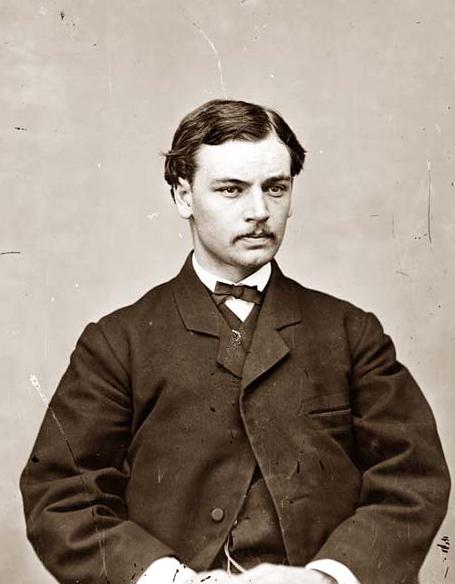
Young Robert Todd Lincoln sincerely wanted to enlist.

Robert Todd Lincoln had just entered Harvard when his father was inaugurated in March, 1861. Within weeks, Fort Sumter was attacked, and the new President called for 75,000 volunteers. At the outset, everyone believed the so-called “war” would be a big brouhaha: a battle fought, some unfortunate casualties, and cooler heads would prevail to settle the problems.

The battle was fought, the casualties staggered the imagination, nobody went back to the table, and nothing was resolved other than more battles and unthinkable casualties. Robert Lincoln diligently attended to his studies, but many of his Harvard classmates were enlisting in the Union Army. The President and First Lady continually counseled that by finishing his education, Robert would become a better officer. They likely believed that the war would be long over by the time Robert graduated.

But the Civil War dragged on and on, and Robert was getting constant ribbing from his fellows: he was a mama’s boy, or a slacker. Or worse, a coward. He was none of those things, and by mid-1864, at twenty-one, he was determined to enlist. His arguments with his parents grew heated – but they were valid.

Mary’s Story

First Lady Mary Lincoln was petrified that something might happen to Robert – and had already lost two sons.

Only a year into the Lincoln Presidency, 11-year-old Willie Lincoln died of typhoid fever. It was a devastating blow to both parents. Lincoln buried his private sorrow as best he could, overwhelmed by managing the cares of state. Mary Lincoln collapsed in hysterical grief. She had already lost a three-year-old son years earlier. Had he lived, Eddie would have been fourteen.

The First Lady was an emotional person, a fact well known to her husband. But with Willie’s death, her grief had been disturbingly excessive. By 1864, she was just starting to resume life, but death and dying was all around her. The casualty lists from the Civil War were numbering in the hundreds of thousands.

It was a shooting war. It was a disease-ridden war. It was a crippling war. It was deadly. The mere idea that Robert wanted to enlist threw her into a frenzied panic. There was no way she could consent. The likelihood that something could happen to her eldest son was not exaggerated. Her arguments were valid.

The War

The Civil War had turned into something nobody had predicted or expected. For all its numerical edge in industry, resources and population, the North was not doing well at all. By mid-1864, it was actually going poorly, and Lincoln believed he would lose the election, and possibly the War itself.

Thus far, he had been cautiously refereeing the arguments between Robert and Mary, becoming increasingly anxious that if anything happened to their son, Mary would never recover. And worse, she could – and would – blame him.

Meanwhile hundreds of prominent Union citizens had sent their sons to War. Mourning bands were common in the halls of Congress. Lincoln had written more letters of condolence than he could remember. There was continual sharp criticism in Congress and in the newspapers that the President’s twenty-one-year-old son was still not in uniform. That criticism was valid, too.

Lincoln’s Story

Abraham Lincoln visibly aged during the Civil War, family strains being part of his plate of cares.

Abraham Lincoln was not insensitive to anyone. Years earlier, when he was Robert’s age, he had signed up with a bunch of his townsmen to fight in the Black Hawk War. It was little more than a skirmish, and he never saw fighting or fired a shot – but it had been a seminal moment in his youth, and an experience he treasured. He certainly understood his son’s desire to participate.

No question about Mary’s fears. He understood them all too well. And that included the possibility that she would blame him for whatever might befall Robert. How could he bear that, too?

And he also understood the reasons for the sniping comments from Congressional leaders whose own sons were in uniform, or in hospitals. Or in the grave.

Everything was valid. He had no answers. And with all else on his Presidential plate, he could barely deal with his own private agony.

The Wisdom of Solomon

Sherman’s March to the Sea undoubtedly helped win Lincoln’s second term. The end was now in sight.

It was General William T. Sherman who unknowingly helped provide an answer. By September, 1864, his huge army had captured Atlanta and was sweeping across Georgia toward the coast – where it would march north to join General Ulysses S. Grant, whose equally huge army was besieging the Confederates only a few miles from Richmond. Lincoln won re-election and could finally see, along with his key generals, that the end of the War was in sight. It would continue, of course. There would be more casualties, of course. But there was an end in sight.

In mid-1864, Lincoln had appointed General Grant as General of the entire Army. The two men had grown to understand and appreciate each other. They also liked each other.

General Grant was happy to have Robert Lincoln on his staff – and to oblige the President, who he sincerely admired.

Lincoln wrote to Grant as a friend, not as a Commander-in-Chief. He asked as a favor, if a position could be found on his personal staff for Robert, who at a mature twenty-one and Harvard graduate, wanted to “see something of the Army.” He suggested that Robert’s age and education would merit the rank of Captain, and that Lincoln personally, would pay his salary. Grant was pleased to oblige.

Robert could finally join the Army. He was satisfied.

Robert was assigned as an administrative officer on Grant’s staff, out of danger, and far from the front lines. It relieved Mary’s worries. She was satisfied.

The President’s son was finally in uniform. Congress was satisfied. The newspapers were satisfied.

Lincoln had found a balance and had satisfied everyone. Including himself. And it was all valid.

Sources:

Epstein, Daniel Mark – The Lincolns: Portrait of a Marriage – Ballantine Books, 2008

Donald, David H. – Lincoln – Simon & Schuster, 1995

http://rogerjnorton.com/Lincoln68.html

http://www.mrlincolnswhitehouse.org/inside.asp?ID=18&subjectID=2

Posted in A POTUS-FLOTUS Blog, Abraham Lincoln, American Civil War, Nifty History People | Tagged , , , , , , , , , , , , , , , , , , | 3 Comments

FLOTUS McKinley: White House Invalid

William and Ida McKinley. In his eyes, she was always the prettiest girl in Canton, Ohio.

Many historians claim William McKinley would have been a far greater president had he not been so distracted by his invalid wife.

Ida McKinley: Candidate’s Wife

Willi9am and Ida McKinley at their 25th Anniversary Party.

Shortly before the 1896 election, William and Ida McKinley celebrated their Silver Anniversary. More than six hundred guests attended a huge party as Ohio Governor McKinley’s closest political friends watched in horror. They realized that if he became President, his lame, epileptic and difficult wife would insist on become First Lady in fact, as well as in essence. McKinley was delighted however. If his frail wife wished to participate, he was happy to give in. He always gave in to her wishes.

His “front porch” campaign was a rousing success. Ida was thrilled to sit on the porch, crocheting and smiling at everyone who came to pay their respects to the husband she idolized. In a way, she became one of his greatest assets. How could anyone help but admire a man so obviously devoted to his semi-invalid wife? He won easily over the young William Jennings Bryan.

Ida McKinley:  White House Staff Nightmare

From the start there was gossip among the White House staff that “something wasn’t right with the new First Lady,” but the word “epileptic” was never used. One of McKinley’s first acts was to plan escape routes if Ida had a seizure and had to be carried quickly from the room. He had done this so many times and in so many places, he was an expert.

Ida had also developed an intransigent and demanding personality disorder making it impossible for a substitute to assume the hostess role. While nieces came to visit, sometimes for weeks at a time, Ida would not permit anyone to usurp what she believed was her rightful societal position.  Meanwhile her condition, usually treated with heavy sedatives, made it impossible for her to function in that role.

Ida McKinley loved ornate (and very expensive) clothing, even though it was years out of current style.

It therefore fell to the President himself to oversee many of the traditional First Lady duties, such as housekeeping decisions, menu planning, seating arrangements, and even where the coat racks would be placed. Ida was incapable of making those choices – and refused to relinquish them to anyone else except her already overworked husband.

The White House staff loved President William McKinley, who had a warm and generous soul. But whatever sympathy they might have had for his wife became intense dislike. It was not due to the phlebitis, which made her lame. It was not even due to her periodic “nervous faints” and the heavy sedation. It was her total self-absorption and lack of concern about anyone else, including the extra burdens she placed on the husband she so dearly loved.

The First McKinley State Dinner

President and Mrs. McKinley. He always sat next to her at a formal dinner party.

The First Lady was physically and dispositionally incapable of managing state dinners, which frequently numbered more than a hundred guests. Nevertheless, she insisted on attending, and the devoted President would deny his wife nothing.

In the late 1890s, the rigid rules and traditions of diplomatic protocol were practically on a par with war and peace. Guests were seated at a long or U-shaped table, with the President and First Lady seated in the middle – on opposite sides. This provided four places of honor: The President’s left and right, and the same for the First Lady.

At their first state dinner, McKinley was seated all the way around the table from Ida. If he needed to attend to her, he would physically have to run all around the room. His eyes were fixed on Ida. He barely ate. He barely conversed with his guests. He was beside himself with worry.

After that grueling experience, he did the unthinkable. He altered the seating protocol to be seated next to his wife. This threw the State Department into a panic, since they were the ones who had to rework everything – and make vague explanations.

If Ida ever knew what a headache she caused for the staff, it is unrecorded.

Ida McKinley and the Slippers

One of thousands of pairs of slippers that Ida McKinley crocheted – and gave to charity.

With hours of idle time on her hands for more than twenty-five semi-invalid years, Ida had developed a hobby of crocheting slippers. She made thousands of pairs during her lifetime. True to her nature and need for a strict routine, her pattern – and even the colors – seldom varied.

Ida gave slippers away to family, to friends, to slight acquaintances and even to perfect strangers. Mostly, she donated them to charity.

As First Lady, Ida McKinley provided at least one real contribution. The White House has always received hundreds of requests from organizations wishing donations. In the McKinley administration, no worthy cause was refused. They would receive a pair of Ida’s hand-crocheted slippers to auction or raffle off. It is estimated that thousands and thousands of dollars were raised.

Ida McKinley: The Last Years

William McKinley was assassinated six months into his second term. When he was shot, his immediate thought was for Ida. “Be careful how you tell her,” he told his aide. “Be very careful.”

To everyone’s amazement, Ida took the news calmly. Two nieces rushed from Ohio to help their aunt. The doctors kept her from the sick room, comforting her with their belief that her husband would recover. Within a week, however, his condition worsened. He insisted she be brought in for a final farewell. She sat by his bed and put her head on his chest. He placed his arm around her tenderly, just as he had done for three decades.

Ida went back to Canton, Ohio and lived six more years. She never had another seizure.

Sources:

  • Anthony, Carl Sferrazza – First Ladies 1789-1961, William Morrow,1990
  • Foster, Feather Schwartz – Mary Lincoln’s Flannel Pajamas and Other Stories from the First Ladies’ Closet – Koehler Publishing, 2016
  • Hoover, Irwin Hood – 42 Years in the White House – Houghton Mifflin Co. , 1934
  • Leech, Margaret – In the Days of McKinley – Harper & Brothers, 1959
  • Morgan, H. Wayne – William McKinley and His America – Syracuse University Press, 1964


Posted in A POTUS-FLOTUS Blog, William McKinley | Tagged , , , , , , , , , , , , , , , , , , , , | 3 Comments

BACK OVER THERE: A Book Review

https://i0.wp.com/images.macmillan.com/folio-assets/macmillan_us_frontbookcovers_1000H/9781250084323.jpg

Back Over There, by journalist-author Richard Rubin

One hundred years ago, after futilely preaching neutrality for three years, President Woodrow Wilson, exhausted of options, finally entered “the war to end all wars” so the world could be made safe for democracy. Two million young American fellows left their farms, fields, factories and shops, and happily enlisted in the Great War, whistled Over There, and planned to wreak havoc on the dastardly Huns.

General John Pershing was the man of the hour, and a few little known Colonels named Marshall and Patton and Billy Mitchell would gain their land-legs in that war. A young Douglas MacArthur would earn his first star. A pacifist farmer named Alvin York from the backwoods of Tennessee would become a legend. But this book is not about them. It is mostly about those lesser-known hundred-thousand Americans who did not come home from over there.

A few years prior to writing BACK OVER THERE, journalist Richard Rubin authored a popular series in the New York Times exploring those battlefields and related sites. Returning once again to fill in a few blanks and smooth out the rough facts, he has provided an engaging and extremely thoughtful look at a War that perhaps has become all Wars. He walks a balanced line between sentiment and maudlin; the matter-of-factness of his European friends blends nicely with the innate morality and exuberance of Americana.

The last of the centenarian survivors of that horror, now known as World War I, are now dead. In many cases, their grandchildren are elderly. A few years ago, Rubin, having had the distinct pleasure/honor of meeting some of those aged ex-soldiers, now has parlayed those experiences into a remarkable travelogue-of-sorts through more than 500 miles of the battlefields, trenches and pillboxes, cemeteries, memorials and little known towns on the Western Front in France, which along with the better known places like The Argonne and Chateau-Thierry, made up four years of one of the bloodiest (and under-remembered) episodes in history.

BACK OVER THERE in some ways, is a surprising love story. The country folk of Northern France, where most of the horrific battles, standoffs, death, sickness and despair occurred between 1914-18, are still deeply in love with their history. History is a part of them. People have remained on the farms and in the villages where their ancestors lived and worked a century (or more) ago.  They recall the old stories as if they happened last week. They still love their memory of the idealistic American doughboys who finally came to their aid, and reverently believe the Yanks saved them from total destruction. Even the events of the Second Great War (1939-45) have not dimmed or diminished that love. And the love, at least by author Richard Rubin, is definitely returned in abundance.

His personal experiences of months of dedicated research are coupled with a strong and happy way with words. What could be a litany of dull facts and figures where one battlefield looks just like another, and a trench is a trench, has become a fascinating look at a semi-lost world barely a couple of hundred miles from Paris. It is a world where much of time has stood still. Rubin easily traverses the boundaries of decades, discussing parking places or modern sanitary facilities as easily as he ferrets out the places where a generation of Americans gave their lives and their health and their futures in the hopes of ending war forever.

Rubin introduces us to a dozen or so fellow WWI aficionados, mostly French and a couple of Brits, who, like the metal detectors they sneeringly disdain, helped him find delight in small treasures coughed up by yet another spring rain in an ex-trench that had been overrun by nature decades ago. He learned to recognize grassy hills that buried crumbling cement German pillboxes that mowed down thousands of Allied soldiers. He also learned to appreciate the superb engineering and military acumen that built them. He learned to identify a shard of shrapnel – ours and theirs – and which weapon it came from. Ditto the cap of a canteen or a button from a uniform, or an unspent cartridge. He paid homage to our communal ancestors of WWI vintage, buried forever on French soil. He visited graves and monuments that still were periodically decorated with a flower or ribbon. Some had traces of names that had been worn away by time.  Some never had names. And perhaps most important of all, he learned a deeper appreciation of history and memory – ours and theirs. And perhaps “theirs” is greater and deeper. As one of his French companions remarked, “when you live here, you can’t escape the history – it’s all around you, in everything you see, all the time.

For those who love the glory of war, this is a book be read. For those who loathe war and dismiss glory, this is a book to be read. And for all those in between, who love war when we win, and loathe war when we lose, it is a book to be read – and to learn from. Americans usually try to escape history by denying it and sometimes undoing it, but it is inescapable and we will be forced to repeat and repeat it until maybe we get it right. And maybe we never will.  America lost its innocence during the Great War – just like everyone else.

The War to End All Wars has perhaps become the War to Begin All Wars: vicious, mean, despairing, hopeless, fruitless, seemingly never-ending and in the end, accomplishing little other than leading to new wars in new places with new names and new uniforms and even more destructive weapons.  And more places to bury the honored dead.

And we can thank Richard Rubin for reminding us.


Back Over There, by Richard Rubin

St. Martin’s Press

$17.95

ISBN-10: 1250084326


Posted in Recommended Reading | Tagged , , , , , , , , | 2 Comments