Grant and Lincoln at City Point

In 1864-5, City Point, VA briefly became the tenth largest city in the United States.

Grant in the East

On February 29, 1864, President Lincoln promoted General Ulysses S. Grant as General of the Army – outranking everyone. Since Grant had never been to Washington, his good friend General Sherman advised him to avoid the capital at all costs, and make his headquarters “in the West” where he believed the war would be won.

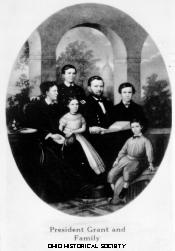
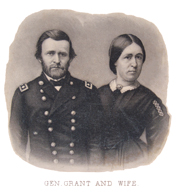
Grant and Lincoln: an illustration

Within a few days of his promotion, Grant decided to take Sherman’s advice – partially. He declined to make his HQ in Washington, a morass of political and social distractions, but he realized that the war in the east required his presence, for many reasons. His HQ would primarily be in the saddle, attached to the Army of the Potomac, still commanded by General George Meade. The two generals (who had never met) formed a cooperative relationship.

For six weeks, Grant directed a fierce chase through central Virginia after Confederate General Robert E. Lee’s Army. The casualties were horrific, and “Unconditional Surrender” Grant gained another nickname: The Butcher of the Battlefield.

To make matters worse, it was an election year, and President Lincoln was far from confident that he would be re-elected. Everything depended on how the war was going – and it was not going well.

By late May, Grant and Meade settled in for a long siege in Petersburg, VA.

Petersburg

The city of Petersburg is around twenty miles from Richmond, then the capital of the Confederacy. Grant had determined (against traditional military thinking) that Richmond per se had little strategic importance to the war. Petersburg, and its “suburb” of City Point, had vital importance.

It was at the confluence of two large and deep rivers, the James and the Appomattox. It also was the hub of five separate railroads, all leading south and west. This was where supplies to feed and forage the Rebel Army were distributed. This was where incoming feed and forage from the deep south and west (generally unaffected by the fighting), came to replenish the rebels’ dwindling supply. The Union army was determined to keep those supplies dwindling.

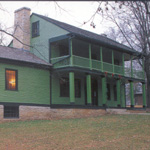
Modern photo of the Eppes home

The little village of City Point, on a spit of land the outskirts of Petersburg about six miles from the front lines, had a deep port on the James River, suitable for Union supply ships coming from the north. The ships came in droves, bringing ammunition and weaponry, food and clothing, forage for the horses and mules, an enormous amount of building supplies and sundries, including twenty-five locomotives and 275 railroad cars brought by barge from Washington, D.C. to provide their own transportation.

Grant’s HQ

Interestingly enough, while the “best quarters available” were usually reserved for the General, Grant assigned the spacious Appomattox Plantation mansion at City Point (owned and vacated by Confederate Doctor Richard Eppes), to Quartermaster General Rufus Ingalls, whose daily traffic was nonstop. Grant had a small two-room cabin built nearby for his own modest needs.

Quartermaster General Rufus Ingalls

Lincoln Visits City Point

With the fallout from the enormous casualties of Grant’s Overland Campaign in early spring, and with the upcoming election boding poorly for the President, Lincoln, as commander-in-chief decided to visit his new General of the Army and assess the situation in person. Lincoln, like Grant, had come the conclusion that the Civil War had become one of attrition. Last man standing. The North had more men and resources. Lincoln’s trip was a brief one, between June 21-23, 1864. He boarded the USS Baltimore in Washington, in the late afternoon of June 20, accompanied only by his son Tad, and Assistant Secretary of the Navy Gustavus Fox. They arrived at noon on the 21st.

On this brief visit General Grant suggested that the President might welcome a visit to some of the troops – something the POTUS always enjoyed. Offering the President his own horse, Cincinnati, Grant rode his other mount, Jeff Davis, and escorted his CinC to the front.

General Horace Porter

According to Brigadier General Horace Porter, “…by the time they had ridden the nearly 10 miles to where the troops were, “he was completely covered with dust, and the black color of his clothes had changed to Confederate gray. His pants legs had hiked up above his ankles, and he looked like a country farmer riding into town wearing his Sunday clothes.”

The troops cheered him enthusiastically. Then Grant suggested they visit the “colored troops, who behaved so handsomely…in front of Petersburg last week.” He was referring to the U.S. Colored Troops of General William F. “Baldy” Smith’s Eighteenth Corps, who had charged the Confederate rifle pits on June 15.

Originally iffy, Grant had formed a good opinion of Black soldiers. He told his division commanders to enlist runaways and freed slaves when possible. He also insisted that they be paid promptly, and ordered white soldiers to be court martialed if they abused their Black compatriots.  

Lincoln was delighted to meet the troops, noting that he had read the reports of their valiant efforts. He also mentioned to Grant how he too, had been initially hesitant to authorize raising Black troops, preferring to hire them as laborers. He was sincerely pleased that they had performed so well.

If Lincoln was happy to meet them, it was nothing compared to how they felt about meeting him. General Porter wrote that “some of them kissed his hands, while others ran off crying in triumph …that they had touched his clothes. The President rode with bared head; the tears had started to his eyes, and his voice was so broken by emotion that he could scarcely articulate the words of thanks and congratulation which he tried to speak to the humbled and devoted men through whose ranks he rode.

Porter continued. “The scene was affecting in the extreme, and no one could have witnessed it unmoved.

Sources:

Porter, Horace – Campaigning With Grant – Mallard Press, 1991

https://www.nps.gov/pete/learn/historyculture/city-point.htm

https://www.waymarking.com/waymarks/WM7XN5_Abraham_Lincoln_visits_City_Point_VA

https://archive.nytimes.com/www.nytimes.com/books/98/02/22/home/5230.html

Posted in A POTUS-FLOTUS Blog, Abraham Lincoln, American Civil War, Nifty History People, Ulysses S. Grant | Tagged , , , , , , , , , , , , , , , , , , , | 2 Comments

Theodore Roosevelt Sr. and Jr. and the Museum of Natural History

This was actually a “family” undertaking.

The Father

On April 8, 1869, a formal meeting was held in the front parlor of the Roosevelt home, at 28 East 20th Street in New York City, to draft the charter that established the American Museum of Natural History.

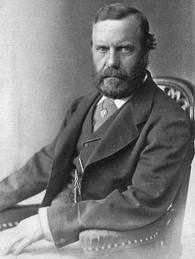
TR SR
Theodore Roosevelt Senior

Theodore Roosevelt Senior was a New York Knickerbocker – one of the descendants of an old Dutch family who settled in New York around 1650. They had come to seek their fortune, which became a large one, and proceeded to take a prominent role in society, both socially and morally. The family owned a large and successful plate glass company, and by the end of the Civil War, with new building projects abounding, were among New York’s millionaires.

Roosevelt Sr. was also considered one of New York’s true philanthropists. He took his Christian responsibilities seriously, and devoted both his fortune and his time to numerous charitable causes. No doubt his interest in Natural History was sincere, but it was a passion deeply ingrained in his son.

The Son

On the day of the meeting to establish the Museum of Natural History, his son, Theodore Junior, was ten years old. He was asthmatic and frail, and as such had been unable to run and play like other boys his age.

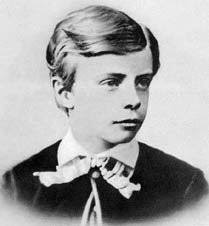
This image has an empty alt attribute; its file name is youngtr.jpg
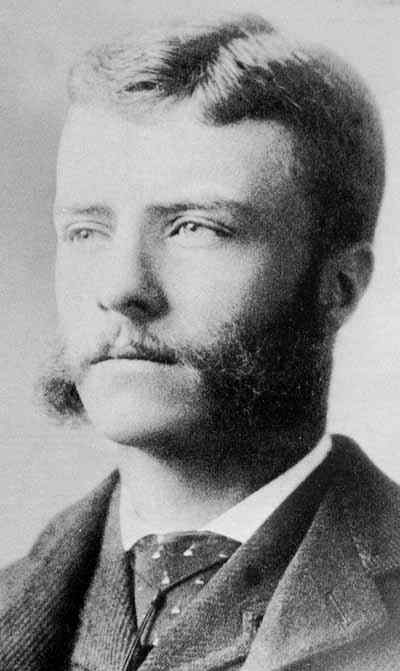
Young Theodore, Jr.

Nevertheless, his mind was clear and open, and his range of interests bordered on the phenomenal. By eight, he had begun a serious collection of leaves and rocks, insects, small critters, and especially birds. He learned their names – including their technical Latin ones – their structures and habitats and the sounds they made. He began to study taxidermy. By ten, he organized the “Roosevelt Museum of Natural History” in his bedroom.

Part of TR’s boyhood collection

No doubt the visitors to the Roosevelt front parlor on April 8 were invited to view the precocious boy’s collections, and nod with encouraging regard.

The Next Five Years

Serious museums, like the one the senior Roosevelt envisioned, do not take shape overnight. Deep pocketed sponsors and dedicated trustees had to be recruited, funds had to be raised, property purchased, architectural plans prepared, etc., etc. And while Father Roosevelt was deeply engaged in those activities, his son was undergoing many changes of his own.

This image has an empty alt attribute; its file name is college-age-tr.jpg
TR, young man to be reckoned with.

Asthma, then as now, is a serious pulmonary condition very common to small children. It is also common, then as now, for asthma to abate considerably once the child reaches puberty. In Theodore Junior’s case it did, coupled with the dedicated effort undertaken by both father and son, to “make” the boy’s body. Gym equipment was purchased and installed in an upstairs room, and an off-duty New York policeman was hired as a part-time personal trainer.

TR (as he would later be called) was as diligent in physical education as he was in intellectual efforts, and he became the poster boy for the strenuous life. His acquired physical strength and stamina was coupled with a pair of eyeglasses to correct his nearsightedness, and by the time he was ready to enter Harvard, he was a young man to be reckoned with – on many levels.

But his interest in natural history would remain lifelong. On many levels.

The Building

For the better part of a decade, what would become the American Museum of Natural History was housed in New York City’s Arsenal, as various collections were amassed, cataloged and codified. The Arsenal still stands, as does the Museum building at 200 Central Park West, near West 77th street. Its cornerstone was laid in 1874, and opened in 1877.

While it is likely that Theodore Roosevelt Senior was present for the grand opening, he was already in poor health. He died of cancer in early 1878, at only 46. His son was nineteen.

As one would imagine, in the course of 150 years, that building has been expanded and revamped several times, and now encompasses 27 interconnected buildings plus the world-famous Hayden Planetarium and a significant library.

It also houses the small “Roosevelt” Museum that TR had begun when he was a child. A formal two-story Memorial was commissioned and dedicated to TR a few years after his death in 1919.

One of TR’s specimens

TR: The Complicated Conservationist

Theodore Roosevelt was undeniably a man who loved hunting as a sport, and throughout his adult life he made time to camp and hunt and enjoy nature in all its forms. His home at Sagamore Hill is filled with massive trophies.

He was also a dedicated conservationist, and during his presidency he created countless preservation sites to protect them against the intrusions of mankind. Those acts were not only his most lasting legacy, but perhaps the ones he treasured most.

There is a wonderful story about POTUS TR on a camping trip out west with a small party. They discovered a “previously unknown” type of desert rodent. It fascinated the President, who immediately shot it. And while his companions enjoyed the benefits of nature for the rest of the day, TR spent the the time with his dissecting tools and slides, preparing his newfound specimen for scientific research. It was said that his methodology was flawless. And he had such a good time doing it!

We tend to forget that TR, the naturalist, was extremely knowledgeable in botany, zoology, ornithology, and related sciences, but in the nineteenth century, there were few avenues for monetary gain, and even fewer where he might “make his mark” – something important to him. Today, TR could easily have a career as a naturalist. And probably a TV series.

He would be the first to remind people that “critters” are needed for scientific study, the same way cadavers are needed to teach medical students.

TR, with his broad outlook and multi-interests also knew they are not incompatible.

Sources:

Miller, Nathan – Theodore Roosevelt: A Life – William Morris, 1992

Morris, Edmund – The Rise of Theodore Roosevelt – Coward McCann, 1979

https://millercenter.org/president/roosevelt/life-before-the-presidency

https://nypost.com/2016/04/17/how-teddy-roosevelt-started-the-museum-of-natural-history-in-his-living-room/

Posted in A POTUS-FLOTUS Blog, Nifty History People, Theodore Roosevelt | Tagged , , , , , , , , , , , , , | 3 Comments

Poor Ex-FLOTUS Julia Tyler

Literally.

Rich FLOTUS Julia Gardiner Tyler

Julia Gardiner (1820-1889) was a wealthy New Yorker. Her father, David Lyon Gardiner owned considerable property in Long Island. Her mother, Juliana MacLachlan was the only child of an even wealthier brewer.

Julia and her two brothers and sister were given every advantage that money could buy. A good finishing school education, fine clothes, jewelry, carriages, vacations, and the opportunity to meet and mingle with the rich and famous of society. It also included a two-year trip abroad when Julia was around nineteen. They shopped. They also met and mingled with a European titled and privileged social set.

The lovely Julia.

Pretty, well-mannered, and gifted in the feminine arts, Julia and her sister were hits. When they returned, her father (who had served a couple of terms as NY State Senator and retained the title) decided that their now-marriageable progeny might benefit from a mix and mingle with American hierarchy, ergo a “season” in Washington.

There she met President John Tyler, whose ailing wife would die within the year. He was enchanted, and despite the 30-year age gap between them, they married in 1844. She served as First Lady for eight months and was delighted to plow Gardiner funds into fixing up a dowdy White House.

Tyler was not re-elected however, so the newlyweds went to live at Sherwood Forest, his recently built home on the Virginia peninsula.

Adopted Daughter of Dixie

The wealthy and somewhat spoiled New York belle adapted well in Virginia. Her social graces, pleasant disposition, and above all, wealth, translated easily into Southern culture. Julia happily took her turn hosting dinners and balls and barbecues as mistress of a successful plantation.

Sherwood Forest

The Tylers were happy, and seven little Tylers made regular appearances – in addition to the seven grown Tyler children of John Tyler’s first marriage.

Julia wrote home regularly to her mother and surviving siblings, usually enclosing a wish-list of difficult to find items she wanted for their home. They were glad to oblige.

For fifteen years, life was good, even with the darkening clouds of war.

The War and The Beginning of Julia’s Troubles

When the Civil War began, John Tyler, now seventy, was naturally torn. He had been President of the United States, and felt a deep affection for his country, and the responsibility of being an elder statesman. But like many Southerners, his state was his country. And after an aborted try at a last-ditch “peace conference” that he was asked to chair, Fort Sumter put an end to any last-ditch efforts. Virginia seceded along with the other Southern states, and the former President was elected to the Confederate congress.

Elderly John Tyler

But even before he could take his seat, he died.

Julia at 41, was a widow with seven children under fifteen, a great many debts, and a large plantation which included around 70 slaves. And as expected, between the war and the Tyler “first” children, it would take years for the estate to be settled, and the Tyler money, which was always comfortable, was never in league with the Gardiners.

Julia Goes North

Mrs. Ex-President Tyler (as she referred to herself) had no intention of going north at first. In fact she was generous in loading wagon after wagon with supplies for the Confederate Army. But in 1862, Union General George McClellan mounted a massive campaign on the Virginia Peninsula, very very close to the Tyler home. “Mrs. Ex” and her children were seriously in danger, and her friends urged her to apply for safe passage north where she had family.

She applied, and safe passage was granted – provided she take the oath of allegiance to the Union. She adamantly refused. She did however send her older children care of her mother.

Mrs. Gardiner’s mansion in Staten Island

Selling her expendable items of value, in 1863 she arranged a circuitous route, traveling with the two youngest children, first to Wilmington, NC, and then to Bermuda, where she found passage on a ship to New York. There they took refuge in the elegant Staten Island mansion of Juliana Gardiner. Some time later, she learned of the devastation of Sherwood Forest. While it had not been burned, it had been vandalized past repair.

Perhaps worst of all, was her growing estrangement with her last surviving sibling, David Gardiner, also residing in his mother’s household. A staunch Union supporter, he bitterly resented his sister’s Confederate support, which included distributing anti-Lincoln pamphlets and raising money and goods for Southern prisoners-of-war languishing in Northern prisons. Their arguments and quarreling became incessant, and borderline physically violent.

Meanwhile…

Juliana Gardiner, a formidable woman now past 60, had witnessed the deteriorating relationship between her two children, and took her daughter’s side. She asked David to leave her household and move to his own nearby property. Bitter and angered, he left and never saw her again.

Meanwhile-some-more, Juliana decided to make a new will. Only a day before her death in 1864, from a severe case of bronchitis, the will was signed. Julia was the chief beneficiary, which included her mother’s Staten Island home, and some rental income on property designated for David, until such time that the federal government made restitution for losses to the Tyler estate in Virginia.

Older, but still lovely

It was a complex situation, which as might be expected, severed the sibling relationship completely, to a point that the will was contested by David Gardiner and fought in the courts for years.

Between court costs and the damage to Sherwood Forest and other properties she owned, waiting long years for federal compensation and a hard-lobbied pension as a former FLOTUS, plus raising and educating her children, Mrs. Ex-President Tyler was strapped for money for the rest of her life, forced to live proud, but frugally.

A far cry from the sumptuous life she had led for forty years.

Sources:

Anthony, Carl Sferrazza – First Ladies 1789-1961, William Morrow,1990

Seager, Robert III – And Tyler Too, McGraw Hill, 1963

Julia Tyler

https://www.whitehouse.gov/about-the-white-house/first-families/julia-gardiner-tyler/

Posted in A POTUS-FLOTUS Blog, John Tyler | Tagged , , , , , , , , , , , , , , , , | 1 Comment

Herbert Hoover The Dam Story

The Colorado River is a mighty one, taking eons to carve out the Grand Canyon.

HH: The Great Engineer

Herbert Hoover (1874-1964) was a true Horatio Alger story. Born to a poor farmer-blacksmith in rural Iowa, he was totally orphaned by ten, and farmed out to relatives in Oregon. They were kind to him, but it was a lonely adolescence. In high school, he took a summer job at an engineering firm, asked a million questions, and decided that engineering would be his career choice.

When he graduated, Stanford University in Palo Alto, CA had just opened its doors. Tuition was free. But with only a small amount of “seed money” for room, board, books and sundries, he had to take on a variety of part-time positions. With his own natural talents, a willingness to assume responsibility and work hard, he earned a reputation as someone to “keep an eye on.”

Young Hoover

His professors liked him and made sure he was introduced to all the major mining interests in the west. 

When he graduated however, the country was in the midst of a serious economic recession and the “major mining interests” had no openings, although they urged him to contact them again in a few months. But he needed money to live on and could not wait. So he took the only available opening – pushing an ore cart in the mines for 10 hours a day, six days a week – paying a sumptuous $12/week. The miners liked him – he asked a million questions. The owners liked him too. He worked hard and never complained.

Within six months he had a better position that paid $2000/year. In four years, he was earning $40,000/year. That same year, 1899, the President of the United States earned $50,000/year. By the time he was 40, Hoover was a millionaire several times over.

The Great War and Change of Career

When the Great War (WWI) began in Europe in 1914, Hoover was a world renowned mining consultant living in London, with offices in six countries. Asked by some friends to “volunteer” sorting out transportation problems for his fellow-Americans, Herbert Hoover found a new life choice: humanitarianism on a grand scale.

Herbert Hoover, the Great Engineer

It was only a matter of time before President Woodrow Wilson summoned him home to manage some war efforts in the USA. Hoover hadn’t lived in America since he graduated from Stanford.

He was happy to return. With a solid private income, he divested most of his professional mining interests, and devoted his time to philanthropy.

Again, it was only a matter of time before high political office fell into his lap. Under both Presidents Harding and Coolidge, he served as Secretary of Commerce.

The Dam

Damming the Colorado River had been on the minds of engineers for decades. The river was wild, flooded regularly, and wreaked havoc on the ranchers and farmers and town dwellers in the southwest. After the Great War, the technology had caught up with the need, and plans for the great project were undertaken.

It fell under the auspices of the Department of Commerce, and it understandably became Hoover’s pet project. It is a fair assumption, that had HH not been Secretary of Commerce, he would have been engaged as an expert consultant at some (or various) points of the project.

The actual construction of the huge dam began in 1931, when Hoover was President. By Act of Congress, it was to be called the Hoover Dam.

Undermining the Dam

Unfortunately, the Hoover administration coincided with the start of the Great Depression – a severe economic downturn lasting more than a decade. For all his skills and talents as a great organizer, and his own personal philanthropy (he never took a salary for his public services), Hoover lacked the political and personal skills to inspire a populace that was become more and more despondent.

This image has an empty alt attribute; its file name is charlesmichelson.jpg
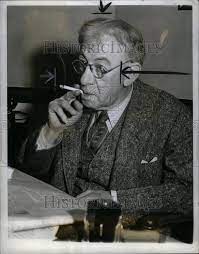
Charles Michelson, spoiler

By 1932, when the country was in the depths of economic woes, Hoover was up for re-election against Franklin D. Roosevelt, a charismatic opponent with a broad grin and a famous name. The Democratic National Committee had also engaged its first paid publicity director, Charles Michelson.

Michelson, a western newspaper reporter past sixty at the time, devised a powerful theme: Make Hoover’s name synonymous with Hoovervilles – the shantytowns for unemployed homeless cropping up in virtually every city. According to Michelson, to do that most effectively, Hoover’s name and the mighty engineering marvel harnessing the Colorado River needed to be completely disassociated.

Through dozens of newspaper and magazine stories, the dam under construction was constantly referred to as “the dam in Boulder.” Boulder, Nevada was a tiny town, population not-a-lot, but would grow by several thousand, once the workers, their families and ancillary services moved in. And “the dam in Boulder” was repeated over and over during the next four years until it became Boulder Dam – featured as Boulder Dam on the maps and the guidebooks and the newsreels and the picture postcards.

This image has an empty alt attribute; its file name is hoover-dam.jpg
The Dam in Boulder

The fact that it was originally called the Hoover Dam was all but forgotten by the time it opened in 1935. The former President wasn’t even invited to the ceremonies.

Hoover, characteristically, did not complain, nor did he ever hold it against FDR personally. But according to the archivists at the Herbert Hoover Presidential Site, he had a blue porcelain Chinese bowl featuring a fierce dragon – and he named it “Charlie.”

Correction…

A dozen years passed before Boulder Dam was rechristened.

Truman and Hoover – close friends.

After FDR died, Harry S. Truman, overwhelmed by the responsibilities on his new plate, reached out to the only living former President, who was happy to be of service. The two men, both midwestern farm boys who grew up the hard way, formed a deep and lasting friendship, and in 1947, Boulder Dam was formally renamed the Hoover Dam. On the maps and the guidebooks and newsreels and postcards. And T-shirts.

Go see it. It is truly an engineering marvel.

Sources:

Smith, Richard Norton – An Uncommon Man: The Triumph of Herbert Hoover – Simon and Schuster, 1984

http://www.hoover.archives.gov/info/HooverBio.html

https://www.history.com/topics/great-depression/hoover-dam

https://millercenter.org/president/hoover/life-before-the-presidency

Posted in A POTUS-FLOTUS Blog, Herbert Hoover | Tagged , , , , , , , , , , , , , , , | 2 Comments

Mary Lincoln: The Lizzie Friends

This image has an empty alt attribute; its file name is young-mary-lincoln.jpg
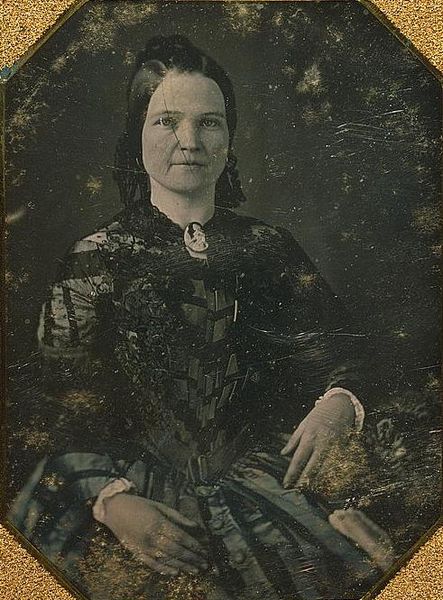
Young Mary Todd Lincoln

“Elizabeths” were imporant in Mary Lincoln’s life – and that doesn’t even include her mother Eliza and stepmother Betsey!

Friends in General

It has been said that some friends are for a season, a reason, or a lifetime. Hmmm.

But there are several kinds of friends. Deep, close friends of course. Some childhood friendships (including family) truly do last a lifetime. Then again, some decades-long friendships are no more than pleasant acquaintances. Hello-neighbors or nice co-workers or fellow parishioners or club members. The shopkeepers who have served you year in and year out.

Or the sense of “friend or foe.” People – even strangers – who wish you well, and/or certainly mean you no harm.

We all have friends in those categories. They all have their own importance.

Little Mary Todd

Mary Todd (1818-1882) had six full siblings. She was only six when her mother died and her father remarried 18 months later resulting in another eight “halfs”. The “first Todds” had a difficult relationship with their stepmother, and couldn’t wait to leave the household.

This image has an empty alt attribute; its file name is mary-niece-katherine.jpg
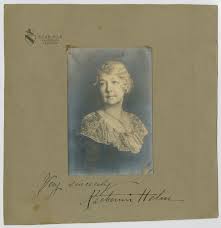
Mary Lincoln’s niece and first biographer

When Mary was pre-adolescent, she had a “friend” in Elizabeth Humphreys, a niece of her stepmother. They shared a room for a while. This relationship is only noted in the first biography of Mary Lincoln, written by her niece-author, Katherine Helm, by then elderly. The recollections were mainly from her mother, who was even more elderly – and eighteen years younger than Mary Lincoln! There does not appear to be any long-term continuation of the Lizzie Humphrey childhood chumminess.

By the time Mary was in her young adolescence, she chose to board at a finishing school only a mile from their house.

Miss Todd and Mrs. Lincoln

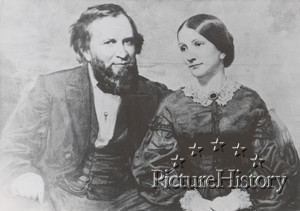
With the four full Todd sisters from the “first” family feeling like the proverbial step-children, Mary eldest sister married young Ninian Edwards, Jr. at sixteen, and went to live in Springfield, IL. As the daughter-in-law of Illinois’ first Governor, she was determined to create a suitable “society” for a state capital – and who better to populate that society than her own sisters? Each were brought to stay with the Edwards’, and to marry appropriately.

Mary’s happiest, or at least most carefree time, were arguably the five years she lived chez Edwards. She had a nice coterie of friends – male and female. Their group entertained each other regularly at luncheons or teas, hosted parties and dances, and attended whatever pleasant outings were available in growing Springfield.

This image has an empty alt attribute; its file name is ninian-and-elizabeth-edwards1.jpg
Ninian and Elizabeth Edwards

Once she met and married Abraham Lincoln, the concept of friendships changed. It was the Victorian age when a woman’s husband became her “all.” (Those were the specific words used – then.) The chums of girlhood might remain naturally, but the closeness changed. Once married, they no longer called each other by first names. They were “Mrs.” whoever. And Mary was a Todd, and Todd’s were, in a phrase, kind of snooty. Their manners and bearings would be impeccable, exactly what was expected in society.

More Lizzies

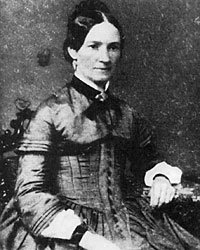
Mary had a close cousin in Springfield: Elizabeth Jane Todd Grimsley (Brown). Her father and Mary’s father were brothers. Some six years younger than Mary, they nevertheless became good friends, and Lizzie was a bridesmaid at the Lincoln wedding. She married four years after the Lincolns, and became an integral part of the Lincoln-Todd family-social set.

This image has an empty alt attribute; its file name is lizziegrimsley.jpg
Cousin Lizzie Todd Grimsley

When Lincoln was inaugurated in 1861, Cousin Lizzie went to Washington for the festivities, and was prevailed upon to stay for six months. It was a mixed bag. Wonderful social events and introductions, but also a fair amount of babysitting and nursing the young Lincoln boys. Lore says she finally wrote to her family in Springfield suggesting that they “send for her,” since she was becoming tired of Washington.

Many years later, she penned a short memoir of her six-months in the White House.

Nevertheless, and despite a continuation of the relationship, there is an absence of any record of close contact between the Todd cousins.

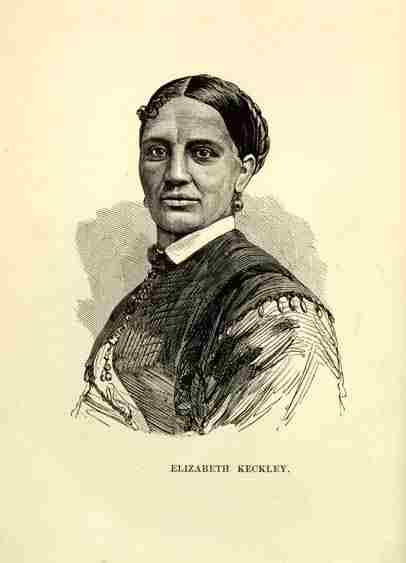
Lizzie Keckley is a different story. She and Mrs. Lincoln were same age. Keckley was born a slave in Petersburg, VA, but via her talents with a needle, bought her freedom a few years prior to Lincoln’s inauguration. She met incoming FLOTUS Mary Lincoln shortly before the inauguration, having been recommended as a “mantua maker.”

This image has an empty alt attribute; its file name is elizabethkeckley.jpg
Mrs. Lincoln’s confidante Elizabeth Keckley

Mary hired her, and for the next four years, she was an intimate and indispensable member of the Lincoln household. With the First Lady overcome in great measure by grief, worry and personal unpopularity, she became more and more dependent on Lizzie Keckley. But the relationship, while close and confidential, was still separate. Mary called her dressmaker “Lizzie.” She called Mary “Mrs. Lincoln.”

The severing of that close relationship is a complicated story. Suffice it to say that it ended some time after Lincoln’s assassination – mostly due to money, or lack thereof.

The First and Last Lizzie

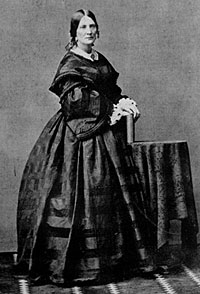
Mary’s relationships was closest to her sister Elizabeth, five years her senior. It was this Lizzie who semi-mothered her when the first Mrs. Todd died, and who she always regarded as a mother image.

This image has an empty alt attribute; its file name is elizabethedwards.jpg
Mature Elizabeth Todd Edwards

It was Lizzie who brought her to Springfield and introduced her into “society.” It was Lizzie who remained her true friend always – even punctuated by some years of estrangement following Lincoln’s assassination. It was Lizzie who was also a true friend to Robert, the eldest Lincoln son, who turned to his aunt in times of need.

And it was Lizzie who opened her home to Mary when she needed “a safe environment” following her brief sojourn in a sanitarium.

And finally, it was Lizzie to whom Mary turned, when her health began to fail. And it was Lizzie, the lifelong sister-mother and friend, who did not fail to take her in.

Sources:

Baker, Jean- Mary Todd Lincoln: A Biography – W. W. Norton & Company, 1989

Clinton, Catherine – Mrs. Lincoln: A Life – Harper Collins, 2009

Helm, Katherine – MARY: Wife of Lincoln – Harper and Brothers – 1928

http://www.firstladies.org/biographies/firstladies.aspx?biography=17

https://www.loc.gov/exhibits/civil-war-in-america/biographies/elizabeth-keckley.html

Posted in A POTUS-FLOTUS Blog, Abraham Lincoln, Nifty History People | Tagged , , , , , , , , , , , , , , , , , , , , | 3 Comments

Calvin Coolidge: Losing Grace

This image has an empty alt attribute; its file name is grace-coolidge.jpg
Calvin Coolidge deeply loved his wife. Always…

But…

Most modern historians conclude that Coolidge was one of the most “sexist” Presidents we ever had.

Born in 1872 in rural Vermont, Calvin Coolidge was deeply imbued with the Calvinist religious philosophy (hard work, and saving and knowing one’s place in the scheme of things), and the Victorian Age. Coolidge’s mother, Victoria, named for the British Queen, died when her son was around twelve. His only sister died two years later. It was just Calvin and his father John, and the two became very close.

Calvin went to Amherst College in Massachusetts, moved to the western part of that state, read law and passed the bar. He settled in Northampton, had a modest practice, and began augmenting his income by political activity and public service.

Coolidge the young dude!

When he met Miss Grace Goodhue, a teacher at the Clarke School for the Deaf, he knew exactly what he wanted: A sensible, agreeable wife who was happy in the traditional woman-code. Home and family. That Grace Goodhue was also educated, attractive and popular, was a bonus he always treasured. But the agreeable wife and home-family was the essence.

Even when her parents were less than enthusiastic about their courtship, believing their only child could do a lot better, Calvin persisted. So did Grace. He loved her and she knew it.

The Love Part

When they married, Coolidge was 32. Grace was 26. They had both been on their own and had experienced the inner pleasure of making their own way. But they saw eye-to-eye. Coolidge was the bread winner. Grace was the bread baker. Whether she was good at it, or even enjoyed it, did not matter.

This image has an empty alt attribute; its file name is young-coolidge-family.jpg
The young family Coolidge

She was happy being Mrs. Coolidge, housewife. In time, she was happy being Mrs. Coolidge, mother of two sons.

Interestingly enough, despite the deep Coolidge sense of thrift, he was very generous regarding Grace’s wardrobe. He had a good looking, stylish wife, and was proud of her. He liked showing her off. He was the one who enjoyed shopping for her clothes, and bought her a closet of hats.

Sexism and Love in the White House

This image has an empty alt attribute; its file name is calvin-and-grace.jpg
The First Couple of the 1920s

When Coolidge suddenly became President in mid-1923, following the death of Warren Harding, their life changed. Sort of. His did, hers not so much, albeit in a much bigger house. He advised his pretty and stylish wife “not to do anything new.” She decided to try horseback riding for exercise; he said no, so she continued her daily hour-long walk in the morning. But she never gave an interview, or made a speech other than “thank you for the flowers.” She was totally traditional. And charming.

Coolidge had inherited a Secret Service Agent, Col. (honorary) Edmund Starling. The taciturn New Englander and the Kentucky Baptist had a instinctive understanding of each other, and the two became friends, in their own way.

This image has an empty alt attribute; its file name is coolidge-and-starling.jpg
President Coolidge and Col. Edmund Starling

Starling related in a book he co-authored years later, that periodically, particularly when the Washington heat and Mrs. Coolidge’s sinuses were at odds, she returned to Northampton. When apart, they wrote each other daily.

Anyway, according to Starling, when the President’s personal mail was brought to him each day, he flipped through quickly for the familiar handwriting. Then he took his wife’s letter and slipped it into his pocket. A short time later, he went to his bedroom, closed the door, and read the letter in private.

Losing Grace

In mid-summer of 1924, sixteen-year-old Cal Jr. died. He had been playing tennis at the White House, rubbed up a blister which became infected and raced through his blood system. He died within a week. His father was never the same, and “Silent Cal” became practically mute.

This image has an empty alt attribute; its file name is cc-fishing1.jpg
Suit, tie and hat – Coolidge fishes

Col. Starling was genuinely worried about his boss, who had never had any hobbies to afford respite from his day-to-day cares. The Secret Service agent finally introduced the President to fishing – a quiet pastime, with fresh air and solitude. Coolidge reluctantly agreed – and liked it.

In 1927, they spent some time at a fishing lodge in SD, not far from Rapid City, where Coolidge could rent office space in the local hotel. Telephone and telegraph wires were installed, along with a secretary – and members of the press.

This image has an empty alt attribute; its file name is cc-fishing2.jpg
CC was a perfect subject for the 1920’s press

Early one morning, Grace, still on the sunny side of fifty, decided to take her daily walk, along with her regular Secret Service escort, bachelor James Haley. It was a wooded area, (fishing lodges usually are), and it was unfamiliar. When the POTUS returned from fishing, he inquired if Mrs. C. was ready for lunch. She had not returned – but was expected shortly.

The President waited another ten minutes and inquired again. They still had not returned.

After waiting more than an hour for the two “hikers”, Coolidge was seriously concerned, and was pacing up and down. An accident? Foul play? Hanky-panky? That thought was quickly discounted. But Coolidge’s tight-lipped silence spoke volumes. And the ubiquitous newspaper reporters were taking notes.

This image has an empty alt attribute; its file name is grace-coolidge-jim-haley.jpg
Mrs. C. and her bachelor Secret Service escort

While a search party got underway, Agent Haley and Mrs. Coolidge finally appeared, none the worse for wear. They had merely gotten lost, and were going in circles for a time.

The Upshot

Of course the newspapers made hay with the incident.

The Boston Globe’s headline read “Wife’s Delay Taxes Coolidge’s Patience. She Goes Off on Long Hike and Luncheon Gets Cold. President Sits on Porch an Hour Waiting for Her to Explain”.

The Boston Herald headlined its story “Wife’s Long Hike Vexes Coolidge: President Paces Porch as First Lady Hits 15 Mile Trail”.

The Post announced “First Lady Almost Lost: President Worried.

Nevertheless, the President had been badly unnerved at the mere thought that something might have happened to the one he loved best. Two weeks after they returned to Washington, Agent Haley was reassigned.

Sources:

Anthony, Carl Sferrazza –First Ladies 1789-1961, William Morrow,1990

Lathem, Edward Connery – Meet Calvin Coolidge: The Man Behind the Myth – Stephen Greene Press, 1960

Sugrue, Thomas & Starling, Col. Edmund W. – Starling of the White House – Peoples Book Club, 1946

https://www.whitehouse.gov/1600/presidents/calvincoolidge

http://www.firstladies.org/biographies/firstladies.aspx?biography=31

Posted in A POTUS-FLOTUS Blog, Calvin Coolidge, Nifty History People | Tagged , , , , , , , , , , , , , , , , | 2 Comments

Eisenhower 1956: The Second Term Decision

At the end of his first term, Ike was 66,, and one of our oldest Presidents to that time.

President Dwight D. Eisenhower

The Life of Duty, Honor, Country…

Dwight Eisenhower (1890-1969), one of six strapping corn-fed farm boys, was accustomed to hard work and doing what was expected of him practically from birth.

Once he graduated West Point (1915), he had hoped to be sent to fight The War to End All Wars, but was disappointed by his stateside assignments. Nevertheless, he did his duty, and became one of the foremost military experts in the newest technology: tank warfare.

This image has an empty alt attribute; its file name is youngike.jpg
Ike Eisenhower, tank maven

His superiors, keeping their eyes open for up-and-coming candidates for high level leadership, cast a benevolent eye on young Ike Eisenhower. He excelled (through hard work and good attitude) in every assignment or class – whether he liked it or not. He did not disappoint. It was his duty.

By the time WWII was declared, Ike, a fifty-year-old colonel, was elevated over literally dozens of superior officers for ultimate command. His leadership, decisions and actions are well known throughout the world. He did not disappoint.

Middle-Aged Ike…And Health

After the War, General Ike still did his duty. Writing Crusade in Europe, a best-selling memoir of the War gave him the financial security that a soldier’s life never did. He had plenty of choices, but always followed the path of “duty.”

Short and sweet!

Ike suffered the aches and pains of a long-standing chronically troublesome tummy, and a few other ailments common to middle age. Ike lived hard and worked hard. He was a 3-pack a day smoker, although he quit in the late ’40s. Medical practice had improved with the great discoveries of the 1930s and 40s, but a political candidate’s health was not considered that important. Then.

Despite his reluctance and downright disinclination, politicians on both sides of the aisle came a-courtin’ for Ike to run for President. He had never been a political creature. Soldiers are trained to obey their Commander-in-Chief – no matter who.

When the point was made that “it was his duty” to run, 62-year-old Ike finally conceded and admitted he was a Republican. He won in a walk. Few Presidents were better known, more popular, or beloved. Or trusted. He also expected (because of his age), that he would serve only one term.  

So It Was A Surprise…

This image has an empty alt attribute; its file name is wilsongrayson.jpg
Frail Woodrow Wilson

… two years into his Presidency, Ike woke in the middle of the night with chest pains and cold sweats. The doctor was summoned immediately – and quietly. It was a serious heart attack.

Things were different in the 1950s. Millions of people remembered the “crisis” of Woodrow Wilson’s stroke following WWI, and the iron wall of silence about his condition. Even more millions remembered the myriad of Franklin Delano Roosevelt’s health issues, and the unspoken conspiracy to keep them secret from the public. Half the country did not know he was crippled and couldn’t walk.

Chairbound FDR

Keeping Ike’s heart attack “news” to a minimum was not as hard as one might think in the ’50s. Aided and abetted by the President himself, his heart attack was reported honestly, but downplayed. He recovered.

I Do Not Wish To Be A Candidate for Reelection

The General was no fool. He also enjoyed his responsibilities and was an antsy patient. His heart attack mandated a fairly long convalescence, and Ike was bored. It is said that he paced up and down at his Gettysburg farm “like a caged tiger.” He needed to be back at work. Doing his duty.

But 66 is a pretty big number, and Ike made up his mind that he would not seek reelection in ’56.  He told VP Richard Nixon that he did not see how “he could run…with that sword of Damocles hanging over his head.”

After his heart attack in 1955

He wrote to his brother Milton, if I should show any signs of yielding to persuasion,“please call in the psychiatrist – or even better the sheriff.” He told House Speaker Joseph Martin, “I don’t want a second term. Four years in the White House is enough for one man.”

He believed he had truly fulfilled his “duty” to the country, advising the Republican National Chairman, “I’ve given my adult life to my country. I’ve done enough.”

Of course the politicians wanted Ike for another term. He was wildly popular – and trusted – at home and abroad. No one else in the political docket even came close. That part hit a vulnerable chord in Ike’s psyche. He confided to an old friend that he felt guilty, because he had not developed a suitable candidate to succeed him as President.

A Change of Mind

Finally, Eisenhower had a meeting with several of his closest political aides and confidants. They all urged him to run again – because he was the only Republican who could win in 1956. It was another call to duty, and Ike believed it was “a challenge I could not ignore.”

In June, 1956, only weeks before the nominating convention, Ike’s chronic intestinal woes suddenly flared up to a point that surgery was necessary. This time medical technology was up to better snuff. They finally determined the cause: ileitis, a serious bowel inflammation. A good sized section of his bowel needed to be bypassed, which it was.

Again, the severity was downplayed and Ike recovered, albeit very slowly. The doctors publicly insisted that the surgery was in no way life threatening, was not malignant and they were hopeful for a complete recovery. And, perhaps most importantly, his heart was unaffected.

But perhaps one key to Ike’s decision to run again, centered on “duty.” He was fearful about the constitutional ambiguities on presidential disability, and how to deal with it. Now, more than ever, he was determined to remedy that gap, preferably by constitutional amendment, a lengthy process. It wasn’t political. He needed the second term to accomplish this.

It was his duty.  

An amendment was finally passed in 1967 – and Ike lived to see it.

Sources:

Gilbert, Robert E. – The Mortal Presidency: Illness and Anguish In the White House – Basic Books, 1992

Nixon, Richard M. – Six Crises – Doubleday, 1962

https://millercenter.org/president/eisenhower/impact-and-legacy

https://www.jstor.org/stable/23359809

https://pubmed.ncbi.nlm.nih.gov/19213302/

Posted in A POTUS-FLOTUS Blog, Dwight D. Eisenhower | Tagged , , , , , , , , , , , , , , , , , , , , | 2 Comments

Ulysses S. Grant: The Homecoming

Ulysses S. Grant was never happier than with his beloved wife and children.

The Family Grant – later

USG & Julia: The Long Courtship

This image has an empty alt attribute; its file name is wedding-photo-of-grant.gif
Young Ulysses S. Grant

For Second Lt. Ulysses S. Grant, it was truly love at first sight when he met Julia Dent. Her brother Fred had been his West Point roommate. Being stationed after graduation at Jefferson Barracks in St. Louis, USG took a courtesy ride out to meet Dent’s family, who lived about ten miles from town. The Dents welcomed him warmly, and encouraged him “not to be a stranger,” and the 21-year-old soldier, unaccustomed to close family dynamics, began coming for Sunday dinner every couple of weeks.,

He finally met the eldest Dent sister (four brothers/three sisters, in that order) a few months later, when she graduated from finishing school. She was just shy of eighteen. The attraction between Grant and the plain young woman with the warm personality was immediate. He began coming around more often.

A few months later, Grant received new orders. He was being transferred to the Louisiana Territory – and possibly beyond. He found himself uncommonly depressed by the news, and determined that it was because he did not want to leave Miss Julia Dent. He had fallen in love.

When he asked her to marry him, they decided to have a “secret” engagement instead. She knew her parents would object: they were too young, and a 2nd Lieutenant was not a strong financial prospect.

This image has an empty alt attribute; its file name is grant-and-wife.jpg
The young couple – a few years later.

Their “engagement” lasted for four years, mostly by correspondence, and punctuated by the War With Mexico.

When he returned, he was 26, tanned, battle-hardened and a Captain. A man. She was 22. Old enough to marry.

Despite some private worries that their bonds may have frayed, once they saw each other again, everything fell into place. They married.

Newlyweds

Captain Grant and his bride began their mister-and-missus assigned to an army post in Detroit. Little Fred came along in due course. Then they were reassigned to Sacketts Point, NY, a lonely garrison near the Canadian border. But they were happy. Grant even believed that life in the army could be a good future and planned to apply to West Point, teaching mathematics – when there was a vacancy.

But with little “Buck” on the way, Grant was reassigned to the California-Oregon territory. Gold had been discovered in California, and the army needed a presence. The route of choice in the early 1850s was a dangerous slog across the Isthmus of Panama through disease-infested jungles. It was no place for a pregnant woman and a toddler. Julia went back to St. Louis. As soon as USG was settled, he planned to send for them.

The Sad Bad Times

Grant’s misfortunes (and there were several) while assigned out west for the better part of two years, are well known.

He had been given quartermaster duties, and while it undoubtedly gave him great insights into moving armies, he was bored.

As was customary, soldiers were permitted to engage in mild outside business interests. Grant invested a good chunk of his savings into a couple of ventures. Through no fault of his own, they failed and he lost his money.

But perhaps most of all, he was desperately lonely and homesick for the ones he loved best. When a letter finally arrived from Julia, she had enclosed a tracing of little Buck’s hand – the namesake son his father hadn’t seen. It is said that Grant wept. Maybe. He was not a weeper by nature, but no doubt the pain of separation affected him deeply.

This image has an empty alt attribute; its file name is julia-and-children.jpg
The ones he loved best.

He began helping himself to the community whiskey barrel and dipper behind the barracks. Unfortunately Grant was unable to a) control himself and b) hold his liquor. The effect of one or two drinks would become painfully obvious, and usually observed by those who could (and later did) do him harm.

He was finally given the choice: Resign, or be dismissed. He resigned.

A Long Road Home

This image has an empty alt attribute; its file name is white-haven2.jpg
The Dent house in St. Louis – it wasn’t green then.

With practically no money and no companions, Captain Grant began his way back to St. Louis and the wife and babies who would not remember him. Depressed and guilt-ridden for his long list of failures and failings, he was finally forced to wire his father in Cincinnati to “send money” so he could finish his journey. Jesse Grant was so incensed at his son’s irresponsibility, he even wrote to the Secretary of War to have his resignation disregarded. Nevertheless, he sent the money. But the Secretary of War did not rescind the resignation.

Grant had written to Julia, but said little of his ordeal. He merely told her that he had been given leave, and was coming home soon.

It was a forlorn, tired, dusty and sad-eyed Captain who finally rode up the path to the Dent family house. Two little children, about four and two, were playing on the porch. He recognized them immediately and knew they were his. He leaped off his horse and bounded up the stairs two at a time, clutching them, one under each arm, smothering them in kisses.

Little boys, being little boys, squirmed and shrieked at this stranger. Julia, hearing the commotion, came outside to investigate.

Her husband was home.

The Homecoming Decision

A couple of very fine historians have called Julia and Ulysses “soul mates.” This is as good a term as any. They were bound together, and needed each other to function well.

They had no secrets. In a very short time, ex-Captain Grant confessed all his woes to his beloved. His apathy in the army. His business failures and loss of their savings. And, above all, his pain of separation from her. All of which led to the whiskey barrel, and unbearable embarrassment and shame and guilt.

They vowed then and there that they would never be separated again for more than a few weeks. They never were.

Nine months later, their daughter Nellie was born.

Sources:

Grant, Julia Dent – The Personal Memoirs of Julia Dent Grant – G.P. Putnam’s, 1975

Korda, Michael – Ulysses S. Grant, The Unlikely Hero – Atlas Books, 2004

White, Ronald C. – American Ulysses, A Life of Ulysses S. Grant – Random House, 2016

https://millercenter.org/president/grant/life-before-the-presidency

Posted in A POTUS-FLOTUS Blog, American Civil War, Ulysses S. Grant | Tagged , , , , , , , , , , , , , , , | 1 Comment

FDR Changes His Will

Franklin D. Roosevelt was well born and well pedigreed.

But…

President Franklin D. Roosevelt

But when his seventy-something father died, FDR was still in college. His son was provided with a substantial yearly income, but Sara Delano Roosevelt was given the principal under her own control. She lived a long life, and never relinquished control until her own death. By that time, Franklin Delano Roosevelt (1882-1945) was President of the United States.

The Roosevelt home at Hyde Park belonged to Sara Delano Roosevelt.

FDR had invested a huge percentage of his own income back in the 1920s, when he purchased the Warm Springs, GA property and built a convalescent facility for polio patients – like himself. Ergo, while comfortably fixed financially, he was not nearly the wealthy man many perceived.

FDR invested his own money in Warm Springs.

Early in FDR’s Career…

…When he could still walk and dance and play golf, he became active in Democratic politics, and followed the career path of his distant Republican cousin Theodore, who, when FDR was at Harvard, was President of the United States. When FDR married TR’s favorite niece Eleanor, they became uncle-nephew. And, since TR was a superb politician, he not only understood FDR’s Democratic opportunities, but was happy to support his cousin-nephew.

So FDR became Assistant Secretary of the Navy, and in a semi-throwaway election, was the Democratic candidate for Vice President in 1920.

A young lady, barely out of her teens, had been recruited to help on the campaign. Possessed of excellent secretarial skills, a retentive and discerning mind, plus a good attitude, she was noticed by the handsome young VP-candidate and his family.

This image has an empty alt attribute; its file name is missylehand1.jpg
Young Marguerite LeHand

When the losing campaign (it was a rout) ended, FDR invited Miss Marguerite LeHand to join his “professional” family and manage his active schedule and correspondence. The younger Roosevelt children found it hard to pronounce her name, so she was nicknamed “Missy,” and it stuck. She, in turn, would call him “Effdie.”

Missy

Missy LeHand (1896-1944) was the youngest child in her family, and seems to have had some early childhood health issues, which may (or not) have resulted in a heart condition. Nevertheless, it never deterred her from schooling, secretarial training, ambition to be self-supporting and her absolute devotion to her fascinating boss.

In mid-summer 1921, Franklin Roosevelt contracted polio, which was a game-changer for all involved, including Missy. Her role as secretary, office-assistant, etc., now became part-time nurse-attendant, house manager, political aide, occasional hostess and companion to a man who was determined to a) restore his health, and b) keep his finger in the political pot.

That FDR was a charmer-first-class is well known. That Missy became a charmer as well, is lesser known, since she invariably kept discreetly in the background.

Missy was devoted to FDR

It was inevitable that she became aware of the dynamics of the Roosevelt household, with formidable mother, distant-but-caring wife, and five increasingly lonely children. It was Missy who accompanied FDR on his trips to swim in the warm waters of the South where he might regain some use of his legs.

She wrote… I came to know exactly how Mr. Roosevelt would answer some of his letters, how he would couch his thoughts. When he discovered that I had learned these things it took a load off his shoulders…

And she learned to be the companion-hostess that FDR needed badly. She learned to play poker, mix the cocktails, and help with his stamp collection. She knitted. He talked. She listened. Most people who knew them believed she was deeply in love with him.

Serious Politics and Serious Stuff

By the late 1920s, FDR had rejoined the political scene, and won two terms as Governor of New York, which poised him perfectly for a run at the Presidency in 1932. By that time, Missy was far more than just his secretary-assistant. She was a part of his most intimate political cadre. She had clout. She lived at the Governor’s Mansion, and later in the White House.

She was a key member of FDR’s team.

Despite a couple of bouts of iffy-health, and perhaps undiagnosed mini-strokes, she was a handsome woman when she reached her mid-thirties. There were suitors. There were serious suitors. There were even some marriage proposals.

But Missy loved her job. And she loved her boss. No one else came even close. If there was anything more than an unfulfilled romantic attachment, we will never know.

FDR always kept his deepest feelings to himself. If you were going to “know” him, it had to be through osmosis.

The Stroke and the Change of Will

Throughout the massive turmoil within the country, and within the world, Missy LeHand remained an indispensable part of Franklin Roosevelt’s life, and indeed in the annals of history.

Missy’s grave marker

But in June, 1941, she collapsed at the White House. It was a serious stroke. Some said it was from overwork. Some said it was from stress. Whatever triggered it does not really count. What counts is that it happened.

FDR was deeply affected, especially since he had known devastating illness so intimately. At first, he wheeled himself into her room, talking to her, trying to remain cheerful, but it seemed to depress them both. She was given the best medical treatment available, including time at Warm Springs – for the waters.

But very quietly, shortly after her stroke, and the prognosis that any improvement would be long, arduous, and not guaranteed, FDR revised his will. By that time his mother had died, and his inheritance was his alone.

In the revision, the principal was to be divided among his five now-adult children. The income, (today more than $3 million per year) was divided equally between his wife Eleanor, and his devoted friend Marguerite LeHand to provide her always with the best possible medical care.

In the end, it was moot. Missy died less than a year prior to Effdie.

Sources:

Alter, Jonathan – The Defining Moment – Simon & Schuster, 2006

Beschloss, Michael R. – Presidential Courage: Brave Leaders and How They Changed America 1789-1989 – 2008

Marguerite “Missy” LeHand: FDR’s Right Hand Woman

https://www.whitehouse.gov/about-the-white-house/presidents/franklin-d-roosevelt/

Posted in A POTUS-FLOTUS Blog, Franklin D. Roosevelt, Nifty History People | Tagged , , , , , , , , , , , , , , | 2 Comments

Lincoln and Johnson vs. The Georges of 1864

It wasn’t a shoo-in by any means.

The USA in 1864

The Civil War had begun its fourth year. Casualties were huge,with seemingly no end in sight.

Nobody was happy. Nobody was winning. But it was not an election year in the South. When Lincoln issued yet another conscription call, there were open revolts in various Northern cities. Always an astute judge of the people’s pulse, Lincoln expected to be re-nominated, but very likely to lose the election.

The Union’s Political Maneuvering

Nothing seemed to be working in Lincoln’s favor, and he knew it. The Republicans were badly split between the “radicals,” screaming for vengeance for all the misery, the abolitionists, who were screaming for equal-everything for the former slaves, and the peace-lovers who wanted things the way they used to be – and that included the nullification of the Emancipation Proclamation. Lincoln was always a moderate, desperately trying to find an acceptable middle ground.

President Lincoln

Even so, by early summer, Lincoln believed he could be the last President of the United States.

Under his active leadership, two important changes were made within the party. First, since even the name “Republican” had become anathema, the party temporarily changed itself to the “Union” party with no question about what the party (and its candidate) believed to be the essence of the election.

This image has an empty alt attribute; its file name is young-andrew-johnson.jpg
Andrew Johnson of TN

Secondly, the second spot on the ticket would not go to likeable but ineffective VP Hannibal Hamlin of Maine. The position itself was insignificant, but the geopolitical implications were huge. Maine was small and safely a “Union” state, as was the rest of New England, thus it brought little to the “Union” table. But by 1864, Tennessee had suffered devastating fighting, and the state, always deeply divided, was poised to rejoin the Union. Maybe. Lincoln believed it was worth something politically. Andrew Johnson, a lifelong Democrat, was the only Southern Senator who did not resign his seat at the outset of the Civil War. He had also done yeoman service for the Union cause.

It was a compromise that Lincoln believed was worth it.

The Democrats Pick Their Winner

The Democratic poster of 1864

If the Republicans were badly split in 1864, the Democrats were a shambles of factions, lumped into two main categories: the War-Democrats and the Copperheads.

The War Democrats wanted the Union preserved and reunited. Fight the war. Win it. With or without slavery. They were happy to pull the issue off the table if it made things easier.

The Peace Democrats, or Copperheads, as they were nicknamed for the head of pennies they crafted into buttons, wanted peace at any price. That meant the Confederate states could leave the Union (or not), they could be re-accepted back into the Union (with or without minimal oath and other requirements), and they could keep their slaves, and those who had been freed would be returned to their bondage.

Both sides had been clamoring their policies since the start.

Now, with the Republicans in shambles, all they needed was a winning candidate.

George McClellan

This image has an empty alt attribute; its file name is mcclellan.jpg
General George McClellan

General George McClellan was one of the best known figures of the Civil War. A Philadelphia patrician upbringing, an honor student at West Point, a fine engineer, and later a railroad president, McClellan had a strong resume. Once the war began, he re-enlisted in the Union Army as a general, won a couple of petty skirmishes in western Virginia about the same time as the “great skedaddle” of Bull Run demoralized the troops, and was put in charge of the Army of the Potomac.

“Little Mac” as he was called, was unquestionably a superb military organizer, and he duly began whipping the army into shape. He equipped them, fed them, drilled them, marched them, paraded them, reviewed them and truly loved them. They in turn loved him. He made them proud of themselves. Lincoln, his cabinet and congress became impatient. Mac did everything except “fight” with them.

After nearly two years of losses, near-losses and/or not-wins, plus a super ego-cum-mouth that alienated his “superiors,” Lincoln finally dismissed him.

McClellan returned to his home “awaiting further orders” that never came. He was also a discontent. And a Democrat. Democratic party bigwigs made a beeline for the McClellan house.

George Pendelton

On-again-off-again young (in his thirties) Congressman George Pendelton was an Ohioan, firmly opposed to fighting the Civil War, and later firmly opposed to Emancipation and the 13th  14th  and 15th amendments. Entrenched in the Copperhead faction of the Democratic party, he was fast becoming one of its top spokesmen, making him a viable candidate for the Vice Presidency (still a geopolitical accommodation).

At the Democratic convention, the Pendelton-Copperhead faction rammed through a platform generally denouncing the War as a failure, and proposing to end everything, reverting to how it was in early 1860. But if the South wished to secede peacefully with slavery intact, that could be made possible.

McClellan Says No

Almost immediately after being named the Democratic candidate, McClellan publicly repudiated the peace plank of its platform and pledged to continue the war effort – but to do a better job of it than Lincoln.

After all, McClellan was first and foremost a soldier and general, and had led the Union’s military efforts. He stressed his strong commitment (after victory) to “the restoration of the Union in all its integrity” and his firm belief that the huge number of Union casualties and other sacrifices should not have been in vain. It would be a deal breaker.

The Democratic party leaders wanted McClellan.

The Upshot

Within a month, the Lincoln-Johnson ticket received the welcome news of General Sherman’s devastating, but almost-bloodless march through the South. Lincoln also was generous in granting military leave so the soldiers could go home to vote.

Lincoln-Johnson won with about 55% of the popular vote – and more than 90% of the electoral vote. The soldier vote was overwhelmingly for their Commander-in-Chief. He loved them too.

Sources:

Beschloss, Michael R. – Presidential Courage: Brave Leaders and How They Changed America 1789-1989 – 2008

Waugh, John C. – Re-Electing Lincoln: 1864 – Crown Publishing 1997

https://www.ushistory.org/Us/34e.asp

https://www.lib.niu.edu/1996/iht319615.html

https://www.battlefields.org/learn/biographies/george-b-mcclellan

Posted in A POTUS-FLOTUS Blog, Abraham Lincoln, American Civil War, Andrew Johnson | Tagged , , , , , , , , , , , , , , , | Leave a comment