Ida McKinley’s Slippers

This image has an empty alt attribute; its file name is ida-mckinley1870.jpg
Ida McKinley was dealt some nasty woe…

Poor Ida McKinley

Ida Saxton McKinley (1848 – 1908) was the pretty, wealthy and privileged daughter of a well-to-do Canton, Ohio businessman/banker.  At twenty-three, she married young attorney William McKinley, formerly a brevet-major in the Civil War. His practice was successful, and the Saxtons were delighted when “The Major” proposed to their daughter.  The newlyweds had a baby daughter within a year after their wedding day, and everything was going well for them.

This image has an empty alt attribute; its file name is youngmckinleys.jpg
The devoted McKinleys

Ida’s second pregnancy two years later left her with two major physical ailments: phlebitis (blood clots) in her knee, which caused pain and lameness; and epileptic seizures which colored the rest of her life. At twenty-seven, she was forced to curtail most activities, and required a cane.

Phlebitis is considered serious, even today. There is a dangerous potential for the clots to break apart and travel to the lungs, with fatal consequences. Today it can be effectively treated, but in 1875, all that could be prescribed was rest, elevation, a cane, and possibly something for the discomfort.

Epilepsy, known since Biblical times, bore a stigma. The word “epilepsy” itself was never used by Ida’s doctors or mentioned by name in the presence of either McKinley. Ida’s seizures were couched in phrases like “fainting spells” or “a nervous condition.” Today it can be successfully treated with medication and careful monitoring, but in the 1870s, there was no treatment other than heavy opiates and sedatives.

This image has an empty alt attribute; its file name is little-katie-mckinley.jpg
Little Katie McKinley

Ida’s medical problems also precluded any thought of more children, limiting the McKinley’s private life as well. Then came the final one-two punches: Her little baby, which had triggered the decline of her health, was born sickly and died after a few months. Soon afterwards, little Katie, the darling of their hearts, sickened and died before her fourth birthday. It had been a horrendous year.

It was too much for Ida to handle, and she fell into a severe (and understandable) depression. This in turn developed into what some psychologists might call a personality disorder of intense self-absorption and a strangulating focus on her husband (the only one who was left to her). She became fixated on McKinley to the point that if he were detained, she could become hysterical with worry. And those hysterics frequently triggered a seizure. Her world became extremely small. Her interests revolved solely around herself, her husband and their life together.

Ida McKinley’s Medical Prognoses

One hundred and fifty years later, both modern medical and psychological treatment has advanced enormously. Ida would likely require specialized medication and careful watching even today, but her physical condition and emotional outlook surely would be more fulfilling and less limiting.

In part, to provide a change of scenery for both himself and his distraught wife McKinley, ran for and was elected to Congress. He sold their house in Canton with its sorrowful memories. Since Ida was unable to assume any household responsibilities, he took rooms at the Ebbitt House Hotel. He also engaged a full-time nurse-maid, since his wife could not be left alone for very long. 

But most of all, Ida required a well-regulated regime. No stress. No demands. And no surprises. In 1875, this was a major part of whatever treatments were known and available, and the McKinleys spared no expense consulting physicians. During the next quarter century, they consulted dozens of them, even traveling to New York and Philadelphia, hoping in vain for a cure to Ida’s afflictions.

Ida’s Hobby

Needless to say, with so many doors closed to her, Mrs. McKinley needed to find quiet pastimes and activities to fill her days. One of her hobbies was crocheting yarn slippers. During the next thirty years, it is estimated that she made more than 4,000 pairs. Slippers do not take long to craft, and with practice, Ida became an expert. She likely could crochet a pair a day – or even more, and she taught her aide to piece together the finishing touches.

This image has an empty alt attribute; its file name is slippers.jpg
A pair of Ida’s slippers (courtesy of the Ohio History Connection)

As a part of the strict routine of her her life, the slippers were always made to the same pattern, although she did make them in various sizes. They were usually in the same colors: gray (for men) or blue (for women). She also made them for children. She disbursed them generously – to friends and family, to friends-of-friends, to casual acquaintances and to total strangers. Thousands of pairs were given to charity.

Every president since George Washington has been inundated with requests for donations to all sorts of charities or institutions. During the McKinley presidency, Ida’s slippers became a godsend. No legitimate charitable request was denied by the President or First Lady. A pair of slippers, hand-made by Mrs. McKinley was graciously sent to be raffled or auctioned off. It is said that considerable sums of money were raised this way. A few pairs still remain today.

McKinley the Beloved

This image has an empty alt attribute; its file name is plumed-ida.jpg
FLOTUS McKinley

Interestingly enough, Ida refused to remain secluded, and insisted on participating in her husband’s life as much as possible, both before and during their years in the White House. McKinley was delighted to indulge her at every opportunity, although it caused gargantuan travel problems via trains, carriages and unfamiliar settings (since he might need to quickly spirit her away from public humiliation), but Ida accompanied McKinley a surprising amount of time. And always with her crocheting bag in hand.

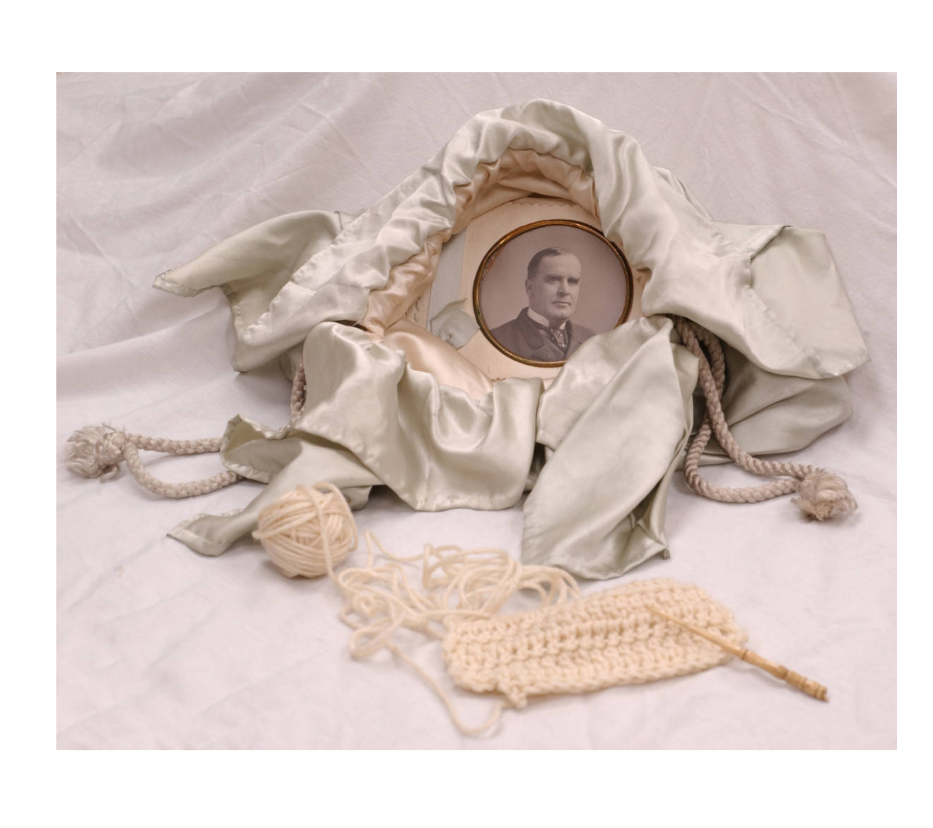
Ida adored her gentle and very devoted husband who had sacrificed so much of his own happiness to provide for hers. Framed photographs of him surrounded her in every room, wherever she was. In an odd, but touching display of devotion, she selected her favorite photograph of him, and carefully sewed it to the bottom of her crocheting bag. 

Ida’s crocheting bag (courtesy of the Ohio History Connection)

This is not a story. It is a good yarn! The bag exists, and yes, McKinley’s photograph is neatly affixed to the bottom.

SOURCES:

Anthony, Carl Sferrazza – First Ladies 1789-1961, William Morrow,1990

Foster, Feather Schwartz – Mary Lincoln’s Flannel Pajamas and Other Stories from the First Ladies’ Closet – Koehler Publishing, 2016

Leech, Margaret – In the Days of McKinley – Harper & Brothers, 1959

Morgan, H. Wayne – William McKinley and His America – Syracuse University Press, 1964…

https://ohiomemory.org/digital/collection/p267401coll36/id/10944/

http://www.firstladies.org/biographies/firstladies.aspx?biography=25

Posted in American Civil War | 2 Comments

The Unexpected Death of Zachary Taylor

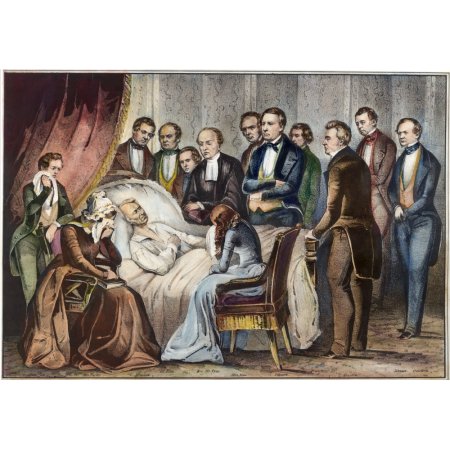
This image has an empty alt attribute; its file name is deathoftaylor.jpeg

During the past few decades, a couple of mild kerfluffles were posed by eminent scholars who suspected that POTUS Rough and Ready may have been done in!

Ol’ Zach

Zachary Taylor (1784-1850) was Virginia born to a middle class family who moved to Louisville, Kentucky when the future president was still a youngster. He received a moderate education, and by 20, decided to make the army his career. He rose in the ranks, and was considered a good officer.

He married Margaret Mackall Smith, originally from Maryland, when he was 23, and the young couple began a life on the move. They traveled from pillar to army-post, living in barracks, forts, tents, cabins, and wherever the army put them. Major, and later Colonel Taylor was said to be able to sleep in the saddle. In the expected time, the couple raised four children to maturity. Two died in infancy. It was a hard life.

During his decades in the regular army, which included service in the War of 1812, Taylor managed to put by enough money to purchase a plantation in Louisiana, and planned to make it their “retirement” home. It may have been a hard life, but it was a decent one. 

Older Zach

Army officers are expected to be non-political, obeying orders from whoever is Commander-in-Chief at the time. Taylor was no exception. He took little interest in politics, never voted, and was never known to express any notable opinions, even if pressed.

The General

He had also acquired his “Ol’ Rough and Ready” nickname, since he was the antithesis of the spit-and-polish image of a military general, like his counterpart, the towering Winfield Scott. At average size, perhaps 5’8, his boots were seldom shined, his clothes were whatever he pulled from the saddlebag, and the general impression was disheveled. Strangers meeting him had no clue that he was a senior army officer. 

When the War with Mexico became a pending crisis in 1846-7, Taylor was already a General serving in the “west”, not far from the disputed area in Texas poised to ignite hostilities. He was ordered to take his command to the border. He did, was victorious in several skirmishes, incidents and bona fide fame-and-name-making battles. With President James K. Polk, committed to a single term, and not wildly popular anyway, General Taylor was considered a viable political option.

Problem was, he wasn’t interested. He was non-political, believing as a good soldier, his loyalty was to his Commander-in-Chief, period. He had never shown the slightest inclinations for office.

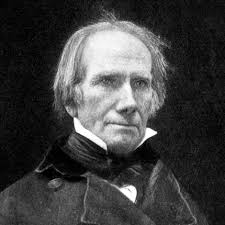
Henry Clay, Whig-Maker

In 1848, Henry Clay was not only the foremost Whig in the country, but at 71, had been on the national scene for nearly 40 years. But the Whig party had only existed for perhaps a decade, and they were still a motley group of assorted regional and fractious factions. Clay had already run for President three times – and lost. The last loss, in 1844, against the unknown dark horse Polk, was a total upset. That should have been his year – but Harry of the West blew it, so to speak. 

Henry Clay

Clay was not overly anxious to run again and lose – but neither was he anxious to throw serious support to another unknown. The one and only successful Whig election (in 1840) saw elderly ex-General William Henry Harrison win the presidency, but he died a month later. His in-name-only Whig VPOTUS, John Tyler, gave the Whigs nothing but agita. 

Nevertheless, the political big-Whigs decided that another military hero could win and settled on Zachary Taylor, dangling whatever might seduce him away from his retirement in Louisiana. He offered a rare anomaly of being a Southerner and a slaveholder, but a staunch Unionist, strongly opposed to the extension of the “peculiar institution” in the territories. Perhaps against his better judgment, and surely against his (and Mrs. Taylor’s) personal inclinations, he relented, allowed others to do his campaigning, and won.

Agita….and Death

This image has an empty alt attribute; its file name is zachary-taylor.jpg
President Zachary Taylor

Zachary Taylor, 12th President, may not have been political by nature but he was an independent man, whose core philosophies were truly core: Presidents should not be involved in legislative matters, other than the constitutional veto power. Secession is abhorrent. Slavery should be contained where it was, and not expanded. Manifest Destiny (i.e. sea to shining sea) was perhaps a little too much.

Elder Statesman Senator Henry Clay, no huge fan of Taylor, was nearly 75 and in failing health, but began crafting a “compromise” bill of packaged-together diverse issues. He had done a similar service back in 1820 when slave-vs.-free states were an issue, alarming the Union even then. 

Taylor threatened to veto the “Compromise of 1850” and some Congressional Whigs, in their own usual shambles of factions, even threatened Taylor’s impeachment. 

This image has an empty alt attribute; its file name is unfinished-washmon.jpg
The unfinished Washington Monument (WH Hist. Soc.)

No one expected that Taylor would die in 1850. His health had been robust for a man of 65. The story goes that after a ceremony at the unfinished Washington Monument on a blistering July 4, he consumed a great amount of cherries and ice milk. Or ice water. (Milk wasn’t pasteurized, and Washington water was generally foul.) He became violently ill and died a few days later. The formal diagnosis (then) was cholera morbus, or (today) acute gastroenteritis. Even then, given the political situation, Taylor was a suspected victim of poisoning.

Under a more compliant President Millard Fillmore, The Compromise of 1850 passed, made nobody happy, caused seismic rifts, but delayed the Civil War by ten years. 

150 Years Later

In 1991, some fine scholars arranged to have Taylor’s body exhumed for possible evidence of poison. They did find minute traces of arsenic, which most people have in their systems today, but not nearly enough to cause harm, let alone death. Some intrepid scholars still persist, seeking more evidence, but the Taylor descendants have declined further investigation, preferring to let Ol’ R and R RIP.

Sources: 

Eisenhower, John S.D. – Zachary Taylor – Times Books, 2008

Hamilton, Holman – Zachary Taylor: Soldier in the White House – Bobbs-Merrill, 1951

Hoyt, Edwin P. – Zachary Taylor – Reilly and Lee, 1966

https:www.whitehouse.gov/about-the-white-house/presidents/zachary-taylor/

https://www.britannica.com/biography/Zachary-Taylor

https://www.senate.gov/senators/FeaturedBios/Featured_Bio_Clay.htm

Posted in A POTUS-FLOTUS Blog, Nifty History People, Zachary Taylor | Tagged , , , , , , , , , , , , , , , , , , , | 1 Comment

Bess Truman: Waiting for Harry

This image has an empty alt attribute; its file name is bessandharry.jpg
Bess and Harry Truman on their wedding day.

The Old Soldier

Harry Truman was 33, well past the age for a man to be a volunteer soldier, unless, of course, the country is in severe danger. In 1917, when the US entered the Great War, as it was called then, the country was not in severe danger, and most people believed it was a “European” War best left to the Europeans. After all, that was the sage advice of George Washington.

This image has an empty alt attribute; its file name is captain-harry.jpg
Captain Harry

Nevertheless, once the US was committed, Harry Truman, mostly farmer, and part-time off-season employee decided to enlist. Not only was he somewhat over age, medium in size, with little education past high school, his eyesight had been poor from earliest childhood. 

But he memorized the standard eye chart, signed the papers, and was now a soldier. Perhaps the higher-ups detected some hidden leadership. They made him a captain.

This image has an empty alt attribute; its file name is young-bess.jpg
Bess Wallace

Bess Wallace, his long-standing sweetheart, thought he was nuts and said so. But Harry persisted in doing his patriotic duty, and prepared to go “over there.” Bess wanted to get married immediately, but Harry disagreed. He was concerned that something might happen and she would be left a widow. Or worse. He could be wounded, and she might be saddled with an invalid for the rest of her life. 

So she gave him her photograph, wished him luck, and off he went. 

Harry and Bess

Harry Truman always claimed that he met 5-year-old Elizabeth Wallace in little kid dancing school, and loved her from that time on. He was a few months older. Even though he was a farm boy in rural Lamar, MO, he attended school in Independence, where they two were in the same class – at least in the same grade. Their social class was miles apart. 

The Trumans were a poor farming family, and the Wallaces were considered upper crust. Harry and Bess always knew each other and said hello, but the distinctions prevented anything other than the superficial pleasantries. With little money and plenty of farm chores, Harry had no hope of further education, despite being a fine student. 

Much of that changed when Bess was eighteen and recently graduated from high school. Her father, David Wallace, with a long history of alcoholism and inability to find/keep employment, stepped in the family bathtub and put a bullet in his head. It was a horrific scandal in 1903, and any hopes Bess might have had for further education or employment of her own were now rendered impossible.

David Wallace

Her mother, Madge Wallace, the daughter of the wealthy Gates family, had always been difficult and headstrong, which included her marriage to the handsome-but-hapless David, which her parents had strongly objected. Now she became more difficult, and took Bess (the eldest) and her three younger brothers to Colorado for a year – to let the scandal die down. When they returned, they moved in with her aging parents. And Bess was needed at home.

Hello Again

Years passed and Harry worked the farm, which need him even more after his father died. In the winter months, he took whatever positions he could find in town to make a little extra money. 

When he was in his mid-twenties, he was visiting a relative in Independence, who mentioned in passing that she needed to return a pie plate to Mrs. Wallace, who lived down the street. Harry volunteered to return it, remarking that he and Bess Wallace had been classmates. 

A rare early photo of Bess and Harry
Madge Wallace

Armed with the pie plate, he knocked at the door, was greeted by Bess, who seemed happy enough to chat with him awhile. The chat led to Harry asking if he could come by again, and a very mild and long courtship began. It lasted for nearly twelve years. Harry didn’t have any money, so their “outings” had to be whatever was free. Bess did not seem to mind, and was always happy to go. 

Bess had plenty of friends and a nice social life, but her marital opportunities were limited. Harry kept coming by however, and soon enough most people assumed that Harry and Bess would marry. Eventually. If he ever had enough money.

Money and the Family

Money was only part of Harry’s problem. The other part was that he was truly needed by his mother and a younger brother and sister. Then too, was the fact that he had little skills other than farming and the occasional jobs he held. Nor did he have any guidance in what kind of work to seek. 

Bess’ grandparents had money – and one of the finest houses in town. But they were getting on in years, and Madge Wallace was dispositionally unfit to manage a household. It fell to Bess to see to those details, and also make sure her younger brothers got a) an education and b) the opportunity to get out of that household. She was, by her own admission, a homebody.

And then there was the fact that Madge Wallace bitterly opposed any union between her daughter and the socially-way-down-the-line Farmer Truman. But after three years of courtship, Bess finally agreed to an “understanding, albeit she was in no rush. It lasted for six years.

So while “Captain” Harry was gone, she continued her pleasant social connections with her bridge group and discussion club. She sold war bonds, and sewed for the Needlework Guild. And the two corresponded “over there.”

Hello Again, Again

Harry Truman came home from the War. He was not killed, nor maimed in any way. He had justified his superiors’ confidence in him, and his men liked him immensely.

Meanwhile, with both parties now in their mid-thirties, they decided it was now or never, and they got married. Their wedding date was one of the rare details that Bess publicly admitted to the press. It was June 28, 1919.

Sources:

Foster, Feather Schwartz – The First Ladies from Martha Washington to Mamie Eisenhower – Sourcebooks, 2011

Truman, Margaret – Bess W. Truman, 1986, MacMillan

Truman, Margaret – Harry S Truman – 1972, William Morrow

http://www.firstladies.org/biographies/firstladies.aspx?biography=34

http://www.trumanlibrary.org/bwt-bio.htm

Posted in A POTUS-FLOTUS Blog, Harry S Truman, Nifty History People | Tagged , , , , , , , , , , , , , , , , | 1 Comment

Abraham Lincoln: Quibbling Thanksgiving

In 1863 Thanksgiving Day had been a local or regional holiday for more than two centuries.

Quibbling The Day

Massachusetts has long maintained that a day of Thanksgiving was celebrated a year after the devout Pilgrims landed in Plymouth in 1620. Even today, Thanksgiving celebrations are filled with decorations of Pilgrims and Indians, corn/maize, and of course, turkey.

Virginia, however, midway down the Tidewater peninsula between Richmond and Williamsburg, insists that the first inhabitants of Berkeley Plantation beat the Pilgrims to the punch a whole year prior. And those first inhabitants were not Pilgrims, but people of property, albeit just as devout.  

Giving thanks for one’s blessings is a fine thing, but starting dates are a silly quibble.

And if that quibble wasn’t enough, our Founders quibbled as well. Nobody was against giving thanks of course, but they quibbled about making it a federal holiday, rather than a state occasion. 

Thus the concept of separation of church and state, inherent to the Constitution of the Country, kept the celebrations local, and mostly in the north. If a community or region, or even a state wished to make a holiday of it, nobody objected – but there was no national consensus. George Washington was known to have proclaimed a Thanksgiving Day – but it was not an ”established” holiday.

Sarah Josepha Hale

Sarah Josepha Buell Hale (1788-1879) was a New Hampshire woman, left widowed at a young age, along with five small children. Forced to support herself at a time when women working outside the home was near-scandalous, she turned to writing. She could do that at home.

Sarah Josepha Hale

She produced a fairly successful book of poetry and stories, which included the eternally popular “Mary Had A Little Lamb” that all children know today.

This led her to the editorship of Godey’s Lady’s Book in 1837, a position she held for forty years! Godey’s was the precursor of women’s magazines, and a staple of journalism for decades. By the 1840s, it was subscribed to by practically every woman who could read. While it contained stories and articles from men, it also featured articles written by and for women. As time went on, it included articles/advertisements for products ladies needed and wanted to know about. Recipes. Child-raising. Home-making. And always, the latest feminine fashions, which were regularly featured on the cover. 

Godey’s was popular for years!

While Mrs. Hale was a traditional believer in “a woman’s place,” she was also socially inclined, supported the construction of the Bunker Hill Monument, donated to the restoration of Mount Vernon, and believed strongly in education for women – and their right to own property. 

Godey’s fashions

She also believed that Thanksgiving Day should be a national set-and-fixed holiday, not merely regional, or at the whim of local governments. 

For more than twenty years, she wrote articles and editorials and letters every year to every sitting President, as well as to other important statesmen. The editor of Godey’s Ladies Book, was credible and had a long reach. By the mid-1850, 34 states had Thanksgiving Day celebrations, but the holiday was never “national.”

President Lincoln Signs On

Abraham Lincoln, sixteenth POTUS, had far more on his plate than a turkey dinner in 1863. A horrific Civil War had begun two years earlier, and the casualties and devastation far surpassed even the wildest imagination. The once-United States was split in two, North and South, with no telling when, or if, it could be mended.

This image has an empty alt attribute; its file name is lincoln-family.jpg
Lincoln and Family in 1863

But in July of 1863, two coincidental and remarkable events occurred simultaneously. In Gettysburg, PA, following three days of intense fighting-cum-casualties, the Union Army had defeated its Confederate counterpart. And in Vicksburg, MS, after months of intense waiting, preparation, feints, skirmishes and long siege, the southern forces surrendered.

Interestingly enough, Confederate President Jefferson Davis had proclaimed a ”day of thanksgiving” after earlier Southern victories. But each Southern state seemed to celebrate it at their own whim. Lincoln declared a day of thanksgiving a year earlier, following Union victory at Fts. Henry and Donelson, and again after Gettysburg. Nobody opposed the concept, but they managed to quibble over the unifying “when.”

This time, Mrs. Hale’s letter of September 23 reached two pairs of responsive ears. Abraham Lincoln’s, and Secretary of State William Seward’s. They believed that a ”national” Thanksgiving Day (at least in the “national” North) would have a healing effect. Secretary Seward drafted the proclamation. (As an aside, presidential proclamations do not require congressional advise/consent or voting.) Perhaps our POTUSES, whoever they are, need a respite from quibbling.

The event itself was not controversial in the slightest. The fourth Thursday of November was selected for the occasion.

Lincoln Gets the Credit…

William Seward

…but it was mostly William Seward’s doing. He was the one who actually drafted the proclamation, which seems a little gabbier than Lincoln’s prose. Lincoln’s secretary John Nicolay acknowledged that it was Seward’s composition, and Secretary of the Navy Gideon Welles recorded in his diary, that he complimented Seward on its writing. The “authorship” is another silly quibble.

The salient points are really thus:

Washington, D.C.
October 3, 1863

By the President of the United States of America.

A Proclamation…..to set apart and observe the last Thursday of November next, as a day of Thanksgiving….

In testimony whereof, I have hereunto set my hand and caused the Seal of the United States to be affixed.

Done at the City of Washington, this Third day of October, in the year of our Lord one thousand eight hundred and sixty-three, and of the Independence of the United States the Eighty-eighth.

By the President: Abraham Lincoln

This image has an empty alt attribute; its file name is rockwelllthanksgiving.jpg
Norman Rockwell’s Thanksgiving image

And while there are countless reasons for giving thanks, and plenty of prayerful supplications, there is no mention of turkey, sweet potatoes, cranberries, green bean casserole and pumpkin pie. People can quibble over turkey vs. ham on their own. And do.

Nevertheless, a year after the proclamation, the original manuscript was sold to benefit Union troops and has never resurfaced. But we celebrate it nationwide today: Fourth Thursday in November..

Happy Thanksgiving!

Sources:

Schultz, Duane – The Most Glorious Fourth Vicksburg and Gettysburg, July 4, 1863 – W.W. Norton, 2003

https://historynewsnetwork.org/article/173700

https://www.womenshistory.org/education-resources/biographies/sarah-hale

https://www.britannica.com/topic/Godeys-Ladys-Book

http://www.abrahamlincolnonline.org/lincoln/speeches/thanks.htm

Posted in A POTUS-FLOTUS Blog, Abraham Lincoln, Nifty History People | Tagged , , , , , , , , , , , , , , , , , , , , | 2 Comments

Grant, Grant, The Tanner’s Son…

Held his nose and away he run…

This image has an empty alt attribute; its file name is general-grant.jpeg
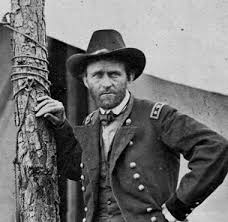
The quintessential Ulysses S. Grant

Jesse Grant, Tanner

Jesse Root Grant (1794-1873) was Pennsylvania-born, but migrated to southern Ohio as a small child. He had a decent education for his time and station in life, but possessed a strong desire to get ahead, and a fair aptitude for business.

This image has an empty alt attribute; its file name is jesse_and_hannah_grant.jpg
The parents Grant

As an adult, he became a tanner. He bought horse and cow carcasses, processed them in vile-smelling chemicals to make them pliable, and sold the leather to saddle makers, shoemakers, harness makers, and anyone else who worked with leather. Occasionally he sold those finished goods in his store.

By his late twenties, he was considered a prosperous middle-class businessman, with several holdings. He had sufficient means to begin a family, and courted and married Hannah Simpson, also Pennsylvania-born, but migrated to Ohio as a young woman.

The two were polar opposites. Jesse was bombastic opinionated and dominating. Hannah was silent and deeply religious. Perhaps the only thing they had in common was their strong antipathy toward slavery.

In the expected period of time, the Grants had six children, Hiram Ulysses being the eldest. The next five followed about three years apart.

Their home in Georgetown, Ohio was a fine brick house, with ample room for their growing family. The tannery was nearby, perhaps at a sufficient distance to keep the reek from permeating the house itself.

The Tanner’s Eldest

The first born son to Jesse and Hannah Grant, was named Hiram Ulysses, better known to history as Ulysses S. (for Simpson) Grant. Nobody ever called him Hiram. Quiet and taciturn like his mother, Ulysses was a diligent enough student, brought up to mind his manners. Like most children of the early 19th century, he was also expected to do household chores. Or help in the family business. Young Grant hated the tanning business, with its stench and blood.

Etching of Grant house and tannery

Fortunately for him, at a very young age he showed a distinct affinity for horses. Some said he liked horses better than people. Others merely indicated that he ”had a way” with horses. Whatever those gifts were, by the time he was eight, his father trusted him enough to drive a team eight or ten miles away – on his own.

As long as he could pick up and deliver goods, and escape the nauseating atmosphere of the tannery, Ulysses was happy to help out. It is also likely that Jesse Grant sensed his son’s aversion, and permitted him to be useful on his own terms.

Since the elder Grant was a man of reasonable means and definite ambition for his offspring, Ulysses was sent to a Kentucky boarding/prep school while in his mid-teens. At seventeen, however, it was his father who took a hand in directing his future. He arranged for his eldest son to receive an appointment to West Point. It was free, and despite the reasonable means, Jesse was a thrifty man.

This image has an empty alt attribute; its file name is wedding-photo-of-grant.gif
The young U.S. Grant

Ulysses Simpson Grant (now his official name, since his Congressman-sponsor knew nothing about the Hiram part, and assumed the traditional middle naming of an eldest son with his mother’s maiden name), did not wish to attend West Point or become a soldier, and said so. His father, always dominating, said his son would go, and learn to like it. Ulysses S. Grant would not stand up to his father until he was past forty.

So he went, and liked it well enough to fit in, and graduate mid-class. His academics were average, and he showed ability in mathematics and drawing. But he excelled in horsemanship.

Once graduated from the Academy, he had no fears of being expected to work in his father’s tannery.

Ten Years Later and Then Some…

The tannery business was the furthest thing from Lt. Grant’s mind during the next ten years. He was sent to St. Louis MO for his first assignment, where he wooed and wed Julia Dent, the sister of his West Point roommate. The wooing was easy; the wedding took four years of devoted waiting while USG served ably, including service in the Mexican War. His marriage and subsequent deployments were comfortable enough, and his marriage thrived and was fruitful.

But when Ulysses and Julia were separated, he assigned to California/Oregon territory, and she to return to St. Louis to have their second son, he fared poorly. Boredom, financial disappointment and most of all, homesickness for his beloved ones, led him to the all-too-convenient whiskey barrel. That led to a “requested” resignation from the army, embarrassment on many fronts and severe depression.

He finally had to wire his father for enough funds to return to St. Louis. He was thirty years old. His father was livid, but he sent the money.

Back to the Tannery

For the better part of seven years, former Captain Ulysses S. Grant fought his own losing battle of the wilderness, trying to find suitable work and means of supporting his family in St. Louis.

By 1860, things were so bad that Grant was forced by necessity to write to his father begging for a job in one of his tanneries. It may have been the hardest letter USG every wrote. But Jesse Grant grudgingly obliged, and sent his son-and-family to Galena, IL, where he had a partnership in a tannery, now being managed by USG’s younger brothers.

This image has an empty alt attribute; its file name is perkins-grant-galena.jpg
Grant & Perkins, Galena, IL

Knowing his aversion to the blood and stench of the business, USG was usually assigned clerking and/or delivery duties, although one source indicates that the former army captain was a strong physical specimen, and loaded the heavy carcasses down the chute into the vats of boiling, stinking chemicals. All sources claim that he scrubbed down in a makeshift outdoor shower before Julia would let him in the house.

Less than a year later, when the Civil War began, and Grant, the only citizen of Galena with military experience, was asked to train a company of ”volunteers,” he accepted with alacrity.

And he never set foot in the tannery again.

Sources:

Chernow, Ron – Grant – Penguin Press, 2017

White, Ronald C. – American Ulysses: A Life of Ulysses S. Grant – Random House, 2016

https://millercenter.org/president/grant/life-before-the-presidency

https://libguides.css.edu/usgrant/home/family

https://www.nps.gov/ulsg/index.htm

Posted in American Civil War, Ulysses S. Grant | Tagged , , , , , , , , , , , , , , , , , , | 1 Comment

Lou Henry Hoover and Women’s Athletics

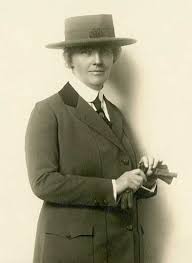
An early image of Lou Henry as Mrs. Herbert Hoover

The Western Woman

Despite her birth and early girlhood in Iowa, Lou Henry (1874-1944) spent most of her growing-up years in California when it was still considered the “Wild West.”  

Her father, Charles Henry, was a middle class banker, and Lou was exposed to all the accoutrements of town life. A nice house, nice clothes, good education, good exposure to whatever the town had to offer in the way of culture.

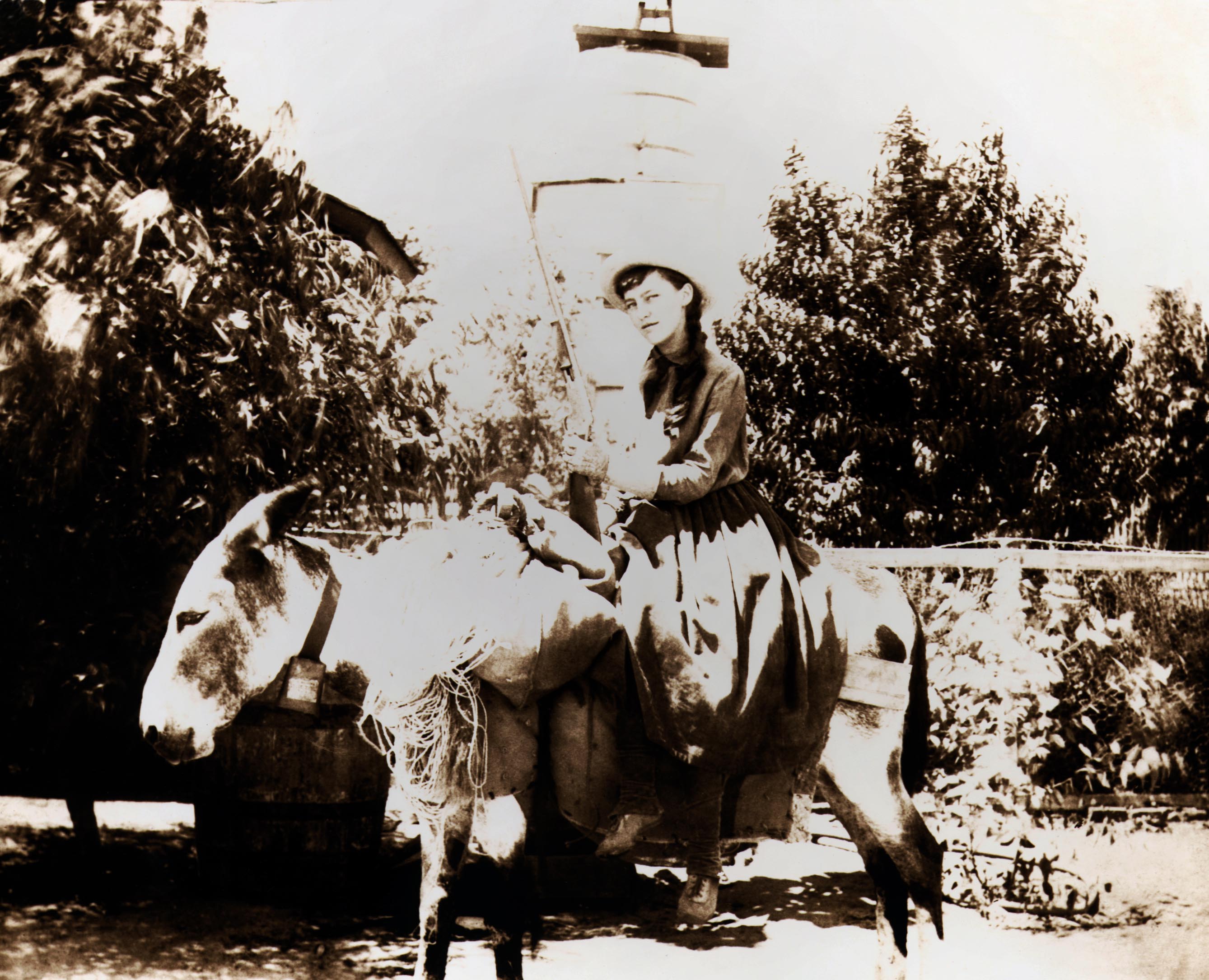
Her father was also an ardent outdoorsman, and Lou was his companion on camping trips, fishing trips, riding any animal that would tolerate a passenger, climbing trees and fences, shooting a gun, building a fire, and any activities that fostered the love of the great outdoors.

This image has an empty alt attribute; its file name is lou-age-8.gif
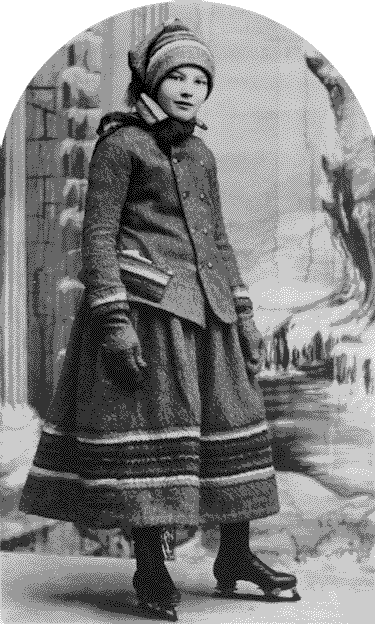
Lou Henry – around eight.

She was also a tall woman – around 5’9” at maturity – and an excellent athlete. For a girl. It was still the Victorian Age, and the role of women was firmly embedded in tradition. Still, she skated, biked, played baseball (sometimes with the boys) and tennis. And all in long skirts. 

While Lou always focused on her academic studies, athletics and sports ranked next. In school, she loved the gymnasium exercises of marching, drilling with Indian clubs and ribbons and wands, but preferred the actual sports and teams. As a student at Stanford University, she was president of the Stanford Women’s Athletic Association in her senior year. 

Lou – and “friend”

Nevertheless, she would always be representative of woman-in-transition. While her administrative and executive skills were excellent, and her natural leadership was obvious to all who knew her, Lou never lost her regard for the traditional “norm.” 

Always a consensus builder, she might not think out of the box completely – but she was a firm believer in enlarging the box, as it were, and working from within. 

The National Amateur Athletic Federation

When Lou and Herbert Hoover returned to the US, after spending two decades abroad in various exotic locales, they were wealthy, philanthropic, well-known on an international scale, and poised to assume positions of substance in their native country. 

This image has an empty alt attribute; its file name is louhoover-archer.jpg
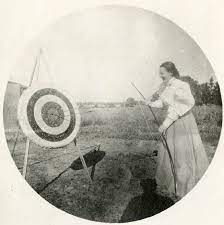
A rare image of Lou Hoover engaging in sports.

It became apparent to many, particularly in the military, that an appalling number of men were failing the requirements for military service in The Great War – for physical fitness deficiency. Thus the National Amateur Athletic Federation was created in 1922 to address that situation, In the early 1920s, there were limited resources for sports, and the NAAF encouraged activity for all, rather than just the most talented athletes. One of their key issues was that in time every man, woman and child be included in recreational sport activities.

They also determined that athletics for men and women were developing differently, and they voted to establish two separate sections: boys and girls (i.e. men and women).

When the NAAF was founded, it tapped Lou Henry Hoover, already active in the newly created Girl Scouts, as its only female Vice President, to spearhead the NAAF’s Women’s Division.

The Women’s Division

Women’s sports in the 1920s were a holdover from the Victorian age. Educators, physical instructors and physicians were concerned that stressing competitive sport for girls and women might lead to training, regimens and competition (i.e. the popularity of the Olympics) that were too strenuous. Or dangerous. Some women’s phys ed organizations protested women varsity teams entirely. 

According to Jan Beran’s essay in Lou Henry Hoover: Essays on a Busy Life, Mrs. Hoover noted in an article from the New York Herald on March 25, 1923, “The World War showed a vast and appalling number of physical defects among the young men of the nation and it follows as a corollary that a large percentage of young women are likewise handicapped. Much of this can be corrected by proper exercise and I believe full opportunity for reasonable physical development should be afforded.”

Mrs. Hoover’s Girl Scout activity translated easily into the NAAF

As VP of the NAAF, Lou chaired a Conference on Athletics and Physical Education for Women and Girls in spring, 1923, attended by more than 300 women high school and college physical education teachers nationwide. The agenda included the physical capacity of females and the availability of recreational sport for them. They were unanimous in supporting the the concept of providing more opportunities for girls and women to participate. The challenge was identifying the problems and correcting them properly. 

It was a unique position. New standards were needed to govern the conduct of competitive female sports, including demanding practice times and schedules, time away from school and financial gain from the sport. Then there was a lack of physical/medical examinations, disregard of the athletes’ well being, long seasons, rivalries, spectator behavior, and involvement of only an elite portion of talented students. 

While it may seem archaic to modern women today, back then, Mrs. Hoover led the consensus for the Women’s Division to provide opportunity for every girl and woman to participate in quality instructional physical education and recreational programs, believing that the female sex could enjoy “greater joy and recreation in wholesome participation than in the intensive competition that aims at championship and records.” And that included having women administrators, coaches and referees.

Mrs. Hoover, Facilitator

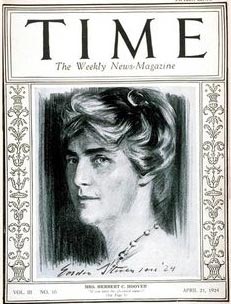
Even prior to being FLOTUS, Mrs. Hoover was on the cover of Time Magazine.

Lou Hoover actively chaired the Women’s Division of the NAAF for five years, until her husband was elected President in 1928. Always modest, and considering her role to be a consensus-builder, she said, “I feel I am but a bit of mechanism in a scheme for carrying out your [the Women’s Division] wishes. If the success attends our various deliberations that we wish, I feel that all congratulations and credit must be attended to you.”

It was the way she was. And it was the way it was…then.

Sources:

Mayer, Dale C. (Ed.) – Lou Henry Hoover: Essays on a Busy Life – High Plains Publishing Company, 1994.

Pryor, Dr. Helen B. – Lou Henry Hoover: Gallant First Lady – Dodd Mead, 1969

https://hoover.archives.gov/hoovers/first-lady-lou-henry-hoover

Frontiers: A Journal of Women Studies Vol. 3, No. 1 (Spring, 1978), pp. 1-7 (7 pages) Published By: University of Nebraska Press

Posted in A POTUS-FLOTUS Blog, Herbert Hoover, Nifty History People | Tagged , , , , , , , , , , , , | 2 Comments

Burying Mary Lincoln

Everybody knows about Lincoln’s assassination and the huge funeral journey back to Springfield. But what about when Mary died?

This image has an empty alt attribute; its file name is mary-lincoln-pg.jpg
First Lady Mary Lincoln

Mary Lincoln, Widow

Mary Todd Lincoln (1818-1882) became a widow when she was 45, and survived her husband by seventeen years. They were bitter years for her. She understandably refused to return to Springfield. She could not bear being in a house where she had lived with a husband and three sons (a fourth had died years earlier as a toddler); now she had no husband, and only two sons.

This image has an empty alt attribute; its file name is mary-in-mourning1.gif
The Widow Mary

She moved to Chicago, and for the most part of those seventeen years, was virtually homeless, living in residence hotel rooms. Money, which most believed was sufficient for a moderate-to-comfortable lifestyle, was never enough for The Widow Lincoln, who believed her debts incurred as First Lady amounted to some $38,000. (More than a half-million today). Some modern historians believe the debts were more likely around $12,000 – still sizable. 

Her “retirement” was plagued by scandals, and to escape the public eye, she took her youngest son, Tad, then around 14, to live in Europe, where it was less expensive. Shortly after they returned, Tad died. He was just 18. 

This image has an empty alt attribute; its file name is rtlincoln.jpg
Robert Todd Lincoln

Her oldest son, Robert, had become a successful Illinois attorney, married and starting his own family. Despite the best intentions of all concerned to have a warm relationship, difficulties between Robert, his wife and his mother became strained to a point of distant. Mrs. Lincoln’s difficult personality, coupled with serious grief, depression and various illnesses (some real, some psychosomatic), made her nearly impossible to live with. Her Victorian sense of “my husband is my all” made it nearly impossible for her to live alone. She had little to occupy her time.

She suffered the humiliation of another scandal, a trial of her sanity, and spent a few months in a sanitarium. After her release, and an opportunity to “recuperate” at her sister Elizabeth Edwards’ home, Mary Lincoln again went to Europe.

When she was 60, she had two new health issues, totally unrelated to her emotional and/or mental health. First, she was losing her vision, commonly believed today to be cataracts. Secondly, she injured her back in a fall, and very possibly may have broken a bone or two. She had back pain for the rest of her life.

This image has an empty alt attribute; its file name is edwards_eliz_ihl_large.jpg
Elizabeth Todd Edwards

She wired her sister Elizabeth asking if she could come to live with her. Permanently. Elizabeth said yes.

The Darkened Window Upstairs

For the next two years, she resided with Elizabeth and Ninian Edwards, in the same house where she met and later married Abraham Lincoln. Legend indicates that the young children in town, who knew nothing about First Lady Lincoln, sniggered at the rumors of a peculiar old woman who sat in a darkened room and never came out.

Happily for those involved, Robert Lincoln, by then Secretary of War under Garfield/Arthur, had visited his mother, in an effort to mend fences and repair tattered relationships and reputations.

This image has an empty alt attribute; its file name is last-mary.jpg
The famous “doctored” photo of Mary Lincoln

Most historians concur that Mary Lincoln died of a stroke. Whatever the cause, death was welcome to Mrs. L. whose last years were far from happy.

Meanwhile…

This image has an empty alt attribute; its file name is lincolntomb.jpg
Abraham Lincoln’s Tomb in Springfield, IL

In 1876, a totally new scandal-in-situ had been aborted – and kept under tight wraps. A few counterfeiters had devised a plot to kidnap the body of Abraham Lincoln from his memorial in Springfield, and hold it for ransom. Secret Service agents, then tasked with counterfeiting issues, worked undercover, ostensibly working with the miscreants, alerted the authorities, and the perps were arrested. The plot and its outcome (a nifty story in itself) was kept a secret. If Mrs. Lincoln, recovering from the sanitarium, was aware of the situation, it is unknown. Newspapers only mentioned that ”items from the Tomb” were stolen, and recovered. Only the authorities, John Carroll Power, the Tomb Custodian, a few Oak Lawn Cemetery volunteer “guardians” and Robert Lincoln knew the details. 

Tomb Custodian John Carroll Power

They determined that the sarcophagus would be sealed – and remain empty. Lincoln’s 600-pound lead-lined coffin would be hidden away deep within the building, under the protection of the Lincoln Tomb custodian until final arrangements could be made.

It was further determined that coincidental structural repairs were required, because of the unstable ground surrounding the Tomb itself. Thus Lincoln’s body was once again reburied in a shallow grave within the building. Only the Guard of Honor members and Robert Lincoln knew about it.

When Mary Lincoln died in 1882, Robert Lincoln told the Guard of Honor to bury his mother’s casket next to the casket of Abraham Lincoln – wherever it was. Thus Mrs. Lincoln had her dearest wish granted: to have her final remains lie beside her husband. 

This image has an empty alt attribute; its file name is al-sarcophagus.jpg
Lincoln’s sarcophagus.

She remained buried in the shallow grave next to Abraham Lincoln for five years, while repairs were being made above ground.

It was not until 1887 that Mary Lincoln was finally interred in the wall-crypt along with her three sons who had died years earlier. But the area surrounding the Tomb was seriously unstable, and required extensive shoring up. In the meantime, Lincoln’s coffin was opened on a few occasions, to ascertain that indeed, the remains inside were that of the martyred sixteenth President.

Mary Lincoln’s Crypt

Not until 1901 would Abraham Lincoln’s casket be re-placed not in the sarcophagus, but lowered far below ground and covered by ten feet of cement. The sarcophagus remains empty, even today.

Sources:

Baker, Jean – Mary Todd Lincoln: A Biography – W.W.Norton & Co. 1999

Clinton, Catherine – Mrs. Lincoln: A Life – HarperCollins, 2009

https://chicago.suntimes.com/2021/4/15/22382530/abraham-lincolns-body-stolen-plot

https://www.whitehouse.gov/about-the-white-house/first-families/mary-todd-lincoln/

https://lincolntomb.org/

Posted in A POTUS-FLOTUS Blog, Abraham Lincoln, Nifty History People | Tagged , , , , , , , , , , , , , , , , | 2 Comments

FDR and the March of Dimes 

Of all the programs undertaken by Franklin Delano Roosevelt, none was more personal than the National Infantile Paralysis Foundation.

This image has an empty alt attribute; its file name is fdr-and-friend.gif
The quintessential PR photo for the March of Dimes

Polio

Polio is the common name given to “infantile paralysis,” a contagious and horrible disease, thankfully near eradication today.  It was not only fatal to a significant population, but permanently crippled nearly all who were infected. To make it worse, it focused mostly on children. If they managed to survive, they were robbed of childhood itself. They would never run and play and dance.

Oddly enough, in 1921, unsuccessful Democratic candidate for Vice President Franklin Delano Roosevelt was nearly forty when he contracted polio. Within a short time, it became obvious that his high fevers and muscle pain was far more than a bout of influenza. 

He spent the better part of the next decade focusing on regaining his health and mobility. Despite his monumental successes and services to his country and the world, he never regained his mobility, and never walked again without heavy braces or other aids. And in those days, keeping a low profile on his disability was crucial to any political plans he might have.

Warm Springs

This image has an empty alt attribute; its file name is fdr-swimming.jpg
Swimming was a therapeutic exercise

By the mid-20s, FDR had discovered that warm water exercise was more beneficial to his recovery and general health than just about any other treatment. Warm Springs, GA, originally called Bullochville, was a tiny village that had been known as a spa for several decades, due to its mineral springs that remain at a constant near-90-degrees.

This image has an empty alt attribute; its file name is fdr-little-wh.jpeg
The Little White House at Warm Springs

Roosevelt, a wealthy New York patrician, was impressed by the springs, and how much better he was able to function in those waters. The town, however, was poor and run-down, with limited facilities and comforts. FDR plowed a substantial part of his inheritance into forming a foundation to create a convalescent and therapeutic facility for polio patients – mostly children. He engaged his former law partner and friend Basil O’Connor to manage the legal and financial details. 

This image has an empty alt attribute; its file name is basil_o_connor.jpg
FDR’s law partner

While it never became the thriving invalid spa that FDR had envisioned, it was nevertheless highly successful in recruiting fine medical and therapeutic specialists. Once FDR was NY Governor and later President, Warm Springs became a location known to just about every household.

The Foundation

By 1938, FDR was in his second term as President, burdened by a Great Depression that of itself was crippling the country. He was also concerned about seriously unsettling events in Europe that would envelop the world within a year. He did not have the luxury of his once-frequent trips to his “Little White House” as it was called, in Warm Springs.

This image has an empty alt attribute; its file name is fdr-polio.jpg
A rare photo of FDR, polio patient

But he was still deeply concerned about it, and its potential to provide treatment for polio patients. And he was even more determined that the scientific community find a cure.

In 1938, there was no precedent for “government” support (i.e. funding) for health research. And the President had enough on his plate, and plenty of opponents to thwart any such efforts. And there wasn’t enough money, anyway. 

The New Foundation

FDR re-engaged his old friend O’Connor to repurpose his Warm Springs Foundation into the National Infantile Paralysis Foundation, specifically to provide medical research for a cure, and services and aid for polio patients. They would depend on subscriptions, or private donations for funding. Grass roots programs to raise money had been popular for decades, whether it was to provide for Civil War widows and orphans, or building the pedestal for the Statue of Liberty. 

FDR and friends

The idea was that if 1 million people contributed a dime – only a dime – affordable even during the Depression, they would have $100,000. Once the paperwork was completed and filed, the power of the press was called upon to further the cause.

The Nickname

Within a day or two, letters came trickling in. Perhaps a few hundred. 

Then Eddie Cantor, a well-known star of stage, screen and radio, mentioned the new campaign to fight the scourge of polio, and urged people to “send a dime” to the President at the White House. Drawing on a popular magazine and newsreel series called “The March of Time,” Cantor called the President’s program “The March of Dimes.” 

It was short, it was catchy, it was recognizable, and it worked.

Eddie Cantor

Within a week, more than 300,000 letters were received at the White House. Mostly dimes, many of which were from children, who wanted to help other children dance and play. Then there were contributions of quarters. Some people contributed dollars. Some wrote larger checks. 

This image has an empty alt attribute; its file name is march-of-dimes-letters.jpg
Letters flooded the White House – with dimes.

Villages, towns and cities across the country formed committees to “adopt” the March of Dimes as their pet charity, and planned banquets and dinners and fairs and events to raise money. The March of Dimes continued to attract national, and even worldwide support for years.

The Outcome

Franklin Delano Roosevelt died in 1945, and never saw the reality of his dream: finding the cause and cure and prevention of polio – funded by the March of Dimes.

Cures for terrible diseases do not happen overnight. Many hours of research, trial and error are necessary. Most efforts fail, or are only incrementally successful. By the 1940s, two young scientists were working independently to develop a cure for viral diseases. By the 1950s, both were independently perfecting and developing a vaccine for polio. Both Dr. Albert Sabin and Dr. Jonas Salk had been engaged in projects heavily funded by the March of Dimes for years.

Both vaccines resulted in a huge drop in polio cases shortly after they were administered.

Today, the scourge of polio is practically eradicated, but the March of Dimes, once again repurposed and rebranded to combat birth defects still continues.

Roosevelt’s legacy is large and widespread, but the March of Dimes is undoubtedly the one dearest to his heart – especially since it has been so successful.

Sources:

Gallagher, Hugh – FDR’s Splendid Deception – Dodd, Mead, 1984

Lippman, Theodore Jr.- The Squire of Warm Springs – Playboy Press, 1977

https://www.medpagetoday.com/pediatrics/generalpediatrics/74711

https://www.nps.gov/nr/travel/presidents/roosevelts_little_white_house.html

Posted in A POTUS-FLOTUS Blog, Franklin D. Roosevelt | Tagged , , , , , , , , , , , , , , , | 2 Comments

Burying James Monroe – Again

This image has an empty alt attribute; its file name is monroe-1.jpg

A quarter century after James Monroe died, he was buried. Again.

James Monroe, Virginian

Like his close friends and Revolutionary companions Thomas Jefferson and James Madison, James Monroe (1758-1831) had strong ties to Virginia. Monroe could arguably considered the one with the tightest tie to the Old Dominion, having served in its state government in numerous positions, from legislator to state senator, and its Governor. Twice.

Then, of course, he was the fifth President of the United States, and part of what was termed the Virginia Triumvirate: Jefferson, Madison and Monroe, serving consecutively for two terms each, covering more than two decades of US leadership.

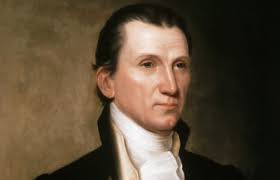
James Monroe, Virginian

When he retired from the Presidency in 1825 he was 66, and still in generally good health. His wife, ten years his junior, was becoming frail. Nevertheless, they returned to Oak Hill, their home about 35 miles from Washington. As might be expected, he served on the Board of Visitors for Jefferson’s newly established University of Virginia.

His ties to the state were strong.

Those Last Years

For the better part of five years, Monroe enjoyed his retirement life of “gentleman planter” much like his fellow Virginia Presidents. Also, like his predecessors, Monroe, who had never been wealthy, had incurred several debts throughout his life, and now battled insolvency. He sold his Ash Lawn plantation (close to Monticello) which today is open and managed by the College of William and Mary.

He remained active, serving as a delegate to the Virginia Constitutional Convention in 1829, but forced to relinquish his role as its presiding officer in 1830, due to failing health.

This image has an empty alt attribute; its file name is jameselizabethmonroe.jpg
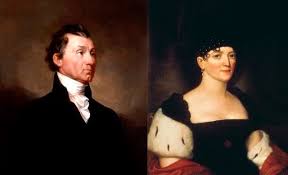
James and Elizabeth Monroe

It was death of his wife Elizabeth Kortright (1768-1830) that helped precipitate his decline. They had been married more than 40 years, during which time they had seldom been apart for more than brief periods. Even during the two decades (on and off) that Monroe served abroad in ambassadorial positions, Elizabeth was with him.

When she died in 1830, a frail and now-failing James Monroe moved to New York City, to live with his daughter Maria Hester, her husband Samuel Gouverneur and their family. In another historical coincidence, on July 4, 1831 – fifty-five years after the Declaration of Independence was signed – James Monroe died of heart failure, and possibly complications from tuberculosis. He was 73.

His family buried him at a simple ceremony in the Gouverneur family vault at Marble Hill Cemetery in New York. There were no Virginians present. He would lay there for more than a quarter century.

Hollywood: The Cemetery

Cemeteries, including important ones, have been around for millennia. The Egyptians had their pyramids, the Romans their catacombs. Various native tribes had their sacred burial grounds. Once European colonists began to populate the American continent, crypts and cemeteries were usually attached to churches. Many people however, preferred interment on their own property, a la George Washington. Several “modern” presidents choose burial at their associated institutions.

In 1847, a sprawling “garden cemetery” was built in Richmond, VA, near the banks of the James River. Unlike the grid-like cemeteries, this one, sprawled on 135 acres of valleys, hills and stately trees was a new concept of the 19th century that became very popular. They called it Hollywood Cemetery, and today it is recognized as a registered arboretum.

During the next decade, the beautiful cemetery (one of Richmond’s treasures) was growing in “residents” and status. By the mid-1850s, as sectionalism and secession between North and South were creating huge rifts, its Governor Henry A. Wise wanted to make a statement, ostensibly seeking our dear departed Founding Fathers of Virginia to provide a more moderate tone and remembrance.

George Washington being removed from Mount Vernon was out of the question, of course, but both Jefferson’s Monticello and Madison’s Montpelier had been sold and were falling into disrepair. No close family ties remained there. Gov. Wise had hoped to bring the coffins of both Jefferson and Madison (two of Virginia’s favorite sons) to be re-interred at Hollywood, but for various reasons (and perhaps historical serendipity), those efforts failed.

Harper’s Illustration now in the LOC.

Monroe was a different story, however. He had no ties to New York. Why shouldn’t his earthly remains “come home”? His son-in-law, still living, had no objection.

The Homecoming

So on July 2, 1858, 100 years after James Monroe’s birth, with $2000 authorized by Virginia’s General Assembly, officials from Virginia and New York joined descendants of Monroe at the cemetery in New York to see the lead coffin dug up and placed in a mahogany casket.”

Perhaps oldest photo circa 1865 (LOC)

The following day it was placed on a steamship, appropriately named Jamestown, and brought from New York, through the Chesapeake Bay, and up the James River to Hollywood Cemetery. “On the night of July 4-5, a crowd of Richmonders assembled at the dock for their arrival. Then Gov. Wise and Richmond Mayor Joseph Mayo led the funeral procession through Richmond’s streets to the cemetery, two miles away. Monroe’s coffin was borne in a hearse drawn by six white horses.”

The ceremony was held with a limited number of spectators (not enough room) followed by some gala celebrations in town. Newspapers across the country reported the event, and the desire to “re-unite” the country.

And the grave-marker.

His wife, daughter and son-in-law have been re-buried nearby.

This image has an empty alt attribute; its file name is jmonroe-grave-hollywood.jpg
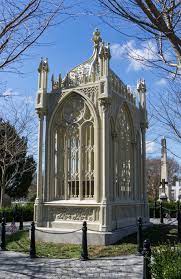
James Monroe’s grave in Hollywood Cemetery – today.

The Birdcage – Hollywood Style

In 1859, Albert Lybrock, an Alsatian architect who emigrated to the USA some years earlier, designed a beautiful and ornate Gothic Revival cage made from cast iron, which surrounds the sarcophagus. It has been nicknamed “The Birdcage”.

It was labeled a National Historic Landmark by the National Park Service in 1971 due to its unique and elegant architecture.

In 2015, the State of Virginia appropriated nearly $1 million to repair the structure, and return it to its original beauty.

Sources:

Cresson, W.P. – James Monroe – UNC Press, 1946

Unger, Harlow Giles – The Last Founding Father – DeCapo Press, 2009

https://www.britannica.com/biography/James-Monroe

https://www.hollywoodcemetery.org/

https://www.dailypress.com/news/dp-xpm-19940904-1994-09-04-9409020413-story.html

Posted in A POTUS-FLOTUS Blog, George Washington, James Madison, James Monroe, Thomas Jefferson | Tagged , , , , , , , , , , , , , , , , , | 2 Comments

Dolley Madison and the War of 1812: A Book Review

This is a book for middle-school readers.

Eons ago, when old-me was a very very young-me, Scribner’s published as “Scribner’s Junior” – a series of biographies geared to perhaps second through sixth grades, depending on reading skills. (Mine were excellent!) I devoured every one I could get my hands on – ranging from George Washington to George Washington Carver, Sacagawea to Florence Nightengale and Daniel Boone to Babe Ruth. And Dolley Madison. And I still remember little facts and stories about them to this day. I also remember loving them – and learning to love history.

This of course was long before Author Libby Carty McNamee was born – but semi-miraculously, she has picked up where Scribner’s left off. Perhaps for the middle school bunch. Dolley Madison and the War of 1812 is a few notches up in reading ability, and several notches up in actual history. And it’s done without boring the young reader (or even and “old-me” reader) to death with facts and figures and the stuff they will never remember nor care about. Ms. McNamee’s stuff they will remember! After all, “story” is 5/7 of “history.”

Dolley was a legend in her own time – a very rare thing, especially for a woman. Yes she was stylish, yes she was glamorous, and yes she had an outgoing conviviality. But she was more than that. She used that style and glamor and conviviality for its best possible use: to bring divergent groups and factions and opinions – and personalities, together. And none of it would have been possible without the loving and always supportive backing of her quiet scholarly husband James Madison. They were a team. He plotted the course, but it was her hand on the helm.

In Author McNamee’s book, (and she is a fine story-teller), these long-ago people are brought to life. Not just as names in books or answers that come up on tests (or Jeopardy shows). More importantly, they are brought to life on their terms. The way things were then. And how they thought then. With all their limitations. No electricity. No telephones or telegraphs or televisions. No automobiles or airplanes. No modern conveniences. Forget the internet. Her gowns touched the ground; his breeches ended at the knee. And people knew their places – something utterly incomprehensible today, especially among the young.

The author focuses entirely on the War of 1812, which according to many fine historians would never have occurred had there been telegraphs or telephones or transportation faster than a horse. But since history is history, and what was, was, the war occurred, to the enthusiasm of some and misery of others.

The Madisons were walking a fine line. Dolley was raised a Quaker, which is a pacifist sect. Madison, a small man with iffy health, was as unwarlike as any president we have ever had. But the reasons had been presented (both sides), discussion and debate had been going on for years, and finally the war came, with James Madison’s reluctant approval.

Libby McNamee begins midway through the war and focuses on a) their actual actions and the events surrounding them, and b) their relationship to each other (generally well known to their contemporaries) and of course c) the literary license of dialogue between the parties involved.

The young reader (and even older ones) will get a good overview of the economic causes of the war (usually boring), the various generals and commanders on both sides (interesting) and the eventual burning of Washington (always exciting)!

She receives enormous help in this effort – from Dolley herself. During her long lifetime (she lived to 81), she was famous, and indeed beloved nationwide for a half-century. There are hundreds of letters to draw from, and not merely Dolley’s letters. Since so many notables knew Dolley very well, their letters mentioned the First Lady. Even strangers mentioned Dolley and her reputation. Interestingly enough (and even cutting a little slack in acknowledging the more sanctified “place” of women in the early 19th century), just about everyone had a good opinion of her.

McNamee includes important biographical information within the context: her youth and upbringing, her relationships with her sisters, her first marriage, and even a brief mention of her ne’er-do-well son. That works just fine. This is a novel, not a full bio. She is a very good writer, although some of the dialogue tends to be a bit repetitious in concept, i.e. worrying about each other, about themselves, about politics, etc. Certainly they worried, but a little pruning might help. No doubt her next books (and I hope there will be many) will tighten that flaw that practically every writer struggles with.

But the best, best part of Dolley Madison and the War of 1812 is that it never talks down to the reader. An adult can read it and enjoy it – or even read it aloud. And that includes the guys, too! Well done Libby McNamee!

Trade print or e-bookable. Click on the link!

Dolley Madison and the War of 1812

by Libby Carty McNamee

ISBN-10 ‏ : ‎ 1732220247 ISBN-13 ‏ : ‎ 978-1732220249

Posted in A POTUS-FLOTUS Blog, James Madison, Nifty History People, Recommended Reading | Tagged , , , , , , , , , , , , | 1 Comment