Richard M. Johnson: Scandalized Vice President

Richard Mentor Johnson was our first VP Johnson. Andrew (2) and Lyndon (3) came later.

RMJ: Kentuckian

Richard Mentor Johnson (1780-1850), was born/raised near what is now Louisville, KY when the area was still part of Virginia. His was a large, prosperous family who moved to the Lexington area when RMJ was in his mid-teens. He was sent to Transylvania College (the oldest college west of the Alleghenies) and read law.

Between his own considerable acreage, brawny good looks and a pleasing personality, and the need for deeds and property settlements, Johnson did well. By the early years of the 19th century, he was already a state legislator. Even before the Constitutionally determined age of 25 for a Congressman, RMJ was elected to Congress. (He was 25 when he was sworn in.) When Thomas Jefferson was President, Johnson could be counted on as a staunch Democratic-Republican.
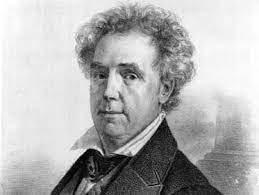
Richard M. Johnson

When James Madison was President, Johnson became a trusted ally of the so-called War Hawks, which included Henry Clay and John C. Calhoun. He fought in the “western” theater (the Great Lakes and Canada) during the War of 1812. It was said (but never proven), that it was RMJ who fired the shot that killed Tecumseh at the battle of the Thames. Nevertheless, Johnson never denied it, and used it whenever it was beneficial.

When Andrew Jackson started making serious Presidential noise, Richard Johnson was shortlisted as a Vice Presidential running mate. Jax wound up with Calhoun, which he regretted. By the time, Martin Van Buren had worked his way into Jackson’s confidence as a possible successor, Johnson was overlooked. 

RMJ: Vice President

The Vice Presidency had begun its constitutional life as an afterthought. There was little support for the position, and no real significance in its office. 

After the debacle between Thomas Jefferson and Aaron Burr over the Presidency in 1800, adjustments regarding the VP were made and clarified. But the position was still a throwaway: a geopolitical accommodation between North-South, or East-West. But it was honorable and well paid: $5000/year, at a time when $500 a year was considered decent. 

The balance between the cosmopolitan Martin Van Buren (NY) and the rough-hewn Kentuckian seemed beneficial. Johnson had a Jackson-like campaign slogan of “Rumpsy-dumpsy, Rumpsy-dumpsy, Richard Johnson killed Tecumseh.” 

Ah but… there was a scandal (see below) that was well known in Washington, and Johnson failed to receive the crucial electoral votes to become VP. His actual “election” to that position was via the Senate. He remains the only VP elected by the Senate.

But Martin Van Buren won handily, and RMJ became VP. It was generally ceremonial, and few politicians ever consulted the VP. 

The Scandal Part…

It was said (actually whispered) that as a young man, Johnson had seduced one of his father’s slaves. This was not uncommon at the time, particularly in Kentucky. But this was different.
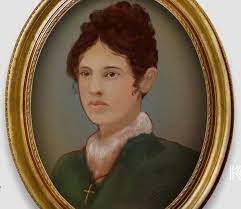
Said to be Julia Chinn

Julia Chinn was an octaroon. She was 7/8 white, with only one Black great-grandmother. Nevertheless, according to Kentucky law she was still enslaved, and Johnson was powerless to free her.

It was not merely a man-concubine relationship. They lived in his home as common law man and wife for twenty years. Until her death. 

Every indication is that he was very good to her and they were happy. She bore him two daughters. He gave them his name and raised the girls as his own. He dressed them in satin and lace and had them well educated.

Adaline and Imogene Johnson were not only given all the comforts and benefits of any young ladies who did not have (1/16th) Black blood, but their father introduced them into high level society as his daughters, and they eventually married white men.

Julia Chinn had carte blanche on his plantation. She made all the household decisions in RMJ’s absences (and there were many) and his creditors and tenants and overseers quickly learned to abide by her decisions. It is said that her business judgment and ability was well respected.

Then she died of cholera, some three years before RMJ became VP, as did their daughter Adaline.

More Scandal…

While Johnson’s personal relationships were neither denied nor loudly broadcasted, there were those politicians in the South who were aghast at the situation. They easily accepted “wrong side of the blanket” issues of any color – but complete acknowledgement and open social acceptance when racial issues were involved, was absolutely verboten. After Chinn died, Johnson was known to take up with other darker complected women. It was a slap in the face to the politicians. They would not tolerate Johnson in high office.
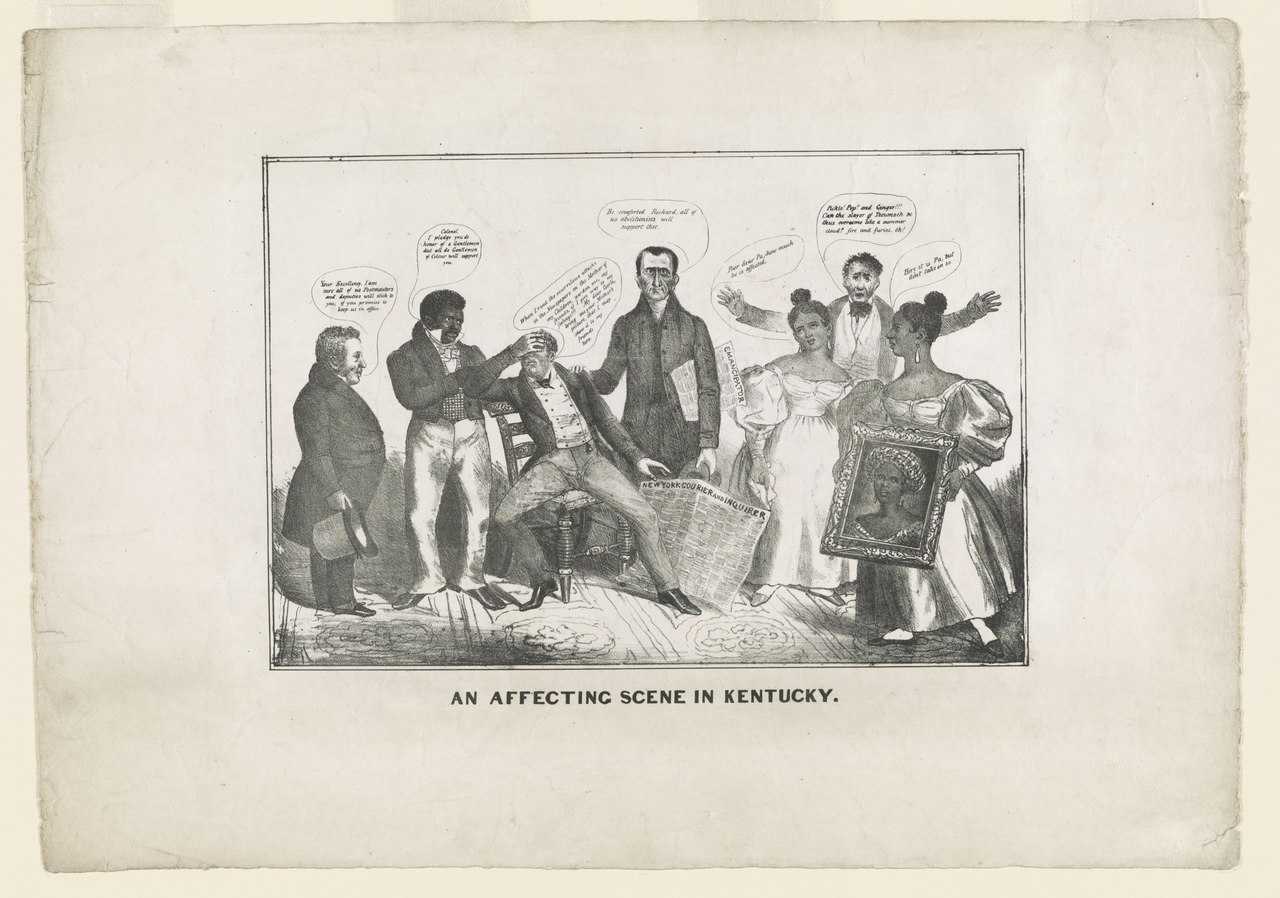
A scurrilous cartoon of Johnson and his family.

President Martin Van Buren was a long time widower with four sons and no daughters. The societal nuances had little impact on him, and most indications are that he was generally neutral about his Vice President. But he was shrewd, and likely realized that Johnson was a liability at the ballot box. 

When the election of 1840 was being considered, the Democrats opted to re-elect (or try to) Martin Van Buren. But they also opted NOT to include Vice President Richard Johnson on the ticket. 

The Upshot – and the Irony

In 1840, President Martin Van Buren (left) ran for election alone. There was no Vice Presidential candidate put forth by the Democrats.

His opponent was a Whig, a motley new party of dissatisfied Democrats, most of whom loathed the aged Andrew Jackson and were concerned about a nasty economic downturn. 
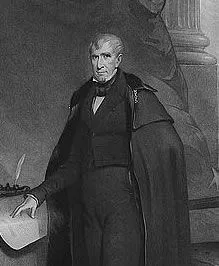
They ran a former general of the modest “battle” of Tippecanoe during the War of 1812. William Henry Harrison (right) was in his late 60s, with a semi-prominent name and a decent enough reputation. 

As his Vice President, they selected a maverick Democrat, John Tyler of Virginia with an axe to grind with Jackson. It was still a throwaway office. In fact their slogan was “Tippecanoe and Tyler too.”

They won. A month after Inauguration Day, Harrison died and Tyler became the first VP to become POTUS upon the death of his predecessor. 

Sources:

Barzman, Sol – Madmen & Geniuses: The Vice-Presidents of the United States – Follett Publishing, 1974

Shafer, Ronald G. – Breaking News All Over Again – Amazon Publishing, 2022

https://millercenter.org/president/vanburen/essays/johnson-1837-vicepresident
Posted in A POTUS-FLOTUS Blog, Andrew Jackson, James Madison, Martin Van Buren, Nifty History People, William Henry Harrison | Tagged , , , , , , , , , , , , , , , , , , , , , | Leave a comment

The Tea Party Tea Box

A rare treasure of American history!

The Boston Tea Party

Eons ago when I was in the 4th grade, everybody learned the basics of the Boston Tea Party. The gist being that back in December 1773, colonists in Massachusetts had become irate over taxes imposed by Great Britain, the “mother country.” Every effort to rectify the problem had failed – and now GB imposed another tax – on tea, which just about everyone drank. 

Paul Revere was there!

Tea was the most popular drink of choice in the colonies, coming via the British East India Company, a consortium of British businessmen with holdings in Asia for more than a century. They were making a fortune.

You get the idea….

One of the more obnoxious conditions of being a British “colony” (as opposed to being a nation of its own), was that all trade had to be with (or via) England. None of the 13 colonies were permitted to trade with France, or the Netherlands, or Spain directly. Even trade between the colonies was limited. This made competition and choices, including competitive pricing, illegal. 

Great Britain had imposed and rescinded taxes on several items over the past decade, but refused to allow the colonists any say in the government, i.e. taxation without representation. GB, pressed for money, kept issuing new taxes. It had become a boiling issue. 

The Tea Boxes

Tea bags as we know them now, were more than a century away in the 1770s. Loose leaves were packed in thick wooden boxes, about a cubic foot in size. A lot of leaves could be packed in a box, and could weigh as much as 100 pounds or more. The Beaver, Eleanor and Dartmouth each carried more than a hundred boxes. Once delivered to their destination, tea merchants repackaged the tea into much smaller containers for public purchase. With tax.

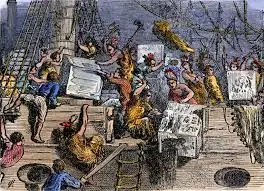
Taking matters into their own hands, a group calling themselves The Sons of Liberty disguised themselves with feathers and paint, waited till dark, and boarded the three ships holding a large cargo of the now-hated tea. They went below to the cargo holds, passed the boxes from person to person, slashed open the boxes with an axe, and dumped the tea in the river along with the broken box. Of course, nobody saw anybody or anything. Nobody came forward. Ever.

The Following Day

The Charles River was full of tea leaves, broken boxes and pieces of wood, lapping along the shores near Dorchester Heights. Fifteen-year-old John Robinson was walking along the shore in the early morning and saw an unusual object half buried in the sand. He knew immediately what it was. The “adventures” of the previous night electrified Boston, and nearly everyone knew about it. 

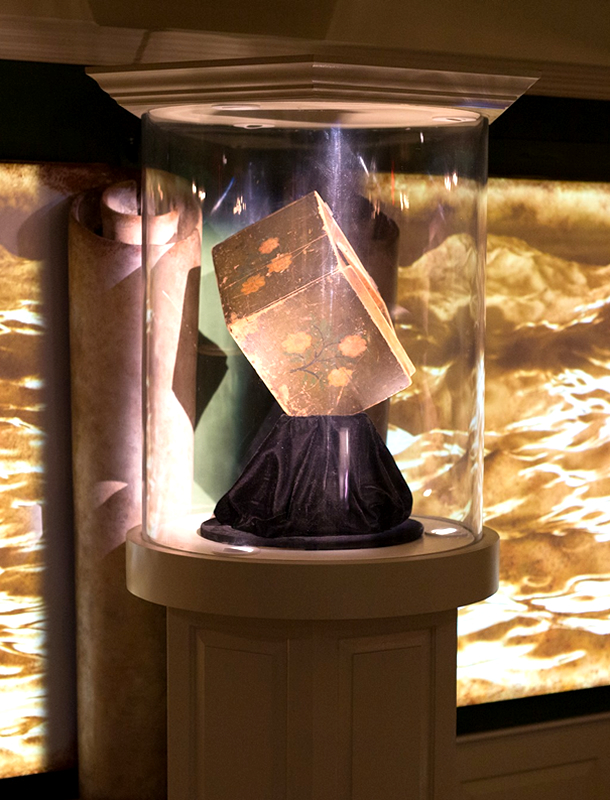
This is a replicated box.

Robinson had found one of the tea boxes. The tea had been dumped, but the box remained intact, except for the lid. It was about 10”x13”x12”. He took the box home, and kept it for the rest of his life.

The 200 Year Brigade of Hands

Robinson eventually married, but was only 46 when he died. His wife remarried some time later, and as “Grandma Holden” the box remained in her possession in upstate New York for more than 40 years. Shortly before her death, she passed the box to Solomon Lurana of Wisconsin, a relative by marriage, and one who a) had been very close to the family, and b) had an abiding love and understanding of history, and what the box represented. He was also diligent about keeping documented information regarding its provenance.

Solomon Lurana kept the box for nearly thirty years before giving it to his 8-year-old orphaned granddaughter, Mary Lurana Cade, who he was raising. She used the box to store her dolls, and some dress-up old clothes. At some point, the family cat used the box as a home for her kittens. 

In 1896, Mary Lurana Cade married Isaiah Ford and moved to Knoxville, TN, and started a family: son William Cade Ford, and Helen Ford Waring. Then they relocated to Texas. The box went with them. 

Mary Lurana’s husband died in 1917, and she went to live with her daughter and son-in-law. Mother and daughter were both educators, with a strong interest in history – and, of course, the box that had been in their direct/collateral family since 1773. It was Helen who diligently researched and documented the chain of “ownership” through nearly 200 years. Helen Waring died in 1961, and the tea box was assigned to her brother William Cade Ford.

The Robinson Half-Chest

By the time of the USA Bicentennial in 1976, the Smithsonian Institution learned of the existence of a 200-year-old relic from the Boston Tea Party, and tracked it down – in Texas! An elderly William Ford gave permission for it to be displayed in an exhibit that opened in 1974. It was officially “renamed” the Robinson Half-Chest.     

After the exhibit, the “half-chest” was properly crated and returned to Betty Ford Goodman (her father had died during the Smithsonian interim). It sat in a bank vault for a couple of years, till the family decided to bring it back home. The Goodman children remember taking it to school for show-and-tell.

Unto Today

Boston is a city awash in history, and treasures its relics. In 2004, plans were made to establish a new historical  “venue”: a Boston Tea Party Exhibit and Museum. The Goodman family contacted the proper Tea Party Museum conservators, and offered their “box”. The conservators were delighted.

The venue opened in 2012, and the “box” became a star! There’s an interactive lecture-program, a replica ship with tethered styrofoam “boxes” for tossing overboard, a charmer of a little museum with the “real box” – and, of course, a tea room.

Yes, the tickets are expensive. Yes, there is a TAX, too!

But go see it anyway! It’s nifty!

Sources:

A Box Worth Keeping

https://www.britannica.com/event/Boston-Tea-Party

https://www.masshist.org/revolution/teaparty.php

Posted in Nifty History People | Tagged , , , , , , , , , , , , | Leave a comment

Selling McKinley in 1896

Historians frequently point to 1896 as being the first “modern” election.

Setting the Stage

By 1896, the country was poised for a new century. Huge changes had occurred since the Civil War some 35 years earlier. Railroads crossed the entire country in days, not weeks. Most people lived less than 100 miles from a station. Electric light was now two decades old, and entire cities had been electrified, paving the way not only for light, but for the power to run all sorts of electric-based appliances – from industrial machinery to waffle irons.

The telegraph, was practically “old technology.” From communicating from town to town, it now connected the USA to Europe and beyond. In minutes. The telephone, first introduced at the country’s Philadelphia Centennial in 1876, was now commonplace in every village. The phonograph brought culture into living rooms. The approaching horseless carriages and even flying machines were no longer wild dreams of science fiction. 

One of the lesser known, but hugely important advances of that post-Civil War era, were printing processes. Color printing and lithography. Photographic reproduction. Electric presses that could print thousands of newspaper pages in an hour. 

Between transportation and communication advances, the average citizen could be kept in the loop very quickly – and inexpensively. 

The Candidates for 1896

William McKinley (1843-1901) was an Ohioan, a Civil War veteran, attorney, Republican congressman, Governor of Ohio, and all-around nice guy. Just about everyone had a good word for him. Despite all of the above, other than people from Ohio and/or officialdom in Washington, he was generally unknown. Nevertheless, he was short-listed for the Republican presidential nomination in 1896, particularly since former POTUS Benjamin Harrison declined any interest, and perennial hopeful John Sherman (also Republican from Ohio) was long in the tooth with declining health.

William McKinley

McKinley would have little opposition at the 1896 convention.

What was a complete surprise however, was the Democratic candidate. Youthful (35), good looking and devout, William Jennings Bryan (1860-1925)  of Nebraska was completely unknown. A middling attorney by discipline, he served two unremarkable terms in Congress before being defeated. He relinquished law in favor of journalism, again unremarkable. But his one true love was politics, and his passion was oratory.

William Jennings Bryan

Almost as an afterthought, Bryan was asked to make a short speech at the 1896 Democratic convention in favor of bi-metalism, i.e. adding silver coinage to the gold standard to help alleviate the economic problems, mostly of the midwestern farmers. It was a touchy subject, since the financial/industrial communities feared chaos and inflation, and even a good many Democrats had serious doubts. Bryan’s speech made history. He electrified the convention with his soon-to-be-famous Cross of Gold speech.

This in turn, propelled him right into the candidacy. 

The “Modern” Campaign

Young Bryan, the youngest Presidential candidate (ever), had all the energy and appetite of youth. Breaking all traditions regarding candidates demurring about their worthiness, and permitting their supporters to campaign on their behalf, Bryan jumped in with both feet, zig-zagged the country, making speech after speech, shaking thousands of hands every day, and whipped his followers into a frenzy of silver coinage support.

Mature McKinley, nearly 20 years Bryan’s senior, opted for the traditional. He stayed home in Ohio, and let his supporters come to him, which they did. In droves. He made well prepared mini-speeches in response to their issues and questions sent in advance. And with his frail wife sitting beside him on their porch, crochet bag nearby, McKinley was the picture of best-America itself. Kind. Good. Confident. 

Frail Ida McKinley became a campaign asset.

In the “old” days, presidential supporters bought rounds of drinks and cigars for potential supporters. They wrote letters to the newspapers. They held torchlight parades – mostly for effect. They gave away ribbons or cards with their candidate’s name as souvenirs.

But the “modern” contribution to the campaign in 1896 was the influx, influence and importance of money. Lots of money. And the options of where to spend that money.

Marcus Alonzo Hanna

Mark Hanna (1837-1904) was born in Cleveland, Ohio, the son of a middle class grocer. Possessed of a near genius in administration/management, by 25 he was running his father’s much improved business. He married the daughter of a wealthy coal magnate, and began running that business as well. By the time he was 40, Mark Hanna ran several companies, including a daily newspaper, the Cleveland Opera House and its streetcar company. He gravitated to politics about the same time as Lincoln’s election, and was active in behind-the-scenes Republican interests. That included generous campaign contributions.

Marcus A. Hanna

When he met William McKinley, six years his junior, the association grew from civic and political interests to a deep and abiding personal friendship. Hanna was known to love McKinley “like a brother.”

When he became campaign manager for McKinley’s presidential bid in 1896, he introduced several new innovations, large sums of money being the most important. Hanna raised about $4 million (in 1896 money!), against perhaps $500,000 for Bryan!

Spreading the Word

With the fattest wallet up to that time, Hanna recruited some 4,000 speakers to campaign across the country in behalf of WMcK. That included their expenses of train travel, hotels, meals and sundries.

He flooded the country with millions of brochures and campaign literature, on nearly every subject of interest. 

He papered the country with campaign broadsides and posters – in color! Volunteers plastered these broadsides on the outside of barns in remote areas for maximum impact. 

He took advantage of the new craze for campaign buttons. Some were made of celluloid, featuring photographic reproductions of the candidate. Some were in color!  

His campaign slogan of “A Full Dinner Pail” (used for the first time) resonated with the working man, underscoring McKinley’s promise for “prosperity for all.” 

He made assiduous use of McKinley’s front-porch image as a kind and devoted husband to an ailing wife. Kind and devoted counts!

Bryan never had a chance.

Sources:

Leech, Margaret, In the Days of McKinley – Harper & Brothers, 1959

Morgan, H. Wayne – McKinley and His America – Syracuse University Press, 1964

Philips, Kevin – William McKinley – Times Books, 2003

https://www.whitehouse.gov/about-the-white-house/presidents/william-mckinley/

https://www.history.com/topics/us-politics/william-jennings-bryan

https://ohiohistorycentral.org/w/Marcus_A._Hanna

Posted in A POTUS-FLOTUS Blog, Nifty History People, William McKinley | Tagged , , , , , , , , , , , , , , , , , , , , | 1 Comment

Kermit Roosevelt: TR’s Troubled Son

All children inherit varying traits of both parents.

The Second Son

Kermit Roosevelt (1889-1943) was the second son of Theodore Roosevelt and his second wife, Edith Kermit Carow, named him for a great uncle and a brother, who died in infancy. While all TR’s six children inherited parts of his many traits, Kermit was the one most like his mother. He looked like her. He had her sensitivities. He was said to be her favorite (if she admitted to any).

Young Kermit

As a boy, he was smart as a whip, athletic, practical, and like all Roosevelts, a voracious reader, lover of poetry and excellent writer. One could not survive at Sagamore Hill without exceptional literacy. His gift for languages was his own however. While both of his parents had mild linguistic competence, Kermit had a talent for it.

Kermit attended the local grammar school in Oyster Bay, followed by Groton (mandatory for the family boys), and then to Harvard. He had just started Groton when his father became President in 1901.

Edith K. Roosevelt

Throwback Traits

Kermit’s inherent melancholy and predilection for alcohol was also a family trait. 

Edith’s father, Charles Carow, was a source of disappointment and embarrassment to his family. He drank, and subsequently his business efforts failed. Some sources believe that an embarrassed adult-Edith destroyed a fair amount of Carow documents.

Then there was Elliott Roosevelt, TR’s younger brother. He developed a thirst for alcohol while he was still in his teens. It was complicated by a secondary addiction to laudanum. He spent more than a decade in and out of sanitariums, and died at 34. 

While Theodore and Edith had their moods and cares like everyone, Kermit was a different case.

Kermit the Companion

Of all TR’s sons, it was Kermit who also inherited his father’s enthusiasm and dedication to outdoor adventure and natural science. 

In 1909, when his 50-year-old father was “retiring” from the Presidency, he opted on a year-long safari in Africa, under the auspices of the Smithsonian. Kermit, who had just begun his Harvard education, opted to take a year off and join the expedition. It could arguably be said to have been his happiest year. Father and son bonded very closely, and the expedition was successful – and joyful.

Kermit in Africa

Kermit returned to Harvard, plowed through his academics and earned a degree in engineering in 1912. He had just embarked on a career when his father was invited on a trip through an unexplored region of the Amazon. Edith Roosevelt, perhaps fearing for her always too-eager husband’s well-being, pleaded with her sensible, but reluctant son to accompany him.

Having become fluent in Portuguese, Kermit Roosevelt was more than a pleasant companion on what became a difficult and dangerous exploratory expedition. Keeping his melancholy confined to his diary, he became a leader in the expedition, and actually saved his father’s life. TR, seriously ill with malaria, had also gashed his leg to a point that could prove fatal, and insisted the group continue without him. He planned to overdose himself with morphine. Kermit, also ill with malaria, refused to accept that scenario, and oversaw TR’s evacuation on a stretcher until he could be transported to a hospital. 

The First War….and Beyond

After his return Amazon, Kermit married and joined a banking firm in Brazil, where his linguistic skills would be beneficial. But by 1917 when the Great War (as it was then called) erupted in Europe, all four Roosevelt sons were among the first to enlist. Their father lobbied hard to recruit and lead a regiment, but a wiser Woodrow Wilson refused. 

Unlike his three brothers (pictured above) who had some officer training, Kermit had little if any military experience. Nevertheless, he received a voluntary commission from the British government, and was sent to the Middle East, where he quickly learned Arabic, and proved his value, earning the British War Cross. He was also the only Roosevelt son who was not injured – or killed. He returned home, and wrote a well-received book War in the Garden of Eden.

He continued his outdoor exploratory travels through the 1920s, along with founding a steamship company. He also continued to write engaging books (co-authored with his brother Ted) about those adventures. 

But Kermit’s periodic depression and chronic alcoholism had become a part of his daily routine. The Great Depression, which drained his finances, did not help matters. Nevertheless, he continued writing and traveling. And while he was a great worry to his family, his dissipation was under tight wraps – and out of the headlines.

Mature Kermit Roosevelt

The End Is Near

As WWII approached, he (and his two surviving brothers) were eager to serve their country as they had in the First War, even though they were well over age and both Ted and Archie had serious, long-standing war-related injuries. Kermit enlisted with the British Army for a while, but was considered of a liability because of his drinking. He returned home, and descended further into alcoholism.

President FDR reluctantly commissioned Kermit into the US Army, and sent him to a remote outpost in Alaska, to engineer and build defenses. In 1943, after only a few months, he put a bullet in his head.

Kermit Roosevelt was a great lover of poetry. While still at Groton, he “discovered” the poems of Edwin Arlington Robinson and recommended him to his President-father, who agreed with his young son’s assessment. Robinson, eventually a multi-Pulitzer prize winner and frequent Nobel nominee, had written his most famous poem, Richard Cory, still considered a classic today. (Read it!) No doubt Kermit understood the poem better than most.

Edwin A. Robinson

Edith Roosevelt, now past eighty, along with the rest of the world, was told that her son had a heart attack.

Sources:

Hagedorn, Hermann – The Roosevelt Family of Sagamore Hill – Macmillan, 1954

Miller, Candace – The River of Doubt – Random House, 2005

Renehan, Edward J., Jr. – The Lion’s Pride: Theodore Roosevelt and His Family in Peace and War – Oxford University Press, 1998

https://www.shakariconnection.com/kermit-roosevelt-books.html

https://www.nps.gov/people/kermit-roosevelt.htm

Posted in A POTUS-FLOTUS Blog, Nifty History People, Theodore Roosevelt | Tagged , , , , , , , , , , , , , , , | Leave a comment

Abraham Lincoln and The Prince

Spoiler alert: Abraham Lincoln never met Prince Albert or Queen Victoria….but….

The Protocol of Nations

In the earlier days of the country, long before “the hot line” existed, direct communication between heads of state was not considered proper. Written communication (and even most face-to-face conversation) pertaining to diplomatic situations went through the channels of designated intermediaries, i.e. the Secretary of State or ambassador or similar officialdom.

In addition to the proper channels, protocol was rigid. Who was presented first, who entered first, who sat where, right side vs. left side, etc. Lapses of these formalities could create an international incident.

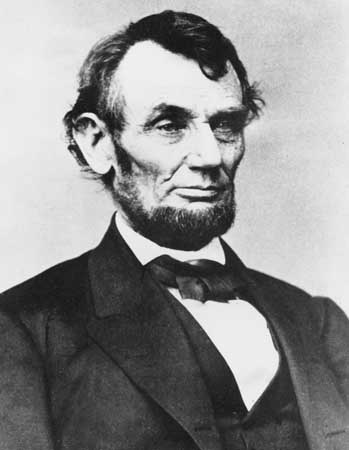
Abraham Lincoln: New President

Abraham Lincoln’s first months as POTUS in 1861 were fraught with crises upon crises, and most historians (and his contemporaries) believe that AL was perhaps not at his most effective in those early days. Several months passed before he began to grow into his new challenges, which seemed to change daily.

When it came to foreign policy, he had little experience, spoke no foreign languages, and his knowledge of the ins-and-outs of diplomacy was still to be learned. For many months he relied on his Secretary of State, William Seward, who had far more expertise in those areas.

Secretary of State Wm. Seward

Prince Albert: Queen Victoria’s Consort

Albert, Prince Consort of England, was a German man, a decade younger than the US President, but he had been given a superb classical education and a background of European protocol. Only twenty when he married the Queen of Great Britain, he was obliged by their constitution to remain above all politics. He also grew into his position – that of advisor to the Queen, and counselor to a succession of Prime Ministers, Foreign Secretaries, and similar high ranking officials – of all parties. Most historians concur, that while Albert was not warmly regarded in his adopted country, the populace had come to respect his considered advice, which was usually excellent.

Prince Albert and Queen Victoria

In personality, the Prince was far more like Jefferson Davis than like Abraham Lincoln. Both were formal in bearing, invariably polite but cool, and generally humorless, narrow and rigid in their ways and opinions.

But in the early days of the American Civil War, while the British people were very much opposed to slavery (which they had abolished decades earlier), they appreciated Southern manners, and most of all, the benefit of American cotton which had become a mainstay of their textile economy.

The Southern Plan

Jefferson Davis was not a stupid man, and realized from the outset that seceding from the Union to form a “new” country was fraught with problems on many levels: economic, transportation, manufacturing, manpower, etc.  Gaining diplomatic recognition would go a long way to alleviate many of those problems.

To initiate some of those plans, James Murray Mason and John Slidell were sent as envoys to Britain and France to press the Confederacy’s case for diplomatic recognition, and to lobby for financial and military support. Both men were widely respected in the South, with solid credentials in foreign affairs. They were also prepared to run the blockade that the Union had immediately put into effect from Maine through the Gulf of Mexico.

Emissaries Mason and Slidell

Cutting to the Chase

It was a complicated scheme, and Union intelligence was well aware of their intentions, as well as the potential diplomatic dangers. After a convoluted path of embarkation plans and vessels, Mason and Slidell finally boarded the RMS Trent, a British mail packet ship, in Havana. They were bound for St. Thomas, and then to England. Captain Charles Wilkes of the USS San Jacinto immediately gave chase.

San Jacinto Capt. Charles Wilkes

According to Prince Albert’s diary on November 28, 1861 “An American warship holds up our mail packet Trent on the high seas and boards her, and removes by force four gentlemen from the Southern States, who were to have gone to London and Paris as envoys. They are carried off to New York. General indignation. The Law Officers declare the act as a breach of international law.”

Lord John Russell, British Foreign Secretary drafted a bellicose memorandum for the British ambassador in Washington, “threating to recall” our man in Washington.” It was tantamount to a declaration of war. A copy was sent to the Prince Consort.

On November 30, desperately ill with only two weeks to live, Prince Albert drafted an amended version for the Queen. It was firm, but lacking in the belligerence of the original. He noted that [the Queen] should have liked to have seen the expression of a hope, that the American captain, did not act under instructions, or, if he did that he misapprehended them, that the United States Government must be fully aware that the British Government could not allow its flag to be insulted, and the security of her mail communications to be placed in jeopardy; and Her Majesty’s Government are unwilling to believe that the United States Government intended wantonly to put an insult upon this country…”

Without knowing it was Prince Albert who suggested this form of response, Abraham Lincoln was like minded in sentiment. Although a relative novice in both foreign relations and maritime law (he would improve with time), he obviously knew it was a definite breach of international law.

Engraving of the Trent “incident”

Seward and Lincoln

Secretary of State Seward, who was far more knowledgeable in those matters that the President, saw a foreign incident as an opportunity to divert attention and possibly even reunite the country.

Lincoln disagreed, claiming “One war at a time.”

Both men agreed however, that the aggressive Captain of the San Jacinto had exceeded his authority, and in due time, quietly permitted Mason and Slidell to be released. No apology, no explanation. And the British government continued to maintain its neutrality.

Lincoln likely never knew that it was Prince Albert who suggested the “plausible out.”

It was the last memo the Prince ever wrote.

He died on December 16.

Sources:

Bough, Richard – Victoria and Albert – St. Martin’s Press, 1996

White, Ronald C. Jr. – Lincoln: A Biography – Random House, 2009

https://millercenter.org/president/abraham-lincoln/key-events

https://www.history.com/topics/american-civil-war/trent-affair

https://www.britannica.com/biography/Albert-Prince-Consort

Posted in American Civil War, Nifty History People | Tagged , , , , , , , , , , , , , , , , , , , | Leave a comment

The Great White Jail

The White House is the finest prison in the world.” Harry S Truman.

The White House Paradox

The White House, or the Executive Mansion, is undoubtedly the finest residence the country has to offer the President of the United States, whoever it is. It is a beautiful structure and magnificently maintained. It is rent-free to the POTUS and family with numerous perks. It is finely furnished. Any repairs are undertaken by the “country.” A multitude of staff polish, dust, sweep, wash and provide the meals, laundry services and personal attention. A President and/or First Lady never has to wash a dish or iron a shirt. (And this doesn’t even count the administrative staff!) Walking distance to the office.

Forty-five Presidents and their families called it home, at least for a while. (George Washington never got to live there, although he helped supervise its construction.)

George and Martha never lived there.

No matter how some of our early POTUSES demurred, they all wanted the position, and certainly deemed it a huge honor and responsibility. Of the first 34 (not counting GW, nor going beyond Eisenhower, and acknowledging the numerical confusion via Grover Cleveland), 11 re-upped for a second term. Two more (Lincoln and McKinley) were elected to a second, but incomplete term. Seven ran again – and lost.  Three others (Van Buren, Fillmore and Theodore Roosevelt) wanted it so badly that they ran again – on a third party ticket. They still lost.

A few others, like John Tyler, Andrew Johnson, Ulysses Grant and even seriously ailing Chester A. Arthur wanted it but were denied their party’s nomination.

Only James K. Polk, James Buchanan and Rutherford B. Hayes willingly said “sayonara” and rode off quietly into the sunset.

Ergo, no matter what was later said, just about all of the above (and those who followed Ike), liked living there.

But once in residence, most of them looked upon the place as a metaphor for the burdens of the Presidency.

The Early Fellows: In Their Own Words

The illustrious George Washington couldn’t wait for his retirement back to Mount Vernon, commenting, I am once more seated under my own vine and fig tree … and hope to spend the remainder of my days in peaceful retirement, making political pursuits yield to the more rational amusement of cultivating the earth. 

Martha Washington, who never lived there but spent eight years in NY and Philadelphia’s temporary Executive Mansions, said …Indeed I think I am more like a state prisoner than anything else.

John Adams wrote documenting the departing George Washington’s comments as “Ay! I am fairly out and you fairly in! See which of us will be the happiest.” John Adams may have thought those exact words when he left the keys to the house for Thomas Jefferson.

John Adams

Even later, ol’ John wrote his son, “No man who ever held the office of president would congratulate a friend on obtaining it.” His son obviously agreed: The four most miserable years of my life were my four years in the presidency. – J.Q. Adams

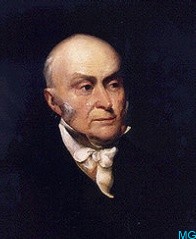
John Q. Adams

And Jefferson, upon leaving the Executive Mansion wrote a friend, “I am now at that period of life when tranquility, and a retirement from the passions which disturb it, constitute the summum bonum.”

His good friend and later successor, James Monroe claimed “I shall . . . be happy when I can retire beyond their reach in peace to my farm.”

Andrew Jackson, the born-for-storm fellow, conceded, “You must pay the price if you wish to secure the blessings.

Some Later Words of Exhaustion

James K. Polk: “I will soon cease to be a servant and will become a sovereign.” (Actually a dead sovereign, since he only lived a few months after leaving the WH.)

Outgoing President James Buchanan told his successor, Abraham Lincoln: “If you are as happy, my dear sir, on entering this house as I am in leaving it and returning to Wheatland, you are the happiest man in this country.”

Ulysses S. Grant had mixed feelings. “Cheap cigars come in handy; they stifle the odor of cheap politicians.” But FLOTUS Julia Grant LOVED the White House, and cried when she left. “Oh, Ulys, I feel like such a waif.”

Julia Grant
Ulysses S. Grant

One of the most unlikely POTUSes, Chester Alan Arthur did not mince words. “You have no idea how depressing and fatiguing it is to live in the same house where you work.” And, at the end of his term, he is quoted (maybe) as remarking…“there doesn’t seem anything else for an ex-President to do but to go into the country and raise big pumpkins.”

On the day Grover Cleveland left the White House, defeated after his first term, his wife, First Lady Frances Folsom Cleveland told the staff: “I want you to take good care of everything… I want to find everything just as it is now when we move back in exactly four years from today.” Grover Cleveland said nothing, at least not for the record. They mostly lived in a private house in Washington where he could have some privacy.

“I would rather be chief justice of the United States, and enjoy a quieter life…” Wm. Howard Taft

And Coolidge really meant he did not choose to run. “Ten years in Washington is longer than any other man has had it—too long!”

And Even Unto Today

“We must even face the prospect of changing our basic ways of living…” – Jimmy Carter

“From the moment I walked into the White House, it was as if I had no privacy at all.” – Nancy Reagan

“I really loved living in the White House, but I don’t miss it at all.” – Barbara Bush

And finally…. No one sheds tears for anyone lucky enough to live at the White House. – Author/columnist Maureen Dowd

Sources:

Dunlap, Annette – FRANK: The Story of Frances Folsom Cleveland, America’s Youngest First Lady – Excelsior Editions, 2009

Grant, Julia Dent – The Personal Memoirs of Julia Dent Grant: (Mrs. Ulysses S. Grant) – 1975, G.P. Putnam’s Sons

https://www.brainyquote.com/topics/white-house-quotes

https://tjrs.monticello.org/letter/1590

https://www.azquotes.com/author/15324-George_Washington

Posted in A POTUS-FLOTUS Blog, Abraham Lincoln, Calvin Coolidge, Chester Arthur, George Washington, Grover Cleveland, Harry S Truman, James Buchanan, James K. Polk, James Monroe, John Adams, John Quincy Adams, Nifty History People, Thomas Jefferson, Ulysses S. Grant, William Howard Taft | Tagged , , , , , , , , , , , , , , , , , , , , , , | Leave a comment

President Benjamin Harrison: States Man
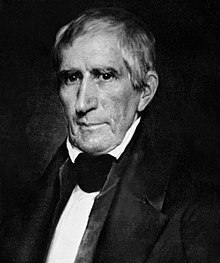
Benjamin Harrison is one of those post-Civil War presidents with a beard.

A Little More About Ben

For the knowledgeable, Benjamin Harrison (1833-1901) is generally remembered as the grandson of another President – General William Henry Harrison (1773-1841), who is mostly famous for dying a month after taking his Oath of Office. 

Ben, and his Grandfather Wm. Henry Harrison came from a long line of distinguished Harrisons.

And for the lovers of esoteric, Republican Benjamin Harrison is known as the 23rd POTUS sandwich between the non-consecutive terms of Democrat Grover Cleveland, (22 and 24) who forever confuses the numeric order of Presidencies. 

And yes, he did have a beard.

Past that, poor Ben seems to fade into the woodwork. After all, during the last third of the 19th century (or thereabouts), very little “sexy” historical issues and concepts occurred. The country was at peace, and after the Civil War, that was exactly what was wanted. Racism, temperance, women’s rights, labor unions and similar social issues was were backburnered to the lunatic fringe. And nobody really cared, unless you were personally affected. 

It was The Gilded Age, a time that business-as-usual was booming, great fortunes were being made, and, as the old saying goes, “nothing succeeds like success” and all seemed well. The streets were said to have been paved with gold, according to the millions of immigrants who began pouring in, and who were willing to dig for the gold. 

Why Ben?

Between the presidency of Andrew Jackson (1829-1837) and Theodore Roosevelt (1901-09), with the exception of Abraham Lincoln (1861-65), most of the presidents were capable men of good character and background – but colorless and compliant. (Ulysses S. Grant, of course, is somewhat of an exception, but he is known mostly for being GENERAL Grant.) 

Congress, and the Senate in particular, had always considered itself to be the dominant branch of government. After all, they represented “the people” in its broadest form. Candidates for the presidency considered it an honor and privilege, rather than an ambition, per se. Expected to be dignified and “presidential,” candidates held back, and let their supporters promote their cause, and their party’s agenda. 

Benjamin Harrison was just such a candidate. A bland fellow. In fact some considered him a cold fish whose wimpy handshake was not encouraging. He was a struggling lawyer in Indianapolis before the Civil War, and even served as Court Clerk to augment his meager practice. But when he hung a flag out of his office window with an “enlist here” sign, he quickly raised a regiment, and was appointed its commanding officer by the Indiana Governor. He served ably and competently, and befitting the Harrison name. Grandpa WHH had been a General of minor distinction in the War of 1812. Ben became a Brigadier General of minor distinction.

The Harrison house in Indianapolis
Benjamin Harrison’s fortunes changed after the Civil War

But when the war ended, being a lawyer, a Republican, and a Union General were solid credentials for public office, not to mention his illustrious family name. Ben’s law practice improved. The Indiana legislature saw fit to send him to the Senate. And when a Republican candidate was needed to challenge the incumbent Democrat Grover Cleveland, Ben seemed handy enough. They waved the bloody shirt, and he squeaked by. 

He is usually rated as pretty fair, as far as Presidents go. 

The Exceptional Note to his Resume

During his four year, single term as President, six states were added to the Union. 

Discounting the original 13, back in 1789-91, no other President has the distinction of formally creating six new states.

As a sidebar, there hadn’t been a new state added for more than a decade. The balance of party-power in Congress after 1870 was fairly even, and votes were incredibly close. And, (what a surprise) it was politics as usual. The Democrats consistently voted against admitting new states, since the applicants were all from the north and northwest, and likely to tilt Republican. Whatever tight edge the Democrats might/might not hold would be swamped by a much larger majority. But now, with a slim Republican majority in Congress another Republican president safely (but barely) ensconced in the White House, the timing was right for six new states, all expected to send Republican legislators to Washington. Before another mid-term election could take place, their applications for statehood was rushed through.
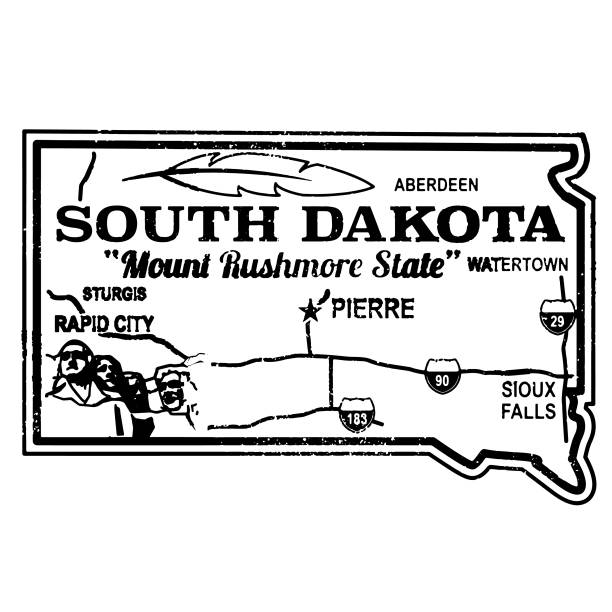
Those states were: North and South Dakota… The territory of “The Dakotas” was so large, that it made sense to create two states (#39 and 40). They were followed by Washington and Montana (#41 and 42). All became legally a part of the United States in November, 1889. The following July, Idaho and Wyoming (#43 and 44) were admitted as well.

And, as expected, every one of them sent two Republican Senators to the Capital. The Republican majority in the Senate now increased by twelve!
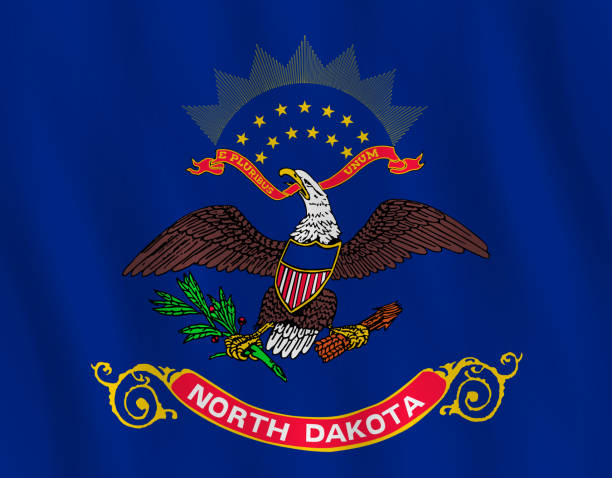
All on President Benjamin Harrison’s watch! It is a record, very unlikely to be equaled.

Epilogue on New States

Six more years passed before another state was admitted: Utah (#45), in 1896, during Grover Cleveland’s second (non-consecutive) term.

Another decade passed before the 46th state (Oklahoma) was admitted in 1907. Theodore Roosevelt’s Administration.

New Mexico and Arizona joined the USA in 1912. They were #47 and 48. William Howard Taft’s administration.

And thus it remained for a half century. Alaska (#49) and Hawaii (#50) did not become part of the United States until 1959, under the Eisenhower administration.

Sources:

Boller, Paul F., Jr. – Presidential Anecdotes, Oxford University Press, 1981

Stoddard, Henry L – As I Knew Them: Presidents and Politics from Grant to Coolidge – Harper & Brothers, 1927

https://www.whitehouse.gov/about-the-white-house/presidents/benjamin-harrison/

https://millercenter.org/president/bharrison/campaigns-and-elections

https://guides.loc.gov/chronicling-america-northern-west-territories

https://millercenter.org/president/bharrison/the-american-franchise

Posted in A POTUS-FLOTUS Blog, Abraham Lincoln, Andrew Jackson, Benjamin Harrison, Dwight D. Eisenhower, Grover Cleveland, Theodore Roosevelt, William Henry Harrison, William Howard Taft | Tagged , , , , , , , , , , , , , , , , , , | 1 Comment

Breaking News All Over Again: A Book Review

The History Behind Today’s Headlines

One of the true lessons of history is the stunned surprise of people today when they are confronted with the similarities of yesterday. What? This happened before? Maybe decades ago? Or centuries ago? How could this be?

Ronald T. Shafer, with an impressive resume as Wall Street Journal editor for a bunch of years, and now retired, is a frequent contributor to the Washington Post. He tackles the incongruities of history with knowledge, a smile, and a delicious sense of ironic humor. His latest book, a compilation of his more recent Washington Post articles, is aptly titled Breaking News All Over Again: The History Behind Today’s Headlines, The conclusion being that history definitely does repeat itself – wearing different clothes.

History is all about concepts. Of course there are specific events or situations, but the nub of it all, if you look closely, are the concepts.

It also helps that author Shafer has a dandy way with words, and tells a great story. 

For instance, vis-a-vis COVID. A pandemic is nothing new. Consider the Black Plague or other diseases that wiped out millions of people centuries ago. A hundred years ago was the so-called “Spanish Flu,” which also wiped out millions, probably wasn’t Spanish, and made Spaniards very angry at the implication that it was. Shafer tells it like it was.

More COVID… like vax and anti-vax. Two hundred and fifty years ago, smallpox, a recurrent plague of its own, with a 30% mortality rate was running rampant in Massachusetts. Abigail Adams bit a fearsome bullet in deciding to have herself – and her four young children – vaccinated. This was not a quick shot in the arm. It required weeks of preparation, and further quarantine. And she underwent the procedure first, so she could be immune and care for the children. If she survived. The decision was hers alone. Her husband was in Philadelphia shepherding a new nation into existence. PS – She survived.

For those who recoil at the nastiness and venom of recent elections, one could look back to the US Centennial election of 1876 and the Hayes-Tilden travesty. It challenged the Electoral Votes, and was played out in full before the entire country. It was also confused and complicated – and was barely “settled” by Inauguration Day. It was also mainly fought by the “bedfellows” of both sides, since both acerbic Samuel Tilden (D-NY), popular vote winner, and genial Rutherford B. Hayes (R-OH) chose to remain out of the fray and out of the path of slung mud. But it’s a dandy of a story! 

How about the Vice President having a final say in certifying the Electoral College votes? Or was it merely a formality? Go back to 1857, and check out a true molehill being whipped into a non-mountain by a man who wasn’t even the Vice President! (The elected VP had died years earlier, and had never been replaced!) Plus the fact that the actual vote, popular and electoral, was never in doubt. 

And there’s a little known story of racism being responsible for nobody actually running for VP as a Democratic candidate in 1840. Incumbent President Martin Van Buren, elected in 1836, was running again. His VP, Richard Mentor Johnson of Kentucky, was summarily dropped from the ticket. Granted those early VPs had an honorable but mostly ceremonial position. It was primarily a geopolitical accommodation, with no heavy lifting. But back in 1811, Johnson had begun a common law marriage with Julia Chinn, a mulatto slave. He could not free her, according to Kentucky law. The fact that the marriage lasted for more than 20 years and was considered reasonably happy, producing two daughters – and the fact that Julia Chinn had died a few years before Johnson became VP… none of this mattered. What did matter was that those two daughters had been lovingly and well brought up, educated, dressed in silks and satins, introduced into polite society and even married white fellows. It was scandalous and not to be tolerated by those few who knew about it. When the time came for the re-election of Van Buren, enough people knew about it to make Johnson a definite liability. He was not on the ticket, and perhaps they believed that ducking a potentially hot subject was more important than an empty office. Nobody was nominated on the Democratic ticket. It didn’t matter anyway. Van Buren lost. But not because of his “unsuitable” Vice President. 

Snubbing between incoming and outgoing Presidents is not new either. Author Shafer focuses on a complicated minuet-gone-wrong between outgoing Andrew Johnson and incoming Ulysses S. Grant, who had grown to loathe each other. And THEY had precedents for that too! POTUS John Adams skipped out of town to avoid his ex-best friend Thomas Jefferson. And his son John Q. dittoed the snub because he loathed Andrew Jackson. 

But one of my favorite Shafer stories concerns commercially-driven holidays. We always hear the complaints that even before Labor Day, Halloween decorations are filling the shelves. And before Halloween is over, Christmas goodies are filling the shelves. Poor Thanksgiving gets lost in the shuffle. This is not new. Abraham Lincoln put the 4th Thursday in November on the calendar as Thanksgiving, but FDR was coerced into moving it up a week – to accommodate the merchants who wanted a week’s “stimulus” for the shoppers. Granted it was still the Depression, but in 1939, the country was torn between which Thanksgiving to celebrate, and it wound up being where you lived. The confusion lasted only one year. It is now and forever (we trust) the 4th Thursday. (And the shelves are still decorated in Merry and Bright right after Halloween!

Read “Breaking News” – you’ll love it! And you might even learn something!est of all – it’s only $10! What a bargain!!

Shafer, Ronald G. – Breaking News All Over Again: The History Behind Today’s Headlines

Paperback ‏ : ‎ 125 pages

ISBN-13 ‏ : ‎ 979-8840421079

Posted in Recommended Reading | Tagged , , , , , , , , | Leave a comment

Martha and Abigail: Habits of Friendship…

Martha Washington and Abigail Adams are arguably the most prominent women of the last quarter of the 18th century.

An Unlikely Friendship

The likelihood that Martha Washington (1731-1802) would even meet Abigail Adams (1744-1818) would have been considered remote in 1770. The distances alone were prohibitive. It could take at least two weeks of hard travel.

The young Martha Washington

Martha Washington, née Dandridge-Custis of Virginia, was nearly fourteen years older than Abigail Adams, née Smith, from Massachusetts. The daughter of a gentleman planter of average pedigree, Martha was brought up to embody the domestic virtues of her generation of women. Her formal education was basic. Reading, writing and ciphering (basic arithmetic). As the oldest in a spread-out family of five surviving siblings, she focused on the necessities of managing a household, herbal gardening and “medicine,” child rearing, supervising servants, and of course, the arts of cooking and handiwork.

Col. George Washington

Abigail Smith Adams was the second daughter of a Congregational minister and his wife, whose distaff “Quincy” pedigree was considered far superior to a mere clergyman. Despite the family’s lack of material wealth, education played an important role. Abigail and her two sisters were permitted access to their father’s considerable library. She made use of the privilege, and was always a voracious reader. Nevertheless, she also learned the womanly skills of hands-on household management.

A young Abigail Adams

When she married John Adams, an attorney nine years her senior, she was barely 20, but he had been attracted to her wit and intelligence years earlier, when she was far too young for the courtship that began in earnest when was she was 18. 

A young John Adams

By Reputation Only…

When shots were fired at Lexington Concord in April 1775, ex-Colonel and now wealthy planter George Washington was appointed by the Continental Congress to take command of its fledgling army – in Massachusetts. There is documented evidence that GW paid a courtesy call on Abigail Adams, and spent a pleasant hour at tea and conversation. The General offered to include Mrs. A’s letters to her Congressional-representative husband in his official correspondence packet.

The likelihood is strong that he may have mentioned that occasion to Mrs. Washington – along with some complimentary words concerning Mrs. Adams. 

In December, 1775, Martha Washington traveled to be with the “General” in Massachusetts, and stayed for several months. While she had become acquainted with Mrs. Adams by reputation, there is no indication that any personal meeting or correspondence took place at that time. 

Fast Forward Fifteen Years

In the mid 1780s, John Adams, who had been representing the new “USA” in Paris, Holland, etc., finally sent for his wife. Abigail, with serious trepidation of ocean travel, bit the dreaded bullet, and joined him abroad. They stayed for the better of 5 years, which made a huge impression on a 40-year-old woman who had never been farther than Boston in her life.

Mr. Vice President Adams

By the end of the decade, many events had transpired, not the least being John Adams’ election as Vice President of that very new “USA,” whose seat was temporarily situated in New York City. By mid-1789, the Adamses, along with President Washington and family, were new NY residents. The two women finally met in person.

Neither Lady Washington (an unofficial title) nor her husband had experience with diplomatic protocol, but since they were both in their late 50s, erring on the side of formality seemed far better than familiarity.

Thus when Lady W. Began hosting her regular “levees” and receptions, Abigail Adams attended every two weeks and had a permanent invitation, and a seat on her right. They exchanged visits and dinners. Their grandchildren played together. They took pleasant excursions together. The friendship continued even after the temporary capital moved to Philadelphia. And when health, family matters or governmental calendars precluded face-to-face conversation, a warm, albeit sporadic correspondence kept them in touch.

An 1861 representation of a Washington reception by Daniel Huntington (LOC)

The Gift and Gist of the Friendship 

Martha Washington was not politically inclined, nor was politics and government considered suitable for feminine conversation – and certainly not at that high level. (Abigail also had other more intellectually minded correspondents to fill those needs.)

While the First and Second Ladies had occasions to converse privately, and possibly exchange mild opinions about events and participants of the 1790s, most of their conversations – and definitely their limited correspondence (usually written in the third person) – centered on their commonalities. Home. Family. Children. Weather. Grandchildren. (Martha, who had lost all four of her children, was now raising two young grandchildren. Abigail was also a grandmother.)

Health, whether their own or that of their family/friends, played a key topic in their correspondence. In those days, poor health was practically synonymous with “will of God,” and a fearful situation.

But perhaps the most important document in their correspondence was when George and Martha Washington retired to Mount Vernon in 1797, and John and Abigail Adams became President and Mrs. Adams…

Abigail was seeking advice, and was somewhat intimidated at the universal acclaim given to Martha Washington as FLOTUS. She admitted that her mind was filled “with an anxious Solicitude least [sic] she should fall far short of her most amiable predecessor…”

Martha replied, noting that while she was flattered, “…with in [sic] yourself you possess a guide more certain than any I can give…the good sence [sic] and judgement for which you are distinguished…

But in the limited amount of extant correspondence between the two women, one thing is certain: they enjoyed a happy regard and esteem for each other, considering the other to be their true friend.

Abigail Adams, correspondent to a wide range of recipients, referred to Martha Washington by saying they lived “in habits of friendship and intimacy.”

Sources:

Brady, Patricia – Martha Washington: An American Life, Viking, 2005

Levin, Phyllis Lee – Abigail Adams – St. Martin’s Press, 1987

https://www.whitehousehistory.org/rules-of-engagement

http://www.Washington papers.org

http://masshist.org

Posted in A POTUS-FLOTUS Blog, George Washington, John Adams | Tagged , , , , , , , , , , , , , , , , , , | 1 Comment

George Washington and the Purloined Packet

Mail delivery during Colonial times was arduous – and long.

Delivering the Mail

Written communication i.e. letters, documents, newspapers, etc., was not nearly as common in early colonial times as it would become in later generations. First of all, literacy. A large percentage of people could not read or write. Secondly, transmitting letters, documents, newspapers, etc., was dependent on an occasional wagon going in the general direction, but primarily on a trustworthy and expert rider on a fast horse.

Then came the common sense genius of Benjamin Franklin (1706-1790), who at 31 was appointed Postmaster of Philadelphia. The pay was minuscule, but there were fringe benefits, particularly the franking privilege: he did not have to pay for his own postage. As a printer and newspaper publisher, this was a huge savings, particularly as his popular Gazette became widely subscribed throughout the colonies. 

An illustration of young Franklin

He was so successful in Philadelphia, that the British government appointed him Postmaster General of the thirteen colonies – a position he held for two decades.

By the early 1770s, as those thirteen colonies were grousing and grumbling and laying the seeds for their eventual independence, appointing Dr. Franklin (by then a world renowned polymath, i.e. genius of all trades) as Postmaster General of the Colonies was a no-brainer. 

He inspected the postal routes in the cities and towns, and engaged the most reliable men to serve as local postmasters, a position of honor and responsibility. Most of them were tavern-keepers whose places of business were along well-traveled routes. They came in frequent contact with the increasing number of citizens en route “elsewhere,” and who would be happy to carry a small packet to a town or village along the way, whether it was North (toward New England) or South (toward Georgia). 

Benjamin Franklin, polymath

Ol’ Ben also sent postal riders out at night, which cut the delivery service from New York to Philadelphia to about two days. It was practically miraculous. 

George Washington, Correspondent

George Washington, both as gentleman planter and General, was an assiduous correspondent. For more than a decade, the proprietor of Mount Vernon corresponded with his “factor,” or agent, in London, conducting the sale of his farm produce and purchasing the worldly goods needed by Mr. and Mrs. W. And both Washingtons maintained a frequent exchange of letters with family members and friends throughout Virginia. 

Once GW became General of the Continental Army, the correspondence was practically unending, demanding the services of several staff officers and aides for copying and filing, and a few (such as Alexander Hamilton) who could compose/draft complete letters for the General. 

The Great General

He wrote frequently to the Continental Congress in Philadelphia, along with several Virginia officials, regarding army matters whether it was in Boston or New York or elsewhere. GW also wrote to several representatives individually, particularly those members of special committees who oversaw specific aspects of the army: finances, recruitment, casualties, housing/feeding/equipping the soldiers plus a jeremiad of his own grousing about everything the army lacked, including discipline. He was always candid in his observations. This was official business.

Then there were strategy/orders letters to his sub-commanders dispatched in various locations. And exchanges with Governors and prominent citizens of sister Colonies. More official business.

Then there was Mount Vernon business. The estate was never far from GW’s heart and mind, and regular letters to his cousin Lund Washington, his plantation manager, are filled with instructions regarding the crops, the fields, the weather, the servants, the tenants… No detail was overlooked. 

Home is where his heart was

There was also voluminous correspondence with his brothers, nephews, his stepson Jack Custis, his in-laws (with whom he had strong ties), his neighbors and personal friends. 

And few packets going to Mt. Vernon failed to include his private letters to Martha, his “dearest.

But no matter the sender or the addressee, mail delivery during Colonial times was arduous – despite the skilled rider and fast horse. And Dr. Franklin’s inventive mind.

Purloining the Packet

In late September 1776, while GW was regrouping his ragtag force in White Plains, NY after a mega-evacuation from Brooklyn Heights, a packet of his correspondence was waylaid. The dispatch rider was careless when he stopped at a public house/post office in Pennsylvania, not far from Philadelphia, but in a district that numbered a large number of Tories – those loyal to the British Crown.

Hancock didn’t get any mail…

Whether by design or plain negligence, the messenger opened his bundle, extracted a particular letter that required forwarding, and stepped outside for a few minutes, leaving the satchel of correspondence on the table. According to John Hancock, who informed GW by fast rider that very day, “…the whole of his Letters were carried off & no person could give any account of them…he [the messenger] is here without a single Letter.”

Hancock, Congress and George Washington feared the worst.

Understandably, the irresponsible dispatch rider was imprisoned. The innkeeper was removed from his office of postmaster. The bartender was questioned at length. And, as expected, the stolen packet found its way to British headquarters, where General Howe and his staff found a treasure trove of “interesting” information, particularly regarding GW’s low estimation of his troops, lack of funds, discord between the “Eastern and Southern Colonists,” and his usual litany of disappointments.

…But Howe did!

Honor Among Generals

About a month after the purloined packet incident, George Washington received a letter from General Howe himself. His fears were confirmed. The British had indeed come into possession of his correspondence. But this particular letter included his unopened letter to Martha Washington, along with a personal note from the British general, stating “I am happy to return it without the least Attempt being made to discover any Part of the Contents.”

They did things that way then.

Sources:

Fraser, Flora – The Washingtons: George and Martha “Join’d by Friendship, Crown’d by Love” – Alfred A. Knopf, 2015

Middlekauff, Robert – Washington’s Revolution: The Making of America’s First Leader – Alfred A. Knopf, 2015

Padover, Saul K. (ed.) – The Washington Papers – Easton Press (reprint), 1985

https://www.history.com/news/us-post-office-benjamin-franklin

https://www.battlefields.org/learn/biographies/william-howe

Posted in A POTUS-FLOTUS Blog, George Washington, Nifty History People | Tagged , , , , , , , , , , , , , , , , , , , , , , | Leave a comment