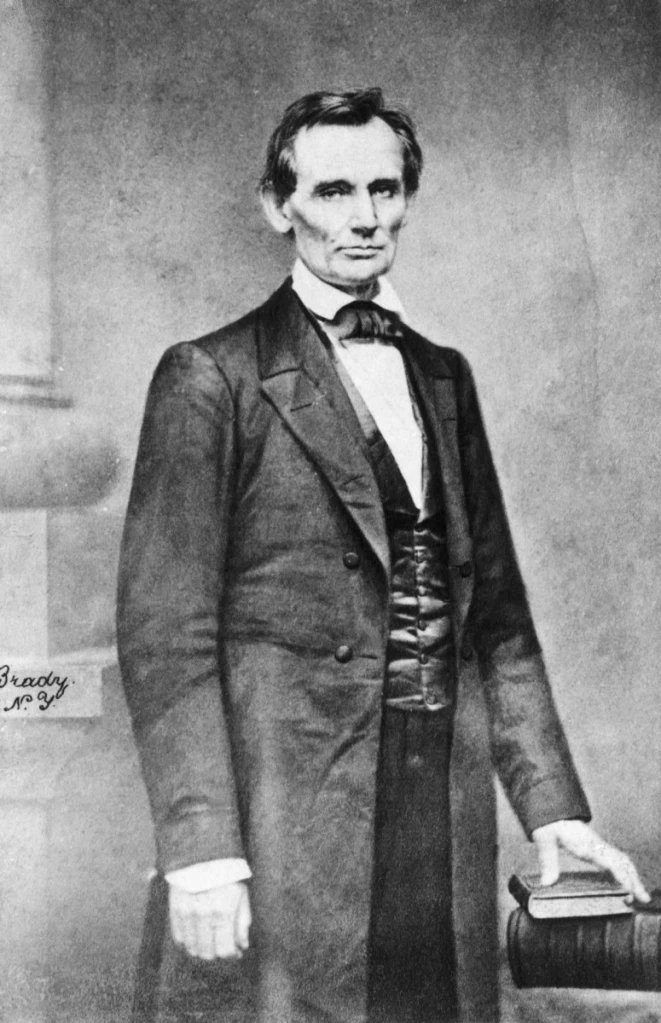
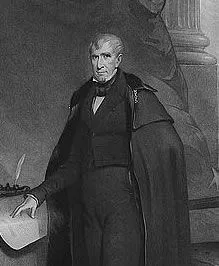
The Epiphany of Edwin M. Stanton

Edwin M. Stanton was a complicated and very prickly fellow.

 Stanton: The Basics

Edwin McMasters Stanton (1814-69), was Ohio born and raised, the son of a middle class physician and his wife. His father died when Edwin was only thirteen, leaving the family nearly destitute. Plagued by severe asthma, he found it difficult to engage in the usual rough-and-tumble activities of childhood. Instead he focused on reading, study and poetry and managed to attend Kenyon College, join in the debate clubs and similar organizations.

Always religiously inclined, Stanton came from Quaker stock but was raised Methodist. He attended a Presbyterian grammar school, but went to an Episcopal College, where his religious affiliations solidified. His strong anti-slavery sentiments led him to law, and he was admitted to the Ohio Bar in 1835. He also became interested in politics. Mostly Democratic.

Edwin M. Stanton

By 1860, Edwin Stanton was on an A-list of prominent business attorneys with access to high places in the Democratic Party – including an end-of-term appointment as Attorney General in the Buchanan Administration.

Short and stocky, EMS was gruff, steely and tactless. And humorless. He was difficult to like, unless you hung in and got to know him well. But he was unflagging in his professional dedication, his integrity and his ability to juggle thousands of balls in the air, dropping very very few. He panicked easily at first, but once calmed down, he managed capably and coolly.

The Lincoln Connection:

Stanton was a well-established and well paid attorney when he first met Abraham Lincoln in 1854. Lincoln was an up-and-coming “local” fellow from Springfield IL, originally assigned to be part of a legal team concerning the patent infringement rights of Cyrus McCormick, the inventor of the reaper. The monies and prestige involved were considerable. Stanton led the legal team, and his impression of Lincoln was dismissive. Lincoln participated only as an “observer” on the case. 

By 1860, Edwin Stanton was an anti-slavery Democratic member of Buchanan’s failing administration; Abraham Lincoln, now a Republican, was President-Elect, always anti-slavery, but intuitively aware of the complex political repercussions and the need to tread cautiously. 

Abraham Lincoln: 1860

Lincoln had admonished his campaign managers “not to make promises in his name” at both the 1860 nominating convention and election. But Pennsylvania’s electoral votes were essential, and its powerful “Republican” boss Simon Cameron was assured of a Cabinet position whether Lincoln approved or not. Putting party affiliation and even personal experience behind him, Lincoln decided to replace Cameron as Secretary of War a year later, and turned to Stanton as his replacement.

Mars and Neptune and The President

There were only seven Cabinet positions in 1860: State, Treasury, War, Navy, Attorney General, Interior and Postmaster General. Several of the new Secretaries had been candidates for the Republican nomination, and likely believed they would have been better choices than Abraham Lincoln, a little-known midwestern lawyer with scant formal education.

All of them were well regarded attorneys, with the exception of Secretary of the Navy Gideon Welles from Connecticut. Welles had originally trained as a lawyer, but practiced journalism instead. When Lincoln chose his cabinet, he needed representation from New England, preferably someone who was not a vitriolic abolitionist. Welles had performed important services for the new Republican Party, was unquestionably anti-slavery-but-moderate (like Lincoln), and seemed a good choice, except for the fact that he knew very little about the Navy. Knowledge, of course, is learnable. Lincoln nicknamed him “Neptune” – for the god of the sea.

Gideon Welles,

In choosing Edwin Stanton as Secretary of War, Lincoln went against all political wisdom. Stanton was still a Democrat. He was an Ohioan, and the Midwest was already well represented. And perhaps, on a personal level, he knew that Stanton neither regarded him well, nor liked him personally. It may have been intuitive with Lincoln: Stanton, an implacable man with Herculean energies. Personalities aside, he was the man for the job. AL nicknamed him “Mars” – for the god of war.

Changing Hearts and Minds

A recently appointed Edwin Stanton considered Gideon Welles weak and ineffectual. That changed on March 8-9 1862, when two odd-looking ironclad contraptions fought to a standstill in the Chesapeake Bay, and changed naval warfare forever. Stanton had been pacing frantically in the telegraph room of the war department bemoaning an impending catastrophe, and issuing rapid-fire orders to brace for the sacking of Washington. Welles, who had issued the orders to build the Monitor, was calm. He had faith in the genius of its designer. 

The Monitor (foreground)

When the battle was over, considered a technical draw, the bottom line was a Union victory. They had the means to build more and would. The South did not and could not.

Stanton gained new regard for his fellow bewhiskered Cabinet counterpart. 

The change toward Lincoln was gradual. He had been sarcastic about “the original gorilla” in his personal correspondence, and regarded the POTUS as an imbecile. And couldn’t bear his “droll stories.”

But when both Lincoln and Stanton lost sons within a few months of each other, the exchange of heartfelt condolence helped. So did the fact that Lincoln never mentioned their previous encounters which were embarrassing or even insulting to him. Lincoln could not spare Stanton, whose energies and devotion were incalculable. And Stanton grew to love and admire his great and good Commander-in-Chief, to a point of brotherly devotion.

One of the many imagined deathbed scenes.

Stanton took charge of the assassination aftermath with the vigor and tenacity of a bulldog. It is doubtful that anyone could have been as diligent, aggressive, tireless and competent in apprehending the conspirators as quickly as he did and bringing them to justice.

And it was Stanton’s words in epigram: Now he belongs to the ages.

Sources:

Donald, David H. – Lincoln – Simon & Schuster, 1995

Goodwin, Doris Kearns – Team of Rivals – Simon & Schuster, 2015

Edwin M. Stanton (1814-1869)

https://www.history.com/topics/american-civil-war/edwin-m-stanton

Posted in A POTUS-FLOTUS Blog, Abraham Lincoln, American Civil War, James Buchanan, Nifty History People | Tagged , , , , , , , , , , , , , , , , | 1 Comment

Martin Van Buren and the Great Resignation

They called him The Little Magician .

MVB: Dutch Politician

Martin Van Buren (1782-1862) was born in Kinderhook, near Albany New York, to a tavern keeper and his second wife. Originally from The Netherlands, their first language – and that of their son – was Dutch. His basic schooling was local, and by fourteen, was complete. He worked at the tavern and did chores.

But he was bright and ambitious. When the opportunity to read law arose, Matty jumped at the chance. His mentor, Peter Silvester liked him, and provided not merely a legal education, but the social graces and bearing that the up-and-coming attorney would need. That included proper dress, behavior, and the paramount necessity of listening before speaking, and taking the middle ground. He also advised his young charge to finish his law education with William Van Ness, more prominent, more successful and more political. He passed the NY Bar at 21.

Young MVB

His political involvement with the Democratic-Republicans of the early 19th century came quickly, and local office, state legislature, NY’s Attorney General followed. So did election to the US Senate.

By 1824, the Federalist Party was gone and the D-Rs were well on the way to their own fracture. The uber-courteous MVB kept his eyes as well as his options open. He had developed a talent for “ducking” controversy and smooth “maneuvering.” He waffled diplomatically most of the time – even when Congress was tasked with deciding the hotly contested election.

The Jackson Connection

The election of 1824, saw the D-Rs disunited. John Quincy Adams, William Crawford, Henry Clay and Andrew Jackson were all candidates for President. New Yorker Van Buren personally favored William Crawford. General Andrew Jackson, whose technically-too-late victory at the Battle of New Orleans a decade earlier presented little appeal to the now-urbane sophisticate. Nevertheless, MVB, as usual, kept a benign nodding silence when Congress was tasked with deciding the election, which went to JQ Adams.

The winner in ’24

But when Jackson visited New York some time later, MVB found him agreeably like-minded on many issues. Perhaps even more, he smelled a winner. Winning counted a great deal for The Sly Fox of Kinderhook (another of his nicknames).

He enlisted in the Jackson camp, accepted Jax’s loss in the election, turned his focus on NY’s electoral votes, and worked to insure Jackson’s future victory in his home state. In 1828 Jax won, and MVB was appointed Secretary of State.

The Cabinet Troubles

When Andrew Jackson was inaugurated, Cabinet Secretaries were heavily weighted on geopolitical accommodation rather than clout. It did not take AJ long to marginalize most of his official cabinet, and rely heavily on a cadre of unofficial advisors, nicknamed his “Kitchen Cabinet.” 

The winner in ’28

In the “official” column were Secretary of State Martin Van Buren (NY), Secretary of the Treasury Samuel D. Ingham (PA), Secretary of War John Eaton (TN), Attorney General John Berrien (GA), Secretary of the Navy John Branch (NC) and Postmaster General William Barry (KY). Vice President John C. Calhoun (SC) was never included as a cabinet member.

No sooner did Jax take office than he was blindsided by a petty social quarrel that crippled his nascent Administration. His Secretary of War, John Eaton was a close friend from Tennessee. Still a young widower, he developed a congenial friendship with Mrs. Peggy O’Neale Timberlake, daughter and hostess of the hotel owner where Eaton boarded. When Mrs. Timberlake’s sailor-husband died at sea (some said suspiciously), the relationship between hostess and senator advanced. Peggy was young, vivacious and outspoken. Gossip and slander about her moral unfitness ensued. Jackson advised Eaton to marry her and quell the brewing scandal.

Sen. War John Eaton

Young, vivacious, and outspoken usually meant morally flawed, and the daughter of a hotel keeper was not an acceptable pedigree and social equal with other Cabinet wives. Brewing scandal quickly developed into cause celebre! She was immediately ostracized by the fair sex of Washington, led by the wife of Vice President John C. Calhoun. President Jackson, remembering the slander that caused such grief and pain to his own beloved late wife Rachel, immediately rushed to support of the “maligned” Peggy Eaton. It caused him no end of angst, and threatened to ruin his presidency.

Said to be the notorious Peggy

The political wives would not budge. Calls went unreturned. If Peggy was invited, they declined. She was completely shunned and their husbands capitulated to the dictates of “society.” Mrs. Calhoun even returned to South Carolina rather than nod to the tarnished woman. Any potential accomplishments of the Jackson Administration was put on hold while they debated the social acceptance of the Secretary of War’s wife.

It lasted for two years. Nothing was getting done.

The Van Buren Solution/Coup

Secretary of State Martin Van Buren was a long-time widower, and thus removed from the petty matrimonial dictates of a snobbish society. He happily attended Peggy Eaton’s salons.

The Little Magician finally pulled a political rabbit from his bag of tricks, and devised a unique and politically canny solution. Both he and Secretary of War Eaton, would resign. 

The exhausted Jackson (courtesy SI)

This was anathema to Jax, who refused to allow his “friends” to be bullied for his sake. But he listened. The gist was simple: if two Cabinet members submitted their resignations, the President could conveniently request the resignations of the others en masse, freeing him to appoint more congenial associates. Hmmm. 

To the great relief of Jackson – and John Eaton as well – the POTUS appointed his former Secretary of War as Minister to Spain, where he and his notorious wife became very popular. He also appointed his former Secretary of State (MVB) as Minister to Great Britain. With his strongest and most loyal supporters out of the country and out of the fray, Jax was free to go his own way, which of course he did. The other cabinet members disappeared into oblivion.

Sources:

Marzalek, John F. The Petticoat Affair, The Free Press, 1997

Meacham, Jon,  American Lion in the White House, Random House, 2008

Van Buren, Martin – The Autobiography of Martin Van Buren – Chelsea House, 1983 (reprint)

Peggy Eaton

https://www.history.com/topics/us-government/john-c-calhoun

Posted in A POTUS-FLOTUS Blog, Andrew Jackson, John Quincy Adams, Martin Van Buren, Nifty History People | Tagged , , , , , , , , , , , , , , , , , , , , , , , , , , , | 5 Comments

Theodore Roosevelt: Super Cop

Theodore Roosevelt had a varied career, and made the most of all his opportunities

The Mid-90s: At Loose Ends

Still in his early-to-mid 30s, Theodore Roosevelt, aristocratic and wealthy New Yorker, had jam packed decades into his young life. He was a Harvard graduate, married and widowed, remarried and a young father of a growing brood, a well-regarded and prolific author, an energetic NY Republican Assemblyman, a cowboy-rancher in the Dakotas, a politician with growing clout, and a federal appointment to the newly created Civil Service Commission. He was also a well-known hobnobber of the movers and shakers of Washington, DC. 

His appointment as a Civil Service Commissioner gained him recognition not only in the Benjamin Harrison Administration, but was held over for a while in the returning Grover Cleveland Administration. POTUS GC, having been a NY Governor, remembered the youthful (and noisy) Assemblyman from a decade earlier, and liked him.

TR and Goliath

But having done about as much as could to be done with the Civil Service Commission, TR was antsy for some new challenges – but they had to be nifty! The City of New York came to his rescue with an offer of Police Commissioner.

Nifty Indeed

It was like inviting a six-year-old to play cops and robbers… as one of President TR’s pals later said “you have to remember he [TR] is only six.” The new commissioner had a grand time of it.

Jacob Riis

TR had learned early on, that the power of the press was indeed powerful – if you used it effectively – and he was a master! He had become acquainted with Jacob Riis, a journalist/photographer and Danish immigrant, whose early days in the US had been swathed in squalor. He never forgot those struggles, and devoted most of his coverage to “how the other half lives,” which became the title of one of his best selling books.

Riis escorted TR around to the seamier and impoverished sections of tenements and filth, inflaming the latent social conscience of the aristocratic Roosevelt. Social conscience was never far from TR’s thoughts; his father spent most of his too-short life working actively for civic and charitable causes. Riis and Roosevelt would be friends for life.

Poverty and squalor

TR’s favorite “game” was to wander around the Tenderloin, and other seedy areas of NYC late at night, to check on the policemen, making sure they were “doing their duty” when they were on duty. They weren’t – at first. But once they realized that their new Commissioner was a) on the prowl, and b) pounced in places they never expected, they shaped up, and most of the NY police force loved him. TR was fair. He cared about their welfare. He was also exciting to be around. Things happened when he showed up. Of course there were a few cops who weren’t so enthusiastic, especially when their look-the-other-way income was curtailed.

And, of course, the New York journalists had a field day of it! Their cartoonists found a meal ticket in the bespectacled patrician with the toothy grin. The newspapers regularly carried stories of his “inspection” routines, and his efforts to bring good law enforcement to the rough neighborhoods. 

Oops…

TR got into trouble when he attempted to enforce a standing law that mandated closing the saloons on Sundays. The Temperance folks had insisted they be shuttered – at least on the Sabbath. The saloon owners were unhappy since they were losing business. The working men, particularly in the German-speaking areas, were livid. They were not habitual drunkards, but merely men accustomed to a convivial beer or two on their only day off. And many an agreeable officer who looked-the-other-way was likewise angry at losing his lucrative pre-speakeasy partnership.

Theodore Roosevelt was not a drinker, other than wine with dinner, and whether he personally approved or not, the law was the law, and he was charged with enforcing it. He was also not a gambler, but charged with upholding the laws against gambling. He was also a puritan when it came to sex – but charged with enforcing the laws against prostitution. All of the above were rampant in New York City’s seedier areas.

The Anti-Saloon League was very potent.

Naturally the proponents of these popular vices found creative ways to skirt the law. They formed “private clubs” to provide unregulated vice. They adapted their premises to serve (at least on paper) as a hotel or restaurant. “Patrons” could simply cross the new bridge, and go to Brooklyn for their Sunday pleasures.

TR’s happy relationship with the press took a big hit and he knew it. But at least he “did his duty.” And he learned a valuable lesson in treading lightly with those vices that were more effectively chastised (maybe) from the pulpit rather than the precinct. And he would never forget the lesson of ridicule as an effective weapon.

The Effective Weapon

Theodore Roosevelt was a deeply moral man, but he was also a practical one. He too could find creative methods of keeping within the law, especially when it jibed with his own high ground.

While he was Police Commissioner, Herman Alwardt, a virulent anti-Semitic German clergyman from Berlin, came to New York City to preach his hatred of Jews. Commissioner TR was tasked with providing police protection for his talk.

In 1895, NYC had a large and growing population of Jewish immigrant-citizens, many of whom had risen to places of prominence, and feared the pervasive anti-Semitism that had driven so many of them to US shores. They petitioned Roosevelt to prevent the speech and refuse police “protection.” In his own words, he told them it was impossible and “if possible would have been undesirable because it would have made him a martyr. The proper thing to do was to make him ridiculous. Accordingly I detailed for his protection a Jew sergeant and a score or two of Jew policemen. He made his harangue against the Jews under the active protection of some forty policemen, everyone of them a Jew!”

TR sent 40 of “New York’s Finest” – a small army of burly, well-trained Jewish policemen – to protect Rev. Ahlwardt from any harm – except the ridicule.

Sources:

Brands, H.W. – TR: The Last Romantic – Basic Books, 1997

Dalton, Kathleen – Theodore Roosevelt: A Strenuous Life

Marschall, Rick – Bully! The Life and Times of Theodore Roosevelt – Regnery History, 2011

https://www.theatlantic.com/international/archive/2009/08/teddy-roosevelt-on-that-proto-nazi-schmuck/22678/

https://www.history.com/news/theodore-roosevelt-new-york-politics-governor-police-commissioner

Posted in A POTUS-FLOTUS Blog, Nifty History People, Theodore Roosevelt | Tagged , , , , , , , , , , , , , , , | Leave a comment

FDR 1941: The Christmas Houseguest

On December 6, 1941, the US was an isolationist country. That changed on December 7.

The great partnership

The Storm Clouds

War had been looming throughout Europe for nearly a decade. Japan had been making belligerent noises in Asia for more than a decade. Most US citizens, with the devastation and grief of the Great War (1914-18) still fresh in their minds, were strongly opposed to any involvement in another war – particularly one that did not concern them…at least not overtly.

By 1939, what was now termed World War II was riding high in Europe. Within six months, Germany had overrun most of Eastern Europe and was in the process of devastating most of Western Europe as well. For all intents and purposes, Great Britain was standing alone, and shaky at best.

Their new Prime Minister, a 65-year-old Winston Churchill, had been railing against the brutal tyranny of Herr Hitler and his cohorts for the better part of a decade. Most of the time he was ignored. He had developed a private correspondence with a fairly like-minded Franklin Delano Roosevelt, but the US President could read the political realities of a pacifist populace, which included the Congress. No amount of pleading and exhorting from the PM could budge any assistance other than sympathetic moral support. 

The British PM

Nevertheless, in 1940-41 Americans scoured their newspapers and/or were glued to their radios listening to American Edward R. Murrow describe the valiant rescue at Dunkirk and the relentless Battle of Britain. The mood was shifting.

The Day of Infamy

December 7, 1941, the Japanese attacked Pearl Harbor in Hawaii, then a US territory. It is considered a pivotal date in history. Less known (at least in the US), is that on the very same date, Japanese planes strafed British colonies Malaya and Hong Kong. Great Britain immediately declared war on Japan, too.

German and Italy, who had been formally allied with Japan since mid-1940, immediately declared war on the United States. That was immediately followed by the US declaring war on German, Italy and Japan. 

Like it or not, within 48 hours, we were once again embroiled in a world war. Churchill had at last found the active support he desperately needed. Congress had unanimously hopped aboard the war train, and forgot about isolation. 

President FDR

Needing/desiring real face-time with FDR, Churchill made plans for a personal visit. When FDR expressed safety concerns in the U-boat patrolled Atlantic, the PM paid little attention, and on December 22, the Duke of York landed in Norfolk, VA with its illustrious (and secret) guest. 

Welcome to the White House…

It truly was a secret. FDR knew of course, but he had told no one – not even his wife Eleanor. He reassured her by saying that Churchill would only be there for a few days. She wrote in her syndicated newspaper column, that it never occurred to her husband that it might require a good deal of furniture moving and other associated amenities for the British Prime Minister.

Nevertheless, Churchill and his key aides were offered the complete hospitality of the White House. This included transforming an upstairs room into a mini headquarters for the British staff. The downstairs Monroe Room was made into a giant map room.

FLOTUS Eleanor was not told.

Then of course, Christmas notwithstanding, Winston Churchill was no ordinary guest. He took full advantage of his guest-ness with a litany of personal demands: a glass of sherry in his room before breakfast, scotch and soda before lunch, and French champagne and aged brandy before bed. He also insisted upon breakfast (in his room) with fruit, orange juice, a pot of tea, with hot food and cold food, which turned out to be eggs on toast, with bacon and ham with mustard.

“One Big Family”…

Churchill wrote to his associates in London that he (and staff) lived with the President (and staff) in great intimacy and informality. That was an understatement.

The PM kept very peculiar (at least to Americans) working habits. Lunching every day with the President was expected. But the two-hour nap was not. Nor was the after-dinner work session, punctuated with brandy and cigars, that lasted into the wee-hours, much to Eleanor Roosevelt’s dismay and exasperation. But it was exactly what was needed to forge the growing close bond between two of the most powerful men in the world, who did not always agree, but had developed huge regard and affection for each other.

The WH staff and servants were shocked to see the British PM wander around in his nightshirt or Chinese silk dressing gown. Or his “trademark” brightly colored onesie. But they got used to it.

Churchill had onesies in all colors!

What completely shocked the President, however, was when he wheeled himself over to Churchill’s room, knocked, was told to “come in,” and there was the PM naked as a jay bird, blithely dictating some letters to his secretary (who obviously was accustomed to Churchillian habits).

Roosevelt was embarrassed, begged pardon, and went to “excuse himself” for a more opportune time, only to be firmly told by his august houseguest, “You can see that the British Prime Minister has nothing to hide from the American President.”

O Christmas Tree

The emergencies of the War would make 1941 the first Christmas (White House or not) that the Roosevelts did not spend with their children and grandchildren. Most holiday plans were either cancelled or amended appropriately.

For safety and security reasons, the traditional ceremonial lighting of the National Christmas Tree on the ellipse of the White House was due to be cancelled, but the POTUS overruled it. Instead, joined by Winston Churchill on the South Portico, he pressed the button to illuminate to tree, stating that “the dignity and brotherhood of man which Christmas Day signifies more than any other day or any other “symbol” would serve as the country’s greatest weapon against “enemies who preach the principles of hate and practice them.”

And Prime Minister Winston Churchill stayed for three weeks.

Sources:

Camino, Al – ROOSEVELT and CHURCHILL: A Friendship That Saved the World – Chartwell Books, 2018.

Davis, Kenneth – FDR: The War President: 1940-43 – Random House, 2000

Goodwin, Doris Kearns – No Ordinary Time – Simon and Schuster, 1994

https://www.whitehouse.gov/about-the-white-house/presidents/franklin-d-roosevelt/

https://www.smithsonianmag.com/history/darkest-days-world-war-ii-winston-churchills-visit-white-house-brought-hope-washington-180961798/

Posted in A POTUS-FLOTUS Blog, Franklin D. Roosevelt, Nifty History People | Tagged , , , , , , , , , , , , , , , , , , , , , , , | Leave a comment

Abraham Lincoln and the Christmas Turkey

All the Lincolns were very fond of animals.

The Lincoln Family Pets

In the mid-1850s, the Lincoln Family of Springfield, IL had a dog named Fido. He was likely what people would call a mutt, or a mixed breed, but the Lincoln children loved him. So did Lincoln. Mary Lincoln tolerated the “yellow” dog, but regularly complained when he tracked mud on her newly-scrubbed floors and carpets. She was also understandably less than thrilled when AL and the boys fed Fido from the table.

But when AL was President-elect, planning to close up their house and move to Washington, it was decided that Fido needed a new home. Painful as it was, particularly for Willie and Tad, there was no way the family could tend to a dog, particularly aboard trains and in hotels for nearly a month before they arrived in the nation’s capital. 

One of their neighbors, John Roll, had known Lincoln since they were both young men. He lived near them in Springfield, and his children were close in age to Willie and Tad. They were happy to provide an easy transition for the tearful Lincoln boys. Periodically, they would hear about their old pet, (from AL’s old barber) and how happy Fido was with his new family.

More Pets

During the four years the Lincolns lived in the White House, there were several pets who became part of the family. There were a couple of cats, likely strays, that they named Tabby and Dixie. Many people who knew Lincoln personally, said he had a great fondness for them. 

The boys had ponies.

Nanny and Nanko were a pair of goats who were also great favorites of Tad’s. It is said that they were given the run of the White House grounds, and became accustomed to the sound of Lincoln’s voice. When he was out walking, they would come bounding toward him. Perhaps the most famous “goat” story was when Tad was 8 or 9, he hitched them to a chair, sat down and “sledded” them through the hallways.

Jack the Turkey

Sometime in mid-1863, after gentle-but-persistent pressure from Sarah Josepha Hale, the formidable editor of Godey’s Lady’s Book (a must-read for all Victorian women), Abraham Lincoln proclaimed the last Thursday in November as a national Thanksgiving Day. It would be celebrated from that time on not only as a day of prayer and thankfulness, but a day of feasting and family togetherness. Turkey dinner was a meal-of-choice for large gatherings. Simple enough to roast and large enough to feed a dozen or more people – depending on the girth of the bird. And stuffing was easy to prepare and always delicious.

Sarah Josephus Hale

As a gift to the President, a live turkey was donated to the Lincolns for their Thanksgiving dinner, but AL, having returned from dedicating the Gettysburg National Cemetery, had a nasty bout of variola, considered a mild form of smallpox. He was too ill to enjoy Thanksgiving festivities. The plan was to keep the turkey for Christmas dinner instead.

The turkey, of course, was immediately adopted by Tad Lincoln, his youngest son. Robert, their oldest was a student at Harvard. Two other Lincoln sons had died young: Eddie, always sickly, succumbed shortly before his 4th birthday; Willie was only eleven when he died of typhoid fever in the White House. The family was devastated, and little Tad, who had a speech impediment from birth, was given free rein by his very permissive parents. The President indulged the little boy who was always lovable, warm-hearted, and spoiled. Tad named the turkey “Jack,” and taught the big bird to follow him all around the White House grounds.

POTUS and son.

Lincoln recovered from his variola in about a month, and by the Christmas season was back to being himself again. Jack the Turkey was assigned to the kitchen staff for butchering and stuffing purposes. Lincoln told Tad that the turkey was specifically given to them for their holiday dinner.

Tad Lincoln sprang into action, pleading for the life of his beloved pet. He had witnessed loved ones of condemned soldiers wait for hours in the White House hallways, in order to beg the President to spare their dear one. Speech impediment or not, Tad was good – and effective. To wit…. “But he is such a good turkey, Pa, and I don’t want him killed.” Then he added that Jack the Turkey had every right to live, too.

Lincoln the lawyer and Lincoln the kind-hearted POTUS-father knew when he was beaten, and Jack the Turkey was given a reprieve. In fact, AL wrote on a card that the bird was formally “pardoned.”

Jack’s statue in Hartford, CT (John Meszaros)

More of the Jack Story….

The pardoned turkey continued to live with the Lincolns, happy to follow Tad around. Nearly a year later (1864), when AL was re-elected, there was a long line of soldiers waiting to cast their votes near the White House. The President saw the line – and spotted Jack the Turkey in line. He playfully asked his son if Jack were planning to vote in the election. “Oh no, Pa,” replied Tad, “He’s much too young.”

It is unknown whether or not Jack was able to avoid the kitchen for Christmas Dinner ‘64, but the likelihood was that another reprieve was issued.

What is known however, is that the Christmas Dinner of 1864 was Lincoln’s last. He was assassinated a few months later, and what happened to Jack the Turkey is anyone’s guess.

Sources:

Conroy, James B. – Lincoln’s White House: The People’s House in Wartime – Rowan & Littlefield, 2016

Leech, Margaret – Reveille in Washington 1860-1865 – Harper-Collins, 1941

https://www.nps.gov/abli/planyourvisit/lincoln-pets.htm

https://www.almanac.com/sarah-josepha-hale-godmother-thanksgiving

Posted in A POTUS-FLOTUS Blog, Abraham Lincoln, American Civil War, Nifty History People | Tagged , , , , , , , , , , , , , , , , | Leave a comment

George Washington: A Tale of Two Christmases

In Colonial days, Christmas was an important family holiday.

Christmas Celebrations Circa 1770

Christmas celebrations have been around for centuries. In the 18th century American Colonies, particularly in the South, people decorated their houses with home made wreaths of pine boughs and cones, ribbons and vegetation. It was usually more “green” than “red.” And the “red” was usually a darker red. The red of apples and pomegranates and berries. 

But it was always a family occasion – and a feast occasion. The kitchen was busy for days preparing meats and game, poultry and vegetables – and of course lavish desserts. There was generously poured libation. There was music. There was singing (hymns, of course) and dancing – depending on the strictness of their observation. Church services were well attended.

Families were large then, and many people traveled for miles to spend the holiday with their kin. Between the distances and the primitive means of transportation (usually horses-and-vehicles of some kind), family members were known to stay for a week or more. 

Bottom line. It was fun and always an occasion to be remembered.

George Washington: The General

In 1775, George Washington was a 43-year-old Virginia planter of means, a former Colonel of its Militia, and long time member of the House of Burgesses. When the thirteen grumbling Colonies called for a convention in Philadelphia, GW was one of Virginia’s representatives. 

Washington’s beloved Mount Vernon

April, 1775 was a watershed moment. Boston militiamen faced British soldiers at Bunker Hill with serious loss of life. Then the Redcoats marched into Lexington and Concord and fired on farmers and tradesman who mustered at a “minute’s notice” to protect their property – and their rights. What was a local revolt was becoming an all-out revolutionary war. 

George Washington was the only delegate to the convention who had actual military experience, albeit from 15 years earlier. But he was charged with whipping the Massachusetts militia (and anyone else who wanted to enlist) into an army. The new General left for Boston immediately.

By 1776, the Continental Army, as it was then called, was a ragtag, ill-equipped, poorly subsisted bunch of men between their mid-teens and mid-fifties. After managing to outmaneuver the British Army out of Boston, the next 18 months were filled with American losses, and clever strategic withdrawals, from Boston through New York, and into The Jerseys. 

GW: The Christmas of 1776

December, 1776 found General Washington in Pennsylvania, across the Delaware River, some 15 miles from Trenton, NJ, where more than a thousand Hessian soldiers (a mercenary force hired by Great Britain) was headquartered. 

Leutze’s famous painting was made nearly 75 years later.

The weather was bitter cold, and the small Continental army was poorly clad, some had no shoes. Food was scarce. Morale was at rock bottom. General Washington despaired, since many of the soldiers had enlisted for 6-months, due to expire at the New Year. GW feared that the war, and the cause of American independence would end there and then.

Hoping to reignite flagging morale, he devised a brilliant plan. Late on Christmas Day, knowing the Hessian fondness for the holiday and its associated libation, he planned to surprise them in the early morning.

His entire army was ferried across the ice-packed Delaware, and as silently as possible, they marched to Trenton, and surprised the Hessians, groggy with sleep – and grog. Not only was it a near bloodless victory for the Americans (only five casualties to the Hessian 900), but General Washington was able to confiscate huge stores of food and other provisions.

The successful battle was followed a few days later by a similar foray at Princeton. Morale was lifted, many militiamen re-enlisted, and many new recruits came to join the cause.

That was George Washington’s “famous” Christmas story.

GW: The Christmas of 1783

The less “famous” Christmas story is just as important.

Even though the Revolutionary War ostensibly ended with the surrender of General Cornwallis at Yorktown in late 1781, the war technically did not end until late 1783, when the Treaty of Paris was officially signed, sealed and delivered.

Astute man that he was, George Washington was not about to disband the army until every British soldier was en route back to Britain. It took two years, but finally, his responsibilities having been completed, he bade his officers a fond farewell, advised them of his “retirement” back to his beloved Mount Vernon, and headed for Annapolis, MD, where the Continental Congress was temporarily in session. He planned to resign his commission in person.

Trumbull’s painting in the Capitol Rotunda

GW arrived in Annapolis on December 16, and spent several days being feasted and feted and showered with honors by everyone before the formal ceremony on December 22, 1783, where he physically returned his commission papers to Thomas Mifflin of Pennsylvania, then serving as President of Congress. (The essence of this was immortalized 40 years later in a huge “representation” mural for the Capitol Rotunda).

Following more “fond farewells,” private citizen GW began his trip to Mount Vernon. He had promised his wife Martha that he would be home for Christmas. But one more overnight was needed, since late December darkness came early.

Martha was waiting for him.

He arrived late on Christmas Eve to his beloved home that had changed little since he left it 8 years earlier.

The Last Word

The final summation on George Washington’s formal retirement is usually credited to King George III. When he learned of GW’s voluntary retirement to private life, he remarked, “ If he does that, he will be the greatest man in the world.”

Sources:

Randall, Willard Sterne – George Washington – Galahad Books, 2000

Weintraub, Stanley – General Washington’s Christmas Farewell: A Mount Vernon Homecoming 1783 – Free Press, 2003

https://www.history.com/this-day-in-history/washington-crosses-the-delaware

https://www.mountvernon.org/george-washington/

https://history.house.gov/Historical-Highlights/1700s/General-George-Washington-resigning-his-commission-in-Annapolis,-Maryland/

Posted in A POTUS-FLOTUS Blog, George Washington, Harry S Truman | Tagged , , , , , , , , , , , , , , , , , , , , | 1 Comment

General Ike and Princess Elizabeth: First Meeting

General Eisenhower spent several months in England preparing for the D-Day Invasion in 1944.

The King and Queen of WWII

In no small part, the decisions and actions of Great Britain’s King George VI (1895-1952) were deeply influenced by the distaste and antipathy about the abdication of Edward VIII in 1936, since the root cause of it was personal and private: marriage to a twice-divorced American woman. The Royal consensus was that the ex-monarch (now re-titled Duke of Windsor) put his personal inclinations above his duties and the country’s welfare. 

The Royal Family

King George (Edward’s younger brother) had been woefully unprepared for such a monumental leap in both responsibilities and personal visibility, made even more uncomfortable by his lifelong stammer. The bitter example of his brother would color his life.

Those changes naturally had a major impact on the King’s family life, which had always been close and loving. It was vastly different from the remote relationship with his own parents, King George V and Queen Mary. Even in their monarchical positions, George VI and his consort Queen Elizabeth took extra pains to keep their daughters, Princesses Elizabeth and Margaret (13 and 9, when the War began in 1939) protected and well beloved.

Disregarding the suggestions of many Londoners and officialdom to have the young Princesses sent away to safety, the Queen famously said that the girls could not go without her, and she could not go without the King, and the King….would never leave.

The 1940s were a hardship, a tragedy, a despair, and in its own way, an inspiration to the world, as the British people tried to keep calm and carry on bravely, despite everything.

Having their King remain in London (or no farther than Windsor, only 30 miles away), added to the Brits’ affection for him. It also gave the King added confidence.

General Eisenhower

In December 1941, after the Pearl Harbor attack, the entry of the United States as active participants in WWII gave hope to everyone in Great Britain, which by that time was soldiering on alone. Wittingly or unwittingly, much of Europe had caved in to the ruthless Nazi regime.

General Eisenhower

After two full years of fighting, the USA, along with GB and assorted European nations-in-exile, were under enormous pressure from the Soviet Union, their allies on the eastern front. They finally began massive plans for an invasion on Germany’s western front. General Dwight D. Eisenhower, who had been instrumental in planning and implementing the North African campaign, was named Supreme Commander of the Allied Forces planning the invasion.

Despite all the various political and military obligations, Ike managed to find a bit of precious downtime in history-rich London and its suburbs. That included a pleasant semi-official visit with King George VI and his consort, Queen Elizabeth. 

The British Monarch gave him an open invitation for a private visit to Windsor Castle.

Some time later, Ike, General Mark Clark, and a small party of his staff officers came to “tour” Windsor Castle.

The Non-Meeting of Ike and the Princess

King George sincerely wished for the US Army high-brass to enjoy their brief visit to Windsor without the need for the protocol and tradition demanded by the British monarchy, generally unknown to Americans. Ike and his staff officers had made specific arrangements, but the royal pair were obviously unaware of the visit.

The Royal Family circa 1944

As a matter of fact, the royal family was out on the terrace having tea, when the “possible intrusion” occurred. The King, having met Ike previously, recognized the general and his officers, and wished to allow them the freedom of their visit, and spare them the embarrassment of intruding on the King’s Tea Party. 

He and the Queen and the two Princesses quickly dived under the table, or behind a hedge (depending on the source) and kept out of sight while the General’s party passed through.

Of course, once they left, the King resumed his tea, and explained the who-and-why to his family. Princess Elizabeth, now around 17, had only a superficial idea who the General with the odd-sounding last name was. She learned more later once she was permitted (at 18) to don a military uniform and join the Auxiliary Territorial Service as an automobile mechanic. It was an experience she would treasure, and a skill set she would never forget. 

A Dozen Years Later

The teenaged Princess Elizabeth was always aware of her position once her father became King. She also knew she was first in line to the throne, and expected to succeed her father as Queen in her own right. She did not know that her accession would be far sooner than she wanted, even though her father was ill, and becoming frail and haggard. 

Father and Daughter

The General with the odd-sounding last name was world-famous by the end of WWII, and people around the world referred to him as “Ike.” He may (or not) have surmised that he might meet the Queen-to-be at some point. He did not anticipate that the two would meet as heads of their respective countries.

But after ducking, waffling and denying any interest in politics for more than 6 years, Ike was finally persuaded to be a candidate for US President in 1952. He won in a landslide. Everybody “liked Ike!” His victory was only a few months after King George VI had died. 

In October 1957, Queen Elizabeth and her consort Prince Phillip visited Washington as guests of now-President and Mrs. Dwight D. Eisenhower. At some point in the visit, the Queen admitted to the president that she had “seen” him at Windsor Castle from her vantage point under the table (or behind the hedge) when she was still in her teens, and he was still not-quite-the-world-famous General Ike. It has been surmised that they both had a good laugh over it.

Both had wonderful smiles!

Sources:

Judd, Denis – King George – Franklin Watts Publishing – 1983

Korda, Michael – IKE: An American Hero – HarperCollins – 2007

https://www.dailymail.co.uk/news/article-1347513/Day-Queen-George-VI-hid-Eisenhower-table-bizarre-Royal-conversations-didnt-make-landmark-film.html

Posted in A POTUS-FLOTUS Blog, Dwight D. Eisenhower, Nifty History People | Tagged , , , , , , , , , , , , , , , , , , | Leave a comment

Richard M. Johnson: Scandalized Vice President

Richard Mentor Johnson was our first VP Johnson. Andrew (2) and Lyndon (3) came later.

RMJ: Kentuckian

Richard Mentor Johnson (1780-1850), was born/raised near what is now Louisville, KY when the area was still part of Virginia. His was a large, prosperous family who moved to the Lexington area when RMJ was in his mid-teens. He was sent to Transylvania College (the oldest college west of the Alleghenies) and read law.

Between his own considerable acreage, brawny good looks and a pleasing personality, and the need for deeds and property settlements, Johnson did well. By the early years of the 19th century, he was already a state legislator. Even before the Constitutionally determined age of 25 for a Congressman, RMJ was elected to Congress. (He was 25 when he was sworn in.) When Thomas Jefferson was President, Johnson could be counted on as a staunch Democratic-Republican.

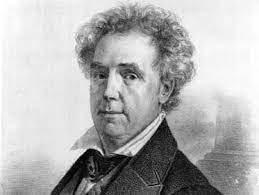
Richard M. Johnson

When James Madison was President, Johnson became a trusted ally of the so-called War Hawks, which included Henry Clay and John C. Calhoun. He fought in the “western” theater (the Great Lakes and Canada) during the War of 1812. It was said (but never proven), that it was RMJ who fired the shot that killed Tecumseh at the battle of the Thames. Nevertheless, Johnson never denied it, and used it whenever it was beneficial.

When Andrew Jackson started making serious Presidential noise, Richard Johnson was shortlisted as a Vice Presidential running mate. Jax wound up with Calhoun, which he regretted. By the time, Martin Van Buren had worked his way into Jackson’s confidence as a possible successor, Johnson was overlooked. 

RMJ: Vice President

The Vice Presidency had begun its constitutional life as an afterthought. There was little support for the position, and no real significance in its office. 

After the debacle between Thomas Jefferson and Aaron Burr over the Presidency in 1800, adjustments regarding the VP were made and clarified. But the position was still a throwaway: a geopolitical accommodation between North-South, or East-West. But it was honorable and well paid: $5000/year, at a time when $500 a year was considered decent. 

The balance between the cosmopolitan Martin Van Buren (NY) and the rough-hewn Kentuckian seemed beneficial. Johnson had a Jackson-like campaign slogan of “Rumpsy-dumpsy, Rumpsy-dumpsy, Richard Johnson killed Tecumseh.” 

Ah but… there was a scandal (see below) that was well known in Washington, and Johnson failed to receive the crucial electoral votes to become VP. His actual “election” to that position was via the Senate. He remains the only VP elected by the Senate.

But Martin Van Buren won handily, and RMJ became VP. It was generally ceremonial, and few politicians ever consulted the VP. 

The Scandal Part…

It was said (actually whispered) that as a young man, Johnson had seduced one of his father’s slaves. This was not uncommon at the time, particularly in Kentucky. But this was different.

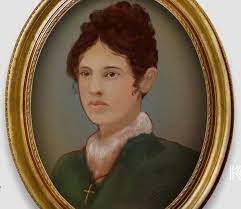
Said to be Julia Chinn

Julia Chinn was an octaroon. She was 7/8 white, with only one Black great-grandmother. Nevertheless, according to Kentucky law she was still enslaved, and Johnson was powerless to free her.

It was not merely a man-concubine relationship. They lived in his home as common law man and wife for twenty years. Until her death. 

Every indication is that he was very good to her and they were happy. She bore him two daughters. He gave them his name and raised the girls as his own. He dressed them in satin and lace and had them well educated.

Adaline and Imogene Johnson were not only given all the comforts and benefits of any young ladies who did not have (1/16th) Black blood, but their father introduced them into high level society as his daughters, and they eventually married white men.

Julia Chinn had carte blanche on his plantation. She made all the household decisions in RMJ’s absences (and there were many) and his creditors and tenants and overseers quickly learned to abide by her decisions. It is said that her business judgment and ability was well respected.

Then she died of cholera, some three years before RMJ became VP, as did their daughter Adaline.

More Scandal…

While Johnson’s personal relationships were neither denied nor loudly broadcasted, there were those politicians in the South who were aghast at the situation. They easily accepted “wrong side of the blanket” issues of any color – but complete acknowledgement and open social acceptance when racial issues were involved, was absolutely verboten. After Chinn died, Johnson was known to take up with other darker complected women. It was a slap in the face to the politicians. They would not tolerate Johnson in high office.

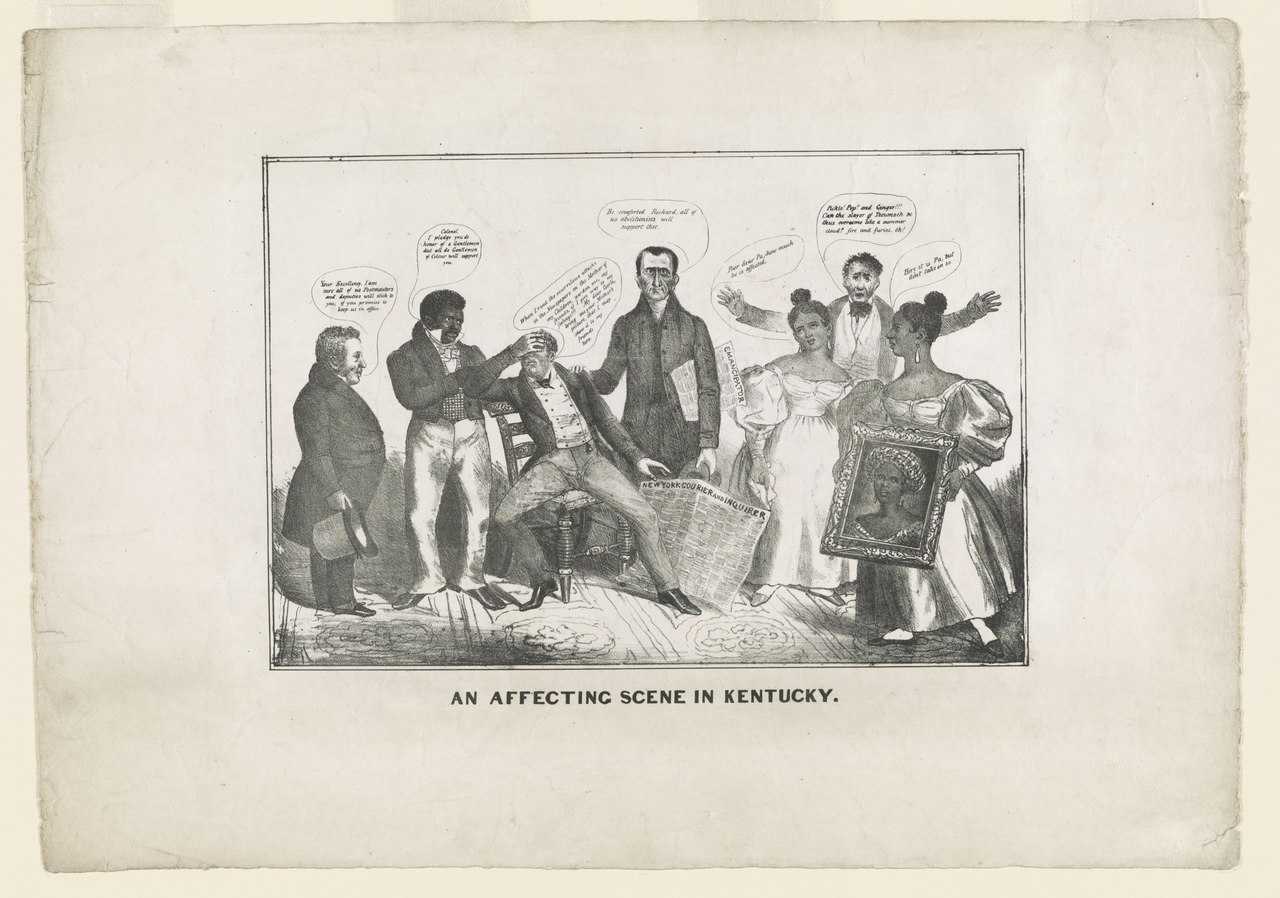
A scurrilous cartoon of Johnson and his family.

President Martin Van Buren was a long time widower with four sons and no daughters. The societal nuances had little impact on him, and most indications are that he was generally neutral about his Vice President. But he was shrewd, and likely realized that Johnson was a liability at the ballot box. 

When the election of 1840 was being considered, the Democrats opted to re-elect (or try to) Martin Van Buren. But they also opted NOT to include Vice President Richard Johnson on the ticket. 

The Upshot – and the Irony

In 1840, President Martin Van Buren (left) ran for election alone. There was no Vice Presidential candidate put forth by the Democrats.

His opponent was a Whig, a motley new party of dissatisfied Democrats, most of whom loathed the aged Andrew Jackson and were concerned about a nasty economic downturn. 

They ran a former general of the modest “battle” of Tippecanoe during the War of 1812. William Henry Harrison (right) was in his late 60s, with a semi-prominent name and a decent enough reputation. 

As his Vice President, they selected a maverick Democrat, John Tyler of Virginia with an axe to grind with Jackson. It was still a throwaway office. In fact their slogan was “Tippecanoe and Tyler too.”

They won. A month after Inauguration Day, Harrison died and Tyler became the first VP to become POTUS upon the death of his predecessor. 

Sources:

Barzman, Sol – Madmen & Geniuses: The Vice-Presidents of the United States – Follett Publishing, 1974

Shafer, Ronald G. – Breaking News All Over Again – Amazon Publishing, 2022

https://millercenter.org/president/vanburen/essays/johnson-1837-vicepresident

Posted in A POTUS-FLOTUS Blog, Andrew Jackson, James Madison, Martin Van Buren, Nifty History People, William Henry Harrison | Tagged , , , , , , , , , , , , , , , , , , , , , | Leave a comment

The Tea Party Tea Box

A rare treasure of American history!

The Boston Tea Party

Eons ago when I was in the 4th grade, everybody learned the basics of the Boston Tea Party. The gist being that back in December 1773, colonists in Massachusetts had become irate over taxes imposed by Great Britain, the “mother country.” Every effort to rectify the problem had failed – and now GB imposed another tax – on tea, which just about everyone drank. 

Paul Revere was there!

Tea was the most popular drink of choice in the colonies, coming via the British East India Company, a consortium of British businessmen with holdings in Asia for more than a century. They were making a fortune.

You get the idea….

One of the more obnoxious conditions of being a British “colony” (as opposed to being a nation of its own), was that all trade had to be with (or via) England. None of the 13 colonies were permitted to trade with France, or the Netherlands, or Spain directly. Even trade between the colonies was limited. This made competition and choices, including competitive pricing, illegal. 

Great Britain had imposed and rescinded taxes on several items over the past decade, but refused to allow the colonists any say in the government, i.e. taxation without representation. GB, pressed for money, kept issuing new taxes. It had become a boiling issue. 

The Tea Boxes

Tea bags as we know them now, were more than a century away in the 1770s. Loose leaves were packed in thick wooden boxes, about a cubic foot in size. A lot of leaves could be packed in a box, and could weigh as much as 100 pounds or more. The Beaver, Eleanor and Dartmouth each carried more than a hundred boxes. Once delivered to their destination, tea merchants repackaged the tea into much smaller containers for public purchase. With tax.

Taking matters into their own hands, a group calling themselves The Sons of Liberty disguised themselves with feathers and paint, waited till dark, and boarded the three ships holding a large cargo of the now-hated tea. They went below to the cargo holds, passed the boxes from person to person, slashed open the boxes with an axe, and dumped the tea in the river along with the broken box. Of course, nobody saw anybody or anything. Nobody came forward. Ever.

The Following Day

The Charles River was full of tea leaves, broken boxes and pieces of wood, lapping along the shores near Dorchester Heights. Fifteen-year-old John Robinson was walking along the shore in the early morning and saw an unusual object half buried in the sand. He knew immediately what it was. The “adventures” of the previous night electrified Boston, and nearly everyone knew about it. 

This is a replicated box.

Robinson had found one of the tea boxes. The tea had been dumped, but the box remained intact, except for the lid. It was about 10”x13”x12”. He took the box home, and kept it for the rest of his life.

The 200 Year Brigade of Hands

Robinson eventually married, but was only 46 when he died. His wife remarried some time later, and as “Grandma Holden” the box remained in her possession in upstate New York for more than 40 years. Shortly before her death, she passed the box to Solomon Lurana of Wisconsin, a relative by marriage, and one who a) had been very close to the family, and b) had an abiding love and understanding of history, and what the box represented. He was also diligent about keeping documented information regarding its provenance.

Solomon Lurana kept the box for nearly thirty years before giving it to his 8-year-old orphaned granddaughter, Mary Lurana Cade, who he was raising. She used the box to store her dolls, and some dress-up old clothes. At some point, the family cat used the box as a home for her kittens. 

In 1896, Mary Lurana Cade married Isaiah Ford and moved to Knoxville, TN, and started a family: son William Cade Ford, and Helen Ford Waring. Then they relocated to Texas. The box went with them. 

Mary Lurana’s husband died in 1917, and she went to live with her daughter and son-in-law. Mother and daughter were both educators, with a strong interest in history – and, of course, the box that had been in their direct/collateral family since 1773. It was Helen who diligently researched and documented the chain of “ownership” through nearly 200 years. Helen Waring died in 1961, and the tea box was assigned to her brother William Cade Ford.

The Robinson Half-Chest

By the time of the USA Bicentennial in 1976, the Smithsonian Institution learned of the existence of a 200-year-old relic from the Boston Tea Party, and tracked it down – in Texas! An elderly William Ford gave permission for it to be displayed in an exhibit that opened in 1974. It was officially “renamed” the Robinson Half-Chest.     

After the exhibit, the “half-chest” was properly crated and returned to Betty Ford Goodman (her father had died during the Smithsonian interim). It sat in a bank vault for a couple of years, till the family decided to bring it back home. The Goodman children remember taking it to school for show-and-tell.

Unto Today

Boston is a city awash in history, and treasures its relics. In 2004, plans were made to establish a new historical  “venue”: a Boston Tea Party Exhibit and Museum. The Goodman family contacted the proper Tea Party Museum conservators, and offered their “box”. The conservators were delighted.

The venue opened in 2012, and the “box” became a star! There’s an interactive lecture-program, a replica ship with tethered styrofoam “boxes” for tossing overboard, a charmer of a little museum with the “real box” – and, of course, a tea room.

Yes, the tickets are expensive. Yes, there is a TAX, too!

But go see it anyway! It’s nifty!

Sources:

A Box Worth Keeping

https://www.britannica.com/event/Boston-Tea-Party

https://www.masshist.org/revolution/teaparty.php

Posted in Nifty History People | Tagged , , , , , , , , , , , , | Leave a comment

Selling McKinley in 1896

Historians frequently point to 1896 as being the first “modern” election.

Setting the Stage

By 1896, the country was poised for a new century. Huge changes had occurred since the Civil War some 35 years earlier. Railroads crossed the entire country in days, not weeks. Most people lived less than 100 miles from a station. Electric light was now two decades old, and entire cities had been electrified, paving the way not only for light, but for the power to run all sorts of electric-based appliances – from industrial machinery to waffle irons.

The telegraph, was practically “old technology.” From communicating from town to town, it now connected the USA to Europe and beyond. In minutes. The telephone, first introduced at the country’s Philadelphia Centennial in 1876, was now commonplace in every village. The phonograph brought culture into living rooms. The approaching horseless carriages and even flying machines were no longer wild dreams of science fiction. 

One of the lesser known, but hugely important advances of that post-Civil War era, were printing processes. Color printing and lithography. Photographic reproduction. Electric presses that could print thousands of newspaper pages in an hour. 

Between transportation and communication advances, the average citizen could be kept in the loop very quickly – and inexpensively. 

The Candidates for 1896

William McKinley (1843-1901) was an Ohioan, a Civil War veteran, attorney, Republican congressman, Governor of Ohio, and all-around nice guy. Just about everyone had a good word for him. Despite all of the above, other than people from Ohio and/or officialdom in Washington, he was generally unknown. Nevertheless, he was short-listed for the Republican presidential nomination in 1896, particularly since former POTUS Benjamin Harrison declined any interest, and perennial hopeful John Sherman (also Republican from Ohio) was long in the tooth with declining health.

William McKinley

McKinley would have little opposition at the 1896 convention.

What was a complete surprise however, was the Democratic candidate. Youthful (35), good looking and devout, William Jennings Bryan (1860-1925)  of Nebraska was completely unknown. A middling attorney by discipline, he served two unremarkable terms in Congress before being defeated. He relinquished law in favor of journalism, again unremarkable. But his one true love was politics, and his passion was oratory.

William Jennings Bryan

Almost as an afterthought, Bryan was asked to make a short speech at the 1896 Democratic convention in favor of bi-metalism, i.e. adding silver coinage to the gold standard to help alleviate the economic problems, mostly of the midwestern farmers. It was a touchy subject, since the financial/industrial communities feared chaos and inflation, and even a good many Democrats had serious doubts. Bryan’s speech made history. He electrified the convention with his soon-to-be-famous Cross of Gold speech.

This in turn, propelled him right into the candidacy. 

The “Modern” Campaign

Young Bryan, the youngest Presidential candidate (ever), had all the energy and appetite of youth. Breaking all traditions regarding candidates demurring about their worthiness, and permitting their supporters to campaign on their behalf, Bryan jumped in with both feet, zig-zagged the country, making speech after speech, shaking thousands of hands every day, and whipped his followers into a frenzy of silver coinage support.

Mature McKinley, nearly 20 years Bryan’s senior, opted for the traditional. He stayed home in Ohio, and let his supporters come to him, which they did. In droves. He made well prepared mini-speeches in response to their issues and questions sent in advance. And with his frail wife sitting beside him on their porch, crochet bag nearby, McKinley was the picture of best-America itself. Kind. Good. Confident. 

Frail Ida McKinley became a campaign asset.

In the “old” days, presidential supporters bought rounds of drinks and cigars for potential supporters. They wrote letters to the newspapers. They held torchlight parades – mostly for effect. They gave away ribbons or cards with their candidate’s name as souvenirs.

But the “modern” contribution to the campaign in 1896 was the influx, influence and importance of money. Lots of money. And the options of where to spend that money.

Marcus Alonzo Hanna

Mark Hanna (1837-1904) was born in Cleveland, Ohio, the son of a middle class grocer. Possessed of a near genius in administration/management, by 25 he was running his father’s much improved business. He married the daughter of a wealthy coal magnate, and began running that business as well. By the time he was 40, Mark Hanna ran several companies, including a daily newspaper, the Cleveland Opera House and its streetcar company. He gravitated to politics about the same time as Lincoln’s election, and was active in behind-the-scenes Republican interests. That included generous campaign contributions.

Marcus A. Hanna

When he met William McKinley, six years his junior, the association grew from civic and political interests to a deep and abiding personal friendship. Hanna was known to love McKinley “like a brother.”

When he became campaign manager for McKinley’s presidential bid in 1896, he introduced several new innovations, large sums of money being the most important. Hanna raised about $4 million (in 1896 money!), against perhaps $500,000 for Bryan!

Spreading the Word

With the fattest wallet up to that time, Hanna recruited some 4,000 speakers to campaign across the country in behalf of WMcK. That included their expenses of train travel, hotels, meals and sundries.

He flooded the country with millions of brochures and campaign literature, on nearly every subject of interest. 

He papered the country with campaign broadsides and posters – in color! Volunteers plastered these broadsides on the outside of barns in remote areas for maximum impact. 

He took advantage of the new craze for campaign buttons. Some were made of celluloid, featuring photographic reproductions of the candidate. Some were in color!  

His campaign slogan of “A Full Dinner Pail” (used for the first time) resonated with the working man, underscoring McKinley’s promise for “prosperity for all.” 

He made assiduous use of McKinley’s front-porch image as a kind and devoted husband to an ailing wife. Kind and devoted counts!

Bryan never had a chance.

Sources:

Leech, Margaret, In the Days of McKinley – Harper & Brothers, 1959

Morgan, H. Wayne – McKinley and His America – Syracuse University Press, 1964

Philips, Kevin – William McKinley – Times Books, 2003

https://www.whitehouse.gov/about-the-white-house/presidents/william-mckinley/

https://www.history.com/topics/us-politics/william-jennings-bryan

https://ohiohistorycentral.org/w/Marcus_A._Hanna

Posted in A POTUS-FLOTUS Blog, Nifty History People, William McKinley | Tagged , , , , , , , , , , , , , , , , , , , , | 1 Comment