
Some marriages are mismatches.
The Pierces
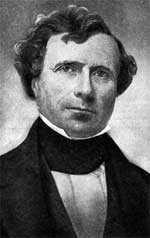
Young Franklin Pierce D-NH
Franklin Pierce was 30 years old when he married in 1834. Good looking, genial and personable, he waited until he was established in his law practice, and was a sitting New Hampshire Democratic Congressman.
His bride, Jane Appleton, was twenty-eight, considered a spinster, synonymous with “old maid” at the time. She was petite, pretty with finely chiseled features, bookish and very religious. She was also of a melancholy disposition. Geniality and pleasure-loving traits had eluded her.
Newly elected to Congress in 1833, Pierce brought his bride to honeymoon in Washington, DC – a place she quickly grew to loathe. Always frail in health, possibly due to early tuberculosis, she believed the climate was unhealthy. More importantly, she disliked the social and political atmosphere of the nation’s capital. Declining most invitations, she chose to remain in her rooms, except for regular attendance at church services. Subsequent congressional sessions saw Pierce going to Washington alone.
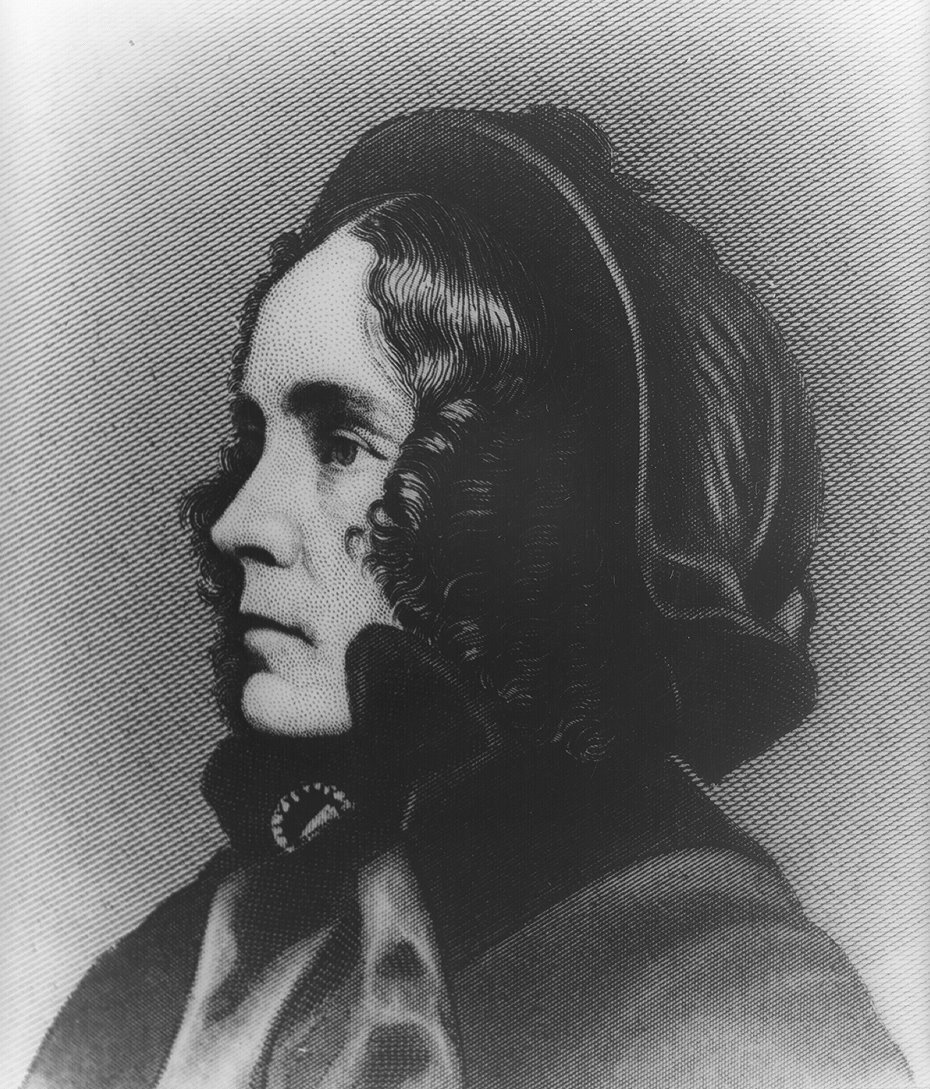
Young Jane Appleton Pierce.
Jane had a valid reason for remaining in New Hampshire by then. She was in her childbearing years, and would have three sons. The first died in infancy; the second at aged four.
The third child, Benjamin, was born when she was thirty-five. She considered it her last chance for motherhood, and life thereafter revolved around little Bennie.
The Acquiescence of Pierce
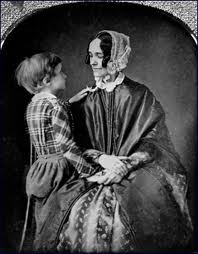
Jane Pierce and her son Bennie. Two sons had already died. He was all that was left to her.
Devoutly religious, (more so than her husband) Jane Pierce (1806-1863) believed that after her duty to God, motherhood was the ultimate and highest calling for a woman. Her life was well ordered. Her pleasures were focused on a small circle of friends and relatives, and regular visits from her minister.
It is always difficult to project backwards, particularly when personal matters are involved. Even private letters and diaries avoided recording the most intimate of thoughts. Nevertheless, one can surmise that the Pierce marriage was showing signs of strain. The differences in their personalities were becoming apparent. Every indication shows that Pierce loved his “Jeannie,” as he called her, and tried sincerely to please her, but it was difficult. Everything he enjoyed, she disdained. So he acquiesced.
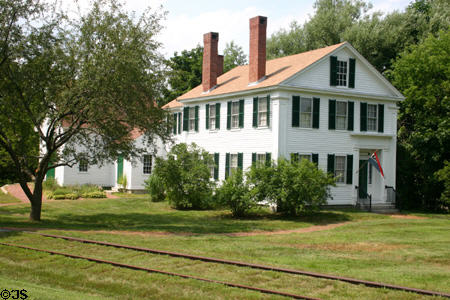
The Pierce Manse in Hillsboro, NH. Franklin Pierce was born here.
She hated Hillsborough, where they made their home, about 15 miles from Concord. They moved to a rented house in Concord.
She hated Washington. He went alone.
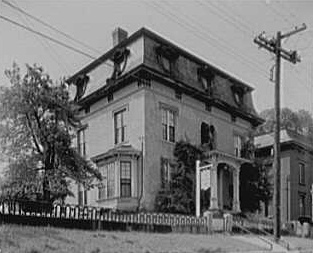
A town house in Concord that the Pierce’s lived in prior to his Presidency.
She disliked most of his companions. He was convivial and loved company.
She hated politics. He declined to run for re-election, and concentrated on his law practice and local New Hampshire issues.
She continued to hate politics. He declined an appointment in President Polk’s cabinet.
She was opposed to drinking. He took the pledge, joined a temperance society, and for a time, even served as its president.
In 1846, when Pierce was past forty and with no military experience, he enlisted in the Mexican War as a private, perhaps to escape the tedium. Because of his age, his education, and his prominence as a former congressman and senator, he was promoted. To General.
The Deception of Pierce
Despite his vow to refrain from national politics, Franklin Pierce (1804-1869) had a thirst for it like the liquor he also vowed to avoid.
The political scene was turbulent and complicated, and would become more so. The Democrats found it increasingly difficult to find a viable presidential candidate. Pierce, a Northerner with no personal inclination toward slavery except where it already existed, had many Southern friends. His political instincts indicated that he might indeed be available, i.e. acceptable to both North and South.
In the early 1850s, most politicking was done via letters. Pierce wrote many letters to various political friends, a common enough activity in the mid-nineteenth century. As was also common, Pierce was very cautious about being a possible candidate – after all, he did not wish to appear overtly interested. He needed friends to toot the horn.
But Pierce had been involved in politics (overtly and peripherally) for years. He knew the odds. He knew the odds, long though they might be, were also in his favor. He assured his politics-hating wife that he was “long forgotten.” In truth, he meddled via the New Hampshire politicians et al, to help the odds.
Pierce Is Nominated and Elected

President Franklin Pierce
It took 35 ballots to even mention Franklin Pierce’s name in 1852. It took 48 ballots to nominate him as the Democratic candidate. He was honest enough with his wife; he had been long forgotten. Very few of the convention attendees had heard of him. But he had very few enemies, and a fairly bland reputation. He had served in Congress and in the Mexican War. He was handsome and likeable. In short, just what was needed.

After Bennie’s death, Jane wore mourning for the rest of her life.
When Jane heard the news, it is said that she fainted. Pierce claimed it was a total surprise to him as well. Privately Jane hoped her husband would lose so she would not have to live in Washington in an environment she disliked intensely. But she was a deeply religious woman, and came to believe that it was obviously God’s will for Pierce to be President. She acquiesced.
Shortly before the Pierce family left for Washington, they visited family in Massachusetts. En route, their train derailed, and their 11-year-old son Bennie was crushed between the cars. It was devastating to both parents, particularly his already depressed mother, who now believed it was God’s punishment for leaving home.
Even more devastating was learning, en route to the inauguration, that her husband had lied to her. He had personally encouraged his candidacy, and had taken behind-the-scenes part in its promotion. Jane left the train in Baltimore, unable to continue.
She did not attend the inauguration. She did not arrive at the White House for a month. And she never really recovered from her son’s death – and her husband’s deception.
Sources:
Foster, Feather Schwartz – The First Ladies: An Intiate Portrait of the Women Who Shaped America – Sourcebooks 2011
Nichols, Roy Franklin – Franklin Pierce: Young Hickory of the Granite Hills – University of Pennsylvania Press, 1959 (revised)
Shenkman Richard, Presidential Ambition: Gaining Power at Any Cost, Harper, 1999

 Presidential History Blog
Reblogged this on Indie Lifer.
What a sad story! Thank you. Each story helps us understand the people who made our history better.
Reblogged this on Practically Historical.
When the Democrats declined to re-nominate Pierce for another term in 1856, Jane was happy. Briefly.