JQA: The First Trip to Russia

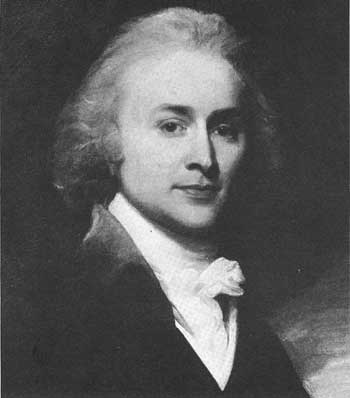
John Quincy Adams was fourteen years old and incredibly bright.

First…Naming Rights

It has been fashionable lately to name one’s offspring as if it came out of a Scrabble box. But for centuries many people considered it a time-honored tradition to name one’s children in honor/memory of someone who was dearly beloved or admired. Perhaps they believed that their child might be blessed with the stellar qualities of the deceased.

When John Quincy Adams married Louisa Catherine Johnson, having a family was a given, and something to be awaited with pleasure. Unfortunately, while Louisa found it easy to become pregnant, it was very hard for her to stay pregnant. She had fifteen conceptions, and only four live births; the last baby living only a year. 

Her first son, born in 1799, was named George Washington Adams, for the old General and First President of the USA who died within the year. Nevertheless, President Washington had been duly impressed with young Adams, and set him on the diplomatic role that later led to his presidency.  

Charles Francis Adams

His second son, was named John Adams II, (no Quincy) in honor of his father. 

His youngest son was named Charles Francis Adams. The Charles-part was for JQ’s younger brother who he loved dearly, and whose misfortunes culminated with dissipation and an early death. The Francis-part was for Francis Dana, who was also instrumental in preparing a young John Quincy for his eventual greatness.

The Young Traveler

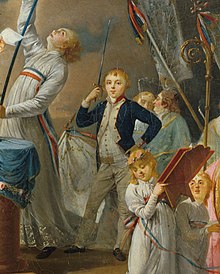
John Quincy Adams was only ten when he accompanied his father to Europe in 1778. The exceptionally gifted student with an inquisitive mind was placed in the best schools available, and disappointed no one either in academics or behavior. Happily, one of his better talents was an ear for language. He mastered French within six months, and eventually would be fluent or conversant in several others. 

Young JQA

The Adams father-and-son returned to Boston in late 1779, rather dejected – and rejected. Expecting to retire to his long-neglected law practice, he was recruited by his fellow citizens to help draft a constitution for their new state. Within a few months, JA was re-recruited by Congress to return to France as part of a commission to negotiate the terms of peace with Great Britain, ostensibly ending the long War for Independence. 

John Adams accepted the assignment with alacrity, and this time brought along young JQ and his brother Charles, younger by three years. 

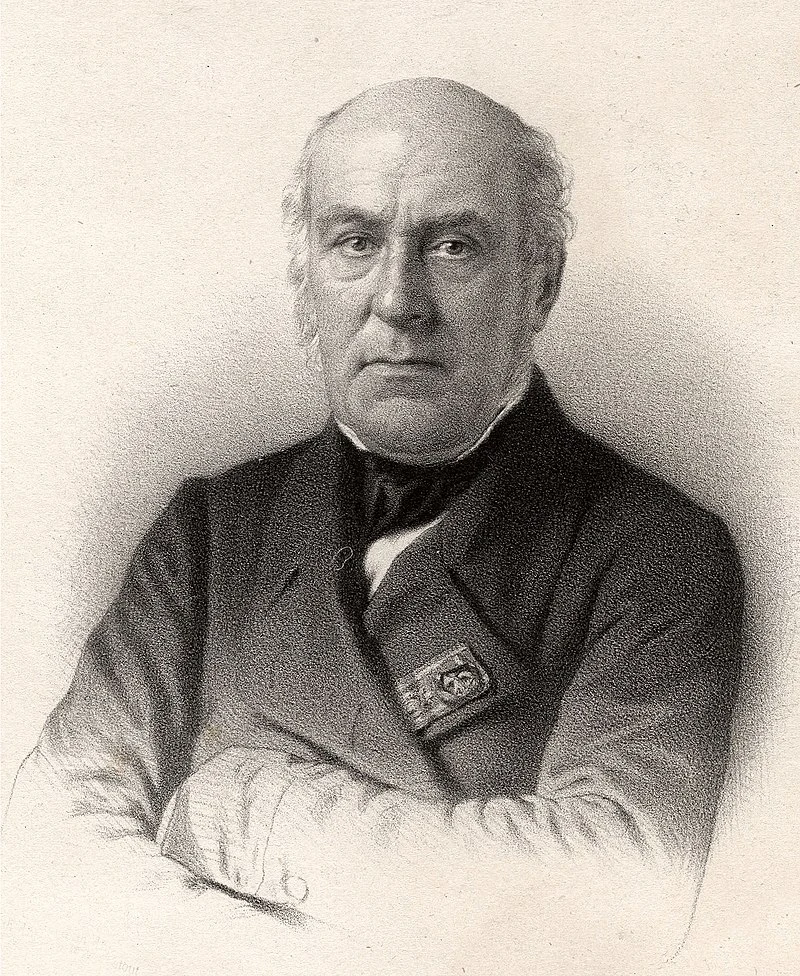
Francis Dana

On the ship that carried Adams and Sons back to Europe in late 1779, they were accompanied by a fellow Massachusetts attorney, about eight years younger than the senior Adams. Francis Dana came from a distinguished family, was an ardent patriot and member of the Sons of Liberty, and had been elected to Congress in 1777, and was now sent to join the Peace Treaty Commission as its secretary. 

Francis Dana

While the sea was calm on this journey, their sailing vessel was awash with leaks and structural disrepair, forcing the passengers to help “crew” the ship to land at the first safe port they could reach in Europe – in a remote part of northern Spain. The Adamses and Dana then hired carriages to take them 1000 miles across the Pyrenees in the dead of winter. 

The long haul gave Adams a chance to assess Dana, and gave Dana a fine opportunity to assess the younger Adams. 

Preparation for Diplomacy

The Peace Treaty Commission was unsuccessful for Adams. The French diplomats did not like him. The “commissioners” themselves did not get along well due to incompatible personalities, styles and dispositions.  

John Adams

With the boys in school, and the commission going nowhere, John Adams made a crucial decision: he would go on his own recognizance (i.e. no Congressional appointment or credentials) to Holland, a republic and commercial powerhouse. There he would attempt to gain not only recognition for the USA, but some financial loans to help establish the young wannabe nation. 

He took the boys with him, and placed them in another school. JQ, at thirteen, already fluent in French, both written and oral, came to learn sufficient Dutch to get by, and in time, would master German fluently. He had also learned Latin, classic literature and history, both ancient and modern. And his close companionship with his father during the last three years exposed him to a basic understanding of law. His temperament was diligent, careful and detailed.

He had developed fine penmanship. Unlike the large unwieldy scrawl of his father, JQ’s writing was small, clear, and envied by most. 

The eventual success of the Senior Adams to secure favorable loans from the Dutch was one of his crowning achievements. But while in Holland, he also championed the nomination of Francis Dana to become the Minister to Russia, which Congress acceded to in the summer of 1781. 

The Empress Catherine

Dana’s French (the international language of diplomacy) was mediocre at best, and he recruited young JQA to accompany him as his secretary-translator. At fourteen, he was far too young for any official post, but thrilled for the opportunity to serve – and learn. John Adams was pleased for his son, and charged Dana with finding appropriate continuation of JQ’s education. 

Dana’s mission was unsuccessful. Catherine the Great did not accept his credentials due to some convoluted prior naval treaty arrangements and other complications. Nevertheless, JQA remained in St. Petersburg for fifteen months – sufficient time for him to learn a fair amount of Russian. Then he traveled on his own, to rejoin his father in the Netherlands. 

Epilogue

Frances Dana had a successful legal and business career, and became Chief Justice of the Supreme Court of Massachusetts.  

John Quincy Adams returned to Russia nearly thirty years later as the senior American diplomat in Europe with solid diplomatic credentials. He stayed in Russia for five years. He later became Secretary of State under President James Monroe, and President of the USA in 1824.

Sources:

Kaplan, Fred – John Quincy Adams: American Visionary – Harper Collins, 2014

Unger, Harlow Giles – John Quincy Adams – DeCapo Press, 2012

https://millercenter.org/president/jqadams/life-before-the-presidency

https://founders.archives.gov/documents/Hamilton/01-03-02-0236

https://www.masshist.org/object-of-the-month/objects/i-am-here-too-soon-francis-danas-failed-attempt-2007-09-01

Posted in A POTUS-FLOTUS Blog, John Adams, John Quincy Adams, Nifty History People | Tagged , , , , , , , , , , , , , , , , , , | Leave a comment

Abigail Adams: The Shining Moment

To her everlasting credit…

AA: Revolutionary Patriot

With her husband some 400 miles away in Philadelphia trying to create an independent nation from 13 disassociated colonies with all their inherent problems, needs, quibbles, and disparate personalities (including his own), Abigail Adams voraciously consumed the latest news. Whether from the various gazettes and newspapers she could find, letters to and from an increasing correspondence list, conversation with friends, neighbors and passing strangers, she devoured whatever information she could, and became an ardent revolutionary herself in her own right.

She had known for some time that John Adams had come to the conclusion that the American colonies needed their own independence from Great Britain, to whom they “belonged” for 150 years. She agreed. She was also delighted each time she learned that another prominent personage was drawing the same conclusion. “I long to hear that you have declared an independency…”

Abigail and John Adams

Of course it was much more complicated than just declaring it.  

AA: Revolutionary Thinking 

Abigail Smith Adams (1744-1818) had a somewhat turbulent soul. On the one hand, she was the daughter of a Congregational Minister, and religion had played (and would always play) an important role in her life, her outlook, and her moral behavior. It also provided comfort. 

On the other hand, she was a particularly bright woman with a challenging intellect, but denied the formal classical education usually reserved for boys. Boys were tutored from an early age, and if families could afford it, received a college education for a professional career. Girls might learn to read and write and do sums, but it was usually taught by the mother, or some female relative. Past that, their education was domestic: cooking and sewing, gardening, child care and household management. 

Nevertheless Abigail and her equally bright sisters had access to her father’s excellent library and that of their grandparents. These were heady tomes on theology, philosophy, government and politics, history, classical literature, and anything that might help shape moral attitudes and behavior. 

It became apparent to Abigail Smith that girls ought to have the same exposure to learning as their brothers. She reasoned that if they were expected to raise sons to a high level of achievement, they should be given the tools to do that job. It was a mantra she espoused for her entire life. 

When she married John Adams she found a like-minded soul, who encouraged her inquisitive and turbulent mind. Most of the time. 

AA: Written for Eternity

In the same letter that Mrs. Adams wrote to her husband in Philadelphia, where she longed to hear of a declaration of independency, she wrote, “…in the new Code of Laws which I suppose it will be necessary for you to make I desire you would Remember the Ladies…” 

The Declaration

But when Abigail Adams continued her plea for remembrance, she actually was quoting British author Daniel Defoe, of Robinson Crusoe fame, when she added that “all men would be Tyrants if they could.” 

Throughout history, all power had been assigned to the masculine sex; women (i.e. wives) were always subservient, expected to obey a husband’s rule, no matter how tyrannical, foolish or cruel it may be. She suggested that it should be put out of their [men’s] power of the vicious and lawless to use us [women] with cruelty and indignity with impunity.

She further teased – at the risk of her husband finding her “saucy” – that she was well aware that a major component of the American determination for independence was their resentment of being bound by taxation (or any other restrictive laws) without representation. That re-enforced her strong feelings against slavery, which never changed, and which John was keenly aware of,  “…fighting ourselves for what we are daily robbing and plundering from those who have as good a right to freedom as we have.”

She added that if particular care and attention is not paid [to the Ladies] “we are determined to foment a Rebellion and will not hold ourselves bound by any Laws in which we have no voice, or Representation.” She was not asking for sexual (i.e. female) equality; she sought a legal system whereby a married woman could institute an action against an abusive husband, and guarantee her a share of the fruits of their mutual labors, and that would recognize her voice in the education of their daughters.

And if she was quoting Daniel Defoe regarding male “tyranny,” perhaps she remembered the ancient Greek dramatist Aristophanes, whose play Lysistrata focused on the rebellious women who banded together to deny sexual privileges to their menfolk in order to stop a war!

Abigail was a voracious reader, and classics were her delight. Her letters are filled with lengthy quotes. Just a thought.

John’s Reply

John Adams always appreciated a good mind wherever he found it, and he always knew the goldmine of his wife’s intellect. He also likely knew when to avoid a hornet’s nest when he was sitting on one – and knew any serious consideration of women as a potent force was a never-win situation. He gently laughed it off as petticoat-rule, perhaps knowing that he was one of the least guilty of men… and his wife knew it!

While Abigail found a kindred spirit in Mercy Warren, who by that time had become a dear and trusted friend, she nevertheless dropped the subject with her husband, this time by quoting Alexander Pope’s couplet:

“Charm by accepting, but submitting sway, Yet have our Humour most when we obey.”

  It took another 150 years before the Ladies decided to remember themselves. 

Sources:

Akers, Charles W. – Abigail Adams: A revolutionary American Woman – The Library of American Biography – Pearson Longman, 2007

Ellis, Joseph J. – First Family: Abigail and John Adams – Alfred A. Knopf, 2010

Gelles, Edith B. – Abigail and John: Portrait of a Marriage – William Morrow, 2009

https://millercenter.org/president/adams

https://www.masshist.org/digitaladams/archive/doc?id=L17740922aa

Posted in A POTUS-FLOTUS Blog, John Adams, Nifty History People | Tagged , , , , , , , , , , , , , , , , , , , , , , | 1 Comment

The Miracle of Dorchester Heights 1775-6

It was pivotal. It was bold. It was a colonial victory. It was never a battle.

General Washington

Boston, Massachusetts

There is little doubt that Boston was the cradle of the American Revolution. In the 1760s, when Great Britain began imposing various taxes on its American colonies – without any representation in the British Parliament, it was Boston that objected strongly and created the most noise. 

By 1770, the noise become rancor, not only about taxes, but about various other arbitrary and objectionable acts imposed on Boston. There were incidents. Blood was shed. 

The Tea Party

In December 1773, following a long list of British restrictions and taxes (still without any representation in Parliament), a heinous tax on tea, an essential commodity, led to American retaliation. In the dead of night, a band of angry citizens disguised as natives in blankets and war paint, boarded a British frigate moored in Boston harbor, and dumped some 300 crates of tea into the Charles River. 

The British punished the colony severely. Boston Harbor was closed to any trade, and the British effectively laid siege to the city until the tea was paid for. The line was drawn. The tea would never be paid for. 

A besieged Massachusetts solicited help from its sister colonies, and a Continental Congress was called for September 1774, in Philadelphia. While sympathetic to the plight of Boston, the Congress was still loath to engage in anything “treasonable,” and sent a well-crafted petition of grievances to King George III. They also agreed to hold a second Congress the following year.

British General Wm. Howe

But by the time that Second Congress convened in April, 1775, British soldiers had marched to Lexington and Concord. Shots had been fired on Massachusetts militia men. Considerable blood was shed and lives were lost. Action was required, All thirteen colonies pledged militia recruits, and George Washington of Virginia was selected as General of the Continental Army. He left immediately for Boston. 

The Man, The Plan, The Cannons

Waiting for him in Boston was a Massachusetts militia man and ardent patriot. Henry Knox was a 25-year-old bookseller, who had read every book in his shop on warfare and particularly, artillery. Knowing that the local militias had no weaponry other than their citizens’ personal muskets and powder, he formed a daring plan. 

Henry Knox, book-taught General

He advised General Washington, who had served as Colonel in Virginia’s militia for nearly a decade some fifteen years earlier, that heavy artillery was indeed available – but it was some 300 miles away, in Fort Ticonderoga, on the New York-Vermont border. The fort had been captured and deserted, but the big cannons were still there!

Knox’s plan was daring and ingenious: send militia men to the Fort, help themselves to the heavy cannons and bring them back to Boston. Through wooded terrain with no clear paths, in the dead of winter, with snow and ice and freezing cold. As secretly as possible. General Washington agreed to the plan, volunteers were recruited, and they marched to the Fort to retrieve 43 cannons and 16 mortars – weighing more than 5500 pounds.

On December 17, Knox sent a letter to Washington, detailing he enormous difficulty involved in transporting the cannons through ice and winds across Lake George. He advised GW that his men had built 42 strong sleds and had hired 80 yoke of oxen to drag them as far as Springfield, MA. From there he would bring his valuable train to Boston.

On January 25, 1776, an exhausted and half-frozen parade of militia and oxen teams dragging the artillery showed up near Dorchester Heights. It would take another six weeks for powder and ammunition to arrive.

The Miracle

Boston had been under siege for nearly two years. The well-trained and well-equipped British had fortified every high point surrounding the town, including Bunker Hill, which they had taken some months earlier. It was declared a British victory, but British casualties were far greater than American lives lost. The only benefit was determination on both sides. British now encircled and fortified the city of Boston with their big guns. The siege continued.

Bunker Hill was a pyrrhic victory

The only exception was Dorchester Heights, with a commanding view of Boston and its harbor. Working stealthily, the Colonials cleared a path up the Heights so the weapons could be positioned, and if necessary, camouflaged. Surprise would be the Americans’ greatest asset.

On March 2, Abigail Adams, some ten miles from Boston, wrote to her husband in Philadelphia, that “something terrible” had been predicted for weeks, but what/when, she did not know. Then, her letter stopped. The house was shaking. Stopping a passer-by, she learned that the Colonials had begun to fire, and the entire militia was ordered to report immediately, with three-days’ provisions. 

Her house shook ten miles away.

She climbed to the top of the nearest high point, looked across the harbor, and saw and heard the sounds of shells and cannons, meant to harass the British. It was a diversion, created by General Washington, to focus the British away from the monumental fortifications being put in place on Dorchester Heights. In the dead of a bitter cold night, Colonial soldiers had wrapped their wagon wheels in straw to muffle as much sound as possible and dragged their guns up the heights.

In the early morning of March 5, British General William Howe was astounded to see cannons aimed directly at his army from the top of Dorchester Heights. General Washington correctly anticipated that there would either be an attack (with heavy British losses), or they would be forced to vacate the area.

The Heights commanded Boston, and was now heavily fortified by the Colonials, both in firepower and manpower, and the weather was horrendous. General Howe had little choice.

Taking about 1000 Boston Loyalists with them, 11,000 British Redcoats boarded their ships in the harbor, and by March 17, departed without firing a shot.

There were no casualties. There would be no more battles fought in Massachusetts.

The Cradle of Liberty rocked on!

Sources:

Davis, Burke – George Washington and the American Revolution – Random House, 1975

Levin, Phyllis Lee – Abigail Adams – St. Martin’s Press, 1987

Randall, Willard Sterne – George Washington – Galahad Books, 2006

https://www.ushistory.org/valleyforge/served/knox.html

https://www.battlefields.org/learn/articles/guns-ticonderoga

https://www.history.com/this-day-in-history/american-forces-occupy-dorchester-heights

Posted in A POTUS-FLOTUS Blog, George Washington, Nifty History People | Tagged , , , , , , , , , , , , , , , , , , , , , , , , | Leave a comment

Harry Truman: Recognizing Israel 1948

Harry Truman was not a popular president in his own time.

Disdain for Harry

Harry S Truman (1884-1972) was a midwestern farm boy with neither pedigree, education, money or talent to recommend him. Having served commendably as Captain Harry in WWI, he returned to Independence, MO, had a short-lived partnership in a haberdashery that failed, and was at loose ends. He came to the attention of Tom Pendergast, the political boss in western Missouri and Harry ran for, and was elected Country Supervisor. Twice. Then, according to Missouri statute, he was ineligible for a third term. 

Again at loose ends, he ran for US Senator in 1934 – as 3rd or 4th or 5th choice of the MO politicians. HST was only an unknown local official. His surprise victory was due to his own intrepid campaigning and maybe a little luck.

Captain Harry, vote-getter

President Franklin D. Roosevelt had little regard for “the Senator from Pendergast,” as he called him. Still, HST made friends, served diligently and enjoyed the position. During WWII he chaired a committee to investigate and correct problems with US war production, i.e. waste, inefficiency, corruption and profiteering. The “Truman Committee” made headlines – and was considered a great success. 

But he was still “small potatoes” to the political powers that were or wanted-to-be. As a candidate for VP in FDR’s 4th election campaign, he was again the 3rd or 4th or 5th choice. FDR didn’t care. 

But when Roosevelt died ten weeks after his inauguration, the shocked and saddened country was definitely concerned that Harry Truman would not measure up, even somewhat. But nobody, not even bitter opponents, could deny that Truman would face a catalog of monumental problems and situations during the next years. 

Leftovers of WWII

In a nutshell, everything was a leftover from WWII. The Atomic Bomb and its aftermath – and frightening potential. A new map of Europe. And Asia. Rebuilding Europe. And Asia. The Cold War. And Korean crisis. Return and readjustment of US veterans. Health care, civil rights and education. Continual labor strikes. A huge influx of new immigrants. Communism. And maybe an election for a term of his own. Etc.

1000 words…

The newly created United Nations, a project dear to FDR’s heart (and a leftover of WWI’s League of Nations), was established to help ameliorate many international problems. 

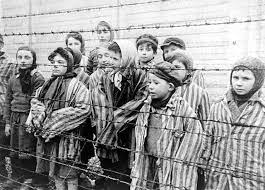
One of those problems concerned the fate of perhaps a million European Jews who managed to survive the savagery and butchery of the Nazi concentration camps. The six million who perished no longer could be helped. 

A homeland for the diaspora of Jewish people in the Biblical “Promised Land” had been a dream of Zionists since the late nineteenth century. By the end of WWI, things began to look more promising. By the end of WWII, and the discovery of the horrors of the Holocaust, action was required. The United Nations batted the situation back and forth between much support, no support, and general indifference. But they finally determined to partition Palestine between the Palestinians and a new nation of Israel. It would be a land happy to accept the “tired and poor” remnants of European Jewry. 

1000 words…

Another leftover of WWII was the US State Department, whose diplomats waffled and smirked, but were basically anti-Semitic and always had been.  

Eddie Jacobson

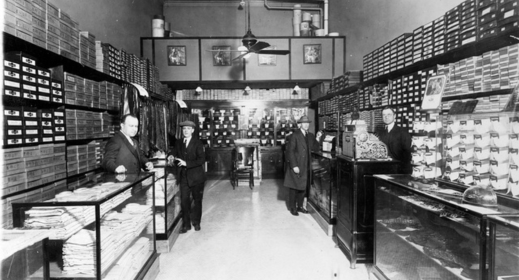
Eddie Jacobson (1891-1955) and Harry Truman knew each other casually in Independence, but were tasked with running a canteen for a while during WWI. It was a huge success and the two men became friends. At the end of the war, they became partners in a men’s clothing shop. For a few years it did well, but there was an economic downturn, and few fellows were buying shirts and ties and cuff links. The store closed, but the men remained friends.

The store did well – for a while.

The friendship was primarily between Harry and Eddie; not The Trumans and The Jacobsons. Later biographers and historians stress that Eddie and his wife were never invited to the Truman house for dinner. Most of them claim Bess Truman was anti-Semitic. She was likely polite, but cool.

It was Madge Wallace’s house.

The Trumans lived with Madge Wallace, Bess’ mother, in her house. She was basically an ecumenical bigot. She didn’t like anybody. But nobody liked her either. Ergo, nobody was invited for dinner other than family.

Eddie, Harry and Israel

Eddie Jacobson was never overly religious, but was always active in his Jewish community and passionate about creating a homeland for his Jewish brethren. He corresponded with and visited his old pal Harry Truman on occasion to gently lobby for US support. He reminded HST that “he had never asked any favors of Harry as Senator, or even now as President,” but this one was important.

HST was deeply torn. The State Department, headed by well-respected Sec/State (and former General) George Marshall, was firmly opposed. He believed that an independent Israel would be surrounded by millions of violently angry Arabs, and would be unable to protect themselves. Nor could a depleted US military support them. There were a few other valid reasons, but that was one that could not be denied or waffled away.

Many Jewish leaders, religious and otherwise, had been applying enormous pressure, and HST was visibly annoyed, despite his early claim that “Today – not tomorrow – we must do all that is humanly possible to provide a haven and a place of safety…”

President Truman and Eddie Jacobson

Eddie had been honest about “never asking for any favors” in the past, which HST had always appreciated. But now, at Eddie’s fervent plea, a grudging HST agreed to meet with the elderly Chaim Weizmann, one of the founders of the Zionist Movement. USA support was forthcoming.

Some time later, when Rabbi Yitzhak Herzog told the President that he was put in his mother’s womb to help create the State of Israel, it is said that Harry Truman had tears in his eyes.

At 12:11 A.M. on May 14, 1948, the USA became the first country to recognize the State of Israel. 

Sources:

McCullough, David – Truman – Simon & Schuster, 1992

Truman, Harry S – Memoirs by HST: Years of Decision – Doubleday, 1955

Truman, Harry S – Memoirs by HST: Years of Trial and Hope – Doubleday, 1956

https://www.archives.gov/education/lessons/us-israel

https://www.americanheritage.com/i-hardly-know-truman

Posted in A POTUS-FLOTUS Blog, Franklin D. Roosevelt, Harry S Truman, Nifty History People | Tagged , , , , , , , , , , , , , , , , , , , , , , , , | Leave a comment

John Adams Goes to Congress

John Adams, lawyer

Lawyer Adams

John Adams was never a wealthy man, and never would be – at least compared to his fellow Founding Fathers like Washington or Jefferson. Or John Hancock or Benjamin Franklin. When he married at 29, he had become reasonably established as an attorney, and modestly able to support a wife and family. 

To maintain and grow his legal practice however, he was required to travel great distances from their home in Braintree. Boston, where most of his clients were, was some ten or twelve miles away. By carriage or horseback, it was nearly a half-day’s ride. Plymouth and Falmouth, Worcester, and even points in what was then Maine, was often two or three days travel.

His professional reputation was growing, as was his purse. 

18th century Boston

All this travel brought Adams into regular contact with fellow attorneys, businessmen, clergymen – the cream of Massachusetts Colony. Politics, and a continuing, nagging dissatisfaction about the relationship between the colonies and Great Britain, their Mother Country, was high on the list of conversation topics. 

The formation of clubs, committees, associations and patriotic societies were the unsurprising result when combining distances, attorneys, prominent citizens and political dissatisfaction. John Adams was invited to join several of those societies, which he did. One of those was the Committee of Correspondence, formed for the sole purpose of exchanging news and information among like-minded citizens of Massachusetts’ sister colonies. Letters were written, sent, passed along and hopefully published in various newspapers and gazettes, bridging the great distances with their shared concerns and commonalities.

Vexation and Discontent

Massachusetts had been a hotbed of vexation and discontent since 1765. Great Britain had imposed heavy duties and taxes on its American Colonies in order to help pay for its recent Seven Years War with France (the French and Indian War). There was no representative input in Parliament from the Colonies. The colonies protested; the taxes were rescinded…but other taxes and writs and acts were subsequently enacted. And protested…and ameliorated. And yet another series of duties were imposed. Nothing was being resolved by way of American representation in Great Britain.

A tea-party illustration

In December, 1773, a huge shipload of heavily taxed tea had been sitting in Boston Harbor for a month, with Boston patriots squabbling with royal officialdom in increasingly heated contention. As deadlines neared and no satisfactory conclusion reached, a band of citizens, disguised as natives in blankets and war-paint, boarded the frigate in the darkness of night, hauled up 342 chests of “the bainfull weed,” worth some ten thousand pounds sterling, split the crates open, and tossed everything overboard.

There were consequences. Great Britain closed the port of Boston until the tea was paid for. British ships surrounded the the harbor, and nothing could enter or leave, except for necessary food or fuel. All trade was stopped, including much of Boston’s inter-colonial trade. It had a dire effect economically and politically. 

Abigail and John Adams

Patriotic citizens in all thirteen colonies were electrified! The Committees of Correspondence had reached a point where face-to-face discussions were warranted. They called for a convention to be held midway – in Philadelphia, the largest and most cosmopolitan city in America. John Adams was one of four citizens chosen to represent Massachusetts.

Joining The Best and Brightest

John Adams was an inveterate diarist all his life, but he was a Puritan, heart and soul. He wrote diligently, not only of events and situations, people and places, but of his never-ending angsts. His diary was often a metaphorical hair-shirt for flogging himself with his perceived failings, foibles, insecurities, shortcomings, and anything that might be considered “human.” 

Once chosen as a delegate, he confided to his diary, “This will be an assembly of the wisest Men upon the Continent, who are Americans in Principle, i.e. against the Taxation of Americans by Authority of Parliament… I feel myself unequal to this business. A more extensive Knowledge of the Realm, the Colonies, and of Commerce, as well as of Law and Policy is necessary, than I am Master of.”

Philadelphia – the largest city in America

He worried about everything: his companions on the trip, of seeing more of the world than he had ever seen before, and the future of his country. He wrote, “We have not Men, fit for the Times… I feel unutterable Anxiety – God grant us Wisdom, and Fortitude!”

He would need to become acquainted and take the measure of the other delegates. To work cooperatively. It would not be easy for him to learn “the Characters and tempers, the Principles and Views of fifty Gentlemen total Strangers to me.”

Adding to those esoteric fears, was the more mundane concern of underwear. He wrote his wife Abigail, “I think it will be necessary to make me up, a Couple of Pieces of new Linnen [sic]. I am told, they wash miserably… and am advised to carry a great deal of Linnen.”

Reproduction of 18th century men’s underwear

Abigail Adams duly made her husband some extra pairs of drawers. She also made him a light brown silk vest, so he could keep up appearances in Philadelphia.

And so, on August 10, 1774, along with his cousin Samuel Adams, Robert Treat Paine and Thomas Cushing, John Adams boarded a fine carriage pulled by four horses, and the Congressional Delegation left for Philadelphia. A parade of some 50 or 60 horsemen rode with them for several miles. Well wishers greeted them, cheering them on. 

He wrote Abigail that in every town all along the way, bells were rung, cannons were fired, and men, women and children crowded “as if it was to see a Coronation.”

But it would be six weeks before Abigail received her first letter, which, when she saw his familiar handwriting, had given her such a rush that “I was not composed enough to sleep till one o’clock.”

Epilogue: John’s fears of inadequacy would come to naught. He measured up very nicely.

Sources:

Butterfield, L.H. (ed) – The Book of Abigail and John – Harvard University Press, 1975

Ellis, Joseph J. – Passionate Sage – W.W. Norton Co., 1993

Gelles, Edith B. – Abigail and John: Portrait of a Marriage – Wm. Morrow, 2009

Levin, Phyllis Lee – Abigail Adams – St. Martin’s Press, 1987

https://founders.archives.gov/about/Adams

https://www.masshist.org/digitaladams/archive/diary/

https://www.britannica.com/biography/John-Adams-president-of-United-States

Posted in A POTUS-FLOTUS Blog, John Adams, Nifty History People | Tagged , , , , , , , , , , , , , , , , , , , , | Leave a comment

Martha Washington’s Secretary

Martha Washington

A Lady’s Secretary

In the 18th century, a “secretary” was also a synonym for a writing desk. Also, in the 18th century, communication between individuals (if not spoken) was via pen and paper. Specifically quill pen, ink and handcrafted paper. These items were expensive, and generally unavailable to all but people of means. It counted for the high illiteracy rate in the young United States. As the costs of pens, ink, paper and the associated accoutrements became more affordable, by the end of the USA’s first century, the majority of its citizens could read and write.

But in the 1700s, as might be expected, it was the boys in the family who had the opportunity and monies for education. If a girl did not/could not read or write, no matter. Better she could bake a pie. 

Martha Washington received basic book-leaning. She could also bake a pie.

Mount Vernon Furniture

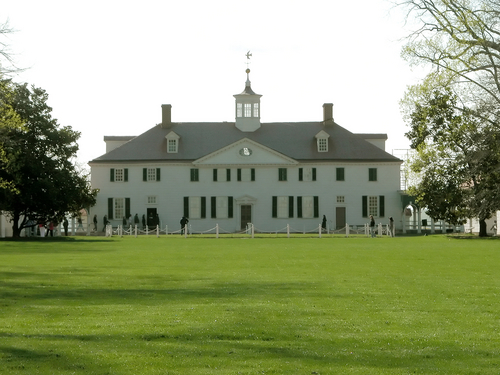
Mount Vernon, the home of the Washingtons for more than 40 years, was high on the list of upscale housing. It was already well situated and nicely furnished when George brought his bride there in 1759. It got better and better as time went on.

Mount Vernon
The General

When Martha’s first husband died, Martha (the Widow Custis) managed most of her own business correspondence, perhaps with some help from her brothers. Once she married George Washington, he managed most of her business correspondence as well as his own. And he had much better penmanship. As a member of Virginia’s House of Burgesses, he had governmental correspondence. He had property and tenants. He had plantation interests. He had family concerns. His correspondence was continual, and it was not unusual for him to spend several hours a day at his desk. 

GW’s desk (Mt. Vernon)

His “secretary” was elaborate and expensive. He purchased it in Philadelphia in 1790 from the French Minister.

It featured a suitable writing surface, with plenty of room for quills, pens and inkwells, his seals and sealing waxes, blotting paper, and his candlestick and candles. It also contained numerous drawers in varying sizes, for bills, receipts, notebooks, account books, and even some personal papers and whatever its owner wished to keep at hand. And always, there were a variety of “secret” nooks and crannies for the utmost privacy.

GW’s desk accessories (Mt. Vernon)

A lady’s “secretary,” on the other hand might have some of those features, but more often than not, it was a lower piece of furniture, with a smooth writing surface, and fewer drawers and cubbies for accoutrements.

18th Century Correspondence in General

Both Washingtons maintained active correspondence with a wide range of recipients other than business interests. George and Martha were both the eldest of five who lived to maturity. Letters between siblings were frequent. As their respective families grew, letters to the next generation were also frequent. Then of course, there were letters to friends and neighbors. In Martha’s case, once the American Revolution was underway, and she traveled each winter to join the General wherever his headquarters were, she made many new friends and acquaintances along her route. Some of them remained her friends – and correspondents – for life.

GW’s excellent penmanship

Correspondence was more than just an exchange of news, invitations or keep-in-touch activities. Letters were meant to be kept. To be read, and re-read, perhaps regularly, especially from ones you loved. Correspondence was also a form of entertainment in those days. Books were fairly scarce, and radio, television, and the internet would have boggled George and Martha’s imaginations.

Responding to letters was usually an evening activity for women – after the children were bedded down for the night, and the dishes and household chores were completed. Out came the paper and quill, for a long “visit” with your dear friends. Once children were grown, the lady of the house had more latitude as to when to communicate. Of course men could create their own schedules for business correspondence.

Martha Washington’s desk (Mt. Vernon)

Martha’s Desk

In 1790, after spending two years in New York City, the new-USA capital was moved to Philadelphia while “Washington DC” was being built. At the time, the Comte de Moustier, the French Minister to the US, was returning to a turbulent France, and was selling several of his possessions. Along with GW’s desk (above) was this small desk. It featured tambour panels which were designed to slide in grooves to reveal compartments for storage. The writing surface also lifts up to conceal the insides. The Washingtons purchased it with personal funds in 1790 as a desk for Mrs. W.

The Death of George Washington

George Washington was just shy of his 68th birthday when he died in December, 1799. He was only sick for two days. It was a surprise and shock to all. His wife of 40 years was devastated.

It was also customary in the 18th century to destroy personal letters, particularly after the death of a spouse. This relationship is private, to be kept as such. As an aside, when Abraham and Mary Lincoln left Springfield, they burned their private correspondence.

Thus Martha Washington burned all the letters between her and her husband.

Martha’s Will

Martha Parke Custis Peter

Martha Washington survived her husband by two and a half years, deeply grieved and in gradually failing health. Her children had all died, but she had four surviving grandchildren. Some months before her death, she made her will. In addition to her dowered property, and the assignments made per her husband’s will, Martha had several personal items to bequeath to close family members.

To her granddaughter Martha (Patsy) Parke Custis Peter, she left her writing table. Some time later, a family member discovered two letters from George to his wife that somehow fell behind a drawer. Addressed to “his Dearest,” they were written when he assumed the position of General of the Continental Army.

Posterity could have no finer souvenirs. They are the only letters from him to her to survive.

Sources:

Brady, Patricia – Martha Washington: An American Life – Viking, 2005

Fraser, Flora – The Washingtons” George and Martha “Join’d by Friendship, Crown’d by Love – Alfred Knopf, 2015

https://founders.archives.gov/documents/Washington/03-01-02-0003

https://www.britannica.com/topic/secretary-furniture

https://www.mountvernon.org/george-washington/the-other-special-relationship/french-objects/

Posted in A POTUS-FLOTUS Blog, George Washington | Tagged , , , , , , , , , , , , , , , , , , | Leave a comment

Calvin Coolidge Chooses to Run: 1924

Perhaps the biggest surprise in Coolidge’s life was being nominated as Vice President in 1920. 

Calvin Coolidge

The Vice Presidency

If the selection of little-known Warren G. Harding as the Republican candidate for president in 1920 was a surprise to the country, the choice of even less-known Calvin Coolidge for the second spot boggled the imagination. Mostly his. 

President Warren Harding

Coolidge had been a middling attorney from the western (i.e. unimportant) part of Massachusetts, but hardly more than mediocre in reputation or purse. In his younger days, to augment his income, he became active in politics, serving in the state legislature – and even served a term as Mayor of his hometown – Northampton. He worked his way up the legislative ladder, and finally served as Governor of Massachusetts toward the end of the 19-teens. 

Hardings & Coolidges

After ducking and waffling on the most pressing issue in Massachusetts, a strike called by the Boston police force, Governor Coolidge finally interceded, saying “There is no right to strike against the public safety by anybody, anywhere, anytime.” It made headlines. It also made Coolidge a person of interest.

More surprises were in store for him.

The Popular VEEP

While Calvin Coolidge has some fine qualities, “imagination” is not on the list. He was a bland fellow, conservative in demeanor and politics, more inclined to avoid problems than to solve them. The height of his wildest dreams had been his election as Governor. His original thought was that being a “former” Governor might help his law practice. 

But the national election of 1920 was a culmination of second and/or third raters on both tickets. Mostly because of women’s votes, an electorate exhausted by the Great War, and a good looking candidate for POTUS, who pushed for a national reboot, i.e. “back to normalcy,” the Republicans won – and won big!

The Vice Presidency as an office itself had been an add-on since the Constitutional convention, and had mostly been filled with bland, malleable fellows to balance geopolitical needs. It was an empty office, charged only with presiding over the Senate, and anything else the President asked him to do. It became a ceremonial flurry of cornerstone laying, beauty queen crowning, and as one VP quipped, “the chief funeral goer.” And dining out.

Coolidge and his missus, the stylish and personable Grace née Goodhue, were on every A-list of dinner parties as guest of honor. In uber-cosmopolitan Washington, the plain New Englanders had become wildly popular, another occurrence that boggled the Coolidge imagination. Mrs. C. was outgoing, educated and good natured. He, on the other hand, was introverted and reticent. But he had a wickedly wry sense of humor, which coupled with his dead-panned delivery, delighted all of social Washington. 

Then Harding died in August 1923. 

That was another surprise to Coolidge. The VP and his POTUS were only superficially acquainted. They did not care for each other; their personalities were totally different. 

The Election of 1924

In early summer of 1924, politicians on all sides began their quadrennial jockeying for office.

Coolidge was unbelievably lucky. First and foremost, his distance from Harding’s administration worked very well in his favor as scandal after scandal trickled into a torrent of allegations, disreputable conduct, and out and out criminal behavior – by top officials. Coolidge was not tainted in any way.

Then two, the country was at peace. 

Then three, despite pockets of whatever issues cropped up in various places, the economy was doing well. In fact, these were boom times! 

Nothing succeeds like success. So with only nine months as VP-turned-POTUS, Calvin Coolidge was the easy top-choice for the Republicans. 

The Problems With the Democrats

The leading candidates for the Democratic ticket couldn’t stand each other, making any coalition or cohesive efforts impossible. 

Needing to find the “negatives” to the Republican “positives,” the Dems focused their attentions and platforms on a) the “new” Ku Klux Klan, which presented its rejuvenation as a patriotic organization and was riding an all-time high, with chapters in every state, and a membership of more than a million; and b) Prohibition – the recent law of the land that everybody (except the overly pious) hated. 

The two front runners were poles apart. 

William McAdoo, (CA) former secretary of the Treasury and Woodrow Wilson’s son-in-law, was more sympathetic than not toward the Klan, and supported Prohibition, the Volstead Act, and deplored the crime wave that it spawned.

Wm. McAdoo

Alfred E. Smith was the popular Governor of NY, whose lack of formal education and “dese, dems and dose”, raised the hackles of the intelligentsia. But Al was a street kid from the Lower East Side”s immigrants-of-all-kinds. The Klan was un-American to Al. And he also liked his beer or a shot of whiskey and said so.

Gov. Al Smith

(As an aside, Coolidge totally rejected the Klan and everything xenophobic it represented. He also distanced himself from Prohibition, believing that it’s a bad law if it makes law abiding citizens disrespect the law.)

103 Ballots!!!

Hard to believe, but the Democratic Convention of 1924 lasted for more than two weeks. Some New Yorkers quipped they were happy to invite the delegates to visit NYC, but not to take up residency. 

More than 100 ballots seesawed between McAdoo and Smith, with no one claiming the required number of votes, and everybody becoming very testy and irritable. 

John W. Davis

Almost in desperation, the delegates finally converged on John W. Davis of West Virginia, a former modest legislator and recent ambassador. Barely known today, he is the losing-est presidential candidate of any major political party. 

The only thing people tend to remember about that Convention was the heroic (and painful) speech nominating Al Smith, “The Happy Warrior,” given by a polio-crippled Franklin Delano Roosevelt. 

And Republican Calvin Coolidge skated to an easy, easy victory! Not a surprise.

Sources:

Cohen, Jared – Accidental Presidents: Eight Men Who Changed America – Simon & Schuster – 2019 

Murray, Robert K. – The 103rd Ballot: Democrats and the Disaster in Madison Square Garden – Harper and Row, 1976

https://www.britannica.com/event/United-States-presidential-election-of-1924

https://www.jstor.org/stable/2206152

Posted in A POTUS-FLOTUS Blog, Calvin Coolidge, Nifty History People, Warren G. Harding | Tagged , , , , , , , , , , , , , , , , , , , , | Leave a comment

Georges Washington Lafayette: Godson 

Illustration of Georges Washington Lafayette

The Family Lafayette

The Marquis Gilbert (plus a slew of middle names) Motier de Lafayette was born in 1757, into one of the wealthiest aristocratic families in France. Orphaned as a toddler, he became a ward of the King, who provided him with a superb education. At seventeen, he married fifteen-year-old Adrienne de Noailles, just as wealthy and well placed as he was. Happily for them, and despite a litany of separations and woes caused by various wars and hardships, it was a solid and loving marriage. 

The young Marquis

But a nineteen year old Lafayette also fell in love with the American War of Independence. His education, which included extensive military training, commended him to General George Washington, who learned quickly enough that the young Frenchman had all the requisites of a fine commander. 

On a brief visit home to France in 1779 (to urge the King’s assistance for the USA), Lafayette’s son was born. He named him Georges Washington Lafayette (1779-1849), as a token of his high esteem for his American Commanding General. And as a further token of his personal affection, he asked the General to be the baby’s godfather. GW was delighted to accept.

Following the better part of six years in the brand-new United States of America, helping them fight for their freedom from Great Britain, the Marquis de Lafayette (1757-1834) returned to his home in France. He was still in his mid-twenties, and still one of its wealthiest aristocrats.

Back in France

In 1787, the same time Washington was presiding over the Constitutional Convention, Lafayette was appointed to the Assembly of Notables. Crises on many levels, particularly financial, had brought France to the brink of its own civil war. 

Thomas Jefferson, erstwhile Governor of Virginia, was serving as Ambassador (using the modern terminology) to France, and had grown to love all things Gallic. He worked tirelessly with Lafayette to draft the French Declaration of the Rights of Man, hopefully to deflect the growing threat of violence. It was wishful thinking.

THomas Jefferson

By the time Thomas Jefferson returned to the US and became Secretary of State to the new President George Washington, the Bastille had been overthrown. It was the opening salvo of the French Revolution.

Lafayette and Washington

Once again, the French Monarchy, hanging on by a thread, sought the services of Lafayette, and elected him to the Estates General and again as Commander of its National Guard. His chief responsibility was to protect the King and Queen. Again, wishful thinking.

By 1792, the Revolution was in full swing. The monarchs were overthrown and beheaded, but its government was more anarchistic or despotic in nature than anyone could have predicted. During one of their “radical governments du jour” Lafayette fled to the Austrian Netherlands, where he was arrested and spent five years in prison. Several members of his family met the guillotine.

The Dilemma

The French Revolution sent ripples around the world. The decade from 1789-1797, was called the Reign of Terror, with reason. Even the most ardent US Francophiles despaired at times. George Washington, first President of the United States, was deeply torn. He had never traveled abroad, spoke no other language than English, and his knowledge of high level foreign diplomacy was mostly limited to military situations.

GW had personal affection and regard for Lafayette, and had he been a private citizen, would doubtless provide whatever assistance he could to the Marquis and his family. But he was not a private citizen. His primary allegiance was to the fledgling United States, which needed to keep a neutral balance in its political-foreign relationships. It was classic rock-and-hard-place. If he tried to aid the Marquis, he would alienate the French government (whatever one they had at the time). If he toed the diplomatic road (whatever one that was at the time), Lafayette would no doubt suffer. He remained in jail. His wife and son were refugees.

Said to be Adrienne de Lafayette

Adrienne de Lafayette managed to smuggle her son into hiding, disguised as a peasant. Then, in 1795, at the suggestion of James Monroe, then Ambassador to France, and long-time friend of Lafayette, the Marquise arranged to send Georges, now around sixteen, along with his tutor, to America, care/of his godfather George Washington, the President of the United States

Another Dilemma

Normally GW would have been delighted to welcome his godson to the President’s House, but that would have caused an “international incident,” something the POTUS tried to avoid at all costs. So young Lafayette waited it out in New York until better arrangements could be made. 1796 was an election year, and GW was determined to retire at the end of his second term. 

When the time was right, an invitation to the President’s House was made to the young Frenchman. He would spend the next two years as guest of his godfather.

Mount Vernon

When GW retired, his godson stayed with the Washingtons at Mount Vernon for several months. He finally returned to France in 1798. His father had been released from prison and Napoleon had assumed command of the government. The Family Lafayette, whatever was left of it, had their citizenship restored.

Young Georges Lafayette joined the French Army and served until 1807, when he returned to civilian life. He had married the daughter of the Comte de Tracy, and had three daughters and two sons. He entered the Chamber of Deputies, and usually voted with the liberal side. He maintained a quiet private life.

The older Georges Lafayette

Epilogue

The older Lafayette

In 1824-5, Georges Washington Lafayette accompanied his father, the Marquis, now past seventy, on a two-year trip to the USA, to visit old friends and familiar places, and where his father received accolades and honors wherever he went. The Senior Marquis was granted honorary US citizenship, the first and only distinction of its kind for more than a hundred years.

And both Lafayettes laid a wreath at George Washington’s grave at Mount Vernon, where they both shed tears.

Sources:

Fraser, Flora – The Washingtons” George and Martha “Join’d by Friendship, Crown’d by Love – Alfred Knopf, 2015

https://www.britannica.com/biography/Marquis-de-Lafayette

https://www.mountvernon.org/library/digitalhistory/digital-encyclopedia/article/georges-washington-de-lafayette/

Posted in A POTUS-FLOTUS Blog, George Washington, Nifty History People | Tagged , , , , , , , , , , , , , , , , , , | Leave a comment

Dolley Madison, Alass, Alass

Historians have pondered her “wedding day” letter for centuries!

The Quaker Girl

Dolley Payne (1768-1849) was born into a family who had converted to the Quaker religion. Like many who “choose” their faith, her father was strict in his observances. Dolley wore the Quaker gray gowns and bonnets, no jewelry, never learned to dance. Their house was functional, rather than decorative.

Notwithstanding, the Paynes owned a fairly prosperous plantation – with perhaps ten slaves. This was a troublesome matter to John Payne, since Quakers were strong abolitionists.

As the oldest daughter in a family of eight children who survived, Dolley (her real name, by the way), was primarily home-schooled to read, write and do sums. And cook, sew, and help with the babies who kept coming along. Blessed with better-than-most good looks (blue eyes and dimples) and an even better personality, she would later write that her family was a loving one, but not particularly merry.

Philadelphia

When Dolley was around fifteen, her father made the difficult decision to manumit his slaves, at great financial cost to him. He bought a large house in Philadelphia, a Quaker city, where he would have friends. He also purchased a starch factory to support his family.

Dolley loved Philly! She had never been in a big city before, and wrote that in a half-hour in Philadelphia she saw more people than she had seen in her entire life put together. She made friends, enjoyed the atmosphere, and was quick to appreciate the colors, the fashions, the culture, the noise and hustle and bustle of the most cosmopolitan city in the American Colonies.

There is a story (probably apocryphal) that old Benjamin Franklin, recently returned after a decade in Paris, was being carried in his sedan chair when he passed the unknown-to-him Dolley Payne. He stopped his carriers, summoned the young miss, and told her that he had seen many beauties in Paris, but she was prettier than them all. Or something like that. Ol’ Ben has an historic reputation of appreciating feminine pulchritude, and he was reputed to have said “something like that” to several Philly fillies.

The venerable Dr. F.

Anyway, the story was appreciated by Dolley throughout her life, and she reportedly enjoyed telling it.

Enter John Todd, Lawyer

Naturally the Paynes were regular attendees at their Quaker Meeting House, although Dolley later remarked several times that she did not believe she “had the soul of a Quaker.” A few years after they moved to Philadelphia, John Payne’s starch business failed and he suffered severe financial losses. Threatened with losing their home, Dolley’s mother took in boarders to meet their expenses.

Meanwhile, the Quakers turned from John Payne, which devastated him further. He had given so much for his new faith, and was now being shunned. His health deteriorated, he became despondent, and took to his bed.

One of the Quakers who did not shun him was a young attorney named John Todd. He lived fairly close to the Paynes, and knew the family. He was enchanted with Dolley (most people were), and wanted to marry her. He also believed that “courting her family” was a good way to help his cause. He was right.

Dolley liked Mr. Todd, but she was not attracted to him. She turned him down. More than once. According to lore, he was plain looking and heavy-set. No Adonis. But in the 18th century, looks were far down on the Marital Happiness Requirements List. He was prosperous. He owned his own house. He looked after his parents. He was kind and truly cared for Dolley. That was more important. The Family Payne encouraged the match.

So despite the fact that she did not love him, she acceded to her father’s dying wish, and she married John Todd, Esq. And in the expected time, she had two sons. They were happy.

Dolley Todd, Widow

Three years later there was a severe epidemic of yellow fever in Philadelphia. A quarter of the population died. John Todd was one of the victims. Dolley’s infant son also died. She became very ill and nearly died. Taking her two-year-old son, she rented her house, and returned to her mother’s boarding house – to help out.

Philadelphia had become the temporary capital of the new USA by then, and a few months later, Senator Aaron Burr, one of their boarders, advised The Widow Todd that Congressman James Madison wanted to meet her. She was overwhelmed. Madison was very well known, having been a key participant in drafting the Constitution of the United States. He was also seventeen years her senior, shorter than she was, and slight as well. No Adonis.

Madison had also seen Dolley shopping in the street markets, and was totally enchanted. At 41, he had suffered through a couple of disappointing romances years earlier, and had resigned himself to a lonely bachelorhood. But when he came to call on her, he couldn’t help but fall in love with the uber-personable and charming widow. He wooed. And pursued. And brought toys and treats for her little boy.

James Madison

Dolley liked Madison. But she didn’t love him, nor was attracted to him. Nevertheless she accepted his invitations to dinners and local events and carriage rides. And he called on her regularly.

A few months later he proposed. She gently turned him down, saying “it was much too soon.” Her husband had only died a few months before.

Dolley Madison… The Alass part…maybe

After a wretched day licking his wounds from another romantic failure, Madison (a cerebral man) realized that Dolley had not said “no.” She merely said “not yet.” There is a difference. He continued his wooing and pursuing. She continued accepting the invitations.

Some time later, she checked her Marital Happiness Requirements List, which now included being a kind protector and stepfather to her son. Madison was also wealthy and could/would provide handsomely for them. And, she later wrote, “their hearts understood each other.”

The Madisons

Nevertheless, on her wedding day, she sent a letter to her friend Eliza Collins, signing it “Dolley Madison…alass, alass.”

Perhaps the 26-year-old widow was saying goodbye to whatever hopes she may have dreamed of having a passionate “Prince Charming” romance.” Just a thought.

But her new marriage would be happy. Very happy.

Sources:

Allgor, Catherine – A Perfect Union – Henry Holt & Coo., 2006

Gerson, Noel B. – The Velvet Glove: The Life of Dolley Madison – Thomas Nelson Publ., 1975

https://rotunda.upress.virginia.edu/dmde/bio-intro.xqy

https://www.librarycompany.org/women/republicancourt/madison_dolley.htm

https://www.historicamerica.org/journal/2022/2/2/dolley-and-james-opposites-attract

Posted in A POTUS-FLOTUS Blog, James Madison, Nifty History People | Tagged , , , , , , , , , , , , , , , , , , , | Leave a comment

POTUS Chet Arthur: Private Civil Rights Advocate

Chester Alan Arthur, 21st President, was one of our most private Presidents.

The Making of a Private Man

Chester Alan Arthur (1829-1886) was born in Vermont, and raised in upstate New York. His father a farmer-minister, was far from cosmopolitan. Nevertheless, he believed in education, and his promising son was sent to Union College, a very fine school. 

Chet was a tall, well-built young man, considered handsome. He was also smart, and gifted with exceptional administrative abilities. He read law, was admitted to the bar, and accepted into the New York firm of Erastus D. Culver, an abolitionist. In 1854, at 25, he participated actively albeit in a minor role, in pursuing a habeas corpus action against Jonathan Lemmon, a Virginia slaveholder, who was passing through NY with eight slaves. Culver and his associates insisted that since New York prohibited slavery, those slaves were automatically freed. The case was appealed, and as late as 1862, was upheld.

Chet the Dude
Elizabeth J. Graham

Later that year, in a precursor to the Rosa Parks bus boycott, CAA was the lead attorney representing Elizabeth Jennings Graham, schoolteacher who was denied a seat on a New York streetcar because she was Black. He won the case, a verdict that led to the desegregation of NY streetcar lines.

These early actions came to the attention of New York’s Governor Edwin D. Morgan who recognized the young man’s talents, and helped further his career..

During the Civil War, largely due to Gov. Morgan’s mentorship, Chet Arthur was appointed Quartermaster General of New York – a position with the huge responsibility of feeding, clothing, arming, housing and supplying hundreds of thousands of NY volunteers for the Union Army.

It gave him the opportunity to become politically active, behind-the-scenes, helping raise money for Republican Candidates, including President Lincoln in 1864. By that time, Governor Morgan had been elected Senator Morgan.

Edwin D. Morgan

Chet Arthur performed his responsibilities capably, but seldom sought personal recognition for himself. He was a party operative, rather than a candidate. But he was operating in very exalted company.

The Cosmopolitan 

At the end of the Civil War, Chet Arthur was in his late thirties, married to a Southern Belle of fair pedigree and stunning beauty, and had a couple of children. They had a substantial town house, an active social life and were doing well. 

Roscoe Conkling

Then he met Senator Roscoe Conkling, a Utica attorney-Congressman-turned-Senator-turned political boss and pal of General Grant. Conkling took a liking to the modest but sophisticated Arthur, who had helped raise substantial funds for President Grant in 1868. By 1872, wheels were in motion for Conkling to assume complete control over New York patronage positions. 

Chet Arthur was now a key figure in New York Republican politics, at least among the higher ups. The rank and file had no idea who he was, and Arthur liked it that way. He dined at the finest restaurants. His taste was impeccable, whether for fine wines and brandy, spiffy carriages or the trousers in his wardrobe. He associated with the cream of political society, and the just-plain-rich. And for the next fifteen years he had a great time. But he never was a candidate for office. 

Under the auspices of Conkling, he was appointed Collector for the Port of New York, a wildly lucrative federal post, earning as much (or more) as the President of the United States. It was a sinkhole of patronage corruption, i.e. no-show jobs, under-the-table bribes, etc. CAA was never accused of personal participation in the corruption, but a) he did turn a blind eye, and b) it was on his watch. When President Rutherford B. Hayes cleaned house, Arthur was one of the first heads on the chopping block. 

He returned to his law practice and his behind-the-scenes politicking. 

The Garfield Business

How James A. Garfield became the Republican presidential candidate in 1880 is a long and complicated story. How a “disgraced’ Chester Alan Arthur became the Republican vice-presidential candidate is just as long, and arguably even more complicated. 

The surprise POTUS Arthur

Suffice it to say, it happened. Then Garfield was assassinated, lingered for fifteen weeks and died. The frightened, tainted, suspected, ill-suited, and overcome Vice President hardly left his New York townhouse and refused to assume any “executive” responsibilities as long as Garfield was alive. That restraint was sincerely commended by the American populace. It went a long way in redeeming his “political hack” reputation. 

Back to Civil Rights

While President CAA is usually remembered for Civil Service Reform (considered a complete turnabout in his case), his public and private efforts on behalf of Civil Rights were no less commendable. He had always favored fairness and equanimity in education, and included Education for Blacks in each of his three State of the Union Messages. He also knew that he had neither personal nor political clout to take on such efforts. But he would try.

When the Supreme Court decided in 1883 to declare the Civil Rights Act of 1875 unconstitutional, he was forceful in his opposition, and insisted he would back any legislation to reduce the ruling. 

But some of his efforts were purely private. 

Mifflin W. Gibbs

He personally donated a substantial sum to an all-Black church. He solicited and accepted an invitation to present the diplomas to graduates of a Black high school in Washington DC. He invited the choir from Fisk University to perform in concert at the White House. (It is said he was visibly affected.)

P.B.S. Pinchback

He appointed newspaper publisher P.B.S. Pinchback the surveyor of the Port of New Orleans.

He appointed H.C.C. Atwood as assistant US Commissioner General.

He appointed Mifflin W. Gibbs as receiver of monies in Little Rock, Arkansas.

He appointed former Senator Blanche K. Bruce as Consul to Trinidad.

Senator Blanche K. Bruce

“I may be President of the United States, but my private life is nobody’s damn business.” – CAA

Sources: 

Cohen, Jared – Accidental Presidents: Eight Men Who Changed America – Simon & Schuster – 2019 

Greenberger, Scott S. – The Unexpected President: The Life and Times of Chester Alan Arthur, De Capo Press, 2017https://www.whitehouse.gov/about-the-white-house/presidents/chester-a-arthur/

https://www.whitehouse.gov/about-the-white-house/presidents/chester-a-arthur/

https://www.nps.gov/articles/000/the-remarkable-roscoe-friend-and-nemesis-of-presidents-part-i.htm

https://www.britannica.com/biography/Blanche-K-Bruce

Posted in A POTUS-FLOTUS Blog, Chester Arthur, James Garfield, Nifty History People | Tagged , , , , , , , , , , , , , , , , , , , , , , | Leave a comment