Mary Lincoln’s Rivals

photo posted on post-gazette.com

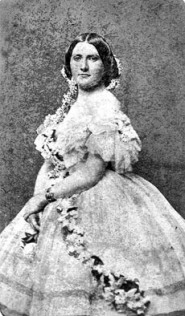
Harriet Lane, bachelor President Buchanan’s niece, was a popular hostess in the late 1850s. She had been presented to Queen Victoria – a gold star on anyone’s social resume.

Thirty year old Harriet Lane enjoyed a hugely popular tenure as de facto First Lady in the late 1850s. Her social leadership was as successful as her Uncle James Buchanan’s political administration was a flop. When First Lady-to-be Mary Lincoln arrived in Washington, she had a hard act to follow.

Mary Lincoln Makes Enemies

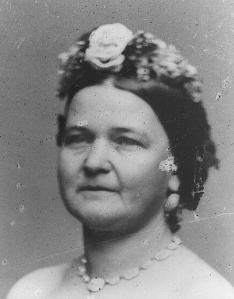
Many people believed that Kentucky bred-Illinois wed Mary was a Southern sympathizer. Perhaps an actual spy. She wasn’t.
mary for suite

Mary Lincoln arrived in Washington in 1861, fully convinced that she was equal to the task of being the social leader of the country.

Washington society women were dismissive of her “taste” and “culture,” believing that she was as humbly born as Lincoln. She wasn’t that either.  A contingent of somewhat smarmy Congressional wives called on her prior to the inauguration to offer their “assistance” in helping her over the societal shoals, as it were. Smarmy yes, but they meant no harm. Mary Lincoln, offended at the inference that she wasn’t up to snuff, let them know it. The “advisory committee” left in a huff, and seldom if ever attended her receptions. They were content to host their own lavish salons and snipe at the First Lady.

Mary Lincoln Makes A Major Enemy

Kate Chase was the uber-snotty, cultured and sophisticated twentyish daughter of Treasury Secretary Salmon P. Chase. She was everything Mary was not: young, tall, slender, pretty, cosmopolitan, rich and very smart.

When she met Mrs. Lincoln, shortly after the inauguration, the First Lady greeted her pleasantly and invited Kate to call again. Kate then insinuated that Mary would be welcome to call on her. Kate knew better – and so did Mary. It was the supreme gaffe. First Ladies only receive; they do not pay calls. Kate Chase immediately took first place at the top of Mrs. Lincoln’s antipathy list.

Tall, slim, pretty and wealthy, Kate Chase made a formidable rival to Mary Lincoln’s social pretensions.

Salmon P. Chase, a former Governor of Ohio, had had a decade of political leadership as an ardent abolitionist. Thrice widowed to pretty women who died young, he lavished his affections and considerable wealth on Kate, who was thrilled to take an important role as his escort and hostess. Her salons were attended by the crème of society. Chase desperately wanted to be President, and even as a cabinet secretary, plotted to head the Republican ticket in 1864. Kate was determined to further that goal with every social skill she possessed. That alone was enough to antagonize Mrs. Lincoln.

In early 1862, the Lincoln’s 12-year-old son died, and Mary went into deep mourning. In addition to her intense grief, the proprieties of mourning were strict, and Mrs. Lincoln’s role as society leader was on hold for over a year. Miss Chase was delighted to pick up that slack, and the Chase mansion became the mecca of social Washington – particularly among those who were not thrilled with Lincoln.

Kate married in 1863.  The groom was William Sprague, a nasty drinker, philanderer and “political general” via being the Governor of Rhode Island. But Sprague had an immense fortune, and the Chase funds were running low. Kate willingly bartered her marital happiness (and she would be very unhappy) for the Sprague infusion of money for her father’s presidential ambitions.

Mary positively loathed Kate (the aversion was mutual), and refused to attend the wedding. Lincoln went alone, pleading the First Lady’s ubiquitous “unwellness.” Mary had her faults, but hypocrisy was not one of them. She couldn’t stand the bride, and couldn’t force the smile.

Then, of course, there was the time the Lincolns were hosting a large diplomatic dinner and Mary deliberately scratched Chase-and-daughter from the guest list. It created such a protocol furor that Lincoln personally had to override the insult and scratch their names back in.

Mary’s True Rival Waiting in the Wings

The beauteous Kate was Mary Lincoln’s chief rival for nearly four years, but in 1864 there appeared another, even more formidable. This rival, however, was nothing like Kate Chase. She was fortyish, plain as a post, rather dumpy and unfashionable, not overly smart or politically savvy, and positively clueless that she was a social contender.

Julia Grant_2

Julia Grant, the plain and dowdy wife of Ulysses S. Grant, would be given a complete makeover by the social-minded Congressional wives.

Julia Grant, mother of four like Mary, was the homey and homely wife of Ulysses S. Grant, now General of the Army, and next to Lincoln, the most important man in the Union. He was as unpolitically inclined as his wife, but they were both willing to learn.

The same society matrons who had incurred Mrs. Lincoln’s wrath in 1861 were quick to flock to Mrs. General Grant in 1864, and offer her that same assistance in navigating the socio-political waters of Washington. Julia, a genuinely nice lady, appreciated the offer and attention – and probably realized she could use the help.   She became very popular, mainly because so few (other than Mary Lincoln) saw her as a threat to anything. The Grants became the honored guests at everyone’s soirees – and they went as often as Grant was available.

The only time Mrs. Lincoln and Mrs. Grant actually spent time in each others’ company, Mrs. L. was on her absolutely worst behavior, accusing Mrs. G. of “waiting in the wings” and wanting to be in her place. Poor Julia didn’t know what hit her. All she did know, is that she did not wish to be in Mrs. Lincoln’s company again, a situation tragically fulfilled by Lincoln’s assassination only days later.

Mary Lincoln would have no more rivals. Her place as widow of our martyred president was singular and unenviable. No one wanted to be in her place ever again.

Sources:

  • Clinton, Catherine – Lincoln: A Life, 2009, HarperCollins
  • DONALD, David Herbert – Lincoln, Simon and Schuster, 1995
  • http://www.civilwarwomenblog.com/2007/08/kate-chase.html
  • Grant, Julia – The Personal Memoirs of Julia Dent Grant (Mrs. Ulysses S. Grant) Southern Illinois University Press, 1988
Posted in A POTUS-FLOTUS Blog, Abraham Lincoln, Nifty History People | Tagged , , , , , , , , , , , , , , , , , , , , , , , , , , , , , | 2 Comments

Ike and Mamie’s First House

Mamie Doud was only nineteen when she married Second Lt. Dwight D. Eisenhower, recently graduated from West Point.

The Eisenhower Bride and Groom

The Early Ikes

Ike and Mamie – about the time of their marriage.

While Mama and Papa Doud adored Ike, and would consider him their “son” for the rest of their long lives, they were not thrilled at the marriage. Mamie, they believed, was much too young. She was also somewhat pampered and spoiled, and the Douds were concerned that she would not adapt well to the restrictions of army life. Mamie came from well-to-do stock, with all the luxuries that upper middle class money could buy. Second Lieutenants  do not earn fortunes.

They needn’t have worried. While Mamie was noticeably deficient in the housewife-arts, and would never master sewing, knitting or cooking, she did have some hitherto unknown gifts that would enable her to be a superb military spouse.

The Talents of Mamie

Like Ike, Mamie had a wall-to-wall smile that invited friendships from the start.  They were delighted to mingle with the other junior officers at card parties and pot-luck suppers and whatever activities were popular.  They were just as happy to take their turn as hosts, and for the next twenty-five years of their marriage, wherever they were deployed, their quarters became “Club Eisenhower.” Senior officers also took notice of the capable young lieutenant Dwight D. Eisenhower and his cute little slip-of-a-thing wife.

Another hidden talent was her ability to pack and move at practically no notice. Ditto unpack and move in within the day. Mamie Eisenhower claimed that they moved twenty times in twenty years, so she had mega-experience. She kept the crates and boxes in storage, each neatly marked for its contents. Then, when it came time to “unpack,” and the large furniture was in place, Mamie immediately hung the pictures and placed ashtrays and knick-knacks in their usual places, so when Ike came home that evening, it really was home. Clothing, kitchen goods and all the closet-and-cupboard items could wait till later.

The Great General

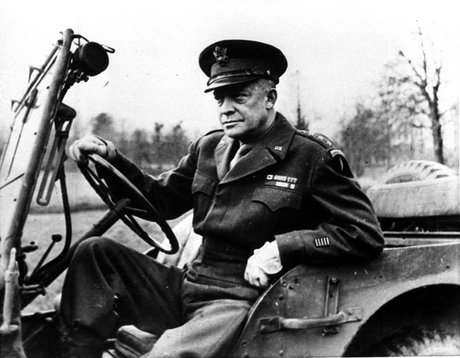
The quintessential General Eisenhower. No matter how many stars were on his shoulder, he always had that common touch.

All that changed with World War II, and Ike was promoted over more than a hundred officers with seniority. The “General” who planned and implemented the monumental D-Day Invasion of Europe was now the Great General with five stars on his shoulders, and his choice of future plans.

Shortly after the War, Ike wrote Crusade in Europe, about his wartime efforts, and it was a huge best-seller.  Money was no object now. They could afford a house.

In 1948, Ike “retired” from active duty, and accepted a position as President of Columbia University, in New York City. It came with a house.

But Ike and Mamie wanted their own digs. They were both past fifty and had never owned a house.

Ike & Mamie Rediscover Gettysburg

The farm in Gettysburg is the only house the Eisenhowers ever owned.

Early in their marriage, the young Eisenhowers had been deployed in Gettysburg, Pennsylvania, and had loved the area, with its beautiful rolling hills, quiet seclusion and deep historic significance. They found an old farm, with dilapidated buildings, cows, chickens and 189 acres, for only $40,000 (about $400,000 today.) They bought it, even though they knew it would require a lot of work. They did not know that it would be years before they could move in and enjoy it.

In 1951, Ike was “recruited” again as the Supreme Commander of NATO, the mutual European defense organization formed after the War. It came with a house, too. The Eisenhowers’ Gettysburg farm would have to wait.

Then, despite saying “no” several times, General Eisenhower was “recruited” again – this time as Republican Candidate for President in 1952. He won easily. The new job also came with a house, and a nice one at that.

Ike and Mamie Rebuild The Farm

Ike and Mamie spent as much time as possible in their only house.

The responsibilities of the Presidency and the First Ladyhood did not prevent the Eisenhowers from tackling the job of making their own “farm” habitable, and suitable for the President of the United States.

Buildings had to be torn down and new ones erected, to Mrs. Ike’s specification. She had become accustomed to being the General’s Wife, and could be picky. They knew that some of their houseguests would be world leaders and heads of state. Fixing up the Gettysburg farm cost Ike more than $2,000,000 (in today’s money), and it would take the better part of his first term in office.

It would not be until late 1955 that the Eisenhowers could actually use their new home – at least part time. But once it was habitable, Ike and Mamie enjoyed their farm as few other First Families did. It was a “c’mon down” place.

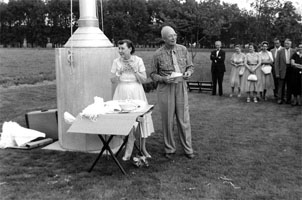
The POTUS and FLOTUS hosted the entire White House staff at their Gettysburg farm.

The Comfy Eisenhowers

Ike and Mamie had their own style, and it was apple pie American! Their furnishings were not elaborate. Many of their “treasures” were trinkets from old friends.  Or souvenirs and gifts from the powerful and famous leaders of the world.  After all, General Eisenhower (the title he preferred, like Washington and Grant) was probably the most famous man in the world.

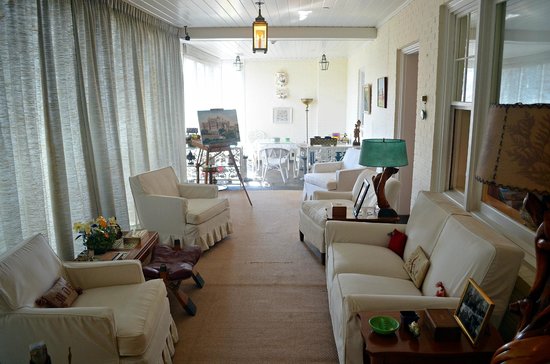
The sun porch. They could play cards or read magazines or Ike could paint. Or watch TV and have supper on tray-tables.

Their special retreat was the sunroom, where they could play cards or watch television, something they both loved to do. It is said that after all the high falutin’ banquets and dinners of the grand stage, they were delighted to have soup and sandwiches on tray-tables in their sunroom, and watch the Ed Sullivan Show.

Ike willed the Gettysburg farm to the country, with the proviso that he could live there for the remainder of his life; it was amended to include the same provision for Mamie. It was her first house, and her last house. She lived there until her death in 1978.

Sources:

Eisenhower, David & Eisenhower, Julie Nixon – Going Home to Glory – Simon and Schuster, 2010

Eisenhower, Susan – Mrs. Ike –  Farrar, Straus & Giroux, 1996

Lester, David and Lester, Irene – Ike and Mamie – G.P. Putnam, 1981

Posted in A POTUS-FLOTUS Blog, Dwight D. Eisenhower | Tagged , , , , , , , , , , , , , , , , , , , , , , , , | 5 Comments

The Taft’s Silver Anniversary Party, or Nellie’s Happy Day

Helen Herron Taft was not destined to fully enjoy her days as First Lady, but the Tafts would celebrate their 25th wedding anniversary in grand style.

Nellie’s Ambition, and an Anniversary Precedent

Helen Herron (1861-1943) was an Ohioan whose parents were close friends of Rutherford and Lucy Hayes, who in 1877, celebrated their 25th wedding anniversary in the White House. The party was private one, for family and friends. The Herrons, including teenaged Nellie, were invited.

She was intoxicated by the White House, perhaps most of all by the realization that the Executive Mansion was the seat of power. Nellie was convinced that she might be mistress of the White House herself. It was a dream that would never be extinguished, and which became more of a life-design rather than “dream.”

When she married Republican attorney William Howard Taft (1857-1930), she had consciously selected a man with the personal gifts and ability that could achieve her goal.   Taft’s goal was to become a justice on the Supreme Court, but Nellie had a one-track mind, and preferred a better address.

Nellie Taft was a stunning Edwardian woman when she became First Lady in 1909.

Mrs. Taft was the “politician in the family,” according to her husband – and to just about everyone else. Her ambition was never a secret. She envisioned herself as First Lady, and had a well-planned agenda for what she would accomplish in that role, socially, artistically and intellectually.

The Short-Lived Paradise

Less than three months after Taft’s inauguration as President in 1909, First Lady Helen Herron Taft collapsed from a stroke. She was only forty-eight.

While she was not paralyzed, she suffered from aphasia, and was unable to speak properly, nor read or write. Her mouth drooped, making it impossible for her to appear in public. The saddest part of all, was that while the “transmitter” part of her brain was impaired, the “receptor” part was intact. Nellie understood everything that was going on. She just could not participate.

For a depressing year and a half, she worked tirelessly to regain some of her lost abilities. Taft, who loved his wife dearly, wanted to do something nice for her; something to give her whatever pleasure he could from her White House experience.

William_Howard_Taft

President William Howard Taft would claim that the presidency was the only job he held that he did not enjoy.

The Silver Anniversary Party Decision

June, 1911 was the Tafts’  Silver Anniversary, and then, as now, an occasion for a party. Part of the reason for the party (aside from the Hayes’ precedent), was that it could be “private;” something Mrs. Taft could attend.

President and Mrs. Rutherford B. Hayes inspired teenaged Helen Herron to aspire to the First Lady position.

Like the Hayes example, the party began as an affair for family and close friends. Both Tafts came from large, tight-knit families, each with several siblings-with-spouses and grown nieces and nephews. Then of course, as social and political animals for a quarter century, they had acquired many friends from all parts of the country.

There was, as there usually is with grand plans, an “oops moment.” Only a month before the party, Nellie suffered a relapse. While it was not as serious as her first stroke, it set her recovery back considerably, and perhaps most importantly, made her fully aware that her health must be her main focus. First Ladydom and politics would have to take a back seat.

But the party plans proceeded on schedule.

The Growing and Growing and Growing Guest List

It did not start out to be a mega-“do.” Just a nice afternoon garden party at the White House for family and close friends. But somehow the “private” party began to take on a life of its own, particularly as regards the guest list.

nellie after stroke

Nellie Taft was a shadow of her former self at the time of their Silver Wedding Anniversary in 1911.

A president’s cabinet is his “official family.” They must be invited. Taft’s beloved Supreme Court justices must be invited. Congressional leadership must be invited. Perhaps all congressmen and senators. The list began to grow.

Both Tafts came from prominent Ohio families with deep roots. The entire Ohio state political hierarchy must be invited, including the Governor, past Governors and past leadership – regardless of party.   And if the Ohio Governor was invited, then all governors must be invited. It would be tacky otherwise.

Military brass and high ranking administrative executives must be invited. The diplomatic corps must be invited, from all countries.  And one cannot invite a foreign ambassador to such a gathering without inviting his monarch or head of state.   The list now included a huge number of people that the Tafts had never met, nor were likely to meet, but who must be invited anyway. The party list was growing like Topsy, with a life of its own.

All told, more than eight thousand invitations were issued, and that does not include spouses. A full five thousand (and some counts were higher) persons actually attended.

The Hall of Silver, or The Silver Haul

taft teaset

A Lenox tea set in cobalt blue and silver was one of the Taft anniversary gifts.

It is commonly accepted today for a host to request “no gifts,” or perhaps a charitable donation. The Tafts made no such requests, however. Since a 25th Anniversary is traditionally a “silver” one, gifts of silver began pouring in like the output of the Comstock Lode.

There were hundreds (literally!) of silver trays, punch bowls, tea-sets, urns, serving pieces, platters, candle sticks and candelabra of all shapes – and price tags. There was jewelry for Mrs. T.  There were pens and inkwells for President T. There were desk sets, olive forks, pickle forks, card cases, vanity sets and goblets. Many were monogrammed or specifically engraved presentation pieces. All was of the finest quality, since it was a “personal” present to the President of the United States. And because it was a “personal” present, the Tafts got to keep their silver-haul.

It was also traditional, in those days, for gifts to be displayed publicly. Rooms were put aside in the White House, with tables set to dazzle visitors and tourists who came to gape at the brightness of the stash.

It had become a very tacky situation, particularly since much was “re-gifted” at a later date. Few objects were ever used by the Tafts personally, and quite a bit was sold during World War I – for war bonds.  That’s what they said, anyway.

Even so. Tacky.

Sources:

Anthony, Carl Sferrazza – Nellie Taft: First Lady of the Ragtime Age – William Morrow, 2005

Taft, Wm. Howard Mrs. – Recollections of a Full Life – Dodd, Mead – 1914

http://etiquetteer.com/category/nellie-taft/

Posted in A POTUS-FLOTUS Blog, William Howard Taft | Tagged , , , , , , , , , , , , , , , , , , , | Leave a comment

Martha Randolph: Jefferson’s One Slender Thread

Martha Jefferson Randolph had many advantages as Thomas Jefferson’s daughter, but her life was far from happy.

Patsy: The Early Years

Thomas Jefferson (1743-1826) was twenty-seven when he married Martha Wayles Skelton, a twenty-three year old widow with a toddler who would soon die. It was an instant attraction, and a true love-match. They would have six children together, but three died in infancy. The tragedy was that Martha Jefferson had a delicate constitution, and child bearing was difficult for her. She died at thirty-three, after a brief ten year marriage.

Purported to be Martha Wayles Jefferson. TJ’s wife, and Patsy Jefferson’s mother.

Martha Jefferson (1772-1836), named for her mother and called Patsy from birth, was their eldest daughter, eight years old when her mother died. Her sister Maria (called Polly) was three; baby Lucy had just been born when Martha Jefferson succumbed. Thomas Jefferson was totally distraught for weeks, unable to sleep or eat. Only riding horseback for hours on end helped him to work out his grief. Little Patsy was his sole companion and comfort.

Patsy was the only witness to her father’s profound grief, and they would be close from that time forward. But it would be an odd relationship. Thomas Jefferson was inclined by disposition to give and withhold his affections in return for obedience. It would be a lesson that Patsy learned early; she would always be his obedient daughter.

Patsy: The Paris Years

In 1783, Thomas Jefferson was appointed Minister to France by the new-United States. It was an assignment that would propel him out of his mourning, and open his great mind to life on a completely different level.   He took twelve-year-old Patsy with him, having left his two younger daughters in care of relatives.

He quickly arranged for Patsy to be educated at a convent-school not far from his residence in Paris. Despite the fact that Jefferson was not favorably inclined toward brilliant women, he wanted his daughter to be well educated, “in case she winds up marrying a fool.” Convent schools were the crème of female education. Patsy lived at the school during the week, and stayed with her father on weekends. By fourteen or fifteen, she was already serving as her father’s “hostess and escort” as he entertained the best and the brightest Paris had to offer.

At sixteen, Patsy concluded that she wanted to become a nun. The convent sisters were graceful, gentle women whose influence was not lost on their American (and non-Catholic) student. They were delighted with her aspirations, and encouraged her to write to her father announcing her desires.

Jefferson immediately showed up at the school and kindly but firmly withdrew Patsy. He commented that he “wanted her to see something of the world before she renounced it forever.” If Patsy objected or resented the interference, it was short-lived. There was definitely life to be lived in her future.

A year later, they returned to Virginia permanently.

Patsy: The Randolph Connection

Image result for martha jefferson randolph

Martha Jefferson Randolph, the only one of Thomas Jefferson’s children to survive him.

The Randolphs were one of the “First Families of Virginia,” and kin to Jefferson via his mother, Jane Randolph. Patsy, now of marriageable age, drew the attention of Thomas Mann Randolph, a cousin five years her senior. They married, with Thomas Jefferson’s blessing.

Randolph was well placed in Virginia’s social and political hierarchy, and once the United States had its Constitution adopted, he entered Virginia state politics, became a State senator, and when his father-in-law was President, a two-term congressman. He later served as Virginia’s Governor.

Thomas Mann Randolph, Martha’s husband. Despite eleven children, the marriage was not happy.

While Randolph’s political resume is certainly laudable, his resume as husband and father is not. He fathered twelve children with Patsy, eleven reaching maturity. (Obviously Patsy did not inherit her mother’s limitations regarding child bearing!) But Randolph was an alcoholic, and brutal under its influence. Some historians conclude that he likely had some psychotic tendencies. Then again, Randolph was always a distant second in his wife’s affections; she devoted herself entirely to her father.

Patsy Randolph: Mistress of Monticello

Patsy Jefferson Randolph, tall, slim and red-haired, was not a woman given to whining or complaining. She bore her many children and raised them according to the confines of woman-ness of the eighteenth century. If she had troubles in her marriage, she was inclined to keep them to herself.

thomas jefferson

Thomas Jefferson was deeply devoted to his daughter and was a loving grandpa to her eleven children.

If Jefferson was aware of the troubles caused by his son-in-law it was not recorded in any of his writings. However he insisted that his daughter live close by and visit Monticello for long periods of time. After his younger daughter Polly died in childbirth at only twenty-five (Lucy had died at three), Patsy was now his only his only comfort.  He would notably comment, “my evening prospects now hang only by the slender thread of a single life.”

As her own marriage deteriorated, Patsy and the children began spending more and more time at Monticello. During Jefferson’s presidency, he encouraged her to come to Washington and serve as his de-facto hostess, and she did periodically, but the needs of her large family made it difficult. She was also happier as the quintessential mistress of Monticello, overseeing its comforts, entertaining its many guests, and making it the great home of a great man.

Patsy Randolph: Heir to Monticello

monticello

Jefferson was deeply in debt for most of his life, but he left his magnificent Monticello plantation to his daughter. She would be forced to sell it.

If Patsy kept her marital woes from her father, so her father kept his financial woes from Patsy. Both had serious woes.

By the late eighteen-teens, Randolph’s alcoholism and abusiveness had become too much for Patsy to bear, and the couple separated in essence if not in legality.   Meanwhile Jefferson’s financial obligations had so deteriorated that he even planned to auction off his beloved Monticello in a lottery. It failed

It would fall to Thomas Jefferson Randolph, Patsy’s eldest son, to try to make some sense out of the monetary muddle, rein in the expenditures, and keep the house from creditors. He did a yeoman job, hanging on by its own slender thread. When Jefferson died in his bed in 1826, with his beloved daughter at his side, he murmured “the last pang of life was parting with her.”

Patsy Jefferson Randolph inherited Monticello, but it would be a precious burden that she could not afford to keep. The house was sold for debts, and Patsy went to live periodically with her children. She survived her father by only ten years, and is buried at Monticello.

Sources:

Malone, Dumas – Jefferson & His Time: The Sage of Monticello – Little Brown, 1981

Randolph, Sarah –  The Domestic Life of Thomas Jefferson – Thomas Jefferson Foundation, 1947

Scharff, Virginia – The Women Jefferson Loved – Harper Perennial, 2010

Posted in A POTUS-FLOTUS Blog, Nifty History People, Thomas Jefferson | Tagged , , , , , , , , , , , , , , , , , , , , , , | 5 Comments

Young Herbert Hoover’s Best Career Move

hoover birthplace2

Herbert Hoover was born in a small Iowa farmhouse.

The story of Herbert Hoover is a true Horatio Alger story. Poor boy makes good through his own pluck and hard work. And a little bit of help along the way.

The Making of an Engineer

youngbert

Herbert Hoover was orphaned at ten.

Herbert Hoover was an Iowa farm boy, completely orphaned by ten and sent to live with relatives in Oregon. He received kind and affectionate treatment from them, but as strict Quakers, they also instilled the values of diligent hard work and initiative. Hoover obliged. He studied first, did his household chores second, earned extra spending money third, and finally, if there was a little time, he could play. Or go fishing.

A summer job in an engineering firm while he was in high school gave him some direction for a future career in engineering. Stanford University had just opened in Palo Alto, California, and the tuition was free – if you could pass the entrance examination. (Even then, Stanford did not take dummies!) Since there were other expenses associated with a college education besides tuition, Bert, as his friends called him, took on a variety of part-time jobs to earn his room and board and books and modest spending allowance. He did everything from working in the registrar’s office to delivering laundry. Plus, he managed the baseball team. And became Class Treasurer. Needless to say, with all those part time jobs and activities, he became very well known on campus. His dormant leadership and administrative talents began to surface.

hooverat23

Herbert Hoover about the time he became a professional mining engineer.

His class work did not suffer, either. His professors liked him and were delighted to encourage the shy young man whose diligence was worn on his sleeve. They were also delighted to introduce him to many mining and engineering executives who frequently visited the newly-created University.

The introductions to those well-placed engineering professionals provided young Hoover with summer employment as well as future contacts.

Herbert Hoover: Graduation Choices

Herbert Hoover was well aware of his “aloneness” in the world when he graduated from Stanford. While his relationship with his Oregon family would always be cordial, he knew that they had done their best for him, and would/could do no more. His own natural brother and sister would be dear to him for the rest of his long life, but they could do little to guide his future. At twenty-one, he needed to chart his own course.


Wedding day

Lou Henry, at the time she married Herbert Hoover. She had an adventuresome soul, and would be a perfect companion.

Then there was another slight “concern.” He had become pleasantly acquainted with a fellow geology student, a Miss Lou Henry. Born in the same year as he, and also in Iowa, Miss Henry had already graduated from a Normal School (Teacher’s College) prior to attending Stanford. They were the same age, but she was a freshman while Bert was a senior.

Lou Henry Hoover was a “western” woman, who loved the outdoors, and was eager for the new, novel and adventurous life.

The two of them had bonded easily, despite her outgoing middle-class upbringing, and his introverted hard-working shyness. The two parted when Hoover graduated, but they agreed to correspond. It seems that Miss Henry’s interest in the bashful Bert had been apparent from the start.

And despite the introductions to some of the leading mining executives, there was no offer of a job for Herbert Hoover.

The Job Finally Appears

The only opportunity that seemed to present itself to the newly graduated Hoover was a bottom-level position in a gold mine in Nevada City, California: pushing a heavy tram cart loaded with ore for ten hours a day, at the sumptuous salary of $2 a day. Grueling work – especially for a Stanford University graduate.

One biographer would claim that taking that menial job was the best career move Hoover ever made.

Many of those Nevada City miners were from Cornwall in western England, near the Welsh border, where mining had been the family occupation for generations. There was nothing about mines and mining that these Cornish men did not know.

Young Mr. Hoover, not long after he embarked on a life that would make him a multi-millionaire by the time he was thirty.

They took a liking to the young college fellow with the moon-face. He was hard working and not snobbish, qualities they admired. He was also eager to learn. They were just as eager to share their decades of empirical knowledge with him: the kind of knowledge that cannot be learned in a classroom.

It would be said later of Mining Engineer Herbert Hoover, that he could “smell” a mine and intuitively determine  if it would be productive. He would always credit those Cornish miners for helping him develop those intangible instincts.

Herbert Hoover: Upward Mobility

Bert Hoover did not stay very long at the bottom of the mine, both literally and figuratively.   A few months was all that was needed.  The young “trainee” with the college degree was ready to move up.

From a $2-per-day job in 1895, his next position paid $2,000 per year, considered a sizable sum: nearly $50 per week. This was at a time that the average man made $20 or $25 a week, and could support a family.

Herbert Hoover was a hands-on mining executive. Many of his skills and “intuitions” were the results of working with Cornish miners at the start of his career.

Bert impressed his employers with his diligence and desire to get ahead. He was sent to remote regions of Australia for his next opportunity in a position considered far above his age and experience level. He did not disappoint. All the while, he maintained a correspondence with Miss Henry.

Finally, in 1899, after Lou Henry graduated with her own degree in geology, Bert Hoover sent her a long telegram telling her about a new position he had been offered. In China. He would be earning $40,000 a year, and he was only twenty-five years old. (The President of the United States only earned $75,000 a year!) Then he asked her to marry him.

Her reply was short.  She said “Yes.”

SOURCES:

Caroli, Betty Boyd – First Ladies – Oxford University Press, 1995

Mayer, Dale M. – Lou Henry Hoover, A Prototype for First Ladies – Nova History Publications, 2004

Smith, Richard Norton – An Uncommon Man: The Triumph of Herbert Hoover – Simon and Schuster, 1984

http://www.hoover.archives.gov/info/HooverBio.html


Posted in A POTUS-FLOTUS Blog, Herbert Hoover | Tagged , , , , , , , , , , , , , , , , | 1 Comment

Chasing Grover Cleveland in 1886

History would come to regard Grover Cleveland as one of our most tight-lipped Presidents. The secrecy surrounding his nuptials would rank high on that list.

President Cleveland: Affianced for a Year

When Grover Cleveland (1837-1908) was inaugurated in 1885, he was a 49-year-old bachelor and looked the part: rotund (nearly three hundred pounds), scowly-faced, mustachioed, cigar smoking and obviously meaning business all the way. Naturally every Washington matron sought to introduce him to a potential bride, via their maiden aunts or widowed sisters or otherwise eligible ladies in their circles.

Adorabe Frances

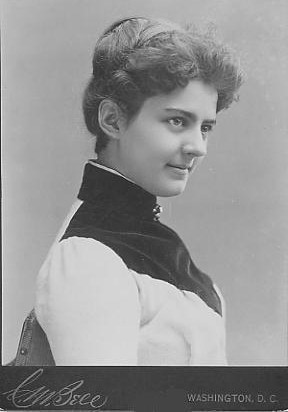
Frances Folsom was only twenty one when she became Mrs. President Grover Cleveland.

He did not rise to the bait. No one knew it at the time, but President Cleveland was already engaged to be married. The object of his affection was 21-year-old Frances Folsom, recently graduated from Wells College in Aurora, New York, and currently traveling in Europe with her widowed mother. For months there was no inkling that this marriage was in the offing, but shortly before the Folsom women were about to return, newspaper reporters in Washington began to suspect something was afoot.

It has never been completely documented as to what exactly tipped them off, but it may well have been the fact that Grover Cleveland, who had never owned a house before, had just closed on a large home in Georgetown. Real estate sales and purchases are public record. This was big news. Speculation was that the President was set to marry Emma Folsom, Frances’ mother, the long time widow of Cleveland’s former law partner and close friend. Nope.

By the time the Folsom women docked in New York, the cat was out of the bag. As the popular song  from the hit Gilbert & Sullivan operetta The Mikado went, “He’s Going to Marry Yum-Yum.” Frances was not only young, but she was pretty, had a nice trim figure, a peaches-and-cream complexion – and dimples!

The Wedding Behind Closed Curtains

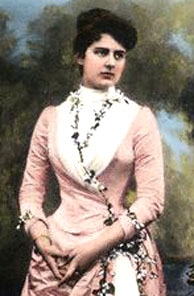
Miss Folsom: The object of Cleveland’s affection.

The White House wedding between the President and the young Miss Folsom took place a week after she arrived. The mother-of-the-bride had absolutely nothing to do with planning the wedding. Neither did the bride. Their only “assignment” was procuring the wedding gown. The President did everything else. He hand-wrote the invitations – less than fifty of them. He arranged for the minister and the honeymoon. His sister, Rose Elizabeth, who had been serving as his hostess for a year, planned the menu and the floral arrangements. John Philip Sousa and the Marine Band had been summoned.

It has been suggested that the reason Grover Cleveland wanted the wedding in the White House was that he could keep it completely under his control. If it had been elsewhere, it would be difficult to arrange the privacy he demanded. As it was, the press, which by the mid-1880s had become increasingly intrusive, was specifically barred from attending.   The President refused all interviews, and insisted that Miss Folsom and her mother do the same. Ditto the White House staff.

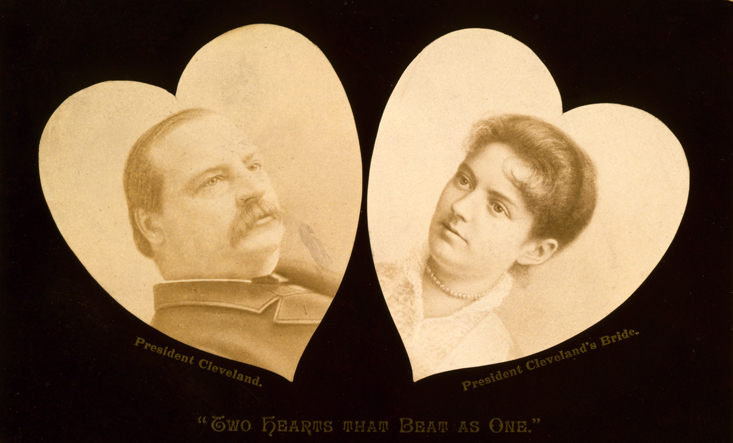
Only a handful of people actually saw the ceremony of President Cleveland and Miss Frances Folsom. Newspaper artists made sketches from general information and imagination.

Newspaper artists had a field day producing romantic likenesses of the President and his bride.

To make sure that the President’s wedding would remain private, he blackened the windows and had all draperies closed so no one could even peek in.  There were guards to keep spectators at a safe distance. The only small concession that was made, was sending a signal when the “I Do’s” had been said, so all the church bells in town could ring out the happy news.

Once the ceremony had been completed, the dinner served and the guests greeted and thanked, the President and the new Mrs. Cleveland changed into their traveling clothes, and slipped of the White House via a side entrance where a carriage was waiting to take them to their honeymoon train.

The Chase Begins

Reporters are usually credited with having a “nose for news.” A special sense-of-imminent-activity. The reporters in 1886 were no different than they are today. The smelled an “escape” plot and were hot on the trail.

The President had not only arranged for a head start, but had further arranged that their train would not be in the station, but would be waiting for them a mile down the tracks, giving the new couple an added advantage.

A bunch of intrepid reporters with the deep expense-account pockets of their publishers chartered a private train for a “follow that train!” pursuit. They proceeded to chase the Clevelands to the Deer Park Lodge in the Catoctin Mountains in Maryland, about an hour from Washington, where they had settled in for a five day honeymoon.

The Honeymoon Watch

The proprietors of the resort were naturally thrilled to be hosting the honeymoon of the President of the United States, and had agreed to whatever terms he had demanded regarding his “privacy.” His cottage was in a secluded area, away from the main building, and far from the main road where he and his bride could enjoy a few days alone-together. So he thought.

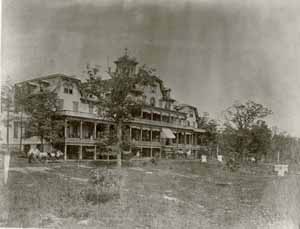
The main house of the Deer Park Lodge Resort. The President and Mrs. Cleveland had a private cottage on the premises.

As promised, the “ghouls of the press,” as Cleveland would refer to them, were given no co-operation from the resort’s proprietor. That did not deter them in the slightest.

Some determined newsmen, armed with binoculars, shinnied up trees to get a better view of the comings and goings of the President and his bride. They bribed waiters carrying meals to the honeymoon cottage to lift the service covers so they could report “what was for dinner.”

When Cleveland took his new missus out for an afternoon in the nearby trout stream, banner headlines reported “Mrs. Cleveland Fishes.”

When it was reported that Mrs. Cleveland played the piano for the President, piano manufacturers around the country offered to “donate” a piano to the White House for the First Lady’s pleasure. All they wanted was the opportunity to publicize the “donation.” The President’s perpetual scowl was now etched.

The President was no longer a political figure. He was now becoming a celebrity and he did not like it one bit! But the new Mrs. Cleveland was as sweet as pie about it. Definitely yum-yum!

Sources:

        Boller, Paul Jr. – Presidential Anecdotes, Oxford University Press, 1981

       Brodsky Alyn – Grover Cleveland: A Study in Character. NY, St. Martin’s Press, 2000

       Carpenter, Frank G. – Carp’s Washington – McGraw Hill, 1960

            Foster, Feather – The First Ladies, Sourcebooks 2011

Posted in A POTUS-FLOTUS Blog, Grover Cleveland | Tagged , , , , , , , , , , , , , , , , , | 1 Comment

Civil War Medicine: Dr. Letterman’s System Evolves

Dr. Jonathan Letterman had devised, implemented and had gained success with a well-trained ambulance corps.  Then he turned his attention to medical practices itself.

Civil War Doctors and their Equipment

By 1860s, medical practice in America had barely evolved since colonial times. In Europe, however, both Louis Pasteur and Joseph Lister were poised to revolutionize medicine with their concepts of bacteria, germs and antisepsis. Nevertheless it would be decades before those theories were accepted as science in the United States.

letterman

Dr. Jonathan Letterman, the Father of Battlefield Medicine, pioneered the Civil War Ambulance System and then turned his attention to arranging medical instrument kits and field hospitals.

During the Civil War, medical doctors with varying degrees of training and competency enlisted in the both North and South. In the South, which was desperately in need of any amount of medical expertise, all doctors were welcomed. In the North, however, there was a rigorous hierarchy of army surgeons, medical doctors, assistant doctors and even nurses. The animosity and friction it caused was understandable, but it was frustrating.

Dr. Jonathan Letterman, who had a decade of experience as an army surgeon out West, was not about to brave the shoals of in-fighting, especially since doctors were urgently needed. He was, however, prepared to implement two system to improve the mechanics of medical practice, both of which were readily executed and accepted enthusiastically by the Army itself as well as the doctors.

The Civil War Medical Kit

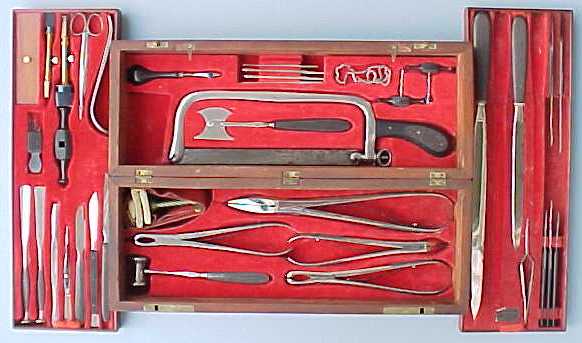
Dr. Letterman pioneered and devised a standardized medical kit of various instruments needed for immediate surgery. The instruments were interchangeable so they could be easily replaced due to loss or damage.

Most army doctors, whether from within the Army Corps itself or as private recruits, brought their own instruments at the start of the Civil War. Some of those instruments were antiquated. Some were in dire need of repair. Unsurprisingly, many were lost or damaged in transport and on the battlefield. A good many were inadequate to treat the types of wounds inflicted by the bone-shattering minie balls.

Most doctors brought their own instruments at the start of the Civil War. Many of them were antiquated, damaged or lost.

Dr. Letterman’s prior experience as an army surgeon had inspired him to develop a list of basic medical tools that he believed were necessary to treating battlefield casualties. He believed wholeheartedly that a standardized kit was essential, along with a fully equipped medical wagon-per-brigade. Then the instruments could easily be transported, and more importantly, replaced if and when needed. Every doctor would then be equipped with all the tools he needed to meet all possible situations.

These medical kits contained various sizes and shapes of knives, scalpels, forceps, bistouries (long, narrow knives for minor incisions), curettes for scraping and cleaning, and lancets for making punctures. In addition, there were tourniquets, bone saws, chain saws, sutures and bandages.

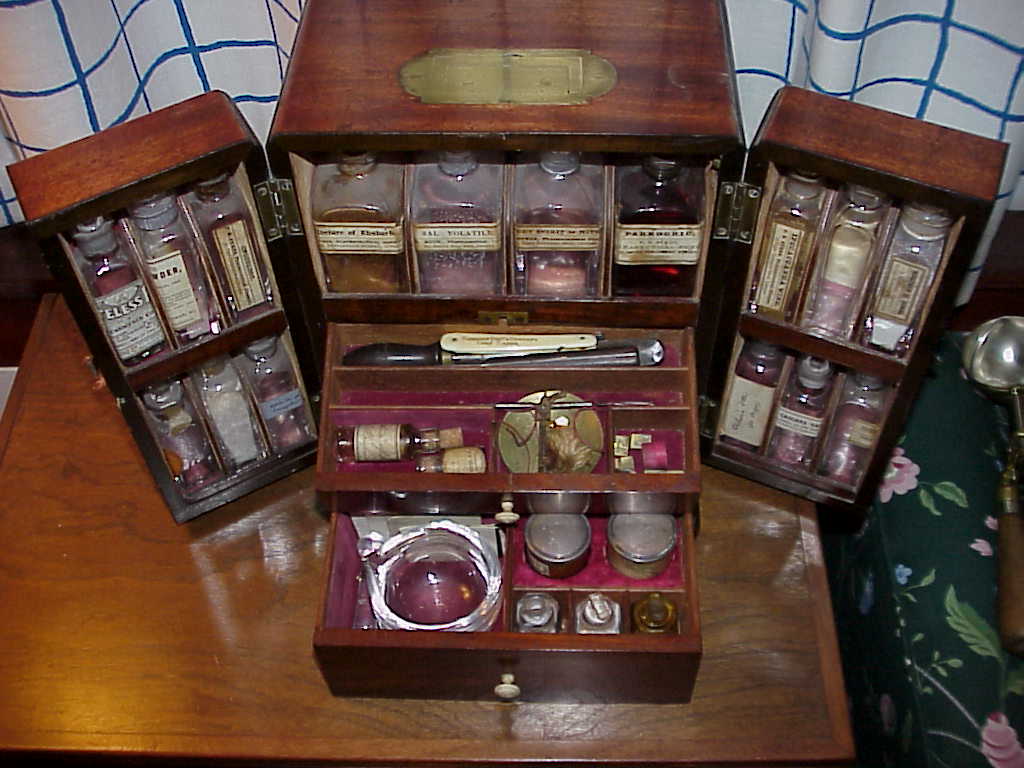
Every Army Ambulance wagon was equipped with an array of medicines, vials and syringes for emergency treatment.

Each medical wagon was outfitted to contain seventy-six different medicines, dressings, medical books, and additional surgical instruments. They were further equipped with bedding, basins, vials, bedpans, basic food staples (hardtack and beef stock), kettles, plates, drinking vessels and spoons. When the extravagance of these supplies was raised, Letterman is said to have responded, “Lost supplies can be replaced, but lives lost are gone forever.”

Letterman’s Final Reform: The Field Hospital System

Shortly after the Second Battle of Bull Run (Manassas), Dr. Letterman introduced and implemented a system to provide a “dressing” station at the front, headed by one assistant surgeon from each regiment. Their purpose was to perform basic “triage”, and tend to immediate first aid and/or minor wounds.

To try to make some sense out of overcrowded, confused and often filthy field hospitals, Dr. Letterman organized a system to triage and treat casualties promptly and more efficiently.

The remainder of the medical staff would be organized into teams, and divisional field hospitals would be set up a few miles behind the lines. While people today are appalled by the lack of sanitation, it was a huge improvement over previous conditions.   With hundreds, and frequently thousands of casualties brought to these makeshift facilities, only the most skilled physicians would be permitted to perform surgery. It would be left to the others to dress wounds, handle the record-keeping, supply maintenance, etc.

Throughout the North, the precursor to today’s VA Hospitals were established for long-term care, which included battlefield illnesses and/or providing prosthetic limbs, etc. These would be solid permanent structures, rather than tents or makeshift facilities at the front.

While some doctors groused and complained that their experience was being slighted, both the Army and the senior medical professionals agreed that it was “a brilliant achievement in hospital management,” despite the lack of sanitation. Countless lives were no doubt saved.

Dr. Letterman’s models for Ambulance Corps, a standardized medical kit and wagon, and field hospital management would be the model for armies throughout the world for the next half century.

Sources:

Henig, Gerald S. and Niderost, Eric – Civil War Firsts: The Legacies of America’s Bloodies Conflict, Stackpole Books, 2001

http://www.army.mil/gettysburg/profiles/letterman.html

http://www.civilwar.org/education/history/biographies/jonathan-letterman.html

http://www.pacivilwar150.com/ThenNow/Medicine/InstrumentsTechniques

Posted in American Civil War, Nifty History People | Tagged , , , , , , , , , , , , , | Leave a comment

FDR Glimpses the Future: 1920

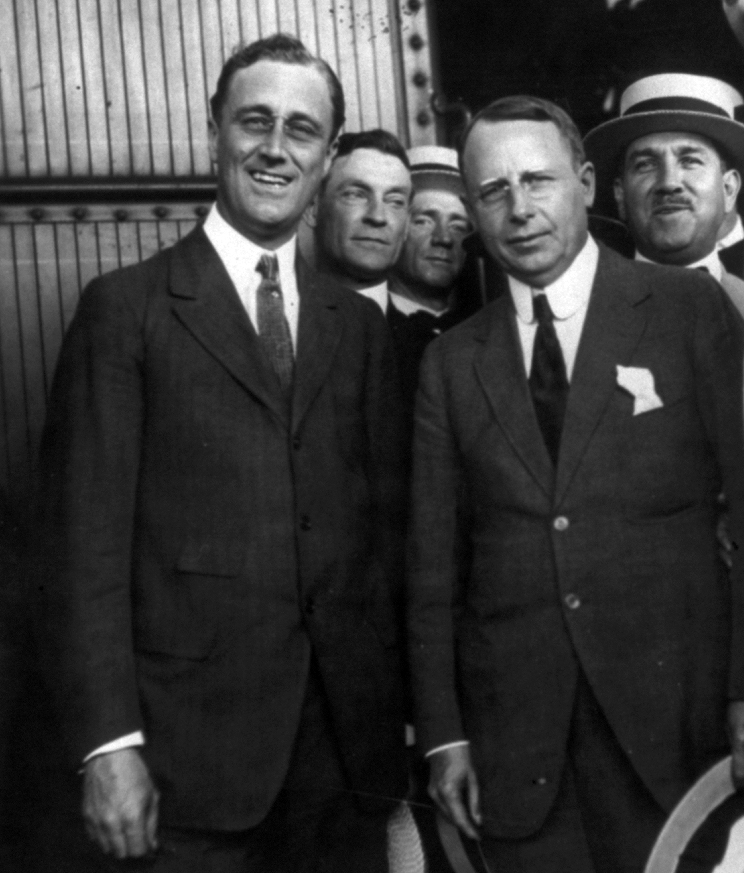
In 1920, Franklin Delano Roosevelt was thirty-eight years old, and the Democratic party’s candidate for Vice President.

Franklin Delano Roosevelt, VP candidate in 1920, poses with the Democratic Presidential standard bearer James M. Cox.

FDR: A Moderate Career

Franklin D. Roosevelt (1882-1945) was not a spectacular rise to success by any means. He had a rather spoiled patrician upbringing. His scholastic career at Harvard was satisfactory, but hardly the outstanding example of his 5th cousin Theodore Roosevelt, who was then President of the United States.

Since he passed the New York Bar prior to completing his course work at Columbia University’s law school, FDR never bothered to finish. He joined a prestigious law firm as a law clerk, and remained in that junior position for several years, with no advancement and seemingly little interest in practicing law.

On a political whim of the Dutchess County Democratic party, he was encouraged to run for the New York State Senate. He jumped at the chance, and possibly for the first time in his young life, found the perfect match for his hitherto untapped talents.

As a young man, FDR was a handsome, athletic six-footer. Most of his contemporaries considered him a political lightweight.

Roosevelt’s success as a State Senator was modest, but he managed to attract the attention of Louis Howe, a newspaper reporter whose political genius sniffed out FDR’s potential. He would become the “Jiminy Cricket” for the future president. It was a stellar matching of temperaments and talents.

During the 1912 Presidential campaign of Woodrow Wilson, FDR met Josephus Daniels, who liked the promising young man with the winning smile and memorable “name.” When Wilson won and Daniels became Secretary of the Navy, he invited Roosevelt to become his assistant. It was a position once held by now-Uncle Theodore (via marriage), a fact not lost on Franklin Roosevelt. He remained in that second-tier post for eight years. But then again, he was still very young.

FDR: VEEP Candidate in 1920

The election of 1920 did not augur well for the Democrats.   President Woodrow Wilson had served for eight years, two of which as the country was fighting “the war to end all wars.” Wilson had as many detractors as he had supporters, mainly due to his idealistic (i.e. unrealistic) vision for the country (and the world), plus his tenacious (i.e. intransigent) refusal to compromise, so it was said.

Louis Howe, a New York political reporter, was one of the few people who believed early on that FDR had presidential leadership.

Wilson had suffered a severe stroke in late 1919, but had recovered sufficiently according to one contemporary, to remain the leader of his party, but not enough to lead it. Nevertheless, Wilson hoped that the Democrats would turn to him once more – for an unprecedented third term. It was not going to happen, and there was no one waiting in the wings.

The Democrats eventually turned to a dark horse, James Cox, an Ohio newspaper publisher, as their standard bearer, and an equally dark horse, Franklin Delano Roosevelt, possessed of little more than charm and a memorable name, in the second spot.

In an oddball coincidence, the Republicans also chose a dark horse, Warren G. Harding, another Ohio newspaper publisher as their candidate, with equally “dark” Calvin Coolidge for Veep.

FDR: The Mirror Image

This image has an empty alt attribute; its file name is wilsongrayson.jpg

President Woodrow Wilson was a broken man by 1920. His stroke left him crippled and frail.President Woodrow Wilson was a bitter man, somewhat inclined dispositionally, but overwhelmingly so after his stroke. He planned to sit out the election that (in his mind) repudiated him, and support no one. Convinced by others that a gesture from the President would be welcome, helpful, and mostly his “duty,” Wilson agreed to meet with Cox and Roosevelt in the mid-summer of 1920.

The Democratic candidates came to the White House and were ushered into the garden where the ailing President was sitting, and despite the warm weather, was wrapped in a shawl to keep his crippled left side from view. His face, however, was drawn and haggard. He had lost considerable weight, and he was never heavy.

But after the perfunctory greetings, Wilson came alive as he talked about his long-held dream of a League of Nations, an international forum to arbitrate the myriad issues that divide nations, and prevent the horrors of the Great War, as it was then called, from ever happening again.

Wilson had expounded on the League-dream-and-theme even before the end of the War. It was his brain child, and the culmination of his life’s work. His passion, coupled with the political reluctance of an equally intransigent Congress likely caused the physical strain that led to his stroke.

That passion so infected his party’s standard bearers that afternoon that they agreed to campaign enthusiastically for the League. They were soundly trounced.

Franklin Delano Roosevelt could not have known that day when he was thirty-eight years old, that he was facing himself a quarter century later: President of the United States, wheelchair bound, crippled by polio, covered by an old navy cape to conceal his withered legs. Like Wilson, his blood pressure was sky-high, with other ailments un-, or misdiagnosed, or perhaps just ignored. But oh, how he could rise to the occasion with the old spark when need arose.

FDR: Looking Backwards

FDR memorial, wearing his navy cape to hide his atrophied legs.

Of course FDR could not see into his future in 1920, but hindsight is always 20/20. It is easy to conjecture that the aging and ailing Roosevelt, in his private insights, may have thought about that long ago day from time to time, and saw himself.

Polio would cripple FDR only a year after that interview with Wilson. He would never walk again without crutches, canes or heavy braces on his legs. The forge of overcoming handicaps would change a charming-but-lightweight politician into an extremely potent leader whose irresistible optimism carried a nation through a Great Depression and an even greater war than the first one.

At sixty-three, the same age as Wilson had been in 1920, FDR was the prime mover and champion of a United Nations, a world organization dedicated to the same principles Wilson had espoused.

And FDR, like Wilson, and even Lincoln before them both, could claim to be a casualty of war.

Sources:
Goodwin, Doris Kearns – No Ordinary Time – Simon and Schuster, 1994

Miller, Kristie – Ellen and Edith: Woodrow Wilson’s First Ladies – University Press of Kansas, 2010

Miller, Nathan – F.D.R.: An Intimate History – Doubleday & Company, 1983

Posted in A POTUS-FLOTUS Blog, Franklin D. Roosevelt | Tagged , , , , , , , , , , , , , , , , , , , , , , , , , , | Leave a comment

Andrew Jackson Introduces the Polks

James Knox Polk and his wife, Sarah Childress, had a match made by none other than General Andrew Jackson himself.

James K. Polk: Young Attorney

James Knox Polk (1795-1849) was North Carolina born, but Tennessee raised and matured. An unimposing man by stature, he was perhaps 5’6″ and slight of build. Perhaps 135 pounds. His lack of physical presence was compounded by his rather dour and bland personality. Bottom line: forgettable.

polk

James Knox Polk was a physically unimposing man, but one of a diligent and tenacious ethic.

But he was diligent and tenacious, and became an attorney in Nashville. His success was modest, and he even became a court clerk for a while to augment his income – and presence. Whether he enjoyed the practice of law is subject to conjecture, however what he did enjoy was politics. It was said that despite his unimposing stature, he was a good orator, but even with that advantage, his rise was slow.

Jackson the Matchmaker

The one with the imposing stature, both physically and in persona, was Andrew Jackson (1767-1845), 6’1″ and at the height of his glory when Polk began to practice law.   Jackson had come to Nashville, Tennessee when he was twenty-one and just starting his varied career: law plus business plus land speculation plus horse racing plus plantation owning plus politics, dueling and other mayhem. He was a superstar from the get-go, and was elected Tennessee’s first Congressman.

the hero

General Andrew Jackson was a towering giant of history by 1820. He attracted a large following of young Tennesseans to his cause: the Presidency. Polk was among them.

When he became “General” of the Tennessee militia (more a political than military appointment), Jackson found his true calling and never practiced law again.

James Knox Polk was fortunate to meet Tennessee’s favorite son at the outset of his career, and the great General was happy to befriend the younger man, as he usually did with devoted “followers.”

Miss Sarah Childress

Sarah Childress (1803-1891) was born to Murfreesboro, Tennessee’s middle class, but middle class “educated”. Current events, newspapers and politics were part of the dinner table discussions. Visiting dignitaries passing through town were often invited to the Childress home.

Polk_sarah

Miss Sarah Childress was a well-educated young woman, deeply committed to her Presbyterian faith.

In keeping with the family’s focus on education (which included female children), Sarah was sent to a Moravian Female Academy in North Carolina when she was in her early teens. It was considered one of the finest finishing schools for young ladies in the South. Sarah learned the usual “womanly subjects,” plus a generous helping of literature, science, geography, philosophy, and mathematics. She was far more inclined toward the “other” subjects than the domestic curriculum. She never seemed to be fond of housewifery.

The Bachelor, The Matchmaker and The Bride

Possibly because of Polk’s lack of physical attributes, his unexciting personality or both, his success with the fair sex was as lackluster as his law practice. By his mid-twenties, he felt in need of the benefits of matrimony on all levels, but was at a loss on how to begin a courtship – or who to court.

Legend has it that Polk turned to his mentor for advice. General Jackson was known to be a devoted husband, who by that time, had been happily married for nearly thirty years.

“Look no further than Miss Sarah Childress,” Jackson is said to have counseled, adding that the young lady possessed all the qualities that young Polk would require for a happy union, commenting that she was “wealthy, pretty, ambitious and intelligent.”

The twenty-five year old man duly called upon the nineteen year old young lady, and within six months, married her. His career began to blossom as well.

A Match Made in Nashville Heaven

One of the few photographs taken of Sarah and James K. Polk. He died at age 52, only months after his term in office ended.

James and Sarah Polk would be married for a quarter of a century, until his untimely death at only fifty-two. Sarah would later write that in all those years, they never had a cross word.

Her attributes were indeed what Polk needed in his life: an intelligence that would provide him with companionship, much like the happy balance between John and Abigail Adams.

Perhaps the singlemost (albeit conjectured) reason for their contentment was the fact that they were childless. Childless couples tend to become particularly close. The Polks no doubt would have welcomed parenthood, but it was not to be. This fact, in turn, spared Sarah from the many female ills and ailments common with childbirth in the early nineteenth century. She enjoyed a long life (nearly ninety years), of remarkably good health. In addition, with no obligations and responsibilities “at home,” Sarah was free to accompany her husband when and wherever he traveled. He enjoyed having her along.

She would be among the select few Congressional wives who joined their husbands in Washington DC where Polk served for six terms, including a stint as Speaker of the House, during the Jackson Administration.

Despite Sarah’s well-remarked disdain for housekeeping chores like churning butter (“I can buy butter,”) her obvious intelligence and political acumen, plus her sultry good looks and glamorous-for-the-time fashion sense, she was well liked by both men and women. She could keep her mouth shut. Her opinions on political matters were reserved only for her husband’s ears.  And that included during her four years as First Lady.

Sarah Polk had discretion, perhaps the most important attribute she could offer to her husband. Perhaps Andrew Jackson sensed that part, too.

Sources:

Anthony, Carl Sferrazza – First Ladies: The Saga of the Presidents’ Wives and Their Power, 1789-1961, Harper Perennial, 1992

Boller, Paul – Presidential Wives – 1988 Oxford University Press

http://www.whitehouse.gov/1600/first-ladies/sarahpolk


Posted in A POTUS-FLOTUS Blog, Andrew Jackson, James K. Polk | Tagged , , , , , , , , , , , , , , , | 2 Comments

Mrs. Madison: The Widow Dolley

The widowed Dolley Madison spent the last decade of her life in poor finances, but rich in friendships.

Dolley by Gilbert Stuart

The Gilbert Stuart portrait of Dolley Madison when she was at the height of her good looks and popularity.

The Legacy of James Madison

James Madison lived to be eighty-five, frail and failing, but mentally alert.

James Madison was eighty-five years old when he died, frail, nearly blind from cataracts, but mentally alert. Montpelier, his once thriving Virginia plantation was failing, partly due to the vagaries of farming itself, partly due to his deteriorating health, curtailing his personal management, and mostly due to Payne Todd, his stepson. His wife Dolley had been a twenty-five year old widow with a two-year-old son when he married her more than forty years earlier. The Madisons had no children together.

Payne Todd, was good looking and personable like his mother, given every advantage and opportunity, but clear from early childhood, that he was doomed to be a wastrel. By twenty, he was on the road to wine, wenching and wagering. As might be expected, he fell into debt, regularly turning to his gentle stepfather, who shielded his beloved wife from the hard truth about her dissipated son. Then he sold more acreage to pay Payne’s debts.  Dolley knew, but she did not know the half of it.

As James Madison’s life drew to a close, his overwhelming thought was to provide for Dolley. For some years, he had been reworking and annotating his papers, including the comprehensive diaries he had kept fifty years earlier, during the Constitutional Convention, which, in essence had turned an amalgam of not-very-united ex-colonies into a cohesive country. These diaries were for Dolley, with his explicit instructions: sell them for publication. He expected them to fetch a substantial sum.

Dolley Madison’s Inheritance

The Madison estate in Orange County, VA, before it was restored to its former glory. It was too much for the Widow Dolley to handle.

Dolley could not run Montpelier alone, let alone profitably. In 1836, when Madison died, she was near seventy, a considerable age at the time. Not long after her husband’s death, she was invited to visit friends in Washington, where she had spent some twenty years at the pinnacle of society. She had been the leader of social Washington since the days of Jefferson, happy to extend her generous hospitality to any and all who wished to call.  She knew everybody, and everybody knew Dolley – and loved her. Then after Madison’s two terms as President, they returned to Virginia to spend twenty years of retirement in the rural countryside.

Realizing that she was a city girl at heart, The Widow Dolley decided to move back to the capital where she had spent her happiest years. She sold Montpelier and paid its debts, including Madison’s bequests to nieces and nephews. She herself was left in poor circumstances. Her health was being to show her advancing years, adding more troubles to her financial stress. She had no trusted family members for guidance and assistance. But she had those diaries – and hope that a publisher would be found.  Then she moved to Washington.

Hello Dolley!

The town had grown from a tiny village in Dolley Madison’s heyday, to a burgeoning city. Everyone was delighted to have Dolley back where she belonged, and it is said that the day she moved in to her little rented house on Lafayette Square, more than a hundred calling cards were waiting for her.

dolley in 1840

Photography was a new invention in the 1840s, and this is one of the rare photos of the elderly Mrs. Madison.

But a commercial publisher was not forthcoming for the Madison diaries, so an old friend suggested that Congress might purchase them. Congress loved Dolley – everyone did. Her hopes rose again. And again, were dashed. Congressmen being Congressmen, they took their sweet time dickering and bickering and referring the matter to committees.

payne

Dolley’s son Payne Todd was a great disappointment. Congress wisely set up her funds as an annuity, so could not wheedle money out of his already impoverished mother.

Meanwhile the Widow Dolley was hard pressed for ready cash, and everybody knew it. It was also no secret that her son Payne was largely responsible for her pecuniary difficulties. Congress took nearly two years to finally complete the purchase of the Madison papers, but they also did her a great service. They arranged that the contract be paid as an annuity, thus insuring that Payne Todd could not wheedle the money from his always doting, but seriously impoverished mother.

She was invited everywhere, and went everywhere. No Washington gathering was “official” without Mrs. Madison, the virtual Queen Mother of society. Dolley was always delighted to accept invitations, but could only afford to entertain once a month. But everybody came! No matter that her refreshments were simple. No matter that the once great lady-of-fashion still wore the old turban hats of yesteryear. Her delightful presence was sufficient to make every occasion an event.  Assorted great-nieces were invited and delighted to stay with their Great Aunt Dolley. The young girls had the enviable distinction of being under the wing of the one woman who could introduce them to every eligible young man in the capital. She had the reputation of being a superb matchmaker.

When she died at eighty-one, she had the largest funeral ever before seen in Washington. Dolley was a National Treasure. She was also the last link to the Founding Fathers, all now long deceased. She had known them all very well. And they loved her too.

Sources:

  • Anthony, Carl Sferrazza – First Ladies: The Saga of the Presidents’ Wives and Their Power 1789-1961 – William Morrow & Co., 1990
  • Anthony, Katharine – Dolly Madison: Her Life and Times, Doubleday & Co., Inc. 1949
  • Moore,Virginia – The Madisons: A Biography , McGraw Hill, 1979
  • http://rotunda.upress.virginia.edu/dmde/editorialnote.xqy?note=all


Posted in A POTUS-FLOTUS Blog, James Madison | Tagged , , , , , , , , , , , , , , , | 2 Comments