Abraham Lincoln: A Big Apple Farewell

The entire country was stunned by Lincoln’s Assassination in 1865.

New York’s Electoral Votes

By 1860, New York had been the most populous state for more than a half-century. It accounted for a whopping 35 electoral votes, and gave them all to Republican Abraham Lincoln. It tipped the election balance in that convoluted four-way race. Had the votes gone otherwise, it would have been an even bigger mess than it was. 

Despite the electoral votes, the popular votes were much closer, mainly due to the huge population of New York City and its immediate environs (the five-boroughs were not incorporated until the 1890s). The Empire State had a population of a little under 1.09 million; the City and its surroundings accounted for more than 800,000! 

The NYC-area not only voted against Lincoln, but did so again in 1864.

New York City was the financial hub of the entire country. The banks, the financiers, the industrial magnates, railroads and shipping and the places of big-business – all were centered (or had major facilities) in New York City. When the Civil War was ramping up, and southern secession was becoming far more than foolhardy blather, NYC was far more interested in what it would (or wouldn’t) do for business. 

Very few New Yorkers were actual secessionists, although many were “sympathetic.” Very few were radical abolitionists. While respectable New Yorkers never condoned brutality or mistreatment, many believed that southern slaves were by and large in better circumstances than the influx of recent immigrants living in squalor and populating the factories of the north.

Lincoln’s catafalque

But when secession did happen, and Lincoln’s election did happen, and the Civil War did start in earnest, there was a serious movement in NYC to secede from New York State and become its own neutral entity. This way, they could trade with both the North and the South, and the European nations that did business with them – and they would make a fortune!

It was all about money. And a huge number of said bankers, financiers, etc. managed to make a huge amount of money, anyway. 

Lincoln’s assassination in April, 1865 drastically changed their collective attitude. They were as horrified by the event as everyone else, and were quick to realize that whatever faults they found in Lincoln-the-President, were more than offset by the virtues of Lincoln-the-Man.

General Townsend and the Procession

Abraham Lincoln had very little blood kin. His closest relative was his 21-year-old son Robert. Thus Secretary of War Edwin Stanton took charge, and assigned the complete mechanics of Lincoln’s Funeral (with few exceptions) to the Military. Brevet Brigadier General Edward. D. Townsend was placed in charge of orchestrating the final circuitous journey of the fallen President from Washington back home to Springfield, IL. The train-processional would follow the route Lincoln had taken when he first was elected in 1860. 

Edwin Stanton
Edward D. Townsend

Every step was immaculately planned, coordinated and followed to the minute. The train itself, which made several “exchanges” with competitive/ancillary railroad lines across state borders. The speed of the train, where it stopped, and for how long. Where it “slowed” to accommodate local citizens lining the tracks and tossing flowers. 

While the military honor guards included a permanent escort for the full ride, thousands of soldiers from local units were interchanged along the way. Most were engaged in crowd control for the hundreds of thousands of citizens who wanted to lay a wreath or bear witness and say a prayer at his coffin. 

Staff officers under General Townsend vetted and choreographed placing the plethora of dignitaries wishing to pay formal or private respects. State governors and past governors, mayors, council members, prominent citizens, Union veterans of all ranks, clergymen, local undertakers, civic groups, ladies’ clubs, choirs… and occasionally old personal friends of Lincoln. The numbers were overwhelming. Old records show that each mourner was allowed one second to pass by the coffin. Some even less. And thousands upon thousands did just that. Some were even turned away for lack of time. 

And then there were the crowds of just-plain-citizens come to pay their tearful respects. 

The Core of the Big Apple 

From New Jersey, where Lincoln’s bier and catafalque were rowed with muffled oars on a barge across the Hudson River, nearly a hundred thousand silent New Yorkers stood waiting at the pier where the trappings of grief were hitched for the slow march to City Hall. Nearly everyone was in mourning garb, or wore a respectful black sleeve or hat band, available for purchase from vendors on nearly every street. Along the route, choirs sang requiems and bands played funeral dirges. And rows upon rows of veterans marched in respectful silence behind the hearse.

The Funeral Procession

Along the way, the procession stopped briefly for various smaller ceremonies for “invited” mourners.

Photographs of the President in his coffin was expressly forbidden, requested by a deeply grieving Mrs. Lincoln, and honored by Secretary Stanton. Nevertheless, dozens of photographs from a respectful long distance were taken of the procession for the newspapers, and for posterity.

Nearly a century later, one of those photographs of New York City’s funeral procession down 23rd Street, was studied minutely and enlarged by historian Stefan Lorant. In an upstairs window of a townhouse, two little boys were watching the event: Six-year-old Theodore Roosevelt and his five-year-old-brother Elliott bore witness, and TR never forgot.

The young witnesses

A Final Salute

When the coffin finally came to the station to be carried aboard the special train to Albany, there was a carriage waiting a couple of blocks away. General Townsend was nearby, and recognized the carriage. He walked over, and greeted his old, retired commander.

Winfield Scott, General of the Army since the War of 1812, now past eighty, would die the following year. The younger Townsend offered to have Scott’s driver bring the carriage closer to the station, but the ailing Scott insisted on walking the distance to pay personal respect to his commander-in-chief.

Sources:  

Searcher, Victor – The Farewell to Lincoln – Abington Press, 1965

https://lostmuseum.cuny.edu/archive/a-city-divided-new-york-and-the-civil

https://www.neh.gov/humanities/2015/marchapril/feature/lincolns-assassination-stuns-the-nation

https://encyclopediavirginia.org/entries/scott-winfield-1786-1866/

Posted in Abraham Lincoln, American Civil War, Nifty History People | Tagged , , , , , , , , , , , , , , , , | 1 Comment

The Most Interesting American: A Book Review

When Theodore Roosevelt was about five, frail and suffering from severe asthma, his wealthy and devoted parents provided the best medical treatment money could buy. In the early 1860s, one of his medically approved treatments was smoking big black cigars (for a five year old with asthma!) and copious amounts of black coffee. As an adult, Theodore never smoked anything, but he did become a mega coffee drinker. One of his sons noted that when TR was President, he drank a gallon of coffee every day – supplemented by four heaping spoons of sugar in every cup!

Between the caffeine and the sugar, TR was perpetually wired! More than just about anything, Theodore Roosevelt was energy personified. He required little sleep, read a book-a-day, traversed the country more than any other President up to that time, exhausted two-at-a-time stenographers with his correspondence, found time to take his wife rowing, his kids camping – and never missed a deadline.

Author, historian and political cartoonist Rick Marschall, is more than just an admirer of Theodore Roosevelt. He is an extremely knowledgeable maven on his favorite subject! His latest effort, The Most Interesting American is a biography of TR’s reputation, reputation being how other people perceived him. A very interesting way of looking at a very interesting American. 

During his relatively short on-paper lifetime (he died at only sixty), he likely died of extreme old age, having packed at least three or more full concurrent lifetimes into those years. And since such a multi-faceted individual presents different faces on his prism, Marschall divides the essence of Roosevelt into enough stand-alone chapters to be books in of themselves, and pepper every presidential TR library: the president, the politician; the sportsman; the conservationist; the family man, etc., etc.

Each section contains prescient annotated commentary from Marschall, followed by comments and excerpts from people who knew him personally. The quotes come from casual to close to lifetime friendships with hundreds (and maybe thousands) of people, many of whom achieved high prominence themselves. Prominent people usually get to know other prominent people.  

And very high on the list of TR’s many admirable qualities, is the one well known in his own time, but usually overlooked a hundred years after his death: his intelligence. He surely must rank very highly among presidents of exceptional intellect. His gift of remembering names and faces, and even small minutiae of their lives or past conversation, is an asset to every politician. His photographic memory of the details (to include multi-lines of poetry) from his book-a-day reading habit was extraordinary. But perhaps the biggest part of his true intellect-cum-intelligence was the scope, variety and broadness of his interests and abilities. He could navigate between mediating labor disputes and foreign wars, and became a master of the end-run – the alternative that usually makes winners of both sides. 

His personal companions were from every sort throughout his life. From outdoorsmen to Ivy League scholars, to poets, policemen and social reformers, to aristocrats and Kings. And children of all ages.

He could discuss a Supreme Court decision, the second act of Macbeth, the history of Lithuania, and the best way to skin a moose – and he could do it all knowledgeably … before dessert. 

And, according to Marschall, TR was very straightforward in evaluating his own abilities, and believed himself to have average skills. OK, perhaps a bit better than average, but surely not exceptional. As a writer, he had a nifty way with the vernacular that poured out of him like Niagara. But many writers were better. As a natural-scientist, he could likely have his own television series today, but career opportunities in the late nineteenth century were limited. And TR’s oversized personality might succumb to the boredom of day-after-day scientific research. As an outdoorsman, he was a mediocre rider and marksman. Even as a politician, in rarefied company, he knew that with politics, the events are usually in control – not the “man in the arena.” Theodore Roosevelt also self-evaluated one of his most important qualities: the one that resonated with the electorate: “sincerity.” And he was a sincere man. His belief that his abilities were average was not false modesty; TR was neither modest, nor false. He was very intelligent and insightful. 

If he had any quality that might be less desirable, it could be his “preachy” side. Marschall, the compiler of the excerpts and quotes, spends a hefty amount of space on TR’s morals, faith, religion and example-setting. Not that it is untrue or insincere. But morals, faith and religion are like garlic in the salad dressing: a little is fine…too much, not so fine. People tend to weary of crusaders, and after a while, said crusaders seem to be tilting at windmills. 

But overall, Rick Marschall has produced a masterpiece of observations by TR’s own contemporaries. Some, like his family members, were private and circumspect in their comments. Some, like John Hay, bridged the decades between knowing Lincoln and knowing TR, and loved them both. Some like Bill Sewell, his earliest guide to the great outdoors. Some like John Muir and John Burroughs, were the naturalists who considered TR their pal. Some were like Archie Butt, his Military Aide whose glances into the personal TR were private letters, never meant to be seen by the general public. There were a slew of newspaper reporters who followed his career for years. And even President Woodrow Wilson, his antagonist and rival, commented about Theodore Roosevelt’s lovable side! And dozens and dozens of people whose names are lost to history, but have left their marks anyway. 

The Most Interesting American is a joy for the Theodore fan, and a treasure for the Theodore scholar! Ask yourself: Who do I want to sit next to at a dinner party??!! The Most Interesting American!!! Available online!

The Most Interesting American

Rick Marschall

Post Hill Press, 2023


ISBN-13 ‏ : ‎ 978-1637586327

Posted in A POTUS-FLOTUS Blog, Nifty History People, Recommended Reading, Theodore Roosevelt | Tagged , , , , , , , , | 1 Comment

John Quincy and Louisa Adams: The Rouge Story

John Quincy Adams was twenty-nine when he married. His bride was twenty-three.

Bride and Groom

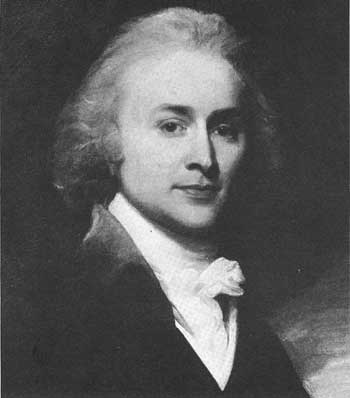
By the time John Quincy Adams was eighteen and ready to enter Harvard, he was already the most cosmopolitan young man in the country. As a boy, he had accompanied his father on diplomatic missions, representing the USA in Paris and later London. JQ was exceptionally bright, exposed to the finest education possible in Europe, fluent in several languages, and by fourteen, was engaged as secretary (and translator) to a diplomatic mission in St. Petersburg, Russia.

John Quincy Adams

He returned to the US at eighteen, sailed through Harvard, read law, passed the Massachusetts bar… then realized that the mundane practice of law bored him to death. Politics and international diplomacy were high on his list of alternative career choices. 

JQA (as he called himself) published prescient essays in the newspapers regarding the new US government, which brought the attention of President Washington. He developed a high opinion of the young man, (to the delight of Vice President John Adams) and started him on his diplomatic career. 

As minister to the Netherlands, his assignments frequently took him to London and the home of the prominent and well-to-do American merchant Joshua Johnson, who had settled in Britain years before the Revolution, married, and raised a family. His daughter Louisa Catherine was twenty, pretty, French convent educated, well-mannered, and adept at all the social graces of a well-to-do Englishwoman. JQ was moderately interested; his passions were for intellectual pursuits rather than people. But he also knew that he was ready for marriage and family, a necessary step in his professional advancement. Louisa likely realized that being courted by the son of the American Vice President was a coup! And her father was delighted!

Louisa Catherine Adams

Their courtship last about two years – mostly by correspondence. Louisa Johnson had ample time to assess the cool disposition of her fiancé, as well as his controlling nature. Nevertheless, the courtship persisted, and in 1797 they married.

The Bad News

Shortly before their wedding, the bride and groom were apprised of the financial embarrassment of Joshua Johnson, who had overstretched his shipping enterprises. Bankruptcy was looming. Whatever JQ might have expected as a dowry would not be forthcoming. 

John Quincy Adams was not born to wealth, nor did he aspire to anything more than comfortable middle class. The Johnson financial distress affected Louisa perhaps more subliminally than she realized at first. It bothered her throughout her life. She felt personally embarrassed, even perhaps devalued, and ashamed of her family. In her diaries, she wondered if her husband’s coolness was predicated on his disappointment in her dowry. (It probably was not; JQ was just cool by nature.)

The only thing Joshua Johnson could give the newlyweds was an opulent honeymoon trip on his last remaining ship. They set sail for Portugal, which was JQ’s new diplomatic post. But the good news, was that his new post was reassigned to Prussia – larger, and far more important.

Prussia

Their new assignment was exciting for both the young Adamses. He already knew passable German, and would quickly improve to fluency, both written and spoken. Louisa, already fluent in both English and French, also learned sufficient German for the expected pleasantries. Their social life glittered. Frederick William III, the young King of Prussia took a liking to his new American diplomat, and Queen Louise considered his bride delightful. 

King Frederick William III

JQ, without intending to hurt his new wife, was an inconsiderate husband. He focused most of his “socio-diplomatic” attentions on his fellow diplomats and their man-stuff: brandy and pipes, card games, and political discussions. JQA thrived in that environment – and usually forgot that his young wife was left to fend for herself in a sea of opulently-dressed strangers. JQ had brought his brother Thomas along as his secretary, charged with escort duty and dancing partner for his sister-in-law. Fortunately they got on well. But Louisa was neglected, and JQ was oblivious. 

Queen Louise of Prussia

Rouge: Part I

Rouge is a cosmetic, used since ancient time to add an attractive “blush” to the feminine cheek. It was also expensive, and as such, an affectation of the upper class. It was common in Europe, particularly in court circles.

In 18th century America, rouge had not yet hopped the pond. Some young women pinched their cheeks for added color, but that was about it. 

The Queen of Prussia was a socially sophisticated woman, born into royalty and exposed to all the nuances of feminine graces. She was close in age to Louisa Adams and found her companionable. 

The Queen had married at sixteen, and already had two babies. She noticed that Mrs. Adams seemed particularly pale and quickly surmised the reason. It was she who suggested a bit of rouge to brighten her complexion. She even gave her a little tub of rouge as a personal gift. 

Rouge: Part II

The Queen had been correct in her suspicions. Louisa was indeed pregnant – the first of fifteen pregnancies, although only four were completed to term, and only three lived to maturity. 

The next time the Adamses were invited to the palace, Louisa had applied some of the rouge. When her husband saw his wife wearing cosmetics, he was livid, and insisted that she remove it immediately! She refused, saying that it was a gift from the Queen, and she felt obliged to use it. 

JQA thought otherwise, and personally scrubbed her face with soap and water. According to one source, she then refused to go to the palace with him. The source continues saying that Louisa considered it a “victory” by not attending. Another source says that Louisa reapplied the dab of rouge, and went alone to the palace. 

Maybe.

But JQA “erasing” the rouge part is true. 

Sources:

Nagel, Paul C. – Descent From Glory: Four Generations of the John Adams Family – Oxfvord University Press – 1983

Shepherd, Jack – Cannibals of the Heart – 1980, McGraw Hill

Unger, Harlow Giles – John Quincy Adams – DeCapo Press, 2012

https://www.britannica.com/biography/John-Quincy-Adams

http://www.firstladies.org/biographies/firstladies.aspx?biography=6

Posted in A POTUS-FLOTUS Blog, George Washington, John Adams, John Quincy Adams, Nifty History People | Tagged , , , , , , , , , , , , , , , , , , , , , | 1 Comment

General Grant’s Last Escort

Serving as a pallbearer is the most unselfish “good deed” someone can do for another. The deceased can never return the favor. 

The Great General

Ulysses S. Grant was not born to anything even remotely connected with fame or renown or even great ability. He came from a strictly middle-class family, with middle-class values and abilities. 

That he was sent to West Point for his education was a great milestone in his life. He was initially resistant, but then again, he was seventeen, and his father was an overbearing man. He did well enough to graduate in the middle of his class, distinguished only for his superb horsemanship. 

Nevertheless, the associations and friendships made at the Academy would figure prominently throughout his life.

The Great General Dies…

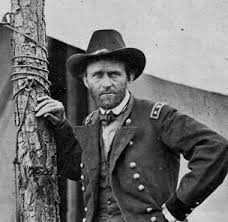
Civil War General Grant’s successes in the field, i.e. the Victor of Vicksburg and the Hero of Appomattox, catapulted him to national prominence, and into the White House itself. For two terms. And then a round-the-world tour of the great cities and capitals!

The iconic General

When he returned, he settled in New York City, feted and partied, and eventually assuming a partnership in a financial brokerage, despite his sincere confession that he “didn’t know anything about finance.” His “I-know-everything” partner was also a scoundrel, who concocted a borrow-from-Peter-to-pay-Paul scheme that left the brokerage in financial chaos, scandal, and riddled with debt that a humiliated Grant committed himself to repay. 

About the same time, the General, now 62, was diagnosed with throat cancer.

…And It Wasn’t Peachy

Grant insisted (and it was often repeated by his family members) that he got cancer from eating a peach. But what did he know? It is more likely that he first recognized the discomfort in his throat while eating a peach, which can be acidic. 

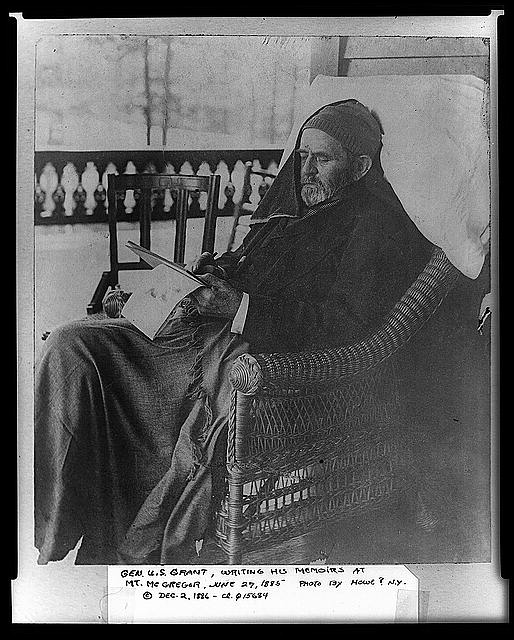
The sick General

But it is even far likelier that he developed the cancer from thirty cigars a day for thirty years…

Bottom line, the General suffered for about a year, in pain and decline, while he churned out his remarkable War Memorials, written with one purpose in mind: to pay his debts and provide for his family. Redeeming his reputation was also a side benefit. 

The Cost of Dying

Grant’s only absolute demand regarding his funeral, was to have his beloved wife Julia lie beside him when her time came. The rest (with perhaps a few of his caveats) was arranged by his sons – and by the U.S. Military. 

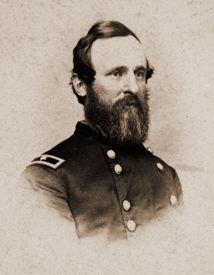
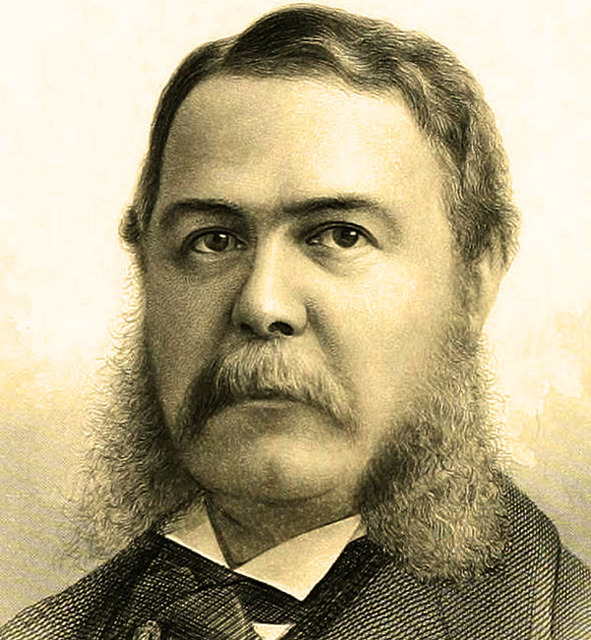
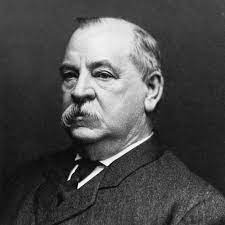
Even today, people of no prominence at all are overwhelmed by the cost of even a modest funeral. Grant’s Funeral was an event worthy of a monarch. The procession itself was seven miles long! And New York City, which was chosen in no small part by Julia Grant (who loved the Big Apple), had deep municipal pockets to do itself proud. President Grover Cleveland and former-President Chester A. Arthur (both New Yorkers, by the way) were the honorary chairmen, and former POTUS Rutherford B. Hayes (a 4x-wounded Union General) led the procession of tens of thousands of war veterans.

Rutherford B. Hayes
Chester Alan Arthur

Hundreds of thousands of people, from the highest of the high to the lowest of the low, lined the streets. Many to march, and many more to pay respects.

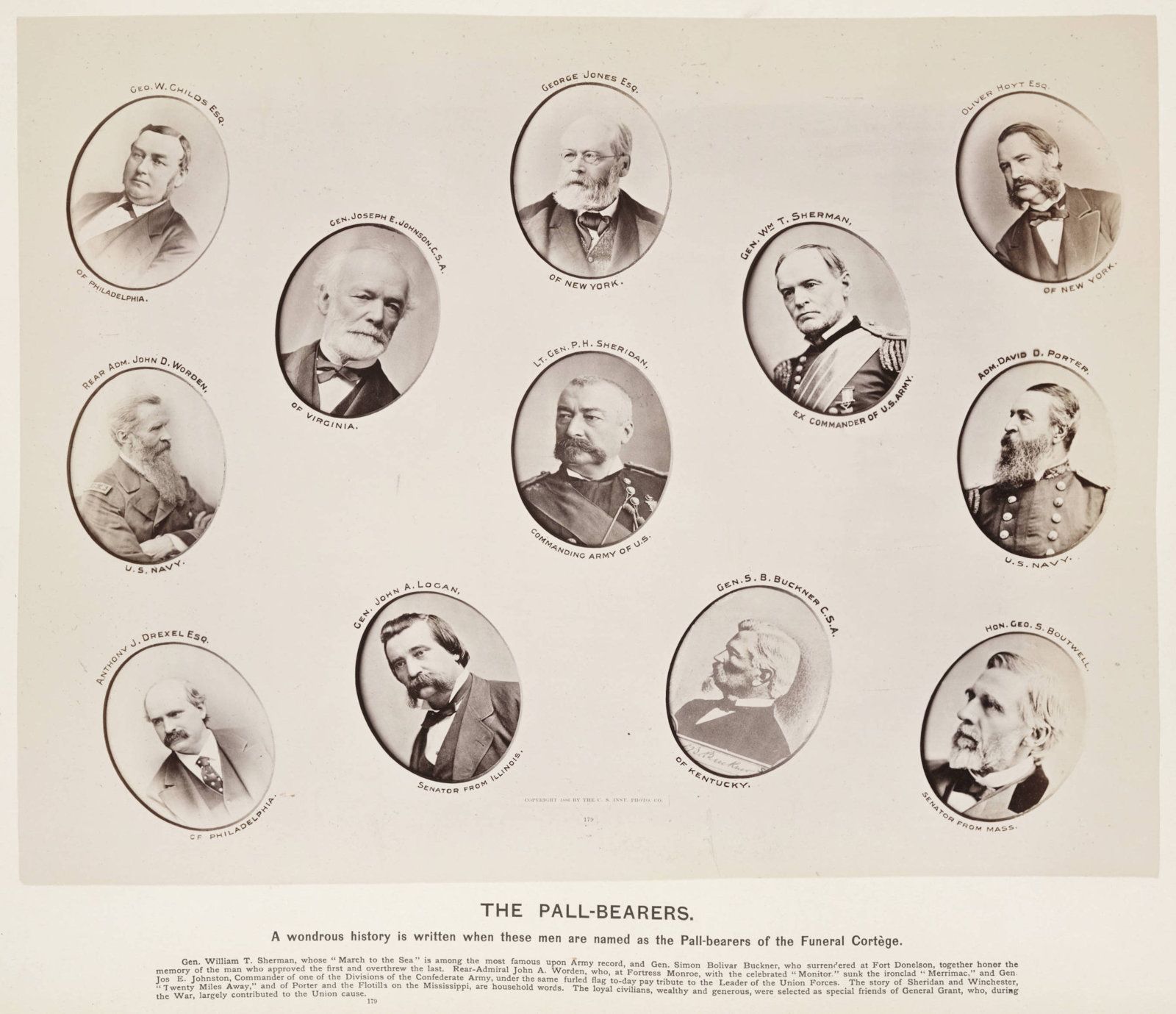
It was the Army (with the input of Frederick D. Grant, a former West Point trained Colonel himself) who selected the handful of pallbearer escorts for the procession.

President Grover Cleveland

The Pallbearers

Leading the regular pallbearers was Admiral David Porter, who had not only known Grant during the War, but had successfully partnered with him on numerous occasions where the Army and Navy worked in happy unison. Hamilton Fish, a New York Congressman and two-term Secretary of State under POTUS Grant was a personal friend. His wife and Julia Grant were very close. George S. Boutwell had been secretary of the Treasury during the Grant Administration. John A. Logan, was one of the best “political” generals during the Civil War, and at the time of Grant’s death was the Commander-in-Chief of the Grand Army of the Republic, the foremost Union Veterans’ association. George S. Childs was a Philadelphia newspaper publisher and neighbor to the Grant’s summer cottage in Long Branch, NJ. George Jones and Oliver Hoyt had raised huge sums to provide for the “retirement” for the never-wealthy Grants. 

Then there were the Honorary Pallbearers

Friends and former foes, and West Pointers all, were assigned special roles in Grant’s Funeral Procession.

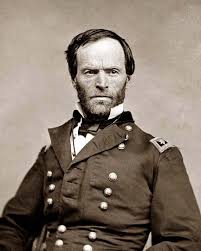
Sherman

 William T. Sherman. The best known Union General next to Grant, was a fellow Ohioan, two years older and ahead of USG at West Point. Their Academy acquaintance was pleasant but generally superficial, given their ages/classes. Subsequent meetings were also pleasant but superficial. Their friendship began during the War, grew at Shiloh, and was cemented during the long Vicksburg campaign. They thought alike. Sherman later became General of the Army.

Sheridan

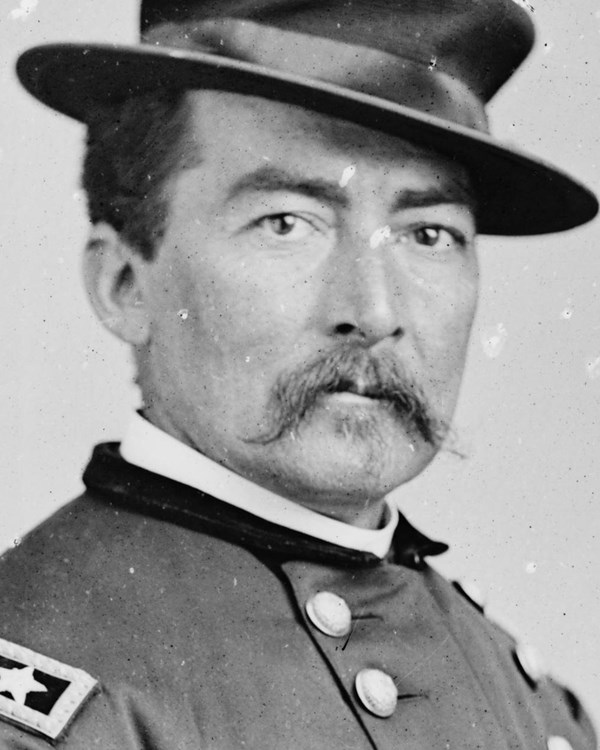
Philip A. Sheridan. Nine years USG’s junior, the best known Cavalry General in the Union Army barely made the WP physical list, at only 5’4”. Nevertheless he packed a cannonade of energetic leadership into his small frame, and at the time of Grant’s death, was General of the Army (after Sherman retired.)

Joseph E. Johnston. Nearly fifteen years USG’s senior, he had attended West Point at the same time as Robert E. Lee and Jefferson Davis. As a Confederate General, he suffered both from serous wounds (during the Peninsula Campaign), and a long-running feud with Jefferson Davis. Nevertheless he was able and capable, and at the time of USG’s death, was the best known living ex-Confederate officer.

Johnston

Simon Bolivar Buckner. This CSA General had been a close friend of Grant’s since their Academy days. He was a pal when Grant needed one, later surrendered to Grant at Ft. Donelson, and came to visit him as he lay dying twenty-one years later. It was personal. 

Buckner

Sources:

Flood, Charles Bracelen – Grant’s Final Victory:  Ulysses S. Grant’s Heroic Last Year – 2012, DaCapo Press

Goldhurst, Richard – Many Are the Hearts – 1975, Reader’s Digest Press

https://www.nps.gov/articles/000/funeral-of-ulysses-s-grant.htm

https://www.smithsonianmag.com/history/war-and-peace-of-mind-for-ulysses-s-grant-1882227/

Posted in A POTUS-FLOTUS Blog, American Civil War, Chester Arthur, Grover Cleveland, Nifty History People, Rutherford Hayes, Ulysses S. Grant | Tagged , , , , , , , , , , , , , , , , , , , , , , , , | 1 Comment

Lincoln’s First Pardon: Private William Scott

By the time of Lincoln’s death, his reputation for compassion had become legendary.

Captain Abe

When Abraham Lincoln was around 22, living in New Salem, IL, he enlisted in the militia along with a bunch of his buddies. A skirmish known as the Black Hawk War had erupted in the region, and volunteers were needed. Thus the New Salem fellows signed up, perhaps for larks or an escape from their humdrum farming chores.

Lincoln in the Militia

As it was, they saw no action, saw no enemy and fired no shots other than for target practice. Mostly it was a month-long camp-out with marching drills. Lincoln, to his great pleasure, was elected by his peers to serve as the captain of their unit. He would later call that election the most gratifying to him. 

Summing up his “military experience,” there was none to speak of. He spent the next thirty years as a civilian.

Lincoln: Commander-in-Chief

Suffice it to say, that when Abraham Lincoln became President in 1861, his knowledge of the military was minuscule. He needed to rely on the professionally trained officers who knew about such matters. He was particularly respectful of the aging General Winfield Scott – who had been the commanding general during the long-forgotten Black Hawk War. 

One thing Lincoln did know about the military, civilian or not, was that military power (army, navy, marines, etc.) is essential to any nation. He also knew that said military has a plethora of rules, regulations, officers, orders, orders and more orders. By and large, it is necessary, and President Lincoln, as Commander-in-Chief of the US Military, respected that need. Without sufficient (and enforceable) discipline and order, an Army will quickly fall apart.  

But as Southern States seceded, and shots were fired at Fort Sumter, and the Civil War began in earnest, things changed. The tiny US Army consisted of perhaps 15,000 men and 1500 officers – and a call for 75,000 volunteers was quickly raised and exceeded. 

One of the Problems

Most of the new volunteers had no military training past shooting at tin cans on a fence or varmints in their fields. Most of them were farm boys, backwoods men, clerks and otherwise entry-level recruits. And while a high percentage of them could read and write, some didn’t know their left and right. And a very high percentage of them had never been more than a few miles from their homes.

Signing up for the Union

Naturally, the educated recruits, the professionals, the businessmen, the “older guys” and the politicians were the stuff of officers. President Lincoln signed hundreds of military appointments for colonels and generals. He was not a fool, and realized that while many of them made fine officers, a lot of them were bumbling and pontificating mini-autocrats. 

When some eighty thousand new recruits enlisted, armed, trained and sent into the field after only a month, there were bound to be problems. If rules and regulations were disobeyed or deliberately flaunted, the punishment could be draconian, if not deadly.

Court martial proceedings.

Lincoln-the-compassionate was a practical man, however. If a soldier deserted, or bounty-jumped to reenlist elsewhere (for the money), or encouraged mutiny, etc., he obviously deserved punishment, however severe. But an exhausted young soldier sleeping on sentinel duty, or scared and running to hide, or similar situations was a different story. 

A Lincoln pardon.

High-level commanding officers regularly complained that the President was undermining their discipline. 

Lincoln insisted on his own latitude. As time went on, he ordered that he personally had to sign off on any court martial for the death sentence.

The Case of William Scott

William Scott, was a private in Company K of the Third Vermont Volunteers. He had enlisted right off, and had seen action at the First Battle of Bull Run. They, like the others, had fallen back to Washington in disarray, and the husky young Scott was detailed for night-time sentry duty on the bridge across the Potomac, between Maryland and Virginia (enemy territory)!

They had fought all day, and then had marched miles to their current position, exhausted and demoralized. Young Pvt. Scott nodded off while on watch. He was caught by the Duty Officer, court-martialed and sentenced to death.

Private William Scott – the first to be pardoned.

Private Scott’s comrades were horrified at the severity of the punishment, and managed to have his case put before the President, who was equally horrified. He pardoned the young private, and had him sent back to his unit. 

The story quickly made rounds in the newspapers and magazines, and puffed and embellished via poems and songs, and Private Scott was now “The Sleeping Sentinel,” and in his day, became the best-known Private in the Union Army. 

The Sad, Sad End

Less than a year later, General George McClellan initiated a mammoth military campaign in Virginia. On one of the first Union assaults of that effort, Private William Scott received his red badge of courage: six bullets to his body. His fellow soldiers dragged him to safety, where he expired. He was 23.

Francis de Hayes Janvier was an American poet of modest renown, and well skilled in the Victorian sentimentality of his time. He wrote the poem “The Sleeping Sentinel,” commemorating young Pvt. Scott being pardoned by the President just as he was lined up before the firing squad. (That part was an exaggeration). The poem was so poignant, it was read to President and Mrs. Lincoln at a White House reception in early 1863. 

The poem was published throughout the North, and even reprinted for many years afterwards. In the nineteen-teens, as moving pictures grew in popularity, a short film, “The Sleeping Sentinel” was based on that poem. 

… And, in the last expiring breath, a prayer to Heaven he sent

    That God, with his unfailing grace, would bless our president.

Even today, Pvt. William Scott is honored in Vermont.

Sources:

Searcher, Victor – The Farewell to Lincoln – Abington Press, 1965

https://acws.co.uk/archives-military-discipline

Daily writing prompt
Describe one simple thing you do that brings joy to your life.
Posted in A POTUS-FLOTUS Blog, Abraham Lincoln, American Civil War, Nifty History People | Tagged , , , , , , , , , , , , , , , , , , , | 1 Comment

Aaron Burr and the Madisons

Despite historical innuendos, Aaron Burr was not a suitor for Dolley Payne’s hand.

The Promising Burr

Aaron Burr (1756-1836) had a childhood mix of tragedy and blessings. His NJ family was reasonably prosperous; his grandfather was the well-known Puritan preacher Jonathan Edwards. 

Alas, Burr’s father, grandfather, mother and grandmother all died by the time baby Aaron was two. He was raised by relatives and guardians. It is said the relationships were strained, and young Aaron tried to run away at various times. Nevertheless, he received an excellent education at the Elizabethtown Academy, and excelled.

At thirteen, he was admitted to the College of New Jersey (Princeton), and became a classmate of James Madison, five years his senior. He showed promise, graduating in 1772, at sixteen. He stayed on to study theology, but lost interest, and went to Connecticut to read law with a relative. Then the Revolutionary War interfered. Burr enlisted, served bravely and commendably, and eventually became Lieutenant Colonel. Then he was severely wounded.

Continuing his legal studies during his recuperation, Aaron Burr entered the political arena in New York, and again showed promise. He opened a successful legal practice and was elected to the NY Legislature. By 1791, he was elected to the United States Senate. Life was definitely promising, although there were hints from some of his peers that his greatest “talents” were for intrigue. 

When the USA Capital was in Philadelphia, Senator Burr boarded with Mary Coles Payne, Dolley’s mother, who had opened her house to boarders when her husband’s business failed. 

Senator Burr and The Widow Todd

Dolley Payne was a young Quaker bride when Senator Burr lived in Philadelphia, but since her house was only a short distance from her parents’ home, they became pleasantly acquainted. 

The young Mistress Dolley Todd

1793 was a horrible year for both Dolley Payne Todd and Aaron Burr. A yellow fever epidemic raged, decimating nearly 25% of Philadelphia’s population. Dying on the same day was Dolley’s husband John Todd and her newborn son William Temple. Only days earlier, both her husband’s parents had died.

In New York, Aaron Burr lost his wife Theodosia Provost, who succumbed after a long battle with cancer. His closest relative now was his ten-year-old daughter Theodosia. 

The recent Widow Dolley Todd now faced another problem: her brother-in-law was conniving to prevent her from inheriting the modest estate left by her late husband. This included their house – and John Todd’s law books! 

Senator Burr was one of the attorneys she consulted in order to claim her rightful property. In addition, when she was advised to make a will, the twenty-five year old widow’s first responsibility was to name a guardian for her surviving son. Her father had died; three older brothers had died. She had no available male kin, and her son, John Payne Todd was only two-years-old.

Dolley named Senator Aaron Burr as Payne’s guardian, should anything happen to her.

Both of them were now newly widowed, but there does not appear to be any romance.

The Introduction

Meanwhile, the Widow Todd having weathered a recent childbirth, an epidemic of huge proportions, the loss of her in-laws, followed by the loss of her husband and her infant son, followed by legal wrangling over her lawful inheritance, tried to pick up the pieces of her life. 

It is said that she was “noticed” shopping at the market stalls by Virginia Congressman James Madison, one of the key members of the Constitutional Convention held a few years earlier to chart the governmental direction of the new country. Dolley was a fine-looking woman, and it appears that she was “noticed” by many people.

James Madison

It is not documented, but Madison may also have noticed her some time earlier at one of President and Mrs. Washington’s levees. Mistress Todd was kin-by-marriage to the Washingtons. Her sister had married one of GW’s nephews.

What is known, however, is that Madison wanted to meet this charming young woman whose bright eyes and warm smile seemed to attract everyone she met. He asked Senator Burr, his Princeton classmate, to arrange the introduction. 

Only four or five months after Todd’s death, Dolley sent a note to her closest friend Eliza Collins, “Thee must come to me at once. Senator Burr says the Great Little Madison wants to meet me.”

The introduction was successful, and five months later Dolley Payne Todd married James Madison, and they lived happily for the next forty years. 

Promises Broken

All the promise shown by young Aaron Burr, whether academically, militarily, legally, politically and even financially… was destroyed by Burr himself in a series of self-inflicted miscalculations – and his penchant for grandiose intrigue. 

When he ran for the position of Vice President (so he claimed) in 1800, the electoral vote was a tie between him and Thomas Jefferson. (According to the Constitution, the winner became President, and the first-runner-up became the Vice President.) But the wily Burr declared that the “tie” permitted him to claim the Presidency for himself, and the election was thrust into the House of Representatives. Perhaps sensing Burr’s deficiency of character, they voted for Jefferson. Burr became Vice President, and generally non-grata in the new capital of Washington DC. Congress promptly amended the Constitution to prevent a repeat of that situation.

In early 1804, his long bitter rivalry with Alexander Hamilton, George Washington’s Treasury secretary, NY lawyer, businessman and entrepreneur, culminated in a duel. Burr fired the fatal bullet, and became non-grata in most of the country. 

An old image of the “duel.”

As ex-Vice President (replaced by Jefferson in 1804), Burr devised grandiose plans to claim a substantial part of the recent Louisiana Territory for his own fiefdom. It resulted in a trial for treason, but he was acquitted for lack of evidence. He self-exiled himself in Europe, where he was generally non-grata by everyone. 

Both Dolley and James Madison were deeply disappointed by their old “friend.” He had played an important role in both their lives.

But for good or ill, they never spoke publicly about him.

Sources:

Cote, Richard N – Strength and Honor: The Life of Dolley Madison – Corinthian Books, 2005

Moore, Virginia – The Madisons: A Biography, 1979, McGraw Hill

https://constitutioncenter.org/blog/the-great-trial-that-tested-the-constitutions-treason-clause

https://www.britannica.com/biography/Aaron-Burr

Posted in A POTUS-FLOTUS Blog, George Washington, James Madison, Nifty History People | Tagged , , , , , , , , , , , , , , , , , , , , , , , , , , , | Leave a comment

Ida McKinley’s Inaugural Trousseau

Every First Lady is entitled to some new clothes for the inauguration!

Clothes Make the Woman…

Of course it helps if you are good looking. It helps even more, if you have money.

Martha Washington in her late fifties was certainly no beauty when she became the First Lady. She didn’t even attend the inauguration, new gown or not.

Martha

Abigail Adams was never a beauty. She didn’t attend the inauguration either.

Abigail

The first FLOTUS to attend was Dolley Madison. She was forty, good looking and stylish – without being opulent. She set the standard for First Ladies to follow.

Dolley

But not all FLOTUSes were good looking.

Mary Lincoln, however…

…was in her early forties. Certainly not beautiful, but nice-enough looking at the time. Certainly not wealthy, but she had splurged in both Chicago and New York on “appropriate” style-setting outfits. The problem was, they were not up to sophisticated Washington styles. She learned that part very quickly. One of her first FLOTUS actions was to engage a personal dressmaker.

Mary Lincoln

She also learned that the merchants in New York and Philadelphia were happy to grant her unlimited credit for her gowns and bonnets, jewelry and shawls. She took full advantage, but her “taste” didn’t quite catch on.

In fact, the only thing that did catch on was her extravagance, mostly unknown to the President.

Fast Forward a Hundred Years

Jacqueline Kennedy was definitely a “looker.” She was young, and her simple elegance (nothing but the best) caught on like wildfire. When her husband complained of her “extravagance,” her father-in-law, a man of deep pockets, told her to buy whatever she wanted and send HIM the bill. She was happy to oblige.

Mrs. Kennedy: A stunning wardrobe

But her clothes, even today, are perfection. They were of the finest quality (but so were Eleanor Roosevelt’s, and they didn’t set any styles), and they were easily copied for the mass market. And the market massed like no other!

Perhaps the best part of Jackie’s fashion influence was that her A-line styles looked good on everyone, no matter their size or shape.

Going Backward Again

Ida McKinley became First Lady in 1897. She was fifty. She had been, as her husband was happy to let everyone know, “the prettiest girl in Canton Ohio” some twenty-five years earlier. She was also one of the wealthiest. Her father, James Saxton, was the newspaper publisher, the banker and a large property owner in town. He liked his new son-in-law a lot! Things looked good!

Ida’s taste

But Ida’s life had taken a dreadful turn a few years into her marriage to William McKinley. A series of tragedies, deaths of two children, and serious health problems had turned her into a demanding semi-invalid. The remnants of her frail, petite beauty remained, but her life was sad.

Her marriage, however, was still a happy one. McKinley adored his ailing wife and made every effort to grant her every wish. Or whim. She had become self-centered and difficult, completely revolving her life around herself, her husband, and their life together. He was, in the Victorian phrase, “her all.”

It was nice…albeit passe for the Gay Nineties!

Even his decision to run for Congress (he was thirty-three, and they had been married for only five years) was predicated on her health. He believed a complete change of venue might lift her despondency.

His political rise was not meteoric, or even particularly notable. He became a tariff-maven, which in itself creates as much zing as a bowl of oatmeal. But he was also one of the nicest fellows in Congress – or Ohio, for that matter. He made friends everywhere. Even his political opponents could find little disparaging to say about him.

And a man so devoted to his invalid wife packs a substantial political plus!

The Trousseau

James Saxton lived a full life, and when he died, he left Ida, his eldest daughter, a substantial inheritance: About $80,000, worth more than a million today.

By the late 1890s however, styles had changed to reflect the emergence of a new type of woman. Smart. Athletic. Active. Healthier. On-the-move. The A-line skirts and short jackets were made for this kind of lifestyle. The split (or divided) skirt was specifically fashionable for bicycles.

The gals style in the Gay Nineties!

Despite her frail condition and inability to exercise at all, and despite the three gargantuan meals the McKinley’s were said to enjoy daily, Ida remained petite. And she loved clothes and jewelry and all the trimmings.

Taste being taste, she had her own – and it was frilly and perhaps a little out of style. Taffeta silk gowns that caused the pleasant rustling of frou-frou (rich noise) were party clothes, mostly worn by wealthy women.

That was Ida’s style.

The election of her husband to the presidency was a monumental event in her life, and with her inheritance (or at least some of it), she wanted to splurge on herself. William McKinley was only too happy to acquiesce. She deserved some personal pleasure.

Ida Goes Shopping

Trousseaus are usually connected to brides and weddings. But they also connote a complete new wardrobe purchased for a major event. Like becoming First Lady. Ida consulted the finest dressmakers and modistes, and purchased an assortment of gowns and wraps, shoes and shawls and perhaps even negligee plus all the accessories. All of the finest material, the most expensive ribbons and laces. Nothing but the best! It is said to have cost her $10,000 – well into six-figures today.

Ida’s Inaugural Gown (Smithsonian)
Ida in the garden

And in every newspaper article about the McKinley campaign of 1896, there was mention of Mrs. McKinley’s inaugural trousseau – and its price tag. It would probably be tacky today, but back then she was thrilled to be included. And the POTUS-to-be was happy to provide some joy in her life.

And it was her own money.

Sources:

Foster, Feather Schwartz – Mary Lincoln’s Flannel Pajamas and Other Stories from the First Ladies’ Closet – Koehler Publishing, 2016

Leech, Margaret – In the Days of McKinley – Harper & Brothers, 1959

Morgan, H. Wayne – William McKinley and His America – Syracuse University Press, 1964

https://www.nps.gov/fila/learn/historyculture/ida-mckinley-life.htm

https://www.whitehouse.gov/about-the-white-house/first-families/ida-saxton-mckinley/

Posted in A POTUS-FLOTUS Blog, Nifty History People, William McKinley | Tagged , , , , , , , , , , , , , , , , , , , , , , , | Leave a comment

Lincoln: The Triumphal Stroll

Throughout history, victorious armies paraded in triumph.

The Procession

As far back as recorded time goes, when a Great War was over, the victors paraded through their towns and villages, trumpets blaring. Hundreds, and even thousands of soldiers glittered in their armor, assembled and proud. 

Most marched. The leaders rode on horseback. In some cultures, kings and princes rode in horse-drawn wagons or chariots, decked out in all their glory. Some rode on elephants. Wagons followed in the parade, filled with the spoils of war: gold and silver, jewels, the finery and opulence of wealth and power now in possession of others.

Toward the end of the procession, were the vanquished. Men, women and children, including the ill and frail, often shackled together, to be distributed as slaves – to the victorious. And the crowds cheered. Occasionally great arches were built to commemorate the great victory.

The parades were repeated over and over throughout millenniums. Some of the arches still stand.

April 2, 1865

Confederate President Jefferson Davis had received the news he had been dreading for weeks. General Robert E. Lee had advised him that his disintegrating army could no longer withstand the long siege in Petersburg, nor protect the Confederate Capital in Richmond, just across the River. He advised the President to evacuate.

Davis made the hard call.

It was not a surprise to Davis, a former West Point officer himself. The department heads of the remaining Confederate government had already packed up their records and paperwork and loaded it onto waiting trains.

When all was done, strategic fires were set to deny any goods, services, arms, ammunition – and even shelter, to their enemy.

April 4, 1865

President Abraham Lincoln, tired, underweight and visibly aged from the stresses of four years of a country at war with itself, had arrived two weeks earlier at City Point, VA, at the confluence of the James and Appomattox Rivers, not far from the besieged Petersburg. Said to be the tenth largest city in the Union at the time, City Point had been thrown together some months earlier to supply and support the huge Army of the Potomac, which was now in the throes of mopping up the remainder of the Civil War. 

Lincoln had met with his military advisors.

Everyone knew it was only a matter of time before it would finally be over and the killing stopped, and perhaps, the healing could begin. 

Spring had come early that year in Washington, some hundred miles away. The President and his family decided to “visit the army” at the invitation of General Ulysses S. Grant. They sailed down the Potomac aboard the River Queen, into the Chesapeake Bay, and finally up the mighty James River. 

He had already spent nearly two weeks with the Army, reviewed their parades, met with their commanders, and greeted the rank and file, something he always enjoyed. The soldiers had grown to love and respect him, and it is said, it was their ballots that guaranteed his second term. Lincoln had also met the USCT (United States Colored Troops, as they were then called), who revered him as their savior. AL was sincere in his recognition of their valor and contribution, and was visibly touched by his reception.

General Grant had already amassed his vast army and began chasing the exhausted Rebels through central Virginia. 

It was a rarity. The President had a free day.

Richmond

“I have always wanted to see Richmond,” Lincoln is said to have commented. So with his eleven-year-old son Tad, Admiral David Porter, and a handful of military escorts, the President boarded one of the riverboats, and sailed the short distance to Richmond. The smell of smoke and ash from its self-inflicted fires permeated the air, as a barge rowed him and his party ashore. 

Nobody knew he was coming. That included a skeletal Union Army dispatched to maintain order.  Of course the tall, lanky President, made a foot taller in his stovepipe hat, was visible. If he had any thought or fear that he might be a target for a well-placed sniper, it is unknown. If he thought his appearance was an act of heroism, it is also unknown. 

Lincoln & Tad statue – in Richmond.

But immediately after stepping ashore, he was recognized by some of the Negroes, and according to Admiral Porter, “No electric wire could have carried the news faster.” Within minutes, the President was surrounded by throngs of Negroes and whites alike, eager to touch him – or his clothing. Or shake his hand.

It was perhaps a mile from the river to the Confederate “White House,” – a mostly uphill walk. It was also a particularly warm day, and Lincoln was perspiring heavily. He moved slowly, since he was completely surrounded by hundreds of men, women and even children. When some Negroes knelt in his path, Lincoln was embarrassed, saying they should kneel only to God.

When he finally entered the Confederate White House, which in essence was a comfortable city-mansion, he was taken to Jefferson Davis’ office, and sat in his chair. When asked by his escort if they could get anything for him, he asked for “a glass of water.” He was hot and tired. And emotionally drained. The past four years were catching up with him. People remarked how much he had aged. He likely agreed. It hadn’t been easy.

Lincoln
The CSA White House in Richmond

One cannot fathom what went on in Abraham Lincoln’s mind while he sat at Davis’ desk. The ghosts of a hundred thousand – or more – Americans North and South who had given their lives in the War, could not have been too far from his thoughts. They never were.

While he was in still in Richmond, he received a wire from Secretary of War Stanton. Secretary of State William Seward had been seriously injured in a carriage accident. His little respite was over.

It was time to go back to Washington.

Sources:

Foote, Shelby – The Civil War: A Narrative: Volume 3: Red River to Appomattox – Vintage Book, 1986

Kelly, C. Brian – Best Little Stories from the Civil War: More than 100 true stories – Cumberland Press, 2010

Searcher, Victor – The Farewell to Lincoln – Abington Press, 1965

https://encyclopediavirginia.org/368hpr-4648536b7dc37ce/

https://www.nps.gov/rich/learn/historyculture/lincvisit.htm

Posted in A POTUS-FLOTUS Blog, Abraham Lincoln, American Civil War, Nifty History People | Tagged , , , , , , , , , , , , , , , , , , , , | Leave a comment

Thomas Jefferson and the Cheshire Cheese

The Third President

Cheese

Practically all cultures include cheese (no pun intended). It basically an offshoot of milk, whether from a cow, a sheep or a goat, etc. to include the curd. As one would expect, the different animal milk produces different types of cheese. A cheese press covered with cheese cloth (no surprise regarding the name) is used to collect the milk and curd, and pressed to smooth all the lumps. After a certain amount of time for aging, etc., a round wheel of cheese is produced. Some are very small. Some are very large. 

Cheese has been around for millennia.

The Election of 1800

In a phrase, the presidential election of 1800 was indeed very cheesy (groan), with incumbent John Adams (MA), a Federalist, losing to an unexpected and convoluted tie between Thomas Jefferson (VA) and Aaron Burr (NY), both considered “Republicans” (a forerunner to the Democrats). Burr’s original intention was to become Vice Presidency, but his decision (because of the tie) was to challenge/opt for the Presidency. Thus the definitely cheesy part. The House of Representatives had to weigh in on that decision. 

Incumbent John Adams lost.

They selected TJ as President, and Aaron Burr as Vice President. (As an aside, the 12th Amendment was quickly proposed and ratified to ensure a separate ballot for POTUS and VP, so such a crisis would never occur again.) 

Vice President Burr caused a tie.

The Massachusetts Baptists

Massachusetts was primarily an industrial and commercial state, with Puritan ethics of hard work and regular habits. By the the latter part of the 18th century, the Baptists had become a large offshoot of the Congregationalists, differentiating by minor changes in their liturgy. While most of industrial  Massachusetts citizens were political Federalists in the manner of George Washington and John Adams, there was a growing number of “Republicans” – especially among the more agrarian Baptists in Cheshire, in the western part of the state, around the Berkshire Mountains. 

One of their political leaders was John Leland, a preacher who was an ardent supporter of the separation of church and state. He had met Thomas Jefferson some time earlier, and respected him. They had become friends, and were particularly like minded on the church-state issue. Leland campaigned vigorously for TJ. 

Let’s Send A Cheese!

There is something about cheese that lends itself to being a welcome gift. Cheese trays with fancy wedges wrapped in colored foil surrounded by other goodies abound – especially around holidays!

Once Jefferson was duly sworn in, John Leland organized his congregation to commemorate the occasion by sending the new President a gift. Since his town of Cheshire was primarily a dairy farming community, rather than collecting money per se, he urged every one who owned a cow to collect every quart of milk and curd from a single cow on a particular day. They were then instructed to bring it to a location where a large apple cider press had been commandeered for the cheese-making process.

The caveat: Only “Republican” farmers with “Republican” cows were invited to participate. Federal cows were not included. The milk from 900 cows was collected in the process and created a cheese that was 4’ across, 15” thick, and weighed more than a half ton! Alas, no tray, no fancy wedges and nobody knew about colored foil.

The Cheshire Cheese Press

Pastor Leland insisted the cheese was made to show “profound respect” to the ratification of Jefferson’s election.

There was one more caveat: The farmers were all free-born. No slave labor was used to make the cheese. 

When the cheese was ready to be shipped, the entire congregation gathered to sing hymns and say prayers over the massive cheese.

Shipping The Cheese

Nobody in Cheshire, or even in Berkshire County itself had a wagon large enough and strong enough to handle such a massive load. And the roads between western Massachusetts and Washington, a distance of nearly 500 miles, were primitive for the most part. 

So a sleigh was hired to transport the cheese to a barge on the Hudson River, and float it down to New York City, where it was hefted aboard a sloop bound for Baltimore. Then it was hauled by a huge horse drawn wagon to Washington – and the President. The trip took three weeks. But that doesn’t really matter. Cheese is known to age very well. 

When it was delivered on January 1, 1802, it came with a note, underscoring the fact that it was made from “Republican” milk, crafted voluntarily by the farming men, women and children of the town, and entirely done by free labor. Not a single slave assisted in its making. 

President Jefferson praised it as proof of the domestic skills of the farmers of Berkshire County. He thanked them by cutting off a large chunk of the cheese to send back its “donors,” along with his personal check for $200 as a donation to their congregation. TJ was very particular about not accepting gifts. He likely thought it was cheesy.

It is said that chunks of the cheese were part of the White House July 4th celebrations.

Comparing Cheeses

Some thirty years later, President Andrew Jackson was also given a humongous cheese from his admirers. It sat aging in the lobby of the White House for nearly two years before AJ threw a huge party and invited everyone in town to come with their knives and napkins to partake. 

Andrew Jackson’s cheese party

It was also said to have left an odor that took months (maybe years) to dissolve, and even longer to clean out of the carpeting. 

And don’t think they didn’t compare notes! Jefferson’s cheese was indeed larger, by as much as 200 pounds. 

Sources: 

John P. Kaminski, Thomas Jefferson: Philosopher and Politician. Parallel Press, 2005.

Moore, Virginia – The Madisons: A Biography – McGraw Hill – 1979

https://www.monticello.org/research-education/thomas-jefferson-encyclopedia/mammoth-cheese

Posted in A POTUS-FLOTUS Blog, John Adams, Nifty History People, Thomas Jefferson | Tagged , , , , , , , , , , , , , , , , , , , | Leave a comment

Captain Grant: A Turning Point

There were six wretched years for Ulysses S. Grant.

Grant: The 1850s

Ulysses S. Grant had become a soldier under duress. His father insisted that his eldest son attend West Point. It was a free education. Not that Jesse Grant was poor; he was definitely middle class, with a successful tanning business in Ohio. But he had worked hard to become successful, and that meant an appreciation of thrift and value. And free is better than not free.

The Senior Grants wanted their son to be educated.

His son Ulysses, then seventeen, did not wish to go. His grades were fair enough, but he preferred to be a farmer. His father thought otherwise, so USG went to West Point. He did well enough to graduate mid-class, and by that time had accepted the challenges of soldiering. Not long after he graduated, he met the sister of his roommate, and they fell in love, although it would be four years till they married. The War with Mexico got in the way.

Once married however, the young couple became part of the young officer contingent at a couple of army forts, and were content and happy. Un…fortunately, when gold was discovered in California in 1849, the Army needed a presence, and USG was reassigned. By that time, they had a toddler, and his wife Julia was carrying their second child. Since the shortest distance to the west Coast was via the isthmus of Panama (a dangerous, swampy slog, almost guaranteed to spread disease), it was no place for a pregnant woman and a two-year-old. She returned to her family in St. Louis with the children. He went to Oregon/California alone, promising to send for them once he got settled. 

Grant and Wife

He never got really settled, and was dreadfully homesick. It took months before he learned he was a father to a second son. He became depressed. And began to drink. The drinking was noticeable to his superiors and his resignation was requested.

Grant returned to St. Louis a despondent and humiliated man.

It got worse. The ex-captain could not seem to find satisfactory work. He wasn’t lazy, nor did he have an “attitude.” There just seemed to be no jobs available. And he was basically without direction. The two jobs that he managed to acquire via “connections” were short lived. Death and politics. No fault of his. His efforts at farming also failed. Poor soil does not ask for references. No fault of his.

Finally, he forced himself to write the hardest letter of his life. He asked his father for a position at one of his tanneries – a job he had hated throughout his youth. His father sent him north to Galena, Illinois, where his two younger brothers were managing one of the tanneries. 

Galena: Spring, 1860

Grant, Julia and their four children arrived in Galena, rented a modest house ($100 per year), and began working for his brothers. Knowing how much the stench and blood of the tannery affected their older sibling, USG was usually dispatched to buy and sell and transport the carcasses. Sometimes he was the clerk in the store. Still, the stench clung to his clothes.

And, as expected, it was a job he detested, but he was grateful. He had a wife and family to support. And he and his brothers got on well enough. 

If the job was a drudge, the Grant homelife was a joy. Grant and Wife were well-matched; they knew it, and they loved each other deeply. No matter how he plodded on during the day, when he came home in the evening, the cares seemed for fall from his shoulders. He was happy to horseplay with his children, and find comfort in his wife’s smiles and embraces. 

Family was the most important thing for USG

Galena: Fall, 1860

It was no secret in Galena that the tanner’s newest employee was West Point educated, and had been a brevet Captain in the War With Mexico. It was also no secret that he was forced to resign from the Army for drunkenness. But when USG joined the fellows in the local tavern from time to time, no one ever saw him drink anything other than coffee. 

With an election coming in November, and Illinois’ two “favorite sons” vying for nomination and election, the taverns were usually full of noisy debate – mostly about whether there was going to be a war. Galena was heavily Democratic; it was Stephen Douglas country. 

Grant voted for Douglas, too.

Grant was reticent, not especially political and not a talker by nature. But he was the only resident of Galena that had any military experience. His considered opinion was usually solicited, and his comments were insightful and respected. 

Galena: Spring 1861

Between the election of Republican Lincoln and his inauguration in March, 1861, the mood, the tenor and even the map of the United States had changed. Everyone was taking sides. Grant learned about old West Point pals who had remained in the Army, and who were now resigning to enlist with the new “Confederacy.” Julia’s father in St. Louis was writing him to sign on with the Rebels, assuring him that his experience was likely insure a Generalship. 

Training and drilling

But when seven states seceded by April and shots were fired at Fort Sumter in South Carolina, Galena became a “Union” town all the way. Every able bodied man was signing up to enlist. 

Naturally miners and merchants, farmers and tradesmen needed to be trained as soldiers. When the town fathers approached USG, and asked him if he would train the volunteers, he accepted with alacrity.

It is said that Grant stood straighter. The semi-depressed stoop he had acquired was gone. His eye was focused. When he left that day and assumed his new “position,” he never turned back. And he never set foot in tannery again. 

And he would be a general by the end of the year.

Sources: 

Chernow, Ron – Grant – Penguin Press, 2017

Grant, Julia Dent – The Personal Memoirs of Julia Dent Grant – G.P. Putnam’s, 1975

White, Ronald C. – American Ulysses: A Life of Ulysses S. Grant – Random House, 2016

https://millercenter.org/president/grant/life-before-the-presidency/

https://libguides.css.edu/usgrant/home/family/

http://www.biography.com/people/ulysses-s-grant-9318285

Posted in A POTUS-FLOTUS Blog, American Civil War, Ulysses S. Grant | Tagged , , , , , , , , , , , , , , , , , , , | Leave a comment