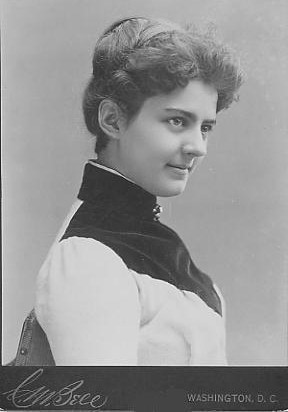
Lou Henry Hoover: The Desk Story

In 1914 when World War I began in Europe, Herbert and Lou Henry Hoover were millionaires, living in a posh London townhouse.

The Millionaire Part

Neither of the Hoovers were born rich. Lou’s family were solidly middle class, but hardly wealthy. Herbert Hoover (1874-1964), on the other hand, was a poor farm boy completely orphaned by nine, and sent to live with relatives.
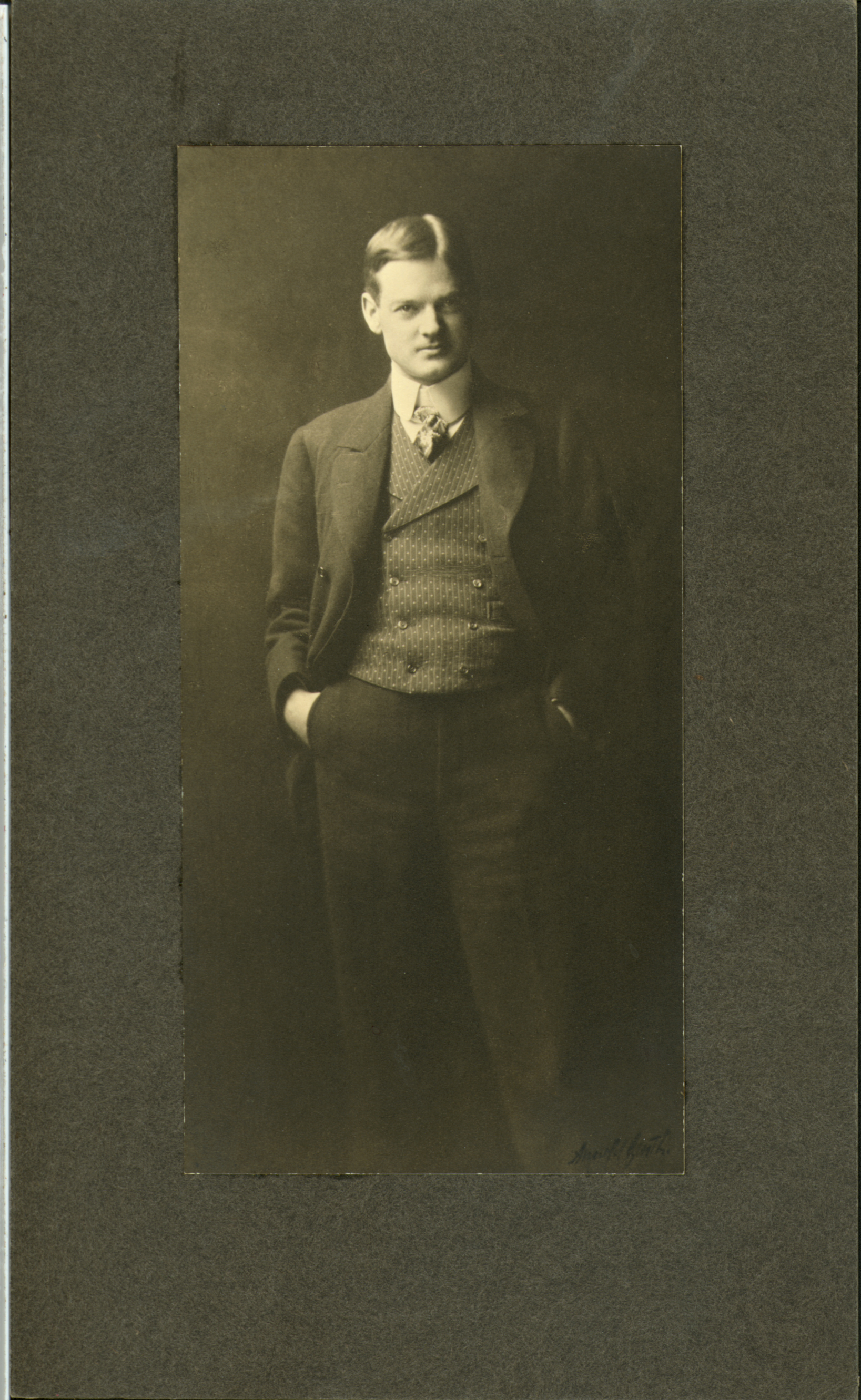
Bert circa 1899-12 copy

Herbert Hoover became a millionaire by the time he was thirty. It was all due to his own talents and energy – and a little luck.

It was entirely by his own talents, energies, hard work and determination that he achieved spectacular success as a mining engineer, and by age 25, was paid almost as much as the President of the United States. At 30, he was a millionaire, and at the time of World War I, he had consulting offices in six countries.

Americans in Europe: 1914

Even though there had been rumblings of unrest through Europe for years, most people (including Americans) were oblivious. Europe had been generally peaceful since the time of Napoleon. War was unthinkable.

But war did come and more than 100,000 U.S. citizens traveling for business or pleasure, found themselves stranded in Europe that August. They all rushed to go home.

lou in china-2

Lou Henry Hoover was a world traveler a few times over by the beginning of World War I.

If communication and transportation problems weren’t enough, each belligerent country refused to honor any other currency than its own. Thus thousands of Americans with dollars in their wallets and/or letters of credit were stuck without ready cash for even a cup of coffee.

As thousands upon thousands of departing Americans arrived in London, trying to book passage back to the States, British officials were overwhelmed by the sheer numbers who had nowhere to stay nor wherewithal to purchase available meals until they could board their ships home.

One official, a personal friend of the Hoovers, asked him if he might help. Hoover readily agreed, and quickly determined the most pressing problem: A quick-fix to provide meals and/or a place to stay until his countrymen could complete their passage arrangements.

The Quick Fix

Hoover promptly called his wife and told her to come at once with all the cash they had in the house – about 500 pounds (perhaps $3000 in today’s money). With nothing more than a personal handwritten IOU note, he began lending small 2 or 5 pound amounts to his fellow Americans. The next day, he went to the bank and withdrew several thousand pounds to continue providing immediate relief.

Meanwhile, Mrs. Hoover recognized another problem and called on several of her numerous women-friends to organize a “quick fix” of her own: relief at the train stations. They called on restaurants to provide sandwiches and coffee and milk for the children (since many Americans had their families with them), recruited a group of “nannies-by-the-hour” and ran a make-shift day care nursery so overstressed parents could wait in line to make arrangements without worrying about small children.

Once the crisis passed, Herbert and Lou Hoover found themselves a new career: Humanitarianism with a capital “H”. He never worked as a mining engineer again, nor took a dime for any of his various positions during the rest of his life.

In his memoirs, written decades later, he noted that he had advanced around $300,000, and all but $300 had been repaid. He believed some of those people may have died.

The Quick Fix That Wouldn’t Fix
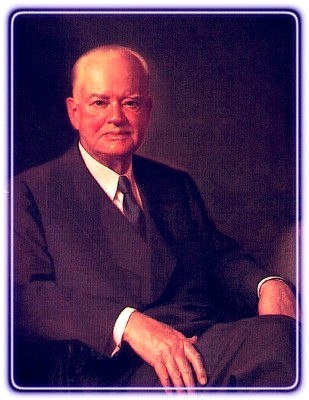
pres_hoover

President Hoover was a fortunate man throughout most of his long life – except for his term as President.

Fifteen years later, the Hoovers, by then one of the most respected and well-known couples in the country, were in the White House. It took less than a year before they were faced with an insidious problem: the Great Depression had begun, and it refused to go away.

hoover-02

First Lady Lou Henry Hoover was a generous woman, but essentially a private one. Both Hoovers shunned the thought of making their generosity known to the public.

First Lady Lou Hoover began receiving hundreds and then thousands of letters begging for help. People needed fuel for the winter, overdue rent to be paid, impending starvation, coats and shoes for the children, and most pressing of all, jobs.

Like her husband, Lou Henry Hoover (1874-1944) was basically a shy person, absolutely appalled at the thought of “tooting one’s own horn” or even permitting a horn to be tooted on their behalf. Very quietly, she ferried requests along with her card, to various federal agencies and services that could offer assistance, including state and local authorities around the country.

But there were hundreds of requests that she answered personally with a few dollars here, a few there, vouchers for food or medicine, warm coats or shoes – whatever she could do to alleviate need, all from the Hoovers’ personal account.

There was no quick fix, and it barely scratched the surface of the extent of the problems.

Mrs. Hoover’s Desk
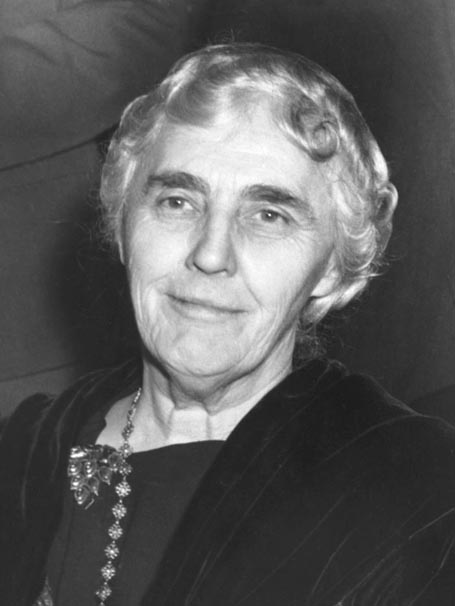
post WH

Mrs. Hoover in her older years. She lived to be just shy of seventy.

When the Hoovers “retired” from the White House, their stellar reputations in tatters, they became what might be termed a “bi-coastal” family. His business interests were in the East, so he took a large suite in New York’s Waldorf Astoria Hotel.

She, on the other hand, was privately and deeply disillusioned by the politics that had turned them from hero to villain. She returned to the home they had built in Palo Alto, California, to follow her own interests, which included numerous cultural and charitable activities. She went East and he went West from time to time. They wrote and phoned regularly.
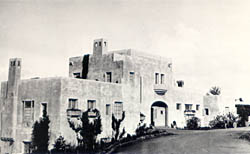
House at Stanford

The Hoover house in Palo Alto, CA was designed by Lou Hoover herself. She oversaw most of its construction.

Once World War II began, both of them recommitted themselves to humanitarian efforts, raising funds and goods for the war effort.

In 1944, Lou Hoover was in New York. Feeling tired and not-herself, she cancelled an appointment to retire early. Ex-President Hoover, with an engagement of his own, kissed her goodnight and said he would see her later.

When he returned, she had died of a heart attack.

Not long after her funeral, Hoover was in California, tying up the loose ends of Lou’s life. When he went through her desk, he was astounded. There were literally hundreds of checks, made out to her personally, for small sums. Accompanying notes thanked her for the help and kindness she had extended when they were in need. Some of those checks had been there for years.

She never cashed them.

Sources:

Boller, Paul Jr. – Presidential Anecdotes, Oxford University Press, 1981

Caroli, Betty Boyd – First Ladies: An Intimate Look at How 38 Women Handled what may be the most Demanding, Unpaid, Unelected Job in America – Oxford University Press, 1995

Hoover, Irwin Hood – 42 Years in the White House – Houghton Mifflin Co. , 1934


Posted in A POTUS-FLOTUS Blog, Herbert Hoover | Tagged , , , , , , , , , , , , , , , , , , | 3 Comments

General Grant in New Jersey

USG-2

General Ulysses S. Grant, the most famous man in America after 1865.

General Grant was the most famous person in the country after the Civil War.

All the rich and powerful and famous were anxious to court his favor, and the General usually obliged.

A Tale of Gifts and Laws

Simply put, there were always laws on the books against gifts of out and out bribery. But it would not be until well into the twentieth century that saw laws covering “soft” gifts, such as dinners, trips and transportation.

When James Buchanan was in the White House (1857-61), he specifically instructed his niece Harriet Lane, who served as his official hostess, not to accept any gifts, other than the traditional flowers or candy or a book. He believed it would reflect poorly on him.

alwalkingstick

A gold headed walking stick, custom made to his height, was a popular gift for President Abraham Lincoln.

When Abraham Lincoln was in the White House a few years later, “gifts” of more consequence than flowers became customary. All the railroad companies issued railroad passes to legislators, local, state and federal – and their family members. When Mrs. Lincoln made trips to New York or Philadelphia, her hotel bills were usually gratis. Baskets of “spirits” arrived at the White House regularly, courtesy of any number of people. Most were dispatched to the army hospitals for medicinal purposes. Lincoln received dozens of walking sticks (custom made to accommodate his height), gold watches, and other tokens of appreciation. To refuse was considered insulting.

Gifting the Grants

General Ulysses S. Grant (1822-1885) presented a different situation. As the victorious General, he was a private citizen, despite being “employed” by the Army. There are no laws against a private citizen accepting a gift (unless so prohibited by one’s employer – or conscience).

Early in the Civil War, after Grant’s first victories at Ft. Henry and Ft. Donelson, a newspaper photograph appeared of him smoking a cigar. “Grateful citizens” began sending him boxes of cigars, considered a nominal gift. Grant was grateful as well, and developed a habit of smoking perhaps twenty or thirty a day. He wound up paying for them thirty years later when he died of throat cancer. Nevertheless…

presentationsword

A magnificent presentation sword for General Grant.

As Grant’s victories increased in substance, “grateful citizens” were more than generous in rewarding the Hero of Vicksburg and Appomattox. Mrs. Julia Grant would be presented with huge bouquets, the children with huge boxes of candies. Even before the end of the War, special meats and jams and delicacies poured in for the General’s personal use. He was gracious, but ate sparingly and plainly.

grantswords

Elaborately decorated presentation swords were a popular gift for victorious generals.

After the War, and particularly during the turbulent administration of Andrew Johnson, General Grant was not only the most famous person in the country, he was arguably the most influential, and a shoo-in for the Presidency in 1868. People with names like Vanderbilt and Whitney, Livingston, Gould and Carnegie insisting on having the Grants as their guests of honor at sumptuous dinners. Senators and Congressmen regularly hosted him. Veterans’ Associations clamored to have their great General as their guest of honor.  He was happy to attend everything.

granthousegalena

Even though the Grants lived in Galena, IL for less than a year, he was presented with the finest house in town – completely furnished!

Silver and gold platters, urns and trays and watches, copiously inscribed as presentation pieces, were offered to the General who saved the Union. Then there were inscribed swords and pistols. And carriages and teams of thoroughbred horses (Grant was an excellent appreciator of horses).  And houses in Galena, Illinois, Philadelphia and Washington. Grant was gracious and accepted the largesse, since it would be ungenerous to decline.

The Long Branch Cottage

Then there were invitations to visit. The Grants were genial people and easy-to-please guests. They were invited everywhere.  And they went.

Mr. George W. Childs, a wealthy Philadelphia newspaper publisher, invited them to his Long Branch, New Jersey cottage in 1868, not long after Grant had become the Republican nominee for President. The Grants accepted the invitation, had a wonderful time at the seashore, and said so.

grantcottagelbnj

The Grant “cottage” in Long Branch was deeded to First Lady Julia Grant. The family spent many happy weeks there.

Mr. Childs then suggested that perhaps the General might wish to purchase a cottage of his own in Long Branch, then one of the posh playgrounds of the rich. Grant admitted that he would love nothing more, but that even a “suitably modest” cottage would cost far more than he could afford. Childs offered to purchase it for him – as a gift. Grant, in a rare moment of “decline” said no, it was too much and would not look right.

Childs did not press, but after the General was elected President, he and a few of his wealthy Long Branch neighbors decided it would be good for property values to have the President-General as a town resident. Five of them pitched in $8000 apiece, and purchased a “suitably modest” cottage. They knew the President would likely decline again, but these wealthy captains of industry were not men to be deterred. They presented the cottage as a gift to MRS. Grant. She had no problem saying yes, thank you.

monmouthtrack

Monmouth Racetrack was built not long after the Grants became “residents” of Long Branch, NJ.

So beginning in 1869, and lasting until shortly before the General’s death in 1885 (with a couple of years off for round-the-world traveling, the Grants became part-time residents of Long Branch. They loved it. Long Branch loved them. Everybody knew him, of course, and he got to know most of the residents, at least to nod-to and tip his hat. They even built Monmouth Racetrack nearby for the General’s amusement.  He loved that too.

The “suitably modest” cottage was torn down some time after World War II. But Monmouth racetrack is still around!

Sources:

http://www.biography.com/people/ulysses-s-grant-9318285

Entertaining A Nation: The Career of Long Branch, NJFederal Writers’ Project of the Works Progress Administration of the State of New Jersey, 1940

McFeely, William S. – Grant: A Biography – American Political Biography Press, 1997


Posted in A POTUS-FLOTUS Blog, American Civil War, Ulysses S. Grant | Tagged , , , , , , , , , , , , , , , , , , , , , , | 3 Comments

Abraham Lincoln’s Grandson: “Jack”

Abraham Lincoln never lived to see any of his grandchildren.

Robert Todd Lincoln & Family

Abraham Lincoln’s eldest son Robert was twenty-one when his father was assassinated. He had completed his undergraduate studies at Harvard, and planned to re-enroll in Harvard’s law school once he was discharged from the Union Army. Abraham Lincoln had agreed.

That, of course, never happened.

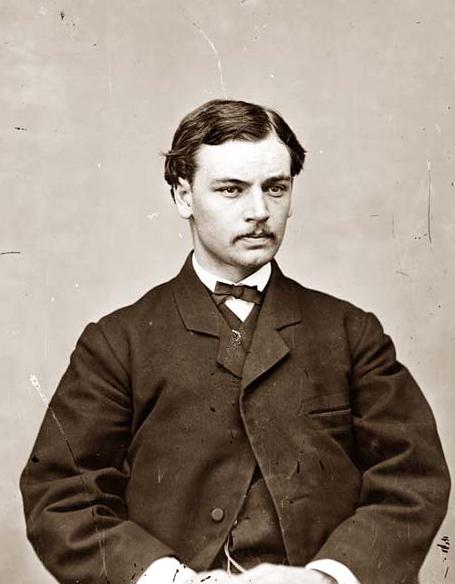
Robert Lincoln

After Abraham Lincoln’s death, Robert Lincoln became the man of the family. He was 21.

Robert had also become enamored of Mary Eunice Harlan, the daughter of Senator James Harlan of Iowa. The Lincolns knew her family, and they knew her. Mary Lincoln liked her very much and encouraged the romance but Mary was only eighteen and Robert twenty-one. Too young. They could, and must, wait.

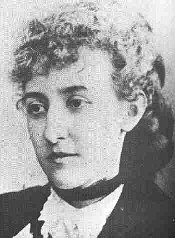
mary harlan

Robert Lincoln began to court Mary Eunice Harlan shortly before Lincoln’s second inauguration.

Miss Harlan remained in Washington with her family, and Robert, now head of the Lincoln family, went back to Illinois with his mother and his only remaining brother. Tad, at twelve, was still much too young to assume any responsibility.

Robert quickly found a position with a prominent Chicago law firm to “read law,” still an acceptable form of legal education and in a year passed the Illinois bar. By 1868 Robert Lincoln had begun what would become a successful law practice. He had corresponded with Mary Harlan throughout and they were married.

Immediately after the wedding, Mrs. Abraham Lincoln and Tad departed for Europe, where they lived for the next three years.

Mr. and Mrs. Robert T. Lincoln

The newlyweds returned to Chicago and set up housekeeping. Mary Harlan, who had known her mother-in-law since she had been fourteen years old, had little inkling of how difficult and troubled the Widow Mary had become. Robert, of course, had known about his mother’s mercurial temperament as well as the enormous debts she had incurred as First Lady.

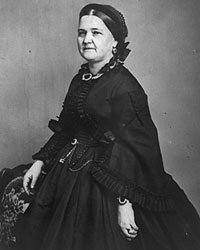
mary in mourning

Mary Lincoln was always a difficult woman, and Mrs. Robert Lincoln began to dislike her imperious mother-in-law.

Correspondence flowed readily between the two Marys, and when news arrived of an impending grandchild, Grandma-to-be Mary was thrilled. Gift after gift along with “motherly advice” was sent back to Chicago for mother-to-be and child. But once the baby was born, it was “Uncle Tad” who was homesick and longed to see his new little niece, named Mary, for her grandmother, but forever called “Mamie.” They returned to the United States. Mr. and Mrs. Robert Lincoln were happy to open their home to them.

That part did not last long. The reason (or reasons) for the rift between “the Mary Lincolns” has never been completely determined, but one consensus is that Mrs. Abraham Lincoln was imperious and bossy, and Mrs. Robert Lincoln had become accustomed to running her own household and intended to keep it that way. Whatever the dissatisfaction, Robert’s Mary packed up, took little Mamie, and returned to her own family. Things deteriorated further. Tad became ill, worsened, and died shortly after his eighteenth birthday. The Widow Mary collapsed with grief, and once again Robert, with no wife or baby to comfort him, rode to Springfield on a train-with-a-coffin.

Mary Harlan refused to come back to Chicago as long as her mother-in-law was there. Mary Lincoln obliged, and began her years of perpetual wandering. She would never again set foot in her son’s house, nor cuddle a grandchild.

Jack Lincoln

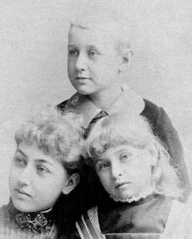
bobs kids

The three grandchildren born to Robert and Mary Lincoln. (l. to r.) Mary (Mamie), Abraham II (Jack) and Jessie. Only the girls lived to maturity.

Two more children were born to Robert and Mary Lincoln: Abraham Lincoln II (1873-1890), and another daughter, Jessie. There is no evidence that Mrs. Abraham Lincoln made any effort to see, contact, or even acknowledge her other grandchildren. One might surmise that Mary Lincoln, who had always loved children, felt the pangs of a neglected or unwanted grandmother. Nevertheless, she died in 1882 without ever having seen her grandson, named for his illustrious grandfather.

jacklincoln

“Jack” Lincoln had a fair complexion like his mother; his long legs may have been lanky Lincoln genes like his grandfather.

From the beginning, Abraham II was nicknamed “Jack.” Being named for his martyred grandfather was as much a burden as a blessing, as Robert must have known himself. Family lore said that “Jack” had to “earn the right to use the name.”

Robert T. Lincoln never had the outgoing personality of either of his parents, preferring a quieter and more secluded life far from the public eye. But in 1880, President-elect James A. Garfield appointed 38-year-old Lincoln as his Secretary of War. It was a position he would hold not only for the six-months of Garfield’s presidency, but throughout the presidency of Chester Alan Arthur.  The family assiduously kept a low profile in Washington.

When Benjamin Harrison became President in 1889, he appointed Robert T. Lincoln as Minister to Great Britain (the term “ambassador” was not used until 1893). The Lincolns were delighted and moved to London. Young “Jack” was said to be a bright young man with a fine future ahead, but like both his parents, kept out of the limelight. A rare studio photographs of him shows a boy with long thin legs, which might indicate lanky Lincoln genes. He was preparing to enter Harvard University when the Lincolns returned to America.

abraham-lincolnII

“Jack Lincoln” as a young man. He died when he was only sixteen.

On a vacation trip to France in 1890, Jack developed a carbuncle, or boil, under his arm. French doctors were summoned, and the carbuncle was lanced, but without the antibiotics of a later generation, infection set in and he developed blood poisoning. Robert Lincoln rushed him back to London, in the vain hope that British physicians might have a miracle cure for the sixteen-year-old young man who was bearing both pain and high fevers with (as his father said) pluck and determination.

But pluck and determination and good spirits were not enough, and Jack died at sixteen. Once again, Robert Lincoln rode a train-with-a-coffin to Springfield, where Abraham Lincoln II was interred in the family tomb.

Forty years later (and after Robert Lincoln’s death), Mary Harlan Lincoln had Jack’s coffin removed from his wall crypt, and reinterred in Arlington Cemetery, where Robert had been buried, and where she herself would be buried at her death.

Another forty years would pass before the name “Abraham Lincoln II” would be engraved on the marker.

Sources:

Lachman, Charles – The Last Lincolns: The Rise & Fall of a Great American Family, Union Square Press, 2010

Wead, Doug – All the Presidents’ Children – Atria Books, 2003

http://rogerjnorton.com/Lincoln66.html

http://www.arlingtoncemetery.net/abrahaml.htm

Posted in Abraham Lincoln, Nifty History People | Tagged , , , , , , , , , , , , , , , , , , | 11 Comments

Abe, Steve, Breck and Bell: A Multi-Colored Map

If one “back-lit” the now traditional red-blue election map, one would find FIVE colors in the 1860s elections. The Unionists and Secessionists were about to collide in the irrepressible conflict.

The Black States:

In this case, the “black” colored states were not states at all. They were U.S. territories. Some were “Indian lands.” It is true that there were dozens of towns and cities within the traditional map lines, but although they may have held many U.S. citizens, they had no voting rights.

election1860In 1860, there were only 33 states in the Union. Three more would be added during the next few years. One, West Virginia, is an oddball, and actually did not exist in 1860.  It was a piece of Virginia that steadfastly remained tied to the Union, and had successfully seceded from its own state.  It was admitted to the Union in 1863. Kansas was admitted in 1861, and Nevada in 1864.

The Red States:

fremont

Charles Fremont, “The Pathfinder,” was the first Republican presidential candidate in 1856. He lost.

cfadams

Charles Francis Adams, son and grandson of Presidents, was an old time Free Soiler. He had opposed the extension of slavery for decades.

The red states, traditionally Republican, made their first winning appearance on the 1860 election map. In 1856, the newly-established political party fielded a presidential candidate, John C. Fremont, but he lost to James Buchanan.

13-millard-fillmore

salmonchase The 13th President Millard Fillmore (top) had run in 1856 on the “Know Nothing” party ticket.  Salmon P. Chase (below), Gov. of Ohio, was a long time abolitionist.

seward

Sen. William Seward of NY, was a long-time Whig, and considered the front-runner for the election of 1860.

The Republicans were a motley assortment of political bedfellows when they first assembled in the 1850s. They consisted of some abolitionists, like Salmon P. Chase, some old Free Soilers like Charles Francis Adams, a pile of disaffected Whigs like William Seward, a remnant bunch of “Know Nothings” (a narrow, xenophobic, ultra-conservative group reminiscent of today’s far-right) like ex-President Millard Fillmore, and a broad range of Unionist Democrats, like the powerful Blair family, whose patriarch had been in Jackson’s “kitchen cabinet.”

President Lincoln

Abraham Lincoln of Illinois had little national credentials in 1860.

Abraham Lincoln, who was the Republican candidate in 1860, was a come-lately to the Republicans. He had been a long-time Henry Clay Whig, who bided his time, perhaps waiting until the political dust settled. By 1858, he not only had joined the party, but had begun to make his voice heard.

The Purple States:

John Breckenridge

Sitting VP John C Breckenridge, at 36, had been the youngest Vice President ever elected. He was the choice of the Southern Democrats.

The traditional “blue” Democratic states were not blue at all but an odd-ball bunch in 1860. Perhaps this is why graph-maker Max Galka avoided “blue” entirely, choosing close-shades instead.  The Democrats had imploded as a party during the hopelessly inept presidency of James Buchanan. Stephen Douglas, Lincoln’s fellow Illinoisan, had been a powerhouse in the party for a decade, but his Popular Sovereignty policies had spawned only bitterness and violence. The Southern delegates to the Democratic convention walked out in disgust when he was declared the candidate, met separately, and fielded their own “Southern” Democratic ticket, headed by Vice President John C. Breckenridge, a Kentuckian, who was still grappling with his allegiances.

It would be “Breck” who commanded the purple states in the 1860 election. Even though the party platform was not officially espousing secession, Southern Democrats were united. Abraham Lincoln, and indeed NO Republican candidates were even on the ballot.

The Green States:

While Northern Democrats had traditionally prevailed in the North prior to 1860, the Republicans had siphoned off many of their supporters during the turbulent 1850s.

stevedougolas

Stephen Douglas, “The Little Giant,” was unquestionably the best known Democratic politician in the country in 1860, but he had espoused divisive policies and had disunited his party.

Stephen Douglas, “The Little Giant,” so-called because of his 5’4″ stature and his powerful influence, campaigned relentlessly across the country – the first presidential candidate to take an overt part in his own election campaign.

It didn’t work. Although he was second to Lincoln in popular votes, Douglas captured only two states in the electoral college: Missouri and Delaware. After Lincoln’s election, he became a strong supporter of the new president, but died only a few months after Lincoln’s inauguration.

The Turquoise States

In Max Galka’s 1860 version, a turquoise state is sort-of blue-ish; the electorate is evenly divided and is luke warm in its affiliations.

It was true. Border states like Kentucky, Virginia and Tennessee were not happy with the Northern or Southern Democratic candidates. A Republican in those contentious areas, which still had large slave-holding populations, was out of the question. So was secession.

johnbell

John Bell had a long and distinguished, but not stellar, career. Few people knew him outside of the border states.

Former Senator John Bell was an old-school Democrat-turned-Whig, now in his sixties. He was staunchly opposed to secession, but even though he was a prosperous slave-owner, he staunchly opposed the extension of slavery. He attracted many like-minded followers.

The Constitutional-Union party was formed as a somewhat hybrid, i.e. the Constitution ostensibly “permitted” slavery, and the Union was indivisible. Border states were an amalgam, thus turquoise it was.

The Map.

election1860Max Galka is a clever fellow who (judging from his delightful and wide-ranging statistical website, of which the electoral maps are just a small part) obviously knows how to take raw data and make some sense out of it in a way that is easy to understand.

The 1860 U.S. election map has been drawn and redrawn many times, and has been our most colorful and most complex. Our greatest POTUS was elected only by plurality in both his elections. He was not even on the ballot in the South in 1860.  In 1864, with the Civil War going poorly, the “Republican” name did not even appear on the ballot: it was the “Union” party.

Fractious and factional elections go with the territory of democracy, and the more things change, the more they stay the same in essence.

It has always been the genius of America to find a balance, and to prevent the pendulum to swing too far in any direction.

Sources:

Presidential Elections Used to Be More Colorful

Abraham Lincoln and the Election of 1860

http://www.loc.gov/rr/program/bib/elections/election1860.html

Posted in A POTUS-FLOTUS Blog, American Civil War, Nifty History People | Tagged , , , , , , , , , , , , , , , , , , , , , , | 3 Comments

Mrs. Keckley, “Contraband” and The Lincolns

The Civil War brought out great bitterness. It also brought out great generosity.

“Contraband”

contraband

Shortly after the Civil war began, runaway slaves were give a unique new name: “Contraband of War.”

Fortress Monroe, near Norfolk, VA, was a crucial center for the Union, since it commanded the Chesapeake Bay, its trade, commerce and defensive position. General Benjamin Butler, a “political” general and Massachusetts lawyer, was in command of Union forces in that area, which was a magnet for the runaways. Technically, they “could not” be freed and “should” be returned to their masters, but Butler, an abolitionist, was not about to permit it. He declared the runaways as “contraband of war”, giving quasi immunity and a sense of growing pride and importance to the once-enslaved.

The Sanitary Commission

Early in the war, the Sanitary Commission was formed in the North. As a precursor to the Red Cross, the organization was devoted to provide money, goods and services for Union soldiers, particularly the wounded.

The idea caught on like wildfire, and hardly a Northern town  was without a chapter. (In the South, there was no structured organization; everyone pitched in however they could.)

Men had organized the Sanitary Commission, but it fell to the women to organize many of their activities: fairs and bazaars, knitting and sewing circles, assembling mess kits and sundries.

Huge sums were raised. Thousands upon thousands of articles – from fully-equipped ambulance wagons to socks and pajamas – were provided to army hospitals.

Mrs. Elizabeth Keckley

Keckley

Elizabeth Keckley, dressmaker and confidante to First Lady Mary Lincoln.

Elizabeth Keckley (1818-1907) was born in Petersburg, VA, a mulatto slave.  At a young age, she discovered a rare talent for sewing and designing ladies fashions and eventually became so adept that she earned enough money ($1200) to purchase her freedom.

As a free woman, she moved to Washington in 1860 and opened a shop, making gowns for the capital’s elite. She had come highly recommended to Mary Lincoln, and began working with the new First Lady the day the Lincolns entered the White House.

Lincoln Family

“Lizzie” Keckley became an indispensable part of the Lincoln White House.

The relationship between Elizabeth Keckley and Mary Lincoln would steadily deepen. Mrs. K. would not only be engaged as her modiste and personal dresser, but helped nurse Willie and Tad when they were sick, and tended to an ailing (and grieving) Mrs. Lincoln as well. From time to time she even combed the President’s thick and unruly hair. In short, she became indispensable, and the close confidante and companion to the First Lady.

Elizabeth Keckley and Contraband

contraband2

Free Negroes and former slaves came to Washington in droves during the Civil War. They were usually “disappointed” by freedom.

While the North and South actively supported their wounded, “Contraband” were given little assistance. Where were these poor souls to go? How would they find work and avoid starvation?   They were being ignored and neglected.

Mrs. Keckley had become a prominent figure among the free Negro citizens of Washington, well respected by her community. After witnessing a fund-raising fair in Washington to help wounded Union soldiers, she approached the pastor of her church about forming a society to assist all those “contraband” who needed food, clothing, medical attention and shelter. An organization was formed to collect money and goods, and to distribute them where they could. They named it the Contraband Relief Association.  Once Negroes were accepted as soldiers in the Union Army, it became The Ladies’ Freedmen and Soldiers Relief Association.

It was one of the first organizations established for Negroes to provide care for their own, and set a standard for subsequent charitable groups, uniting assistance among the capital’s Black Churches.  They organized their own fairs and bazaars, lectures and dances.

President and Mrs. Lincoln Contribute

President Lincoln

President Lincoln approved a generous personal donation to the Contraband Relief Association.

Lizzie Keckley had had a very brutal upbringing. Her “masters” were cruel; she was subject to beatings, rape and humiliation, yet she rose above it and was proud and self-sufficient. She was not given to beg for favors. Her prominence as dressmaker to the First Lady, and the genuine kindness she received at the Lincolns’ hands was sufficient.

mary in mourning

Mary Lincoln was a generous supporter to the Contraband Relief Association.

However, a month after the Contraband Relief Association was formed, she accompanied Mrs. Lincoln on a trip to New York, and took advantage of that time to tell her about her new “organization.” Mrs. L. was delighted to lead off the fund raising drive, and after requesting support from the President, pledged $200 (which would be far more than $2500 today). Mrs. Lincoln’s influence also brought Lizzie in contact with many prominent Northerners who also contributed generously. Wendell Phillips and Frederick Douglass were included among the subscribers, and even gave lectures on its behalf.

Both Lincolns would make subsequent contributions from time to time.

Mrs. Keckley: A Fall From Grace

behindthescenes

“Behind the Scenes” has been reprinted many times – but it was unsuccessful when it was written. It is said that Robert Lincoln arranged to purchase every existing copy to prevent his mother’s embarrassment.

The rupture of the close friendship between the First Lady and her dressmaker began basically over money. After Lincoln’s assassination, Mary Lincoln needed Mrs. Keckley’s near-constant companionship and nurturing, but she could no longer afford to pay her. Mrs. Keckley needed the money. Devoting all her time to the demanding former First Lady left her no time to tend to her business. She lost her customer base.

older Keckley

Elizabeth Keckley lived a long life, but it was mostly in poverty, relying on assistance from some of the charitable organizations she helped to found.

In a effort to support herself, she penned an autobiographical book with a ghost-writer, called Behind the Scenes: Thirty Years a Slave, and Four Years in the White House. In it, she presented an intimate portrait of the Lincolns including private letters from Mrs. Lincoln. This was a total breach of trust and privacy and Victorian morality, and the relationship between the two women was severed. Mrs. Lincoln never spoke of her again except to refer to her as the “Negro historian.” Mrs. Keckley had not intended to harm or humiliate the former First Lady, and indeed was devastated by the broken relationship.

Elizabeth Keckley later spent time as a dressmaking instructor at Wilberforce University, but eventually died at age 89 in poverty, at a Home for Destitute Colored Women, one of the offshoots of the Contraband Relief Association.

Sources:

Fleischer, Jennifer – Mrs. Lincoln and Mrs. Keckley – Broadway Books, 2003

Keckley, Elizabeth – Behind the Scenes: Thirty Years a Slave, and Four Years in the White House – Important Books, 2013

http://docsouth.unc.edu/neh/keckley/summary.html

Posted in A POTUS-FLOTUS Blog, Abraham Lincoln, American Civil War, Nifty History People | Tagged , , , , , , , , , , , , , , , , , , , , , , , | 2 Comments

The President and the Apprentice: A Book Review

The President and the Apprentice by Irvin F. Gellman is a massive and masterful book. It runs nearly 600 pages, not counting another 200 small print notes and citations. A remarkable effort.

One could write pages of comments of course on such a huge research project, but as a lay person (non-academic) who remembers (albeit as a school child) the 1950s, there are two aspects that I personally found most significant: theme and challenge.

The Vice Presidency as an Entity:

The President and the Apprentice: Eisenhower and Nixon, 1952-1961, by Irwin F. Gellman

It must be remembered that for 150 years prior to Vice President Nixon, the office of Vice President was little more than a geopolitical accommodation: an honorable position, but largely ceremonial with no heavy lifting. The concept of a Vice President doing anything more substantive than attending funerals, cutting ribbons and laying cornerstones was new.

In fact, it was so insignificant, that if you added up the amount of time the country physically had an empty Vice Presidential office, it would be more than 38 years!

When Woodrow Wilson was incapacitated, VP Marshall cringed at the thought of assuming responsibility (assuming that Wilson would allow it). And even though Franklin Roosevelt was failing in health (and probably knew it), he kept Harry Truman in the dark about most issues.

This changed via Ike and Nixon.

The Theme:

The theme of The President and the Apprentice, of course, is the 1950s, and we aging boomers and boomers-emeritus who are still around, usually have fond memories of that time: the nuclear “Donna Reed” family values (when kids could walk six blocks to school by themselves without fear of serious mayhem), TV and rock ‘n’ roll.

We tend to forget the undercurrents simmering below that post-war sigh of contentment: a belligerent Korean situation, unrest in Africa and the Middle East, civil rights tension about to explode in our own country, and oh yes, Communism, Sputnik and The Bomb.

The more things change, the more they stay the same.

The Challenge:

Author Gellman is younger with no first-hand memories save that (perhaps) of Richard Nixon twenty years post his Vice Presidency. The challenge here is enormous, and Gellman makes a huge effort to be fair, which in this particular case, is incredibly difficult. Few men have been more divisive than Nixon; if he said it was sunny and warm outside, there would be those who would insist there was a blizzard.

Just slogging through the various memos, diaries, letters and documents of the hundreds of people involved either closely or peripherally is daunting. The mega-issues that still prevail today are equally daunting. With modern emphasis on “primary source” research, one is sometimes hard pressed to know who and what to believe. Even primary sources (including the subjects themselves) do not always a) know everything, and b) tell the complete truth.

The main challenge (among many) is public perception. President Eisenhower, victorious General, Ike the Beloved (everybody liked Ike), and Nixon the Suspect (would you buy a used car?…) Given the subsequent career of Richard Nixon, those perceptions still run deep.

The second challenge (among many) is the long-held perception of Ike as a lazy president; a General accustomed to delegating, and even happier to play golf and stay above the fray. All PR and no politics.

That concept has changed among historians over the last few decades, concurring that Ike had a deep understanding and connection to all the key issues, and operated with a “hidden hand.” Ike, the strategist-General, careful in deploying his tacticians. (The PR and no politics part, however, remains. Ike did not like or truly understand politics.) That Nixon was deployed to undertake matters of consequence has never been questioned. Nixon put the office “on the map” as it were. No more cornerstone-laying and beauty queen crowning.

Yet another challenge, albeit a personal one, was the relationship between Ike and Dick as people – who eventually would become family by marriage.

Ike was a genial fellow, boy-to-man, who had a wall-to-wall grin and easy-to-like personality. Always one of the guys. Nixon was nice enough looking, but darker.  There was always the undercurrent paranoia of the outsider. The guy who never quite belonged.

According to Gellman, it was Nixon himself who may have fostered the premise that the personal relationship between the President and his apprentice was cordial, but distant. Gellman believes otherwise, and supports it with generous documentation. Nevertheless it is Nixon’s perception that counts, and it is Nixon’s perception that colors, rather than the paperwork.

Ike was happy to throw Nixon under the bus during the first election in 1952 (Checkers Speech); he was cool in 1956, letting the “convention” make the decision. Some years later, when asked about Nixon’s “accomplishments,” Ike was unforgivably callous, wanting some “time to think about it.”

Nixon had been Ike’s go-to man for the hard, and sometimes unpleasant duties, politics being at the top of that list. And he gave 1000%. If Nixon was hurt, he had cause, and like all outsiders, the hurt ran silent and deep.

The Historical Perspective

Dozens and perhaps hundreds of books have been written about Ike, both as “General Ike,” and as President. Ditto Nixon, whose long political career spanned a half-century of more ups and downs than Ike’s EKG. It is hard to be neutral. Gellman has not only undertaken the challenge with a sense of fair play, he has presented a book that deserves to be on every library shelf, and one that future historians will value and respect.

He openly acknowledges Ike’s quiet but active role as president, and even more, demonstrates the many opportunities that were afforded to his Vice President, and how much they contributed to Nixon’s eventual career. Nixon’s “acting presidency” during Ike’s serious illnesses became a rare opportunity for him to learn and grow – something no other Vice President had before.

Gellman’s book is aptly named: The President and the Apprentice. It was just that: a mentoring by a great man to a younger man who was eager to learn. Gellman is fair, he is thorough, he is readable, and he is relevant.

Well done!

THE PRESIDENT AND THE APPRENTICE

Eisenhower and Nixon, 1952-1961

By Irwin F. Gellman

Illustrated. 791 pp. Yale University Press. $40.

ISBN-10: 0300181051

Posted in A POTUS-FLOTUS Blog, Recommended Reading | Tagged , , , , , , , , , , , , , | 2 Comments

Nabby Adams: The Mastectomy

John and Abigail Adams’ daughter underwent a mastectomy when she was forty-four.

The Oldest Adams Offspring

abigail and john

Nabby Adams’ illustrious parents: John and Abigail.

The eldest of the four surviving children of John and Abigail Adams was a daughter, named Abigail (1765-1813) and forever nicknamed “Nabby.”   Somewhat withdrawn and shy by nature, she was bright enough, but never displayed the brilliance or intellect of either of her illustrious parents.

Nevertheless, she learned the domestic virtues and skills of a colonial woman and at twelve, had assumed substantive household activities. By this time, her father had been dispatched to Europe as diplomatic minister by a fledgling United States government.  John Quincy, Nabby’s younger brother and close companion, went with him. The long separations that John and Abigail suffered throughout the 1770s drew mother and daughter closer together.

When Nabby was in her mid-teens, she caught the eye of Royall Tyler, a local young man, recently graduated from Harvard. In those early days, romance and courtship was under the eye of everyone, and there was no such thing as a “casual date.” From the start, inquiries were made, and it seems that Mr. Tyler appeared unsatisfactory. There is some indication that Abigail’s sister Mary Cranch vented her disapproval. There is some indication that Abigail herself put the kibosh on it. There is definite indication that John Adams, far off in Paris, left the matter in his wife’s capable hands.  There is little indication, however, that either Royall Tyler or Nabby Adams had much to say about it, or that Nabby’s heart was broken past perhaps the slight wound stage.

Nabby Adams Smith

nabby

Nabby Adams was a stylish young woman in her late teens when she went to Europe with her mother. (from the Adams. Natl Historical Park)

In part to soothe whatever slight wounds she may have felt from the romantic breakup, and in greater part to be her mother’s companion, when John sent for his wife and she agreed to meet him in Paris, Nabby went with her. By that time, she was a young woman of pleasing looks and marriageable age.

Col. William Smith (one of a handful of “William Smiths” who pepper and confuse the Adams’ family tree) had been graduated from the College of New Jersey (Princeton) and had served as one of George Washington’s adjutants during the Revolution. Now he served as John Adams’ secretary. Ten years older than Nabby, he wooed and won her. Both John and Abigail were pleased with the match – a decision they would come to regret.

nabby husband wm smith

Col. William Smith was John Adams’ secretary while he was in Europe. He became the Adams’ only son-in-law.

Within a year of their marriage, the Smiths were now parents of an infant. There would be three more. They returned to the United States and settled in New York City, at that time  the capital of the new United States.  All went well. Then the capital was moved to Philadelphia, and William Smith was hard pressed to find stable and/or satisfying employment. Inclined toward the “quick deal,” he was always on the lookout for a speculative venture, and the couple spent many months apart while Smith set out to seek his fortune, which was never forthcoming. Nabby was hard pressed to keep food on the table. Her parents and her brother John Quincy helped where they could.

Despite the senior Adams’ change of heart toward their son-in-law, Nabby seems to have remained supportive, never speaking ill of him, and disdaining those who did. Eventually Abigail took two of their daughters to live with them in Quincy, Massachusetts – to spare her daughter the additional expense.

Nabby Becomes Ill

smith_abigail

An engraving of the young Abigail Smith (nee Adams)

In 1811, when she was only forty-four and living in the “frontier” of upstate New York, Nabby Adams Smith discovered a lump in her left breast, along with a general malaise. Doctors were summoned, but medical knowledge was still in its infancy, especially in remote locations. They recognized the cancerous tumor easily enough, but were at odds as to how to treat it. When she finally told her parents, they insisted she come to Boston for better treatment.

benj rush

Dr. Benjamin Rush, a Signer of the Declaration of Independence and close friend of John Adams, was the one who insisted that Nabby Adams Smith undergo an immediate mastectomy.It bought her a little time.

It was Dr. Benjamin Rush, one of the best known physicians in the country, and a close friend of John Adams, who insisted that Nabby undergo immediate surgery. She would not survive otherwise.

Very little actual and factual documentation exists regarding Nabby’s surgery, other than that it was done on a reclining chair in John and Abigail’s house. She was also fully clothed for modesty, required only to expose her left breast. One can only surmise the event from similar experiences and procedures of that time.

To wit. The likelihood was that every spare piece of linen or cloth was brought to make her comfortable, and to provide dressings. It is also probable that every candle they had was brought to provide the best possible lighting. There was no anesthesia. Nabby may have had strong whiskey forced down her throat, if anything at all. If she was fortunate, she might faint and be spared excruciating pain. There was no antisepsis. Doctors were casual in washing their hands and instruments; more likely a wipe-swipe on their aprons. When the breast was completely removed, the doctors noticed that the tumor appeared larger and more widespread than originally believed, but they had done their best. According to Jim Olson’s excellent article on Nabby Adams’ Mastectomy, it took longer to dress the wound than it did to remove the breast.

Nabby’s recovery was long, mostly due to her weakened condition. She stayed in Quincy with her parents, and the family sustained themselves hoping that the operation had been successful. It was seven months before she was well enough to return to upstate New York.

But she was not cured. The cancer had metastasized even before her operation. Within weeks, Nabby’s brief remission-of-sorts had ended and she began experiencing assorted aches and pains, that at first were regarded as “rheumatism.” But it was not. It was the cancer returning with avengance.   In spring 1813, she returned to Quincy once more “to die in her parents’ home.” It was her choice. When she arrived, after an excruciating trip, she was a shadow of her former self.

Nabby died on August 9, 1813, a few weeks after she arrived. And, just she had wished, with her family around her.

Sources:

Gelles, Edith B. – Abigail and John: Portrait of a Marriage – William Morrow, 2009

Levin, Phyllis Lee – Abigail Adams – St. Martin’s Press, 1987

http://www.shsu.edu/~pin_www/T@S/2002/NabbyAdamsEssay.html

Posted in John Adams, Nifty History People | Tagged , , , , , , , , , , , , , , , , , | 4 Comments

Jane Pierce: First Lady of Sorrows

Some people are born with a melancholy gene. Like Jane Appleton Pierce.

A Solemn Girl

jane_pierce

Jane Appleton Pierce, First Lady 1853-57) was always a sad figure. The adjective used to describe her was “woebegone.”

There was nothing in Jane Appleton’s (1806-63) childhood that suggested merriment. She was a New Englander, her father a Congregational minister, and strict religious observance was key to her personality and character. But it was morbid devotion, inasmuch as she believed in a punishing God. Whatever ill befell her (as it must to everyone from time to time), Jane believed it was due to her own shortcomings – even though she couldn’t understand what it was she had done to displease the Almighty.

As she grew into womanhood, she was pretty, dark-haired and petite, with finely chiseled features. Pretty enough to attract a very good-looking New Hampshire attorney.

A Convivial Man

Franklin Pierce (1802-1869) was her polar opposite. Outgoing by nature, religion was acquired rather than bred into him. Yet it was willingly “acquired” and he sincerely tried to abide by its tenets.   He became a lawyer, and gravitated easily to the social end of it: i.e politics.

franklin pierce

Franklin Pierce was an outgoing and convivial man with many friends. He was the complete opposite of his wife, who led a much more secluded life.

He courted Miss Jane Appleton off and on for a few years. He seemed genuinely attracted to her, and every indication is that he truly cared for her. But they were a mismatch of personalities.

Her family was reluctant to encourage the romance; in fact they were not pleased at all. Rumor was, Pierce drank. Rumor was correct. Pierce enjoyed passing an evening with his fellows at the tavern, bending the elbow and talking politics.

The Pierce Marriage

The courtship may have been mild, rather than intense, but they married. Jane, by that time, was twenty-eight, and courted or not, considered an “old maid.” Franklin Pierce at thirty-two, was established firmly enough to win a seat in Congress as a Jacksonian Democrat. Their honeymoon was to be in Washington.

It began auspiciously, but deteriorated. The Washington climate in the 1830s was abysmal. Hot and sultry in the summer, damp and chilling in the winter. Jane, always frail, caught cold easily, and found herself confined to her boarding house rooms.

In addition, small town Washington (and it was still a small town) was nothing like small town Concord, New Hampshire. Washington was extremely sophisticated, worldly and, of nature, political. The few women who accompanied their Congressional husbands were not to Jane’s liking. If she went out at all, it was to church. When Pierce socialized, he usually went alone.

Subsequent Congressional sessions saw him alone as well. Jane remained in Concord, but this time she had a purpose. She was pregnant. In her limited world, the highest, if not the only duty of a woman, was motherhood.

jane and bennie

Following the deaths of her first two sons, Jane Pierce focused her life on her remaining son Bennie.

The true pleasure she felt from bearing her first son was short lived. The infant died shortly after his birth.

Her second son, Frank, was born healthy, as was Bennie, her third son. But Frank died before his fourth birthday, and all Jane’s hopes and dreams became centered on Bennie.

The Acquiescence of Pierce

More than anything (other than motherhood), Jane Pierce wanted her husband home with her. Not in Washington. She obviously made her wishes known, and Pierce, no doubt reluctantly, agreed. He would practice law in Concord and forsake politics – except on a local level.   He even declined a cabinet position under President James Polk. But of course, he would continue to correspond with many of his political friends throughout the country.

Then too, Jane wanted him to forsake drinking. He agreed to that as well and took the pledge. For a time he was the President of their local temperance society.

Jane may or may not have realized what a great effort it was on her husband’s part. He loved politics. He loved socializing in the taverns. But he obviously loved his wife more. Then.

When the War with Mexico was declared, Pierce was in his mid-forties, but he wished to serve and volunteered. It is unknown if he wished to have a respite from his generally somber wife.

The First Straw

By 1852, the country was reeling through abolitionism, secession, states’ rights and a host of other divisive issues. Pierce had been away from the national scene for a decade, and told his wife everyone had forgotten about him.

pres_pierce

Fourteenth President President Franklin Pierce

Not true. Nor did he want to be forgotten. The political situation assured that no Southerner (slaveholder) could be elected. If the presidency was to go to a Northerner, it could only go to someone who was sympathetic to the needs of the South. Pierce was sympathetic, and encouraged his supporters to quietly promote his candidacy.

It took 49 ballots, but he won the nomination. He told Jane it was a complete surprise, and it is said that she fainted.   A few months later, he won the election. When she finally adjusted to the reality of the situation, she determined it was God’s will.

Only a few weeks before they were to depart for Washington, the Pierce’s and 11-year-old Bennie went to visit family in Massachusetts. En route, the train derailed, and their son was killed instantly.

Jane was completely devastated and never recovered from the shock.

The Second Straw

JanePierce

It is said that First Lady Jane Pierce spent many hours in the White House writing letters to her dead son.

It was a gloomy President-elect and Mrs. Pierce, still in deep mourning, who took another train to Washington in late February, 1853.  Along the way, Jane overheard some Pierce supporters discuss the nomination and election, indicating that Pierce had personally encouraged his nomination.

Her husband had blatantly lied to her. She had just lost her son, and now she lost faith in her husband’s word. She left the train in Baltimore, unable to continue. She would not arrive in Washington till a month after the inauguration.

Her four years in the White House were glum and morose. She wore black continually, made few public appearances, and relied on an aunt-by-marriage to “do the honors” when honors were required.

As their long-time close friend author Nathaniel Hawthorne would remark, “Jane Pierce was never really of this world.”

Sources:

Caroli, Betty Boyd – First Ladies – Oxford University Press, 1995

Nichols, Roy Franklin – Franklin Pierce: Young Hickory of the Granite Hills – University of Pennsylvania Press, 1959 (rev.)

Shenkman, Richard – Presidential Ambition: Gaining Power at Any Cost – Harper, 1999


Posted in A POTUS-FLOTUS Blog, Franklin Pierce | Tagged , , , , , , , , , , , , , , , , , | 4 Comments

Martha Washington’s “Disposition”

Martha Washington had very few memorable “quotes” – but one of them bears repeating. Often.

Martha Washington: Correspondent

Martha and George grave

Both George and Martha Washington are buried at their beloved Mount Vernon home.

When George Washington died in 1799, his distraught widow of more than 40 years systematically burned most of their correspondence. George Washington was the most famous man in the country, but Martha wanted to keep their privacy intact. This was not uncommon in those days. Letters between spouses were private, not for public consumption. Thomas Jefferson burned the letters between him and his wife shortly after her death. It is likewise believed that Mary Lincoln, nearly a century later, burned the private letters between herself and Abraham Lincoln shortly before they left Springfield, Illinois.

But if Martha Washington was not a prolific correspondent (a la Abigail Adams), she was nevertheless regularly in touch with her family members, and many of the ladies she came to know during her “travels with George” during the American Revolution. Letters being the only form of communication other than face-to-face conversation, they played more than merely a keep-in-touch role: they were a form of entertainment, meant to be kept; to be read and re-read.

In a surviving letter to her friend Mercy Otis Warren, Martha remarks that she is “still determined to be cheerful and happy, in whatever situation I may be; for I have also learned from experience that the greater part of our happiness or misery depends more upon our disposition, and not upon our circumstances.”  It is more than likely that the comment itself may not have been not original to Martha, merely that she quoted it. But since she did quote it, and since it suggests so much of the Lady Washington that we know, it bears repeating.

Circumstances

martha young-2

Photographs did not exist in Washington’s time; this likeness is said to be the young Martha Washington.

One can use the word “circumstances” in many ways. Financially, Martha Dandridge was raised in comfortable circumstances. Her father was solidly middle class gentry. When she married Daniel Custis, she would never have to worry about money. Ever. He was one of the wealthiest planters in Virginia, and at his death, she inherited nearly 20,000 acres and a labor force of 300. And a house containing some of the finest household goods in the colony. And ready cash, too.

But sometimes “circumstances” are merely the capriciousness of fate. Martha and Daniel Custis had four children together. Two died before they were five. When Daniel died, she was left with Jacky and Patsy, ages four and two. Then she remarried.  These circumstances were kind.

George Washington would be the only father those little children would remember. They called him “Father,” and he was as affectionate and devoted to their well being as if they were his own blood. The Washingtons had no children together.

young GW

General George Washington – about the time of the Revolutionary War when he was in his forties.

When Patsy was fifteen, she died in an epileptic seizure. She may have had early childhood “fitts”, but they became more problematic and severe as she approached puberty. The Washingtons made every effort and spared no expense to find a cure for her affliction. As might be expected, Martha was devastated by Patsy’s early death.

A decade later, her son Jacky, now around twenty-seven with a young wife and four children, died from a camp-fever in Yorktown, where he was attached to the Colonial Army. General Washington raced home on his only trip to Mount Vernon during the entire Revolutionary War, to be at his stepson’s bedside, and to comfort his wife, who was profoundly grieved.

She had borne four children. She had lost them all.

Nevertheless, despite a perfectly natural depression following her children’s untimely deaths, Martha did not become “a depressive.” While it no doubt left a deep scar on her heart, she survived. When one thinks of the life-altering depressions of Jane Pierce (losing all three of her children), and Mary Lincoln (also losing three children), one cannot help recognizing the truth of Martha Washington’s “disposition-over-circumstances.”

More Circumstances

washingtonfamily

George and Martha Washington with her two grandchildren, George Washington Parke Custis and Nelly Custis.

Portrait of First Lady Martha Washington

The famous Gilbert Stuart likeness of First Lady Martha Washington.

Lady Washington, as Martha was known following the American Revolution, was by nature a homebody. She was a domestic woman, happiest at their beloved Mount Vernon, surrounded by nieces, nephews, grandchildren and kin-of-kin. She had always disliked traveling, and encamped with General Washington solely to please him.   Traveling was hard, cumbersome and at times, dangerous. Weather itself could be dangerous. It was wartime; her carriage might be intercepted by the enemy. Roads, where there were roads, could be hazardous to her carriage and the wagon of supplies she usually brought with her. Communication was difficult and could take days.

After the Revolution, both she and the General  returned to Mount Vernon and planned to remain there for the rest of their lives.

george and martha

George and Martha, as posterity likes to remember them.

But circumstances led to a divergent path. General Washington was still needed by the infant country he helped found, and in 1789 he took office as the first President of the United States. Like it or not (and she did not especially like it), Martha Washington would be needed in New York, and later in Philadelphia.

That same disposition that saw her through the deaths of a husband and four children, and that kept her cheerful during seven years of long separations from her husband, interspersed with the trepidations of long journeys, was a disposition that would win her many friends and acquaintances. Wherever she went, those she met would remark on her agreeable personality, and surviving letters are filled with kind words about the first First Lady.

Her distaste for her exalted position was well known to her husband, but she managed to hold her tongue and her pen…and remain “cheerful.”

It was her disposition.

Sources:

Brady, Patricia – Martha Washington: An American Life – Viking, 2005

Randall, Willard Sterne – George Washington: A Life – Galahad Books, 1997

www.mountvernon.org

https://www.whitehouse.gov/1600/Presidentshttps://www.whitehouse.gov/1600/Presidents


Posted in A POTUS-FLOTUS Blog, George Washington | Tagged , , , , , , , , , , , , , , , , , , , , , , , | 2 Comments

Frances Cleveland: The FLOTUS As Celebrity

When 49-year-old sitting president Grover Cleveland took a 21-year old bride, the country was enchanted.  

Frances Folsom: White House Bride

Adorabe Frances

Frances Folsom Cleveland was only twenty-one when she became First Lady.

New First Lady Frances Cleveland was not only young, but she was pretty.  She had a nice figure, a peaches-and-cream complexion – and dimples! The very antithesis of the grumpy looking and seriously overweight president.

At her very first reception, only a year out of Wells College, Frances delighted the crowds that came to greet her. She smiled easily, shook hands for hours on end (youth smiles on stamina), and had a kind word for all.

formal portrait

President Grover Cleveland

Within the month, she was the media darling. Letters poured in with requests for her photograph. The White House ordered 10,000 photos to fill the demand. Within another few months, they had to re-order their supply.

The “Media” of the 1880s

After the Civil War, women began taking on an entirely new importance. Their activism during the Civil War had not only been impressive, it had been essential. They helped raise millions of dollars (North and South) for the war effort: planning dinners, fairs, dances, and bazaars . They organized hundreds of knitting and sewing circles. Most of all, they learned how to organize; how to spend their time effectively and efficiently; how to work together in committees – and some even learned how to speak in public.

To address this huge change in the public perception of women, magazines emerged  catering to those domestic issues: personal appearance, household management, child care, and even “suitable” hobbies. McCalls, Redbook, Ladies Home Journal and Good Housekeeping magazines made their initial appearances in the last decades of the nineteenth century – and are still around today. Supporting these magazines were thousands of advertisers of “womanly” and/or domestic products, from hand creams to the latest model sewing machine.

francesad4

First Lady Frances Cleveland was featured on covers of dozens of magazines.

Immediately after the Cleveland marriage, the magazines were pasting illustrations and sketches of Mrs. C. on their covers – with or without President Cleveland. They quickly found that their circulation boomed with every issue featuring the new young FLOTUS.

“Frankie” the Celebrity

Frances as an ad

Her image was used to endorse all sorts of patent medicines…

To promote mega-interest in their products, advertisers commandeered the likenesses (implying tacit endorsements) of well known persons without their knowledge or consent – let alone any monetary payment. There were no laws against it.

francesad2

…and undergarments…

Once the photographs of the new Mrs. Cleveland became available, they began appearing in magazines and newspapers, attached to advertisements for a broad variety of goods.

francesad3

…and even chewing tobacco.

She was seen in ads patronizing sewing machines, fabrics, a piano, and any number of pills and potions, implicitly suggesting that the First Lady was using, or endorsing said products. One of the products said to be used (daily, no less) was arsenic, claimed to be a beauty treatment for her complexion. Of course Mrs. Cleveland never did any such thing.

Mrs. C. and the Children

By the time of Cleveland’s second term (non-consecutive), First Lady Frances had become a mother. Ruth was born between the Cleveland presidencies. Esther was first Presidential baby to be born in the White House. (Frances was pregnant at the time of Cleveland’s second inaugural.) A couple of years later, their third daughter, Marion, made an appearance – but she was born in their summer home.   Their two sons were born after Cleveland’s term ended.

frandesad6

Illustrations were made depicting the entire Cleveland family tacitly “endorsing” department stores.

Now, as a young matron still in her late twenties, Frances was receiving letters soliciting advice on child care. Now the magazine covers were sketching idealized portraits of the Cleveland family unit: Mother, Father and children in a garden, or at the dinner table. Department stores ran “tacit” endorsements of Frances and the girls “window shopping” at their stores.

There were still no laws against the President, the First Lady, or even the First Children being “commandeered” in such a fashion – without their permission.

According to the New York Times, “The problem became so widespread that one of the president’s supporters introduced a bill in Congress to prohibit using the image of any real woman without her express written permission.  The bill’s failure left the Cleveland’s with no legal recourse, so they could only plead with businesses, usually to no avail, to cease and desist.”

The President grumbled and groused about the intrusions, but the advertisers paid no mind.  The Clevelands continued to have their likenesses used commercially.

The End of the Era

francesad5

President and Mrs. Cleveland had their photographs used to promote cigarettes.

Grover Cleveland’s second term was not successful. There were mounting issues, both domestic and international; some even pitted the conservative Democrat against members of his own party. Frances, of course, continued to be popular.

But once the second term ended, and the couple and their children “retired” to private life, the pervasive merchandising of their family dwindled. Cleveland, by that time, was sixty, and never considered “fashionable.” Mrs. C. was now occupied as wife and mother, and active in several community activities, such as the Kindergarten movement, and as a trustee for Wells College, her alma mater.

Cleveland’s health deteriorated, and he finally died at age 71. When Frances remarried a few years later (the first First Lady to do so), everyone wished her well, and for the most part, forgot about her.

Sources:

Boller, Paul Jr. – Presidential Anecdotes, Oxford University Press, 1981

C    Carpenter, Frank G. – Carp’s Washington – McGraw Hill, 1960

       Dunlap, Annette – Frank: (Frances Folsom Cleveland) – SUNY/Excelsior, 2009

            Foster, Feather – The First Ladies, Sourcebooks 2011

http://www.nytimes.com/learning/general/onthisday/harp/0612.html


Posted in A POTUS-FLOTUS Blog, Grover Cleveland | Tagged , , , , , , , , , , , , , , , , , , | 2 Comments