William Howard Taft and the Bathtub(s)

taft-tub

One of the many oversized bathtubs said to have been created for President William Howard Taft.

William Howard Taft was a big baby who became a big boy who became a very big man.

WHT: The Big Guy

William Howard Taft (1857-1930) came from a very prominent Cincinnati, Ohio family. His father had served in Grant’s Cabinet as well as in several diplomatic posts.

young will

Young Will Taft had a stellar pedigree: prestigious Cincinnati family, Yale, attorney, judge. He was a natural!

Following in his father’s footsteps, Will Taft went to Yale, graduated at the top of his class, returned to Ohio, became an attorney, and began a steady rise in public service.

As a full-grown man, the once-big baby became a six-footer, weighing anywhere between a svelte 250 lbs. (on a thin day), to a huge 350 lbs., depending on his level of stress.

Blessed with the proverbial fat-and-jolly disposition, Taft was always popular with all levels: mentors, peers and subordinates. Everybody loved him. When he married the former Helen Herron (1861-1943), her political intelligence and ambition provided a constant impetus for his political rise.

youngjudgewht

Appointed to the bench early in his career was perfect for the judicious and genial – and sedentary – Taft. He loved being a judge!

Early in his career, Taft was appointed to the “bench.”  The sedentary judicial life suited him perfectly. The all-encompassing one-size-fits-all black robes also suited him perfectly. But Nellie, his ambitious wife, along with the close-knit Taft family, had other plans for their favorite relative.

Taft’s Road to Washington

Appointed Solicitor General by President Benjamin Harrison, the Tafts moved to Washington. The genial young attorney focused his wistful eye on the Supreme Court; Nellie focused her wistful eye on a better address a mile away on Pennsylvania Avenue.

William_Howard_Taft

Both Presidents Benjamin Harrison and William McKinley liked and admired Taft. President Theodore Roosevelt was his closest friend.

President Harrison liked the big, personable and extremely competent Taft, and at the end of his single term, appointed him Sixth Circuit Court of Appeals Justice. The continual travel of the Circuit Court suited him. Trains, restaurants and hotel living increased his girth.

Finally, at the end of the 19th century, and shortly after the Spanish-American War, President McKinley appointed Judge Taft as Governor-General of the Philippines, the Pacific island nation that had fallen into the American lap, whether we wanted it or not.

Taft In the Philippines

Taft was an ideal choice. He managed to unite (as best as could be united) a half-dozen insurgent factions, and began a road to real progress among the fractious population.  They liked him.

Nellie Taft always considered the Philippines as a “dress rehearsal” for the Presidency. In Manila, she was the First Lady – and Taft was a popular leader. Both Tafts counted that time as among their happiest years.

taftinphilippines

Not a horse…but you have to feel sorry for the water buffalo!

He also managed to squeeze in some exotic travel, dear to the heart of both Tafts. The big fellow once wrote to Secretary of State Elihu Root, telling him of his trip on horseback through the tropical jungles. Root, a close friend of the 300-pounder, wired back inquiring, “How is the horse?”

During those Philippine years, Taft was offered his “dream job” – a seat on the Supreme Court – twice, no less, by now-President Theodore Roosevelt. Taft sighed and declined, citing his desire to complete ongoing efforts in Manila. Mrs. Taft sighed in relief. Her eye was still on the White House. The Supreme Court was a lifetime position, and Taft, still in his forties, was far too young to make such a commitment.  When a Cabinet position was offered, however, the Taft’s returned home.

Taft Expands in the White House

Taft did not really want to be President, and he hemmed and hawed. The Brothers Taft, ably abetted by Nellie – along with persuasive President Theodore Roosevelt, a close personal friend, managed to twist the big guy’s arm.

Taft easily won the 1908 election.

thebigtaft

Taft is said to have gained fifty pounds in the White House.

Helen Herron Taft

First Lady Helen Taft suffered a severe stroke only weeks into the Taft presidency. WHT missed her political savvy!

All began well, but the culmination of dreams was abruptly ended when Mrs. Taft suffered a stroke only a few months into the administration. It was a long recovery that devastated all her dreams. It would equally devastate President Taft, who loved his wife dearly, and relied on her political savvy. Her inability to speak, read and write coherently deprived the President of a keen and prescient advisor. Her inability to “appear in public” deprived him of her regular nudge to keep him awake at the table.

Some people lose their appetites under stress. Some become ravenous.

Will Taft had always battled with weight. He had been placed on various diets by various doctors over the years. He had followed them and had even lost appreciable weight. But it was a yo-yo; it would never stay off permanently. Now, with the stress of the Presidency he never really wanted, the illness of his wife, and a growing rift with his ex-best friend, former-President Theodore Roosevelt, Taft’s weight ballooned to around 350 lbs. – heavier than he had ever been.

“Tubby” and Tubs

tafttubcartoon

Taft and the “tub” incident, whether exactly true or semi-apocryphal, provided cartoonists with a wealth of opportunities!

The legend is (according to long-ago White House Chief Usher Ike Hoover’s recollections) the overweight President literally became stuck in the bathtub and needed to be pried out. This may well be apocryphal, since if there actually was such an undignified and embarrassing personal incident, chances are it might be neatly hushed-up. But the general “public knowledge” is that several Taft-sized bathtubs were built and installed. One such tub was constructed for the battleship North Carolina sometime in 1909, when Taft was expected as a guest. Other appropriate-sized bathing venues were installed in other facilities where the chubby President was expected to stay. That includes the White House. A new tub was created specifically for our largest POTUS in circumference.

One absolutely true “tub story” concerns the Cape May Hotel in New Jersey, where the plus-sized Ex-POTUS was staying and bathing. Seems Taft’s weight “displaced” a ton of water, which overflowed onto the floor, leaked down through the ceiling, raining on guests dining below. The following day, as Taft was gazing at the Atlantic Ocean, he quietly remarked, “One day I’ll get a piece of that fenced in, and when I venture in, there won’t be an overflow.”

Sources:

Hoover, Irwin Hood – 42 Years in the White House – Houghton Mifflin Co. , 1934

http://millercenter.org/president/biography/taft-life-before-the-presidency

https://www.whitehouse.gov/1600/presidents/williamhowardtaft
Posted in A POTUS-FLOTUS Blog, William Howard Taft | Tagged , , , , , , , , , , , , , , , , , , , | 1 Comment

VP Charlie Curtis and His Data Base

Charles Curtis is one of our most obscure Vice Presidents, known only for being part  Indian, as they used to call it, and he was proud of it.

charles curtis

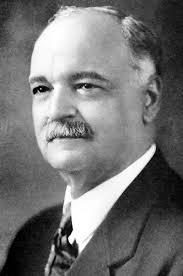
Charles Curtis, Vice President under Herbert Hoover: 1929-1933

Charlie the Kaw

Charles Curtis (1860-1936) was a Kansan, born as the Civil War was getting under way. He was one-eighth Kaw Indian. His mother died when he was a baby, and he was ping-pong-raised by his two grandmothers until he reached puberty. He personally enjoyed his “Indian” life, and expressed a desire to remain within the tribe. His “Indian” grandmother sided with his “Curtis” grandma, however, and suggested that it would be better for him to get an education “on the outside.”

Even though Charlie was an indifferent student and never graduated high school, he managed to read law while he supported himself as a hack-driver. When business was slow, he drove under a gas-lamp to study. His real diligence made up for his so-so acumen, and he passed the Kansas bar and began a practice.

But the political bug bit him, and in the 1880s, the Republican Party was the party of choice. He began supporting Republican candidates, and in a short time, was elected to the State Legislature.

Charlie the Politician

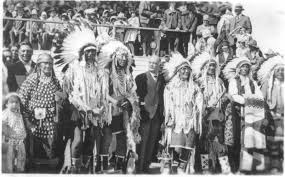
curtisandindians

Charlie Curtis was always proud of his Indian heritage and his inclusion in Kaw Indian tribal membership.

Charles Curtis, by his own admission “one-eighth Kaw and 100% Republican”, was a natural in politics. He was a nice looking fellow with an easy charm and the politician’s glad-hand. He was happy to criss-cross his county for votes and fellowship, and the populace responded.

During the 1890s, a Kansas editor named William Allen White was making a name for himself in journalism, and spent a couple of days traveling with the young legislator as he made rounds in his district. Frequently, White noticed that Curtis seemed to be consulting a little back notebook and mumbling to himself. Upon closer observation, he realized that the notebook was a list of names of everyone Curtis met during his travels, along with salient information that might be useful. Names, spouse names, town, county, what they did for a living, age, children, and distinguishing attributes. And in mumbling, White realized that Curtis was committing this information to memory. Several notebooks would be filled over the years.

If he was going to a certain town, he reviewed all their residents in his book so he could greet them by name, ask after their “ailing mother,” congratulate them on the new baby or whatever else was important in their lives. The voters believed that Curtis remembered them, and he was considered their personal “friend.”

Charlie Curtis went to all the state and county fairs, the political rallies, the local contests and events. This attention to his constituency practically guaranteed that he would continually win his district – even though much of populist-Kansas was leaning heavily toward the party of William Jennings Bryan.

Charlie in Leadership

Few people today realize that Charles Curtis was a viable candidate for high office during the early part of the 20th Century. It was not so much because of his leadership as it was because of his followership. He checked in with the Republic Party power brokers regularly, and voted a straight-as-an-arrow line. The Republicans sent him to Congress. And then to the Senate, where he rose in their ranks, eventually becoming Majority Leader.

The consensus of future politicians wagged that when a new bill was introduced, Charlie Curtis would immediately seek out the moguls and ask, “How do you want me to vote?” And he voted accordingly. He seldom introduced important legislation, never rocked the boat, and was not inclined to disagree – especially when he could charm and disarm.

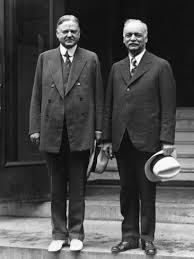
hooverandcurtis

As Herbert Hoover’s Vice President, his role was largely ceremonial rather than substantive. Hoover did not consider him highly.

During the 1920s, Charlie Curtis was regularly shortlisted as a candidate for President – and wanted the office. He had hoped for the Vice Presidency under Coolidge, but Coolidge wasn’t impressed. Curtis wanted the Presidential nod in 1928, but he had no chance against Herbert Hoover, who had a much more impressive resume. He became Hoover’s running mate and Vice President. Hoover wasn’t impressed either, and gave Curtis virtually nothing to do, and never sought his advice or assistance.

Indeed, when the Gershwins penned their Pulitzer Prize winning musical “Of Thee I Sing,” the persona of the ineffectual and unrecognized fictional Vice President Throttlebottom was based on the public’s impression of Curtis.

Charlie’s Data Base

In the early part of the 20th Century, there were no computers or mechanisms for large-scale data storage. Whatever information was collected would be filed by hand, and retrieved similarly. Politicians with a memory for names and faces were truly blessed. Curtis may have had a memory for names and faces, but it was earned and learned over years of work.

By the 1920s, his little notebooks became a system of index cards of every voter in Kansas – and elsewhere, if they were likely to have an impact on his career. Names, spouses, parents, children, children’s spouses, grandchildren. Residences, occupations, issues of concern – and whatever else might be of importance.

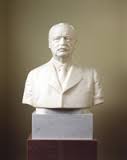
curtisstatuaryhall

The good people of Kansas never forgot their favorite – and Native son. His bust represents Kansas in Congress’ Statuary Hall.

As time went on, the card file was sub-divided according to “special interests.” Doctors. Farmers. Merchants. School teachers. If specific legislation was on the docket for those interests, Curtis could put a substantive list together quickly and circulate the Republican point of view.

Everywhere he went, business cards were collected and more index cards were filed and cross-filed. Even those politicians who thought of Charles Curtis as little more than a political cipher were impressed.

Today Charlie Curtis may be considered a political hack of little regard, but he was a first-rate data base manager way ahead of his time!

Sources:

Barzman, Sol – Madmen & Geniuses: The Vice-Presidents of the United States – Follett Publishing, 1974

Purcell, L. Edward, (Editor) Vice Presidents: A Biographical Dictionary – 2005, Facts on File Publishing

http://www.senate.gov/artandhistory/history/common/generic/VP_Charles_Curtis.htm

Posted in Nifty History People | Tagged , , , , , , , , , , , , , , , , , , | Leave a comment

Jefferson Davis at Twilight

For a man with lifelong poor health, Jefferson Davis managed to live till eighty-one.

The Three Careers of Jefferson Davis

Jefferson Davis (1808-1889) was a quintessential Southerner of the early nineteenth century: one who easily and capably gravitated into three distinct careers. West Point trained, he was a capable and effective army officer. Had he not been elected President of the Confederate States of America, he no doubt would and could have served as a high ranking general for the southern army. His wife Varina later wrote that she believed her husband would have been much happier with a field command than as President of the CSA.

jeff davis

Following the path of George Washington, young Jefferson Davis was a soldier, a planter and a statesman.

Davis was also a successful planter. Resigning military life in lieu of civilian opportunities for wealth was common. Jefferson Davis’ Brierfield estate, thrived. By the beginning of the Civil War, he was considered one of the wealthiest planters in Mississippi.

Davis easily gravitated to political life, another career common to prosperous Southern gentlemen. His voice was mellifluous in an age where oratory was a career in itself.  Elected to Congress in the mid 1840s, his ability to sway an audience was substantial.  He was in line to become a spokesman and leader of Southern issues.

The Complex Reputation of Jefferson Davis

No question about it, Jefferson Davis was a difficult man with few close friends. Many people disliked him. Most people respected him, however, and his personal integrity would always be above reproach. No one was harder on Jefferson Davis than he, himself.

csa pres

Dozens of photographs were taken of US President Abraham Lincoln. Only one was taken of CSA President Davis.

What he was not, however, was a rabble-rouser. Despite his close attachment to John C. Calhoun (who died in 1850), Davis was a staunch Unionist. He was opposed to secession and said so many times. It was a sad event for him when Mississippi followed South Carolina out of the Union in 1861. Nevertheless, he believed the states had a “right to secede” and it was this core belief that would sustain him.

Those who knew Davis, realized that he was a man who once he made up his mind, could not be induced to change it.  He could never quite understand an “honest difference of opinion.” His unfailing courtesy masqueraded as icy indifference, or perhaps vice versa. This intransigence and cold reserve would prove disastrous both personally and politically. Even though he had been elected CSA President without opposition, by the waning days of the Civil War, half of the South disliked him and/or blamed him for their failures.

Jefferson Davis, Martyr

THe older Davises

The Civil War, followed by his two-year imprisonment aged Davis considerably. This photo was taken sometime around 1868.

It may have been Lincoln who was assassinated, and claimed by the ages as our Martyred President, but it is truly Jefferson Davis who had the soul of the martyr.

Captured a month after Lee’s surrender at Appomattox, Davis was imprisoned in Fortress Monroe, and put in chains in a damp cell. He was in his late fifties and had been in poor health for decades. He was obviously no threat to anyone, and the chains, while perhaps symbolic, were unnecessary. True to form, he did not complain. It would fall to his wife Varina to campaign for his “humane” treatment, which included allowing her and their baby “Winnie,” less than a year old, to join him for the better part of two years in the casement prison.

the davis kids

At the end of the Civil War, the Davises had four children under twelve years old.

Davis was not a man to moan and groan, rather to forebear and suffer in silence. Instead he focused what little energies he had left on finding employment and providing for his still-young family. It would not be easy at his age, his health condition, and his past. He had lost everything – except his dignity.

Resurrection and The Lost Cause

The Civil War was a seminal moment in American history, for both the North and South. Parades were held, books were written, songs were sung, speeches were made, banquets and dinners hosted, military reunions, celebrations and memorial services were scheduled with regularity.

In the South, about a decade and a half after the War had ended, and pockets of strife had either begun to heal or fester, The “Lost Cause” was born. Sociologists and historians simplify it by saying it was the Southern way of promoting the valor, the sacrifice, the bravery and gallantry of their soldiers, and the inner resolve and strength on their homefront. It is as good a way to explain it as any. But in the complexities of human nature, the South needed to believe in something positive, or good, or worthwhile about themselves despite their loss, despite their despair and despite their continued economic struggles.

Thus more parades, more celebrations, more occasions to create reason to cheer themselves. For the soldier, any soldier, any age, battle ranks high in the pinnacles of their lifetime.  The bands-of-brotherhood are among the strongest of ties.

elderlyjeff

Despite his white hair and beard, Jefferson Davis aged gracefully and with mental alertness.

Stonewall Jackson-The-Hero was now dead for two decades; General Lee-the-Revered was dead for one. Other generals of lesser note were trotted out from place to place to wave the Stars and Bars, eat barbecue and sip a julep. Then they re-discovered a legitimate “star”: Jefferson Davis, now well into his seventies, white haired, but still straight as an arrow, with his unfailing courtesy (the ice was forgotten) and his overwhelming dignity which never left him.

He was invited to be a guest and to make some appropriate remarks. His oratory was still powerful, and his focus on the valor, the sacrifice, the bravery and gallantry and inner resolve was exactly what his “countrymen” wanted to hear and needed to believe. Now he was invited everywhere, and as long as his health held out, he was happy to go.

He was finally personally popular.

Sources:

Davis, William C. – The Lost Cause: Myths and Realities of the Confederacy – University Press of Kansas, 1996

Johnson, Clint – Pursuit – Citadel Press, 2008

Swanson, James – Bloody Crimes: The Chase for Jefferson Davis – William Morrow, 2010

http://www.civilwarhome.com/jdavisbio.htm

Posted in American Civil War, Nifty History People | Tagged , , , , , , , , , , , , , , , , , , , , | 2 Comments

Mary Lincoln’s Big Sister: Elizabeth Edwards

Elizabeth Todd Edwards was the oldest of Mary Lincoln’s siblings.

The Todd Family

Robert and Eliza Todd of Lexington, KY had six children who lived to adulthood. Mary was the fourth. Eliza died when Mary was only seven; eighteen months later, Robert remarried, and the family dynamic was changed forever with the arrival of a new stepmother – followed by eight more little Todd offspring.

edwards_eliz_ihl_large

Elizabeth Todd Edwards, Mary Lincoln’s eldest sister, as a young Springfield matron.

Elizabeth Todd (1813-1888), the eldest, was the quintessential prototype of the “first-born syndrome.” She took on the responsibility of quasi-mothering her younger siblings, and escaping the strained household at sixteen by marriage to Ninian Edwards, Jr., the son of the first governor of Illinois. She moved to Springfield, its new capital, with a goal of creating a social scene befitting a state capital – practically from scratch. In the early 1830s, it was still a pioneer village.

Elizabeth Rescues Mary The First Time

Elizabeth Edwards, capably hosting social events for her widowed father-in-law, believed that the up-and-coming young men who lived and/or had business in Springfield required intelligent, well-bred young women to help advance their careers and raise distinguished families. And who better than her own sisters to advance that vision? Besides, living in Kentucky with the “wicked stepmother” was becoming difficult for all the “first” sisters.

Mary Todd, five years younger than Elizabeth was duly invited to come to Springfield permanently when she was in her late teens. Staying with the Edwards’ she was immediately introduced to the cream of Springfield.

young mary lincoln

Mary Todd Lincoln, as a young Springfield matron, taken shortly after she married Abraham Lincoln.

Mary was delighted to escape from her “desolate  childhood,” (her own phrase).  Living with her sister and brother-in-law for five years, she enjoyed perhaps the most carefree time of her life. She had a little coterie of social friends, attended parties and theatre and lectures and whatever entertainment was available in the growing town. Then she met and married a struggling young attorney named Abraham Lincoln. That marriage, however, was not without serious misgivings by both Elizabeth and Ninian Edwards. While they believed Lincoln was a nice enough fellow and a capable lawyer, he was multi-steps below the society-minded Todds (who required two “d’s” while God only needed one – according to Lincoln).

The Lincolns married anyway, and it would take them more than a decade to achieve middle-class status.

Rescuing Mary in the White House

It was Robert Lincoln, the eldest of the Lincoln sons, who sent for his Aunt Elizabeth in 1862.

more mary

The death of 11-year-old Willie Lincoln plummeted Mary into a severe depression.

By that time, Lincoln had been elected President of the United States, and the country was being torn apart by a Civil War which would claim more than a half-million lives before it ended.

The First Family, less than a year in the White House, experienced its own wrenching loss.  Eleven-year-old Willie Lincoln died of typhoid fever. Mary Lincoln was devastated by grief. For weeks she was physically unable to leave her bed. President Lincoln, the equally distraught father, was overburdened by his duties and could spare little time for the emotional care that his wife desperately needed.

Robert asked his aunt to come to Washington. She came, and it was she who firmly prodded Mary to get on with her life…”get up, Mary, get dressed, Mary, you can’ t stay in bed sobbing all day, Mary…” Elizabeth stayed for two weeks, and Mary began to move on.

Rescuing Mary for Real

elizabeth edwards

Elizabeth Edwards invited Mary Lincoln to “recover” in their home, following her “sanity” ordeal.

ninian edwards

Ninian Edwards, Elizabeth’s husband, and the Lincolns brother-in-law.

The assassination of Abraham Lincoln was more than mere grief to his wife. It was a trauma. She was sitting beside him when the bullet pierced his skull. Mary would never be the same. Six years later, when Tad, the youngest Lincoln son died at only eighteen, Mary was plunged once again into morbid grief, compounded and exacerbated by Robert’s wife, who had taken a distinct dislike to her mother-in-law. Mary became a perpetual “wanderer,” seeking the physical and emotional comfort that would forever be denied to her.

Her many eccentricities finally culminated in a trial for her “sanity.” Many modern historians believe that her increasingly bizarre behavior was the result of drug interaction. She had been taking various medications prescribed by various doctors in various places for various medical symptoms – for several years.

The trial resulted in Mary being sent to a sanitarium – and a permanent estrangement from her son Robert. It would be Mary herself who engineered her release and retrial, which was dependent on having a “suitable” place to go since Mary had been living in hotels for years.

edwards_home

The Edwards’ home in Springfield, IL, where Mary Todd married Abraham Lincoln – and where Mary Lincoln died.

Mary chose Elizabeth Edwards, who came to her sister’s rescue, offering Mary a stable environment. She stayed with her sister for several months. It was a successful “furlough.” Having removed the cause of her erratic behavior, she never again experienced those symptoms that had so distressed her son Robert.

The Final Rescue

last mary

A “doctored” photograph of the Widow Lincoln, with the “spirit”of her husband watching over her.

Once the Widow Lincoln had recovered some semblance of reasonable composure, she decided to go back to Europe, where she had lived for a few years prior to Tad’s death. She remained there for three more years, mostly in semi-seclusion.

Her return to the USA was predicated on two serious health issues, neither connected with her emotional well- or ill-being. First, she was losing her eyesight, possibly due to cataracts, and/or a suspected undiagnosed diabetes. Secondly, she had a bad fall and hurt her back. It is conceivable that a bone or maybe more was broken. It would trouble her for the rest of her life.

Unable to continue living alone, once again Mrs. Lincoln wrote to her eldest sister-mother for help. “Might she come and stay, more or less permanently?”

Elizabeth, first-born to the core, said yes.

Sources:

Baker, Jean – Mary Todd Lincoln: A Biography – W.W.Norton & Co. 1999

Clinton, Catherine – Mrs. Lincoln: A Life – HarperCollins, 2009

Turner, Justin G. & Turner, Linda Levitt (eds.) – Mary Todd Lincoln: Her Life and Letters – Knopf, New York, 1972

http://history1800s.about.com/od/Lincoln-Family/f/Was-Mary-Todd-Lincoln-Mentally-Ill.htm

ww.mrlincolnswhitehouse.org/residents-visitors/relatives-and-residents/relatives-residents-elizabeth-todd-edwards/


Posted in A POTUS-FLOTUS Blog, Abraham Lincoln, Nifty History People | Tagged , , , , , , , , , , , , , , , , , , , , | 8 Comments

Julia Grant and the Actress

Marie Dressler, probably forgotten today, was a mega-star character movie actress of the early 20th century. She starred with Charlie Chaplin – and Greta Garbo!

Miss Dressler, Actress

Marie Dressler (1868-1934) was a large woman, plain, and plus-sized. But she had enormous comedic skills, and co-starred in early silent movies with Charlie Chaplin, no small judge of comedic talent. She could also sing and dance just as well as she could mug for Broadway audiences.

MarieDressler

Marie Dressler was a featured comedienne on Broadway long before motion pictures were invented.

By the mid-1890s, Marie Dressler was a featured player in the New York theatre, on her way to achieving the stardom that would come in subsequent years. But in the mid-1890s, stage actresses were still disdained by the snooty set (although their menfolk usually thought otherwise). But times were changing, and since Miss Dressler was far from glamorous, her choice of occupation was not considered “threatening.” At least not as threatening as the Floradora girls who danced and cavorted in flesh-colored tights.

Therefore, when Miss D. decided to take a brief vacation at a posh resort in Lake George, she was somewhat unprepared for the cool reception she received from the other guests. Blessed with an outgoing personality and fine sense of humor, she had hoped for some pleasant conversation, and perhaps an invitation to join one of their excursions.

It was not happening. Word obviously got out that a “stage actress” was among them, and the high-society matrons avoided her as if she had a plague.   She was lonely and disappointed.

The Little Old Lady

By the mid-1890s, Julia Grant had been widowed for a decade. Her forty-year marriage to General Ulysses S. Grant had been a particularly loving and happy one. Her eight years as mistress of the White House were the culmination of every dream she could possibly have had.

Julia Grant_2

Julia Grant was a plain woman. Few photographs of her exist, and those that do usually show her in profile, to protect her “crossed” eye from wandering at will.

She had been born to a middle-class St. Louis family some seventy years earlier. It had been a happy and loving childhood, which glowed even brighter in retrospect. One thing that did not glow brighter was the fact that Julia Dent Grant was a plain child with a figure that age and children made stout. She also was born with an eye condition that turned her eye inward. She never would be a beauty; and her eye condition was never repaired. Her doting husband loved her as is.

Nevertheless, and despite her shortcomings, she had a genial disposition and a pleasant personality that won her many friends, male and female, from the start. Naturally, when Prominence (with a capital ‘P’) fell into her lap, the matrons of Society (with a capital ‘S’) were happy to take her under their collective wing. Perhaps realizing that their help might indeed be helpful, she learned to put on the appropriate airs. But whatever “airs” she learned to adopt were those of her position – not of essential Julia. She was never a snob.

And she never permitted her “widowhood” to dictate her life. While she always wore appropriate black

Older Julia

A middle-aged Julia Grant would become “iconic” in her own right.

widow’s-garments, she managed to get out and about enjoying those years that remained to her, surrounded by a close-knit family and friends – and new friends that she would continue to make.

The Private Concert

Marie Dressler was not enjoying her lonely vacation in Lake George. So one afternoon, she spied a piano in an empty public room, and provided her own entertainment and consolation. The soft music and pleasant singing attracted the attention of an elderly lady passing by. She entered the room quietly and took a seat in the back, enjoying a private performance given by someone who obviously had some musical talents and training.

the widow grant

A rare photograph of Julia Grant as an elderly woman.

When Miss Dressler became aware that she had an audience, she naturally invited the woman to come and sit near her, and asked if she had any “requests.” The woman approached the piano and sat nearby, and asked if she knew “Lorena,” which had been popular some thirty or forty years earlier. Miss Dressler said that she did know the song, and proceeded to play and sing for her audience-of-one.

The elderly woman in black engaged her in conversation, and then invited the younger woman to tea the next day. Marie Dressler, who had made no friends at all at the resort, was happy to accept the invitation – even if it was from an elderly woman.

The Reach of Influence

Marie Dressler indeed joined her older companion for tea, and the two of them had a pleasant hour.

garbo-dressler-1930

As a much older woman, Marie Dressler appeared in “Anna Christie” with Greta Garbo.

The host did not bat an eye when Miss Dressler admitted that she was a stage actress in New York. And Miss Dressler did not bat an eye when her companion said that her name was “Mrs. Grant.”

dressler min and bill

She appeared in “Min and Bill” with Wallace Beery.

“Grant” is not a particularly uncommon or unusual name. It meant nothing to Marie Dressler, who was Canadian, born in 1868, the year that Grant was elected President. The prestige and prominence of General USG of the USA would have been known of course, but may not have had the same impact.

Dressler Oscar

Lionel Barrymore presented Marie Dressler with an Oscar for Best Actress in “Min and Bill” in 1932.

The bottom line, was that all Marie Dressler knew about the elderly woman was that her name was “Mrs. Grant.” It meant little… Until she began to receive pleasant smiles, nods and how-do-you-do’s from the other guests.  Plus invitations to join their table or their excursions. Clearly something had changed their attitudes. It became apparent that her Mrs. Grant was the Mrs. Grant, and if the company of an actress was good enough for Mrs. Grant it was surely good enough for them.

Marie Dressler went on to become a major stage and screen celebrity, and plain and plus-sized notwithstanding, won the Academy Award in 1932 for Best Actress.

Sources:

Grant, Julia Dent – The Personal Memoirs of Julia Dent Grant: (Mrs. Ulysses S. Grant) – 1975, G.P. Putnam’s Sons

Kennedy, Matthew – Marie Dressler : A Biography, With a Listing of Major Stage Performances, a Filmography and a Discography, McFarland & Co. Publishing, 1998

http://www.imdb.com/name/nm0237597/


Posted in A POTUS-FLOTUS Blog, Nifty History People, Ulysses S. Grant | Tagged , , , , , , , , , , , , , | 2 Comments

Mrs. Truman and the Housekeeper

Formal Bess Truman

First Lady Bess Truman.

Bess Wallace Truman would not tolerate any disregard to her authority.

Bess Wallace: Homebody

Bess Wallace (1885-1982) was the granddaughter of a well-to-do flour mill owner from Independence, MO. Her mother, Madge Gates, was a spoiled and self-centered woman, who had insisted on marrying David Wallace over her parents’ objections. Wallace was handsome and affable, but not up to the Gates’ “snuff.” His drinking and lack of financial success did not help. Living with the difficult Madge did not help either.

Bess was eighteen when her father committed suicide. Her mother’s personality became more eccentric, and Bess felt obliged to give up any desire for education or “career” in order to manage the household, help raise her three younger brothers and get them out of the strained situation as soon as possible.

Bess and Harry Truman on their wedding day. Both were in their mid-thirties and had been “courting” for more than a decade.

While they were certainly far from wealthy, they were still considered at the top of the social pecking order, and household servants were a part of life. Bess did not make beds, do laundry or cook – unless she personally chose to do so.

She was content to stay home, socialize pleasantly with a handful of friends she would keep for life, play bridge, and, by her early twenties, keep company with a young man she had known since childhood, Harry Truman. But “Farmer Truman” as her mother called him, was literally and figuratively from the wrong side of the tracks. Their eventual marriage found them living with Mrs. Wallace at the head of the table.

Henrietta Nesbitt: Housekeeper

Henrietta Nesbitt (1874-1963) was a housewife and proprietor of a local bakery in Dutchess County, New York, and attended the same village church as her wealthier neighbors, the Franklin D. Roosevelt family, about to move to the White House. She developed a pleasant acquaintance with Mrs. Roosevelt.

housekeeper nesbitt

Henrietta Nesbitt, the White House housekeeper for the Roosevelts, and later, briefly, for the Trumans.

Eleanor Roosevelt had little interest in house management, cooking or domestic activities. Henrietta Nesbitt seemed to be an ideal choice to relieve her of distasteful chores: neighbor, competent at household management, and someone who would be intensely loyal to the Roosevelt family. She was hired as the White House Housekeeper.

Mrs. Roosevelt & Mrs. Nesbitt

Eleanor Roosevelt ceded nearly all day-to-day responsibility for the White House management, which included providing the meals. But it was the Depression, and the politically savvy Mrs. R. insisted that the White House take the lead in conserving food, thrifty purchasing, and related virtues that the President was urging citizens to practice.

famous portrait

First Lady Eleanor Roosevelt had her own active agenda. Household management was not high on the list.

Mrs. Nesbitt was instructed to purchase wisely and prepare nutritious, but plain meals. According to those who frequented the Roosevelt White House, they were perhaps nutritious, but they were also Spartan and tasteless, featuring salted cod, beef tongue, liver and canned string beans. Eleanor Roosevelt never seemed to care what she ate. Her husband complained, but to no avail. Most guests considered their “repasts” as the worst meals of their lives, but the bottom line was that Mrs. Nesbitt was in charge, and she ruled with an iron hand. If turnips or rutabagas were on special that week, they would be on the menu. It did not matter whether the President liked it or not. Those who knew of the Roosevelt’s strained marriage would comment that “Mrs. Nesbitt was Eleanor’s revenge.” FDR once joked that the only reason he had consented to a fourth term was so he could fire Mrs. Nesbitt.

Mrs. Truman Inherits Mrs. Nesbitt

The First swear-in

Vice President Harry Truman was sworn in as President at a simple and private ceremony following Franklin D Roosevelt’s death.

Harry Truman became President very suddenly and at a momentous time in history. It did not matter whether he wanted the job, or whether Mrs. Truman wanted to be First Lady. They were it, plain and simple.

Henrietta Nesbitt had been Chief Housekeeper of the White House for twelve years. Never popular with the staff, she did her job efficiently and expected to continue exactly as before. The menu and the recipes did not change. Nor did they suit the new First Lady.

Shortly after the Trumans became Chief Occupants, First Lady Bess Truman insisted that all biscuits be baked fresh, not “store-bought.”   Mrs. N. assured her that they were. Mrs. T. said she knew the difference, and they were definitely “store-bought.” A rift was growing.

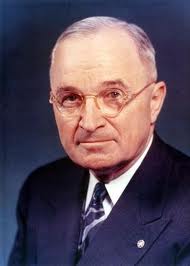
Harry Truman

President Truman did not like Brussels sprouts.

Shortly thereafter, Brussels sprouts were on the luncheon menu, and remained untouched  on the President’s plate. Mrs. Truman advised the housekeeper that the President did not care for Brussels sprouts, and requested they not be served again. (After all, she reasoned, one must be told the new President’s preferences.) They showed up again on the menu the following day and Mrs. Truman was displeased.  Mrs. Nesbitt insisted there was a lot left over, and they needed to be thrifty, and besides, it was how Mrs. Roosevelt did things.

Mrs. Truman was definitely not pleased. She was the First Lady now, and she would have things her way. Mrs. Nesbitt was obviously accustomed to having her way with the day-to-day household management, perhaps expecting Mrs. Truman to be as indifferent as her predecessor. She was wrong. Mrs. Truman was accustomed to running a house, albeit a small one. She was also accustomed to having her own way.

The Final Straw, or “Stick.”

Bess Truman belonged to a Washington woman’s club whose members were learning to speak Spanish. As part of their “educational” efforts, they decided to prepare some Spanish-style cuisine. Each club member was asked to bring an “ingredient” item. Bess Truman was assigned a stick of butter.

She duly requested a stick of butter from the White House kitchen, and was refused. Mrs. Nesbitt said that war rationing was still in effect, and she could not oblige.

That was the wrong thing to say to Bess Truman. Unlike her mother, Bess was not difficult to get on with, but she was very particular about her role as First Lady. She would not tolerate insolence.

Mrs. Nesbitt was summarily dismissed, probably to the relief and the delight of the rest of the White House staff.

Sources:

Truman, Margaret – Bess W. Truman, 1986, MacMillan

http://www.firstladies.org/biographies/firstladies.aspx?biography=34

http://www.history.com/news/hungry-history/cooking-for-the-commander-in-chief-20th-century-white-house-chefs


Posted in A POTUS-FLOTUS Blog, Harry S Truman, Nifty History People | Tagged , , , , , , , , , , , , , , , , , , , , , | 5 Comments

John Quincy Adams: When The People Cheered

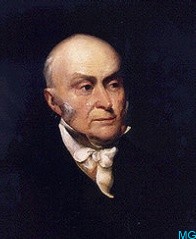
JohnQuincyAdams

John Quincy Adams, 6th President, and considered the most cosmopolitan man of his generation.

John Quincy Adams was a brilliant man of many substantive accomplishments. Popularity was not one of them.

JQA: A Spectacular Upbringing

By the time John Quincy Adams (1767-1848) was twenty-one, he was arguably the most cosmopolitan man of his generation in America.

jq the child

John Quincy Adams was ten years old when he first went to Europe.

At ten, he had the good fortune to travel to Europe with his father, a diplomat for the newly-created United States. Lawyer, legislator and prime mover of American independence, the senior Adams signed the Declaration of Independence, and was considered one of the new country’s foremost statesmen.

Ten-year-old John Quincy Adams was destined to follow in his illustrious father’s footsteps. He was placed in the best schools, and the bright child thrived. Always academically inclined, he excelled in all subjects, including languages. His French was flawless. He was fluent in Dutch and German. In time he would learn sufficient Russian, Italian and Spanish to converse diplomatically,

JQ in Europe

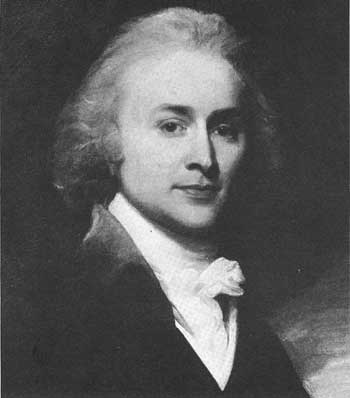
As a young man, JQA was considered handsome, and (for him) very affable.

He returned to the USA at seventeen, ready to enter Harvard College, followed by “reading law”, the usual means of becoming an attorney. While JQA (as he began to refer to himself) was always considered an excellent attorney, and at one time seriously considered for the Supreme Court, he never enjoyed the practice of law. He preferred politics, government and perhaps best of all, the world of diplomacy.

The Personal JQA

JQA, like his brilliant parents John and Abigail, was raised in a Puritan ethic: devout (even more so than his parents), diligent, with rigid adherence to duty above all else.

His personal schedule was designed with little leisure for recreation. Idleness was not tolerated. Up before sunrise, a half-hour of Scriptures, cold baths, regular exercise (swimming was a favorite), reading Cicero in the original Latin and then whatever work or otherwise edifying activities were required.

His only indulgences were his cards, wine and brandy – essential European customs.

lcadams

Louisa Catherine Johnson was twenty-two when she married diplomat John Quincy Adams.

When he married at twenty-nine, John Quincy Adams was already fast-tracked in diplomatic service. His bride, Louisa Catherine Johnson, London-born, Paris-educated, was, on paper, superbly qualified to be consort to a high-ranking public servant.

The Unpopular Campaign of 1824

In 1824, JQA was fifty-seven years old and had spent his life as a public servant: legislator, diplomat and most recently, Secretary of State for eight years under President James Monroe. Few men were better qualified to serve as the country’s chief executive.

But John Quincy Adams had never been a popular man in America, and had few close friends or strong supporters. Camaraderie or familiarity with his peers was not in the Adams character.

There were four candidates for President that year – with very little differentiation in their policies or platforms. Political “parties” as such had not been established, and indeed had been strongly discouraged by the previous generation.  This would change.

William Crawford of Georgia, Monroe’s Secretary of the Treasury, was the South’s candidate, but he had a stroke and his health was frail. With the snail-like communications of the 1820s, most people did not even know it.

None of the four candidates received a clear majority in 1824. The election was thrown into the House of Representatives.

Andrew Jackson and Henry Clay, from Tennessee and Kentucky respectively, were two men cut from the same western cloth: loud, boisterous, violent-tempered men-of-the-people. True to expectations, they hated each other. Nevertheless, both had huge followings.

With a large field, the election produced no real majority, and by law, was thrown into the House of Representatives. It was acrimonious and according to Jackson, corrupt and based on collusion. And it elected John Quincy Adams.

The Unpopularity of JQA

Appointing Henry Clay as Secretary of State was the straw that broke the relationship between JQA and Jackson. Jackson would hate them both till his dying day.

JQA had appointed Henry Clay as Secretary of State, in exchange for his electoral votes (according to an enraged Jackson), who immediately began a strong campaign for the presidency in 1828.

Adams’ cold and acerbic manners did not endear him to the public, and his single term in office was politically acrimonious and personally depressing. His well-conceived and far-sighted proposals, such as a national university, a national observatory, and road and canal building, were thwarted and rejected by Congress, and little was accomplished.

What should have been a brilliantly social White House fizzled with the poor health of Louisa Adams, family problems with the Adams offspring, and JQA’s stand-offish nature.

The Moment of Cheering

Presidents are always expected to perform some ceremonial duties, and JQA was duly invited to break ground for the Chesapeake and Ohio Canal on the 4th of July, 1828.

It was an unusually hot day during a blisteringly hot summer. It had not rained for a long time and the ground was parched. The President was duly introduced, acknowledged to the crowd, mildly applauded and handed the shovel.

Even at sixty, Adams was physically fit, especially with his daily vigorous mile-swims in the Potomac. But the hardened ground was like cement. It wouldn’t budge. Time and again, the President labored in the hot sun in an effort to break the ground.

In those days, and indeed for another century, no man would appear in public without his suit-coat – despite the July weather. And the President specifically, must maintain the dignity of his position.

Finally, and perhaps in a fit of manly pride – President Adams did the unthinkable. He removed his suit-coat and in his shirt-sleeves, put his shoulder to the shovel.

The dry ground yielded.

The crowd roared its approval.

It was spontaneous and sincere.

This was a sound that the societally-challenged Adams was not accustomed to hearing: cheering for him. He was amazed. He liked it. For a few minutes, he was a man of the people. He was popular – not for his accomplishments, but for himself.

He later confided to his diary that had he known how well it would be received, he would have removed his coat long ago.

Sources:

Nagel, Paul C. – Descent from Glory – Oxford University Press, 1983

Shepherd, Jack – Cannibals of the Heart – 1980, McGraw Hill

Unger, Harlow Giles – John Quincy Adams – DeCapo Press, 2012

http://millercenter.org/president/biography/jqadams-campaigns-and-elections


Posted in A POTUS-FLOTUS Blog, John Quincy Adams | Tagged , , , , , , , , , , , , , , , , , , , , , | 3 Comments

The Invalid FLOTUS: Ida McKinley

ida-mckinley1870

Ida Saxton McKinley was said to be the prettiest girl in Canton, Ohio.

Ida Saxton: Pampered Child

Ida Saxton (1847-1907) was the eldest of three children born to James and Catherine Saxton of Canton, Ohio. Saxton was the town banker, lived in a fine house, and enjoyed a reputation as one of the town’s leading citizens.

Ida, arguably one of the prettiest girls in Canton, was the recipient of all the amenities of “the pampered life” of pre-Civil War America: fine clothes (which she would always love), and a solid education in preparation for a substantial marriage. At the end of the Civil War, that education included a fashionable finishing school in Pennsylvania, followed by a Grand Tour of Europe. Then mostly to occupy her time, her father created a position for her at his bank, and she eventually was promoted to teller.

Most Cantonians would acknowledge Ida’s petite figure and good looks, but the general consensus was that she was self-centered and once she “set her head,” she was relentless until she got her way. That this would become a severe personality disorder was far in the future.

Ida Saxton: McKinley’s Bride

William McKinley (1843-1901) was, and would always be considered one of the nicest men around. He came from a poor, rural Ohio family, but one that was filled with affection and deep religious beliefs.

young wm mik

Young William McKinley was good looking, not-very-tall, but with a warm and ingratiating personality.

At age eighteen, he enlisted in the Union Army immediately after the fall of Ft. Sumter, and served four full years, becoming a brevet “major” – a nickname that would follow him for life. Opting for a career in law, he made Canton his home, and he was successful from the start. Not the least reason for this accomplishment was his genuine affability. He joined every fraternal and civic organization in town, and was liked by everyone.

He was twenty-seven when he met the petite twenty-three year old Miss Saxton, and the attraction was powerful. Their courtship was the customary round of parties, socials, picnics and outings. McKinley opened an account at the Saxton bank, and every few days would make a small deposit – and bring a large bouquet for the bank’s pretty teller.

James and Catherine Saxton were delighted when their daughter announced her engagement to the Major.  They adored him.

Ida and William McKinley: The Happy Times

Once they married in early 1871, the new bride and groom enjoyed four wonderful years together in a house that the delighted father-in-law was happy to bestow as a wedding gift. Right before their first anniversary, the McKinleys became the proud parents of a baby daughter they named Katie.

Their active social life in Canton’s “younger set” continued with invitations and activities. But more often than not, the Major was content to come home and spend his evenings with his pretty wife and infant daughter.

little katie

One of the McKinleys’ greatest tragedies was losing little Katie before her fourth birthday.

Marriage and parenthood agreed with both of them. Two years later, they looked forward with pleasure to the new baby Ida was expecting.

Ida and William McKinley: That Bad, Bad Year

Ida McKinley’s pregnancy was a difficult one this time, made worse by the unexpected death of her mother. Her grief was consuming, perhaps extreme in its emotional upheaval, which likely affected her condition. When their second daughter (named Ida) was born, it was a grueling ordeal, and Ida was very ill for weeks. Baby Ida was born sickly, and would die within months.

ida in better days

Even after illness left her frail, Ida would always retain some of her wistful beauty.

Childbirth left Ida McKinley with three life-altering conditions that would change the pretty young woman into a petulant, pathetic and morose semi-invalid.

First, she had developed phlebitis, a condition of blood clots in her knee, not uncommonly related to childbirth.  It was then and still is, a serious and often life-threatening situation. It is treatable today, but in the 1870s, the only treatment available was rest and leg-elevation. At twenty-seven, Ida McKinley needed to walk with a cane.

Secondly, she developed epilepsy, with both grand and petit mal seizures. No expense was spared in trying to find medical help for the afflicted young woman, but in those days, the term “epilepsy” bore a stigma. Doctors recognized the condition immediately – it had been known since Biblical times – but they would never mention it by name. It was always couched in phrases such as “a nervous condition” or “fainting spells.”

And, if the above weren’t enough of a torment for the afflicted woman, little Katie would sicken and die before her fourth birthday.

ida in checks

By the time Ida McKinley was twenty-seven, she was a semi-invalid.

All this led to Ida’s third life-altering condition. Her understandable depression took deep root, and she became obsessive about herself, her husband, and their life together. Her world became smaller and smaller with room for little else. She became totally dependent on McKinley for everything, even the smallest details. Her love for him, while true and deep, would become strangulating.

Through it all, and for the next twenty-five years, William McKinley would put Ida first in his life, devoting himself to her comfort – and every whim in between. He never complained, and never chastised her for her tantrums and frequently irrational behavior. In truth, he would become a part-time psychiatric nurse to his frail and increasingly difficult wife.

Sources:

  • Anthony, Carl Sferrazza – First Ladies 1789-1961, William Morrow,1990
  • Leech, Margaret – In the Days of McKinley – Harper & Brothers, 1959
  • Morgan, H. Wayne – William McKinley and His America – Syracuse University Press, 1964


Posted in A POTUS-FLOTUS Blog | Tagged , , , , , , , , , , , , , , | 2 Comments

Measuring George Washington

After the American Revolution ended, the State of Virginia wanted to honor its most renowned son with a commemorative statue.

Finding A Worthy Artist

Fine art and fine artists were a rarity in Colonial America, perhaps because people were more concerned with survival and earning a living than they were with fine accouterments. The earliest American artists of stature, John Singleton Copley and Benjamin West, began their careers in the US, but relocated to London, where their talents and skills would be better appreciated – at least financially.

houdon

Jean-Antoine Houdon was the most famous sculptor of his time in Europe. He had produced marble and bronze busts of Jefferson, Franklin and Voltaire.

But Virginia, in the process of building a State House in its new capital in Richmond, wanted to honor General Washington with a statue. There was no prestigious sculptor in America in 1782, so they asked Benjamin Franklin and Thomas Jefferson, representing the new country in Europe, if they could make appropriate recommendations.

It was Thomas Jefferson who suggested Jean-Antoine Houdon (1741-1828), one of the foremost sculptors on the continent, and who had already created busts of Jefferson, Franklin and Voltaire. The Virginia legislature was amenable, and likewise commissioned Philadelphian Charles Willson Peale, the foremost artist in America, to paint a full length portrait of the famous general.

young GW

One of many full length portraits done by Charles Willson Peale, one of America’s prominent painters, in order for the sculptor to have proper reference materials of Franklin and Jefferson himself.

Houdon was eager to sculpt George Washington, France’s ally and successful hero. But he insisted that even the finest painted portrait would not be sufficient enough a likeness for his work. He insisted that he must travel to America and undertake Washington’s exact measurements personally.

Houdon Visits Mount Vernon

The State of Virginia agreed to commission the great French sculptor, including paying for (and insuring) his ocean voyage to and from America. George

mount vernon

Houdon visited Mt. Vernon for around two weeks. It took far longer to travel back and forth across the ocean.

Washington also agreed, and was pleased to extend the hospitality of his estate at Mount Vernon.

Houdon came with his assistants, his notebooks and casting materials, his measuring tapes and whatever other tools he required. Washington made time and allowed the artist to measure every inch from the length of his nose to the circumference of his fingers. Then Houdon made a plaster mask of the General’s face, by having Washington lay still for several hours with a plaster concoction on his face. He inserted hollow straws in Washington’s nostrils so he could breathe. The plaster face-mask would go back to Paris with Houdon. So would the terra cotta bust the sculptor made of the General.

The life-mask of George Washington was made at Mt. Vernon. Houdon took it back to Paris to replicate.

Discussions then ranged about “how” this life size sculpture would be presented. It had been fashionable for centuries to garb the honorees in classical style – togas or Biblical robes, or the armor plate of a thousand years before. Houdon wished to portray the General as he truly was, garbed in the clothing of his own time. It was a revolutionary idea – suited to the hero of the Revolution, who preferred that image as well.

The Classical and the Timeless

Houdon’s decision to present a “modern” Washington in his own clothing was accepted, but the sculptor was still deeply entrenched in the classical style adorned with the symbolism of art. He needed to present the “Cincinnatus” Washington. The civilian who took up arms for his country, became a hero, and then returned to his civilian life. A balance of war and peace. The accoutrements of the sculpture were not only accepted as essential, but they would also tell the story.

gwhoudonbust

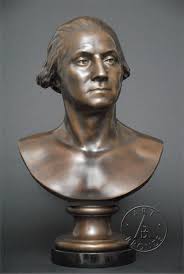
The Houdon bust of George Washington.

Washington is clothed in his uniform, but carries a civilian walking stick. He rests his hand on a bundle of rods, the Roman symbol of civilian authority. Of course there were thirteen rods in the bundle, symbolic of the thirteen States. The symbolic arrows are still reasons for conjecture, although some historians believe it represented the “wildness” of America. His farmer’s plow and his sword are behind him.

It would take the better part of five years for the life-sized sculpture to be completed, carved from fine Carrera marble, and exactly to the measurements Houdon made of his subject. The statue itself stands six-foot-two-and-a-half inches, including the half-inch for the heel of Washington’s boots. It also stands upon a Houdon-produced pedestal which gives heroic height to the image.

It was delivered to the State of Virginia in pieces, where it was assembled somewhere around 1791, and placed in the Rotunda of the Virginia State House in Richmond, where it remains today.

Emulating the Original

houdon washington

Houdon’s classic statue of George Washington is one of Virginia’s treasures.

There is never any assurance against Mother Nature, and the Virginia Legislature was understandably concerned that fire, or damage to the rotunda roof might also destroy the statue. They commissioned bronze reproductions to be cast of the original, in case of any permanent damage. Between 1840 and 1910, additional casts were made, and today there are 33 life size reproductions housed at various locations across the country, notably in New York City, the University of Virginia, and the Art Institute of Chicago.

But the original, the one sculpted by Jean-Antoine Houdon himself, exactly measured from life and still considered by those who knew him, the most accurate likeness of George Washington, still stands in its original location: in the Rotunda of the Virginia State House in Richmond.

Sources:

http://www.britannica.com/biography/Jean-Antoine-Houdon

http://www.mountvernon.org/digital-encyclopedia/article/jean-antoine-houdon/

Cunliffe, Marcus – George Washington: Man and Monument – Little, Brown, 1958

Posted in A POTUS-FLOTUS Blog, George Washington, Nifty History People, Presidential Sites | Tagged , , , , , , , , , , , , , , , , | 8 Comments

The Short Sweet Life of Willie Lincoln

  Despite the fact that Willie Lincoln died before his 12th birthday, he was arguably the happiest of the Lincoln family.

Willie Lincoln in Springfield, IL

William Wallace Lincoln (1850-1862) was named for his uncle-by-marriage. Dr. William Wallace, married to Mary Lincoln’s sister Frances, had been devoted to caring for little Eddy Lincoln, a sickly boy, who died shortly before his fourth birthday, only a few months before Willie was born.

willie-framed

Willie Lincoln as a little guy.

tadframed

Tad Lincoln, taken when he was around three.

Willie was a healthy baby and thrived. His older brother Robert, was seven years his senior, and by the time Willie was old enough to play, Robert was in prep school with other interests. But by the time Willie was old enough to have memory, he had a baby brother to play with. Thomas, called Tad from birth, was two years younger.

Mary Lincoln, the boys’ mother, was a pleasant middle-class housewife who did her own cooking and most of the housekeeping. She was devoted to raising her family, and caring for her husband, who was “her all,” in the Victorian sense of the word.

Perhaps most importantly, Willie’s father, Abraham Lincoln, was by the mid 1850s, a successful Illinois attorney, who no longer spent weeks and months away from home, riding the “court circuit” in order to earn his living. Now he could work nearby, and his time on-the-road was far less. He had the time to be a father, and in his mid-forties, wanted to. Nothing made him happier than engaging in horseplay and other antics with his two young sons, perhaps because he did not have that luxury with Robert. Or with his own father, for that matter.

mary and boys

Mary Lincoln was a devoted wife and mother, pictured here with Willie and Tad.

Lincoln’s office was within walking distance, and as the boys got a little older, he brought them to the office from time to time, to the annoyance of  William Herndon, his law partner. Willie and Tad proceeded to make a mess of everything, throwing papers and spitballs and spilling ink. Lincoln smiled benignly and made no effort at discipline.

The Character and Personality of Willie

Willie Lincoln, unlike Robert and Tad who favored the Todds in looks, was the most like his father. His legs were long, promising a tall fellow. He was also better looking than his brothers, but it was his character and personality that seemed to be most compelling.

Even at school in Springfield, Willie showed an  aptitude for learning, and appeared to enjoy study. He loved to read – but then, both his parents were avid readers. His disposition was a sweet one, patient and kind, and with a sense of humor – qualities usually attributed to Abraham Lincoln himself. His mother once commented that Willie was surprisingly religious for such a small boy, and also noted that he was “the idolized one” of the household.

willie

One of the few photographs taken of Willie Lincoln.

Willie also seemed to share his father’s deliberative thought processes as well. Lincoln once told a visitor that he could watch the boy at breakfast and know every step of the process Willie took to find the satisfactory answer to a problem – since it was exactly the slow and deliberative way he himself arrived at an answer.

The Happy Year: 1861

Within days of arriving at the White House, the Lincoln boys found boon companions their own age in Bud and Holly Taft, whose parents were long time Washingtonians. The four youngsters became inseparable, enjoying sleepovers and dinners and even lessons together. It was a huge relief to Mary Lincoln to know that her boys were happy in their new surroundings, since both the President and First Lady had so many other obligations.

Lincoln family

One of the many images produced of the Lincoln family in the White house. Willie is seated next to his mother.

No child could have been happier living in the White House that year! Willie and Tad were the perfect age: old enough to find excitement and fun in all the soldiers camping out all over town – and young enough to be semi-oblivious to the harsh realities and sorrows of war.

The sadness of the Civil War still managed to affect the youngsters, however. Lincoln’s law clerk, Elmer Ellsworth, had joined the Union Army and was one of the first to give his life. Edward Baker, Oregon Senator and newly commissioned Colonel was another old friend and great family favorite, also killed in action. Eleven-year-old Willie was so moved by Colonel Baker’s death that he wrote a poem eulogizing the man. The poem was even published in the local newspaper.

The Death of Willie Lincoln

Lincoln family3

Another family depiction of the Lincolns in the White House. Willie is shown next to his father.

Nobody would have predicted that Willie Lincoln would have such a short life. He had been strong and healthy, smart and sensitive, and indeed what his mother would later refer to as her hope for solace in her old age.

But early in 1862, both Willie and Tad caught colds, as young boys do in the winter, and were treated and dosed accordingly. They seemed to be on the mend. The Lincolns had planned a gala party since they believed the activities of government needed to continue despite the War. The Lincolns had modified the festivities accordingly, and thought to cancel, but the doctors had assured them that Willie was not in any danger, even though his recovery seemed to be erratic. Both the President and First Lady took turns slipping away from the party to sit with their sick son.

But Willie was in danger. His cold became typhoid fever, and without antibiotics and modern treatment, usually resulted in death. He lingered only days after the only gala event the Lincolns ever hosted in the White House.

The Lincolns were devastated. Willie was laid to rest in a borrowed crypt in Washington. When Lincoln was assassinated little more than three years later, Willie’s body was removed from it’s temporary location, and his small coffin rode alongside his father’s larger one on the train back to Springfield. When the Lincoln tomb was finally completed, Willie’s coffin was finally re-interred where the other members of the Lincoln family are laid to rest.

Sources:

Bayne, Julia Taft – Tad Lincoln’s Father – Bison Books (reprinted) – 2001

Randall, Ruth Painter – Lincoln’s Sons – Little, Brown & Co., 1955

http://rogerjnorton.com/Lincoln68.html

http://www.mrlincolnswhitehouse.org/inside.asp?ID=18&subjectID=2

http://www.lincolncollection.org/


Posted in Abraham Lincoln, American Civil War, Nifty History People | Tagged , , , , , , , , , , , , , , , , , , , , , , , , , , | 3 Comments