William McKinley and Czolgosz the Assassin

popular-president

McKinley was a popular President, and easily won reelection in 1900.

William McKinley was one of the best liked Presidents. Why would anyone want to kill him?

William McKinley, the Popular

mature-mc-k

President William McKinley

By all accounts, William McKinley was a warm, friendly and agreeable fellow. Born in 1843 in a small Ohio town, he was raised in a hard-working, devout Methodist family, with education a high priority for their children.

At eighteen, McKinley enlisted as a private in the Civil War, and remained for the entire four years. He was popular among his superiors and his peers, despite the fact that he had none of the vices-of-camaraderie. He did not smoke, drink, swear, dance, play cards, gamble or chase women. The soldiers liked him anyway, and never thought him sissified or priggish.

By the end of the War, he had become a brevet Major, and an aide de camp to Ohio General Rutherford B. Hayes, who encouraged the younger man to read law and become an attorney. McKinley took the advice, became a lawyer, moved to Canton, Ohio, a growing community, and proceeded to join every civic and fraternal association in town. He was a popular member with dozens of friends. His law practice grew. He married Ida Saxton, the daughter of the town’s most prominent banker.

In 1876, he was elected to Congress, and served for seven terms, making even more friends. It is said that while he may have some political adversaries, he had no enemies.  It is further said that when a colleague rose to argue a point with him, they usually apologized to him first. Then he became Governor of Ohio.

All told, he was an extremely well-liked man, much like Ike and Ronald Reagan who followed many decades later: While you may not agree with him, it was practically impossible to dislike the man!

Leon Czolgosz, the Loner

czolgosz

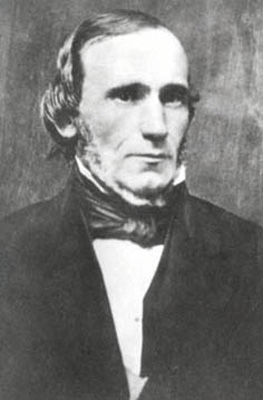
Leon F. Czolgosz, anarchist and assassin.

Loners, and even a fairly new expression, a loner-loser, has become a common description for many terrorists of all kinds today. Most terror attacks, whether they are international, religious, racial, economic or otherwise, and whether they are carried out by bomb-throwing, suicide attacks, vehicle driving, or out-and-out shooting, usually point to the perpetrator as a loner, or someone who has never been able to succeed in a societal atmosphere. They find it hard to find work or make friends. One commonality however, they find it very easy to blame others for their failings.

Such a man was Leon Czolgosz (1873-1901). He was born and raised in Michigan, the son of a hard-working Polish immigrant, considered lower middle-class. Nevertheless, his education ended when he was fourteen, and he became a laborer with varying amounts of skill.

In the early 1890s, there was an economic panic (recession), and Czolgosz became unemployed, along with thousands of other men. Now, essentially an out-of-work loner at twenty, he became interested in the “anarchist” movement in the United States. Their adherents believed that governments, and authorities in general, were responsible for the woes of the world, and in particular, the economic woes. Anarchism had begun in Europe in the early-to-mid 19th Century, and had strengthened increasingly in the later decades. Violence was their nihilistic activity of choice: Tear down governments (authorities) via assassination of rulers.

Czolgosz (pronounced Chol-gotch, but few people could pronounce it) began to read the anarchist newspapers and magazines and attended their rallies. If he attended any smaller meetings or joined any specific clubs, it is vague. Anarchists, by their very essence, loved to talk and pontificate, philosophize and write polemics, but they shunned structured organizations and hierarchies.

The Inevitable Clash

In September, 1901, President McKinley was six months into his second term, and at the height of his popularity. The country, optimistic about its new century and opportunities, flocked to the Pan American Exposition in Buffalo, New York to celebrate its progress. The President planned to attend.

mck-in-buffalo

William McKinley shook hands with the crowd at the Pan American Exposition.

Always affable, McKinley was shaking hands with a crowd of five hundred people waiting in line for the honor. Toward the end of that line was Leon Czolgosz, his hand wrapped in a bandage-like handkerchief, concealing a pistol.

The rest is history. The assassin pumped two bullets into the President, and was immediately pummeled by the crowd, which was quickly becoming a mob. The POTUS admonished them “not to hurt” that man, as he was taken away.

Despite the fact that McKinley was believed to be out of danger and expected to recover, infection set in, and he died within the week. Czolgosz was now not only an assailant, he was an assassin – of the President of the United States.

Disposing of Czolgosz

czolgoszexecution

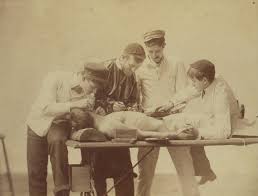
Actual photographs were taken of Czolgosz at his execution.

Of course there was a trial. Of course there was an attempt to portray Czolgosz as insane. But most of the general public still remembered the assassination of Lincoln, and of James Garfield twenty years earlier. The mood of the country was not inclined to be overly sensitive to the noisy anarchists let alone generous toward political assassins. Nor did Czolgosz help his case.  He was unrepentant, saying, “I killed the president because he was the enemy of the people – the good hard working people….I am not sorry.”  This of course did not sit well with the people, including the good hard working people.

The jury deliberated briefly. He was found guilty, and sentenced to die in the electric chair. The general reaction was to get it over with, good riddance and to never speak his unpronounceable name again.

With little publicity, before interment, the body was destroyed with quicklime to deter souvenir hunters or martyr-makers.  Concerned that lime was insufficient to decompose the body, they added sulfuric acid.  Some chemists claimed that the combination of the lime and acid merely created plaster of paris.

Whether it did or did not is irrelevant.  The assassin with the unpronounceable name is dead, buried and all but forgotten, which is exactly what was wanted in 1901.

Sources:

Leech, Margaret, In the Days of McKinley – Harper & Brothers, 1959

Morgan, H. Wayne – McKinley and His America – Syracuse University Press, 1964

http://www.history.com/this-day-in-history/president-william-mckinley-is-shot

https://www.whitehouse.gov/1600/presidents/williammckinley

http://papershake.blogspot.com/2011/05/burial-of-leon-czolgosz-assassin-of.html


Posted in A POTUS-FLOTUS Blog, Nifty History People, William McKinley | Tagged , , , , , , , , , , , , , , , , , | 1 Comment

Mrs. Coolidge and Baseball: A Love Affair

coolidgesatgame

President and Mrs. Coolidge at a Washington Senators game.

Calvin Coolidge liked baseball so-so. But First Lady Grace Coolidge was a enthusiastic fan!

Coolidge the Indifferent Sport

calvin coolidge

Calvin Coolidge, so-so baseball enthusiast.

Calvin Coolidge was always a hard fellow to figure, unless, of course, you were a New Englander. Then he was easy to understand: Except for politics, he was not a joiner. And even in politics, his “joining” at best, was at arm’s length.

He was a man with no hobbies. He neither enjoyed nor played any particular sport as boy-to-man. There is no record of him being on any team. There is also no record of him enjoying or playing any “solitary” pastime, such as hunting or golf or horseback riding. His interest in fishing came much later in his life, and even then, it was mild.

He was also not a man of games. He collected nothing; not stamps or coins or cigar silks. He did not play chess, checkers or cards, at least not with any regularity. Nor did he sing, dance, play an instrument, play-act or draw.

He read his newspaper regularly. That was about it.

Mrs. Coolidge, Baseball, and Politics

By the mid-nineteen-teens, women were becoming more and more involved in politics, and some of that was the “social” end of politics. Even the more austere menfolk (Coolidge being among that group) were beginning to recognize that their wives had some social-political value.

Young Grace

Grace Coolidge, baseball fan of fans!

Grace Coolidge (1879-1957) was a good looking woman. She was stylish. She had a terrific personality. She made friends easily, where Coolidge was diffident. As he advanced in state office, he had occasion to bring his wife to various functions, and began to recognize that she was indeed an asset.

Also by the nineteen-teens, baseball had become the National Sport. Grace’s knowledge of baseball was an automatic entree into the man’s world of social conversation – especially in a state like Massachusetts, where the Boston Red Sox dominated. Grace knew wherein she spoke. Both the Coolidge sons played on local teams, and she had played catch or pitched the ball to them in the yard. She knew the rules of the game. She could keep the box-scores. She followed the sporting pages. She knew the players and their statistics. She could share the heartbreak with the men, when the Sox traded Babe Ruth, their best pitcher, to the New York Yankees, who were determined to make him their best batter.

The First Lady and Baseball

President William Howard Taft had enjoyed baseball, and began the time-honored custom of throwing out the first pitch on opening day. Woodrow Wilson had loved baseball as a youth, and even managed his college team. Warren Harding continued the baseball tradition.

babe-ruth

Babe Ruth as a Red Sox.

With First Lady Coolidge, only one thing changed. The Washington Senators were the “home team,” and politics mandated that her allegiance needed to be switched from the Red Sox (although that would only be temporary). She was quoted as saying, “I venture to say that not one of you gives a hoot about baseball, but to me, it is my very life.”

Whether he liked it or not (and his interest was only lukewarm), Calvin Coolidge was tasked with becoming a fan. It wasn’t always easy. The White House Historical Association tells of the time the POTUS and Missus went to a World Series game. The score was tied at the bottom of the ninth inning, and President Coolidge rose and declared that he was ready to go home. Mrs. Coolidge yanked his coat tails and insisted that he sit right down. She wasn’t leaving.

The Coolidges and Pop Culture

grace_cal-baseball

President and Mrs. Coolidge went to many baseball games. She loved it.

The Roaring 1920s, known for bootleg whiskey and flappers, can be credited with the boom in what today would be called pop-culture. There were movies, radio, phonograph recordings, vaudeville, magazines, sports of all kinds, and particularly baseball, all of which produced people who were catapulted to fame.

calvin and grace

The Coolidges were a nice couple, but the antithesis of the Roaring Twenties.

coolidge-jolson-others-jpb

The Coolidges and a few celebrity pals.

Calvin and Grace Coolidge neither roared nor flapped, but in their own ways, were also catapulted to fame. They occupied the White House. And all the ancillary stars of stage, screen, radio, song, sport – and baseball – found their way to the White House to shake hands with the unflappable President, and his charming First Lady.

Frequently, the cream of the celebrities were invited to stay for lunch. A few for dinner. People like Charlie Chaplin and Al Jolson and Will Rogers were delighted to have their photographs taken with the President, and/or the First Lady, and the POTUS did not seem to mind that the photos usually turned up in the newspaper headlines the following day. That included Babe Ruth. He showed up too. One surmises that Mrs. C. forgave him for his apostasy of leaving Boston.

The Faithful Mrs. Coolidge

President Coolidge (1872-1933) did not live that long after his term in office. Five years after retiring as Chief executive, he died. He was only sixty.

graceandbabe-jpb

The widow Coolidge and the aging Babe. She forgave him.

Mrs. Coolidge, however, lived for another quarter century. She stayed on in Northampton, MA, still taking her daily hour-long walk in the parks or streets. She was frequently seen knitting on her favorite park bench. Everyone knew her.

Mrs. C. managed to forge a quiet but pleasant life for herself. She spent time with her married son and his growing family. She went to Europe. She flew in an airplane. She compiled a series of essays into a “memoir” of sorts. And she continued her long love affair with baseball.

Every year, practically until her death in 1957, she went to Boston for a Red Sox game – or two or three. She kept up with all the players and all their statistics. There is even a story of a time that she was among a crowded audience when an obscure question about an obscure baseball player was asked, and no one knew the answer. Except one person. Mrs. Coolidge. And she was right!

Sources:

Anthony, Carl Sferrazza –First Ladies 1789-1961, William Morrow,1990

Boller, Paul F., Jr. – Presidential Anecdotes, Oxford University Press, 1981

Foster, Feather Schwartz – The First Ladies – Sourcebooks, 2011

Wikander, Lawrence & Ferrell, Robert (eds) – Grace Coolidge, An Autobiography, 1992, High Plains

https://www.whitehousehistory.org/the-coolidges-and-baseball

http://www.davidpietrusza.com/coolidge-grace.html

Posted in A POTUS-FLOTUS Blog, Calvin Coolidge | Tagged , , , , , , , , , , , , , , , , , , , , , | 2 Comments

Robert E. Lee at the Crossroads


generallee

General Lee and Traveler.

April 9, 1865 was only the beginning of a difficult time in the life of Robert E. Lee.

The Surrender

It was a horrible day for General Robert E. Lee (1807-1870). He has been famously quoted as preferring to die a thousand deaths rather than to go see General Ulysses S. Grant.

images_207

The famous meeting at Appomattox Court House.

But he bit the bullet, donned his last best uniform, complete with sash and sword, and rode off to a modest farmhouse in Appomattox Court House. In little more than an hour, it was all over. The terms were decided and signed, and for all intents and purposes, the four-year American Civil War, which destroyed the cream of a generation of men, was over.

Several more days passed as the business of signing paroles, the usual paperwork and reports, and formally discharging the remains of the Army of Northern Virginia was complete, and General Lee could discharge himself.

But in that interim, one more horrific deed changed every hope the South may have entertained for the “let ’em up easy” policy that President Abraham Lincoln had planned. An assassin’s bullet put an end to that.

Later in April

Appomattox Court House is about a hundred miles from Richmond, the Confederate capital whose charred buildings were visible for miles, and the smells of its self-inflicted burning were still in the air. General Lee rode with no escort nor entourage. Occasionally he encountered another ex-soldier en route in that direction, but past the nominal courtesies, it was a silent ride for the tired soldier. No one would dare to intrude on the General’s privacy.

Young RELee

Robert E. Lee, about fifteen years before the Civil war.

Lee was only fifty-eight years old, but his white hair and beard, mostly acquired within the last three years, made him look ten years older. From the time he graduated West Point, more than thirty-five years earlier, he had been a soldier. Duty. Honor. Country. Once that country had been the United States, but in his heart, it was always Virginia, his native state, and the state of his distinguished forebears.

mrsrelee

Mary Anna Custis Lee was the great grand-daughter of Martha Washington.

He was a quiet man, not given to close friendships. His personal habits were moderate, a sip of wine on occasion. At 24, he married Mary Anna Custis, the great-granddaughter of Martha Washington. They had seven children, and he no doubt loved his family deeply.  But the Army was Lee’s greatest love.

The Dilemmas of General Lee

It is always difficult to project possible thoughts into long-dead silent men, but the General unquestionably had much on his mind on that long, long hundred mile journey.

Robert E. Lee was a deeply religious man, and assuredly was grateful that his life was spared, as well as the lives of his three sons, all of whom fought bravely and with honor. Their wounds would heal. He just as assuredly mourned those lost sons of America, North and South. Hundreds of thousands of them, at last count. He was never a man of hatred. Like all soldiers, battle memories are intensely private. To a man of silent disposition, even more so.

To a military officer accustomed to action and decision-making all his life, the limbo of not being in control was perhaps the most burdensome.  The once-wealthy Lee-Custis family was now homeless. Their beautiful Arlington plantation overlooking Washington, DC had been confiscated early in the War. Then it was turned into a huge cemetery, making it forever uninhabitable. Another Virginia family property had been burned. Mary Lee, badly crippled by arthritis was now living in a small rented row home in Richmond.

arlington_house_pre-cw

A sketch of the Lee-Custis home at Arlington, prior to the Civil War. The property would be turned into a national cemetery.

Lee had no occupation and no property. Soldiering was all he knew, other than some mild plantation management. How was he to support his invalid wife and three unmarried daughters?  He could not make any decisions in that regard.

mrsrelee-older

Mrs. Lee was an arthritic invalid at the end of the Civil War. She was confined to a wheel chair.

genrelee

The quintessential General Robert E. Lee.

The assassination of Abraham Lincoln presented yet another problem. The mood of the North had grown increasingly ugly, and there were strident calls for arresting, trying and hanging those rebels responsible for the War. General Robert E. Lee was at the top of the list of those expected to hang. He had signed his parole, pending law-abiding behavior. At least he could make one decision. He intended to honor his pledge and be an example to those who still looked to him for leadership. Nevertheless, the likelihood of his arrest was strong. He would have to prepare his family for the inevitable.

releehouse-richmond

The row house in Richmond that the Lees had rented.

Then of course, there was his own private secret. His doctors had told him more than two years earlier that the pains and tingling in his arm from time to time were indicative of heart problems. He believed them, but he kept it to himself. That was another decision he could make.  Nothing would be served by disclosing that information to his family – unless, or until such a time as it became imperative. They had enough cares as it was.

He would rest for a while in Richmond, enjoying the comfort of Mary and the girls, who he never got to see very often. He would stay there, at least until his sons could find him and the whole family could be reunited, and perhaps plan some kind of future.

He would wait. He would wait for the soldiers he assumed would be coming to arrest him. But mostly he would wait for the hand of Providence which he firmly believed would guide every decision.

Sources:

Fishwick, Marshall W. – Lee After the War: The Greatest Period in the Life of a Great American – Dodd, Mead & Co. 1962

Flood, Charles Bracelen – LEE: The Last Years – Houghton, Miffli Co. – 1981

http://www.civilwar.org/education/history/biographies/robert-e-lee.html

https://www.nps.gov/nr/travel/national_cemeteries/Virginia/Arlington_National_Cemetery.html

Posted in American Civil War, Nifty History People | Tagged , , , , , , , , , , , , , , , , , , , | 3 Comments

Thomas Jefferson’s Merry Party

white house 1807
The White House, as it looked in Thomas Jefferson’s time.

Thomas Jefferson was a sophisticated gentleman, not usually associated with rudeness, but…

President Jefferson’s Hosting Attitudes

thomas jefferson
The sophisticated Virginian, Thomas Jefferson

Thomas Jefferson (1743-1826) had grown up in a time and place of elegance and form. As a young student at William and Mary, he was a frequent guest at the Governor’s Palace, where fine dining and fine manners were matter of course in Williamsburg, the capital of the Virginia colony.

In due time, he himself was Governor of Virginia (not a colony, not yet a state), and even with the Revolutionary War in full throttle, managed to entertain cordially from time to time.

His half-decade or more in Europe, particularly in France, exposed him to the crème de la crème of social settings. When he returned to the United States as President Washington’s Secretary of State, he earned a well deserved reputation of hosting some of the finest dinners. His estate at Monticello, of course, bespeaks the man himself.

Perhaps the most important facet of Jefferson’s style of hosting was that he was a man of the “small” table. He did not care for the European (and later Federalist style) of large levees or receptions, and did not continue the traditions of the Washingtons or Adamses. Frequent dinners for twelve, or perhaps as many as twenty, was far more agreeable to him. This insured interesting conversation enjoyed by all. There could be some active politicking as well, since he chose his guest lists carefully, never mixing Federalists and Democrats, or cabinet members with congressmen. But the food was always delicious and served with elegance. The wine was invariably superb.

Anthony and Elizabeth Merry

anthony-merry
The British Minister, Anthony Merry

Anthony Merry (1756-1835) had been appointed Minister from Great Britain to the recently United States. He had already enjoyed two decades in various European diplomatic posts, and it has been inferred that Merry considered his assignment to upstart America in 1803 as some kind of punishment. His wife Elizabeth definitely believed this backwater country to be beneath them.

Most of the Americans who became acquainted with the Merrys considered them snobbish, stiff, unfriendly, pompous, and a few other choice adjectives of the same genre.

jamesmadison2
The gentle conciliator, Secretary of State James Madison

When the Merrys arrived, Washington was a muddy, unpaved, half-finished town. They moved into the largest house they could rent, along with wagons loaded with their sumptuous belongings. Ambassador Merry (using the word in its modern sense, since the term “Ambassador” was not formally used until McKinley’s time) presented his credentials to Secretary of State James Madison, who arranged to introduce him to President Jefferson the following day.

Merry bedecked himself in his most formal attire, complete with ribbons, sashes, gold braid and a sword, and accompanied Secretary Madison to the White House. Jefferson did not greet them, nor did he have them received in a formal reception room. Instead, the visitors had to go looking for the President, and finally found him in a small study, in “a state of undress” (a term that connoted informal, and thus unsuitable clothing) with “shoes that were run down at the heels” – or more or less slippers. The Ambassador was dumbstruck, and surmised that Jefferson’s actions in dress and presence was a deliberate insult. He may have been right.

Jefferson had little fondness for the British, and was well known to be a Francophile. He was also a man who wished to instill democratic (small ‘d’) traditions in the American government, which included the social sphere as well.

Nevertheless, President Jefferson extended an invitation to Ambassador and Mrs. Merry to be his guests at a White House dinner a day or two later. Merry got over his miff and accepted, assuming he would be the guest of honor. After all, he was the official representative of Great Britain, the most powerful country in the world.

The Dinner, Pell-Mell and The Un-merry Merrys

elizabeth-merry
Said to be the uber-snooty Elizabeth Merry

Anthony and Elizabeth Merry, bejeweled and dolled up in their very finest clothes, came to the White House at the appointed hour, and assembled with a small contingent of other guests. One of those guests was the French Ambassador. Merry was apoplectic. England and France were at war, and had been at war for years (if not for centuries). It was another insult.

DECODED Dolley
The delightful Mrs. Madison

Then, the widowed President Jefferson, who was expected to give his arm to Mrs. Merry as matter of courtesy, gave his arm to Mrs. Madison, who frequently served as his hostess, and escorted her to the round table in the dining room. There was no official or planned seating arrangement. Round tables have neither head nor foot, thus precluding seating honors.  Secretary Madison graciously gave his arm to Mrs. Merry, leaving Mr. Merry perplexed. Where should he go? The rest of the guests escorted themselves to the table, sitting wherever they chose.  Merry wound up sitting wherever there was an empty chair.  He was livid.

Jefferson charmingly explained that this was the “new fashion” of pell-mell. Sit wherever you like. It did not sit well with the Merrys, and they couldn’t wait to leave. They believed they were being deliberately insulted by Jefferson’s coarse and ungracious behavior, and despite whatever fine food and wine might have been served, they did not care. International incidents have been created with much less provocation.

The Merrys never accepted another invitation at the White House.

Sources:

Allgor, Catherine, – Parlor Politics: In Which the Ladies of Washington Help Build a City and a Government, 2000, University of Virginia Press

Allgor, Catherine – A Perfect Union: Dolley Madison and the Creation of the American Nation – 2006 Henry Holt and Company

https://www.whitehousehistory.org/getting-it-right

https://www.monticello.org/site/jefferson/dinner-served

Posted in A POTUS-FLOTUS Blog, Nifty History People, Thomas Jefferson | Tagged , , , , , , , , , , , , , , , , , | 2 Comments

Mary Lincoln: The Last Sad Years

mary in mourning

The Widow Mary Lincoln

In late 1880, Mary Lincoln, no longer able to live on her own, left Europe and returned to live with her sister in Springfield, Illinois. She was sixty-one.

The Widow Lincoln in Exile

When Abraham Lincoln was assassinated in April, 1865, the effects on the country would be far-reaching. So would the effects on his widow, who was 46 at the time. Her emotional health had always been fragile. She frightened easily, had submerged herself into the Victorian mode of perpetual mourning, and could barely cope with the realities of her situation.

mary in mourning

Mary Lincoln would never be the same after her husband’s assassination.

At the time of Lincoln’s death, Mary Lincoln had already lost two sons; one at three years, the other at eleven. She would lose another son at eighteen, and her sole surviving son would be lost to her by estrangement. Despite coming from a large family, she was, for all intents and purposes, alone in the world.

edwards_eliz_ihl_large

Elizabeth Todd Edwards, Mary’s oldest sister, would be her lifeline for the rest of her life.

She had gone to Europe in 1868 to escape the humiliation and scandal from her aborted financial scheme to sell her clothing. Returning to America in 1871, she lost her last son, and saw her relationship with her eldest son Robert deteriorate along with her emotional health. By 1875, her condition had worsened to a point that Robert felt compelled to have his mother tried for insanity and placed in a sanitarium. Recovering from her “insanity” (which many historians believe may have been drug interaction from her various physical and psychosomatic ills), she lived for a time with her sister Elizabeth Edwards in Springfield, Illinois, in the very house where she met and later married Abraham Lincoln.

Unable to face the second humiliation and scandal of her troubled widowhood, she once again departed for Europe. This time she went to Pau, France.

Mrs. Lincoln in Pau

Pau, in the south of France, was specifically chosen by Mary Lincoln, since it was said to have the best climate in Europe, and she was always prone to chills and fevers.  Good weather was a necessity for her refuge and the solitude she claimed to want.

She lived in a residence-hotel, one of many she had lived in during those years of her widowhood. Unable and unwilling to move back to the Lincoln house in Springfield, with its sad memories, she became virtually homeless. Residence hotels were common in those times. People who were alone in the world favored them for providing the amenities they needed while relieving them of the responsibilities of home-ownership they could neither afford or maintain.

For the better part of three years, she remained in general seclusion, making a few superficial acquaintances, and indulging in her preoccupation with shopping. Then her physical health began to fail. She was losing her eyesight, likely due to cataracts (and possibly an undiagnosed diabetes some historians suspect). In addition, she suffered a severe back injury from a fall. X-rays would not be invented for more than another decade, but it is not unlikely that a bone or two may have been broken. The chronic pain would plague her for the rest of her life.

It was time to go home. The only place she could call “home” was her sister Elizabeth’s house in Springfield. She booked passage.

Mary Lincoln’s Belongings

edwards_home

The home of Ninian and Elizabeth Edwards in Springfield, IL. Mary was married in that house, and died in that house.

ninian edwards

Mary Lincoln’s brother-in-law, Ninian Edwards

lewis baker

Lewis Baker, Mary Lincoln’s great-nephew. One of the few people she cared for in her later years.

One of the very few people who the Widow Lincoln cared for and trusted was young Lewis Baker, her sister’s grandson, now a young man around twenty. He was sent to New York to meet Mary’s ship, and escort her back to Springfield. He was also tasked with helping to ship her belongings to the Edwards’ house.

elizabeth edwards

Elizabeth Todd Edwards in her older years.

Despite Mary’s homelessness, she had a huge amount of possessions trailing after her wherever she went – like the scattered debris tail of a comet. More than sixty crates and trunks and boxes were filled with the stuff of her life. Clothing and jewelry and household goods she hadn’t used in years and never would, Lincoln memorabilia, mementos from her White House years, artwork and decorative items she had purchased. Some things had never been taken out of their original boxes.

Elizabeth and Ninian Edwards had agreed to have her come.  She was family, and they knew she had nowhere else to go.  But they were unprepared for the general disturbance Mary-in-residence would cause them. They knew she was demanding and difficult, but they were overwhelmed at the wagonloads of her baggage.

last mary

A “doctored” photograph of Mary, said to be the last ever taken.

In those days, an upstairs room was usually assigned to store a family’s empty luggage. Trips usually lasted for several weeks; clothing and accessories required a great deal of care and room in packing. Families could easily have more than a dozen large trunks.

With Mary’s arrival, sufficient room needed to be found in the Edwards’ house to store her  filled crates and trunks. Within days of Mrs. Lincoln’s arrival, the Edwards’ long-time housemaid resigned. It seems her bedroom was directly below one of the rooms containing Mary’s heavy trunks, and the ceiling was buckling. The maid had a legitimate fear that the ceiling would collapse from the weight, and fall on her when she was asleep.

more mary

First Lady Mary Lincoln – in better days.

Mary Lincoln seldom (if ever) left the house, and usually kept to herself and her room. Instead, she “visited” her trunks and belongings. Despite her bad back, she climbed the stairs and remained on her knees for hours, bending over various cases, examining their contents, unfolding and refolding, and thinking whatever private thoughts came to her mind.

Springfield children, too young to remember the First Lady of two decades earlier, regarded her as a peculiar old woman who sat alone in a darkened room upstairs, never lifting the shades. They were not completely wrong.

Sources:

Baker, Jean – Mary Todd Lincoln: A Biography – W.W.Norton & Co. 1999

Clinton, Catherine – Mrs. Lincoln: A Life – HarperCollins, 2009

Turner, Justin G. & Turner, Linda Levitt (eds.) – Mary Todd Lincoln: Her Life and Letters – Knopf, New York, 1972

http://rogerjnorton.com/Lincoln101.html


Posted in A POTUS-FLOTUS Blog, Abraham Lincoln | Tagged , , , , , , , , , , , , , , , , , | 4 Comments

Benjamin Harrison and the Washington Centennial. And Me.

The 100th anniversary of George Washington’s Inaugural Centennial in New York City was a very big deal.

14-04-28-washington-inauguration

George Washington takes the Presidential Oath of Office in 1789.

The Inauguration of George Washington

George Washington was elected unanimously and with no opposition.  Everyone was enthusiastic about the new President of the United States. Therefore, one can safely assume that it was no surprise to the former General when a delegation from a newly elected Congress came to Mount Vernon to inform him of his election. Washington had already written his speech of response.

gwinaugtrenton

A famous depiction of Washington receiving accolades  in Trenton, NJ en route to his inauguration. Note the white horse.

But arrangements had to be made, not only for the inaugural ceremonies slated to be held in New York (which had donated itself as the temporary capital), but for George Washington’s personal needs as well. He required sufficient housing – with a ballroom large enough to hold a hundred guests. He needed sufficient servants. The handful he planned to bring from Mount Vernon were not nearly enough. And he needed all the accouterments that Mrs. Washington would require, which included the needs of her two young grandchildren they were raising. They also wouldn’t dream of jumping the gun as it were, and overtly plan ahead.

Transportation and communication were both long and arduous. Washington was not inaugurated until late April of 1789. Mrs. Washington, additional house servants and the children would not arrive until some weeks later.

gwinnyc1789

George Washington arrives in lower Manhattan, where he is greeted by the throngs!

The new President’s journey between northern Virginia and New York City took a long time, not merely due to distance, but to his enormous popularity and the momentousness of the event. Every town and city along the way wanted to host him, to invite him, to proclaim him, to present him with honors and gifts.  It would have been rude to decline.

Thus, by the time of his arrival in what is now the Battery section of lower Manhattan, the arrangements had all been put into place. NY Governor George Clinton was on hand to officially greet him. When Washington formally took the oath of office on April 30, a huge crowd came to bear witness to important history.

The Benjamin Harrison Connection

bharrison

President Benjamin Harrison, grandson of a President, was inaugurated on March 4, 1889.

gwparadesouvenir

A centennial parade souvenir.

Benjamin Harrison (1833-1901) was born three decades after George Washington’s death, and in 1889, had recently been inaugurated as President, and thus a successor in the office begun by Washington.

There was also a personal connection of sorts between Harrison and Washington. Benjamin Harrison was the grandson of President William Henry Harrison, who filled the same office for only a month in 1841. Benjamin Harrison’s boyhood memories of his grandpa were limited at best. Nevertheless, WHH was a President, and it counts. And if being the grandson of a President was not enough of a connection, there was more.

President Benjamin Harrison’s great-grandfather, also named Benjamin Harrison, was a signer of the Declaration of Independence, and a good friend of George Washington.  He was also one of the first Governors of the State of Virginia. The relationship between Washington and the new President’s namesake and great-grandfather was a long and personal one.

The Inaugural Centennial

A centennial of anything is an important anniversary.  The country had gone wild for Philadelphia’s centennial of the Declaration of Independence in 1876, and even for accepting the great gift from France, the Statue of Liberty, which did not actually take place until a decade later.

New York City wanted to match the earlier hoopla of Philadelphia, and declared a huge party in late April, 1889.

pres-harrison-in-nyc

President Harrison re-creates the landing of George Washington in lower Manhattan.  There were even bigger crowds!

According to information from the helpful researchers at Mount Vernon, re-enactments had always been popular, and while there is little formal documentation, it is likely that George Washington’s entire progress from Mount Vernon, through all the towns along the way to New York, was re-enacted in various ways, which may have included prominent citizens standing-in for the General, and riding a few miles,  like the traveling Olympic torch.

What is known, and is well documented, is that newly-inaugurated President Benjamin Harrison rode the last leg of that journey. He took the train up from Washington to the Governor’s Mansion in Trenton, (only a few hours), and later boarded a ferry from Elizabeth, NJ to New York City, where he rode a white horse (a la George Washington) to be greeted by the multitudes for a three-day shindig.

New York Plays Host

gwwashingtonparade

The parade itself lasted for nearly eight hours. Every club and organization, trade association and thousands of ex-Civil War soldiers marched.

The Big Apple always does parties right! Every organization, from local fire brigades and police departments, to all the “ethnic” clubs, civic associations, and countless regiments of Civil War veterans and every Ladies Auxilliary unit lined up for a grand parade that lasted for nearly eight hours. Every club that boasted a band had a contingent marching and playing. Wagons were decorated in bunting, pulled by teams of horses. Girls in white dresses rode the floats throwing rose petals. (Rose petal throwing was definitely a documented activity when GW was inaugurated!)

Then there were the dinners. The balls. The presentations. The speeches, and oh yes, the actual recreation of Washington’s inaugural. Every notable was on hand to participate. Senators, Congressmen, Governors and Mayors came from miles around.

A Personal Connection

gwparade1889

It is very doubtful that my grandmother and her sisters were part of this photo, but they definitely were watching the parade!

When I was around eight, my grandmother told me that when she was my age, living in the tired-and-poor tenements of New York’s Lower East Side she went to a parade and saw President Benjamin Harrison riding a white horse. At eight, I did not know what questions to ask. When I got a little older, and asked what the event was, she couldn’t remember.

I had often wondered what the connection was with President Benjamin Harrison, the white horse, and Grandma’s childhood recollection. It would not be till some thirty years ago that I learned about the Inaugural Centennial. So much time had elapsed, and so many other celebrations of mega-importance had eclipsed 1889, that the event is all but forgotten today. But not by me.

The hand of history stretches from me to Grandma, to President Benjamin Harrison, who stretched his hand back to a great-grandpa who had shaken the hand of George Washington.

Sources:

http://americanhistory.si.edu/steinwaydiary/annotations/?id=608

https://www.archives.gov/legislative/features/gw-inauguration

http://www.mountvernon.org/


Posted in A POTUS-FLOTUS Blog, Benjamin Harrison, George Washington | Tagged , , , , , , , , , , , , , , , , , | 4 Comments

John Hay, TR and Lincoln’s Hair

nicolay-and-hay

Lincoln and his secretaries, Nicolay (l) and Hay (r)

John Hay had just graduated from Brown University when he met Abraham Lincoln.

Hay and Lincoln

President Lincoln

President Abraham Lincoln

John Hay (1838-1905) was the nephew of Milton Hay, an Illinois attorney and friend of Abraham Lincoln, nominated in 1860 as the Republican candidate for President. The uncle arranged for his nephew, in a 19th century equivalent, to “work the campaign.”

Lincoln took a shine to the young fellow who was obviously bright, and had a ready wit. Hay also met young Robert Lincoln, who at eighteen was about to enter Harvard. They became lifelong friends. He also met a young journalist a few years his senior – John G. Nicolay.  They would become lifelong friends as well.

youngjohnhay

Young John Hay was only twenty two when he became Lincoln’s private secretary.

Lincoln was elected President and invited Hay to be part of his staff in Washington, as assistant to Nicolay, who he appointed as his private secretary. Only one secretarial position was budgeted, but Lincoln was certain there would be plenty of work. He put Hay  on the payroll of the Department of Agriculture – assigned to the White House. Presidents usually know how to finagle.

Lincoln was personally and paternally attached to his secretaries, often relaxing in their office during “down time.” They in turn, were deeply devoted to The Tycoon, as Hay nicknamed him.

Lincoln’s Hair

deathbed

One of several “recreated” deathbed vigils of the death of Abraham Lincoln.

At the time of Lincoln’s death, it was a common Victorian tradition to cut locks of the deceased’s hair for mementos. One of the doctors at the deathbed vigil did so, carefully cutting six strands of hair from the head of the dead President.

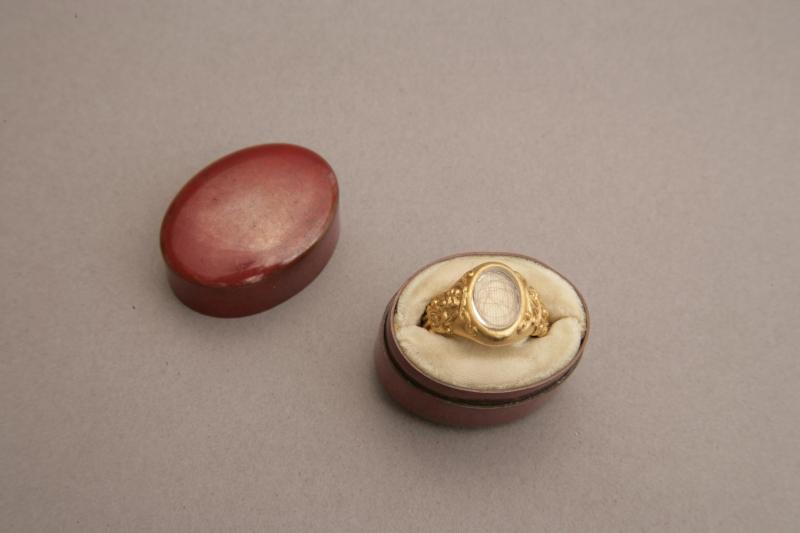
A few years later, John Hay purchased two of those strands, for the enormous sum of $100 – the equivalent of a few thousand dollars today. Still, a bargain. He had it enclosed in a ring, another common Victorian tradition.

Hay: The In-between Years

In late 1865, John Hay, still in his twenties, held some modest posts abroad as secretary to various US legations. Returning to the U.S. in the early 1870s, he became a newspaper reporter, wrote a little, to some success, and married Clara Stone, the daughter of a bona-fide millionaire, who was happy to turn many of his business interests over to his son-in-law. It made Hay financially independent, and assured their children’s future.

Robert Lincoln

Robert Lincoln was a student at Harvard when he met Nicolay and Hay, but they became lifelong friends.

In the late 1870s, John Hay and John Nicolay began a decade-long task collaborating on an impressive 10-volume biography of Abraham Lincoln.  They were given rare access to Lincoln’s files and papers, now legally in the possession of Robert Lincoln. The volumes enjoyed limited popularity, but became the mainstay for two generations of Lincoln scholars.

One reader of the Nicolay-Hay work was 30-year-old Theodore Roosevelt, just embarking on a national political career. He was a huge admirer of the sixteenth president and wrote John Hay a complimentary fan letter.

Hay and Adams

henryadams

Henry Adams, historian and author, would be another lifelong friend of John Hay.

Sometime during those years when he served in Lincoln’s White House, Hay became acquainted with a young man his age, with an excellent pedigree of his own. Henry Adams’ father, Charles Francis Adams was Lincoln’s ambassador to England. His grandfather and great-grandfather had both been Chief Occupants of the White House.

Hay and young Adams bonded instantly for a legendary friendship. But they both needed to go their separate ways and make their own marks.

original-hay-adams-jpb

The original adjoining townhouses of John Hay and Henry Adams. Washington’s famous Hay-Adams hotel stands on that spot today.

By the mid-1880s, Hay and Adams had renewed their friendship and had moved to Washington, DC, walking distance from the White House. Their intellectual compatibility attracted the A-listed elite of the capital to the salons in their adjoining town houses.

Hay and TR

In 1889, a cyclone otherwise known as Theodore Roosevelt moved to Washington as a member of Republican President Benjamin Harrison’s new Civil Service Commission. The post was mid-level at best, as government posts go, but TR whipped it into his usual frenzy of importance.

He also came with a New York pedigree that could not be ignored. But pedigreed or not, lower-level position or not, Theodore himself could not be ignored. He was invited to the Hay-Adams salon, and immediately proved his “interestingness.”

Benjamin Harrison lost his bid for re-election, and TR took a hiatus back in New York for a few years. John Hay, who had always kept a finger in the political diplomatic pie-of-sorts, rekindled his statesman role and served as the Ambassador to England.

olderjohnhay

Dapper John Hay in his older years.

When William McKinley was elected President in 1896, the Republicans were back in the White House. John Hay was appointed Secretary State. Theodore Roosevelt was back in Washington, this time as Assistant Secretary of the Navy.

Hay and TR: The Lincoln Ring

young TR

Young up-and-coming Theodore Roosevelt

John Hay always had a benevolent and somewhat paternal affection for TR, who was twenty years his junior. He and Adams would shake their heads in exasperation at Roosevelt’s frenetic pace and never-ending interests, but they always found him superb company. He was again welcome at the Hay-Adams salon.

Four years later, TR was McKinley’s running mate in 1900, but McKinley was assassinated six months later, and Roosevelt was now President.

lincolnhairring

John Hay’s ring encasing two strands of Abraham Lincoln’s hair, photo courtesy of the Sagamore Hill collection.

Hay was amazed. He was also invited to remain Secretary of State. While TR in many ways preferred his own statesmanship, he relied on Hay’s broad knowledge of foreign affairs, and his endless charm, wit, and uncommonly good common sense. They also spent many hours discussing Lincoln, the man they both admired over all others.

In 1905, when TR was inaugurated to a term of his own, Hay’s health was failing rapidly.   But he made an extraordinary offer: Would TR like to wear the Lincoln Ring at his inaugural? The President was dee-lighted to accept and wore the treasured ring.

Hay died only a few months later, and  the ring fittingly remains in Theodore Roosevelt’s Sagamore Hill Collection in New York.

Sources:

Morris, Edmund – Theodore Rex – Random House, 2002

Taliaferro, John – All the Great Prizes: The Life of John Hay from Lincoln to Roosevelt, Simon & Schuster, 2014 (Reprint)

https://history.state.gov/departmenthistory/people/hay-john-milton

The Sagamore Hill Collection archives

Posted in A POTUS-FLOTUS Blog, Abraham Lincoln, Nifty History People, Theodore Roosevelt | Tagged , , , , , , , , , , , , , , , , , , , , , , , , , , | 2 Comments

An FDR White House Christmas

For twelve years, Franklin and Eleanor Roosevelt occupied in the White House and spent more Christmas holidays there than any other first family.

fdrgiftphoto

President and Mrs. Roosevelt. A signed, framed photograph has always been a popular POTUS-FLOTUS gift to staff members.

Strictly Roosevelt Traditions

carvingturkey

FDR had style in everything – even carving a turkey.

Some holiday traditions are more or less universal. Then, of course, there are those personal traditions that nearly every family incorporates into its lifestyle. That includes Presidents.

Franklin and Eleanor Roosevelt, whose personal lifestyle was diverse, made Christmas a three day family affair at the White House between 1933-1944. Naturally once WWII began, and all four Roosevelt sons were in uniform, it became impossible to gather the whole clan.

fdrxmas

The Roosevelts loved having their family around for Christmas.

But the POTUS was happy to have whoever was in town, particularly the grandchildren. He sat at the head of the table, just as he did at Thanksgiving, and carved the huge turkey with the precision of a surgeon.

Perhaps the most FDR-ish of all, was the annual reading of Charles Dickens’ A Christmas Carol. The entire book in once sitting. He had done for his own five children when they were small, and now he would do it for the grandchildren. He voice-acted every part in his inimitable style. Then each family member filed into FDR’s bedroom to hang their stocking on the mantel. Eleanor would fill them all later that night, and first thing in the morning, all the grandchildren would descend upon the President’s room.

eleanorknitting

Eleanor Roosevelt was an inveterate knitter. Her hands were seldom idle.

But it was Mrs. Roosevelt who was the gift shopper in those days before cyber shopping or even letting her fingers do the walking. She shopped all year. She also knitted all year, making sweaters and scarves for family members.

Mrs. R’s Christmas Book

Beginning in 1922 and ending with her death in 1962, ER maintained a Christmas book of who sent cards and/or gifts, and what they were. She also kept a similar log of what she had sent. It became a very large thick book, but this way she avoided duplication of gifts, and even more importantly, she avoided omitting any well wishes however inadvertently.

erxmasbook

This is a published book, of course, but Mrs. R. really did maintain a personal Christmas book.

When she was First Lady, her personal secretary or other staff member would keep the book updated.

The White House Staff Parties: Part I

valkillforge-xmas-gifts

Some of the gifts the Roosevelts commissioned from the Val-Kill Forge.

It has been customary for every presidential family to host a party (and sometimes a series of parties) for staff members and their families. The Franklin Roosevelt White House staff was larger than any previous one.  And of course, all staff parties and gifts are personally paid by the President.  When literally hundreds of gifts are to be given, it becomes a costly affair. Signed photographs, some framed, some in presentation folders, have been popular gifts from several Presidents.

falakeyring

Fala on a keyring! The Roosevelt Scottie had a fame all his own!

Special dinners or receptions were held for senior aides and staff members, many of whom had to perform intensely private and personal assistance to the disabled President. Mrs. Roosevelt drew on her strong connection with the Val-Kill Forge, part of a craft consortium near their estate at Hyde Park, NY. Mrs. R. had helped to establish the enterprise, and was always its best customer. Each year, the Forge supplied products for Christmas giving. One year it was pewter letter openers with the presidential seal; another year, match book covers, another time, paperweights or pad holders. One year, the Forge reproduced Fala, their Scottie, dangling from a key chain.

The White House Staff Parties: Part II

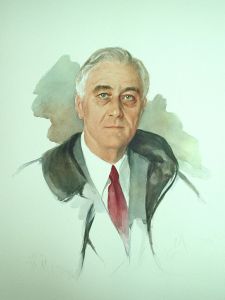
The famous “unfinished” last portrait of FDR

Like most things Eleanor Roosevelt cared deeply about, it was the parties the President and First Lady hosted for the lower level staff and their families that were most important to her. To a White House kitchen helper or maid, to an electrician or doorman or janitor, the opportunity to take their families to shake hands with FDR, to enjoy refreshments and to receive a small token of their appreciation was more than a memorable experience. It was an important event in their lives.

famous-portrait

The famous White House portrait of the multi-interested Eleanor Roosevelt.

Eleanor Roosevelt was keenly aware of this, particularly during the Depression, when a family earning $15 or $20 a week was considered well off. There were dozens of lower level staff employees. Most of them had children.

Mrs. R. was a unique woman on many fronts, and one of the qualities she had in abundance was multi-tasking and multi-utilizing. Throughout the twelve years of FDR’s presidency, she was an inveterate traveler, logging thousands of air, train and automobile miles for the social programs she supported. She visited dozens of cities and towns hard hit by hard times. Factory towns that went bust. Mining towns where the mines had closed. Prairie farms decimated by the dust bowl.

Wherever she went, she brought a purse full of small change, happy to buy nickel and dime items of local goods. Knowing that people did not want a handout, and knowing that those small items might help provide some relief, she purchased little dolls and toys, baskets, foodstuffs and handicrafts for her Christmas Closet.  And it was a real closet at her cottage at Val-Kill.   It was filled with goodies for Christmas gifting.

A few weeks prior to Christmas, lists of staff members, their spouses and children, names and ages, was gathered and organized. The little trinkets she had purchased throughout the year were brought to the White House and carefully wrapped in bright holiday paper. There would be something for every child to take home.  And there were plenty of extras to handle any surprise guests.

Staff members, dressed in their best clothes, were now honored guests in the place where they worked. They were treated to cake and coffee, punch and cookies, a chance to be personally greeted by the President and receive a small token of appreciation.

It was quintessential Eleanor.

Sources:

Roosevelt, Eleanor – Autobiography of Eleanor Roosevelt – Harper & Bros. 1961

Seeley, Mary Evans – Seasons Greetings from the White House: The Collection of Presidential Christmas Cards, Messages and Gifts – 1996, MasterMedia Book

http://www.whitehouse.gov/1600/presidents/franklindroosevelt

https://www.nps.gov/hofr/index.htm


Posted in A POTUS-FLOTUS Blog, Franklin D. Roosevelt | Tagged , , , , , , , , , , , , , , , , , , , , , , | 3 Comments

Ike ’52: The Best known Candidate of All

president-ike

President Eisenhower

Dwight David Eisenhower was past 60 when he ran for President in 1952.

Ike: Boy to Man

ikesiblings

Ike (far left), his parents, and his tight knit family of six fine boys.

There is virtually nothing in the early years of Dwight David Eisenhower (1890-1969) that would point to the glories of his maturity. He was a farm boy, one of six fine, strapping sons born to a Pennsylvania-German family, who had relocated to Abilene, KS.

They weren’t poor, but they were far from rich. Ike went to school, did chores and grew up like  millions of corn-fed boys. He was a middling student, more diligent than brilliant, and more interested in sports or learning to play poker than anything.

His years at West Point were satisfactory, but not brilliant. The good-news, bad-news was that he made the football team and was the star player. Briefly. He injured his knee, and football was out of the picture. Permanently. He had to focus on his academics and soldiering.

The Young Officer

cadet-eisenhower

Ike as a West Point cadet. He graduated in 1915, part of the Class “the stars fell on.”

For the next twenty years, he was sent hither and yon.  A year here, a few months there, with glacier-like speed in promotions. Reverting to pre-WWI soldier quotas, the US army was minuscule. Lack of availability meant few promotions and few opportunities for advancement.

Part of a senior officer’s responsibilities however, is to keep a sharp eye out for the up and coming leaders of the future, and to mentor their careers. Wherever Ike was assigned, he impressed his superiors. If they could not promote or pay him per se, they could certainly teach him. One thing they could not teach him, and the one thing that impressed all who knew him, was his innate personal charm, and ability to get on happily with superiors, subordinates and peers. If Ike had any idea that those qualities were political assets, it is unknown. He had no political ambitions.

youngike

Ike was among the first officers trained for tanks.

He was sent to a variety of special classes to increase his skills and make the best possible use of his abilities. Ike did not disappoint. He was usually at the head of every class he attended. Nevertheless, by the end of the 1930s, Ike, now in his late 40s, was still a major, and expected to retire no higher than colonel. But he was also in Washington.

General Ike

World War II was beginning to collide once again with the peace of mankind, and despite the country’s best efforts to once again stay out of the fray, wisdom of the ages called for preparation. General George C. Marshall, the Secretary of War, had an opportunity to assess Colonel Eisenhower and liked what he saw, including his personal skills. Ike was no prima donna in a profession that usually reeked with prima donnas.

the-great-general

General Ike

Promotions were quicker, and in fact so quick that Ike was advanced over more than a hundred men with seniority. He was now General Ike.

generalmarshall

Army Chief of Staff General George Marshall – one of Ike’s mentors.

Having planned the Africa campaign, he was sent to lead it. Then he was given the task of becoming Supreme Commander of the Allied Forces for the Invasion of Europe in 1944. He worked closely and compatibly with some of the Prima-est Donnas in military history: General Bernard Montgomery of England, General Charles de Gaulle of France, and even General George Patton of the US Army. The success of the mission is well known.  So were his five stars.

supreme-commanders

General Eisenhower as Supreme Commander of the Allies in 1945.

General Ike came home to a phenomenal hero’s welcome, feted and feasted and gifted and presented with “stuff.”

And there was talk of politics. Ike could be whatever he wanted. He didn’t want anything.

Ike after ’45

ikeatnato

Ike was a popular commander of the North Atlantic Treaty Organization (NATO) following WWII.

Post-War Europe was in a total mess, with several countries bordering imminent collapse. The United Nations, a pet idea of Franklin D. Roosevelt before his death, was taking concrete shape, and the North Atlantic Treaty Organization (NATO), a pact between the USA and member European countries for mutual protection was born.

NATO needed a strong and well respected leader: Ike was a shoo-in. He was already  on a first name basis with heads of state around the world.

He wanted to retire. He was nearly 60, and the thought of having a real home of his own had become a high priority. But politics was still beckoning, and everybody wanted Ike, and nobody knew what his politics were. The likelihood is that he didn’t know either.

Then an offer to become President …of Columbia University in New York presented itself. Ike agreed. It was also a convenient place for the politicians to come and plead with him to run for President. The Republicans wanted him. The Democrats wanted him. President Harry Truman practically promised him the Office on a silver platter if he agreed.

Candidate Ike

ike-and-mamie

Ike and Mamie hit the campaign trail. She loved it!

Dwight Eisenhower was a soldier, and had never given much thought to party politics. He answered to the Country and the Commander-in-Chief, whoever he was. He declined sincerely.

But when push came to shove, he admitted that he was Republican – a party that had not held office for twenty years. But he was a different kind of Republican. Conservative without being too conservative; progressive without being radical. It didn’t matter to the electorate. Everybody knew who he was.  They loved him.  So did everybody else in the world, even in places he had never been.

ilikeikebutton

Snappy and memorable.

He had one of the catchiest, shortest and to-the-point slogans ever: I Like Ike.  They trusted him in war, they could trust him in the White House. He did not need campaign biographies; he did not need to be introduced to the American people. They had known him for years. He won in a walk.

ike-and-qe2

The young Queen Elizabeth visits the White House. Ike knew her when she was a teenager!

And when foreign dignitaries came to social events at the White House (which they did in droves), they did not need to be introduced to the President of the United States. They came to see Ike, their old friend.

Sources:

Childs, Marquis – Eisenhower: Captive Hero – Harcourt Brace, 1956

Eisenhower, David & Eisenhower, Julie Nixon – Going Home to Glory – Simon and Schuster, 2010

Irwin F. Gellman – The President and the Apprentice: Eisenhower and Nixon, 1952-1961 – Yale University Press, 2015

https://www.whitehouse.gov/1600/presidents/dwightdeisenhower


Posted in A POTUS-FLOTUS Blog, Dwight D. Eisenhower | Tagged , , , , , , , , , , , , , , , , , , , , , , , , , , , | 3 Comments

Unusual For Their TIme: On the Road With America’s First Ladies, Vol 1: A Book Review

unusual-times-andy

Unusual For Their Time, by Andrew Ochs, is a one-of-a-kind book, and a must-read for all FLOTUS aficionados!

Andy Ochs has written an extremely unique book. It is part historical-ish, part biographical-ish, part memoir-ish, part travelogue-ish – and completely delightful!

Contracted to film C-SPAN’s First Ladies series in 2014-15, the author-cum-camera toured the country visiting the homes, birthplaces and other sites connected with America’s First Ladies, plus a few Presidential “hostesses,” a title given by historians to daughters, nieces, sisters and in-laws who substituted for widowed or bachelored Presidents. By his own admission, the author was given not only a warm welcome wherever he went, but access to dozens of rooms of memorabilia usually tucked away in vaults or behind the velvet ropes. And also, by his own admission, he had the special experiences of holding what they held and walking in precious footsteps.

If Andy Ochs was not born with the history gene, after this journey, he has had one helluva transplant!

Starting with Martha Washington and ending Volume 1 with Ida McKinley, he takes the reader on the grand tour of nifty places like Mt. Vernon, not-so-nifty but essential like the Adams birthplaces, and even some completely obscure sites (and equally obscure First Ladies) like Abigail Fillmore’s house or the property that once belonged to John and Letitia Tyler (his first wife, and the first FLOTUS who died in the White House). Who knew? In the latter case, even the present property owner hadn’t a clue. And of course we are treated to Julia Grant’s St. Louis birthplace and supposed-to-be retirement home, painted in bilious green, which supposedly was the color of the Gilded Age.

The biographical and historical part is fairly obvious and easy to understand: The old gals lived wherever they lived, and here are their furnishings or personal possessions. Anybody can go to those historic places and see their chairs or tables or piano. You can see (usually in locked cabinets), their vases or special china plates or jewelry, or even gifts they received from important visitors when they were First Ladies.

But it is the memoir-able part that makes Unusual For Their Time unique. It is the story of the filming. The personal part about filming the episode in his socks, or holding rare articles in gloved hands. Or assembling and disassembling camera equipment two or three or more times to accommodate yet another incoming tour group.

Then there are the “finding the sites” stories – some of which are not on a must-see historical site map. And he brings a smile to the readers’ faces, when he inserts a “cheap eats” paragraph citing some local oasis, particularly noted for Caesar salad and grilled cheese. Hopefully, all those local beaneries will take advantage of their moment of glory, and offer a few books for sale!

Author Ochs does more than merely entertain or educate. He makes these assorted women come alive. Some of them knew each other; most did not. But nevertheless, they shared the common bonds of girlhood, wifehood, motherhood as well as White House-hood.

Some were poor. Most were not. All had some education, and many were better educated, or from financial backgrounds that surpassed their husbands. Sometimes by a lot. All of them experienced the sorrows of life and death. Some lost parents at an early age. Some lost siblings at an early age. A huge percentage lost children – a devastating event that bonds them all.  None of this, however, was “unusual for their times.”

Author Ochs selected a publisher devoted to providing an outlet and funding for veterans’ memoirs and related projects, and has generously assigned his royalties to that cause. This is certainly a bonus reason to buy the book. But in doing so, he has consigned his book to only cursory technical talents and skills. He would truly benefit from a good editor. “Formatting” is not really editing, and a knowledgeable professional to check for redundancies, basic fact-checking vs. typos, copy-tightening and even a little better writing talent might be helpful.

The author titled his book Unusual for Their Time, and perhaps a few of them were, but it is a stretch as a whole. What was usual? Were they really unusual? With very few exceptions, their pre-First Ladydom lives were as common to their times, locations and stations in life as a proverbial head cold. Ochs tries hard to give each one of those fine women a quality or experience to substantiate the unusual-ness, but it is a stretch.  All women, regardless of their generation, their century and their age are individual in some way. But these gals were visible; their names were generally known during their lifetimes and are even today noted in the history books. Modern First Ladies rate books of their own.  Some of those old gals rate chapters; others merely footnotes.  But the crux of it all, is that we of a later generation did not have the opportunity to know them. And the truly sad part is that these lovely ladies had few opportunities to “be known.”

Andy Ochs has given us this very special chance to get to know them. Like Harry Truman, a pretty fair historian himself once said, “There is nothing new under the sun except the history we don’t know.”

Now we know them a little better.

Can’t wait for Volume II!

UNUSUAL FOR THEIR TIME: On The Road With America’s First Ladies

Author: Andrew Ochs,

Publisher: Tactical 16, April 2106

ISBN-13: 978-1943226122

$15.99


Posted in Recommended Reading | Tagged , , , , | 1 Comment