Dusting Off Franklin Pierce

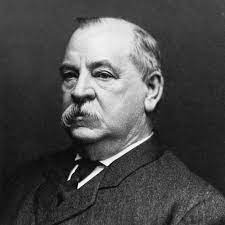
Franklin Pierce, 14th POTUS, is virtually unknown and disregarded…

The Basic Pierce Facts

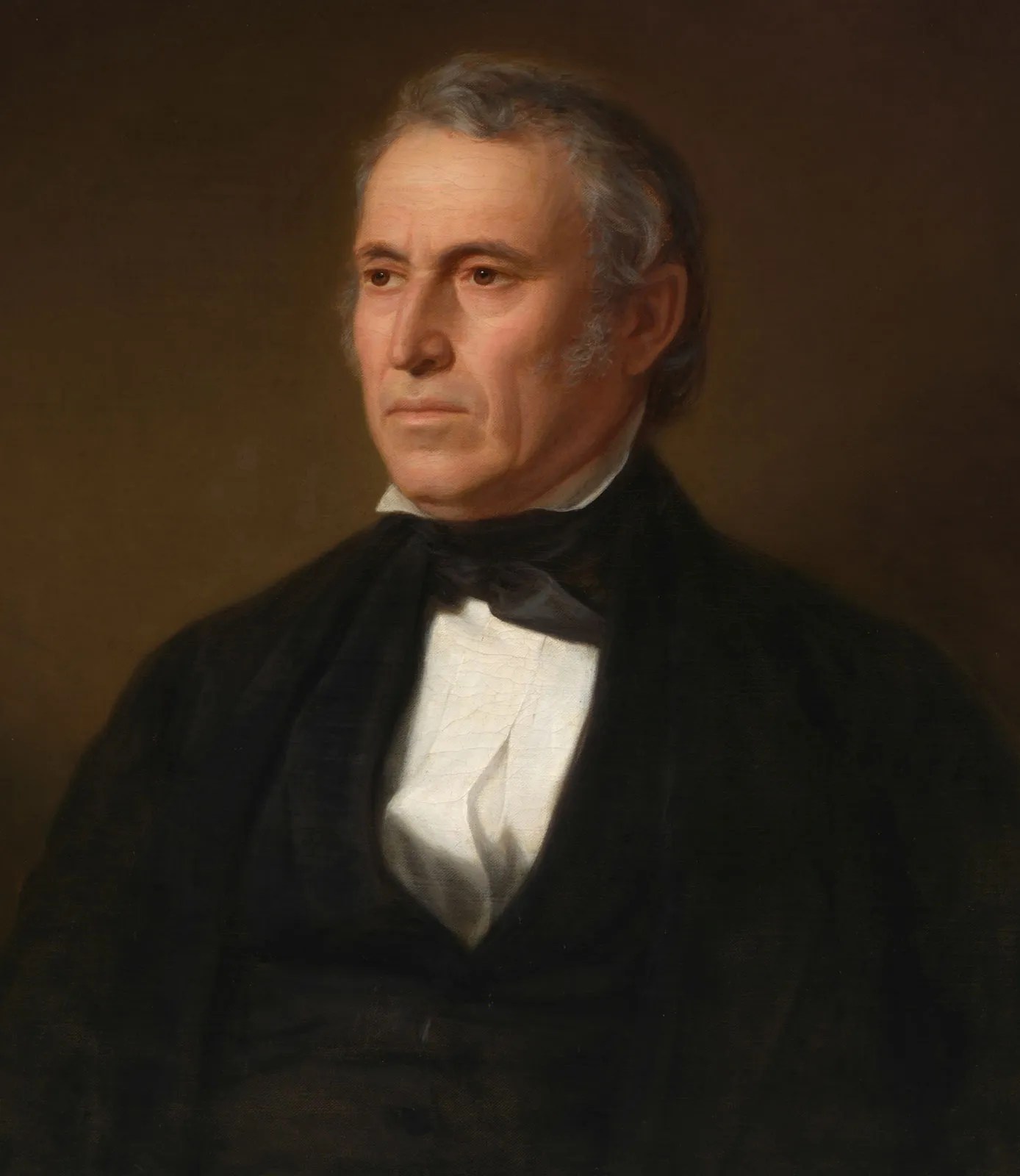
Franklin Pierce (1804-69), Democrat from New Hampshire, was a dark horse nominee, elected President in 1852. It took 49 Ballots to put him on the ballot, which was an exhausting exercise for the convention attendees. Few people knew who he was. He had been off the political radar for eight years.

He was a good-looking fellow, with an outgoing genial personality. As a graduate of Bowdoin College in Maine, Pierce read law and gravitated to politics. He was a natural, since he made friends and acquaintances easily, happily bending an elbow with them at the local taverns. When he met pretty-but-frail Jane Appleton (1806-63), whose minister-father had been President of Bowdoin, he pursued mildly – but her family were unsupportive. Particularly the “bent elbow” part. Nevertheless, with Jane approaching spinsterhood (age 28), they married. By that time FP had been elected to Congress.

Franklin Pierce, 14th President.

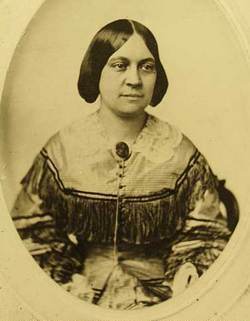
Jane was one of those wives who had extraordinary influence with her husband – but not all influence is good influence, despite her pious morals. Her distaste for politics was a wedge that separated her husband from the career he enjoyed, and the friends he treasured. Her antipathy toward alcohol afforded him little relief from the heavy moral pall of their homelife. When all three of their children died before they were twelve, Jane sank into a depression and never really recovered.

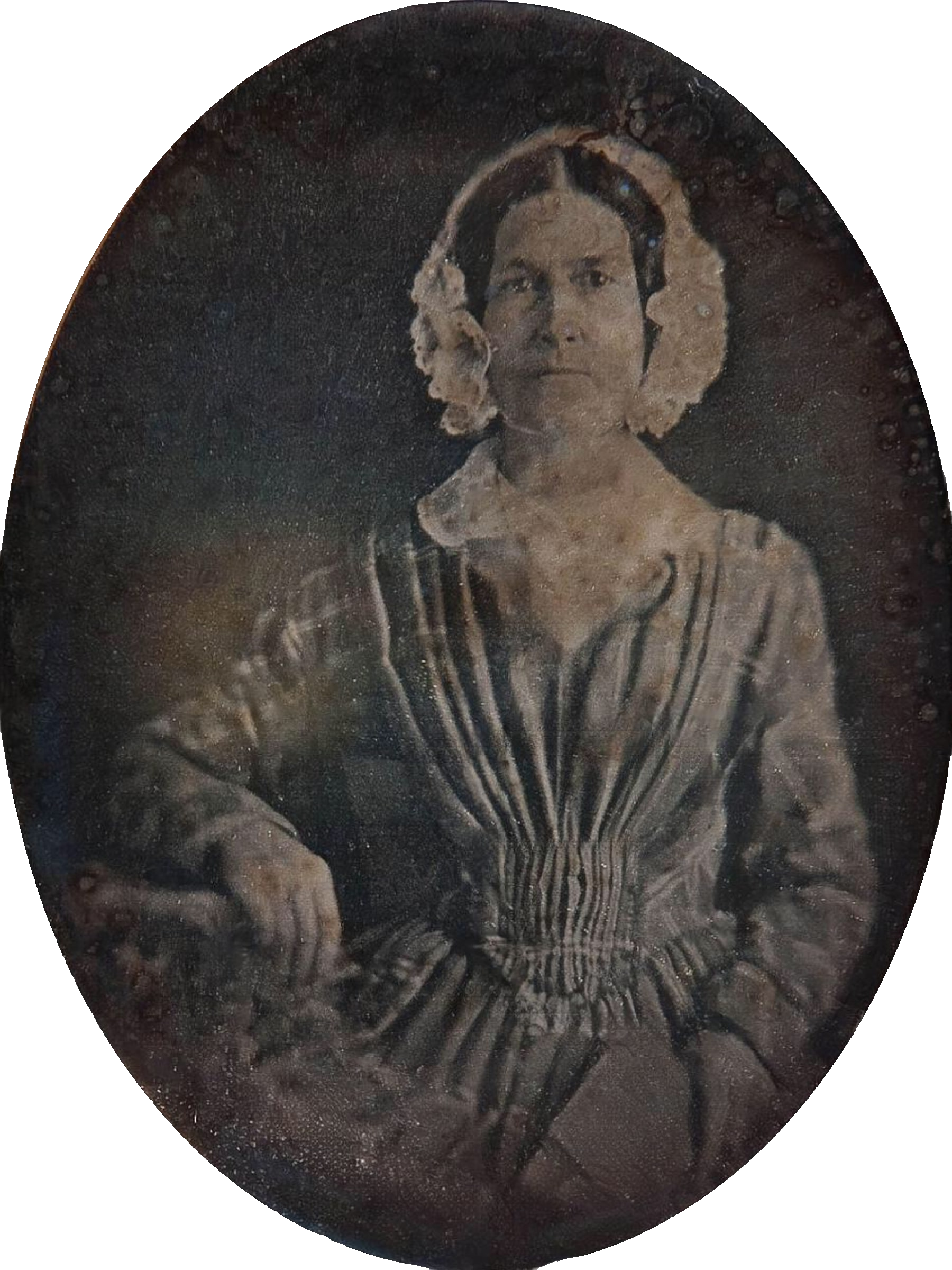
Jane Appleton Pierce

The Pierce Presidency was notable only for his somber social gatherings and his sympathetic attitudes toward the South. While he was always personally against slavery, he waffled on its Constitutionality. 

And he did drink. After Jane Pierce died, he was said to be continually drunk.

And in this, our historically-challenged century, is likely all most people know about good ol’ Franklin Pierce.

A Personal Note…

In 2002 or 3, we made a trip to New England, particularly to visit some Presidential sites we had never seen. Concord NH was on the list. 

When we visited a house in Concord connected with the Pierces and discovered a modest dwelling whose docents were thrilled to see us. Not many visitors came there – let alone someone with a real, serious interest.

The Pierce home in Concord

On a side table, there was a group of photographs, which, we were told, had been taken by a young schoolboy. He had discovered the unkempt and overgrown gravesite of the 14th President, and decided to make it his project for a scouting badge. He spent several hours weeding and tending, replanting and tidying up the grave. He donated the before-and-after photos to the Pierce site. It was heart warming, and I never forgot it! Then there was the little book….

The Pierce grave.

About the Same Time…

The eighth grade class at the Kenneth A. Brett school in tiny Tamworth, NH, took a class field trip to Salem, MA, home of the legendary House of Seven Gables. Their teacher had recalled that author Nathaniel Hawthorne, pal of Emerson and Thoreau, and a bona fide giant of 19th century American literature, had a strong connection to New Hampshire’s only President – Franklin Pierce. They had been classmates at Bowdoin, and remained close personal friends for the rest of their lives.

In fact, when generally forgotten ex-Congressman and Senator Franklin Pierce became the Democratic presidential nominee in 1852, Hawthorne (by that time well-known and highly regarded) was asked to write Pierce’s campaign biography. It was originally published by Ticknor, Reed and Fields, with an edition of less than 13,000 copies, mostly in paper wrappers. They are considered the rarest of all Hawthorne publications. 

Nathaniel Hawthorne

When social studies teacher Brian Wiggin tried to find a copy of the rare biography, there was none to be had in their library, and the state library offered to make a photocopy of the only copy they had.

Inspired by Wiggin, the class decided to reprint their own edition of Hawthorne’s least-known book, using Boxtops for Education, a project sponsored by more than 80 brand name products from Cheerios to Lysol spray. It was a major undertaking by 32 eighth graders – who not only learned more about Franklin Pierce and Nathaniel Hawthorne, but about the publishing process itself. This also included researching for various little known images of the 14th President, his family members and cabinet, and related items of interest. By the time the slim (100 pages) volume was re-published, the eighth grade students knew more about Franklin Pierce than about any other president.

His “notable” accomplishments were generally superficial… memorizing his inaugural address (no notes); keeping his cabinet intact for the full four years; displaying the first Christmas Tree (in the private family quarters). He was President when Commodore Perry opened trade with Japan. He was also President when the Kansas-Nebraska Act began wreaking havoc in the Midwest.

Perhaps more than anything, Franklin Pierce was a sad man, whose historical reputation is less than stellar. He suffered loss and tragedy in his personal life, and lived to see the country split by slavery – which included a sorrowful parting from another close friend, Jefferson Davis, who had been his Secretary of War.

Epilogue:

The eighth graders who resuscitated the Nathaniel Hawthorne campaign biography of Franklin Pierce are all grown men and women now, approaching middle age, and possibly with eighth graders of their own. They had a uniquely edifying opportunity and experience in working with the material, learning as they went….about writing, about understanding archaic language, about long-ago history, about substantive essays, about researching illustrations, about indexing – and about the publication industry as a whole.

Kudos to all! There are so many lessons here to be learned. Especially the joy of hands-on history!

Sources:

Hawthorne, Nathaniel – The Life of Franklin Pierce (reprint) – Peter E. Randall, Publisher, 2000

Wallner, Peter A. (2004). Franklin Pierce: New Hampshire’s Favorite Son. Plaidswede.

https://millercenter.org/president/pierce

Posted in A POTUS-FLOTUS Blog, Franklin Pierce, Nifty History People | Tagged , , , , , , , , , , , , , , , , , , , , , | Leave a comment

John and Abigail Adams: Mourning Alone

When Abigail Adams was thirty-two, she gave birth to a daughter.

Late Fall, 1776

John Adams, following a momentous time in Philadelphia, promoting, drafting and approving the Declaration of Independence, requested and was granted some leave of Congress to attend to his family and business in Massachusetts.

John had been away from his wife and family on-and-off since 1774, attending a Continental Congress as one of the representatives from Massachusetts. Philadelphia to Braintree was a two-week trip; absences were long, and particularly stressful. Not only was there emotional hardship in their separation, but Massachusetts, particularly the Boston area, suffered danger, sickness, turmoil, economic devastation, anxiety and death via a war that was becoming widespread throughout the thirteen colonies.

The young mother

Abigail Adams already had prepared survival kits for her children, managed the family farm and household, tended generously to evacuees from Boston in need of aid, nursed family members and servants through a cholera epidemic – followed by dysentery, followed by smallpox. Followed by death. Followed by an ordeal of inoculating herself and her children against smallpox. She was exhausted.

John’s few months in Massachusetts was welcome beyond belief. By January ‘77, when he returned to Philadelphia, both of them knew she was pregnant. It was her sixth pregnancy. Their daughter Abigail (nicknamed Nabby from birth) was ten; John Quincy was nine; a daughter Susanna died in infancy; they there was Charles, six, and Thomas, four.

Now, when she wrote to her husband, their words were couched in private understanding. “I am sure no seperation [sic]was ever so painfull [sic] to me as the last. Many circumstances concur to make it so—the distance and the difficulty of communication, the Hazards which if not real, my immagination [sic] represents so, all conspire [to] make me anxious, as well as what I need not [. . .] mention.”

The young-ish father

And John responded frequently, and just as circuitously, noting his “source of Anxiety which I never had before,” and urging her to “tell me you are as well as can be expected.”

They did not want their letters to fall into the wrong hands.

June or July, 1777

Pregnancy and childbirth were serious medical conditions, fraught with danger and changes and emotional turmoil. Late in her pregnancy, Abigail had a sudden chill and shaking episode which caused her to fear the worst: that something had happened to the unborn babe. Her doctor was hesitant to confirm anything and possibly could not assure her one way or the other. She was encouraged to have hope.

But Abigail was correct in her fears. When she finally went into labor, it was exhausting, arduous and long. And John, who had been nearby during the births of all his other children, was hundreds of miles away.

JQ had a sad birthday.

On July 11, 1777, John Quincy’s tenth birthday, Abigail gave birth to a stillborn daughter. She named the baby Elizabeth, after her mother, who had died a year earlier. It was nearly a week  before she could sit up and write the sad news to her husband. “Join with me my dearest Friend in Gratitude to Heaven, that a life I know you value, has been spaired [sic] and carried thro Distress and danger altho the dear Infant is numberd [sic] with its ancestors.”

Any loss of a child leaves a hole in the mother’s heart. Even in an age where infant/child mortality were extremely high. And of course, with pregnancy and childbirth creating its own hormonal emotional difficulties, Abigail was devastated. She and John had looked forward to welcoming another baby. While her sisters and her children were near to bring some help and comfort to the bereaved mother, John was another story.

John Adams, Grieving Father

Transportation, including mail delivery, was very slow in 1777. John did not learn the sad news of their stillborn daughter for nearly two weeks after it happened.

He was also alone. He had no family or close friends to provide the comfort that fathers also need. Life was hard in those days, and death in childbirth and infant mortality was high – nearly 30%. Most parents of that era knew the pain of tiny coffins first hand. It was obviously God’s will, expected and borne.

But John Adams also grieved, feeling sentimental pangs for an infant he had never seen. He wrote her immediately, saying “Never in my whole life, was my Heart affected with such Emotions and Sensations.”

But he took whatever comfort he could, grateful to God for preserving to him “a Life that is dearer to me than all other Blessings in this World.”  

Epilogue

Losing a child in infancy, or even in early childhood naturally causes scars, but more often than not, those scars pale with time.

Charles Adams, RIP

But nearly twenty-five years later, John and Abigail suffered a far grievous loss when their grown son Charles succumbed at 30. He was perhaps the most loveable of the Adams children, but also the most vulnerable. He fell into bad habits and eventually disappointed his father with no opportunity for reconciliation. But as Abigail said, “He was no man’s enemy but his own.”

Nabby Adams Smith, RIP

Abigail was devastated beyond understanding, but perhaps more so, her flinty husband was not only grieved, but deeply conflicted about the loss – and about his mishandling of the situation. Unfinished and unresolved issues present grief that no one else can assuage.

Fifteen years after Charles’ death, their only daughter developed breast cancer, and suffered through a mastectomy, followed by two years of its withering metastasis. There was nothing anyone could do.

This time John and Abigail grieved together.

Sources:  

Butterfield et al – The Adams Papers, Vol. 2, – Harvard University Press 1961

Gelles, Edith – Abigail and John: Portrait of a Marriage – William Morrow 2009 p. 37-39

Levin, Phyllis Lee – Abigail Adams – St. Martin’s Press, 1987

https://founders.archives.gov/documents/Adams/04-02-02-0107

https://www.founderoftheday.com/founder-of-the-day/charles-adams

Posted in A POTUS-FLOTUS Blog, John Adams, Nifty History People | Tagged , , , , , , , , , , , , , , | Leave a comment

The Inauguration of Theodore Roosevelt 1901

Vice President Theodore Roosevelt had a quiet, somber inaugural.

The Sad Circumstances

Vice President Theodore Roosevelt was taking a rare family vacation at a resort in New York’s Adirondack Mountains when news came that President William McKinley had been shot by an assassin at the Pan-American exposition in Buffalo on September 7, 1901. Naturally he hurried to Buffalo where he was told that the President was recovering nicely, and Roosevelt was urged to return to his family. But President McKinley was 58, portly and of a sedentary nature. The attending doctors, failing to utilize a newfangled x-ray machine readily available at the exposition, also failed to locate the bullet that had lodged in his belly. Within a few days, an infection had spread rapidly. “Recovering nicely” was quickly becoming “urgent.”

McKinley assassinated!

Once again Roosevelt raced to Buffalo, and advised that the President had died only hours before. The Cabinet had already assembled, along with a small group of Senators and Congressmen. It was essential for the new President to take the oath of office immediately.

The Queen is Dead, Long Live the King

Theodore Roosevelt’s near-decade in the White House coincided with the reign of Britain’s King Edward VII. His mother, the British queen for 63 years, died in January, 1901, making the 58-year-old Prince of Wales the new King. But while he became King immediately, it would be more than a year until his formal coronation and parade.

Old Queen Victoria was past eighty, and had been failing for some time. Plans had been in the works for nearly a year to prepare a magnificent coronation ceremony for her successor. England was a the height of its empire, the most powerful – and civilized – country in the world. They wanted to show off their prestige, especially following the pomp and ceremonies of the late queen’s Golden and Diamond Jubilees. 

Long lists of notable invitees were prepared. After all, the new King was closely related to most of the royal families in Europe. Other countries were duly expected to send high-ranking representatives as well. All came with entourages. And egos. All required housing and feeding and appropriate entertaining. Protocol mavens labored over their precedence and status.

King Edward VII

The plans were so complex that the actual coronation ceremony was postponed until September, 1902.

The Buffalo Inauguration

Today, even in Buffalo, few people know that a president was inaugurated in their city. And not just any president. Theodore Roosevelt was the new president, destined to be one of the most famous world leaders of his time, and perhaps of any time. His was not the sedate personality of Buffalo’s Millard Fillmore, another VP turned POTUS a half-century earlier. Nor was it like the gruff business-minded Grover Cleveland, who grew up in Buffalo and had been its mayor thirty years earlier. 

Grover Cleveland
Millard Fillmore

No, Theodore Roosevelt was the perfect head-of-state for America’s new century.

It had been suggested that the brief ceremony take place in the home of John Milburn, president of the Pan-American Exposition, but that was quickly overruled. It would be unseemly. President and Mrs. McKinley were Milburn’s guests, and following the assassination, he was taken to his home, and lingered and died in his guest room. His body was still being prepared for the funeral services. Frail Mrs. McKinley was in seclusion there.

Ansley Wilcox, a local judge and old friend of TR, met the now-President at the train station. Only three months earlier, he had hosted Vice President TR when he came to open the Pan-American Exposition. Now he brought President TR back to his stately Victorian home, where he could freshen up, change to appropriate “borrowed” clothes, and greet his new cabinet. It was also decided that the Wilcox parlor would be an appropriate place for the private inauguration.

A sketch of TR’s 1902 inaugural

Taking the oath of office was a somber ceremony, with only cabinet members and a handful of other notables. Limited newspaper coverage was permitted, but photographers were expressly forbidden. Later sketches of the scene were from memory. The new POTUS offered brief remarks. There was absolutely no hoopla, and everything was over in a half hour. 

Later…

After paying his respects to Mrs. Ida McKinley, TR took immediate control.

The Milburn home in Buffalo.

Following the funeral ceremonies the following day, TR left for Washington, to stay with his sister Anna Roosevelt Cowles, whose townhouse had been his occasional pied a terre for more than a decade. This way, the McKinley family could make their needed arrangements in private.

Later-Later… A Lost Gem of a Story!

Newspaper coverage of Roosevelt’s inaugural was quickly surpassed by the coverage of  McKinley’s death and funeral, his temporary burial in Canton, Ohio, and the trial and execution of his assassin. In due time, all of that was eclipsed by the whirlwind of TR-ness. 

But, a year later, after the grand spectacle of the coronation of King Edward VII hopped the pond and splattered in US headlines, comparisons were made to TR’s inauguration. An old article from a Buffalo newspaper was found – containing a doozy of a typographical error!!

The typesetter had inadvertently substituted the letter “b” for the “o” in oath, and the article read… “For sheer democratic dignity, nothing could exceed…surrounded by the cabinet and a few distinguished citizens, Mr. Roosevelt took his simple bath, as President of the United States.” Then it was lost.

The oath-bath story appeared in Vanity Fair Magazine, and later was reprinted in a collection of VF clippings circa 1960. And lost again. 

But as Ansley Wilcox said in an essay he wrote shortly after the inauguration in 1901: “It takes less in the way of ceremony to make a President in this country, than it does to make a King in England or any other monarchy, but the significance of the event is no less great.”

Sources:

Corry, John A. – A Rough Ride to Albany – John Corry Publishing, 2000

Shenkman, Richard and Reiner, Kurt – One-Night Stands with American History – Quill/William Morrow, 1982

https://www.britannica.com/summary/Edward-VII

https://millercenter.org/president/roosevelt/life-before-the-presidency

https://www.trsite.org/learn/the-day-of-the-inauguration

Posted in A POTUS-FLOTUS Blog, Nifty History People, Theodore Roosevelt, William McKinley | Tagged , , , , , , , , , , , , , , , , , , , | Leave a comment

Grant, Greeley and the Strange Election of 1872

After Lincoln’s assassination, Ulysses S. Grant was arguably the most famous man in the country.

The Unlikely General

Ulysses S. Grant was an unlikely general. West Point educated (class of ’43), he was a middling student, and other than his fine horsemanship, there was little that stood out.

True, he served admirably in the War with Mexico, but he was a junior officer, and despite brevet promotions, was only a Captain.

Then followed a disastrous time in California-Oregon, where homesickness, depression and boredom led him to the whiskey barrel – and an ignominious departure from the Army. That was followed by a near decade of floundering. He had no real vocation, little useful skills, and no direction whatsoever. His only ambition was to provide for his wife and four small children.

But in 1861, when the Civil War began in earnest, the forgotten ex-Captain Grant re-enlisted in the Union Army, sorely in need of good, trained and experienced officers. Promotions and substantive assignments came quickly. Shiloh. Vicksburg. Chattanooga. Qualities previously unnoticed – even by Grant himself, came to the fore. Quiet leadership, intricate strategies, and breaking many tried and true military absolutes. And, unlike many of his fellow generals, Grant kept ego and “personalities” out of it whenever he could.

1869: The New President

After Lincoln’s assassination, the country clamored for Grant, who tried hard to avoid political involvement. But offers he couldn’t refuse were pouring in, and by 1868, he couldn’t say no. He was nominated, and won by a landslide against former NY Governor Horatio Seymour, who did not really want the office, and is now a name lost to history.

NY Gov. Horatio Seymour

But successful generals – and even fine leaders – does not insure the political skills of a civilian government for nearly 40 million souls, across an entire continent. Despite his overwhelming popularity, he still had detractors. There were those convinced he was the Butcher of the Battlefield – causing humongous casualties. There were those who wanted the “old” union again, to include slavery, or a watered-down version of it. And each area had its own problems, concerns, needs… and that did not include the “former” seceded with strong currents of resentment.

General Grant always had a personal leadership style, rather than a military council. He seldom called staff meetings, and was used to charting the course. While he was invariably open to comments and suggestions from his lieutenants, and occasionally took their advice, he was still a leadership-loner.

President Grant

He never claimed to be a politician and proved it from the start. Without including political leadership advice, he named his cabinet… and backtracked rapidly. His choices were faulty, and his list of detractors grew. And while Grant personally was never corrupt or dishonest, many of his appointees were found with hands in the public till. On his watch. Administration scandals were in every headline.

Of course there were “reformers,” wanting to clean up the political mess, and who favored the peaceful “isms” of the day. Socialism, temperance, communal societies, new and peculiar religious practices….

The Liberal Party began to organize.

Greeley? Really?

By 1865, Horace Greeley (1811-72) was nearly as well known as Grant. He had been “famous” much longer. Born in New Hampshire to a poor family, he showed brilliant scholastic abilities at a young age. Always a little “quirky” in personality, he left home for good at fifteen, found work in Vermont as a printer’s apprentice at a small newspaper, and read his way through the local library.

Young Greeley

Six years later, after the newspaper folded, he went to New York to seek his fortune. He held short-term positions with short-lived publications, started his own short-lived literary journal, became a Whig, joined a Universalist church, and married Mary Cheney all before he was twenty-five.

In 1838, Greeley met Thurlow Weed, an upstate NY newspaper editor and leader of the liberal faction of the growing Whig party. Weed hired Greeley as editor of its newspaper, first backing William Seward, and later, in 1840, William Henry Harrison – the party’s first winner. Greeley jumped into the political fray with gusto!

After the successful 1840 campaign, Greeley moved back to NYC and started his own newspaper: The NY Tribune. After a rocky start, he found success beyond his wildest dreams. Always quirky, he dressed in a duster-style overcoat and a top hat with a turned-up brim. He was a vegetarian. He espoused communal societies, free love, temperance, women’s suffrage, spiritualism and other social anomalies. On the positive side, he was a good writer, a fair thinker, and hired excellent contributors for his paper: Ralph Waldo Emerson, Margaret Fuller, Karl Marx, and later, John Hay.

By the 1850s, he had made considerable money, a solid reputation in publishing, and was a founder of the Republican Party (replacing the ineffectual Whigs). By the Civil War, he was a force to be reckoned with – albeit still quirky.

Horace Greeley

He supported Lincoln – then he didn’t. Then he did again. He supported Grant – then he didn’t, and always considered him the Butcher of the Battlefield.

Political gadflies never really fit in. Nevertheless, he disassociated himself from the Republicans he helped found, and became the darling of the Liberals.

The Election Loss

The Liberal party was a fringe, i.e. spoilers. The Democrats were heavily the “solid south,” responsible for the Civil War. There were no superstars.

In 1872, the Democrats with no prayer of unseating the still popular (albeit vulnerable) Grant, opted to unite with the Liberal Party, seemingly their only hope. Horace Greeley, apostate Republican, was a name brand, sort-of. As expected, he lost the election.

But he lost a lot more than that. His healthy was failing. His wife’s health was failing – and she died. He lost most of the fortune he plowed into the failing campaign, which carried only a half dozen states. And he lost his mind, to a point that he needed to be hospitalized.

By the time the electoral college met to cast the official votes, the quirky Greeley had lost his life, too.

Sources:

Shenkman, Richard and Reiner, Kurt – One-Night Stands with American History – Quill/William Morrow, 1982

White, Ronald C. – American Ulysses, A Life of Ulysses S. Grant – Random House, 2016

https://millercenter.org/president/grant/life-before-the-presidency

https://www.history.com/news/ulysses-s-grant-president-accomplishments-scandals-15th-amendment

https://www.britannica.com/biography/Horace-Greeley

Posted in A POTUS-FLOTUS Blog, American Civil War, Nifty History People, Ulysses S. Grant | Tagged , , , , , , , , , , , , , , , , , , , , , , | Leave a comment

The Justice and the Presidents

Oliver Wendell Holmes Jr. was young enough to be Lincoln’s son – and old enough to be FDR’s father.

OWH, JR

Oliver Wendell Holmes Junior (1841-1935) was Massachusetts born into a solid and prosperous family. His father, OWH Senior was a physician and occasional poet, probably best known for the versifying part. As such, his son was attending Harvard when the Civil War began in 1861. He was twenty – and immediately left school to enlist in the famous 20th Massachusetts. He believed it was his duty as an abolitionist and Unionist.

OWH during the Civil War

Due to his mature age, education and family influence, he was commissioned a second lieutenant, and continued to rise in the military. He was wounded three separate times. The first, at Ball’s Bluff, an early skirmish notable mostly for claiming the life of Col. Edward Baker, a long-time close friend of President Lincoln. He was wounded again at Antietam, and finally Chancellorsville. By then, he had become disenchanted with the war, the incompetence (both sides), and was even considering that the Confederacy should go its own way. Regardless of abolition.

His experiences in the War would color the rest of his life, his thinking, and even some of his important legal opinions.

Nevertheless, now a captain, OWH recovered from his Chancellorsville wounds and returned to active service, assigned in 1864 as an aide to General Horatio Wright, in command of Fort Stevens, one of several fortresses surrounding/guarding Washington DC. 

The Lincoln Encounter

By midsummer 1864, Union General Ulysses S. Grant was doggedly chasing Confederate General Robert E. Lee through Virginia, centering on the major railroad hub of Petersburg. Lee assigned General Jubal Early to provide some diversionary action around the Union capital. Early planned a raid on Washington, and had visions of capturing Lincoln himself.

Lincoln, always eager to support the troops in person if possible, had decided (unbeknownst to Early) to visit Ft. Stevens to demonstrate his faith in its military defenses to panicked Washingtonians. But unbeknownst to both General Wright and Lincoln, Confederate sharpshooters tasked with checking the fort’s defenses were within striking distance. Lincoln jumped up on one of the parapets for a better view. The 6’4” President, adding nearly another foot with his stovepipe hat, presented an unmistakable seven-foot target. 

An easy target

According to lore, it was Captain Holmes standing nearby, who shouted to the POTUS, “Get down you damn fool before you get shot!” Lincoln, unaccustomed to a smart-mouth retort, was said to smile and take the advice.

The smart-mouthed officer was never demoted, transferred or chastised for his “impertinence.” Lincoln likely had to admit the young fellow was right. 

The Making of a Justice

Oliver Wendell Holmes returned to Harvard after the war, received a legal degree, and went on to a stellar career in jurisprudence. He purchased a fine home in Massachusetts, traveled frequently, and was widely regarded for a philosophical and liberal interpretation of law. His thinking, his wit, his command of language guaranteed his presence as one of the country’s premiere legal minds. 

Oliver Wendell Holmes, Jr.

He practiced law in Boston for fifteen years, grew a trademark handlebar mustache, and served as an editor of the new American Law Review. He summarized his thinking in a series of lectures, collected and published as The Common Law in 1881, an important compendium of jurisprudence that has never been out of print.

In late 1882 he was appointed as an associate justice of the Supreme Judicial Court of Massachusetts, and in 1899, became its Chief Justice.

In 1902, President Theodore Roosevelt appointed Oliver Wendell Holmes, Jr. to the Supreme Court of the United States, a nomination that was quickly confirmed. He went on to serve in that capacity for more than thirty years – a record that still stands to this day. He was ninety.

The FDR Roosevelt Connection

Franklin Delano Roosevelt was a distant cousin (and uncle by marriage) to Theodore Roosevelt. He may have had opportunities over the years to become moderately acquainted with the renowned (and witty) Justice, but it was never more than superficial.

When FDR was inaugurated President on March 4, 1933, the country was deep in the throes of a horrible economic depression which was affecting the entire world. Pockets of troublesome international strife were cropping up regularly. While the new President Roosevelt sported a famous name and a popular governorship of New York, he was generally untried and considered a lightweight.

March 4, 1933

He was also crippled by polio, confined to a wheelchair and occasional leg-braces, assiduously kept from the general public.

It had also been a tradition for a century, that a sitting POTUS was happy to receive calls, but did not pay calls (other than perhaps family members).

The Visit

March 8 was Holmes’ 92nd birthday.

Only three days after his inauguration, in the midst of a “bank holiday” to reorganize failing banking policies, Franklin D. Roosevelt paid an unprecedented personal “courtesy” visit to Justice Holmes to wish him a happy birthday.

According to author Jonathan Alter, the two men chatted pleasantly, which included the aged Justice recalling some of his Civil War experiences. He advised the new President that the only thing to do when losing a battle, was to stop retreating, blow the trumpet and give the order to charge.

Never out of print.

Then he thumbs-upped FDR’s iconic litany of new economic programs, by affirming “and that’s exactly what you are doing.”

After they said their goodbyes, Holmes gave his oft-repeated opinion of young Roosevelt: “He has a second class intellect, but a first class temperament.”

It was a pithy assessment. FDR’s intellect was superior to many, but he was hardly “brainy.” But the “first class temperament” was exactly what was needed to see the country through the trials and tribulations that would befall the entire world in the years ahead.

Sources:

Alter, Jonathan – The Defining Moment: FDR’s Hundred Days and the Triumph of Hope – Simon & Schuster, 2006

Ward, Geoffrey – A First Class Temperament: The Emergence of Franklin Delano Roosevelt – Harper & Row, 1989

https://jackmillercenter.org/article/the-fort-stevens-incident

https://supreme.justia.com/justices/oliver-wendell-holmes-jr/

Posted in A POTUS-FLOTUS Blog, Abraham Lincoln, American Civil War, Franklin D. Roosevelt, Nifty History People | Tagged , , , , , , , , , , , , , , , , , , , , , , , | 2 Comments

James Buchanan: The Successful Failure

It would be a rare POTUS who could leave office without truly believing he had done a credible job.

The Stellar Resume

James Buchanan (1791-1867), a Pennsylvanian from mid-state, was the last President born in the 18th century. His family was large, but he was essentially a brother among a slew of sisters. 

Blessed with above average academic gifts, he attended Dickinson College, read law, and traveled the road to success: a solid legal practice, plus a variety of local and state political offices, ranging from district attorney, to local and state offices to congressman – all by the time he was thirty-five.

He had done well for himself financially. Invariably generous with his family, when his sisters were widowed with half-orphans, he undertook to be their guardians, at least monetarily. His niece Harriet Lane was nine when both her parents died, and “Nunc,” as she came to call him, took her as his special ward, educating her, providing her with all the niceties of a proper young-girlhood, and the sincere love and affection of a benevolent uncle.

Harriet Lane, second from left, with the Polks and her “Nunc.”

When Buchanan served in Congress, he made sure that Miss Harriet was placed in a convenient finishing school. He was grooming her to be his “escort” once she reached young womanhood. 

JB and Jax: Oil and Water

In the 1820s and 30s, just about all politics was Democratic – although some sub-sects were beginning to form. James Buchanan was a Democrat, and gravitated to rough-and-tumble Jacksonian politics. But JB was a suave, cosmopolitan fellow, conscious of his gentlemanly manner and appearance. Now-President Andrew Jackson also seemed cosmopolitan and mannerly, but he was a populist, born and raised rough-and-tumble, and it never left him. The manners part seemed contrived. He also did not have Buchanan’s advantage of a classical education.

POTUS Jackson

As a lifelong bachelor, and before his niece Harriet Lane had a permanent hold on his arm, Buchanan was a popular dinner guest – especially when there was an imbalance of men and women at the table. Since many high level dinner parties hosted a maiden aunt or widowed sister, a single man was a godsend for a table-escort. But as far as Jax was concerned, “Buck,” as he was sometimes called, was perceived as a “Miss Nancy.” Effeminate in his manners and bearing. His close friendship with bachelor Senator William King raised eyebrows.

Young James Buchanan

Nevertheless, President Jackson appointed him Minister to Russia.

Fifteen Years Later….

In 1844, James K. Polk, Tennessean and disciple of Andrew Jackson, was barely known outside a small Congressional circle for most of the Jackson Era, including a term as Speaker of the House. Then a series of election losses consigned him to retired-ish, and sniffing for opportunities. Political circumstances elected him as the country’s first “dark horse” President. It was a complete surprise that he was nominated, and even a bigger surprise when he won – against Whig powerhouse Henry Clay.

POTUS Polk

Polk appointed James Buchanan as his Secretary of State. This outraged the aged and ailing, but still politically vocal Andrew Jackson, demanding how the new POTUS could have selected “Buck” for the office – with such little experience in diplomacy. The stunned Polk reminded his mentor that he, himself, had appointed him Minister to Russia. Jax was honest in his explanation: the place where Buchanan could do the least damage, and was as far away from me (Jax) as I could put him!

Buchanan served competently enough at State.

A Decade Later…

Diplomatic lessons had been learned well. Harriet Lane was now old enough to be a social asset to “Nunc.” His ingrained manners and ways aligned perfectly with his new assignment from now-President Franklin Pierce: Minister to the Court of St. James. Queen Victoria. Great Britain. The most cosmopolitan place in the world. He was a great hit.

The Queen liked him. So did the Prince Consort. So did his British counterparts. His tenure as ambassador was an unqualified success, both socially and politically. They may have been his happiest years.

The Queen liked him!

He was a Democrat. A Pennsylvanian. Politically a unionist and against slavery. A man of reputation and resume. With few “enemies” so to speak. And many friends, including many southern friends. And being out of the country for four years, he was untainted by the roiling political waters that was turning into a spewing boiling miasma.

In 1856, he was the Democratic candidate for President – and won.

Elements of Failure

He was nearly seventy when he retired.

All the qualities that made James Buchanan successful in Great Britain conspired against him in Washington. His “social” White House was superb. Miss Harriet was a gracious hostess. Even Queen Victoria was pleased to allow her son, the eighteen-year-old Prince of Wales, to pay a visit to Washington, guest of the POTUS, a man old enough to be his grandfather.

Harriet Lane

But social acumen alone does not strong leadership make. The national “problems” – slavery at the top of the list, the spread of slavery as close runner-up, new territories in a position to “choose” for-or-against slavery was insidious, and a total defiance of law and order was becoming the way of the country.

Strong leadership was needed. A compassionate – and dispassionate nature. And the disposition toward flexibility, creative thinking and good humor. Most of Buck’s experience was legislative rather than executive. Most of his closest friendships were with Southerners. Untested in strong leadership, he floundered and wrung his hands through the tug-of-war that was becoming a real war, making the wrong decisions: sending soldiers when he should have sent diplomats; sending diplomats when he should have sent soldiers. And selecting the wrong ones anyway.

He was considered a failure when he left office, although he spent the remaining seven years of his life trying to explain his reasoning.

He undoubtedly meant well, but his reputation has never improved.

Sources:

Baker, Jean – James Buchanan – Times Books – 2004

Klein, Philip S. – President James Buchanan: A Biography – Pennsylvania State University Press, 1990

https://www.whitehouse.gov/about-the-white-house/presidents/james-buchanan/

https://www.britannica.com/biography/James-Buchanan-president-of-United-States

Posted in A POTUS-FLOTUS Blog, Andrew Jackson, Franklin Pierce, James Buchanan, James K. Polk, Nifty History People | Tagged , , , , , , , , , , , , , , , , , , , , | 1 Comment

Andrew Jackson: The Road to Retirement

Andrew Jackson was seventy when he retired after two terms as President.

The Making of an Old Man

In 1837, seventy was a ripe old age, and former President Andrew Jackson (1767-1845) was older than his years. His health had been abysmal for decades.

“Born for the storm,” by his own admission, he had lived a hard, active, and usually bellicose life. His father died in an accident shortly before his son was born on the frontier border between North and South Carolina. At eleven or twelve, he “volunteered” as a messenger during the American Revolution. He was caught, and imprisoned.

He also mouthed off to the British officer who commanded him to clean his boots, earning him a saber-scarred hand, cheek and soul. Between the scarring and the prison, where smallpox and cholera were rampant, Andy Jackson was changed for life. By the time he was fourteen, his two older brothers and his mother had died. He was now alone in the world.

His schooling was sporadic and insufficient. His contempt for both the British and the “upper class” southern aristocracy, never changed, although he eventually opted to read law when he was in his late teens – mainly to gain a place in the “upper crust” he so disdained. He managed to pass the Carolina bar, and immediately moved to Tennessee.

By 21, the tall, skinny Andrew Jackson was well accepted in Nashville. His inclination for rash decisions and speculation, plus horseracing and gambling assured him of a place in a growing community in dire need of legal “expertise” in the paperwork of deeds and buy-and-sell and general lawyer-stuff. The place and the man had conjoined. Jax was the elected the first Congressman from the new state of Tennessee.

His “questioned” marriage to the divorced (also questioned) Rachel Donelson Robards was another life-changing episode with a long, long trail. It was truly a love match, and “Mrs. Robards” was truly unhappy in her first marriage… but duels were fought, wounds were given and received, enemies were lifelong, and those scars (and bullets) took their place in his body and soul.

Andrew and Rachel Jackson

Change of Career

By the time the “War of 1812” spilled into a series of brutal battles between frontier settlers and Indian tribes in what was then the “southwest” (Tennessee, Alabama, Florida….) Andy Jackson was past forty. And he was absolutely beloved in Tennessee.

In those days, state militias were imperative for protection of life and property. They were also voluntary. Becoming a “general” in the militia was a political appointment rather than one that required real military training. What was needed was a fearless nature and the charisma to attract followers. Andrew Jackson met those requirements easily.

The Battle of New Orleans

He had found his true calling as ferocious a fighter of the various Indian tribes who got in his way, winning him more attention in the halls of government (which was not inclined to have high regard for him to begin with), and even more devotion in Tennessee. His technically-too-late clever victory in New Orleans, defeating a large already-hated British Army with only a handful of American casualties, sealed his importance to a young country feeling its oats. And he never practiced law again.

He was now The Hero, but a different kind. He was a man of the people, rather than the moneyed, aristocratic, well-educated, learned leaders of an earlier time. He was a solid adherent of states-rights (as opposed to a national attitude), rough-and-tumble, self-made, fearless, and if nothing else, an unquestioned leader of men.

He had been a Congressman – and resigned. He had been elected U.S. Senator – and resigned. He had also made and lost a few fortunes along the way. But Jax was uncontrollable. He did not take direction well, he did not obey orders, he did not behave the way high officials were expected to behave.

The government did not know what to do with him, and justly regarded him with great suspicion and disdain.

The Hero

Fast Forward to Seventy

The two terms of Andrew Jackson’s presidency are considered seminal in the history of the USA, like him or not. After the strong leadership of George Washington, subsequent presidents were less bold, feeling their way through the role of Chief Executive, usually deferring to the will of Congress, i.e. “we the people.”

This President was “of the people,” and believed he understood them – particularly their growing influence in the country. His administration, fraught with decisive actions, won him uncompromising loyalty from a growing cadre of followers and an equal number of uncompromising enemies. He changed the essence of politics.

In an age when seventy was old, he looked a decade older. Years of the harsh frontier life left him with all sorts of malarial-types of recurrent fevers. His medical care dreadful. Bleeding was still a treatment for everything, and he was known to open his own veins with a penknife. His gaunt frame was made worse by chronic bowel inflammation – as well as badly rotted teeth. And he carried a regularly suppurating bullet in his chest from a long-ago duel.

He believed he would not have long to live.

The rare last photograph of Jax

When Jackson vacated the White House, he made a long progress back to his Nashville Hermitage plantation. He stopped to see old friends and supporters in towns and villages all along the way. Often entire populations turned out with bands and banners to greet him, shake his hand and toast his health. He was gratified by the acclaim.

His plantation (like those of other presidents) had run down from lack of personal attention. His finances (like those of other presidents) were in disarray.

Rachel Jackson’s grave

He hoped he would not have long to live.

He regularly sat for hours at the garden grave of his beloved Rachel.

Still, he lived for eight more years in retirement.  

Sources:

Brands, H.W. – Andrew Jackson: His Life and Times – Doubleday, 2005

Skidmore, Max J. – After the White House: Former Presidents as Private Citizens – Palgrove Macmillan, 2004

https://www.britannica.com/biography/Andrew-Jackson/Jacksonian-Democracy

https://www.battlefields.org/learn/war-1812/battles/new-orleans


Posted in A POTUS-FLOTUS Blog, Andrew Jackson | Tagged , , , , , , , , , , , , , , , , , | Leave a comment

Abigail Adams and The Misdirected Tea

Tea was expensive. Very expensive!!

The Colonists and Tea

By the time of the Boston Tea Party, tea itself was one of the most expensive commodities traded between Great Britain and her American colonies. It was more than just a commodity. It was a luxury item – but one that was essential to a “civilized” lifestyle.

Tea was an imported crop. British merchants, as far back as the fifteenth century, had been trading with countries in the Far East – China, the East Indies, India, etc. The tea leaves they purchased (and learned to brew) in exchange for British manufactured products became a staple of the good life. This, of course, became an essential traded product with the American colonies.

But it was very expensive. Special locked boxes, or tea-caddies were built, to hold the valuable product, keep it at the required temperature, prevent spillage, and most importantly, from being siphoned off by servants – or even household members.

Tea boxes

Thus, the Boston Tea Party

So when a hefty tax was placed on three ships full of the already expensive tea that Britain sent to Massachusetts, the colonists, already resentful of taxes upon taxes, and no say in the matter (i.e. taxation without representation), rebelled.

Following a month of discussions, petitions, waffling and growing anger, an “unidentified” group of Boston citizens, disguised in blankets and face-paint, boarded the ships in the dark of night, and threw the tea overboard.

An irate Great Britain closed the port of Boston until the tea was paid for – some 10,000 British pounds! The other American Colonies then refused to purchase British products. And on and on and on…

John Adams, The Continental Congress and Smallpox

John Adams, a Massachusetts attorney, along with his cousin Samuel Adams, were gaining reputations as political leaders in the Sons of Liberty. They were part of a small contingent that had been elected to the Continental Congress, to meet in Philadelphia with their colonial counterparts to address their mutual political grievances. It was heating up.

Courtesy, Massachusetts Historical Society.

By this time – 1775, it was more than just a redress of grievances. Complete independence from Great Britain was gaining ground. Shots had been fired. Lives had been lost. George Washington, a Virginia planter who had spent seven years in the Virginia Militia some years earlier, was named General of a Continental Army.

When General Washington arrived in Boston to take charge of his nascent army, he faced a far more fearsome enemy than the British. Smallpox. It was a deadly (30% mortality) infectious disease that flared up from time to time, decimating thousands before it abated naturally.

But by the mid-eighteenth century, a potentially successful inoculation had become available. It injected dead smallpox pustules into a healthy patient, causing a “light” case. This was a dangerous procedure, and very difficult for many to understand. But if the patient survived, they would be immune for life from any recurrence.

Abigail Adams, John’s wife, bit the dangerous bullet, and decided to have herself and their four young children inoculated.

Abigail Adams

John Wants to Share The Burden

John Adams had been inoculated for smallpox some ten years earlier, and knew likelihood that success was not guaranteed. He was also serving in Congress during a crucial time in American history. And Philadelphia was some four hundred miles from Boston – a two-week journey. Even letters took weeks before it reached the recipient.

He knew of Abigail’s decision, and agreed wholehearted in favor of the inoculation. But he naturally was worried about the procedure, the incubation period, and the outcome. From his own experience, he knew it took a month or more for the procedure to be administered. Plus the “lighter” case most patients actually suffered!

Since he could not be with his family in this time of peril, he decided to do the next best thing. He would send a gift.

John’s Gift to Mrs. Adams

Adams was not a wealthy man, but this was an extraordinary circumstance. He managed to find a scarce pound of tea – taxed or not. He purchased it immediately – for 14 shilings! A considerable cost! His wife would appreciate a restorative cup of tea after the great ordeal – to include her own inoculation – and nursing their four youngsters through their exhausting sickness. It had taken weeks!

He found a reputable courier named Garry to deliver the package. The man was not known to him personally – but they were acquainted via several mutual friends. He could be trusted. Garry was happy to perform the small service for the illustrious Mr. Adams.

But weeks passed, and Abigail Adams had not acknowledged receiving the package. John Adams was concerned. When he specifically asked his wife about it – she was bewildered. She had not received it.

Tracing the Tea

John Adams immediately sought Garry-the-courier who was supposed to deliver the tea to Mrs. Adams. The man was indignant! He most certainly delivered the tea to Mrs. Adams. But since he was not acquainted with either John or Abigail Adams, he mistakenly delivered it to Mrs. Elizabeth Adams – the wife of Samuel Adams (who, at that time was much better known).

Samuel Adams was better known!

Elizabeth Adams, it is said, was delighted by the surprise box of tea! And Abigail Adams was not about to march over there and demand her rightfully sent gift of tea.

However, in one of those coincidental endings, it so happens that Abigail called on the other Mrs. Adams, who was happy to see her, and invited her for a cup of tea – which she claimed her husband sent her.

At least Abigail Adams got to taste the expensive tea that her husband tried to send her. And, having the last word on the subject, advised John to let her know in advance if any packages were to be expected – and thus avoid the “mistake.”

Sources:

Boller, Paul F. Jr. – Presidential Wives: An Anecdotal History – 1988 Oxford University Press

Butterfield, L.H. (ed.) – Book of Abigail and John (Selected Letters) – Cambridge, MA. 1775

https://www.washingtonpost.com/history/2020/12/12/abigail-adams-smallpox-coronavirus-vaccine/

https://www.nps.gov/articles/000/samuel-adams-boston-revolutionary.htm

Posted in A POTUS-FLOTUS Blog, John Adams, Nifty History People | Tagged , , , , , , , , , , , , , , , , , , | Leave a comment

John Adams and the King

John Adams was a loyal subject of the British Monarch for forty years.

The American Colonies and the British Monarchs

From the time the first British explorers came to America, the relationship between the colonists and their King/Queen was strong, loyal, and even affectionate.

Britannia ruled the waves, and most Americans believed they were fortunate to be under the aegis of the finest and best country in the world. While the Spanish possessions in the western hemisphere were focused on gold, the British focused on commerce. The British provided the tools and the finest luxuries of European civilization. Expensive cloth, household goods, the accoutrements of a good life. And books. The colonies provided a wealth of raw materials: lumber, grain, farmed goods… and their great cash crop, tobacco.

From the time he was born until he was twenty-five, John Adams was a subject of George II. Most American colonists were happy with their King. The colonies were prosperous. It was a good relationship.

George II

But George II died in 1760.

His grandson George III was only three years younger than John Adams. Although he was descended from the German Hanover princes like his grandfather and great-grandfather, he was born and raised in England – not Germany. He spoke English fluently – without an accent. He had an excellent modern education.

George III

It boded well.

The First “World” War

England and France had been traditional enemies for centuries, long before muskets and cannons replaced swords and longbows. The wars were basically endless, punctuated by a truce that occasionally lasted for decades.

In the 1750s, the French, with a small population covering a huge area of North America, allied with several native tribes to fight the British settlers. Within a year or so, the hostilities had spread to several other venues throughout Europe, leading many historians to consider it the first “world war.” It lasted for seven years.

When the American segment of that war ended, huge tracts of land were ceded to the British. But it had been costly. They had sent soldiers and sailors. And horses, and arms, and provisions… Very costly.

They expected the American colonists to help pay for it. Various taxes were imposed on the colonials.

Taxation Without Representation

It is universally accepted that nobody likes paying taxes. Not then, not now.

For the better part of fifteen years, Great Britain imposed a plethora of taxes on its colonies – citing their reasons; the colonists protested, citing their opposition. Many of those taxes were rescinded or ameliorated – and reimposed in other ways.

But the nub of the argument centered on the fact that the American Colonies had absolutely no say in the matter. They had no representation in the British Parliament, and all requests to that end were rebuffed.

It rankled and festered. The cordial relationship was fraying.

Meanwhile John Adams

Attorney John Adams (1735-1826) was enjoying a growing legal practice and reputation under Royal government in Massachusetts. His future was promising, but he had become active in political circles and joined the Sons of Liberty – a group of likeminded citizens who protested the British refusal to permit American representation in Parliament. Named to a Committee of Correspondence, he exchanged political information with the other British colonies in North America, and became a strong advocate for American independence from Great Britain.

But when well-worded and respectful entreaties were sent to the Mother Country from its American dominions, they were rebuffed not only by Parliament, but by King George III himself, the road was implacably paved for complete independence.

Fast Forward A Decade

Once a war was fought and won and a treaty had been signed between the USA and GB, it opened the door to a United States Minister to Great Britain. It was a plum assignment, and the dearest secret wish of John Adams’ heart.

He had grown up under the monarchy, he had been loyal and respectful and grateful to be a part of their growing empire… With Adams already in place on the European continent, he was a logical choice of the American Congress.

The Adamses went to London.

John Adams wanted to make a good impression.

The English Waltz

John Adams’ maiden speech to the King was diligently crafted, memorized, and heartfelt. He had labored over every word. “The appointment of a Minister from the United States to your Majesty’s Court, will form an Epocha in the History of England & of America. I think myself more fortunate than all my fellow Citizens in having the distinguished Honor to be the first to stand in your Majesty’s royal Presence in a diplomatic Character . . .”

He was gratified that the King responded in kind. Interestingly enough, John actually liked the King. George III had many personal qualities akin to Mr. Adams. He was methodical in his personal habits and not lazy. He made his own fire and even shaved himself, virtues agreeable to JA’s standards. He considered [the King] “the most accomplished courtier in the Dominions…”

Abigail Adams was unimpressed

But he was dismayed that the ever-courteous British politicians deluded themselves that Americans would quickly tire of their so-called independence, and clamor to reunite with their former Mother Country.

Abigail Adams was unimpressed by their Royal Majesties, however. She did not like Queen Charlotte at all. She considered her stiff, and the King stout, and someone who would look better if he didn’t drink so much. The royal family (and it was a large one) did not measure up to anything even remotely complimentary. And both Adamses were convinced that life was much better and happier in America. 

But despite the courtesy, nodding and smiling, JA soon realized nothing was being accomplished. The British ministry generally ignored him, the consensus being the United States would not survive.

They were wrong.

Sources:

Ellis, Joseph J. – Passionate Sage – W.W. Norton Co., 1993

Gelles, Edith B. – Abigail and John: Portrait of a Marriage – Wm. Morrow, 2009

McCullough, David – John Adams – Simon & Schuster, 2001

https://www.britannica.com/biography/John-Adams-president-of-United-States

https://www.archives.gov/exhibits/eyewitness/html.php?section=19

https://www.hrp.org.uk/kew-palace/history-and-stories/george-iii/#gs.cjqmfb

Posted in A POTUS-FLOTUS Blog, John Adams, Nifty History People | Tagged , , , , , , , , , , , , , , , , | Leave a comment

Sarah Polk’s Fans

First Lady Sarah Childress Polk

Miss Sarah Childress

Sarah Childress Polk (1803-1891) was an intelligent, devout Tennessee woman. Her education, considered excellent for the time, was via a Moravian finishing school, but cut short by the untimely death of her father.

At twenty, she married Tennessee lawyer-with-ambition James Knox Polk. Legend says that it was Andrew Jackson himself who suggested that the young politician “look no farther” than Miss Childress when choosing a wife. Legend or fact, it proved to be good advice. The marriage was a happy union.

Mrs. Sarah Polk

Partly because of her innate intelligence, and perhaps mostly because the Polk marriage was childless, Sarah became an especially close companion to her politician husband.  Few letters exist between them, since they were seldom apart for very long leaving little need to correspond.

President James K. Polk and First Lady Sarah Polk

With no family responsibilities at home, little inclination toward traditional domesticity, and her health unimpaired by childbirth, Sarah was free to accompany her Congressman husband to Washington. He was happy for her company. The Congressional social set – men and women – liked her.

Sarah the Fashionista

Sarah was a good looking woman. She was not tall. (Polk himself was perhaps 5’7”.) But she was well-figured and had intelligent eyes. Her dark hair was arranged in fashionable corkscrew curls, sometimes adorned with feather plumes or other stylish accents. She favored jewel-toned deep colors, like royal blue or rich maroon or emerald green, which accented her dark complexion.

The low-cut Empire gowns popularized in America by Dolley Madison had long been passe by the mid-1840s when Sarah was First Lady. Necklines were generally higher; sleeves were long. While Sarah was considered impeccably attired, her taste was modest, even in a modest age. The few portraits and photographs of Mrs. Polk depict a well-dressed woman, but far from flashy. She had nothing of the overt glamorous style of Julia Tyler, her young predecessor, seventeen years her junior. Sarah was dramatic, understated – and looked smashing!

The Fans

Perhaps the most important accessory for a nineteenth century woman was her fan. A head covering of some kind was an age-old tradition and mandatory. Jewelry was a luxury. A lady’s fan however, was a necessity, particularly among women of a certain age when great changes occur. Fans had been around for centuries, and the basic style never varied. 

One of Mrs. Polk’s many fans

In their teens, young ladies had actual lessons in learning the “unspoken language” of fans for flirtatious coquetry. How it was opened, how it was closed, how it fluttered, could signal “I am interested/I am not interested.’ Sometimes it was for modesty or a fashion statement. But essentially a fan was used for its stated purpose: to create a breeze.

Clothing was designed to cover the body, especially women’s clothing, with its hoops and petticoats and yards and yards of material. It was hot, pure and simple.There was no air conditioning, nor any table-mounted electric fans. 

The White Lace fan (Smithsonian)

Most ladies’ fan frames were made from ivory or bone, and sometimes wood.  Then the ribs were covered with various fabrics or specialty papers, decorated in any number of ways.  Most women had several fans in their wardrobe, and being a high ranking congressional wife (Polk was Speaker of the House of Representatives for a time), Sarah no doubt had many.  She had them for daytime wear, for casual veranda-sitting, and for evening or formal occasions.  All were designed to coordinate with her gowns.

One of her documented (and existing) fans is made of a delicate white lace, which naturally went with everything.

Perhaps her most renowned fan is the one she was given by her husband at the time of his inauguration as president in 1845.  It was a magnificent object of hand-crafted paper with a portrait of her husband in the center and all Polk’s predecessors surrounding it. It was one-of-a-kind, and remains today as one of the treasures at a Polk family home in Columbia, Tennessee.  (Polk Place, their primary home in Nashville, was destroyed by fire long ago.) 

Sarah Polk’s unique Inaugural Fan, 1845

Ah, But The Metaphorical Fans

James Knox Polk retired from his single term in 1849, and died only three months later, many claim “from overwork.” Sarah was only forty-four, and had long been accustomed to playing an active albeit behind-the-scenes role in her husband’s career. Now she became a “professional widow” for more than four decades. Her “fans” now took on a metaphorical purpose: they allowed her to hide in public sight, which she believed was her womanly duty. It is said she seldom left her house in Nashville except to attend church.

The Widow Sarah Polk

By mid-nineteenth century, Victoriana culture was entrenched, and the prompt remarriage tradition of an earlier era was replaced by long, if not eternal, mourning. Like Mary Lincoln, Lucretia Garfield and Ida McKinley, widowed First Ladies who followed her, Sarah wore nothing but black thereafter.

The VERY elderly Sarah Polk

She busied herself with some good works, hosting occasional parties for orphaned children, and enjoyed the weekly visits from her minister. But mostly she sorted and resorted, and organized and re-organized her husband’s papers. Her reputation and pious reserve kept Polk Place off-limits for both Union and Confederate soldiers, who otherwise used most of Tennessee as a Civil War battlefield. Visiting dignitaries to Nashville always made a point of paying their respects to the former First Lady. She herself made no political statements, and only released her slaves when it became law. 

Whatever talents or intelligence Sarah had, whatever opinions or political philosophies she espoused or decried, and whatever opportunities she may have let slip away, were forever hidden by her metaphorical fan. It kept her away from the public’s prying eye. 

Perhaps it also hid her self-inflicted boredom.

Sources:

Boller, Paul – Presidential Wives – 1988 Oxford University Press

Foster, Feather Schwartz – Mary Lincoln’s Flannel Pajamas and Other Stories from the First Ladies’ Closet – Koehler Publishing, 2016

Nelson, Anson and Fanny – Memorials of Sarah Childress Polk – ADF Randolph Company (reprint of 1892 publication)

Posted in American Civil War | Leave a comment