The First Ladies and the Doorman

Jeremiah Smith, long time White House employee.

Jerry Smith spent 35 years as a White House factotum, in a variety of positions.

The Scant Basics About Jerry

Jeremiah Smith was a free Negro, born in Anne Arundel County, MD in 1835. Very little is known of him, except that he grew into an imposing figure of manhood, with  the manners of a courtier.

During the Civil War, he served as a teamster in the Union Army, where perhaps he made the acquaintance of General Grant.

That is about as scant as we know.

Then he obtained a position in the Grant White House.

Col. William H. Crook had come into White House service toward the end of the Lincoln Administration, in the capacity of a Secret Service agent. Then, it was simply a personal bodyguard. Crook, who wrote his memoirs of nearly 50 years of service in the Presidential Mansion, gives a fine account of Jerry Smith, or “Uncle” Jerry, as he was sometimes called.

Colonel Crook Said….

Long time White House aide Col. William H. Crook

“[He was] one of the best known employees in the [WH], who began his career as Grant’s footman, and remained in the WH ever since, and still was one of the most magnificent specimens of manhood the colored race has produced. In addition to his splendid appearance, he had the manner of a courtier, and a strong personality that could not be overlooked by anyone, high or low.”

Manners and presence notwithstanding, Jerry was somewhat of a self-created caricature of a Negro servant. This is in no way demeaning, since it gained him a huge audience of admiring dignitaries as well as a huge assortment of fellow White House servants at all levels. He could turn it on and turn it off at will, making the most of all impressions.

Incredibly superstitious, according to Crook, Jerry believed in ghosts the same way a five-year-old believes in Santa Claus – and no one could tell him any different. Since the WH has always been home to benevolent ghosts, Jerry Smith had a varied assortment of stories about the origin of the creaks and groans he heard, and happy to share them with all who would listen.

“…he was always seeing or hearing the ghosts of former deceased Presidents hovering around in out-of-the-way corners, especially in deep shadows at sundown, or later.” He also believed they had a right to haunt their former surrounding and never questioned that right, “being perfectly willing to let them do whatever they wished so long as they let him alone.”

But it is his relationships with some of the Presidential Families that add to his interest…

Jerry Smith and FLOTUS Julia Grant

First Lady Julia Grant

Smith was first engaged as a White House footman, and accompanied Mrs. Grant on her rounds of “calls,” a popular tradition in Washington for several decades. Dressed in his finest navy blue livery with silver trim, it was his responsibility to help the First Lady from the carriage and escort her to the door of whichever home she was visiting. If the lady was “at home,” he would wait until Mrs. Grant was ready to leave (about fifteen minutes), and then escort her back to the carriage. If the lady was not “at home,” Jerry would take Mrs. G’s calling card from a silver case, and leave it with whoever answered the door.

Julia Grant was a genuinely nice lady, and took a somewhat maternal interest in all the servants. When the Grants were in the White House, Washington real estate prices were low, and some “affordable housing” was available for the newly freed Negroes. Julia strongly urged all her Negro servants to purchase these houses as insurance for their old age: they would always have a place to live.

Jerry Smith was slow to respond to Mrs. Grant’s urging, and she became worried about the footman she had grown to like. She is said to have scolded him, adding that if he did not make arrangements to purchase a house immediately, she would buy one for him, and withhold some of his monthly wages to pay for it.

Jerry bought the house.

Jerry Smith and FLOTUS Cleveland

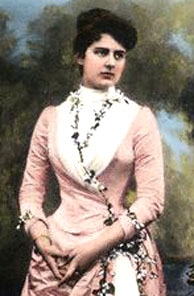
First Lady Frances Cleveland

There is a well-known story about young Frances Cleveland, about to depart the White House following Grover Cleveland’s first term on March 4,  1889. She is said to have told Jerry Smith, now the doorman, to be sure to keep everything just the same for when we come back. When queried about when they planned to come back, she replied “four years from today.” She was right.  The Clevelands again returned to the White House on March 4, 1893.

Toward the end of that term, Jerry Smith and his wife celebrated their 25th (Silver) Aniversary. Jerry completed his doorman duties, including lowering the flag, and quietly disappeared. Then members of the staff remembered it was Jerry’s special day.

According to Crook, “And to that home, that evening, wended a procession of dignitaries such as never before had graced its precincts. Everyone who came to the White House during Jerry’s service there of nearly a quarter of a century, knew the old man, and thoroughly liked him. So great was the general regard, that not merely clerks and assistant secretaries went to his silver wedding, but one carriage after another drove up to his door, containing Cabinet Officers and members of the Diplomatic Corps, sending in to him and his wife some personal gift appropriate to the occasion.”  A pile of silver dollars were left on his table. Jerry was in his glory: being the envy of all his neighbors.

“Official Duster” Jerry Smith, photographed in 1889 by Frances G. Johnston

Jerry Smith and the POTUS

President Theodore Roosevelt

When Jerry Smith retired in 1904 due to infirmity, Theodore Roosevelt was President. Jerry had been made “Official Duster” at the White House some years earlier. It was less physically stressful.

As a mark of personal respect and affection for the aging White House “fixture,” shortly before Jerry’s death, TR personally went to his home and sat with him for a while. It was same little house that Julia Grant had insisted that he purchase.

Sources:

Crook, Col. W.H. – Memories of the White House: The Home Life of our Presidents from Lincoln to Rooevelt – Little Brown, 1911

https://www.whitehousehistory.org/press-room-old/white-house-ghost-stories

http://citation.allacademic.com/meta/p_mla_apa_research_citation/3/1/8/0/5/p318057_index.html


Posted in Nifty History People | Tagged , , , , , , , , , , , , | Leave a comment

Andrew Johnson and Strong Drink

Andrew Johnson2

Just about everyone knows of Andrew Johnson’s embarrassing inauguration as Vice President

The Embarrassing Inauguration

But for those who don’t, the gist of it is…

Republican President Lincoln had specifically requested Democrat Andrew Johnson as his running mate in 1864 – on the UNION ticket: neither Republican nor Democrat.

Months before the election, the Civil War was going poorly for the Union, and Lincoln seriously believed he would lose. There was great opposition on many fronts. Running on a “Union” ticket might focus the election platform/principles on the purpose of the War.

PresLincoln

President Abraham Lincoln

Andrew Johnson (1808-1875) was a lifelong Democrat. His upbringing had been just as hardscrabble as Lincoln’s, and perhaps more so. He hoisted himself by his own bootstraps, became active in politics since his early twenties, and spent most of his adult life holding public office of consequence. He had served as a Congressman and Senator since 1843. He knew the ins and outs of national government.

But the important thing, at least to Lincoln, was that Andrew Johnson, Democratic Senator from Tennessee, was the only Senator from a Southern state that did not resign his office when the South seceded from the Union in 1861. He remained, absolutely and resolutely committed to preserving the Union.

With Tennessee second only to Virginia as a battlefield, Johnson had performed yeoman service to both Lincoln and Tennessee. This included a personally hazardous position as its Military Governor. His life was frequently threatened, and he even began carrying pistols for self defense. Lincoln was grateful for his loyalty and courage – and his service.

The Union ticket won the election.

lincoln-johnson poster

Lincoln-Johnson campaign poster

But in late February, 1865, the VPOTUS-elect became seriously ill, confined to his hotel quarters. His doctor thought it might be typhoid fever. He could not hold down any food for a few days. Nevertheless, the March 4 inauguration was scheduled, and sick or not, Andrew Johnson had to attend. His doctors prescribed a glass of strong whiskey to ward off the chill.

The upshot was that the glass of strong whiskey (or maybe two) in him, combined with an empty stomach, went straight to his head, and he embarrassed himself (and everyone else) with a rambling and incoherent inaugural speech.

Fortunately, the inauguration of the VPOTUS was held in Senate Chambers, and the audience was private. But everyone present was scandalized.

“Andy Johnson Ain’t A Drunk”

Dr Chas Johnson

Dr. Charles Johnson. He drank.

Lincoln was embarrassed for his running-mate, and was said to have publicly stated (at least to the Congressmen and Senators), that he had known Johnson for several years, and “Andy Johnson ain’t a drunk.”

Robt. Johnson

Robert Johnson. He drank.

A taste for alcohol may have been in the Johnson family genes. It certainly was in the case of Johnson’s two sons, Charles and Robert. Both young men had showed great promise in their youth, but perhaps due to the stresses of their service in the Civil War, both of them battled the bottle. Charles, a doctor in the Union Army died in a fall, exacerbated by alcohol. In the case of Robert, his “problem” was widely known by the time Johnson became Vice President, and some of that taint may have flowed upward to include his father.

But being a drunk and enjoying a few drinks are two very different things.

The Indianapolis Dinner Party

This is said to be a true story, by the way – told in an old long out-of-print book entitled The Funny Side of Politics.

When Johnson served as Military Governor of Tennessee, he was invited to a dinner party at the home of a prominent Indianapolis gentleman and his teetotaling wife.

Even though the gentleman’s wife was an ardent believer in the evils of John Barleycorn, the socially snobbish gentleman insisted on purchasing the finest wines available hoping to impress his notable guest. His wife argued vociferously against violating her dinner table with any kind of alcohol, but the Polite Host insisted that Governor Johnson was undoubtedly accustomed to the best wines. He won out. Accordingly the table was set elegantly, including their finest wine glasses.

But when their servant came to pour the wine, Governor Johnson politely turned his glass over, claiming, “I never drink wine.”

The lady of the house was smug up to her eyelids, and the crestfallen Polite Host knew he would be in for a long temperance dissertation once their guests departed.

Perhaps to prolong the time of the dreaded “I told you so,” the Polite Host offered to drive Governor Johnson to the train station. It seemed that the train was not due to arrive for an hour, and Polite Host stayed to keep Johnson company.

“I refused wine at your dinner today because I don’t like the stuff. Too thin,” said Johnson. “Anyplace around here where we could get a drink of good old whiskey?” A somewhat surprised Polite Host indicated that a saloon was close by. The two men walked over, and Johnson ordered a strong libation – and one for his host. He further surprised his companion by downing the drink quickly, and ordering another.

One wonders if the vindicated Polite Host raced home to tell his wife about the “total abstainer” tossing off a shot or two, and giving her comeuppance.

Sources;

Hilton, George S. – The Funny Side of Politics – G.W. Dillingham Co., 1899

Donald, David H. – Lincoln – Simon & Schuster, 1995

https://millercenter.org/president/johnson/family-life

https://www.senate.gov/artandhistory/history/common/generic/VP_Andrew_Johnson.htm


Posted in American Civil War, Andrew Johnson | Tagged , , , , , , , , , , , , , , , | Leave a comment

President Grant and the Grant-Pops

President U.S. Grant

Most historians concur that Ulysses S. Grant’s parents were a little eccentric.

Grant and His Parents

Hannah Simpson Grant

Jesse Root Grant

Jesse Root Grant (1794-1873), the father, was born in Pennsylvania and transplanted to Ohio, where he married and raised a family. He was self-educated and hard working with shrewd business acumen, a trait not inherited by Ulysses, his oldest son. Coupled with a hard working ethic, was a doggedness of character: he pressed hard to obtain his goals. This trait was inherited by his oldest son. But Jesse Grant, despite being a successful businessman and decent citizen, was generally perceived by those who knew him, to be a bossy blowhard and know-it-all. His neighbors liked him well enough – but not that well.

Jesse and Hannah Grant.

Hannah Simpson Grant, his wife, was the polar opposite of Jesse: reticent to the point of silent. Her oldest son inherited some of that reticence. Hannah Grant was also a deeply religious woman, devoted to her Bible, her housework, and perhaps just slightly lower on the list, her family.

While Ulysses and his five siblings always got on well, and there was plenty of food and the necessities of childhood, there was little parental affection. After grace was said, the dinner table was a silent one. Conversation was not encouraged or permitted, unless Jesse had something to say.

But if that environment was out of the ordinary, none of the Grant children knew it.

Mrs. Grant and Her Parents

The family dynamics of Julia Dent, Grant’s wife, was totally opposite, with the one exception of her father, who, in his own way, was just as opinionated as Jesse Grant.

Ellen Wrenshall Dent

Julia was the fourth child and eldest daughter of seven little Dents.  Her father, Frederick Dent (1786-1873), was originally from Maryland, emigrated to St. Louis early in the 19th century, and once settled, acquired the honorary title of “Colonel,” which he used thereafter.

Julia was “The Colonel’s” favorite child; she inherited his plain features. But Ellen Wrenshall Dent was genuinely pleasant with a sweet disposition that soothed troubled waters easily. Julia inherited her mother’s “niceness.”

Julia Grant and her father. She looked like him.

When Lt. Ulysses Grant first met the Dents, they welcomed him with open arms (he was their son’s West Point roommate), and he, in turn, was overwhelmed by the affectionate and rollicking dinner table conversation. It was a family dynamic he had never experienced before. He would later come to realize that Col. Dent had many of the overbearing qualities of his own father.

A Separation of In-Laws

When the relationship between Ulysses and Julia quickly progressed to a romance-leading-to-marriage, Col. Dent’s attitude began to change. Julia had just turned eighteen – much too young to marry. Lt. Grant, at twenty-one, had slim prospects, and army officers did not earn much. Dent wanted better for his favorite daughter. Julia and her beloved decided to keep their intentions secret, a situation that lasted for four years.

The young General and his wife.

Following the Mexican War, when now-Captain Grant at a mature twenty-six came to claim his bride, twenty-two year old Julia was old enough. Col. Dent could not refuse.

Julia Grant, First Lady

But the Senior Grants, while aware of Ulysses’ romantic plans, were also aware that his beloved’s family were slave holders. The Grants, if not formally declared abolitionists, deplored slavery, and were unhappy with their son’s choice, a woman they had yet to meet. They showed no interest in meeting her family.

They did not attend the wedding in St. Louis. Family lore suggests that since Ulysses and Julia were headed to his new assignment in Detroit, they planned to visit the senior Grants en route. Family lore also suggests that by this time, Ulysses was well aware of his parents’ eccentricities. He was far less concerned whether or not they liked his beloved; he was far more concerned whether she liked them.

She didn’t. But Julia was a genuinely nice lady, and whenever she was in the company of her in-laws, she was properly deferential, polite and daughterly. They were nice enough to her. But Julia was always glad to leave, and Jesse Grant was just as glad to say goodbye.

The In-Laws Meet – Sort of.

Jesse Root Grant II. In his elder years he wrote a memoir.

Son-in-law and now Great General and POTUS Grant had had a rocky relationship with Col. Dent for most of his marriage, partly because of his lackluster years after resigning his military commission, but mostly about slavery and secession. Col. Dent was not only a slave owner, but a proud secessionist and Confederate. Grant was not, and never would be. But the older man was now a widower past eighty. He came to live with them in the White House, and his overbearing personality was felt by everyone.

Grant’s parents were certainly proud of their son, but true to form, Hannah Grant, once having said, “So now you are a big man,” and returned to her sewing, never changed. She did not attend the inauguration, nor visit the White House. Jesse Grant, bursting with smug pride, couldn’t wait to go! And, to no one’s surprise, the two grandfathers were oil and water: both insufferable, unbending and generally obnoxious. Col. Dent, was still an unrepentant Confederate who loved baiting presidential guests, including his daughter’s father-in law. Jesse Grant’s opinion of his son’s father-in-law was generally unprintable, particularly when Grandpop Dent consistently referred to Grandpop Grant as “the old gentleman.”  Jesse scoffed, reminding Dent that “The Colonel” was eight years his senior.

According to the President’s son, an adolescent Jesse Root Grant II, (who penned his memoirs some fifty years later), the two “grandpops” could barely stand being in the same room. Since Col. Dent lived at the White House, the senior Grant stayed in hotels when he was in town. But Jesse-the-grandson also remembered with great amusement how much he loved egging both of his old grandfathers into an argument, when they were coerced to sit together at the family table.

Sources:

Grant, Jesse Root – In the Days of my Father, General Grant – Harper & Bros. 1925

McFeely, William S. – Grant: A Biography – W.W. Norton, 1981

White, Ronald C – American Ulysses: A Life of Ulysses S. Grant – Random House, 2016

https://www.smithsonianmag.com/history/general-grant-in-love-and-war-94609512/


Posted in A POTUS-FLOTUS Blog, American Civil War, Ulysses S. Grant | Tagged , , , , , , , , , , , , , , , , , , , | 1 Comment

Franklin Delano Roosevelt: The Bad Deal

Franklin Delano Roosevelt

One of life’s important lessons is playing “the hand you are dealt” the best way you can.

FDR: Several Aces

By the time Franklin Delano Roosevelt (1882-1945) was in his thirties, the hand he was dealt – a patrician-born New Yorker of the Hudson Valley, surrounded by wealth, privilege and being the center of attention, had altered several times as most lives do.

The Roosevelt family estate at Hyde Park.

Little FDR.

He was brighter than somewhat, but not spectacular. He was pleasant and generally accepted, but never popular with his peers. Having been raised by an overly doting and formidable mother and an affectionate but elderly father, he had few opportunities to engage in peer-relationships as a boy.

The added bonus of being a 5th cousin to Theodore Roosevelt, who was President of the United States when FDR was at Harvard, was not lost on him – even slightly. The double-bonus of marrying TR’s niece only added to his resume of good cards to be played.

FDR at around ten.

“Invited” to be a candidate for the NY State senate before he was thirty was one more bonus – one that rescued him from the drudgery of a mediocre (and distasteful) position as a lawyer. It was also one of the seminal moments of his life: placing him on the path of his true calling: politics.

Even the fact that he ran and won as a Democrat was not a problem for him. Republican “Uncle” Theodore understood and approved – and FDR idolized Uncle Theodore and planned to pattern his life in those huge footsteps.

FDR: The Hidden Ace Up His Sleeve

Most people who knew and associated with Franklin Roosevelt in his mature years tended to use the word “dissembling” when they discussed his personality. It is a perfectly good word, and accurate in describing how maddening it was to understand and work with him. FDR was well aware that “he never let his left hand know what his right hand was doing.” He played his cards very close to his chest.

FDR and his formidable mother, Sara Delano Roosevelt. He learned to keep things to himself.

He did not blatantly lie. He also did not tell the truth, the whole truth and nothing but the truth. He found it much easier (and to his advantage) to nod and smile, and let people think he agreed with them. Maybe he did; maybe he didn’t; maybe he hadn’t made up his mind.

He kept his private thoughts to himself, practically from childhood. His mother wanted to be his best and only confidante; FDR did not wish to confide that much, and learned to duck. He became very good at it, and it usually served him well.

FDR: The Joker in the Deck

FDR’s political rise was steady rather than meteoric. He was considered an affable well-named lightweight. Nevertheless, in 1920, after serving as Assistant Secretary of the Navy (Uncle Theodore’s old job) for eight years, he was nominated to run as VP to Democratic Presidential candidate James Cox of Ohio. They were both dark horses, and their chances to win were slim. FDR was only 39, and he could afford an election loss. And, as expected, they lost.

But only months later, Roosevelt contracted polio, a disease that usually affected children. He was not only very ill, but crippled for the rest of his life.

Months later, as his general health began to recover, he had serious choices to make. How could a crippled man be expected to hold public office, let alone elected office? His mother wanted him to remain home at Hyde Park, and devote himself to writing, or other sedentary activities. He was non-committal. His first goal was to regain his health.

Louis Howe, FDR’s political mentor.

His great political guide, mentor and all around Jiminy Cricket, Louis Howe, a newspaperman with a genius for political insight, differed vociferously. Get well of course, but still maintain your activity in politics. Eleanor Roosevelt, his wife of fifteen years, had become politically active in her own right, and also counseled him to keep his finger in the pie.

Playing the Hand he was Dealt

FDR was open and eager to try whatever cure, treatment, activity or possible panacea there was that might restore his crippled legs. He took long trips to Florida, where the warmer climate and water gave him the exercise that was necessary to his “recovery.”

Swimming was beneficial to restoring crippled limbs.

FDR’s house at Warm Springs, GA

When he discovered the naturally therapeutic waters at a sleepy and economically depressed little village in Georgia, he saw not only hope for improvement, but an opportunity to help others. He invested much of his personal income to purchase the area and turn Warm Springs into a rehabilitation center for polio patients. Scores, and hundreds, and perhaps even thousands, mostly children came for treatment and care.

No one worked harder than he did to “wiggle a toe.” Clapping heavy steel braces on his withered legs, allowing him to stand by gripping on to something, was as much a victory as Washington surviving the winter at Valley Forge, and it took a lot longer.

One of the rare photographs of FDR in a wheelchair.

If FDR was privately depressed by his own inability to regain his mobility, he played that hand extremely close to his chest. His winsome grin and cheerful charm diffused the pity that he loathed. People knew he had been very ill; it was never a secret. Many people knew he might require a cane, but that was no detriment. Most people knew nothing.

By the time he was ready to re-enter the political arena, he was an expert player of the deal gone sour. He channeled attention away from his infirmities, and focused completely on the strong and optimistic leadership he preferred to present.

Sources:

Gallagher, Hugh – FDR’s Splendid Deception – Dodd, Mead, 1984

Goodwin, Doris Kearns – No Ordinary Time – Simon and Schuster, 1994

Roosevelt, Elliott (ed.) – FDR: His Personal Letters, Early Years 1905-1928, Duell, Sloan and Pearce, 1948

https://www.whitehouse.gov/1600/presidents/franklindroosevelt

https://www.nps.gov/nr/travel/presidents/roosevelts_little_white_house.html


Posted in A POTUS-FLOTUS Blog, Franklin D. Roosevelt | Tagged , , , , , , , , , , , , , , , , , , , , , | Leave a comment

Saving Mount Vernon for the Ages

An etching of Mt. Vernon in George Washington’s day.

Sometimes when men can’t do it, women can.

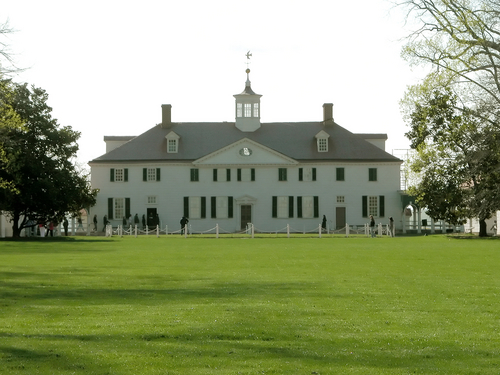
Mount Vernon

George Washington’s nephew, Bushrod Washington

When George Washington died in 1799, he willed his great estate to Martha, his widow, for the remainder of her life, which was not that long. She died in early 1802. GW’s will also provided that after Martha’s death, the plantation, which included the house itself plus several hundred acres, go to his nephew Bushrod Washington, the son of GW’s brother John Augustine, then an Associate Justice on the Supreme Court. (GW’s step-grandson George Washington Parke Custis had hoped to inherit the property, but was only nineteen at the time; Bushrod was in a far better position to care for it.) Unfortunately, the inheritance did not include cash needed for its upkeep, and Bushrod was hard pressed to maintain it. It began to deteriorate.

John Augustine Washington, GW’s great-grandnephew

By the 1850s, the property had descended to Bushrod’s grandson John Augustine Washington, who was even less in a position to keep the great estate “great.” It was beginning to crumble.

Realizing that it was not only a valuable property, but the home of the country’s most illustrious citizen and an historically important property, he needed to sell it, and hoped to interest either the federal government, or the State of Virginia. While both those entities were sympathetic, the consensus was that there was no precedent for government “purchase” of such property. “Thanks, but no thanks.”

The Happy Coincidence

Sometime in the late 1850s, a South Carolina plantation wife was riding the ferry down the Potomac River. When they passed Mount Vernon, signaling its customary horn of salute, she noticed the vast deterioration, and wrote to her daughter Ann Pamela Cunningham, saying, “If the men of America have seen fit to allow the home of its most respected hero to go to ruin, why can’t the some of women of America band together to save it?”

Mount Vernon was deteriorating by the mid-1800s.

The letter and its sentiment was a clarion call to Ann Cunningham, who wrote a letter to the Charleston Mercury appealing for American women to donate funds to rescue Mount Vernon. Thus was born the Mount Vernon Ladies’ Association, the oldest women’s association in the country. It was also the first private preservation organization.

Miss Ann Pamela Cunningham, Mt. Vernon’s guiding spirit.

Their immediate goal was to purchase the property from John Augustine Washington ($200,000 – a vast sum); the second goal, assuming the first could be accomplished, was to restore it to its former glory, and as a tribute to its incomparable owner.

The response was immediate, and Miss Cunningham spread the word not just to the women of the South, but throughout the country. The Association would be a national one – even on the eve of Civil War. Their monthly newsletter (at a subscription rate of $1 per year) had a vast circulation, and the proceeds after expenses went to the Association. The project was a popular one.

The contract with a co-operative John Augustine Washington was signed in 1858, including the Mansion, outbuildings and 200 acres. A down payment of $18,000 was given, the balance to be paid in four installments, over the next four years. It only took 18 months. The great-great nephew of George Washington moved out on February 22, 1860.

It was a huge undertaking.

Helping the Ladies

Raising the funds not only for the original purchase, but as an endowment to restore and maintain the property was daunting. Men needed to be included as sponsors and donors, and preferably men of influence and prestige who could help spread the word.

Among the first supporters of the less-fair sex were Edward Everett, the well known orator and statesman. He made fund raising speeches in its behalf, turning the proceeds over to the Association. William L. Yancey, one of the “firebrands” of the South, performed similar contributions. Henry Ward Beecher, one of the country’s most prominent ministers contributed articles for its newsletter.

Even disrupted by the Civil War, the property was held in veneration, and in accordance with the association’s mission:

Ladies, the home of Washington is in your charge – see to it that you keep it the home of Washington. Let no irreverent hand change it; no vandal hands desecrate it with the fingers of progress. Those who go to the home in which he lived and died wish to see in what he lived and died. Let one spot in this grand country of ours be saved from change. Upon you rests this duty.

The early Vice Regents of the Mount Vernon Ladies Association

From the outset of the War, General Winfield Scott declared the estate as non-partisan. Soldiers who visited Mount Vernon were neither dressed in military uniform nor armed. No one seemed to object.

Miss Cunningham’s secretary Sarah C. Tracy, and Upton H Herbert, Mt. Vernon’s resident superintendent, along with a handful of free African Americans, managed the estate during the Civil War.

Later Even Unto Today

When the Association was started, Miss Cunningham organized the effort to include Vice Regents (or trustees) – one for each state, and the precept holds today. Most of these women were and are socially and financially prominent, happy to donate their efforts and funds for a worthwhile cause. After the Civil War, Vice Regents took responsibility for the preservation and restoration of individual rooms, and researching and obtaining whatever furnishings were original to Mount Vernon.

Prominent citizens continued to contribute their goods, services and talents to the estate. Thomas Edison provided for its electrification. Henry Ford donated a fire engine for the surrounding area. Presidents have used Mount Vernon for important meetings with distinguished guests.

Mount Vernon today. The country’s premier national treasure.

Beginning in the late-19th century, attention was focused on the grounds, which today are fully functioning a la George Washington’s original plans. In the early part of the 21st century, a huge Library and Museum devoted to the study of George Washington was endowed and subscribed. All from private funds.

Simply put, George Washington is Mount Vernon, and Mount Vernon is George Washington.

Sources:

Bourne, Miriam Anne – First Family: George Washington and His Intimate Relations – W.W. Norton Company, 1982

King, Grace – Mt Vernon on the Potomac – MacMillan/Ladies’ Association – 1929

https://www.mountvernon.org/library/digitalhistory/digital-encyclopedia/article/the-civil-war-years/

Posted in A POTUS-FLOTUS Blog, George Washington, Nifty History People, Presidential Sites | Tagged , , , , , , , , , , , , , , , | Leave a comment

Col. Elmer Ellsworth, The Lincolns’ Favorite

Col. Elmer Ellsworth

Few Lincoln favorites were as beloved by the entire Lincoln family as Elmer Ellsworth.

The Young Militia Colonel

Ephriam Elmer Ellsworth (1837-61) was a poor New York fellow with long bootstraps. Blessed with a charismatic personality, solid brains, and an abiding interest in all things military, he gravitated to Chicago, had formed a local militia patterned after the French-Algerian Zouaves, drilled it and nurtured it, and became its Captain – all by the age of 21 or 22.

He came to the attention of Springfield attorney Abraham Lincoln, who took a paternal liking to the young fellow, considering him at only 5’6”, one of the greatest little men he had ever met. Sympathetic to his impoverished self-made background similar to his own, he suggested that Ellsworth come to Springfield as law student/clerk.  The advice and offer was taken.

Willie Lincoln adored Elmer Ellsworth.

So did Tad.

Within a short time, Elmer Ellsworth became a great favorite of all the Lincolns: Mrs. Lincoln (known to be picky) adored him; Willie and Tad Lincoln considered him a big brother who happily engaged in horseplay with the little boys. Robert Lincoln, away at Philips Exeter, would meet him later, and always thought well of him.

But Ellsworth’s love of the militia in all aspects would soon override his enthusiasm for law.

The Lincoln Campaign of 1860

Political campaigns have always attracted young enthusiasts, willing to “volunteer” for long hours and no pay, in the hope of experience, facetime with the powers that be, and potential reward down the road.

Lincoln’s Secretary John Hay thought highly of Ellsworth.

So did Lincoln’s other secretary John Nicolay.

So it was with young Ellsworth, who, along with John Nicolay and John Hay, men close to his own age, offered to help wherever he was needed. According to Hay, “He soon became indispensable. No one could manage like him the turbulent assortment of loyal followers” that crowded along the railroad stops between Springfield and Washington. Nicolay would consider him “very self possessed and cheerful.”

Between September 1860 and February 1861, he saw Lincoln practically every day, and the whole family adopted him as one of their own.

In reality, just about everyone liked and admired Elmer Ellsworth.

Ellsworth in Washington

Invited to bunk-in with Nicolay and Hay at the White House, Ellsworth continued to impress the newly elected President. Within a week of inauguration, Lincoln wrote a lengthy recommendation to then-Secretary of War Simon Cameron, recommending that Ellsworth be appointed Inspector General, along with several perks and benefits. Cameron however, had already promised the position elsewhere, so it was never effected.

Abraham Lincoln had high hopes for the young officer.

The best that the young self-educated militia officer could obtain was a commission as Lieutenant, since existing army protocol placed high emphasis on seniority. Lincoln suggested appointing him to some special duties in the future since the new President who had little formal judgment in those matters, had formed “a high estimate” of his military talents. On the very day that Fort Sumter fell, he wrote to Ellsworth that he hoped [the army] “would personally oblige him” and place him in a position…”satisfactory to himself.”

On the day the President called for 75,000 volunteers, Ellsworth, armed with the presidential letter, raced to New York to raise a regiment of Zouave firefighters. They were quick to enlist, particularly attracted to the exotic uniform with its royal blue shirts and bright red pantaloons. Battles were still to be fought, but troops were trickling in to Washington from all the Northern states, setting up camps everywhere including on the lawn of the the White House and the Capitol. As one of the first units to reach Washington, they became a great hit in the capital – especially when they put out a fire at Willard’s Hotel. Lincoln personally attended the official swearing-in of the Zouave regiment. Ellsworth was beginning to make a name for himself in military circles.

Ellsworth in Alexandria

When Lincoln called for 75,000 volunteers, the state of Virginia voted to join the Confederacy, to no one’s surprise.

A popular drawing of Ellsworth meeting his fate in Alexandria.

Alexandria, Virginia is only a short distance from Washington across the Potomac River. On the rooftop of the John Marshall Hotel, one of the taller buildings in the Virginia town, a makeshift rebel flag (not the one later associated with the Confederacy) was hoisted atop its flagpole – in easy view of the White House.

As a Volunteer Militia Colonel and practically a part of the President’s family, Ellsworth was incensed that his beloved Mr. Lincoln was confronted by this obvious sign of secession. He and a few of his men had gone to Alexandria for a minor assignment, but upon its completion, decided to haul down the offensive piece of material.

With cool judgment, he personally raced up the stairs of the small building, and lowered the offending flag. As he descended the stairs, the owner of the hotel shot and killed him instantly. One of Ellsworth’s men returned a bullet between the owner’s eyes.

Ellsworth Back in Washington

Word spread like wildfire – including notifying the White House that the young colonel was dead. Lincoln was devastated. “I knew poor Ellsworth well,” he told some congressional visitors, “and held him in great regard…the event was so unexpected…it quite unmanned me.”

Mary Lincoln wept at Ellsworth’s funeral.

The country mourned him.

Lincoln and his family went to the Washington Navy Yard, where Ellsworth’s body had been brought, and later arranged to hold funeral services in the East Room of the White House. The President and Mrs. Lincoln sat near the foot of the coffin, surrounded by their cabinet officers, and were known to have shed copious tears. Later, Lincoln was reported to have sat alone by the coffin, meditating on the young soldier of whose career he had cherished such high hopes.

Ellsworth left a lasting impression on all who knew him.

Sources:

Donald, David H. – Lincoln – Simon & Schuster, 1995

https://www.smithsonianmag.com/history/the-death-of-colonel-ellsworth-878695/

Elmer Ellsworth (1837-1861)

http://www.albanyinstitute.org/colonel-elmer-ellsworth-1837-1861-11th-new-york-volunteers.html

Posted in Abraham Lincoln, American Civil War, Nifty History People | Tagged , , , , , , , , , , , , , , , , , , , , , | Leave a comment

Benjamin Harrison: Cold Man in the White House

President Benjamin Harrison

Most politicians excel at the glad-hand. Benjamin Harrison was the exception.

BH: POTUS Grandson

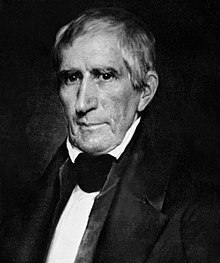
William Henry Harrison died after only one month as President of the US. His grandson Benjamin Harrison (1832-1901) was only nine years old. His memories were sketchy at best.

BenjLincoln

Great Grandpa Benj. Harrison

Grandpa Wm. H. Harrison

Nevertheless, the memory and mantle of his patrician Virginia forebears (namesake Great-Grandpa Ben signed the Declaration of Independence, among other accomplishments), and his illustrious Grandpa General WHH of Tippecanoe/POTUS fame, followed him throughout his life.

Ben’s financial inheritance had long been dissipated by large Harrison families and the once-wealthy Virginians were now scattered and modest in means. Ben was a younger son of a youngest son.

But he managed to get a college education, became a lawyer, married and began a practice in Indianapolis. It was a very slim practice. Harrison took on clerical positions within the court to make ends meet.

The main problem was Ben himself. While his legal abilities and diligence were satisfactory, his personality was a turnoff. Instead of a firm handshake, his was likened to a “wilted petunia.” Small talk was not among his talents, and his conversation skills were nil.

Young lawyers are usually dependent on crumbs from the tables of established attorneys: small cases that a successful lawyer was glad to refer to a beginner. Ben Harrison received few referrals.

One story suggests that he once considered giving up law to open a store, so at least he could feed his family.

The Turning Point: The Civil War

The Civil War was a turning point in Benjamin Harrison’s career.

Harrison was thirty when the Civil War began. His law practice was small, and it is said he thought to use his life savings (around $300) to purchase a substitute so he could support his wife Caroline and their two children.

Since a volunteer army was desperately needed, President Lincoln empowered state governors to commission officers. Indiana’s Governor Oliver P. Morton announced that anyone who could raise a regiment (1000 men) could be its commanding officer. Harrison hung a flag from his office window with a sign to enlist. The regiment was subscribed quickly and “Colonel” Harrison was now assured an officer’s pay to send home each month.

Young General Benj. Harrison

Old Tippecanoe’s grandson knew very little about the military, but he proved to be a quick learner. Attached primarily to the “western” army, he was both brave and competent, and was a brevet Brigadier General by war’s end.

Surprisingly for a personality-challenged man, Ben was an effective public speaker. He was clear and coherent, and could actually inspire a crowd with his oratory. But his one-on-ones had not improved.

After the War, a Republican, a lawyer and a Union General with a Midwestern pedigree were now viable credentials for political office, and Ben was courted by Indiana politicians.

There is a story that one of his colleagues met him at the train station as he was leaving to make a speech out of town, and remarked, “I know you’ll make a fine speech General, but afterwards, try to mix it up with the boys. The fellows like that.” Upon his return, he met up with his colleague and admitted that he tried to be one of the boys, but just couldn’t. “I have to be what I am,” he said honestly.

The Harrison house in Indianapolis.

Wimpy handshake notwithstanding, his law practice improved nicely, and his involvement in Indiana politics was welcomed. At that time, US Senators were “elected” by their state legislatures, and in 1881, Benjamin Harrison was sent to Washington for a six year term as Indiana’s Senator. While he was never part of the “Old Boys Club,” he was perceived as diligent and competent and of good character.

When the opportunity arose for the Republicans to challenge President Grover Cleveland in 1888, a general, a lawyer, a senator and a Midwesterner seemed an ideal candidate.

Once again, the famous Harrison name and “his grandfather’s hat” slogan resonated with the populace, but true to himself, BH did little in the meet-and-greet department, and was always disdainful of the “grandpa” connection.

It was a squeaker. Democrat President Cleveland was only slightly more scintillating than Harrison, and actually won the popular vote. But the Republicans “waved the bloody shirt,” drumming up Civil War political sympathy, and the electoral votes went to Harrison.

BH and Baby McKee

Three generations of Harrisons

The Harrisons moved to the White House with a large extended family: his wife Caroline, her elderly father, her widowed sister and her widowed niece. Then there were the Harrison’s son Russell and his wife and child, and their daughter Mary McKee, and her husband. And a little baby.

The story goes that as the family’s personal belongings were being moved in, reporters saw a baby buggy and high chair on the steps, and asked the staff if the baby was a boy or girl. They didn’t know, so the baby (it was a boy) was immediately nicknamed “Baby McKee.” And “Baby” McKee he remained.

Photo of the Harrison grandchildren.

President Harrison’s legendary permafrost did not melt in the White House, causing his aides to try to whip up whatever favorable publicity they could to warm his image. Babies usually do magic, and Baby McKee (actually Benjamin Harrison McKee), was a cute little fellow.

“Baby” McKee dropped the “baby” part as a grown man.

Photography had improved considerably over the past decades, and “candid” or unposed pictures could be taken. The little guy was a natural. His activities were regularly reported in the newspapers. Aides were able to arrange “naturally posed” photos of the President and his little namesake from time to time.

A huge effort was made to portray the well-known reserved POTUS as a different man when he was “grandpa.” But alas, the actual close relationship appears to be somewhat apocryphal. While Ben Harrison was surely benevolently fond of his namesake grandson, much of the “playful” Grandpa image was a creation of a nearly-desperate public relations team. Like the man said, “I have to be what I am.”

Sources:

Boller, Paul F., Jr. – Presidential Anecdotes, Oxford University Press, 1981

Crook, Col. W.H. – Memories of the White House: The Home Life of our Presidents from Lincoln to Rooevelt – Little Brown, 1911

Hilton, George – The Funny Side of Politics – G.W. Dillingham Co., 1899

ttps://www.whitehouse.gov/about-the-white-house/presidents/benjamin-harrison/

Posted in A POTUS-FLOTUS Blog, Benjamin Harrison, Nifty History People | Tagged , , , , , , , , , , , , , | 1 Comment

Presidents and The Pastime: A Book Review

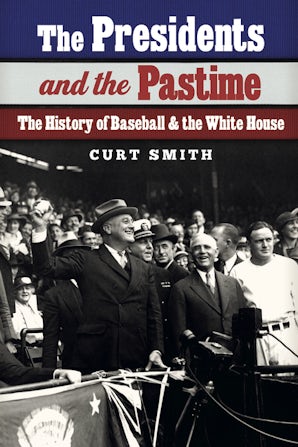
Curt Smith is a journalist with a quirky but engaging writing style. He is a major league expert in baseball history. He also knows presidential history. He was on staff with both Bush Presidents.  All of this is very good.

The Presidents and the Pastime

The Presidents and the Pastime, by Curt Smith

That being said, Presidents and the Pastime: The History of Baseball & the White House, is not for the casual reader. It is for readers who are passionate and knowledgeable about either baseball or the presidency. Hopefully both.

Baseball used to be our national sport. Decades ago, the sports pages were filled with the glorious deeds of people like The Babe, The Man, The Yankee Clipper, The Duke, The Mick and The Say-Hey Kid. It was a very long list. Now, not so much.

Smith has ferreted out a few obscure details about baseball’s antecedents, questions the Abner Doubleday connection (that few people really care about, since his name is so good), and even dredges up some kind words that POTUS Andrew Johnson once said about the sport, or how Grover Cleveland exchanged mild pleasantries with Buffalo semi-pro players back in the 1880s. But the book belongs to the 20th century.

Our author is secretly (or maybe not so secretly) devastated by Theodore Roosevelt, who was about as interested in baseball as he was in ballet dancing. Not for him. Our national sport never caught on with one of our most national-minded and activity-driven leaders. Smith is hard pressed to forgive him.

But with very few exceptions, the rest of the POTUS-gang loved, enjoyed, attended, knew-about, and participated in baseball, whether they grew up playing the game in school or sandlots or merely threw out the first pitch of the season, a tradition started by TR’s successor, Big Bill Taft.

Wilson loved baseball, and managed his college team. Harding played it as a boy. During that first Golden Age of baseball, Calvin Coolidge learned to like it superficially; his wife Grace was a fan from the get-go, and could keep the box-scores like a pro. They even invited Babe Ruth to the White House. Herbert Hoover managed his Stanford team, and respected the game for what it was.

But the one Smith believes “saved” baseball for the generations, was Franklin Roosevelt. Crippled at 40 by polio, all sports became spectator sports for him. But FDR’s defining baseball moment was shortly after the US entered World War II. Baseball’s star players were enlisting. There was serious thought to cancelling the entire season, or perhaps season(s). According to Smith, despite momentous events and decisions, FDR immediately answered a letter from baseball commissioner Kennesaw Mountain Landis, urging that major league baseball be continued. Considered “The Green Light Letter,” FDR believed our national pastime was essential to the spirit/morale of the country. He was right. Everybody went to the games, and the men all wore suits and ties and hats! And they loved the B-team players as much as they had loved the stars now in military uniform. Had the season been cancelled, baseball might never have recovered.

Nearsighted Truman enjoyed the game, but his athletically-inclined wife Bess liked it almost as much as Grace Coolidge. Ike played baseball as a boy in Kansas, but sports injuries sidelined team sports, and he took up golf. Nevertheless, the second Golden Age of baseball was an “Ike event.” A whole decade of it!

Jack Kennedy enjoyed baseball. Both Lyndon Johnson and Jimmy Carter were only interested in politics, but summoned up mild boyhood enthusiasm. Jerry Ford was an all-around athlete, who played baseball as a boy, and enjoyed all team sports.

But when he comes to Dick Nixon, who, with baseball as a channel to his more private side, becomes human, likable, and even a sympathetic man. He probably knew more about baseball than any POTUS.  The 1969 Amazin’ Mets was a World Series capstone not only for Nixon, but for practically all baseball lovers. (I was living in NYC at the time; a bi-league Yankee/Mets fan, so I know!!!)

Then, of course, there was Reagan-The-Gipper. He loved baseball. He loved all things American, and baseball personified America. The author tells a cute story about Reagan, in his movie-days, starring as early baseball figure Grover Cleveland Alexander. When one “presidential” conversation led to a discussion of Grover Cleveland, Reagan commented that “he played him in the movie.” Wrong guy.

Bill Clinton and Barack Obama liked baseball well enough, and no doubt played it growing up. But Bush Leaguers 41 and 43 are core baseball guys, including “43” having been a major league owner.

So much for the POTUS side of the book. The baseball side is an i-dotter-t-crosser trove of baseball stats, stuff, nonsense and good trivia stories. A little heavy-handed on stadium details and numbers that few people really care about, but full of names like Goose and Ducky, Pepper and PeeWee, as well as the well known DiMag and Jackie, Ted and Yaz. Full of Babe-isms, Dizzy-isms, Casey-isms, Yogi-isms and all the tidbits that true aficionados go crazy for. They don’t make ‘em like that any more.

Bottom line. You really DO need to know BBall to get the real effect of  POTUS/Baseball. Modern players don’t seem to inspire the devotion. Maybe too much money and too little fun. The new stadium names reflect the sponsors not the teams, and it is hard to remember who plays where. Baseball is no longer the sport we Boomers once knew. For all its attractions, LA can never replace Brooklyn. And for sure, not a Brooklyn fan.

Whether Curt Smith intended it as such or not, this really-delightful book is for us.

Thanks for the memories.


The Presidents and the Pastime: The History of Baseball and the White House

by Curt Smith

University of Nebraska Press, 2018

ISBN: 978-0-8032-8809-6

Posted in Recommended Reading | Tagged , , , , , | Leave a comment

Andy Johnson and His Father’s Statue

President Andrew Johnson

President Andrew Johnson was barely two when his father died.

Jacob Johnson, Hero

Said to be Andrew Johnson’s birthplace in Raleigh, NC

Jacob Johnson (1778-1812) was poor as a church mouse. Born and raised in Raleigh, NC, he had no education, training or skills. Although he served in the NC militia and rang the church bell, he found menial work at Casso’s inn, stabling horses, carrying bags and unloading wagons. His wife Mary, just as unskilled, worked at the tavern as a housemaid and laundress. They had two children.

Or maybe it was this one. Either way, it was small and poor.

It was a cold winter in 1811 and three men fishing in the nearby creek capsized their small skiff. One made it to shore, but two were drowning. Jacob Johnson heard their cries for help, and without hesitating, plunged into the icy waters and somehow brought the men to safety. Unfortunately the icy water, the exposure and the exertion was too much for the thirty-three year old man, and he died shortly after the attempt.

He was a bona fide hero.

The entire town turned out for his elaborate funeral, replete with a parade and preachers and flowers and fine eulogies. Unfortunately the town provided nothing for Johnson’s widow and small children. Mary Johnson was forced to struggle on. She remarried not long afterwards, but her second husband was even less educated or skilled than the first. Some said he drank and seldom worked. Living and trying to raise two small boys was an ordeal. They barely survived.

Andrew Johnson: Quick Bio

Andrew Johnson (1808-75) was the younger son of Jacob and Mary. He had no memory of his natural father. His earliest memories centered around not enough food or shoes – or education.

Andrew Johnson’s first tailor shop is housed in the Johnson Visitor’s Center.

When he was ten, his mother and stepfather, as a kindness (and perhaps to reduce the mouths to feed) apprenticed the two boys to a tailor, where they would be housed, fed, given the rudiments of basic education, and most importantly, learn a trade so they could make their own ways.

Stories vary about the “master’s” cruelty and Andy Johnson’s natural truculence, and likely contain pieces of truth midway. But shortly before his 18th birthday, Andy ran away (not the first time) – but this time he made it across the Tennessee border, where NC apprenticeship law had no jurisdiction.

Johnson’s next house was a big improvement.

He settled in Greenville, and within a short time married and opened a tailor shop, making men’s suits and coats. With the help of his wife Eliza McCardle, he began a family and learned to read and write proficiently. He prospered.

Eliza McCardle Johnson

He attended local political meetings, and by his early twenties, embarked upon a long career of public office: alderman, mayor, state legislator, congressman, senator, Governor of Tennessee, Vice President and President. An impressive resume.

But his natural truculence was never far from the surface, and Johnson had as many (if not more) detractors as admirers. A lifelong Democrat, he was strongly pro-Union, mildly anti-slavery (believing it was better if everyone worked for wages), and violently antagonistic toward the “property” class, who he blamed for most of the country’s deep divisions.

Johnson was first and foremost a “mechanic”, a term used for tradesmen like tailors, carpenters, shoemakers and small merchants, and was staunchly proud of his working class status.

Andrew Johnson: President

Andrew Johnson’ presidency was difficult on all fronts. In 1864, he was a Democrat running with Republican Abraham Lincoln, on a makeshift “Union” ticket. His political accession to the presidency was mired in tragedy and grief.

Some claim he tried to follow Lincoln’s “let ’em up easy” policy (regarding the ex-Confederacy). Some claim with reason, that he was uncaring about the socio-political future of former slaves. All claim he was difficult to work with, far more inclined to fight it out than co-operate. He had no real partisans.

He endured a bitter impeachment trial, acquitted by only one vote. Needless to say, he was not nominated by anyone for a term of his own.

He returned to Tennessee, unbroken, unbowed and determined to engage in public life again. He ran for and lost two state elections, before being (finally) elected once again to the US Senate, where he was given a standing ovation. He died shortly thereafter.

His Father’s Statue

This is an old story retold by historian Paul Boller, and it very well may be apocryphal, but since any story about Andrew Johnson that generates a smile is so rare, it should be treasured. It is too good a story to lose!

The statue erected to the memory of Jacob Johnson

The absolute truth of the matter is that in mid-1867,  the good people of Raleigh, NC decided to erect a statue at the hitherto long neglected grave of Jacob Johnson, the bona fide (and long dead) hero.

Andrew Johnson’s gravestone is very elaborate.

For the dedication ceremony, William D. Haywood, the Mayor of Raleigh, invited the hero’s son, President Andrew Johnson, to participate and say a few appropriate words. It was his one and only trip South during his presidency. Even though Johnson had no recollection of his long-deceased father, nor had he lived in North Carolina since his teens, he accepted the invitation. So did a huge crowd of local residents, some of whom were old-timers, who remembered the drowning incident, and even knew some of those involved.

Johnson duly made a conventionally windy but satisfactory speech, indicating he had returned to the place of his boyhood in the hope of repairing some of the “breaches” made by the Civil War.

One of the attendees was an elderly woman who remembered young Andy as a tailor’s apprentice. She is said to have remarked to a companion, “Bless this dear old man. He has come back to Raleigh to open a tailor shop.”

True? Not true? Not important enough to really care?

Smile anyway.

Sources:

Boller, Paul F., Jr. – Presidential Anecdotes, Oxford University Press, 1981

Hilton, George – The Funny Side of Politics – G.W. Dillingham Co., 1899

https://www.whitehouse.gov/about-the-white-house/presidents/andrew-johnson/


Posted in A POTUS-FLOTUS Blog, Andrew Johnson, Nifty History People | Tagged , , , , , , , , , , , , | Leave a comment

George Washington: Officer and Gentleman

General George Washington

Of all the residents of 18th Century American Valhalla, George Washington was arguably the one whose character and demeanor were consistently above reproach.

Braddock: The Making of An Officer

The teenaged George Washington’s first career choice was the British Navy. After all, Britannia ruled the waves, and Naval officers were the elite. It did not happen, so the British Army was second best. That didn’t happen either. The best he could get was the Virginia Colonial militia.

With his fair experience as a surveyor and knowledge of the western parts of Virginia, he showed fine promise, displayed stamina and courage, along with all the callow failings of an eighteen or nineteen year old.

Gen. Edward Braddock  inspired a commander.

But at twenty, he managed to obtain a “voluntary” assignment as a scout to General Edward Braddock, one of England’s most experienced soldiers. The French and Indian War was going full tilt, and Washington had knowledge of the frontier, the Indian tribes, and the trails and forts.

The patrician Braddock took a liking to his young volunteer, and counseled him in many of the character traits that make fine leadership. That the two men differed in many ways is to be expected, but Washington absorbed readily, and took many of the older man’s instructive remarks to heart. When General Braddock met the bullet with his name on it, it was young Washington, of the Virginia Militia, who took charge and brought the remaining soldiers back to safety.

One of the key lessons he learned from Braddock, was the importance of a solid and competent officer corps. He famously stated that “An army of asses led by a lion is better than an army of lions led by an ass.”

The Revolutionary Officer

George Washington, commander

George Washington spent eight years in the Virginia Militia, rising to the rank of Colonel. He tried numerous times to secure a position in the British Army, but it never happened, and disenchanted after eight years, he changed careers. He had inherited his late half-brother’s property along the Potomac River, married the wealthiest young widow in Virginia, and was a successful planter for the next fifteen years. The property was a profitable showplace, and Washington became a wealthy man. As such, he was elected to the Virginia House of Burgesses.

When the rifts and unrest between England-the-Mother-Country and the Colonies intensified to a point of military action, it was Washington who was appointed “General.” He had the most professional experience of anyone, even if he was a little rusty.

He spent eight years in command of the little American army, filled with losses, brilliant retreats, a few hard-won semi-victories, and several political near-coups. By and large, it was a thankless job.

General Rochambeau, the French General who respected Washington

But throughout the Revolution, through bad times, worse times, and some horrible times, Washington maintained his unquestioned leadership. His personal reserve and irreproachable character brought him an almost mythic reputation.

By the surrender of Cornwallis’ Army at Yorktown in October, 1781, he was becoming what future generations would term “the indispensable man.”

Yorktown

Gen. Benjamin Lincoln, redeemed at Yorktown.

By the late 1770s, the American Revolution had taken a new direction: instead of its focus on New England and the middle colonies, the British swept up through the Southern Colonies. Washington was consulted on the strategies and tactics, but  his best under-commanders were in the field: General Nathaniel Greene and General Benjamin Lincoln. Washington himself never went South during the Revolution. Greene and Lincoln had a rough go of it, learning Washington’s lessons of running away to fight another day.

Meanwhile, after Benjamin Franklin’s long diplomatic siege on the French monarchy, monetary and military assistance had finally materialized. General Jean-Baptiste Rochambeau (1725-1807) and Admiral the Comte deGrasse, were finally committed to the American cause.

General Charles Cornwallis, a capable officer in a bad spot.

General Charles Cornwallis, one of England’s finest commanders, found himself in an untenable situation at the little town of Yorktown, Virginia, some 75 miles up the York River from the Chesapeake Bay – just as the French Fleet arrived and found a superb place for a bottleneck. As the American soldiers effectively held the English with their backs to the river, Washington and his soldiers, plus Rochambeau and his soldiers, raced from New York to Yorktown, Virginia. This would be it. Perhaps the war would be over.

The Surrender

The surrender at Yorktown, by Trumbull

General Cornwallis, competent officer though he was, had no choice. He was boxed in, and had learned that no reinforcements or aid would be forthcoming. He requested terms to surrender his army.

George Washington had an excellent memory, and remembered the humiliation that General Benjamin Lincoln had endured in South Carolina at the hands of British General Henry Clinton. He had been refused the “honors” of war (something of the utmost importance to GW), and was treated ignominiously.

General Washington sent word to Cornwallis, that his second-in-command General Benjamin Lincoln would accept the surrender. Cornwallis immediately advised that he was indisposed (these honors were of the utmost importance to him, too), and sent his second-in-command, General Charles O’Hara, who offered his sword to Rochambeau. The French General graciously declined, and to British musicians playing A World Turned Upside Down, Benjamin Lincoln accepted O’Hara’s sword.

General Washington, Quintessential Gentleman

General Washington, officer and gentleman.

It wasn’t personal. Washington, a patrician Virginia planter as well as General, had sincere respect for his adversary General Cornwallis, and after the surrender, invited him and key members of his staff to a dinner at his headquarters. It was undoubtedly elegant, with the finest of food and wine.

According to historian Paul Boller, the story goes that his guest General Rochambeau stood, raised his glass and toasted, “To The United States.”

Washington stood, raised his glass and saluted, “To the King of France.”

Then Cornwallis stood, raised his glass and said, “To the King.”

There was silence. Then Washington stood, raised his glass and said, “….of England. Let him stay there and I will drink him a full bumper.”

Sources:

Boller, Paul F., Jr. – Presidential Anecdotes, Oxford University Press, 1981

Lengel, Edward G. – General George Washington: A Military Life – Random House, 2005

http://www.eyewitnesstohistory.com/yorktown.htm

https://www.u-s-history.com/pages/h1304.html

https://www.mountvernon.org/george-washington/the-revolutionary-war/washingtons-officers/


Posted in A POTUS-FLOTUS Blog, George Washington, Nifty History People | Tagged , , , , , , , , , , , , , , , , , , | Leave a comment