Martha Washington’s Agony: Patsy Custis

When Martha Dandridge Custis married George Washington, she had two little children, ages four and two.

George Washington, Stepfather

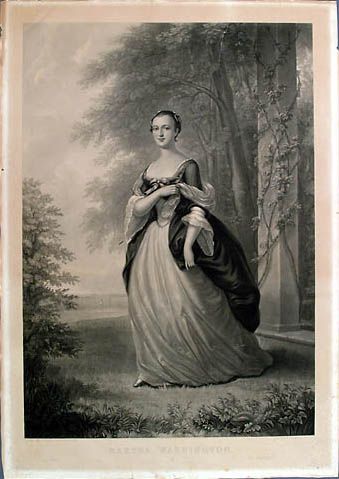
Early etching of Martha Washington

Martha Dandridge had married Daniel Custis when she was eighteen. Eight years later, he died, leaving his widow with a vast estate and two small babies, John (Jack) and Martha (Patsy). Two other babies had died in early childhood.

A little more than a year later, Martha married Col. George Washington of the Virginia militia. Her two children had no memory of their natural parent; Washington was always “Father.”

Image result for paintings of George Washington and Jack and Patsy Custis

George Washington, an affectionate stepparent.

According to Virginia law, George Washington,  stepfather, became legal guardian to the children, and was an affectionate parent.

Patsy Parke Custis

The only known likeness of young Martha (Patsy) Custis

The first documented instance of any health problems concerning little Patsy was when she was around five. GW’s papers indicated that she experienced “fits and fevers.” Even today, early childhood fevers and convulsions are not uncommon, albeit unquestionably unsettling for the parents. They are usually short-lived, with no long-term problem.

No other occurrence is documented about Patsy until she was about eleven, approaching puberty. The underlying cause is difficult to determine more than two centuries later, but needless to say, in the 1760s, medical science was unequipped to treat it.

Epileptic seizures have been around since Biblical times. Even then, it bore a stigma, but it appears that the Washingtons were not squeamish. They recognized and understood the nature of the problem, but it was intensely private, contained solely within the family circle.

Epileptic seizures can manifest in many different ways and in many varying degrees. Some episodes last only seconds and are barely noticeable – even to the patient. Some are fainting spells; some are half-conscious flailing about; some are rigidly frozen. Patsy’s episodes appear to have been severe, violent and fairly frequent.

Nevertheless, Patsy was a pleasant child and young woman. Her rare portraits depict a pretty young lady of poise and presence. She played the spinet. She sewed. She was accomplished at the minuet and reels. She maintained as “normal” a life as possible.

Young Womanhood: 1770

A wealthy young (i.e. marriageable) Virginia woman of sixteen, circa 1770, could look forward to some of her happiest years. It was a social time; parties and balls abounded. Patsy Custis, with breeding and money, would have had lovely gowns, jewelry and dancing shoes. With the Washington esteem and influence, invitations to the finest homes would have been forthcoming. Add to that her good looks and pleasant disposition, the likelihood that she would be popular is a fair assumption. She could look forward to a happy time of courtship, and hopefully, a kind and affectionate husband.

But it became obvious early on that it was not to be. Patsy could not have been oblivious to her fate. It likely devastated her devoted mother, who had enjoyed two happy marriages.

Cures, Treatments and Frustrations

As affectionate and caring parents, George and Martha Washington consulted many physicians. They came from Alexandria, Fredericksburg and even Williamsburg, the Colonial capital, in the hope that something could be done to ease Patsy’s distress. One physician came from Baltimore at least ten times during a five year period.

Money was no object. They tried drops, “Nervous Powders” and potions, various drugs of herbs and barks, “a large Julep,” mercury and ether. They bled her, purged her, and took her to the medicinal waters at Warm Springs, Virginia. They even had a special iron ring made for her to wear, supposedly to prevent a seizure from happening.

Changes in her diet and lifestyle were suggested, including regular mild exercise and drinking barley water and eating cool food.Nothing seemed to work. On the contrary, her “fitts”, as they were called in Colonial times, increased in frequency and intensity as time went on.

In the summer of 1770, George Washington kept a private and discrete record of those occurrences in his almanac. Over a period of 86 days, Patsy suffered episodes on 26 days – sometimes twice in a single day.

The Eleanor Calvert Connection

Young Eleanor Calvert, Jack Custis’ bride.

Eleanor Calvert (1754-1811) of Maryland, was born to Charles Calvert, illegitimate offspring of the 5th Baron Baltimore. The wealthy family lived in Prince George County, Maryland.

John Parke (Jack) Custis.

Eighteen-year-old Jack Custis, being tutored in Annapolis  attended a party in 1773, met 15-year-old Nelly Calvert and was enchanted. The feelings were mutual, and they became engaged a short time later.

George Washington was reluctant, since he planned to send his stepson to Kings College (now Columbia University) in New York. Jack was always a lazy student, disinclined toward scholarship, but Washington still held lingering hopes. However, once he met the Calverts (who he liked) and the charming Nelly, he too was enchanted and  agreed to the engagement, on the condition that Jack at least try a few months at Kings College. He also suggested that Nelly visit Mount Vernon.

She arrived only days before Patsy’s unforeseen death. The two young women bonded immediately, to the delight of Martha Washington. Her daughter’s health had deeply curtailed her activity, so any diversion and friendship was warmly welcomed. Patsy seemed happier than she had been in months.

In midafternoon of June 19, 1773, Patsy went upstairs to get a letter from her brother Jack in New York, when Nelly heard a strange noise. Running to investigate, she found Patsy on the floor in the throes of a severe seizure. The Washingtons came immediately and carried their poor daughter to bed. She never recovered, nor made a sound.

On June 19, 1773, George Washington wrote in his diary, “At about 5 PM today, poor Patsy Custis died suddenly.”

“Without a word, a groan or scarce a sigh.”

The Comfort

Martha Washington was devastated. Now three of her four children were gone. Despite knowing the Washingtons for such a short time, Nelly Calvert stepped into the breach left by a daughter, and was sincerely devoted to the grieving parents. When she married Jack not long thereafter, she became their daughter, and even as a remarried widow years later, remained their daughter as long as George and Martha Washington lived.

Sources:

Bourne, Miriam Anne: First Family: George Washington and his Intimate Relations, 1982, New York, NY, W.W. Norton

Brady, Patricia – Martha Washington: An American Life – Viking, 2005

https://www.mountvernon.org/library/digitalhistory/digital-encyclopedia/article/martha-parke-custis/

http://gwpapers.virginia.edu/a-cryptic-record-of-a-family-tragedy-the-unhappy-progression-of-patsy-custiss-epilepsy/


Posted in A POTUS-FLOTUS Blog, Nifty History People | Tagged , , , , , , , , , , , , , , , , , , , | 1 Comment

Dolley Madison’s Son Payne Todd: The Final Blow

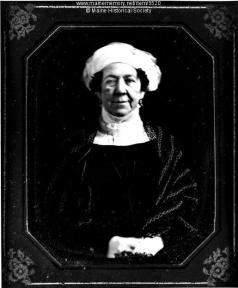
dolley in 1840

The Venerable Mrs. Madison

Dolley Madison’s son, Payne Todd, had always been a disappointment.

Payne Todd in Brief

Dolley Madison (1768-1849) had been married to John Todd, a Quaker lawyer, for three years. Then he died, leaving her with a two-year-old son.

When she remarried, her new husband was the only father Payne Todd (1792-1852) knew. James Madison, more grandfather than father, was indulgent, supportive, helpful and affectionate. But like his wife, he was disinclined to administer the discipline that all children require from time to time. 

On the asset side, Payne grew up to be good looking like his mother, courteous and well mannered. His courtly bows were praised. His disposition was charming, again like his mother. He made friends easily.

But try as they did, neither James nor Dolley Madison seemed to make academics, hard work or profitable employment part of Payne’s agenda.

By the time he was 21, he was well on the path to dissipation from wine, women and wagering.

Madison’s Problem

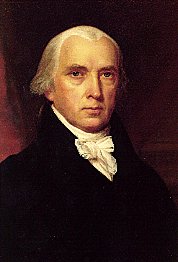
James Madison, stepfather

James Madison, eighteen years older than his wife, had waited a long time to marry, and he adored her. Since Payne displayed acute disinclination toward every opportunity Madison provided for schooling, his stepfather finally tried other approaches.

As president, Madison sent the young man, then about twenty, as secretary to a small delegation appointed to St. Petersburg, Russia, hoping a diplomatic venue would be to his liking. It was. Payne loved the cosmopolitan lifestyle, particularly since he was treated like a Crown Prince. He was soon seen at all the gaming tables in the capital, quickly losing most of the generous allowance and then some that his stepfather provided.

When the delegation disbanded, Madison left the group in Paris, and began a gambler-alcoholic existence. He seldom wrote home unless it was to his stepfather (rather than his mother) asking for money, usually large sums.

The Montpelier plantation was too much for Dolley in her elder years.

Madison quietly sold off acreage from his large estate to pay Payne’s debts, rather than cause pain to his beloved Dolley. Eventually, she became aware (as did most of the country!) of the extent of Payne’s dissipation (which included Debtors’ Prison), but she never knew the extent of the money his stepfather advanced, including the heavy mortgage on Montpelier. Every effort the Madisons made to help Payne sustain himself, including an adjoining plantation to run himself, seemed doomed to failure. All his “business enterprises” were little more than disastrous get-rich-quick schemes. Nevertheless, Dolley loved her son, never spoke ill of him, and always claimed “he had a good heart.”

The only existing likeness of John Payne Todd

When James Madison died in 1836, he was eighty-five. His once-thriving plantation was in serious financial decline. His will named Dolley as his chief heir, but he also left a complex and complicated series of bequests to assorted charities, nieces and nephews that would take years to fulfill. Dolley, already in her late sixties, could not manage the plantation and finances herself. Payne, by now a dissolute alcoholic, was ill-equipped to help. She eventually sold the plantation and moved back to Washington, where she had many friends – and very few funds.

The Poor Widow Dolley 

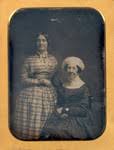
Anna Payne Causten and her aunt Dolley Madison

Having taken a great loss in the sale of Montpelier, largely due to her son’s dissipation and debts, she rented a small house near the White House, bringing with her a few old retainers, and her niece Anna Payne Causten, who had been her devoted mainstay during James Madison’s last years.

The former president had spent those elder years annotating his diaries from the Constitutional Convention fifty years earlier, believing them to be invaluable to the country he helped found. This was his major bequest to his beloved Dolley; he expected them to be published, valued at $100,000 – enough to provide for all his bequests – and his widow.

Dolley had enlisted her son’s help in finding a publisher, but Payne proved inept as ever, and nothing came from it. Congress finally authorized funds for a partial purchase, but it was inadequate. Dolley was broke. She was neither an experienced businesswoman nor did she have a natural head for finance. Always a loving and doting mother, she had given Payne her power of attorney. As usual, he bollixed up the sale of Montpelier to a point that Dolley could no longer go back to Virginia: she would be inundated with lawsuits and outstanding claims and debts.

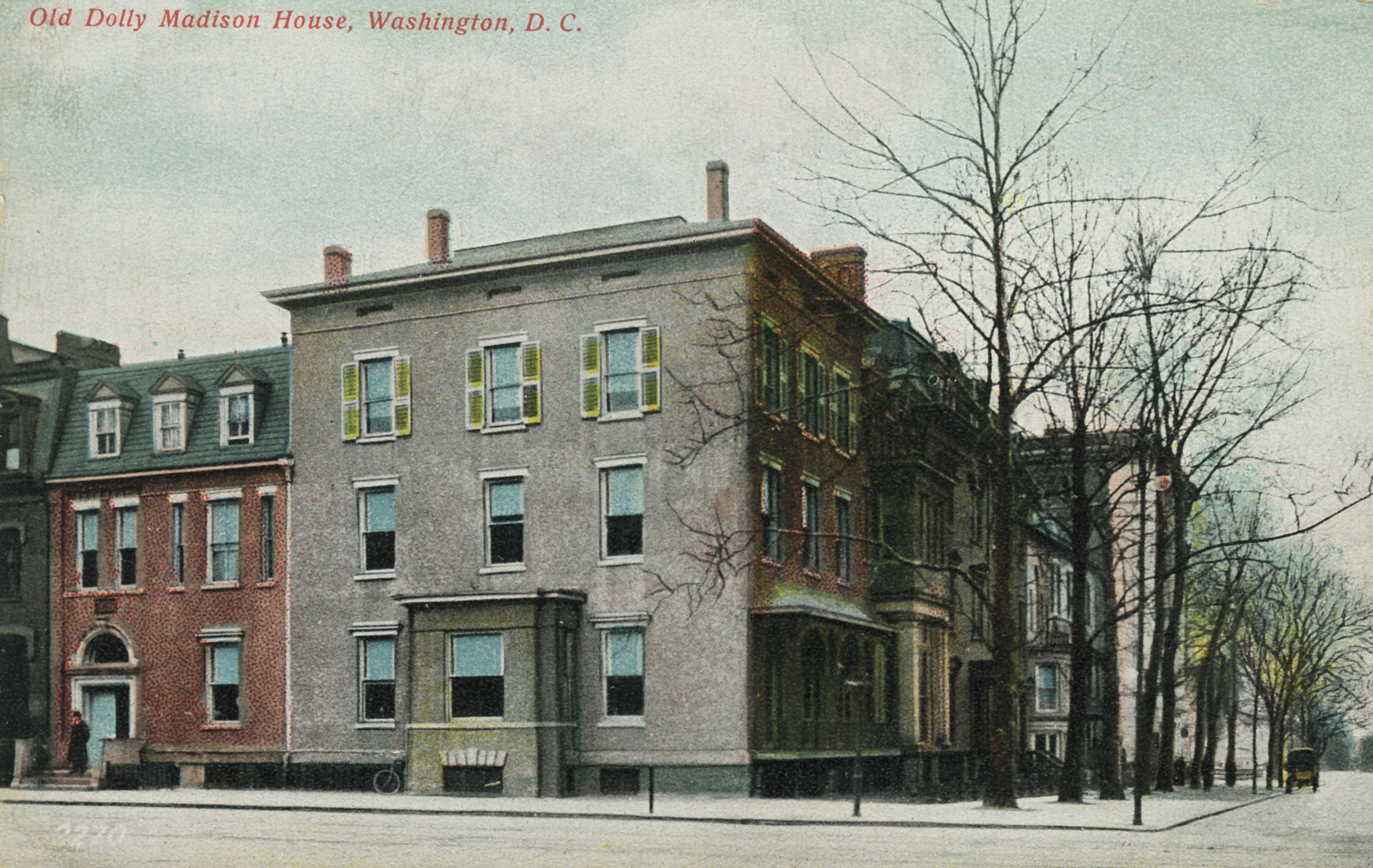
Dolley’s house in DC. It is still there.

Most of the existing correspondence between Payne Todd and his aging mother were either about needs: usually his, or finances and property: usually hers. There is the expected courtesy, some genuine affection, but little indication of a desire to help her.

Dolley had outlived her closest kin. Like Madison’s family, they were all into the second generation, with strife amongst everyone, usually about money. Payne Todd was all she had, despite his incompetence and dissolute habits.

It was her devoted niece-companion Anna Payne Causten who provided the day-to-day assistance and affection that Mrs. Madison had always generously provided to others. 

Dolley Madison best remembered.

Nevertheless, Dolley held her head high and maintained her consummate dignity and grace in public. Most people believed she had comfortable means, but the truth was that she was suffering financially.

The Battle of Wills

Dolley’s will had been written nearly a decade before her death, but by 1849, as her health declined, she wanted to provide for Anna. When Todd got wind of her inclination, he turned up at her bedside, lawyer in tow, with a new will, making him, her only son, sole heir of his mother’s estate. Her frail condition could not stand up under the stress and duress. She signed it.

Very shortly thereafter, when another nephew, an attorney, learned of that subterfuge, he drafted (and she signed) another will, dividing whatever estate she had left between Payne Todd and Anna, who would otherwise be left destitute. Dolley could now rest easy…

However…The battle of wills was fought for nearly three years – by then, both Payne Todd and Anna Payne Causten had died.

Sources:

Angelo, Bonnie, First Families: The Impact of the White House on their Lives – 2005, HarperCollins

Anthony, Carl Sferrazza – First Ladies: The Saga of the Presidents’ Wives and Their Power 1789-1961, 1990, William Morrow

www.montpelier.org/explore/community/madisons_johnpaynetodd.php

https://rotunda.upress.virginia.edu/dmde/bio-intro.xqy

https://rotunda.upress.virginia.edu/founders/default.xqy?keys=FOEA-print-02-02-02-3114

Posted in A POTUS-FLOTUS Blog, James Madison | Tagged , , , , , , , , , , , , , , , , , , , , , | 11 Comments

Nellie Taft Writes Her Memoirs

The elegant FLOTUS Helen Herron Taft

This is a sad story with a delayed happier ending.

Nellie: Discovering the Ambition

Helen (Nellie) Herron (1861-1943) was smart as a whip, and as ambitious as Caesar. She had the ambition to want things, and the ambition to work for them. But she also had a yin-yang nature that was deeply rooted in the womanly conventions of the 1870s, designed to keep the smart and ambitious woman in check.

Young Helen Herron

When she was in her mid-teens,the Herron family spent time in the White House visiting close friends, President and Mrs. Rutherford B. Hayes. Nellie was more than entranced. She was inspired. Here was where she wanted to live. As First Lady.

Since she couldn’t counter the mid 1870s, she realized that if the White House on her long-range horizon, she would have to marry it.

Nellie: Marrying the Ambition

At twenty five, Helen Herron married William Howard Taft, four years her senior. They had courted pleasantly for three years, and she conventionally said “no” three times. Then she said “yes.” Taft was a big, gentle teddy bear who sincerely loved the savvy young woman with a sharp wit – and tongue. More importantly, he had impeccable credentials with an arrow pointing toward high office in Washington.

Like the Herron, the Tafts were from Cincinnati with eastern antecedents. Will’s father was a widely respected attorney, and cabinet secretary during the Grant Administration. Will was first in his class at Yale, returned to Cincinnati to study law, passed the bar easily, and had begun a career in public service. Republican public service.

The only snag was that Will was appointed to the bench at a young age, and loved being a judge. His highest ambition was a seat on the Supreme Court. Nellie assiduously devoted most of her enormous energies to channel those judicial ambitions to a better address on Pennsylvania Avenue. She read all the newspapers, knew all the players and the issues, and made sure they attended all the see-and-be-seen events. She was happy to skimp on her own personal comforts to fund political dues.

Nellie: The Hubris of Ambition

The old saying is to be careful what you wish for. Nellie wished and it came true, largely in part to her encouragement, her channeling, and the fact that Will Taft sincerely wanted to please his wife.

Nellie Taft at work.

In 1909, William Howard Taft became President. Nellie was now First Lady with a long agenda of FLOTUS activities – well within the “conventional” purview of 1909 First Ladydom: Social activities, cultural activities, educational activities.

But only a few weeks into the Taft Administration, on a party-cruise down the Potomac, Nellie fainted. But it was not a faint. It was a serious stroke that left her with aphasia.

Aphasia is a condition resulting from a blood clot in the brain that impairs the patient’s ability to speak coherently and to read and write. It also can cause the face to droop on one side. But her physical health was not impaired. There was no crippling.

More of a Sad Story

Taft was devastated. Aside from truly loving his wife, he had counted on her considerable political savvy in a job he never really wanted. Now she couldn’t help.

Nellie Taft after her stroke. The change is obvious.

Even sadder than her new limitations, her “transmitter” functions were damaged, but her “receptor” functions were intact. Nellie could understand everything. Her memory was only slightly impaired. If you asked yes/no questions, she could nod with proper response. But she could not elaborate on the answer. She improved, albeit with some residual speech impediment. She could, at least in part, make several of the traditional FLOTUS decisions – but she could not appear in public.

Her daughter took a year off from Bryn Mawr College to help. Her three sisters rotated long visits to help. The President spent hours with her whenever he could.

Several months later, another less-severe stroke forced her to refocus her ambition: on her health, like it or not. Politics now became secondary.

It took the entire Taft term to regain most of her lost abilities.

Nellie: Recollection of Full Years

Of course she was deeply depressed. She got what she wanted and could not enjoy it. She understood everything, but she could not communicate publicly. It was agonizing for her to help arrange a state dinner or receptions that she could not attend. She was also politically shrewd enough to understand that her husband was destined to be a one-term President, and she worried about their post-Presidential finances. Yale University came to their rescue with a Chair of Law for Taft. They moved to New Haven CT, which she loathed. She was bored.

Her “autobiography.” Written well before WHT was CJ.

Both Tafts had their greatest dreams fulfilled. She became FLOTUS and he became CJ of the SCOTUS

In part to help combat her mother’s depression, her daughter suggested that Nellie write her memoirs. No other First Lady had done that – at least so far as anyone knew. (Julia Grant had written hers some twenty years earlier, but they had not been published.)

Nellie dictated her experiences to her daughter, who crafted them into a nice, albeit not exciting, book. She focused on her childhood and youth. On her marriage, family and travels. But mostly on her happiest five years in the Philippines at the turn of the 20th Century, when Taft was its Governor-General. Nellie was First Lady there. The four years she spent in the White House was a briefer chapter, mostly devoted to table settings, menus and guest lists. She had wanted to do so much more.

Nevertheless,  in 1914 Recollection of Full Years, by Mrs. William Howard Taft, was published by Dodd, Mead to modest success.

Nellie lived to be 83, with a quiet, but interesting and reasonably active life.

She saw her husband appointed Chief Justice of the Supreme Court, his greatest ambition. She saw her children married and very successful. She saw her daughter become Dean at Bryn Mawr College. She saw several grandchildren.

And perhaps most importantly, a long line of politically distinguished Ohio Tafts still look back to their matriarch with pride.

Sources:

Anthony, Carl Sferrazza – Nellie Taft: The Unconventional First Lady of the Ragtime Era – 2005, William Morrow

Ross, Ishbel – An American Family: The Tafts – 1964, World Publishing

Taft, Mrs. William Howard – Recollections of a Full Life – Dodd, Mead, 1914

http://www.whitehouse.gov/about/first-ladies/helentaft

Posted in A POTUS-FLOTUS Blog, William Howard Taft | Tagged , , , , , , , , , , , , , , , | Leave a comment

The Death of George Washington

George Washington died in late 1799, two months shy of his 68th birthday.

The Health of George Washington

Anyone who had seen George Washington a few weeks before his death would have remarked how well the General looked. They would have been right.

The General.

With little exception, Washington enjoyed robust health throughout his lifetime. He survived the normal childhood ailments. He contracted and survived a mild case of smallpox when he was in his late teens. He managed to avoid contracting tuberculosis (consumption), a highly contagious disease, despite close contact with his afflicted older brother, Lawrence, whose Mount Vernon estate came to George after the older man died.

The eight years he spent in the Virginia militia toughened him inside and out, and left him relatively free of injury or recurring camp fevers. Fifteen years later, during the eight years Washington spent as General of the Continental Army, he again was relatively free of illness, and despite a conspicuous presence on the battlefield, was never wounded.

The few fevers and agues reported to afflict him were generally mild, and he recovered.

Later Health

General Washington wanted nothing more than to return to Mount Vernon. Throughout the Revolutionary War, he corresponded regularly with his plantation manager, and the beloved estate was never far from his thoughts.

The President.

Past fifty when the war ended, he still enjoyed the vigorous physical challenges of tending his property.  He spent hours in the saddle, inspecting every inch of the place.

His retirement, however, was brief. Within two years, a tenuous “government” of confederated states was deteriorating, and the General, perhaps the only one whose presence and support could command complete respect, was again recruited, this time to preside over another convention of state notables to “reinvent” a new and improved government. When part of that new “constitution” established the office of “President,” it was considered a given that George Washington would hold that title.

Once again he left the comforts of Mount Vernon, and except for periodic visits, was away for nearly another decade.

The Beloved Hero.

Middle age was generally kind to the new president, save for a painful episode from a carbuncle (boil) on his thigh, early in his first term. Then as now, they frequently require surgical lancing. There were no antibiotics, which today are routinely and effectively prescribed to counter the infection that causes boils. He suffered miserably for several weeks, and recovered.

When he finally retired for good in 1797, he was still vigorous at sixty-five. The joy of returning to Mount Vernon removed years as well as cares.

December, 1799

For nearly three years, the retired General/President once more took up his plowshare to resume work as planter, frequent host and elder statesman.

He still stood tall and rode like the soldier he was. He may have lost a step or two, and needed glasses for reading, and complained of chronic toothache – but he was strong and alert.

The Elder Statesman.

Thus, on December 12, he mounted his horse for his routine inspection circuit around the plantation. It was a raw, damp day, and in the early afternoon a wintry-mix began. He returned around 3 PM, soaked and chilled.

Dismissing the suggestion that he change to dry clothing, he managed his desk work for an hour before dinner. By evening, he felt poorly and retired early. 

His wife Martha, accustomed to tending the usual sicknesses of both plantation and military life, became alarmed at his fitfulness during the night. Washington had a high fever, and complained of a very sore throat.

The Treatment

The most common treatment for just about anything in the 18th century, was bleeding: opening a vein and removing about a pint of blood from the patient. George Washington endorsed the practice, but as a modern reader might suspect, the cure only aggravated the problem.

Tobias Lear, George Washington’s secretary, was also alarmed, and sent for Dr. James Craik, an Alexandria physician and Washington’s close friend of nearly fifty years. Craik had been educated at the University of Edinburgh, considered one of the finest medical schools in Europe. He emigrated to the “colonies” and met George Washington, then a 20-year-old militiaman. If any doctor was to be trusted, it was Craik.

By midday, Washington could barely speak, and had difficulty swallowing. He was bled again. And again.

At Martha’s urging, a second physician, Dr. Gustavus Brown was summoned. While waiting for Brown, Craik sent for yet another physician, having grown alarmed at the severity of Washington’s condition.

A fourth round of bleeding was performed, and some sources believe that 32 oz. of blood had been removed.

Despite continuous weakness, pain, fevers and loss of blood, the General was conscious and cognizant, and suspected this illness to prove fatal. He had written two wills some time earlier, and asked that they both be brought. He reviewed them, selected the one he wanted, and ordered the other to be burned. He instructed his secretary to settle his accounts, and directed that when he died, his body was not to be interred until three days had passed.

Washington’s final resting place at Mount Vernon.

The News

On December 14, 1799, two weeks before the turn of a new century, George Washington murmured “’tis well,” and expired. He was 67.  He had been ill for only two days.

The news of his death traveled quickly to his northern Virginia neighbors, but slowly to the rest of the country. Those in the populated coastal cities learned the sad news by Christmas. For those living inland and in remote areas, months passed before they were apprised. 

All were shocked and stunned and grieved.

Church bells tolled a mournful dirge. Flags were lowered to half-staff. Ministers in pulpits across the country prepared eulogies of the greatest American of their time.

Lighthorse Harry Lee, a friend, a Virginian and Revolutionary War comrade in arms, said it best, and perhaps most memorably… “First in war, first in peace, and first in the hearts of his countrymen.”

Sources:

Lengel, Edward G. – General George Washington: A Military Life – Random House, 2005

Randall, Willard Sterne – George Washington – Galahad Books, 2000

https://www.mountvernon.org/library/digitalhistory/digital-encyclopedia/article/the-death-of-george-washington/

https://www.nps.gov/york/learn/historyculture/craikbio.htm

Posted in A POTUS-FLOTUS Blog, George Washington | Tagged , , , , , , , , , , , , , , | 1 Comment

Thank You, John Tyler

John Tyler

The Whig party wasn’t really a political party per se, in 1840.

It was more a conglomeration of frictional, factional and sectional needs and angsts, and would remain so for the rest of its short 12-year-run.

The frictional part centered around towering figures: Democrat Andrew Jackson and Jackson-loathing Henry Clay, both of whom had ardent adherents and bitter enemies. Jackson’s hand-picked successor, Democrat Martin Van Buren, inspired little affection.

henry clay

Henry Clay

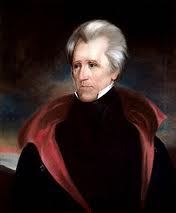
andrew jackson 1

Andrew Jackson

The factional part and the sectional part were frequently combined. Certain areas bellowed about “states’ rights.” Certain areas clamored for national financing for “internal improvements” like roads, and dredging harbors and rivers for navigation. Some favored industry and banking. Some were violently opposed. Some areas demanded high tariffs; others wanted no tariffs. Slavery “issues” were lower on the list at that time, but would rise substantially during the following decade.

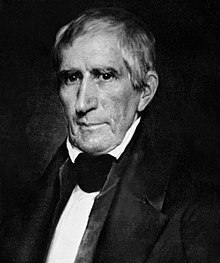
William Henry Harrison, the first Whig President…

…but the people remembered him like he was in 1812.

During the first Whig election in 1836, there was no single candidate. Different sections ran their favorite sons. Four of them. They expected to lose, but this way, they might find a front runner for the next national election. The front runner turned out to be an aging William Henry Harrison, a military hero of the Battle of Tippecanoe during the War of 1812.  He became the Whig candidate of 1840.

Vice President John Tyler: 1840

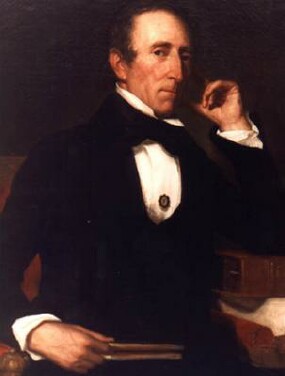
John Tyler, a maverick.

John Tyler was a Virginia patrician of means and pedigree. He practiced the three professions of many Virginians: plantation owner, practicing attorney, and politician. By upbringing and personal inclination, he was an ardent “states rights” Jeffersonian Democrat. Serving in Congress and the US Senate, he had originally aligned with the Democrats (the only party at that time), but soon grew disenchanted with Andrew Jackson. The rift ebbed and flowed for the eight years of the Jackson presidency. Tyler was basically a maverick.

Martin Van Buren’s presidency was marked by an economic downturn (usually blamed on Jacksonian banking policies), and the Democrats were seriously divided. The Whigs, smelling victory, needed the least objectionable candidate. This left poor Henry Clay out in the cold; he was fraught with enemies. William Henry Harrison was a bland 68-year-old fellow with a good name and few political foes. To balance their ticket, they needed geographical accommodation and someone who would appeal to the states’ rights Southerners. (As a PS – Harrison was a Virginian, born and raised not far from Tyler; but as a young man, he emigrated to the Northwest Territory, and was considered “western.”) 

The Vice Presidency was never a concern. It was a throwaway position of honor and little heavy lifting. Some said Tyler was nominated because nobody else wanted it.

President John Tyler: 1841

The Whigs mounted a rousing, rip-roaring campaign in 1840, with a nifty slogan: Tippecanoe and Tyler too. They won.

Harrison and Tyler were inaugurated on March 4, 1841. Then Tyler went home. Nobody ever thought that a month later Harrison would die. But he did.

A fast rider was sent to Tyler’s home with the momentous news; and the VPOTUS immediately left for Washington. Meanwhile, in the interim, Harrison’s cabinet met, and realizing that the Constitution was particularly vague about the authority of a VP-turned-POTUS, decided that John Tyler would be “Acting President,” with all decisions made by the Cabinet, the VP having one vote – just like everyone else.

Secretary of State Daniel Webster remained in Tyler’s cabinet.

“President” Tyler, having been sworn in at his hotel in Washington by a circuit court judge, did not see it that way. He believed that since he was expected to fulfill the responsibilities of the President, he should inherit the title as well, to wit: be the President. He met with Harrison’s cabinet, heard them out, then stated his own inclinations very firmly. This included the politely worded offer to “accept resignations.” He was a very stubborn man. When letters came to him addressed to “Vice President Acting as President” or some such phrasing, they were immediately returned to the sender – unopened.

The Cabinet backed down – at least for a while. It did not take them long to realize that Tyler was definitely not a Whig; he was still a states’ rights Democrat, and not inclined to follow the Whig agenda. The cabinet resignations were indeed forthcoming (all but Secretary of State Daniel Webster resigned). The divisiveness of the political agenda was so violent, that President Tyler was struck from the Whig party roster. And the Democrats didn’t trust him either. He became “a man without a party.”

He did not seem to care. He was also not elected to a term of his own.

The Upshot, and the Gratitude of History

The constitutional (as opposed to traditional) determination of the Vice President assuming the role of a deceased President remained up in the air for a very long time. A decade after Harrison’s death, Whig President Zachary Taylor died, and VP Millard Fillmore assumed the presidency. This time there was no objection since Fillmore was a solid Whig, albeit not overly effective. Fifteen years later, when Republican Abraham Lincoln was assassinated, Democrat-in-Republican-ish-Clothing Andrew Johnson assumed the office and the title. Problems came later.

VP Chester Alan Arthur refused to assume any presidential responsibilities during the ten-weeks POTUS James Garfield lay dying from an assassin’s bullet. While the Cabinet was extremely cool to him, he was applauded by the country as a whole for his restraint. He served admirably.

Vice Presidents Theodore Roosevelt, Calvin Coolidge and Harry Truman assumed the Presidential title and responsibilities after the death of their predecessors, and performed well enough to be elected terms of their own.

And all of the above served their VP-POTUS terms without a Vice President!

It was not for a 125 years, until Lyndon B. Johnson assumed the presidency following the assassination of John F. Kennedy, that Congress finally tackled the fine points to validate Presidential Succession, paving the way for Gerald Ford.

No soldiers. No rioting. The transition goes smoothly. And we are grateful to a stubborn John Tyler.

Sources:

Seager, Robert III – And Tyler Too, McGraw Hill, 1963

https://www.whitehouse.gov/about-the-white-house/presidents/john-tyler/

https://www.britannica.com/topic/Whig-Party


Posted in A POTUS-FLOTUS Blog, John Tyler, William Henry Harrison | Tagged , , , , , , , , , , , , , , , , , , , , , , , | 1 Comment

President and Mrs. Hoover at Rapidan Camp

President and Mrs. Herbert Hoover in their favorite spot!

Both Herbert and Lou Henry Hoover loved the great outdoors.

The Outdoorsy Hoovers

In the 1880s, when both Herbert and Lou Hoover were children transplanted to Oregon and California respectively, the Wild West was still “wild.”

“Bert,” as he was called by friends, was fully orphaned at ten, and sent to live with relatives. Hard work was always part of his Quaker upbringing, but after schoolwork, household and farm chores, and the extra-cash jobs of childhood, his happiest leisure hours were spent outdoors – fishing. He loved it all his long life.

Lou Henry grew up in a middle class family; her father was a banker. She had one foot in culture, education and town life, the other in the frontier. She rode expertly, could shoot a rifle, build a fire, climb trees, bound over fences and other tomboy activities. Including fishing.

A Presidential Retreat

After World War 1, the presidential plate became more and more complex. Air travel was still in its infancy. Presidential “vacations” for a couple of weeks was becoming difficult.

The Hoovers in a happy place!

It was President Calvin Coolidge who suggested that a nearby “retreat” where a President could relax for a few days might be beneficial to his health and well being.

When Herbert Hoover became President in 1928, he had already spent eight years as Secretary of Commerce to both Presidents Harding and Coolidge. He agreed wholeheartedly about the benefits of a nearby getaway – especially since his home was in California. Too far to commute.

Even before his inauguration, he began investigating possible sites within 100 miles of Washington – only a few hours away.

The First Couple…


…found exactly what they were seeking: a rustic area in the Blue Ridge Mountains of western Virginia, at the confluence where two fine streams met to form the Rapidan River. Hoover, a poor boy who had made an enormous fortune as a mining engineer, personally purchased 200 acres at $5/acre. They named it Rapidan Camp – or Camp Rapidan (depending on which source you espouse).

The Marines were assigned to work with Mrs. Hoover to plan, design and erect a dozen cabins to house the Hoovers, their guests, and those staff members who came along for the working-vacations.

Most of the expenses and materials were personally paid by the Hoovers.

The Rustic Compound

The “brown” house. Unlike the White House, it was definitely not fancy!

The POTUS and Mrs. Hoover had lived in remote mining camps several years earlier, and were not only used to the harsh rugged lifestyle, but enjoyed it. Prior to becoming First Lady, Lou Hoover became active in the Girl Scouts; now she was the national President of the organization. It was not an honorary title; she was its working President. Outdoor living, nature studies and frontier survival skills were dear to her heart – especially for girls!

The Girl Scouts was always dear to Lou Hoover’s heart. (from the Hoover Library-Museum)

She knew exactly what was required for the new Presidential compound. The streams were stocked prior to their visits, since fishing in the cool mountain air was mandatory for both Hoovers.

The guest and staff cabins were plain, equipped with little more than a rustic bedroom, bathroom-of-sorts and a porch. No electricity.

A large cabin centered around a cozy lounge and broad fireplace, featured tables and comfortable seating for reading, conversation, and games of all kinds for staff and guests. The basic furniture came from the presidential yacht Mayflower, which had been sold. Some furniture was donated. Some was personally purchased by the Hoovers.

A large central mess hall fed everyone, and employed a chef, kitchen help and waiters. (Domestic and kitchen staff were housed dormitory style in nearby cabins). Fresh catch-of-the-day was likely on every menu!

The Guest List

Herbert and Lou Hoover were both blessed with good health and enormous energy. In their mid-50s, they both put in 12- and sometimes 15-hour days, especially once the economy devolved into The Great Depression.

Relaxing – in a suit and tie. She wears pearls.

Thus by 1931, Camp Rapidan became more than just a weekend getaway: it was deemed essential to the President’s health. But while he usually slipped away for a few hours of quiet fishing, most of the trips to Camp were working sessions.

Cabinet members came frequently. Sometimes wives were included. Congressmen and senators, senior officials, presidential secretaries and related staff also came regularly. Girl Scout leaders and executive personnel were invited by Mrs. Hoover for planning sessions. Most of the invitees considered the “invitation” as a fringe benefit of their jobs.

The Marines maintained a small nearby camp of its own to accommodate those assigned to the Presidential staff for security and property maintenance. Telegrams, mail and newspapers were flown in every morning.

While most of the guests were governmental-ish, well known non-government guests were periodically invited, mainly for good companionship.

And if they like to fish, all the better.

The Future of Rapidan Camp

President Hoover donated Rapidan Camp to the state of Virginia at the end of his term. The intention was that it become a permanent Presidential getaway. By then, its beneficial restorative qualities were well established.

Hoover’s successor, Franklin D. Roosevelt visited the Camp early in 1933, but the extremely rugged terrain was not conducive to the special needs of the wheel-chair bound President. A more accessible site was found in the Catoctin Mountains of Maryland, even closer to DC. FDR called in Shangri-La after the peaceful place in James Hilton’s fictional Lost Horizon.

President Truman seldom used it, preferring deep sea fishing in Key West, Florida.

President Eisenhower reactivated Shangri-La for his personal use, but renamed it Camp David, and it has been used by every successive President.

Rapidan Camp lives on as part of the Shenandoah National Park, maintained by the National Park Service. Three of its original buildings are still standing after nearly 90 years.

It is open to the public – and well worth the trip!!

Sources:

Smith, Richard Norton – An Uncommon Man: The Triumph of Herbert Hoover – Simon and Schuster, 1984

https://www.whitehouse.gov/about-the-white-house/presidents/herbert-hoover/

https://hoover.archives.gov/

https://www.nps.gov/shen/learn/historyculture/rapidancamp.htm


Posted in A POTUS-FLOTUS Blog, Herbert Hoover, Presidential Sites | Tagged , , , , , , , , , , , , , , , , | Leave a comment

JQ Adams and the Honeymoon Disappointment

JQ in Europe

The cosmopolitan young John Quincy Adams

John Quincy Adams was a 30-year-old diplomat when he married.

JQ the Diplomat

John Quincy Adams as a child.

John Quincy Adams was a recent graduate of Harvard College when George Washington became president in 1789. He had received an exceptional education during the 8 years he spent in Europe, when his father (currently VP) John Adams, was sent abroad for diplomatic assignment. Having studied in some of the finest schools in Europe, he mastered several languages, was acquainted with many of the important people on the continent, and self-assured in the sophisticated manners and deportment of those in high circles. Now he was an attorney, recently admitted to the Massachusetts bar.

In short, he was considered by many of his American countrymen, to be the most cosmopolitan young man of his generation. If that wasn’t enough, he was making a name for himself (at least in pseudonym) writing well-crafted letters to the newspapers in support of the new country and its policies.

George Washington thought well of him, and appointed him Minister to the Netherlands. He was only 27. Washington was so well pleased at his young appointee, that he specifically urged John Adams, his successor, not to recall his son, believing him to be destined for a brilliant diplomatic career. 

As part of his ambassadorial duties, JQ was obliged to encourage trade between the Netherlands and the United States, which necessitated meeting and greeting Americans living and working abroad. He also had occasion to cross the English Channel from time to time, again representing U.S. interests.

The Johnsons of London

Joshua Johnson, JQA’s father-in-law

Catherine Nuth, JQA’s mother-in-law

On one of those trips to London, JQA (as he liked to refer to himself) met Joshua Johnson, a merchant from Maryland who had emigrated to England a decade before the Revolutionary War. He engaged in a successful shipping business, married Englishwoman Catherine Nuth, and raised a family. Thus prominently placed, Johnson made it a point to seek and befriend his native country’s representatives. Some time in late 1795, JQA was duly invited to dine at Johnson’s opulent home, filled with all the amenities of fine living. There he met Louisa Catherine, Johnson’s second daughter. She was twenty, convent-schooled in Paris, cultured, graciously accomplished – and pretty. The young man was smitten. By mid- 1796, the two were engaged.

John Quincy Adams’ prior “romantic life” had been unsuccessful and unsatisfying, having been rejected a few years earlier by a young girl that he fancied at the time. While he channeled his romantic disappointment into professional success, he was also developing the chilly exterior that would come to mark his persona.

But Joshua Johnson was delighted at the match. Not only was JQA a fine figure of a young man and a well-regarded diplomat with a promising career ahead, he was also the son of the Vice President of the United States, expected to be in line for the top position. Young Adams was a prize, indeed!

The two years of engagement between JQ and Louisa was mostly by correspondence. Once betrothed, Louisa conventionally wrote to her fiancé every other day; JQ wrote markedly less. Their letters were generally routine, hardly to be considered tender love notes. Nevertheless, Louisa had ample opportunity to recognize the rigid and overbearing nature that would come to dominate her lot in life. She could have broken the engagement – but she did not. 

The Marriage Potential

The classically educated Louisa Catherine Johnson

On paper, Louisa Catherine Johnson possessed all the attributes necessary to make a fine consort for a man of importance and distinction. Her education and culture was exceptional for the time; her manners and language skills were flawless; her beauty and grace were the stuff of Gainsborough paintings.

If that were not enough, Louisa came from a well-moneyed family. The Adamses were financially comfortable by the end of the eighteenth century, but were never wealthy. JQ had many cultural interests: history, literature and poetry being among them. He harbored a deep desire to write poetry, but while reasonably accomplished, lacked the creative spark of greatness. Despite being considered an excellent attorney, he did not enjoy the practice of law. Ever. 

But while pursuing monetary gain was never an Adams’ trait, the ample dowry promised by Joshua Johnson would enable him to provide for his wife and their potential family, and still have plenty of leisure time for his many avocations. In addition, Joshua Johnson had outfitted one of his ships to take his daughter and son-in-law on a honeymoon cruise to Portugal, where JQA had recently been assigned as Minister Plenipotentiary.

Abigail Adams

All of the aforesaid outweighed (at least to him) the disapproval of his mother Abigail Adams, who believed a cultured European woman would prove too delicate and unequal for the rugged new country across the ocean.

President John Adams always liked his daughter-in-law.

On July 26, 1797, John Quincy Adams and Louisa Catherine Johnson were married in London. On the day of the wedding, very shortly before the ceremony, Joshua Johnson took his new son-in-law-to-be aside, and confessed his financial embarrassment. He had stretched himself too thin, and bankruptcy loomed. His creditors were pressing, and he planned to leave the country and return to America. All Johnson could provide was a plush honeymoon cruise. There would be no dowry, opulent or not.

Exactly when this information was told to the bride is unknown, however it was always an embarrassment to her, and she even suspected that JQA’s critical flintiness was predicated on his disappointment. He, on the other hand, confided to his diary that he never regretted his decision to marry Louisa.

Their voyage to Portugal was balmy and comfortable, although they learned en route that his mission had been changed, and they would be moving to a new position: Minister Plenipotentiary to Prussia – a much more prestigious assignment. He would fulfill Washington’s prediction for a brilliant career.

Sources:

Nagel, Paul C. – Descent From Glory: Four Generations of the John Adams Family – Oxfvord University Press – 1983

Shepherd, Jack – Cannibals of the Heart – 1980, McGraw Hill

Unger, Harlow Giles – John Quincy Adams – DeCapo Press, 2012

http://www.firstladies.org/biographies/firstladies.aspx?biography=6

http://millercenter.org/president/biography/jqadams-campaigns-and-elections

Posted in A POTUS-FLOTUS Blog, John Quincy Adams | Tagged , , , , , , , , , , , , , , , , , , , , , | Leave a comment

Abraham Lincoln and the Leg Cases

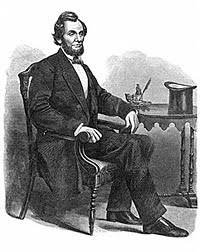
The Commander-in-Chief

Abraham Lincoln had very little military knowledge when he became Commander-in-Chief.

Lincoln’s Military Experience…

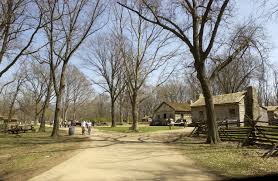
A recreated New Salem.

…was next to nothing in 1861 when he became President. Thirty years earlier, as a young man, he volunteered with some New Salem fellows to fight in the Black Hawk War against some native tribes. It was a mere skirmish. His militia unit saw no enemy, fired no shots in anger, and the entire episode was more like a camp-out with marching drills. It lasted about a month.

But one thing Lincoln learned very quickly as President (and thus Commander-in-Chief), was the importance of military command and obedience to orders. If order is not strictly enforced and maintained, anarchy results, and an army can quickly collapse.

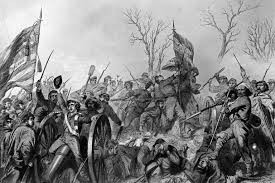
The casualties were overwhelming.

When 75,000 Union volunteers were recruited, the raw soldiers were unused to the rigors of military discipline, and as might be expected, the commanding officers had their challenges. Sometimes harsh punishments were needed to set examples.

Once the Civil War began, Lincoln made a point of borrowing books on military command and strategy from the Library of Congress.

Harsh Penalties

As the War progressed, and the predicted three-month hoo-hah lasted for four years, court martial and similar disciplinary measures were routinely effected. Death penalties were not uncommon.

Lincoln was a kind man, a fact quickly learned to the dismay of military brass. The waiting room of Lincoln’s White House office was packed with family members come to plead with the tender-hearted President to spare the life of their dear one, condemned to death.

Many of those miscreants were little more than teenagers, away from home for the first time. Some, after long days of marching and drilling – and fighting – nodded off on sentry duty: a hanging offense.

The war was far bloodier than anyone expected.

Some of the aforementioned were just plain “skeered” as Lincoln put it. Fear is common to all soldiers. Even the most heroic admit to it. It is a natural response in the face of death. So a lot of them ran away. Some merely to a place of nearby safety. Some actually got lost in the fog of war. Some ran further, as the war went on endlessly.

Some deserted because they got tired of military life. Some were just plain homesick. Some had families who needed them.

Some, however, enlisted for the bounty the government paid to recruits. They got the bounty money, deserted after a month or so, and re-enlisted in another town or state to collect another bounty. A few did that on a regular basis and managed to accumulate a great deal of money.

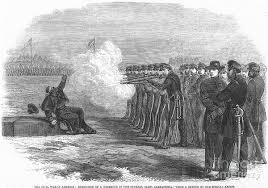
But if caught and court martialed, they would be shot.

So their loved ones came to Lincoln, some on their knees, begging for the President’s mercy.  He called them his “leg cases.”

The Origin of “Leg Cases”

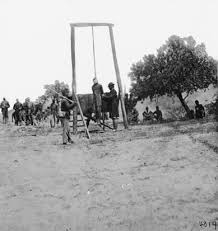
Hanging was a common punishment for desertion.

Lincoln the great story-teller, occasionally told the yarn of the Irish immigrant soldier caught running from battle, court martialed and sentenced to hang. When he was given a chance to speak on his own behalf, he said, “I ain’t a coward. My heart beats as brave and true as Julius Caesar. It’s me legs, gen’ral. Me legs are the cowardly culprits that run away with me.”

Abraham Lincoln understood the essence of the tale, and referred to the hundreds of legal and military transcripts piled on his desk as his “leg cases.” It is said those documents make up the greatest percentage of Lincoln’s wartime correspondence. It is also said that in private conversation, he was not so sure that he might not be among those leg-case fellows himself.  

Few things pained him more, especially the hundreds of tearful and distraught parents and wives pleading for him to spare their boy.

Adjudication

Early in the War, Lincoln learned that as Commander-in-Chief, he was responsible for the general welfare of the soldiers. As a man, he believed their grievances should be heard out. Lincoln-the-Lawyer also admitted that he tried to find whatever extenuating circumstance he could to pardon or reduce the sentence. Thus, most of the death-sentence punishments were required (by him) to come to his desk for final resolution. 

He tried hard to find some rationale for his well-know mercy and once said of a particular rascal, “I think if he had more than one life, a little hanging wouldn’t hurt him. But after he is dead, we cannot bring him back, no matter how sorry we might be.”

Military brass complained frequently that their discipline was being subverted by the President’s tenderness. Lincoln didn’t quite see how hanging a scared teenager who ran away at Antietam would benefit anyone. 

The Commander-in-Chief was tender-hearted when it came to punishment.

According to Civil War historian William C. Davis, Lincoln once heard rifle shots being fired from across the Potomac, and told an army chaplain, “This is the day they shoot deserters. I am wondering if I am using the presidential pardon as much as I ought.” 

It reached a point that Lincoln issued a blanket order that death sentences for desertion (unless otherwise indicated) be lessened to “hard labor.”  

Outmaneuvering the Generals

Pardons, commutation of sentences, and other mercies made up a good deal of Lincoln’s paperwork.

Benjamin Butler was an accomplished attorney, politician and political General, known for his harsh, no-nonsense treatment for miscreants. He finally sent Lincoln a telegram: “President Lincoln, I pray you not to interfere with the court martials of this Army. You will destroy all discipline among our soldiers.” B.F. Butler.

One of Butler’s soldiers was about to be shot, and his elderly father had come to plead with the President. Lincoln decreed that the fellow was not to be shot until further orders, but the old man was concerned that the President could order his son shot the following week. Lincoln smiled, saying that “if his son waited for those orders to come from me, he would live to be older than Methuselah.”

Sources:

Davis, William C. – Lincoln’s Men: How President Lincoln Became Father to an Army and a Nation – Free Press, 1999

Donald, David Herbert – Lincoln – Simon and Schuster – 1996

Waugh, John C. – Reelecting Lincoln: The Battle for the 1864 Presidency – Crown Publishing, 1998

http://www.mrlincolnswhitehouse.org/the-white-house/upstairs-at-the-white-house/upstairs-white-house-mr-lincolns-office/mr-lincolns-office-pardons-clemency/

http://www.mrlincolnswhitehouse.org

Posted in Abraham Lincoln, American Civil War | Tagged , , , , , , , , , , , , , , , , | 3 Comments

The Murder of Ida McKinley’s Brother

First Lady Ida McKinley

In 1898, First Lady Ida McKinley received shocking news. Her brother had been murdered.

George Saxton, Libertine and Rake

The Saxtons were one of the most prominent and wealthy families in Canton, OH. They had three children, born within three years of each other. Ida the eldest, then Mary (always called Pina) and George. George Saxton (1850-1898) grew up to be charming, good looking and well educated. He entered the family businesses and did well, was considered eminently “eligible,” a very snappy dresser and on every Cantonian’s invitation list.

George Saxton, a ladies-man!

He is reputed to have been engaged at least twice, but while he happily courted and escorted, he assiduously avoided marriage. In fact, he still made his home in the “family” mansion with his married sister Pina Barber and her husband and children, although he maintained a bachelor pad nearby. By that time he was in his mid-40s, and his sister Mrs. Ida McKinley was First Lady.

Enter Anna George

The Saxton House stayed in the family for generations.

Anna (Annie) Ehrhart George, ten years younger than George Saxton, was different from his other conquests. She was definitely attractive, but she was a dressmaker, married with two children. Her husband, Sample George was a carpenter, which put her at a much lower social level than the Saxtons (or his other ex-fiancées). While his sisters and their spouses frowned upon the affair, they never ostracized him.

Anna George

The attraction between George and Mrs. George was mutual. A married woman was tantalizing: forbidden fruit. Perhaps Saxton believed it would make her more accommodating, but Annie took the relationship very seriously.

He plied her with expensive gifts, and wooed and pursued for nine years. Then she finally left her husband, and moved into an apartment next door to George’s bachelor pad. Sample George immediately filed a $30,000 suit against Saxton for “alienation of his wife’s affections.”

The lawsuit dragged on and on in court. George Saxton had the wherewithal to engage fine lawyers, who could nitpick, argue and delay. It took nearly six years to settle the case, and the aggrieved husband wound up with only $1500 or so. But by that time, the husband had found and married another woman, and perhaps was not as aggrieved.

During that long interim of separation, the relationship between Annie and George Saxton had cooled substantially.

The house got a huge makeover about 25 years ago and is now the First Ladies Library.

Nevertheless, George promised to marry her, pending the legalities. He sent her to South Dakota (the Reno of its time) for a quickie divorce, giving her $1200 for expenses. Still believing marriage was in her cards, Annie obtained her divorce and returned to Canton, only to learn that Saxton reneged on his promise to marry her.

She also learned that he had been wooing and pursuing several other women for at least five years. Now Annie sued him – for breach of promise. Nevertheless, she continued to stalk him and seek reconciliation. But George had wearied and wanted to be rid of her, and sought an injunction against her. (It gets very complicated). A brief reconciliation was effected, but it was rancorous and stormy, especially when Annie learned that George had been seeing Eva Althouse (another wedded woman) and Mary Park (yet another wedded woman), who was planning to divorce her husband in order to marry George Saxton. (Notice a pattern here?)

October 7, 1898

Around 6 PM the evening of October 7, 48-year-old George Saxton was riding his bicycle to the home of Eva Althouse, duded out for a romantic evening in a three-piece suit, a flower in his lapel, and a bottle of champagne in his satchel. Eva Althouse however, his intended amour du jour, was not home.

Then two shots rang out. George fell on Althouse’s steps. The assailant came closer, and upon hearing George cry out, pumped two more bullets into him before disappearing into the shadows.

The murder made the newspapers!

The news spread like wildfire across Canton. Everyone had an opinion.

In the White House, President McKinley was receiving guests when an aide came and whispered a private message. The President’s face paled visibly. Always aware of his wife’s frail health, he waited until after midnight before gently breaking the news her.

The Trial of Anna George

Two hours after the murder, Anna Ehrhart George was arrested, jailed and charged with first degree murder.

…even the New York Times!

Her friends said Annie had finally given up hope of marrying Saxton. She had no money, and her reputation was in tatters. They also claimed she had threatened to kill George if he continued to see Mrs. Althouse, claiming no jury would convict her once they heard her story.

It was circumstantial, albeit compelling, evidence. She was recognized by a streetcar driver in the area; her dress was soiled; police had scraped gunpowder from her hand. However no eye-witnesses placed her at the scene; the murder weapon was not produced (although discovered some months later), and her alibi was corroborated by three witnesses. Anna George did not testify; nor did her attorneys consider pleading temporary insanity, or a crime of passion. There was hardly any plea at all. And no one from the Saxton-McKinley family attended the trial, which lasted for 22 days!

Annie had been right. Nobody wanted to see her hang. The people were sympathetic. Newspaper reporters all over Ohio were sympathetic. Even her ex-husband Sample George was sympathetic and said nothing against her.

The jury deliberated for 23 hours and took 22 votes. Then came the unanimous verdict: Not guilty. The crowd went wild!

President McKinley was very careful about breaking the news to his frail wife.

President and Mrs. McKinley and the Barber family made no public comment about the trial, however they led a private funeral procession for George Saxton, and it is said the First Lady wept at his grave.

George Saxton is buried in the Saxton family plot. Anna Ehrhart George’s grave is generally unknown.

Sources:

Leech, Margaret, In the Days of McKinley – Harper & Brothers, 1959

Morgan, H. Wayne – McKinley and His America – Syracuse University Press, 1964

Dale E. Shaffer, Yesteryears Section of the Salem News, December 27, 1994

Traxel, David – 1898: The Tumultuous Year…that saw The Birth of the American Century – Knopf – 1998

http://www.firstladies.org/biographies/firstladies.aspx?biography=25


Posted in A POTUS-FLOTUS Blog, Nifty History People, William McKinley | Tagged , , , , , , , , , , , , , , , , | 2 Comments

Harry Truman’s Mother-in-Law From Hell

bess and harry
Harry Truman was always an outspoken man who never minced words, but…

Madge Wallace

Young Madge Gates Wallace

Margaret Gates Wallace (1862-1952), called Madge from childhood, was perhaps the only exception.  Madge was the spoiled daughter of midwesterners George and Elizabeth Gates. George Gates was the owner of a large flour mill, and as a prominent and wealthy man, built a spacious Victorian home on North Delaware Avenue, the best neighborhood in Independence, MO.

David Wallace

Madge graduated from Independence Female College (more like a finishing school), studied music briefly at the Cincinnati Conservatory of Music, and married David W. Wallace shortly before her 21st birthday, against her parents’ better judgment. Two years Madge’s senior, David was the handsomest boy in town, and at the time, held a minor post in the Kansas City Customs House. The Gates’ believed it was insufficient to support their daughter.

Always considered a pleasant fellow, Wallace hoped for Democratic patronage advancement, but between the political climate and Wallace’s heavy drinking, he never advanced. As expected, it created financial and emotional strife within the family despite having four children. Madge was frequently forced to rely on her parents for money.

Bess Wallace (1885-1982) was their eldest.  Brothers Frank, George and David followed; a sister died in early childhood.

The Strife Part

Bess Truman’s mother in earlier times.

Modern psychologists could easily make a case for Madge Wallace to have a “personality disorder” of some kind. She was unquestionably a difficult woman. Some said she had an exalted sense of her own “worthiness” and its lack in everyone else, including Yankees, Negroes, Jews, Eye-talians, the Irish, Republicans, etc. Some said she was inclined to bury her head in the sand and avoid facing her problems. Few people liked her.

Nevertheless, she had ample reason for dissatisfaction in her marriage – as her parents had predicted. Handsome and affable are fine, but David’s drinking, lack of financial stability and inability to get, keep and progress in a career made life extremely tense. Madge began taking lengthy “vacations” with her sister in order to avoid the tensions. The household management fell to Bess.

Young Bess

Young Bess Wallace

In 1903, when she was eighteen, her father stood in the bathtub and put a bullet in his brain. While he did not leave the proverbial “note,” he was deeply in debt. Perhaps he found living with Madge to be equally intolerable.

In 1903, “suicide” was scandalous. Whatever psychological problems Madge had before, were now exacerbated. Mumbling the ubiquitous “business reverses,” and unable to face the obvious stigma, Madge took the children to Colorado Springs for a year, to let the talk die down.

When they returned, they moved in with her parents.

By that time, the elder Gates’ were past seventy, Madge was incapable of managing the household, so the responsibilities fell to Bess, and would remain so for the rest of their lives. Any further education or “career” for her was out of the question.

Enter Harry

The house in Independence was originally the Gates’ house. Then the Wallace house. Finally the Truman house.

Harry Truman (1884-1972) always claimed he loved Bess Wallace since they were both five years old in little kid dancing school, and she was the only love of his life.

Born in Lamar, MO, literally on the other side of the railroad tracks, the farming Trumans were a far cry economically and socially from the affluent and pretentious Gates/Wallaces. Nevertheless, Harry and Bess were the same age and in the same class all the way through high school. They knew each other and liked each other, but it was a superficial relationship due to their youth, but mostly the socio-economic part. Different circles. When they graduated, they went their separate ways. College for him too, was out of the question; he needed to help with the farm. In the winter he found temporary jobs to get them through.

When he was in his early twenties, Harry was visiting a relative in Independence, who mentioned in passing that she needed to return a pie plate to Mrs. Wallace. Harry said he knew Bess, and offered to return the plate to her. He did, and so began a long, long courtship, punctuated by his service in World War I.

As expected, Madge Gates was not pleased about her daughter keeping company with  “Farmer” Truman (as she called him). He was far, far beneath her.

June 28, 1919

A month after Captain Truman was discharged from the Army, he and Bess finally married.  They were both well into their thirties.

bessandharry

Bess and Harry Truman on their wedding day.

Mrs. W. – small but very feisty.

Many years later, their daughter Margaret hinted that shortly before the wedding, Harry and Bess had their one-and-only mega-battle. She also hinted that neither of her parents offered details or explanations, but Margaret suspected that Harry understandably wanted a house of his own, and Bess insisted they live with Madge. Mrs. W. obviously could not live alone, and Bess was the only one who could live with her.  Margaret Truman added that they lived in the Gates house for the rest of their lives, “So Dad must have loved Mother very much.” He bought the package.

Uncharacteristically, he also never said an unkind word about Madge Wallace. Ever. Not when she insisted on sitting at the head of their dining room table all her life. Not even when she disdainfully insisted on calling him MISTER Truman, even when he was President.

madgewallace

Madge Wallace in the White House

Harry and Bess Truman never entertained guests in that house. They certainly couldn’t “banish her to her room” in her own house, but they could not chance near-certain embarrassment over what she might say to their friends.

Later and Later

Family put up with Madge Wallace because she was kin. She knew the neighbors, but had few, if any friends. But she had a widespread reputation in Independence as a difficult and peculiar woman. When she lived with Senator Harry and Bess in Washington, and even later in the White House, that same reputation was re-earned among new people.

Those close to him said that Harry Truman had the original mother-in-law from Hell.  He never said a word.

Sources:

Truman, Margaret – Harry S Truman – William Morrow & Co., 1973

Truman, Margaret – Bess W. Truman – Macmillan Publishing, 1986

http://www.firstladies.org/biographies/firstladies.aspx?biography=34

http://www.trumanlibrary.org

https://www.whitehouse.gov/about-the-white-house/presidents/harry-s-truman/


Posted in A POTUS-FLOTUS Blog, Harry S Truman, Nifty History People | Tagged , , , , , , , , , , , , , , , , | Leave a comment