Abraham Lincoln and Smallpox

PresLincoln

Abraham Lincoln suffered from variola (smallpox) when he was in the White House.

November, 1863

Almost as an afterthought, President Lincoln had been invited to make “a few appropriate remarks” at an event in Gettysburg, Pennsylvania.

In July, a massive three-day battle had been fought at the tiny town of Gettysburg. Thousands of soldiers, North and South had died. Thousands more had been injured.

The only known photo of Lincoln at Gettysburg.

 Pennsylvania Governor Andrew Curtin, a Republican, mounted a vigorous campaign to make part of that battlefield into a national cemetery. The effort was enthusiastically supported, and on November 19, the dedication ceremony for the sobering memorial was scheduled. Former Congressman Edward Everett, considered the country’s premier orator, had accepted Curtin’s invitation to be the keynote speaker. As a courtesy, an invitation for the President to be on the program was issued – nothing more.

Abraham Lincoln: Health in General

Abraham Lincoln considered himself a healthy and normal child-to-man. He was strong, grew rapidly, and if he suffered the usual youthful illnesses, they were mild enough, and he recovered with no visible after effect. It wasn’t until his young manhood that there is any evidence of health-related issues, notably a case of gonorrhea (he erroneously believed was syphilis) contracted on a trip to New Orleans.

His most reported health issues were periodic incidences of “the hypo” or hypochondria, which, according to medical posterity, were more a bout of general depression, coupled with malaise or inertia. It recurred at intervals throughout his life – only as President, Lincoln did not have the luxury of feeling “hypochondriacal.”

During his four years in the White House, he worked incredibly long hours, was under enormous stress and came into contact with literally thousands of people from various places and walks of life. That he didn’t feel well from time to time is a given – and is also fairly well documented. His secretaries, who also worked long hours and met thousands of people were also unwell periodically. But for Lincoln, those “illnesses” appear to have been relatively minor, and did not cause him to lose much time from his work.

The President’s Variola

mary and boys

Mary Lincoln with sons Willie and Tad.

There is some vagueness about when Abraham Lincoln first showed his symptoms. Some sources claim Lincoln had been ill prior to Gettysburg. Shortly before the dedication ceremony, his ten-year-old son Tad was sick and feverish. The doctors were not sure of the exact illness (children have many), but having already lost two sons, both Lincolns were seriously concerned. Nevertheless, Tad was recovering, Lincoln had accepted the invitation, and kept the commitment, believing it was incumbent upon him to be a part of hallowing the ground.

 Variola is a mild form of smallpox, just as contagious, but perhaps not as deadly or disfiguring. The symptoms mimic the usual aches, fevers and general malaise of many other ailments, but within days, a rash or blotches that form blisters and scabs is its most distinguishing feature.  

By the 1860s, inoculation for the dreaded pox was fairly commonplace. It was so highly contagious that Union soldiers were routinely inoculated upon entering the Army. But Lincoln had never been inoculated, and was exposed to literally thousands of people who thronged in the White House for a few minutes of the President’s time.

Most sources today claim he was incubating the illness at Gettysburg, but it didn’t manifest until AFTER he returned to the White House.

What is consistent, however, was that his illness coincided with the Gettysburg dedication ceremony, and the fact that he was not feeling well when he went. By the time he returned to the White House, he was definitely ill, feverish and complaining of body aches. He took to his bed. His valet, William Johnson, was also ailing and immediately sent to his rooms. The White House physician was summoned. Within a few days, the telltale rash and pustules began to form.

There is also some speculation that Lincoln had smallpox, period. Variola, being a mild form of the disease was only admitted (and publicized) to lessen the effect of the President being seriously ill. (It may also be speculated that a “lesser form” might ease the anxieties of Mary Lincoln.) 

nicolay-and-hay

John G. Nicolay, Lincoln and John Hay

Both John G. Nicolay and John Hay, the President’s private secretaries, were visibly upset that Lincoln might die. Smallpox was a killer. The mortality rate for those who contracted it, still hovered at 30%. William Johnson was one of those victims.

Asst. secretary William Stoddard worked closely with Mrs. L.

According to William Stoddard, an assistant White House secretary (whose diaries and books are a mainstay of Lincoln White House scholars) all members of the White House household, staff and family (i.e. Mary and Tad) who had never been inoculated, were immediately treated appropriately.

Lincoln’s Recovery

President Lincoln remained in his rooms for several weeks after he returned from Gettysburg. It was a well-known fact that smallpox, light case or not, was highly communicable, and thus strict quarantine procedures were enforced. People who either had a case of smallpox, or who had been inoculated were immune, however. Records show that Lincoln did not return to his office until shortly before Christmas. By that time, the scabs from his rash and blisters had abated, and he did not appear to have any visible facial scarring. 

The President, who was constantly besieged by people of all stations who wanted offices or favors or clemency, or merely just to shake his hand, now quipped to his doctor once he felt better, that “now I have something that I can give to everybody.”

According to Lincoln himself, however, there was definitely an outbreak of smallpox in Washington in late 1863 through early 1864. He sent a wire to his son Robert, at Harvard, warning him and his friends not to come to the Capital because of the outbreak.  By that time, the President was fine.

But sick or well, he made a dandy speech at Gettysburg.

Sources:

Conroy,James B. – Lincoln’s White House: The People’s House in Wartime – Rowman and Littlefield, 2016

Donald, David Herbert – Lincoln – Simon and Schuster – 1996

http://rogerjnorton.com/Lincoln68.html

http://www.mrlincolnswhitehouse.org/inside.asp

https://www.history.com/this-day-in-history/lincoln-delivers-gettysburg-address
Posted in A POTUS-FLOTUS Blog, Abraham Lincoln, American Civil War | Tagged , , , , , , , , , , , , , , , , , , | 1 Comment

Bess Truman and The Airplane

Truman family

The Truman Family

Few First Ladies were as reluctant as Bess Truman.

Bess: The Reluctant Everything

Young Bess

Young Bess Wallace

Bess Wallace (1885-1982) was considered outgoing and personable all the way through high school. She was a good student, an excellent athlete (a rarity at the turn of the 20th century) and popular with her classmates.

That changed when she was eighteen. Her alcoholic father who had difficulty holding a job, and who perhaps could not tolerate his difficult wife any longer, stepped into the bathtub and put a bullet in his head.

It was a scandal!

YoungMadge Gates

Madge Gates Wallace, Bess’ Mother

Madge Wallace packed up the children and took them to Colorado for a year to let the talk die down. When they returned to Independence, MO, they moved in with her parents, and where Bess lived for the rest of her long life.

Her wealthy grandparents, George and Elizabeth Gates, were getting on in years, and her “difficult” mother was dispositionally unsuited for managing a household. Those responsibilities fell to Bess, who gave up thoughts for higher education of any kind.

The Truman Part

Bess’ life evolved into a comfortable routine. Managing the house, getting her younger brothers educated and out of the house as soon as possible, and shielding her mother from any distress. Her own social life was active enough, with regular bridge games with several of her old school chums, all of whom had known Mrs. Wallace for years, and understood her “peculiarities.”

Then, when she was in her early twenties, Bess re-met up with another old school chum, Harry Truman. They had been classmates all through school, but the acquaintance was superficial. Harry was literally a farm boy from the other side of the tracks, and a far cry from the somewhat snobbish Gates-Wallace’s. 

Harry Truman always claimed he loved Bess since they were five years old, nevertheless he did not begin to court her until they were in their mid-twenties. And even then, it was sporadic. Harry didn’t have any money for courting; he was needed at home, too.

But the courting continued, punctuated by World War I, until they finally married – when they were in their mid-30s. And then, they lived in the “Gates-Wallace” house.

bessandharry

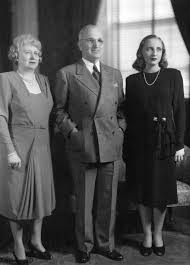
Mr. and Mrs. Harry Truman

BT: The Reluctant Senate Wife

Truman house

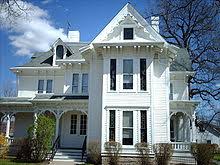
The Gates-Wallace-Truman house in Independence, MO

Harry Truman’s political rise was neither meteoric or even expected. He jumped at the unlikely opportunity to run for the US Senate after a half-dozen other potential candidates turned it down: 1934 was a losing year. But Harry campaigned relentlessly, and in a total upset, he won.

He went to Washington alone. In January, 1935. Bess would not leave her mother, and besides, their daughter Margaret was still in school. But once Harry got settled in a small apartment, he invited his reluctant wife for a visit. Surprisingly, she enjoyed Washington. The following year, he took a larger apartment – big enough for all of them, including Mrs. Wallace.

Bess Truman slipped nicely into the role of senate wife. Her bridge-playing skills won her easy access to some of the groups that proliferated. And as Margaret got older and Bess had more time on her hands, Harry recruited her to help out in his office – handling his personal mail, and occasionally serving as tour-guide to visiting Missourians.

She was happy. Very little was demanded of her. 

BT: Reluctant FLOTUS

All that changed in 1944, when Harry Truman was suggested to be the Vice Presidential candidate for Franklin Delano Roosevelt’s unprecedented 4th term. The relationship between the popular President and the Missouri Senator had been superficial, and perhaps even cool. But when pressed, Truman agreed. They won.

HSTinauguration

The Inauguration

Even though it was obvious to most close observers that FDR was in failing health, and might not survive his term, few expected that the Grim Reaper would show up as soon as he did, only weeks after the Inaugural.

When Truman took the private oath of office on April 12, 1945, Bess Truman knew her life had changed profoundly. World War II was coming to an exhausted end, and the problems of putting the country, and the world together again were daunting, and in many ways unpredictable. 

Realizing she would/could never take on the socio-political activities of her predecessor, Eleanor Roosevelt, Bess kept to a simmering background. She would do whatever Harry asked of her – but nothing more.

BT: Whack-A-Plane

It was a packed house for the event!

By mid-20th Century, even without the Eleanor influence, the role of First Lady was generally filled with ceremonial functions. The near-constant supervising and hostess duties of White House events. Ribbon-cutting. Bouquet accepting. Teas and receptions. As long as she didn’t have to make any speeches, Bess would go.

Bess Truman tries to christen the plane.

About six weeks into the Truman Presidency. Bess and Margaret were dispatched to christen a pair of ambulance planes for the Army and Navy. Whacking a new structure with a ceremonial bottle of champagne has been a long-time tradition. The athletic Mrs. T. took the bottle and whacked. And whacked again. Actually eleven solid whacks! The bottle refused to break. It had not been “scored” (deliberately weakened) in advance. 

Bess keeps trying!

Meanwhile, the place was packed. All the military brass showed up and the newsreel cameras were rolling. Bess Truman was mortified and angry.

According to Margaret, the furious FLOTUS returned to the White House, marched into the President’s office and told him of her humiliation. HST immediately demanded a copy of the newsreel film. His wife, the First Lady of the Land, would not be subject to ridicule!

The three Trumans, Harry, Bess and Margaret then watched the film clip privately. Margaret went on to write that all three of them had tears running down their cheeks – from laughter at the bottle that wouldn’t break! 

Movie houses across the country aired the clip. No one laughed at the First Lady. They  laughed at a very very funny situation. They still do. 

Sources:

Foster, Feather Schwartz – The First Ladies from Martha Washington to Mamie Eisenhower – Sourcebooks, 2011

Truman, Margaret – Bess W. Truman, 1986, MacMillan

Posted in A POTUS-FLOTUS Blog, Harry S Truman | Tagged , , , , , , , , , , , , , , , , , | Leave a comment

The Private Sorrow of Eliza McCardle Johnson

  First Lady Eliza McCardle Johnson.

Quick Bio on Eliza

Said to be a rare early photograph of Eliza Johnson.

Eliza McCardle (1810-1876) was Tennessee-born and an only child. While most of the American First Ladies were middle-class gentry, if not out-and-out well-to-do, Eliza was likely the poorest of the lot. Her father was a shoemaker. The family struggled. Nevertheless, a shoemaker was a skilled trade, and John McCardle was considered a respected member of his small community in Greeneville, TN. Poor was not a problem; everyone was poor. And Eliza went to the local school where she received a fair education.

McCardle died when Eliza was in her early teens, and she and her mother sewed slippers and other items to make ends meet. Legend has it, that she first laid eyes on seventeen-year-old Andrew Johnson when she was about fifteen or sixteen, and he came to town pushing a cart with all his worldly goods. Legend continues, that Eliza saw him, and told her companion “he was the boy she was going to marry.” Maybe she said that. But within a year, she did marry him.

They were the youngest First Couple. She was sixteen, he was eighteen.

The Tailor’s Wife

Andrew Johnson (1808-75) was one of the poorest fellows in Raleigh, NC. His father died when he was two, and his mother remarried shortly afterwards. They barely got by. When Andrew was ten, partly to spare themselves the extra mouths to feed, and partly as a “favor” to the boys, Andrew and his older brother were apprenticed to a local tailor. The “favor” part, was providing the boys with a trade so they could make their own ways.

There is some indication that the master-tailor was a strict taskmaster (perhaps); there is some indication that Andrew was a truculent boy who hated discipline (more than likely). He tried to run away a few times. At 17, he ran over the border to Tennessee, where NC apprentice laws did not apply. 

Andrew obviously was a pretty fair learner, since he became a good tailor. When he married Eliza, he set up shop in his small two-room cabin. When he sewed at night, Eliza read to him. Some say she taught him to read and write. Indications are that he already “knew his letters” and could sign his name, but most historians believe she undoubtedly advanced his ability to read, write and do arithmetic. 

Andrew Johnson as a younger man.

Their four children came along within eight years. So did Andrew’s interest in local politics. He went to town meetings, was elected alderman, then Mayor, and then State legislator. He was doing well enough to build a better house and make a good life for Eliza and the children: Martha, Charles, Mary and Robert. He politicked and she took care of the house and family.

The National Stage

Martha Johnson Patterson

Mary Johnson Stover

By the time Andrew Johnson was in his thirties, he was elected to Congress. Eliza stayed home, their children received the benefit of a fine education in Washington. Both Johnsons felt strongly about providing some of the necessities – and luxuries – that had been denied to them as youngsters.

Both their daughters received a solid female-education. Charles went to Georgetown University and became a doctor. Robert also went to Georgetown and became an attorney. The Johnsons were justifiably proud parents of sons who had achieved high professions.

The Surprise

When Eliza was past forty, her daughters were already grown and married. Eliza was a grandmother. Then she became pregnant again.

Having a baby some twenty years after her last child was born, was a serious medical condition in the 1850s. The child (Andrew Jr., nicknamed Frank) was somewhat on the frail side, but managed to survive his boyhood. Eliza, however, perhaps in her weakened condition, developed tuberculosis.

There are basically two kinds of tuberculosis: fast and slow. Either way you died. Eliza had the slow kind. It sapped at her for years. Walking across the room was an ordeal. For the next 25 years, she was chair-bound, living the life of a semi-invalid.

The Price of the Civil War

Andrew Johnson

Andrew Johnson, the only Southern Senator who did not resign his seat when other Southern states seceded in 1861, did yeoman service for the Union. But there was an enormous price to be paid.

One can never really know what triggers someone to turn to drink, especially long-ago people from a family where documented personal life is scarce. There may be dozens of reasons, but one can safely assume the Civil War did not help. Tennessee was hard hit.

Dr. Charles Johnson He drank.

Charles-the-Doctor served in the Middle Tennessee Union Infantry, but perhaps was not cut out for the gore and suffering he witnessed. He likely would have succeeded setting broken bones and delivering babies in Greeneville. It was rumored that the whiskey they used for anesthesia found its way into his tent. He died after being thrown from his horse in 1863. He was only 32.

Attorney Robert Johnson. He drank even more.

Robert had become an attorney, but the suspected alcoholism of his brother was confirmed in his own life. His well-known drunken escapades resulted in his being “retired” from the Tennessee Cavalry.

When Andrew Johnson assumed the presidency following Lincoln’s assassination, he brought Robert along as his secretary, hoping to a) keep an eye on him, and b) hoping that the responsibilities would spur him to reform. Neither hope prevailed, and Robert took his own life a couple of years later. He was only 35.

If Eliza was devastated by the plummeting of her high hopes for her well-educated sons, it was compounded by the misery of the war itself in Tennessee. Her years as First Lady were equally depressed by her husband’s political misfortunes and her own poor health. She held her head high, however, but participated only minimally. Her daughters “did the honors.” 

Sources:

Anthony, Carl Sferrazza –First Ladies 1789-1961, William Morrow,1990

Caroli, Betty Boyd – First Ladies: An Intimate Look at How 38 Women Handled what may be the most Demanding, Unpaid, Unelected Job in America – Oxford University Press, 1995

Kendall, Joshua – First Dads – Grand Central Publishing, 2016

http://www.firstladies.org/biographies/firstladies.aspx?biography=18

https://www.nps.gov/anjo/index.htm

https://www.nndb.com/people/091/000127707/

Posted in A POTUS-FLOTUS Blog, Andrew Johnson | Tagged , , , , , , , , , , , , , , , , , | Leave a comment

The White House Conservatory: The Lost Treasure

 Arguably the largest of all lost White House treasures, is the Conservatory.

The Greenhouse Concept

Some three hundred years ago, the first greenhouse was built in Colonial America. The concept had been known in Europe for some time: to provide a protected place for plants and similar vegetation to grow. Enclosing an area with glass panes allows for sunlight to reach the greenery; likewise those same panes offer protection from the elements. In the seventeenth century, it was a novelty that caught on.

Of course it was a costly venture, only available to either the very wealthy, or to a small but growing number of early agronomists who liked to experiment with the forces of nature. But it was also relatively easily constructed, and/or dismantled.

Fast Forward: 1850s

Prince Albert of Great Britain espoused the concept of a gigantic greenhouse (encompassing most of Hyde Park!) to showcase his Great International Exhibition in 1851. The “Crystal Palace” as it was nicknamed, was a masterpiece of engineering and ingenuity. It was also a huge success.

Harriet Lane

An early depiction of the conservatory. (LOC)

Franklin Pierce authorized construction of a “botanical” house, (where the old Jackson orangery had fallen into disuse), but the actual construction began under President James Buchanan, in 1857. Encouraged by his niece Harriet Lane, the structure was located only 12 feet from the White House itself, connected by a glass-enclosed passageway.

It was a wooden structure, but featured a glass roof and sides, making it look light and airy. It’s proximity to the Potomac River assured a water supply. It was one large room, with green painted tables filled with potted plants and flowers.

Lincoln’s Conservatory

Mary Lincoln

The Conservatory had grown considerably by the time Abraham Lincoln became president. He seldom visited it, but Mary Lincoln loved it, and was said to walk through almost daily. Not only did she personally select the fresh flowers and tropical plants for White House décor, but sent bouquets of various sizes as modest gifts, courtesy of President and Mrs. Lincoln. At least one documented bouquet (sent to Senator Sumner) was sent as an “apology” for losing her temper.

Oklahoma Indian chiefs visit the “Lincoln” conservatory. (LOC)

Select White House guests were often escorted through the Conservatory, with Mrs. L. or one of Lincoln’s staff as tour guides . Matthew Brady photographed the lovely setting on the occasion of a delegation of Indian Chiefs from the Oklahoma Territory.

In 1867, the Conservatory burned.

The Grant Glory Day

By the time Ulysses S. Grant became President (1869-77), the Gilded Age had begun.

Algernon Sartoris married Nellie Grant in an opulent White House wedding.

The Grants were neither opulent nor showy, but they definitely understood their position and prominence. The burned conservatory was now replaced by an iron and glass building twice as large as before. Additional buildings were built over the next few decades, gerrymandered wherever there was room. Now, in addition to the usual plants, ferns, flowers and fruits, exotic flora, such as delicate orchids, were imported – and thrived.

In 1874, when Grant’s daughter Nellie was married in an elaborate White House wedding, the conservatory was tasked to provide massive amounts of decorative plants and flowers, The walls and staircases of the White House were twined with lilies, tuberoses, and spirea. White orchids and orange blossoms (especially sent by rail from Florida) had been sent for the bride’s tiara.

The lush conservatory.

In the East Room, where the ceremony took place, the large window draperies were closed. In front was a raised platform, with a wedding-bell fashioned in pink roses. Four large columns draped in red, white and blue supported the girders. Flowers and potted palms were everywhere. The floral bounty spilled over into more sub-sections of the White House, decorating the State Dining Room for the wedding breakfast, and in the other public rooms for the buffet.

Later Victoriana

For the next three decades, the Conservatory was a place to entertain selected guests, as well as a private retreat for the First Family’s relaxation – whoever they may be. Many FLOTUSes used it to relax or take tea with friends.

Lucy Hayes and her children.

A soup bowl from the unique Hayes dinner service.

Lucy Hayes (FL: 1877-81) claimed that after every formal White House dinner, dessert was followed by a guided tour through the Conservatory. Her idea for a dessert set featuring the exotic plants along the path from the White House to the conservatory eventually grew into an extensive, expensive and avant- garde dinner service showcasing the flora and fauna of America the beautiful and bountiful. Pieces from the service are in museums today.

When POTUS Grover Cleveland married 21-year-old Frances Folsom in a White House wedding, the conservatory obliged with all the floral decorations. But it was a tiny wedding limited to less than 50 guests – and absolutely no reporters or photographers!

Caroline Harrison (FL: 1889-92) was arguably the most domestically talented mistress of the White House, and it was said that the conservatory was never more beautiful or lush. Bouquets of fresh flowers, usually personally selected by Mrs. H. were sent to most of Washington officialdom for birthdays, anniversaries, illness, and condolences.

First Lady Ida Saxton McKinley in a Gown, Holding a Hand Fan in

Ida McKinley

Frail Ida McKinley (FL: 1897-1901) sent bouquets generously, and loved entertaining selected guests in the Conservatory.

Repurposing the Conservatory

It wasn’t that Theodore Roosevelt did not like or appreciate the conservatory. Our nature-lovingest POTUS certainly understood its value to Presidential graciousness. However…

The conservatory in the early 20th century. (LOC)

The White House was in serious need of remodeling and expansion by 1902. The accommodation needs for family and guests had grown enormously. The greatly enlarged presidential staff required far more room than the building-proper could contain.

The conservatory was expendable. Flowers and plants could be obtained elsewhere. The POTUS premises had priority, and needed the proximity.

So in 1902, the conservatory was dismantled and demolished, replaced by what is known today, as the West Wing.

Sources:


Conroy,James B. – Lincoln’s White House: The People’s House in Wartime – Rowman and Littlefield, 2016

Cross, Wilbur & Novotny, Anne – White House Weddings – David McKay Company, 1967

http://www.whitehouseweddings.com/nellie-wilson.html

The White House Grounds & Entrance: Conservatory


Posted in A POTUS-FLOTUS Blog, Abraham Lincoln, Franklin Pierce, James Buchanan, Presidential Sites, Rutherford Hayes, Theodore Roosevelt, Ulysses S. Grant, William McKinley | Tagged , , , , , , , , , , , , , , , , , , , , , | Leave a comment

101 Presidential Insults: A Book Review:

Author Mike Purdy is a professional political guy: a speaker, podcaster, and frequent contributor/talking head on an A-list of media outlets. He’s pretty good at it, and likable, too.

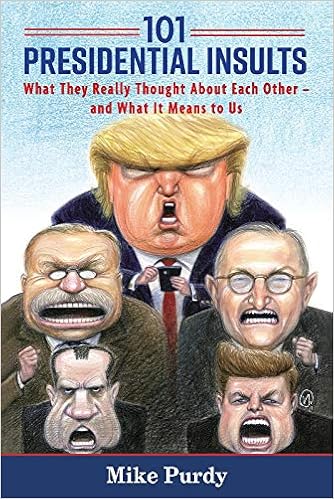
Now he has added to his already impressive resume with a slim but nifty little volume entitled: 101 Presidential Insults: What They Really Thought About Each Other – and What It Means to Us.
This is one of those books that should be in every library, and a dandy little gift for any politics-lover who wants a quick, snappy and amusing read!

This is about Presidents on Presidents. Some commented on a past president, some on a man who eventually became president. Even George Washington found a few choice words to criticize James Monroe!

Personally volatile POTUSES like the Andrews (Jackson and Johnson) are are only minimally included, although I suspect author Purdy made a valiant effort to track down some slamming-damning quotes from them. James Monroe, John Tyler, James Knox Polk and Zachary Taylor were able to keep their venom contained. Likewise Chet Arthur, Grover Cleveland and Benjamin Harrison. And Calvin Coolidge wasn’t nicknamed “Silent Cal” for nothing.

What is particularly delicious about the book is its glossary of insults, consistent with the mores of past times. Few early presidents would stoop to using profanity in public – whether written or verbal. About as profane as they might get, would be “damn fool.” Tame, by today’s standards.

Some of the choice creations of literacy come from Theodore Roosevelt, whose dandy way with words surpasses most of our POTUSES. He quotably considered that William McKinley (his boss at the time) had the backbone of a chocolate eclair. He called Woodrow Wilson a Byzantine logothete. (And when was the last time YOU used that phrase in conversation?) He also called him a “lily-livered skunk.” (Take that, you varmint!) Even his ex-best friend, William Howard Taft couldn’t escape TR’s wrath: he called him a “puzzlewit.” Would that all insults today could be said so elegantly, and with no need for the ubiquitous “bleeping.”

Harry Truman, one of our most outspoken and salty Presidents, liked history, and was not above taking spot-on aim at a few of his predecessors, and not without some truth. Calling Millard Fillmore a man who “swayed with the breeze” or Franklin Pierce as “a complete fizzle,” might be expected, but dismissing James Madison, the Father of our Constitution as someone “who couldn’t make up his mind” (according to Harry), is downright disrespectful. He was not much kinder to his successors, claiming that Ike didn’t “know any more about politics than a pig does about Sunday.” That he thought poorly of Richard Nixon might also be expected – many people had unkind words for him. But he was also unsparing about his immediate predecessor, FDR, commenting “he didn’t give a damn personally for me or you or anyone else in the world as far as I could see.”

But all Presidents need to take it on the chin as well as fire the first shot. Ike called Harry “a congenital liar;” Nixon called HST’s term in office a Scandal-a-Day Administration.

So what does it mean to us? Presidents are people, the same as we are, with the same failings and foibles and stuff that makes us human. None of them knew when they were in grammar school, that one day they would be First Occupant. Some had occasional lapses of good judgment. Some believed their “confidential” remarks to friends or even to their diaries (like the venomous John Quincy Adams) would remain private – forever! (Silly them!)

Even George Washington and Abraham Lincoln, on the highest altar of Presidents, had tempers that were occasionally lost, and opinions that occasionally were not kept to themselves. Today, with the pervasive influx of various social media, the frenzied need for being in some kind of a “loop,” and the total disregard for anything that resembles privacy and respect, the boundaries have changed dramatically. The better angels of our collective vocabulary are gone with the dodo.

Mud slinging has been around as long as there was mud and people had discovered language. Different generations might use different language but it is still the same old mud. As Harry Truman also said, “There is nothing new under the sun except the history we don’t know.”

Mike Purdy has given us a wonderful little glimpse into the darker presidential vocabulary, and we can enjoy it. Best of all, we can leave this book on the table without fearing our children’s corruption. But he also implores us in his introduction for our need to “reset our political discourse from one of rancor to respect.” Good idea. Second the motion! Good book, too!

Available on most online sites!

101 Presidential Insults: What They Really Thought About Each Other – and What It Means to Us.

Author: Mike Purdy

Publisher: BookBaby

ISBN-10: 1543963749

ISBN-13: 978-1543963748


Posted in A POTUS-FLOTUS Blog, Recommended Reading | Tagged , , , , , , , | Leave a comment

Florence Harding And The Knife in her Back

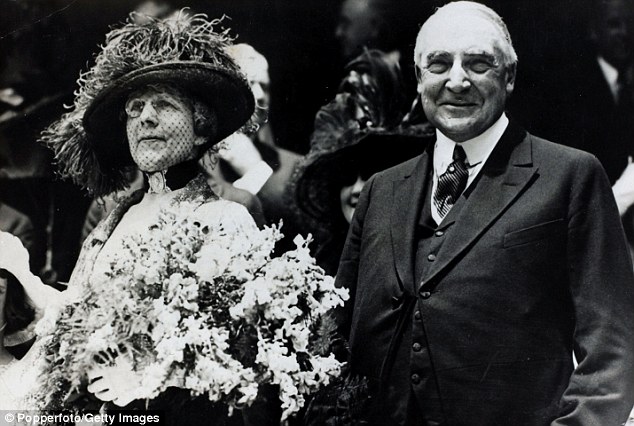
The political Hardings.

Warren Harding’s wife was difficult, but his paramours were no picnics either!

Warren the Romeo

Most citizens of Marion, Ohio in the late-1880s considered Warren Gamaleil Harding one of the handsomest young men in town, plus affable and easy-to-like.

harding w-moustache

Warren Harding with a mustache

When he first appeared on the Marion scene, he was somewhat at a loss of vocation. Having spent a little time working for a printer and finding the work pleasant, he bought into The Marion Star, a small weekly newspaper. In time, it would become a major Ohio daily.

FlorenceHarding

Florence Harding in her younger days.

The handsome young fellow had his choice of female companions, but always gravitated to the fast lane. A local divorcee five years his senior chose him. Florence Kling DeWolfe was the daughter of a rich-but-tyrannical father, average looking, and tough as nails. She was the ardent pursuer in the relationship. When they married he was 25, she was 30.

It was never a happy marriage, but each brought something the other needed. She needed renewed respectability following her disastrous first marriage, suspected to be common-law. He needed constant prodding to achieve any kind of success.

Her new mother-in-law advised Florence to “keep the icebox full, and keep a sharp eye on Warren.” It was sage advice. The bride learned early on that her husband had a wandering eye, and the rest of him usually followed. There were rows. There were promises. And nothing ever changed.

Even before the serious nephritis that claimed one of Florence’s kidneys, and cost their marriage bed, Warren was eyeing the local ladies. It was rumored that he fathered a child with an old friend of the “Duchess”, as he called his wife. And that was not the only amour.

But as her kidney ailment, complicated by heart problems, became serious, there was a gradual tacit understanding. As long as WH was discreet and only casually involved, FH could turn a blind eye.

Jim and Carrie Phillips

young carrie

Carrie Phillips

Around the turn of the 20th century, Jim and Carrie Phillips moved to Marion. She was an attractive woman in her late 20s; he owned a successful dry goods store. They became socially active, and in due course met their near-neighbors, Warren and Florence Harding. Having joined the same civic-business associations as the now-successful newspaper publisher, Jim Phillips became a major advertiser in The Marion Star. Florence Harding became pleasantly acquainted with Carrie.

Warren Harding and Carrie Phillips: a composite

By 1905, Harding had also become active in Ohio Republican politics, served as a state legislator, and then a term as Lt. Governor. Also around 1905, Carrie and Jim lost a baby son. It is believed that in consoling the bereaved mother, the relationship between the handsome newspaperman and the pretty housewife changed. Unbeknownst to Mr. Phillips and Mrs. Harding, Carrie and Warren began a steamy and passionate love affair. It was fairly discreet, but definitely not casual. Most historians consider her the love of his life. It went on for the better part of ten years, and then some, substantiated more than half a century later by hundreds of explicit and erotic love letters he wrote her.

The Dagger in her Heart

Despite a 13-year difference in their ages, the friendship between Florence and Carrie had become strong, filling an important gap in the Duchess’ life. She never had many friends, and now she had someone to enjoy “girl” things with. Exchanging recipes, going shopping or to the hairdresser.

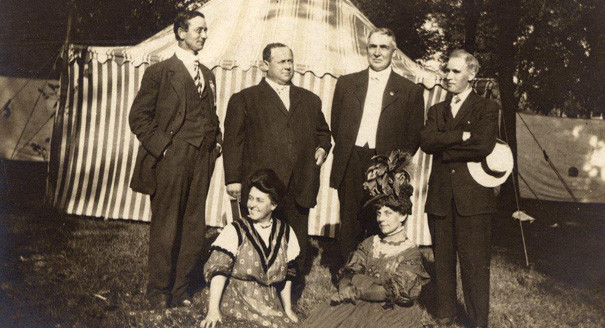
The Phillipses and the Hardings and two unidentified men.

For a decade, the two couples were dear friends, having dinners, going to parties and civic events – and even vacationing abroad together. There is one story that en route to Europe, Harding and Carrie waited until their spouses were soundly sleeping, and then slipped off for a secret tryst.

Carrie Phillips, in her own way, was just as tough as The Duchess. Self-centered and confident of her sexuality, she not only carried on with Warren, but with other lovers (and let Warren know about it), all the while demanding that Harding divorce his wife and marry her. She also wanted him to forego politics, which she hated. She claimed it took up too much of his time. Warren Harding, who seldom could say no to anyone, waffled and said nothing, except that his wife was a very sick woman, and likely to die. If that happened, he would gladly marry Carrie. Foregoing politics was something else.

duchess

Florence Harding was one tough cookie!

It was Carrie who was believed to be responsible for deliberately letting the long-time affair come to Florence’s attention. As might be expected, The Duchess went ballistic, and seriously considered divorce. After all, she was the injured party. But after a few days, her rage turned to ice. She had already been divorced and had worked hard to redeem her reputation. A second divorce would ruin her forever. Where would she go? What would she do? How would she live, especially with poor health? Besides, she enjoyed her active role in the newspaper business, and she loved politics as much as her husband. There would be no divorce. Warren Harding also seemed disinclined to pursue it.

Florence never spoke to Carrie Phillips again – at least not intentionally. One embarrassing story claims the two women met by accident in a public place, and they went at it like cats in the back alley.

Florence Harding had lost her best friend. Now she had no one to talk with or to confide in. She had no shopping companion, lunch-buddy and chit-chatter about girl-stuff. The scars from her husband’s repeated infidelities had toughened the already tough woman, and she was used to it. But this injury was traumatic.

She would never let anything or anyone hurt her again.

Sources:

Anthony, Carl Sferrazza – The First Lady, the Jazz Age, and the Death of America’s Most Scandalous President – William Morrow, 1998

Anthony, Carl Sferrazza  –First Ladies 1789-1961, William Morrow,1990

Robenalt, James David – The Harding Affair: Love and Espionage During the Great War – Palgrave Macmillan, 2011

Russell, Francis – The Shadow of Blooming Grove: Warren G. Harding in His Times – McGraw Hill, 1968

http://www.firstladies.org/biographies/firstladies.aspx?biography=30

Posted in A POTUS-FLOTUS Blog, Nifty History People, Warren G. Harding | Tagged , , , , , , , , , , , , , , , , , , , , | 4 Comments

Enthroned Washington: The Naked George

older-gw.jpegThesis: Where there is art, there are art critics. Corollary: Everybody is a critic.

Commemorating George Washington

Houdon's Washington

The most famous statue of GW is in the Virginia State House

Statues commemorating heroes and saints, sages and scenes of glory have been around since antiquity. It was only natural that when the State of Virginia wanted to honor its favorite son, circa 1785, the master French sculptor Jean-Antoine Houdon was commissioned. He traveled to Mount Vernon to take the General’s measure, literally as well as figuratively. Then he broke all traditional artistic preconceptions, and depicted him fully dressed in his “modern” uniform, with a few discreet allegorical references. It was intended for, and indeed still remains, in the rotunda of the Virginia State House.

By 1832, the centenary of Washington’s birth, Congress was desirous of a statue to grace the rotunda of the Capitol Building, in the City that bears his name. Also, by that time, there was a growing cadre of fine American artists and sculptors. Horatio Greenough (1805-1852), born and raised in Boston and a Harvard graduate, was among them. Despite his academic education, his natural talents led him to art, and, as practically required, living in Italy to study with the masters.

Horatio Greenough

Horatio Greenough, painted by Rembrandt Peale

When Congress commissioned 27-year-old Greenough, they had a few caveats. They wanted Washington to be “larger than life.” They also wanted him to be seated, honoring his statesmanship, as opposed to military accomplishments. And they were prepared to pay the opulent sum of $5000.

The Very Expensive Statue

Greenough was a competent sculptor with a fair body of work during his short life. He died at only 47. But as an accomplished academician, he was also bound to traditional and classical stylistic conceptions. As was popular during that neoclassical period devoted to antiquity, he modeled his creation after the Statue of Zeus, sculpted by Phidias, and considered one of the Seven Wonders of the Ancient World.

The statue of Zeus

An “imagined” statue of Zeus, one of the Ancient Wonders. It was destroyed in the 4th Century AD for it’s gold.

Greenough ordered the finest Carrera marble, and produced it entirely in his studio in Florence. It took him eight years. He was so proud of it, that he engraved it on the back, in Latin, “Horatio Greenough made this image as a great example of freedom, which will not survive without freedom itself.”

When he wrote and advised Congress that “Enthroned Washington” (as he titled it) was ready to be shipped, Congress was faced with a problem: getting it from Italy to the USA. In 1840, it was daunting, and Congress dickered and debated for weeks. Finally, they agreed to send an American man-of-war to bring George home. More money.

Another problem: getting the statue from Florence to the port city of Genoa for shipping. It weighed more than twelve tons. It took twenty-two yoke of oxen several days to haul George over the unpaved mountainous Italian roads. Seriously not cheap. One story says that the peasants en route believed the statue to be of some saint, and they knelt and genuflected as it passed by. Maybe.

Yet another problem: When the statue finally arrived in Genoa, they discovered George was much too large for the hatch of the man-of-war sent to bring him home. A merchant vessel with large enough capacity had to be refitted and chartered. More money. A lot more money.

The Trouble With George

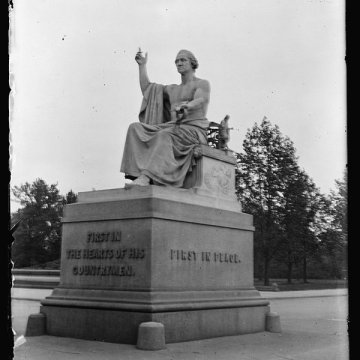
Enthroned Washington

Finally, Enthroned Washington arrived at the Washington Navy Yard in 1841. A committee of select Congressmen were designated to formally “receive” the statue. They were horrified to find the Great George Washington was indeed seated (as authorized), but naked to the waist, with a robe in his lap and a section of a toga draping his right bicep. His bare feet were also in full view.

Virginia statesman (and later Governor) Henry Wise commented, “The man does not live and never did live, who saw Washington without his shirt.” (He didn’t say anything about his bare feet, although it is likely that only his servants and Martha ever saw him without his boots, either.)

As word got around about this “un-Washingtonian” image, it appeared that most of the country were like-minded of the sentiment, and convinced that George himself would despair.

Meanwhile, there was another problem: getting the huge statue from the Navy Yard to the Capitol. It cost another $5000. Then, as they finally were about to enshrine George in the Rotunda, they discovered that he was too large for the Capitol doors, and the masonry had to be cut to accommodate the massive statue. Once placed in its reserved spot however, the floor began to sink, so a massive and expensive pedestal was built for additional support.

It did not take too long for Congress to decide that the Rotunda was not really suitable, so George was removed and replaced outside the Capitol Building. Over the next thirty five years, it was moved a few times, and by the mid-1880s, had already cost the country upward of $42,000.This image has an empty alt attribute; its file name is enthronedwashington-outdoors.jpg

It had also become a laughing-stock, albeit a respectful one. One jokester, according to Frank Carpenter, a Washington journalist, commented on the outstretched sword in the statue’s left hand and his right hand pointing heavenward. He was sure George Washington is demanding, “Take my sword if you will, but bring me some clothes!” DC winter winds can be bitter cold! And then, of course, the city is full of pigeons.

It was unintended, but it was a scandal.

George’s Final Resting Place

Moving Enthroned Washington to the Smithsonian. A massive undertaking!

By 1908, with snow, wind, weather and exposure, some cracks were discovered in the back of the statue, and the “authorities” decided George needed to come back indoors. The Washington Evening Star commented diplomatically, that the statue looks “pitiful out in the cold.” The original “castle” of the Smithsonian Institution was deemed the perfect location. The cost to remove, ship and re-install the statue was staggering.

In 1963, it was finally moved at a cost that dwarfed all the others, to the second floor of the Smithsonian’s new Museum of American History, still seated, naked to the waist. You can see it today if you like. We paid a helluva lot of money for it!

Sources;

Carpenter, Frank G. – Carp’s Washington – McGraw-Hill, 1960.

https://www.atlasobscura.com/places/bare-chested-george-washington

https://www.mountvernon.org/library/digitalhistory/digital-encyclopedia/article/horatio-greenough/

Posted in A POTUS-FLOTUS Blog, George Washington, Nifty History People | Tagged , , , , , , , , , , , , , , , , , | Leave a comment

Governor Theodore Roosevelt: Kicked Upstairs

roughridingWhen the Spanish-American War ended in 1898, Theodore Roosevelt was a hero!

TR: The Rough Rider

rough rider

Rough Rider TR

Theodore Roosevelt, was a New York Knickerbocker, Harvard graduate, Republican state legislator, cowboy, Civil Service Commissioner and Assistant Secretary of the Navy under President William McKinley when tensions in Cuba escalated over cruel Spanish rule.

When war was officially declared, he resigned his position, and formed a volunteer cavalry brigade, consisting of the many sides of his personality: New York politicians and policemen, cowboys from “out west,” and Ivy League college fellows. Nicknamed “Rough Riders,” TR’s innate commanding personality maneuvered them to the forefront, and they won a widely publicized victory on San Juan Hill. If he was well-known before, Colonel Roosevelt was now a household name.

The “war” was mercifully short, but the rampant yellow fever and assorted tropical diseases kept the soldiers quarantined on Long Island. For the better part of six weeks, Republican politicians, civic leaders, reformers and newspapermen trekked out to Montauk Point to discuss Colonel TR’s future plans: specifically, his availability as a Gubernatorial candidate.

It was not as simple as it sounded. Barely forty, TR was a well-known maverick. Political parties loathe mavericks – people they cannot control. The reformers loved him, but they worried about the influence of the political bosses. And TR himself, a very savvy politician, knew he could not win an election without a major party behind him – or govern effectively (should he win), without the latitude of his own agenda.

Tom Platt: The Easy Boss

Thomas Platt, the “Easy” Boss

Thomas Platt (1833-1910) was a US Senator and the titular head of the New York Republican Party for more than a decade in 1898. He was nicknamed “the Easy Boss” because of his genial nature, and the fact that he did not “rule” with a heavy hand. A businessman by profession (as opposed to a lawyer), he was shrewd, but willing to listen, to accommodate when/if feasible, insisting he only wanted what was best for New York. It was he who helped incorporate the boroughs of Brooklyn, Staten Island and Queens into what is now Greater New York.

“Boss” Platt, who had known Roosevelt for a dozen years, was none too thrilled about backing him as the Republican candidate. He was wary, knowing TR was not a man who could or would “toe a party line.” He might even undermine his influence and power, which was considerable.

But political bosses know their politics inside and out, and usually have a shiny crystal ball into their party’s future success – or failure. NY Republicans in 1898 were having hard times. The newspapers were filled with scandals and corruption that had been uncovered “on their watch.” Reform was in the air. The Democrats were sure to win. Their squeaky-clean, well-respected candidate was Justice Augustus Van Wyck.

Unless, of course, the GOP could come up with a sure-winner!

Platt sent an emissary to Montauk.

Governor TR

young TR

Republican Governor Theodore Roosevelt

Both TR and Platt knew each other much too well to actually demand “latitude” (TR) or party-loyalty-above-all (Platt).

TR was interested in the Governorship, believing he could actually accomplish some good in Albany. It was also a two-year position, which also appealed to him. Other options might present themselves.

TR was breaking all records in popularity and prestige and Platt needed a winner. All he asked for, in return for the GOP’s political support, was that he be consulted about political matters and major appointments.

Consulted is an open word. “A” respectfully asks for “B’s” input/opinion; “B” respectfully obliges, but the bottom line is that “A” is not bound to act according to “B.” At least, that was TR’s understanding of the word. He was happy to tell Tom Platt that he would oblige and consult him often. But he would run a clean campaign, and if elected, a clean administration.

Platt was happy – sort of. The Republican Party supported TR.

He campaigned vigorously, as only TR could, but it was a squeaker! He won by just 1% of the vote. As expected, he governed as vigorously as only TR could.

During the two years of his governorship, he held twice-daily press conferences, levied taxes on public utility franchises (i.e. streetcar companies) that derived their franchise from the state. He signed legislation to improve civil service reform, set wage-hour standards, raised teachers’ salaries, outlawed racial segregation in public schools, expanded the state’s forest preserves, established the Palisades Interstate Park, reformed the Fish and Game Service, and strengthened banking and insurance laws.

TR also quickly learned to “consult” Platt regarding “appointments” by offering him a list of viable candidates to choose from.

But it was not working. The Governor was giving the machine politician grief. Platt and the party he controlled were being softly undermined. They could not handle another two years of Roosevelt.

”Kicked Upstairs”

garret hobart

The late VP Garret Hobart

In 1896, Garret Hobart of New Jersey (1844-99) was elected William McKinley’s Vice President. The two men became close personal friends as well as colleagues. Hobart, a stranger to political Washington, had also gained the respect of both sides of Congress. When McKinley was considering a second term, Hobart as Vice President was a given. But at only 55, Hobart suffered a massive heart attack and died. The position was open.

In 1900, the Vice Presidency was inconsequential. Honorable and ceremonial, but a political dead-end. Even the VPOTUSes who assumed the Presidency were considered inconsequential, and never even nominated for terms of their own. Hobart’s death was a golden opportunity for Platt to rid himself of his troublesome Governor. He convinced the politicians that Theodore Roosevelt was the perfect running mate for McKinley.

McKinley and Roosevelt in 1900

TR wanted the Vice Presidency as much as he wanted to hang by his thumbs; he had his eye in the top spot for 1904. But Platt, who convinced the powers-that-were that TR was viable, came off smelling like a rose. TR got the nod, and smiled, and held his nose.

On Inauguration Day, 1901, The Easy Boss traveled to Washington, in his own words, “to see Roosevelt take the veil.” And the rest is history.

Sources:

Corry, John A. – A Rough Ride to Albany – John A. Corry Publishing, 2000

Dalton,, Kathlen – Theodore Roosevelt: A Strenuous Life – 2004, Vintage

Roosevelt, Theodore- The Rough Riders – Desert Publications (Reprint) 1992

http://www.theodorerooseveltcenter.org/

https://hallofgovernors.ny.gov/TheodoreRoosevelt

https://www.encyclopedia.com/people/history/us-history-biographies/thomas-collier-platt


Posted in A POTUS-FLOTUS Blog, Theodore Roosevelt, William McKinley | Tagged , , , , , , , , , , , , , , , , , , , , | 1 Comment

Chet Arthur, Tiffany and the 19-Year Screen

The dapper and fastidious Chester Alan Arthur

No question about it, the White House receives a great deal of wear and tear.

Chester A. Arthur: Accidental President

Few people would have ever believed that Chester Alan Arthur, New York “spoilsman” politician, would ever have become President of the USA. Only a few years earlier, his name had been linked to corruption at the Customs House in the Port of New York. While CAA’s personal honesty was vindicated, huge graft and malfeasance had been committed on his watch. He was summarily dismissed.

New York politician Chester Alan Arthur

Nevertheless, he had been, and continued to be, a wealthy attorney and politician. Following the political scandals in the Grant Administration, the Republican party imploded into various factions, and Arthur’s name was eventually floated as an accommodation to mend said factional fences. A Vice Presidency was an insignificant office throughout the 19th century; honorable and ceremonial, but with little impact.

In 1880, James Garfield, another dark horse in the field, won the Presidency; Chet Arthur was now Vice President. When Garfield died six months after his inauguration from an assassin’s bullet, CAA was now POTUS.

Washington political insiders thought poorly of him. The general public knew little other than his reputation as a well-mannered and bewhiskered political hack.

What he was, however, was elegant. Recently widowed at fifty, he was independently well-to-do, with very high standards for his surroundings.

The White House in 1881

The White House in 1882

Nearly every 19th century President inherited a shabby Executive Mansion. Early Presidents were expected to bring their own furniture, although after the “burning of the White House” during the War of 1812, some items were obtained as a permanent part of the house.

The physical upkeep of the White House was always a separate budget item. Congress made sure the mansion was painted regularly and that the grounds were well kept. But the decor, especially in the “public” rooms, took hard wear. Table and chair legs wobbled, furniture was stained. Carpets were worn, and in some places, threadbare. Visitors to public receptions regularly clipped fabric from drapes or cushions for souvenirs. Nearly every administration had a real need to “re-do,” and periodically Congress came through with some money. Most Presidents, cognizant of the expense and temporary occupancy, only fixed the essentials.

When Chester Alan Arthur (1829-1886) assumed the Presidency, the public rooms were dated and dingy. To CAA, that was not an option. He refused to move in until changes were made. It was the Gilded Age. Money was available. Congress obliged and allocated funds.

Louis Comfort Tiffany

Louis Comfort Tiffany, artist, artisan and decorator

Louis Comfort Tiffany (1848-1933) was to decorative arts like Henry Ford was to motor cars. The son of Charles Tiffany, premier jeweler of New York City, LCT demonstrated artistic talents at a very young age. Following a basic education, he studied painting with George Inness, and at various art academies.

Early on, he became enamored with glass making, the Art Nouveau artistic movement, and interior decor in general. With the Tiffany name and money as well as his own talents and leadership, he opened his own glass making Tiffany Studios in 1878. His creations became popular among the wealthy. An opportunity to redecorate the Mark Twain House in Hartford, CT made the young man’s reputation, as well as his personal fortune.

The Tiffany Screen

President Chester Arthur sent for America’s 32-year-old premier designer and decorator. Tiffany was tasked to select the carpeting and fabrics and furnishings for many of the public rooms, but the piece de resistance, was a 50-foot long stained glass screen supported by faux-marble columns, for the downstairs corridor.

The entrance hall with the Tiffany screen

Another view of the entrance hall with the Tiffany screen

An old architectural screen had been commissioned for the corridor by President Martin Van Buren some 45-years earlier to block the draft, but while the structure was still solid and reusable, the panels were plain glass.

Young Tiffany had become expert with bits of opalescent colored glass enclosed by a metal casing, and fashioning them into a mosaic of flowers, birds and scenes of nature, creating true works of art, whether it be lamp shades or stained glass windows. Completed and installed in 1883, the screen for the White House corridor, incorporating eagles and flags, was his masterpiece, luminescent in the evening, when the gaslights of the White House chandeliers were lit. It was magnificent, especially since it reflected light from both sides of the panels.

The memorial window for Ellen Arthur

As an aside, President Arthur also became enamored with stained glass. Coincidental to the Tiffany screen, St. John’s Church, across Lafayette Park, had engaged a French firm to design and install stained glass windows. The President endowed one of those windows in memory of his wife who had died in early 1880.

A half dozen years later, under the Benjamin Harrison Administration, electric lights became part of the White House. The harsher light seemed to negate the vibrant colors of the screen, and electric light was deemed more important than a beautiful screen.

Only nineteen years after it appeared on the ground floor of the White House, the Tiffany screen was removed by the Theodore Roosevelt Administration, as part of a huge renovation project. (The Conservatory with its beautiful plants and flowers was also a casualty. The area was used for the West Wing, also deemed more necessary.)

Later and Still Later

The Tiffany screen was dismantled in 1902, and subsequently was lost in a fire.

The Tiffany Screen, as painted by Peter Waddell

In 2007, however, contemporary artist Peter Waddell was commissioned by the White House Historical Association to recreate, on canvas, the glory that was the Tiffany Screen. Painstakingly researching the various colors on the many Tiffany glass palettes, a 55”x72” painting depicts what is consider by many, one of the lost treasures of the White House.

The stained glass window at St. John’s Church, dedicated to the memory of Ellen Herndon Arthur, is still there.

Sources:

Barzman, Sol – Madmen & Geniuses: The Vice-Presidents of the United States – Follett Publishing, 1974

Greenberger, Scott S. – The Unexpected President: The Life and Times of Chester Alan Arthur, De Capo Press, 2017

https://www.whitehousehistory.org/press-room/press-fact-sheets/decorating-the-white-house

https://www.biography.com/people/louis-tiffany-9507399

https://www.whitehouse.gov/about-the-white-house/presidents/chester-a-arthur/

https://www.whitehousehistory.org/the-grand-illumination-sunset-of-the-gaslight-age-1891-by-peter-waddell

Posted in A POTUS-FLOTUS Blog, Chester Arthur | Tagged , , , , , , , , , , , , , , , , , , , , , , | 1 Comment

Franklin and Eleanor: The Chasm

Young Mr. and Mrs. Roosevelt

Franklin Delano Roosevelt was a 5th cousin to Eleanor Roosevelt.

The Commonalities of Childhood

Descended from Dutch ancestors slightly post-Mayflower, both Franklin and Eleanor Roosevelts were New York Knickerbockers, an aristocratic old-line status.

Both Franklin (1882-1945) and Eleanor (1883-1961) came from wealthy and privileged families: Franklin from the Hyde Park-Hudson River branch, Eleanor, from the New York City branch. But past the name, rank and bank accounts, there was little commonality.

young FDR

Young Franklin Roosevelt

Franklin was the only child of the second marriage of his much older father. His doting mother doted, and most of his youth was spent in adult company. He developed a self-assured and outgoing personality.

young eleanor

Young Eleanor Roosevelt

Eleanor’s father Elliott, was the younger brother of Theodore, man-on-the-rise. Her mother was a well-born but remote socialite who died when Eleanor was eight. Elliott, a hopeless alcoholic, died when she was ten. Raised by a somewhat dotty maternal grandmother, Eleanor had a desolate and lonely childhood. She was shy, withdrawn and lacking in confidence.

But both were intelligent, well-educated, and raised according to the late Victorian social conventions.

Franklin and Eleanor: The Early Years

The distant family connections between the Roosevelt branches precluded close or frequent contact (although young Elliott stood godfather to infant Franklin). But when Franklin was studying at Harvard, and Eleanor, having made her obligatory society debut, was volunteering her time at a settlement house on New York’s Lower East Side, they met by chance, and recognized each other from a previous gathering.

They became friends from the start, finding commonalities of character, interest and the qualities both had hidden beneath the superficialities. They fell in love.

Sara Delano Roosevelt was a doting mother.

By this time, Franklin’s father had died, and his mother was less than enthusiastic about an early marriage. She was also disapproving of Eleanor: physically plain, inward, and her inheritance (while substantial) was inadequate for Sara Delano. She made several attempts to maneuver out-of-sight to connect with out-of-mind.

It didn’t work. They maintained their relationship, and married in 1905. Uncle Theodore, now the Republican POTUS, gave the bride away.

The growing differences between their personalities was apparent early on. Franklin was naturally outgoing and accommodating, happy to live the life of ease that he had been born to. He became a lawyer, but coasted lackadaisically through junior level duties – for five years.

The young Roosevelt family

Meanwhile Eleanor, the dutiful wife, bore six children in the first ten years of marriage. One died. Her opportunities, other than the conventions of the wealthy, were limited. And boring.

Then too, they lived either with or very close to Sara Delano Roosevelt, her formidable mother-in-law. That included relinquishing household management and child-raising. Household duties can easily be done by others, and Eleanor’s maternal instincts were not as well-developed as Sara’s. “Granny,” by her own admission, raised the children; Eleanor “merely bore them.” Eleanor became resentful, and withdrew even more.

In 1911 things changed. FDR, a diffident attorney, had been recruited as a candidate for the New York State Senate – on the Democratic ticket. With “Uncle” Theodore’s blessing, he leaped at the opportunity, won, and discovered his true calling: politics. His wife shared the interest, insights, and their mutual amusement at Sara’s disdain.

Taking an active part on behalf of Woodrow Wilson in the 1912 election (again with Uncle Theodore’s blessing), he earned himself a position as Assistant Secretary of the Navy when Wilson won. It was a post held 25 years earlier by TR.

They moved to Washington, DC. Without Sara.

The Widening Chasm

Lucy Mercer

While FDR (as he was beginning to be called) slipped easily into his new role, Eleanor was still at loose ends. She was expected to pay and receive social calls, which she considered a pointless waste of time. But her schedule was filled with so many obligatory activities that a part-time social secretary was engaged.

Meanwhile, according to their eldest son James many years later, after their youngest son was born in early 1916, and having done her duty in the procreation department, Eleanor announced that she did not want any more children.

In 1916, birth control was controversial – and even taboo. It had originally been encouraged for those who could not afford the children, let alone the mothers whose health and strength were ebbing quickly. Eleanor was not in that category. Finances were never a problem.

But Eleanor was a conventional woman – then. If a woman did not want children, the only solution was separate rooms, sometimes with a lock on the door.

The Roosevelt family

They were still young. FDR was 34; Eleanor not quite 33. She apparently did not care about the physical intimacy. He, perhaps, felt the void.

Her happiest times were at their summer house on Campobello Island. It was hers to run, sans Sara. FDR joined them from time to time when his duties in Washington permitted. Nevertheless, he was always the “fun” parent; she, the dependable one.

The Chasm Erodes

When the War in Europe (WWI) began, and with a half dozen servants to tend to their house and the babies, Eleanor began volunteering some time via her one true-love: being useful. She made sandwiches and poured coffee for departing doughboys, and later assumed management for some of the Red Cross stations. She found it far more fulfilling than the mundane and useless day-to-day social activities she hated but where he was comfortable.

The chasm had been there for a long time. Whether or not they were consciously aware of it, Franklin and Eleanor had grown apart.  The lifestyle he enjoyed, she loathed. Her social secretary, Lucy Mercer, still in her early twenties, was pretty, well born, and trained to societal conventions.

Lucy was enchanted by the charming and handsome FDR; he found the young woman an engaging escort when Eleanor was out of town.

It was most likely unintentional, but they fell in love.

Sources:


Posted in A POTUS-FLOTUS Blog, Franklin D. Roosevelt, Nifty History People | Tagged , , , , , , , , , , , , , , , , , , , , | Leave a comment