The Monroe Plateau

…Arguably the second oldest permanent possession of the White House…

The Return of the White House

George Washington’s portrait has been in the White House for more than 200 years.

Shortly after Dolley Madison “rescued” the Gilbert Stuart portrait of George Washington (the oldest possession)  in 1814, British soldiers torched the White House, as well as other buildings in Washington. The Madisons never lived there again. The house required extensive repair. Between the fire damage, the smoke damage, and the water damage (from the providential hurricane that extinguished the flames) the mansion was not fit to live in for nearly three years.

President James Monroe

In 1816, James Monroe was elected 5th President. He duly took the oath of office on March 4, 1817, but did not move into the president’s house till fall. By that time, the sandstone building, still bearing the scars of its trauma, was painted white, leading to its venerable nickname.

Early presidents were expected to bring their own furniture. At least their own personal furniture for their private rooms. Congress appropriated funds for house maintenance and servants, and some decorative touches, such as carpeting and draperies, and sufficient tables and chairs for important visitors. 

The Tasteful and Formal Monroe

James Monroe (1758-1831) was born into Virginia gentry, but gentry of modest means. Orphaned early, he was raised/mentored by a benevolent uncle. He dropped out of William and Mary at the onset of the American Revolution, and distinguished himself as a scout and soldier, was wounded, earning a treasured letter of recommendation from General Washington himself. 

Having been promoted to Colonel, Monroe found himself promoted out of a job. There were plenty of colonels and not enough soldiers. He took advantage of this lull in his fortunes to read law with the Virginia Governor – Thomas Jefferson. 

James and Elizabeth Monroe traveled in very high European circles.

Monroe was elected to the Confederation Congress, the Constitutional Convention, and even served a couple of terms as Governor of Virginia. Then he took further advantage of the lull to become active in politics, hold public office, and marry Elizabeth Kortright, the young daughter of a British Soldier who, following the French and Indian War, opted to remain in New York.

But most important to his career, and possibly to his own persona, was his decades long (intermittent) service as minister to France, England and Spain. It was in those great capitals of Europe where he was exposed to “high culture.” 

The Plateau

As President, Monroe brought several pieces of personal furniture to the Executive Mansion, most of which he had purchased in France. He also brought a list of fine French merchants whose goods and services might be required in the future.

Congress was generous with the new President in 1817. The country was growing quickly; the economy was expanding; and they knew first hand that the poor old now-white House needed stuff. Having spent considerable time among kings and emperors, Monroe had a very good idea of what stuff would be expected from an upstart little backwoods country (the USA) if they wanted to treat on an equal level with the grandest in the world (Europe). Since the President of the United States was a head of state, full counterpart to said kings and emperors, Monroe would set the American style and the tone of how to impress.

The Plateau in the un-enlarged State Dining Room.

Elegant dinners were an absolute. They still are. Dignitaries come in their finest clothing to be treated to the finest of food and its preparation. The finest of wines, spirits and brandies. Impeccable service. And if the White House State dining room (which, by the way, has changed venues and has been enlarged a few times) is the showplace of the White House, the table setting itself, china, crystal and silver, is its jewelry box. In every administration.

When not in use, a small setting with sections of the Plateau, decorates the State Dining Room

In addition to the above tableware which is periodically replaced, Monroe ordered a low, footed, mirrored centerpiece server from France, which came in seven separate sections, to be used in part or in full as need be – and has never been replaced. He paid 6000 francs, or about $200 – back then. It would equal around $4000 today and is still a great bargain. Called thereafter the Monroe Plateau, the design was not a new one, and was functional. George Washington was known to have a mirrored centerpiece, and it is still part of the Mount Vernon inventory.

It was still an age of candlelight, the only form of indoor night-illumination other than a fireplace. Placing a mirrored centerpiece on a table, centered underneath a grand chandelier blazing with a dozen or more candles, it reflects the light multi-fold. 

More Plateau…

The original Bacchanals to adorn the Plateau.

The Monroe Plateau was gilded bronze, and stretched to its fullest was 2 feet wide, by nearly 14 feet long. Small optional figures called Bacchanals were attached to its sides to hold additional candles or flowers or table decorations. Monroe had also purchased, as plateau add-ons, some exquisite candelabra, urns and epergnes for flowers or fruits.

By 1854 however, candlelight was no longer exclusive. Gaslight and oil was available, less costly and cleaner. Cut-crystal bowls were ordered for the little figurines to hold instead of candles.

A National Treasure

Since the original State Dining Room was designed to seat only 36, the imposing Monroe Plateau was frequently used in part. The Dining room today can hold 140, and the Plateau is said to have been utilized at the most formal dinners by nearly every President since Monroe.

P.S. One POTUS who didn’t like it, was Andrew Jackson, who consigned it to a storeroom. POTUS Martin Van Buren, more aesthetically inclined, not only rescued it, but had it re-gilded.

It may have cost the country $200, but it is priceless.

Sources:

Jeffries, Ona Griffin – In and Out of the White House – Wilfred Funk, Inc. – 1960

https://www.whitehousehistory.org/photos/treasures-of-the-white-house-monroe-plateau

https://www.whitehouse.gov/about-the-white-house/presidents/james-monroe/

https://www.whitehousehistory.org/press-room/press-fact-sheets/decorating-the-white-house

Posted in A POTUS-FLOTUS Blog, Andrew Jackson, George Washington, James Monroe, Martin Van Buren | Tagged , , , , , , , , , , , , , , , , , , | 1 Comment

The Washington Monument and The Pope’s Stone

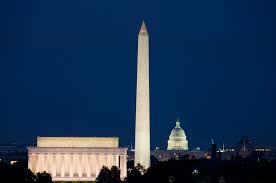
Our iconic Washington Monument

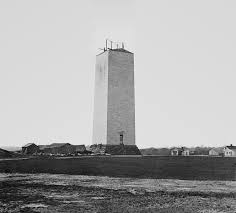
The Washington Monument took more than 40 years to build.

Planning the Monument

As one might expect, circa 1832 Congress planned to commemorate the man whose name became the nation’s capital. Dozens of ideas were proposed and debated. The arguments went on for weeks.

What our second and third generation of statesmen had in mind was a simple monument. Nothing to focus on a great general or a wise statesman. George Washington’s reputation was singular, and should stand alone.

Getting the monument started was easy enough. Finishing it took decades.

When the idea of a great obelisk was proposed, popularized by Napoleon’s conquest of Egypt in the early part of the 19th Century, there was agreement. Plain, simple, imposing and towering over the city at 555 feet. 

Funding the Monument

Congress, of course, needs the means to pay for the items/programs it commissions. This is nothing new, nor was it new then. But the wisdom of our elder statesmen had a plan to offset much of the cost:

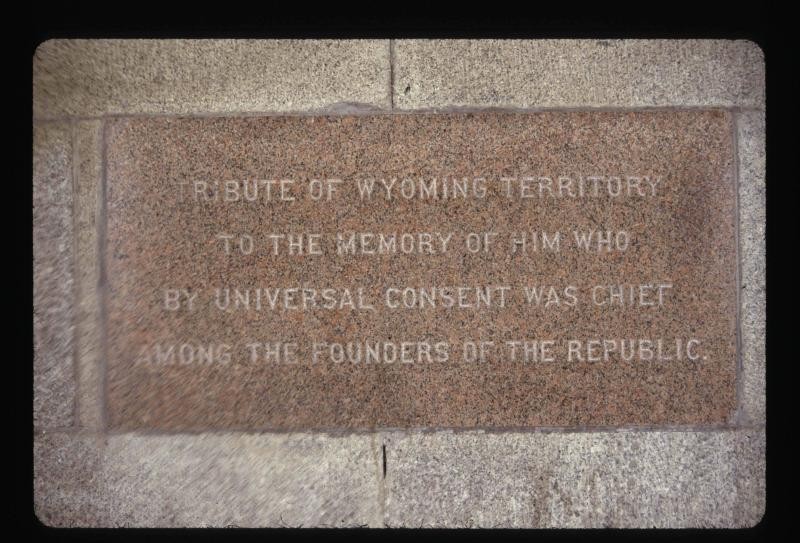
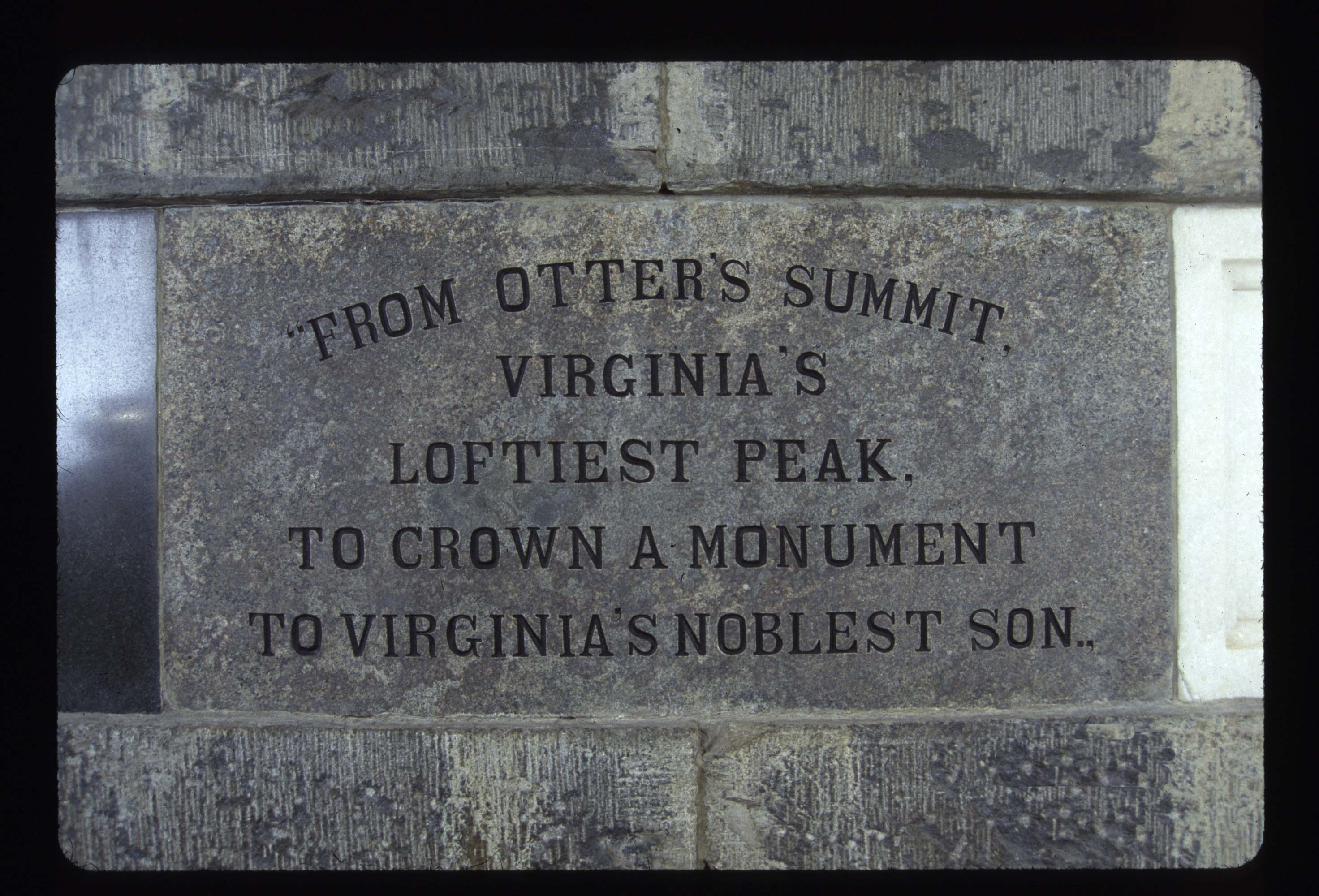
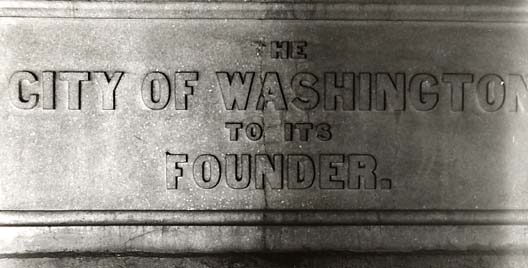
They requested “donations” of specially engraved granite blocks to be used in erecting the great obelisk. (This is like the “buy a brick” campaigns many local buildings use today.)

Individual donations of commemorative stones.

It worked. Every state and territory pledged a donation. There weren’t that many in the 1830s. Most large cities signed on. Organizations, trade guilds, and indeed any group that could raise the money for an engraved granite stone pledged their contribution of a block varying in size, but all weighing more than a ton. Stone masons were doing a booming business! There were also “donations” from foreign countries, all eager to cement cordial relationships with the USA, now past 50 years old.

Naturally this took a good deal of time: purchasing suitable (the best!) granite, determining the proper inscription, finding a master carver, and finally shipping the huge block to the obelisk site in Washington.

For fifteen years, around 200 hundred huge specially inscribed granite blocks began appearing. Happily, granite does not rot or erode, and can withstand just about whatever nature cares to throw at it (maybe).

The Ground Breaking Event & Politics

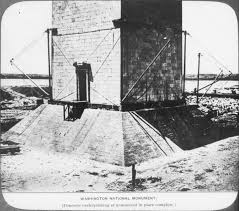
Finally, in July, 1848, a ground breaking ceremony was held to get the project off the ground – literally. President James K. Polk was on hand to lift the first shovel. The speeches and bands and church bells all performed their assigned roles, and the Washington Monument was formally underway. Hundreds of dignitaries showed up, surrounded by hundreds of granite stones. The venerable Dolley Madison was on hand to witness the great occasion.

The Monument was incomplete for nearly 40 years.

But it would take more than 30 years before it was completed. It got less than half way up, and stopped. Part of that was money. Part of that was the Civil War. And part of that was political. By the early 1850s, donations trickled to a halt.

The Pope’s Stone

The 1850s was a turbulent time in the US, destined to become even more turbulent as the decade wore on. In addition to slavery and sectionalism, there was a growing cadre of xenophobic citizens calling themselves the “American” party, but nicknamed the “Know-Nothing’s.” The nickname came from their members, who, if challenged, were instructed to claim ignorance, i.e. “I know nothing.”

The Know-Nothing’s were violently opposed to the flood of starving Irish immigrants escaping a great potato famine in Ireland. According to the “Knows” they threatened “American” jobs. Then too, most of those Irish immigrants were Catholic. Papists. Another perceived threat.

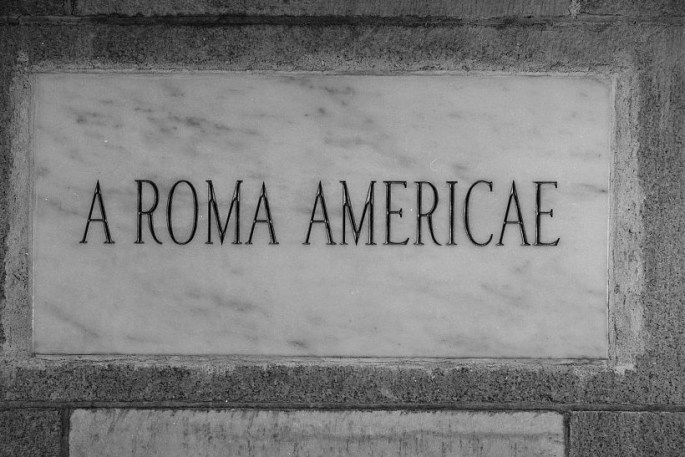
One of the commemorative Washington Monument stones sent from afar came from Pope Pius IX, who had chosen a 3-foot marble block from the ancient Temple of Concord in Rome. It was inscribed in Latin: Rome to America.

Denouncing the Stone

In 1854, a group of the Know Nothing’s decided it was anti-American to have a stone (gift or not) representing the papacy. 

The “replacement” stone from the Vatican in 1982.

On March 6, some of their members, perhaps fortified by liquid courage, found the offensive granite block and managed to cart it away. They proudly let it be known that the Pope’s Stone was no longer to be a part of the monument, but when questioned, the perpetrators “knew nothing.”

Outraged citizens investigated, and searched along the Potomac. A handsome reward of $500 was offered for information leading to the culprits! Naturally, nobody “knew anything” and no one was apprehended.

Fast Forward 30 Years and Then Some

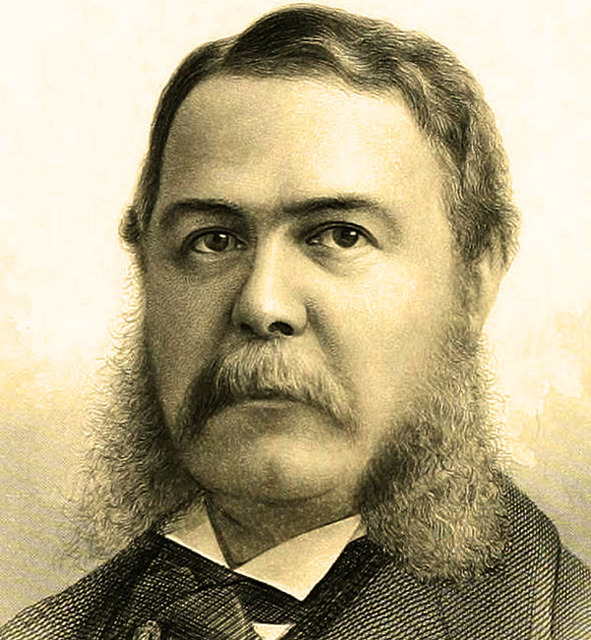
POTUS Chester Alan Arthur formally presided over the “finish” of the Monument.

Politics, the Civil War and assorted other needs took priority for decades. Finally, once the Gilded Age had settled in for a long spell, Americans decided the Washington Monument needed to be completed to get rid of the half-finished eyesore in the middle of the city. In 1876, General-President Grant decided it was an opportune time. It was finally completed in 1884, and formally opened to the public in 1888.

In 1883, an anonymous saloon-keeper contacted the Washington Post and confessed that late at night on March 5, 1854, some “Know-Nothing” members (one of which he was), drew lots, went to the site, tied up the night watchman at gunpoint, carted the stone to the Potomac where a waiting boat near the Long Bridge rowed it mid-river. Then they pushed it over the side. The saloon keeper also mentioned that on the way, many of the men had broken off small chunks of the stone to keep as prizes. Then the anonymous “confessor” directed them to a point where it could be located. They dredged and dredged, but no luck.

However, a decade later, when construction for new piers on the river was underway, lo and behold! They found its remnants. But despite dozens of “urban legends,” nobody was ever discovered to “know anything” about whodunit!

In 1982, Pope John Paul II presented a replacement marble stone. It is now housed in the Washington Monument, with all the others. You can see it.

Sources:

Carpenter, Frank G. – Carp’s Washington – McGraw Hill, 1960

https://www.washingtonpost.com/archive/local/1978/06/01/the-popes-stone-mystery-is-the-evidence-in-smithsonian/83068f83-6a28-4fdf-b14a-9f23d9f4d505/

http://www.catholicjournal.us/2015/04/18/the-popes-stone/

ttps://www.britannica.com/topic/Know-Nothing-party


Posted in A POTUS-FLOTUS Blog, Chester Arthur, George Washington, James K. Polk, Presidential Sites, Ulysses S. Grant | Tagged , , , , , , , , , , , , , , , | 1 Comment

John Quincy Adams and Anne Royall

The curmudgeon and the public nuisance: an odd couple.

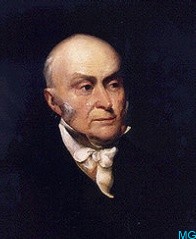
John Quincy Adams

When John Quincy Adams became President in 1825, there were few who could match his stellar credentials: A cosmopolitan European education, Harvard graduate, legislative appointments and a long career in foreign diplomacy, including eight years as Secretary of State.

Alas for JQ, his popularity as a foreign diplomat failed him completely in the “small-d” democratic US government. He was perceived to be cold, aloof, sardonic, unbending and a few other choice detrimental words. But he was no fool. He knew his shortcomings.

He also knew that his presidency, while filled with fine and far-sighted proposals, would be unpopular and disappointing.

Anne Royall, Journalist

During her long lifetime, Anne Royall (1769-1854) was considered by her contemporaries as a common scold, a termagant and other disparaging epithets. Modern historians, however, who love to nitpick and repaint history with glowing brushes, consider her a pioneer woman journalist.

Said to be Anne Royall, early female journalist

It is conceivable that both opinions, like most of history, contain pieces of true.

Her upbringing was poverty stricken, to a point that she and her widowed mother hired themselves out as servants to William Royall, an “older” gentleman. He took a fancy to the young girl, some twenty years his junior, educated her, and married her. The marriage turned out to be a happy one, albeit childless. He died and left Anne comfortably fixed, but Royall’s relatives loathed her and filed suit on grounds that the marriage was common law, and the will was in litigation for several years. Eventually it was nullified and Anne was left penniless.

With practically no funds, but possessed of a quick and frequently viper-tongued wit, strong unpopular opinions and a lively pen, she began to travel – and to write. She found readers, and made a meager living.

Anne Pursues A Pension

Somewhere along the way, perhaps due to the years of lawsuits over William Royall’s will and the poverty that hardened her, Anne became a very bitter woman.

William Royall had served in the American Revolution, and was eligible for a pension. She, as his widow, considered herself entitled to that small aid, but by law, she needed to plead her case before Congress. In person.

Congress did not believe her entitled, and despite repeated efforts, the pension did not materialize. Some indications point to Royall’s family who thwarted her every effort. Anne was virtually destitute, except for printing and publishing regular “scandal sheets,” in which congressmen and senators, judges, government officials, etc. found their names attached to questionably damaging activities – whether political or financial or “private.” She tried to sell subscriptions of her books and/or newspapers to said “subjects.” Many “subjects” considered it disguised blackmail.

John Forney wrote, “I can see her now tramping through the halls of the old Capitol, umbrella (it was a large green one) in hand, seizing upon every passerby, and offering her book for sale….Any public man who refused to buy was certain of a severe philippic in her newspaper.”

A letter from Justice Story to his wife comments, “We have the famous Mrs. Royall here, with her new novel, “The Tennesseans” which she has compelled the Chief Justice and myself to buy to avoid castigation….”

Her contemporaries in Washington painted a portrait of Anne as a hag, with a green cotton umbrella, which she carried everywhere. Her green calash dress in summer and shabby shawls and cloak in winter rendered all the more striking the wrinkled, swarthy, rawboned face of this woman who had struggled so bravely against hard times.

Books of/about that era consider Anne Royall a crazy hag with a sharp, strident voice…wearing thick worsted mittens from which “claws protruded,” always carrying her green cotton umbrella and her newspaper subscription book. She was a poor ludicrous figure, with few partisans.

In actuality, she was a woman forced by circumstances beyond her control, to live by her wits.

The JQ Swim Meet Story

The swimming “incident” – if you know who drew it, pls let me know!

It was no secret in the 1820s, that President John Quincy Adams enjoyed a vigorous early morning mile-swim in the Potomac, weather permitting. The story goes (and has been frequently repeated) that on one of those exercises, he stripped off his clothes, left them on a convenient rock, and went for a dip. Along came Anne Royall, who proceeded to sit on his clothes, keeping the POTUS in nature’s own, treading water until he promised to answer her questions, or give her the story she wanted.

Today, the waterside “interview” is considered apocryphal – although it is a tempting thought and a cute picture. But Anne did get her story and JQ did get his trousers back. She is considered the first female journalist to interview a sitting (or floating) president.

FLOTUS Louisa Adams

What is true, however, is that practically alone among his Washington contemporaries, John Quincy Adams found somewhat of a kindred soul, and she found a true friend. She was alone and maligned, and in some ways, so was he.

He did more than give her the “story” she wanted. He subscribed to her newspaper. He purchased copies of her books. He made efforts in behalf of her pension, which was finally granted nearly twenty years later and after he had died, and which was sued for once again by Royall’s family.

But perhaps most touching of all (especially for a curmudgeon), Adams honored a poor and generally ragged Anne Royall by inviting her to meet Mrs. Adams, which she did. Both JQ and Louisa Adams were always kind to the embittered and much-troubled woman. It is said that Mrs. A. gave her a white shawl.

Sources:

Boller, Paul F., Jr. – Presidential Anecdotes, Oxford University Press, 1981

Forney, John – Anecdotes of Public Men – Harper & Brothers, 1873

Jeffries, Ona Griffin – In and Out of the White House – Wilfred Funk, Inc. – 1960)

Anne Royall


Posted in A POTUS-FLOTUS Blog, John Quincy Adams, Nifty History People | Tagged , , , , , , , , , , , , , , | 1 Comment

Mary Lincoln, Good Neighbor

Mr. and Mrs. Abraham Lincoln of Springfield, IL

Stories about Mary Lincoln’s “difficult” personality abound; stories about her good deeds and genuine generosity are less common.

Miss Todd of Lexington, KY

Mary’s sister Elizabeth Edwards

Mary Todd of Lexington, KY had lived in Springfield, IL since 1837. For five years, she made her home with her sister, Mrs. Ninian Edwards, Jr. Well-placed by marriage as well as via the inherited Todd “snootiness,” Elizabeth Todd Edwards determined to bring her three full-sisters to Springfield, and marry them off to promising gentlemen, thus forming a core of suitable society in the state capital.

Miss Mary was duly introduced to the cream of the Springfield crop, and arguably her most carefree years. Her “expenses” were paid. She had no real responsibilities, including those of “housework.” She quickly gravitated to a little “coterie” of single friends, both male and female. They entertained each other at luncheons and parties, attended lectures and theatricals and whatever pleasurable activities were available in a growing town.

Mary’s acquaintanceship and subsequent courtship with Abraham Lincoln was not without flaws and tribulations. The Edwardses liked Lincoln well enough – but not as a potential family member. His background was pitiful, he had no formal education, and other than debts, had little to bring to any marriage. But the courtship rocked itself to an even keel, and the two married on November 4, 1842.

For the next eighteen years, Mary Lincoln of Springfield, Illinois lived a generally uneventful life, basically enjoying and suffering the ups and downs of a conventional middle-class marriage that had often struggled to reach that middle-class level.

Mrs. Lincoln, Housewife

The Lincoln house in Springfield, IL

After a lonely first year of marriage, living in a local tavern, pregnant with her eldest son, and a husband who spent weeks “riding the circuit” trying to earn a living, the Lincolns moved to their first and only house, on Eighth and Jackson Streets, a short walk from the state house.

Mary may have been unaccustomed to doing the daily chores of running a household, but she certainly knew what they were. Lincoln opened accounts at some of the local stores, and Mary purchased necessary furniture. She made her own draperies and clothing. She purchased a book of recipes and taught herself to cook. While she was likely average in the kitchen, she nevertheless embraced the duties, and Lincoln seldom complained.

Mothering, however, was her delight. She grew up in a household full of babies. Herself the 4th of 6 (by her father’s first wife), she eventually had 8 additional half-siblings. By the time the “halves” came along, Mary was around ten – and the babies kept coming every year and a half or so. By the time she was fifteen, she was the oldest girl living at home, and while she boarded at her finishing school, it was local. She returned on weekends, and helping care for little ones was part of her life.

She always loved babies and children.

Eddie.

Edward Baker Lincoln

The eldest Lincoln son, Robert

Robert Todd Lincoln, named for Mary’s father, was the eldest of the four Lincoln sons, a healthy fellow, promising to grow strong as he grew older.

Two years later, Edward Baker Lincoln was born. Named for a close friend of Lincoln, Eddie seemed to be less robust. Prone to numerous childhood illnesses, he nevertheless lived to be nearly four: old enough to be a playmate for his brother Robert, and old enough for Robert to have some memory of him.

Some time before his death, and after spending a few months en famille in Washington, where Lincoln served a term as Congressman, Eddie began to fail in health. Some accounts say he had tuberculosis.

By that time, Lincoln was back riding the circuit, away for weeks and months at a time. Mary, for all intents and purposes, was a single mother to a six-year-old, and a sickly toddler. She tended him continually, with very little sleep or help. Dr. William Wallace, who had married her sister Frances, was devoted help and comfort to the family, but Eddie died in early 1850.

A month after Eddie’s death, Mary was pregnant again – this time with Willie, named for that same William Wallace who had been so steadfast during that painful time.

Mary Lincoln with Willie and Tad

Tad – formally named “Thomas” for Lincoln’s father, was born two and a half years after Willie. It was a very difficult birth. Mary was thirty-five, in labor for two whole days. Two doctors attended with instruments handy, should they be needed. There would be no more children after that.

Willie had only been fully weaned a few months earlier, but Mary, exhausted as she was, recovered well enough to nurse Tad, who was growing strong.

Good Neighbor Mary

A few months after Tad’s birth, Mrs. Charles Dallman a Springfield neighbor, gave birth to a son. It was also a difficult birth, and Harriet Dallman was weak, with little milk to feed her baby.

Mary’s kindness is remembered in long-ago print.

Despite the fact that the Dallmans and Lincolns were merely neighborly acquaintances, when Mrs. L. learned that the baby was literally starving because he couldn’t get sufficient milk, she directed her husband to go to the Dallman house and bring the baby back to her, insisting she had plenty of milk to spare.

Abraham Lincoln regularly stopped at the Dallman house, tiptoed in and brought the baby to Mary, who wet-nursed him for several weeks until his mother was strong enough.  Unfortunately the boy died in early childhood.  The Lincolns, knowing first hand the pain of losing of little one, sent over trays of food after the funeral to help them through their sorrowful times.

Harriet Dallman lived to be 85, and never forgot Mrs. Lincoln’s kindness.

Sources:

Baker, Jean- Mary Todd Lincoln: A Biography – W. W. Norton & Company, 1989

Clinton, Catherine – Mrs. Lincoln: A Life – Harper Collins, 2009

Bonnie E. Paull, Richard E. HartLincoln’s Springfield Neighborhood – The History Press, 2015

Posted in A POTUS-FLOTUS Blog, Abraham Lincoln, Presidential Sites | Tagged , , , , , , , , , , , , , , , , , , , , , | Leave a comment

Grace Coolidge: The Red Portrait

First Lady Grace Coolidge, by Howard Chandler Christy


Ever since FLOTUS Lucy Hayes, it has become a tradition for the sitting First Lady to have a formal portrait painted.

The Delightful Mrs. Coolidge

Grace Goodhue Coolidge (1879-1957) was one of the most personable First Ladies to ever grace the White House. During her time – the 1920s – she was immensely popular, and frequently compared to the other most popular First Lady, Dolley Madison, from a century earlier.

She had been a charmer from earliest girlhood – pretty, stylish, and with a wall-to-wall smile that disarmed everyone. She also had a college education (University of Vermont), where she was a founding member of its Pi Beta Phi Sorority. She remained active in their affairs for the rest of her life.

Her husband was known as “Silent Cal” to his contemporaries. Bland looking – and so average that he could melt into the wallpaper. Anything more than a nod and how-do was like pulling teeth. Grace’s parents never could understand their daughter’s attraction to such a cold clam.

calvin coolidge

Silent Cal.

But it was really their well-balanced senses of  humor that tied them together. His was Saharan in dryness; hers was teasing and mimicking. It worked. And he loved her. And she knew it.

For the first fifteen years of their marriage, and despite the fact she had been a teacher of the deaf, she was perfectly content to be Mrs. Coolidge, housewife. He was the bread winner, she the bread baker. He was mediocre in the bread winning department, she was equally mediocre in the kitchen.

The Talented Mr. Christy

Howard Chandler Christy

One of the artist’s famous WWI posters.

Ohio born Howard Chandler Christy (1872-1952) was a well known and recognizable American artist, portraitist and illustrator of the early decades of the 20th Century. Following in the popularity of Charles Dana Gibson’s “Gibson Girl” depictions, Christy developed A-listed commissions at an early age. By the time he was 30, his “Christy Girl” images were well known.

He achieved early acclaim during the Spanish-American War, where he was dispatched as a journalist-artist. Portraits and illustration commissions followed from all the major magazines. During World War I, his enlistment posters featured a recognizable style of American womanhood. His work appeared in Harpers, Scribner’s, Century, McClures, etc. The biggies.

By the time he was invited to paint the official portrait of First Lady Grace Coolidge, he was already a superstar.

FLOTUS Coolidge

calvin and grace

The Coolidges. Non-roaring, non-flapping.

The Coolidge presidency coincided with what would soon be called the Roaring Twenties. Oddly enough, neither Coolidge embodied the images that were popularized in all the magazines and films and newfangled radio shows. Nevertheless, it was the beginning of “pop culture” as we know it, and all the celebrities of stage, screen, vaudeville, literature and music halls were flocking to the White House to have their photos taken with the POTUS and his Missus who were glad to oblige. Sometime they invited the celebs to lunch – or dinner.

Grace was content as Housewife-in-Chief. She made no public speeches, other than “Thank you for the lovely flowers.” However, it was completely up to her to introduce and maintain table conversation. She read the books of visiting authors; she heard the songs of visiting crooners; she saw the films of visiting movie stars. She was the one who asked the good questions and led interesting discussions. Coolidge, in essence, said “Hello, let’s eat, and goodbye.”

But the public went wild for both of them!

The Lady in Red

In 1923, once the Coolidges were in the White House, the National Council of Pi Beta Phi voted to commission a portrait of their illustrious alum, Grace Goodhue Coolidge, as their gift to the White House. When they contacted Mrs. C., she was delighted, and mentioned that Howard Chandler Christy was staying at the Executive Mansion, and already in the process of painting the POTUS – and FLOTUS. The artist and his subjects appeared to have a good relationship, so an additional portrait of Mrs. Coolidge was commissioned by Pi-Phi. It’s members contributed the $3000 cost. If one looks closely, the sorority’s signature “arrow” pin is worn by Mrs. Coolidge.

Coolidge had always taken a great interest in his wife’s wardrobe (more than she did herself, according to Grace), and wanted her to wear a particular white dress that was his favorite. In fact, the first portrait of Mrs. C. that Christy made featured that white brocade dress.

Grace in the white gown. It hangs in the Northampton Museum, not the White House.

But the one from Pi-Phi was to be different. Christy spent a great deal of time going through the First Lady’s closet, and decided on a stylish red velvet dress. When the fussy President continued to lobby for the white gown, Christy claimed that the contrast of the blue sky, their white collie, Rob Roy, and the red gown would be a most patriotic portrait.

Coolidge likely knew he would lose that argument, but refused to go quietly. He reportedly suggested that they could still have the same effect if Grace wore the white gown and they dyed the dog.

Christy later commented that “photographs of Mrs. Coolidge seldom do her justice, for she has an alertness that the camera just cannot portray. She radiates energy…. her straightforward gaze, with a sparkle in her hazel eyes…. I have endeavored to retain.” He also painted her with an uncharacteristic serious expression. The story goes that he believed “he once caught a look of resignation in her eyes.”

The artist made his sketches and returned to his studio to work on the full-length, life size portrait considered to be the most popular First Lady portrait in the White House. The china room – where it has been hanging for decades – has been painted exactly the color of that red gown for the best effect!

Pi Beta Phi members celebrate the unveiling.

When portrait was completed, 1300 Pi-Phi sorority members were invited by the Coolidges to attend its unveiling in 1924.

Sources:

Anthony, Carl Sferrazza –First Ladies 1789-1961, William Morrow,1990

Boller, Paul F., Jr. – Presidential Anecdotes, Oxford University Press, 1981

Foster, Feather Schwartz – Mary Lincoln’s Flannel Pajamas and Other Stories From the First Ladies Closet – Koehler Publishing, 2014

Wikander, Lawrence & Ferrell, Robert (eds) – Grace Coolidge, An Autobiography, 1992, High Plains

http://http://coolidgefoundation.org/


Posted in A POTUS-FLOTUS Blog, Calvin Coolidge, Nifty History People | Tagged , , , , , , , , , , , , , , , , | Leave a comment

The Third Battle of the Bills: Taft & Bryan

In 1908, William Jennings Bryan was once again the Democratic Candidate against…

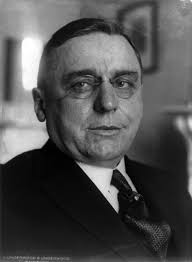
The “Bills”: William Jennings Bryan and William Howard Taft

William Howard Taft

President Theodore Roosevelt had been in the White House for 7-and-a-half years. He had been elected as VP under Republican William McKinley in his second term (1900). When McKinley was assassinated only months later, TR “rose like a rocket” into the top spot, and commanded the position as if he had been born to it.

In 1904, he was unanimously nominated by the Republicans for his own term. TR was immensely popular, and won in a walk over the Democratic candidate, Judge Alton Parker, a nice fellow, but bland as dishwater.

President Theodore Roosevelt

Roosevelt, in a moment of either magnanimity or insanity, shot himself in the foot, claiming he would not run for a “third” term. He would come to regret that decision.

Instead, he chose his successor: a very reluctant William Howard Taft. The two had been close personal friends for twenty years. A fine attorney and jurist, Taft’s heart had always gravitated to the Supreme Court rather than the White House. Having served as Secretary of War under TR, he had national exposure, and all the right qualifications – except passionate desire. That however, was superbly filled and countered by the Taft family, including his ambitious wife, Helen.

To please her, his devoted brothers, and TR himself, Taft agreed to be the candidate.

The country was at peace and prospering economically. Many new progressive policies (such as the Pure Food and Drug Act, curbing monopolies, and growing support for organized labor) had been instituted. Times were pretty good. With Theodore Roosevelt’s clout and strong backing, Big Bill Taft was a perfect successor.

William Jennings Bryan…Again

William Jennings Bryan in 1896.

In 1908, William Jennings Bryan was only 48 years old; still quite a bit younger than most of the previous Presidents. He had already run for President twice and lost twice – to William McKinley, in 1896 and 1900.

Bryan originally was a surprise candidate: A midwesterner, a lawyer of mediocre training, and a mediocre Congressman for two terms. Part of him was also a frustrated clergyman. His main claim to fame, from 1896 on, was his oratory, in an age when oratory really counted. His supporters were mesmerized.

Politically, WJB was a populist and a strong exponent of free coinage of silver, perceived helpful to suffering farmers and small businesses in the midwest. By 1908, however, the “bimetallism” issue had fizzled out completely.

Bryan: Sitting Out ‘04

The surprising emergence of “The Boy Orator of the Platte” as he was nicknamed, had turned William Jennings Bryan into a powerful voice in Democratic party leadership – for the next quarter century.

In 1904, however, even having lost two previous elections, he was still the likely candidate.

But….

Judge Alton Parker

WJB was a very savvy and wily politician as well as an aggressive candidate and proponent of issues of concern to the “common man.” He knew, in 1904, that nobody was going to beat Theodore Roosevelt, who was at the top of his game and the top of his popularity. TR was also becoming politically very progressive, effectively instituting several issues the Democrats had espoused. Bryan loved being the candidate and loved campaigning aggressively – but he certainly did not wish to be a sure loser. Again.

So wily as he was, he slyly lobbied to nominate Alton Parker, a modest and little known judge from upstate New York – the weakest possible candidate the Democrats could find. Of course, Parker lost heavily. No harm-no foul on WJB.

WJB: The Aging Bill Returns

WJB in 1908. Same guy, less hair.

The Democrats had lost three elections in a row: 1896, 1900 and 1904. Considering that Democrat Grover Cleveland (the last Democratic President – 1884 and 1892) was commonly perceived as more Republican than Democrat, the powers that were needed a powerful voice in 1908. Once again, they turned to Bryan.

The conservative elements of the Democratic party were less than thrilled, but the populist and liberal Democrats were delighted. Bryan would always be their hero! He won the nomination on the first ballot!

The cartoonists had lots of fun!!

To balance the ticket, they nominated John Kern, an attorney from Indiana, who had twice run for Governor – and lost. The NY Times quipped that Democratic national ticket was consistent because “a man twice defeated for the Presidency was at the head of it, and a man twice defeated for governor of his state was at the tail of it.”

It may have been an omen.

Big Bill Taft

William Howard Taft

William Howard Taft was well known in Republican circles. He had been immensely effective – and popular – as the Governor General of the Philippines for five years, overseeing a daunting task of merging interests and cooperation among a half dozen or more fractious Filipino parties, insurgencies and religious sectors. He even declined two nominations to the Supreme Court, his dearest ambition, to further Filipino goals. When President Roosevelt finally summoned him home as Secretary of War, he knew it was a “stepping stone.”

In 1905, the country was a peace with little for a Secretary of War to do. Serving as TR’s “trouble-shooter” extraordinaire, he traveled nearly continuously to put out fires wherever they were. Taft’s personal good nature, natural tact and sense of fairness won him friends and admirers wherever he went.

He was also nominated on the first ballot!

The progressive leadership of TR and the incorporation of several “reform” policies was undercutting the Democratic platform, and had already made serious inroads into public acceptance. It was becoming (and indeed would become) a matter of who – or which party – would be the champion of progress.

The numbers tell it all.

So in 1908, while the Democrats and the Populists and the other “fringe” parties might churn up the causes to espouse, it was widely perceived by the general public, that the Republicans could lead and activate it better.

Taft won in a walk – and Bryan lost even more heavily than in his two previous attempts. He would never run again.

Sources:

Rasenberger, Jim – America: 1908 – Scribners, 2007

Sullivan, Mark – Our Times (Vol. 2): America Finding Herself – Scribners, 1927

https://www.britannica.com/event/United-States-presidential-election-of-1908

https://millercenter.org/president/taft/campaigns-and-elections

https://www.history.com/topics/us-politics/william-jennings-bryan


Posted in A POTUS-FLOTUS Blog, Nifty History People, Theodore Roosevelt, William Howard Taft | Tagged , , , , , , , , , , , , , , , | 1 Comment

The Assassin and FDR-the-POTUS-Elect

Less than a month before FDR’s first inauguration in 1933, he was the target of an assassination attempt.

FDR: President Elect

NY Governor Franklin D. Roosevelt

Franklin Delano Roosevelt was an unlikely candidate for President in 1932. The 50-year-old New York patrician had a pleasant, but not stellar resume of accomplishments, but the last, as a popular NY Governor, carried weight. In addition, and unknown to many of his fellow citizens, FDR (as he liked being called) had suffered from polio a decade earlier, and for all intents and purposes, was crippled.

The Democratic politicians of the day liked him well enough, but generally considered him a lightweight. A nice fellow, but one with nebulous leadership.  One thing in his favor: he had a very famous name. Many Americans believed he was “Theodore’s” son. He wasn’t, but many voted for him for just that reason.

By 1932, however, the Great Depression was well underway. Millions of people were unemployed. Foreclosures on homes and businesses and property were at an all time high. People were literally homeless and starving, and the traditional charities were stretched past their limits. President Herbert Hoover, victorious in 1928 as the “Great Engineer” and the “Great Humanitarian” watched his fine reputation plummet into the pits.

It was easy enough to elect Franklin Roosevelt.

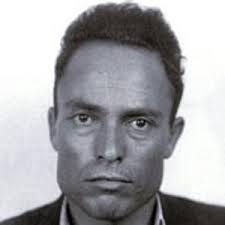
Giuseppe (Joe) Zangara

Giuseppe Zangara was born in Italy in 1900, fought during the Great War, and finally emigrated to the US in 1923, hoping to better his condition. He became a bricklayer, and a naturalized citizen in 1929.

Giuseppe “Joe” Zangara

His was a hard life. Only five-feet tall, he suffered since childhood from stomach pains, possibly from grueling physical work and possibly from an abusive father. If it did not create the anger and hatred in his troubled psyche, it certainly did not help.

As the Depression became even more depressed, Zangara lost his livelihood. Like many anarchists and related malcontents, he believed his misery was caused by the rich and powerful people at the top.

He went to Miami in February, 1933 for some odd-job work, bought an $8 gun and a few bullets at a pawn shop, carried a rickety metal folding chair (for added height) and went to Bayford Park, when he heard that president-elect Roosevelt was in town.

FDR: An Unplanned Visit

The quintessential campaigner

Franklin Roosevelt had not planned to go to Southern Florida after a brief appearance in Jacksonville on Feb. 15. With the inauguration coming up in less than three weeks, he needed a rest in warm climate to work on his speech and his cabinet plans – and maybe a little fishing and some therapeutic swimming in warm Caribbean water. His friend and neighbor Vincent Astor had a yacht which he put at FDR’s disposal when he left Jax. They docked later that evening in Miami.

FDR sitting atop the convertible.

It was not scheduled, but the new president-elect was a friendly fellow who always enjoyed the meet-and-greets, and was happy to spend a little time with the politicians who came to see him. After a half-hour of hand-shaking, he was lifted into a green convertible and taken to Bayford Park, to smile and wave his hat and maybe say a few innocuous words. FDR frequently used convertibles for impromptu speeches. He could sit on top of the back seat for extra height, with his crippled legs on the seat cushion. It gave him folksy informality, and kept him from the rigors and arrangements of podiums and platforms.

In the years ahead, people became very used to it.

Anton (Tony) Cermak, Mayor

Chicago Mayor Anton Cermak

Anton Cermak was the new Mayor of Chicago: the first Democrat elected in decades. It was a horrid time for Chicago, between the Depression, Prohibition, and the seemingly uncontrollable ten years of crime in the Windy City. An immigrant himself, from Austria-Hungary (now the Czech Republic), he had come to America, done well, and parlayed his accomplishments into becoming mayor of a very large city. As such, he became acquainted with NY Governor FDR, but the relationship was somewhat rocky.

When Cermak learned that FDR was to be meeting and greeting in Miami, he made it a point of being close by to mend political fences, which included standing on the running board of Roosevelt’s convertible when the president-elect made rounds.

The Assassination Attempt

True to form, FDR was seated atop the convertible, waving his hat and grinning his soon-to-be famous smile. Within moments, shots rang out. Five shots, five wounded bystanders. The shot aimed at FDR missed.

Within seconds, the crowd overcame Zangara, his gun and the rickety folding chair. Policemen nearby muscled closer. And FDR, raised his hand and called out not to harm the assailant – and to let the law and justice prevail. Then he directed his escorts to help a seriously wounded and bleeding Tony Cermak into the car. He reportedly calmed the injured man, and they sped off to the closest hospital.

Zangara’s mugshots.

The wounded bystanders were also rushed to the hospital, and the would-be assassin was arrested and taken into custody.

Within Weeks…

Naturally the event made headlines across the country. It has been suggested that Roosevelt’s insistence of letting the law take its course, and the manner in which he calmed the bleeding Mayor Cermak resonated well with the public, and boosted his leadership image.

Zangara’s moment of infamy.

Zangara was duly tried for attempted murder at the Dade County Courthouse, where he is said to have told the judge, “I kill kings and presidents first and next all capitalists.” He was convicted on four counts, and sentenced to 80 years in prison.

Only two days after FDR’s inauguration, Anton Cermak died of his wounds. Zangara was retried – this time for murder, and sentenced to death. They wasted no time. Ten days later, he was strapped into the electric chair and executed. Angered that no newsreel cameras were allowed, his final words were “Go ahead, push the button.”

Sources:

Black, Conrad – Franklin Delano Roosevelt: Champion of Freedom – Public Affairs, New York – 2003

Davis, Kenneth – FDR: The New York Years 1928-1933 – Random House, 1994

https://www.u-s-history.com/pages/h1516.html

https://www.history.com/this-day-in-history/fdr-escapes-assassination-in-miami

Posted in A POTUS-FLOTUS Blog, Franklin D. Roosevelt, Nifty History People | Tagged , , , , , , , , , , , , , , , , , | 4 Comments

Woodrow Wilson and the Suffragettes

Woodrow Wilson liked women – and he liked intelligent women.

WW: A Boy and His Family

Thomas Woodrow Wilson (1856-1924) grew up surrounded by three doting women: his mother, Jessie Woodrow – and two older sisters. A younger brother didn’t come along until “Tommy” was ten.

Woodrow bonded with his father from the start, the women in his family pampered and encouraged and loved him dearly. That woman-nurturing became essential to his well being. Throughout his life, his health was always affected by his emotional well (or ill-) being, and in constant need of woman-tenderness. The family always believed that Woodrow was destined for greatness. He may have believed them.

WW: Southern Gentleman

Wilson was born in Virginia, but he grew up in South Carolina and Georgia in the years following the Civil War. (The NJ-connection came much later.)

True to the culture of his upbringing, he was raised as a Southern gentleman: polite, deferential to women, respectful – with the usual manly-protectiveness. Women were the fair sex. The weaker sex. The ones to be treated with a velvet glove. He discovered his true vocation of theoretical government, or “political science” today, and at 25, still studying for an academic life, he met the Georgia peach who would become his wife three years later.

Wilson and the First Mrs. Wilson

Ellen Axson was a daughter of a Presbyterian minister. Wilson was immediately attracted, and they began a courtship, mostly by correspondence. During that exchange of long letters, he came to appreciate the intelligence, wisdom and intuitive understanding of his intended.

He also came to depend on her subtle assistance throughout their 30-year marriage. He never wrote a book, delivered a lecture or speech without her input and suggestions, most of which were, according to him, insightful and valuable.

WW: Charmer

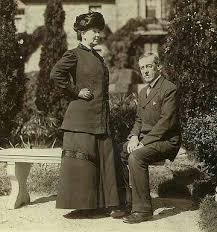
Prof. Wilson and the women in his life.

Wilson was fast-tracked and popular professor. His classes and lectures were always well attended, thus, he was frequently invited to give special programs and seminars at other colleges and universities. With three daughters of his own, plus a house full of family members as long-term houseguests, he needed the extra money.

Ellen Wilson, understanding his need for a captive audience (including bright and appreciative women) and aware of her own societal disinclination, generously encouraged him to “go solo” to the rounds of dinners and receptions that accompany visiting lecturers.

Woodrow Wilson, at his best, was a charmer. Ladies were bowled over by his wit as well as his intelligence. He frequently introduced his lady-admirers to Ellen, who usually became friendly with them as well. She was, in a more subdued way, a charmer, as well.

As husband to a talented and intelligent woman, blessed with three intelligent and educated daughters, it would stand to reason that Wilson would enthusiastically espouse woman suffrage, but his feelings were tepid, at best.

Ellen died less than eighteen months after his inauguration, and his daughters were now grown and living their own lives. Any strong influence they might have exerted was no longer available to him.

Wilson and the Second Mrs. Wilson

His second wife, Edith Bolling Galt, who he married fifteen months after Ellen’s death and fifteen years younger than the President, was a Virginian who opposed suffrage, traditionally believing a woman provided far more influence behind the scenes, than by a constitutional amendment giving them the vote.

Woman’s Suffrage: 20th Century

The Ladies Remember Themselves.

Votes for women was not a new issue. Abigail Adams exhorted her husband to “remember the ladies” at the very beginning of the United States as a nation. He didn’t pay attention, and a hundred years passed before the ladies decided to remember themselves.

There was a “suffrage movement” years before the Civil War, to include less “lunatic fringe” subjects as women’s legal rights, property ownership, and higher learning. Women were active in abolition and temperance issues. They also went west with the pioneers, proving themselves a man’s equal in building a life.

Women rising in the workforce (IA Dept. of Cultural Affairs)

By the early 20th century, women were healthier, for one thing. More athletic and physically stronger. More and more of them were well educated – and not merely to domestic arts like their grandmothers. Many held meaningful jobs outside the home. And men, including important and powerful men, began giving them due (or at least grudging) respect.

WW: The Women

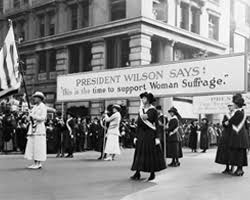
But Wilson was a Southern gentleman to the core, and an idealist to the core. The thought of women marching, and parading and petitioning upset him. Women didn’t behave like that. At least, they shouldn’t behave like that. It was, if nothing else, “unladylike.” Especially with a World War going on.

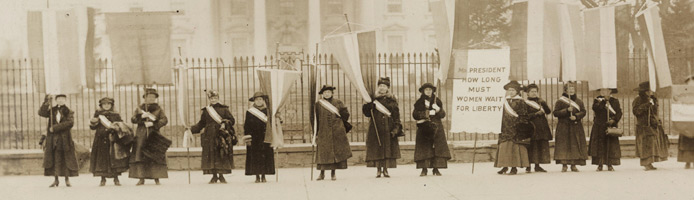
But march they did! All over the country – and in particular, outside the White House for all to see, under the nose of the President.

Protesting at the White House (LOC)

When it rained, the impassioned women marched in the rain, getting drenched in the process. The courteous President Wilson sent staff members with umbrellas for them. When it snowed and the winter temperatures dropped below freezing, President Wilson sent hot chocolate for them. That was the way he was raised.

But war or no war, whether they should or shouldn’t receive the vote (which by the mid-nineteen-teens had already been ratified by several states), it didn’t matter. Women paraded up and down in front of the White House, and when threatened with arrest – or even jail, were happy to chain themselves to the fence, literally daring the police to take them to jail. And they went gladly!

Idealism, intellectuality and confusion do not mix and Wilson was confused. The brilliant professor found it difficult to wrap his intellectual mind around women who no longer seemed to defer to men.

He finally came around to more than lip-service after World War I, and signed the amendment giving women the right to vote – but he also stated that nothing – nothing – gave him more grief as President, than the women.

Sources:

Berg, A. Scott – Wilson – G.P. Putnam’s Sons, 2013

Heckscher, August – Woodrow Wilson: A Biography – Scribner’s – 1991

https://www.wilsoncenter.org/article/woodrow-wilson-and-the-womens-suffrage-movement-reflection

https://www.whitehousehistory.org/pioneering-women-of-the-woodrow-wilson-white-house-1913-1921

Posted in A POTUS-FLOTUS Blog, Woodrow Wilson | Tagged , , , , , , , , , , , , , , , , , | 3 Comments

TR: Marching With Kings

Thousands of people watched the funeral parade of King Edward VII.

The POTUS and the King

President Theodore Roosevelt

The nearly eight years Theodore Roosevelt spent as President coincided with the reign of Edward VII (1841-1910) of England. TR was only 42 when he became POTUS; The King acceded to the throne when he was nearly sixty.

King Edward VII of Great Britain

The King had spent more than four decades as the Prince of Wales during the 63-year reign of his mother, Queen Victoria. Despite a well-deserved reputation as a rakish playboy, he surprised most people by honing his natural good nature and pleasant disposition into some serious diplomatic skills.

Naturally the new President was eager to solidify a growing close relationship with the once-Mother Country. The President and the King began a cordial and regular correspondence. Personal visits (at that time) were not according to protocol.

Deciding that their affinity should be cemented with a handshake, King Edward VII invited Theodore Roosevelt (after his presidential retirement) to pay him a visit. Now  only fifty years old, TR planned a year-long safari in Africa, and intended to make rounds among several European countries on his way home. A nice visit to London, especially quartered at Buckingham Palace, was the capstone on that agenda.

The Safari

TR on safari.

It is hard for any President to surpass a term or two in the White House. Nevertheless, the former President wished to give his chosen successor, William Howard Taft a little breathing room, so TR-the-naturalist (one of his many serious interests) planned a mega hunting trip in East Africa, under the auspices of the Smithsonian Institution. Not only did he agree to send specimens back to the Smithsonian for research and educational purposes, he had committed to sending regular articles to several newspapers, magazines and publishers.

He and his son Kermit, and a supporting cast of hundreds, hunted, wrote, camped out and had the time of their lives.

Once the expedition ended, Edith Roosevelt met up with her husband in Europe. Now clean, comfortably bedded and back in civilization as it were, he embarked on another “good will tour” – this time to take a bow in the great capitals on the continent, planning to end his travels in London.

Unfortunately…

Shortly before the Roosevelts were to visit London, King Edward VII died unexpectedly. He was only sixty-eight.

Newspaper headline from LA Herald

Roosevelt, in Germany at the time, received a cable from President Taft.

To Theodore Roosevelt, American embassy, Berlin:

I should be very glad if you would act as special ambassador to represent the United States at the funeral of King Edward VII. I am sure the English people will be highly gratified at your presence in this capacity, and that our people will strongly approve it. Have as yet received no official notice of the date of funeral, but it is said it will take place on the 20th of this month. Please answer. (Signed) “WILLIAM H. TAFT.”

From Berlin, on May 10, TR sent a one-word response: Accept.

The announcement that former President Roosevelt would attend as the special representative of the United States was indeed received with great satisfaction by the British public. He was, by this time, was the most famous living American.

Europe’s Uncle Bertie

The procession was well choreographed.

Funeral processions and all the related obsequies for royalty are very different from those of mere mortal citizens. For a British monarch, the traditions go back for centuries, and are literally written in stone.

They also do not happen quickly, especially since the King’s death was unexpected and no pre-preparation had been undertaken. Heads of state from all over planned to attend. After all, most of them were relatives. Queen Victoria had nine children, all married with progeny, and the continent was filled with royals and near-royals who claimed close kinship with the extremely popular monarch. The splendor and assemblage surpassed anything ever before seen – including Queen Victoria’s Diamond Jubilee a dozen years earlier.

Their Majesties: An assemblage of European Royalty.

It was the largest gathering of European monarchy to ever take place, with representatives from 70 different states. It would also be the last grand parade of royalty. Within five years, Europe would be in the flames of The Great War (WWI) and four empires would collapse.

The arrangements to house and feed this enormous assemblage was daunting by itself. It is claimed that the food bill alone was well into the millions of dollars (in today’s money). And each head of state and relative came with a retinue. And horses. And all required appropriate shelter and feeding. The meets and the greets, the bowing and scraping, the visiting and the being visited, and the protocol of who was to follow whom, and who stood beside whom was challenging in itself, trying to please and placate and gratify the massive egos involved.

The March of the Kings….and Grand Dukes….&c….And Theodore Roosevelt

Nine Sovereigns attended the funeral of King Edward VII: King Haakon (Norway), Tsar Ferdinand (Bulgaria), King Manuel II (Portugal and the Algarves), Kaiser Wilhelm II (Germany/Prussia) King George I (Greece), King Albert I (Belgium), King Alfonso XIII (Spain), son-and-now-King George V (United Kingdom) and King Frederick VIII (Denmark). The only major monarch who did not attend was Tsar Nicholas II (Russia), who sent several personal emissaries. All were closely related to the late King.

TR in the back, carrying his coat.

Then there were a dozen close relatives and in-laws, all Royal Highnesses, Imperial Highnesses and Serene Highnesses. Followed by thirty-nine Grand Dukes and Princes (also related), and another twenty-five not-quite-so-close relatives, with varying degrees of title. All wore their country’s finest uniforms and decorations, ribbons and insignias. And hats.

And this doesn’t even count the “female” relatives!

Then there was Theodore Roosevelt, wearing plain daytime formal clothes, and carrying his coat. It was a bit much for the former Rough Rider.

He later grumbled privately, “If I met another king, I should bite him,”

Sources:

Los Angeles Herald, Volume 37, Number 223, 12 May 1910

Dalton,, Kathlen – Theodore Roosevelt: A Strenuous Life – 2004, Vintage

Morris, Edmund – Colonel Roosevelt – Random House, 2010

http://www.theodorerooseveltcenter.org/

Monarchy’s last hurrah? Edward VII’s funeral in 1910


Posted in A POTUS-FLOTUS Blog, Nifty History People, Theodore Roosevelt | Tagged , , , , , , , , , , , , , , , , , | 1 Comment

George Washington and The Royal Gift

George Washington’s beloved Mount Vernon.

George Washington’s heart was never far from his beloved plantation

GW: Planter

The Great General was also a great planter.

George Washington made his considerable mark and everlasting fame as a soldier, but his dearest love was Mount Vernon, his Northern Virginia plantation, situated just a stone’s throw from the Potomac River. Even Thomas Jefferson, the lifelong agronomist and botanical experimenter, considered Washington a superb planter.

Once he inherited the then-modest plantation from his half-brother and married the wealthy Widow Martha Custis, he spared no expense or detail in making the site a thriving showplace. Different crops, different sub-industries, different trades were all explored. If a new or novel idea for making agriculture easier, better or more profitable was suggested, Washington was a ready audience. One of his best innovations at Mount Vernon was producing a fine “stable” of mules.

GW: Proponent of Mules

George Washington was an excellent plantation owner.

It is said that mules were first bred in North America via the Spanish Conquistadors, by mating a horse and a donkey (or jackass, as they are sometimes called). But mules are hybrid creatures. They might enjoy the experience, but they are sterile and cannot reproduce themselves. They can reproduce other donkeys readily enough, but one needs to mate a male donkey with a female horse to create a mule. (Mating a female donkey with a male horse creates a “hinny.” Close, but not quite.)

By the late eighteenth century, mules had gained recognition and respect for the considerable benefits they brought to agriculture – and to mankind itself. Mules are almost as large as a horse. They are almost as strong as a horse. But they do not eat as much, usually live longer, and are not as susceptible to most equine diseases. True, they are not speed demons, but when speed is not essential, they are wonderful haulers. While commonly said to be stubborn, they are generally not skittish or fractious with other mules, and can tolerate tiresome or repetitive functions easily. Thus there are many functions on a plantation where a mule is not only useful, but the animal of choice.

An Andalusian jackass

Even as a General, George Washington’s heart was never far from Mount Vernon, and he corresponded regularly with his plantation managers. Some of that correspondence mentioned his desire for a good “jack” (jackass) in order to breed some mules. The best and largest “jacks” were reputed to come from Spain, and Washington investigated the option of purchase. Complications arose from the technicalities and legalities of selling-shipping animals, but once Carlos III, the King of Spain, learned of the Great General George Washington’s personal interest, he sent two prize jacks and their “handler” as a gift.

One of the donkeys died en route, but the other, a four-year-old Andalusian Jackass survived, and was immediately and fittingly named by Washington himself, “Royal Gift.” Unfortunately, the ship bringing “RG” wound up in Boston, rather than along the Potomac. It is said that Washington took great pains and care in bringing Royal Gift to his new home

The Bad-Ass Royal Gift

George Washington had grand plans for his new “Gift”. The huge Andalusian donkey stood about 15 hands high, promising strong offspring! First, Washington planned to mate him with some of his best mares to produce several mules for Mount Vernon. Then he planned to offer stud services to his neighbors, and even friends down the Peninsula, a hundred miles away. Washington demanded a hefty fee and had no shortage of takers throughout the South for RG’s services.

Unfortunately no one consulted the jackass, who was obviously very very picky. No matter what Washington or his plantation experts tried, they could not get the animal “in the mood,” so to speak. RG had some mild interest in “jennies” (female donkeys), but Washington’s finest mares and fillies only rated a ho-hum. Stud was becoming a dud.

But men, being smarter than donkeys (maybe), Farmer George finally resorted to the old switcheroo!  He brought a jennie to RG’s stall, and when things began to look promising, they swapped Jenny for a mare, believing that the donkey was too hot and bothered to know the difference – or care.

A Maltese jackass

It was a handy hint they were happy to pass along to the plantation owners who were seeking RG’s siring services: Put a couple of jennies in the stall with the jack, and by and by, switch them with the lady of choice.

Progeny

A mule.

It came to pass that Royal Gift, picky or not, was indeed prolific, and went on to sire more than fifty mules – just for George Washington. About a year after the Andalusian arrived, the Marquis de Lafayette, George Washington’s loyal young friend and ardent admirer sent the General a Maltese Jackass, along with a couple of other excellent jacks and jennies, perhaps more romantically inclined, and Mount Vernon became a virtual nursery for mules. 

Always a precise record-keeper, George Washington kept a detailed inventory of his newfound additions to the plantation. In 1785 his inventory listed 130 horses and zero mules. At the time of his death nearly fourteen years later in 1799, the general/planter listed 58 mules and only 25 horses. Even today, many of the mules at Mount Vernon can trace their lineage to Royal Gift.

Mules performed yeoman service in the Civil War, pulling all sorts of wagons and armament.

Considered among the pioneers of plantation management, George Washington’s interest in mules proved to be prescient. Mules were arguably the unsung beasts of burden that helped open the West. And the US Army became their greatest patron, purchasing thousands upon thousands for tough and backbreaking work in the Civil War.

Then of course, when they needed an emblem, their beloved utility animal, the mule, became the Army’s beloved mascot! General Washington would have liked that!

Sources:

Randall, Willard Sterne – George Washington – Galahad Books, 2000

https://www.mountvernon.org/library/digitalhistory/digital-encyclopedia/article/royal-gift-donkey/

The President and his mules

Posted in A POTUS-FLOTUS Blog, George Washington, Presidential Sites | Tagged , , , , , , , , , , , , , , , | Leave a comment