Florence Harding: The Poison Rumor

Spoiler alert! She didn’t do him in!

The Death of Harding

When President Warren G. Harding died unexpectedly in August, 1923, the country was sincerely shocked and saddened. The people liked and thought well of him.

President Warren G. Harding

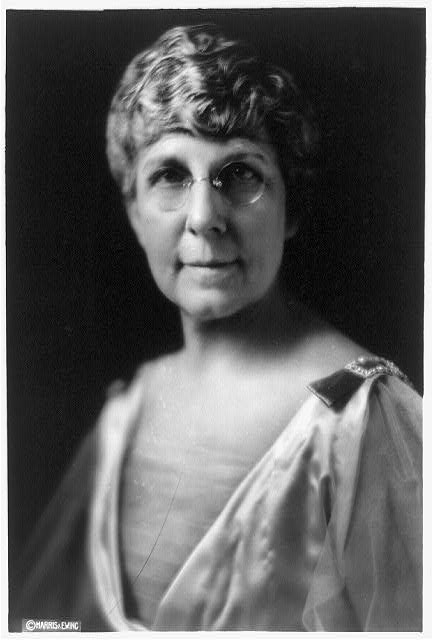
The fact that he had been ill for some time with a un- or mis-diagnosed heart condition was not common knowledge. His widow, Florence Kling Harding, had adamantly refused to have an autopsy performed. It was also noticed that Mrs. H. was stoic and stone-faced during the entire time. She quickly burned quantities of his letters and related documents.

When she vacated the White House, she returned to Marion, OH, and died a year later. She had been chronically ill herself – for years!

This image has an empty alt attribute; its file name is the-duchess.jpg
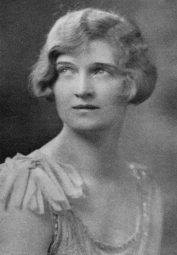
Florence Kling Harding

The Dam Cracks

Within weeks of the President’s death, a trickle of rumors and innuendos began to emerge about misdoings and irregularities in the Harding Administration. The trickle became a torrent, and eventually a flood lasting for years. Screaming headlines throughout the ’20s implicated high-level members of the Harding Administration with their hands in the public purse up to their elbows. Most were long time pals of the former President and Mrs. Harding.

Some months prior to his death, Harding became aware of complicated doings of cabinet members, department heads, and trusted friends. It gave him great grief and stress, complicated by his wife’s serious illness. Their marriage had been turbulent, but by this time, Florence Harding was likely the only person he could truly trust. She knew all the players and was equally upset.

The Dam Breaks

Lumped into a general category they called “Teapot Dome” (named for an area of oil reserves in Wyoming) a variety of complex crimes, misdemeanors and financial finagling surfaced.

Government owned oil reserves in the Rocky Mountains were illegally (or certainly suspiciously) leased to oil moguls, with large sums of money (or loans) equally illegal or certainly suspicious, going to Harding cabinet appointees (and former good-buddies).

The Department of Veterans Affairs (dearly loved and supported by Mrs. Harding), was systematically being swindled out of huge amounts of money, paying top-dollar for new supplies and re-selling them almost immediately for cash. It’s department head was a long-time Harding friend, whose resume concealed prior finagling and outright fraud.

This image has an empty alt attribute; its file name is harrydaughert.jpg
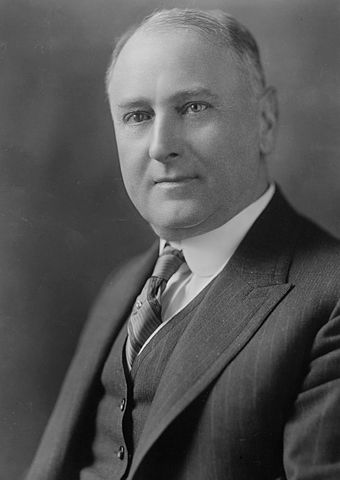
Attorney General Harry Daugherty

Then there was the problem of Prohibition. Liquor sales and distribution (but not consumption) had been banned – except for “medicinal purposes”. Several members of the Harding inner circle found dozens of connections for “medicinal purposes” in exchange for large sums of cash.

Some people committed suicide. Some went to jail. Some probably should have gone to jail.

Insult to Flooded Injuries

If that were not sufficient to taint the Harding reputation and give additional grief to the Widow Harding in her remaining months, she was personally/privately apprised of yet-another one of WGH’s amorous liaisons. She had known about his peccadilloes for decades, but this one flew under her radar.

Nan Britton, a teenaged Marion, OH neighbor, had a crush on Harding for years, and when she was eighteen, the publisher-turned-Senator began a steamy love affair with her, resulting in a child, born a year before Harding was the Republican nominee. While he lived, WGH was generous with the young woman, but he never publicly admitted to the child, nor provided for them in his will.

This image has an empty alt attribute; its file name is nan-in-26.jpg
Nan Britton

When Nan sought child support, a furious Florence Harding flatly refused, remembering the child as a strumpet-in-situ. Finally, in desperation, she published The President’s Daughter and the tell-all book became a best-seller. But by that time, Mrs. Harding had died.

The Strange Death of President Harding

Gaston Means (1879-1938) was a con-man, swindler and general nogoodnik, who managed to inveigle himself a job with the Bureau of Investigation in 1921 (pre-FBI), under the directorship of William Burns. Burns obviously never scrupulously checked Means’ very shady past, which included indictment for murder, along with other acts of crime and fraud.

Gaston Means

Via his new “position” he managed to inculcate himself, at least peripherally, within the Harding inner circle of pals, including his boss’s boss, Attorney General Harry M. Daugherty, who met regularly for poker and booze. The “iffiness” of his association appears to have been more wannabe than “wuz.” Nevertheless, he was involved with several violations of the Volstead Act (Prohibition-related), and spent a couple of years in jail, courtesy of the government.

While in jail, he conceived the idea to write his own book, with the help of a ghost-writer. He called it The Strange Death of President Harding. His book came out in 1930.

His mild association with the “Ohio Gang,” as Harding-buddies were termed, made him privy to the public, personal and private gossip about Warren and Florence Harding, who by that time, were dead for several years.

One of his many plausible “innuendos” was the deep implication of Florence Harding, reputed to be a very savvy political insider. He completely fabricated a story of her knowledge and fury at the Nan Britton hijinks-cum-child, an elaborate plot for revenge, and finally poisoning WGH to “protect” his reputation.

In a century since the Hardings died, there has been no evidence that they were involved in any of the scandals.

The Upshot

Of course the deceased Hardings could refute nothing, but… a) Mrs. Harding knew all about many of WHG’s romances – but the one about Nan was unknown to her till after her husband’s death; b) She absolutely did not poison him – or commit any other mayhem; c) Means’ ghost-writer, having had her own reputation sullied by all the scurrilous accusations sans factual evidence etc., turned state’s evidence.

Gaston Means wound up in in Leavenworth where he died in 1938.

But copies (many reprints!) of The Strange Death of President Harding are still available.

Sources:

Daugherty, Harry M., and Dixon, Thomas – The Inside story of the Harding Tragedy – The Churchill Company, 1932

Means, Gaston G. and Thacker, May Dixon – The Strange Death of President Harding – (Elizabeth Ann) Guild Publishing – 1930

Miller, Hope Ridings – Scandals in the Highest Office: Facts and Fictions in the Private lives of Our Presidents – Random House – 1973

Sinclair, Andrew – The Available Man – Macmillan Co., 1968

https://www.britannica.com/biography/Gaston-Means

http://www.ohiohistorycentral.org/w/Harry_M._Daugherty

Posted in A POTUS-FLOTUS Blog, Nifty History People, Warren G. Harding | Tagged , , , , , , , , , , , , , , , , , , , | 2 Comments

The Three Forgotten FIRST LADIES

This image has an empty alt attribute; its file name is dolley-by-gilbert-stuart.jpg
The incomparable Dolley Madison

Following Dolley Madison, there was a big gap in the role of the First Lady

Elizabeth Monroe was a reclusive woman by nature, and her grown daughter was a snobbish substitute. Louisa Adams was in chronic poor health; her husband was unpopular. Andrew Jackson and Martin Van Buren were both widowers. Widower John Tyler’s second wife Julia Gardiner might have been a shining star if a) she filled the role for more than 8 months, and b) if John Tyler was popular. Sarah Polk was certainly socially competent, but the Polk view of the Presidency itself, and their devout religious inclination made them stodgy.

Then, between 1849-57 came three reluctant and reclusive women, well into middle age when duty called, deeply entrenched in their modest private lives. They were more than happy to relinquish social duties to younger relatives and even happier to avoid the criticism of social Washington, whose main avocation was criticism.

Margaret Mackall Smith Taylor

Margaret Smith Taylor (1788-1852) was born in Maryland to a family of gentry. At twenty-one she married Zachary Taylor, a professional soldier who rose through the ranks. In 1810, when they married, a soldier’s life was harsh, assigned to isolated outposts, mainly to protect against Indian attacks. 

Zachary Taylor, #12

Peggy traveled from pillar to army-post, living in barracks, lean-tos, tents, forts and whatever dwellings were available. She lost two babies to disease, and raised four children to maturity. By the late 1840s, she was looking forward to a quiet retirement on their Baton Rouge plantation, surrounded by family and close friends.

Margaret Smith Taylor

But by 1848, after the War with Mexico, General Zachary Taylor was a bona fide hero, and thus a handy recruit for Presidential nomination, albeit against his will. And hers.

Military life had taken its toll on her, and between age and frontier hardship, her health had ebbed. Youthful beauty coarsened. While the dignities and manners of a gracious upbringing may have lingered in essence, she likely felt ill-equipped to be the social leader of the nation’s capital, and had no interest in trying.

She chose seclusion at the White House, remaining in her rooms and presiding only at the family table. She relinquished the hosting duties to her married daughter, Betty Blair. Naturally rumors abounded that Mrs. Taylor smoked a pipe, or was otherwise “unfit” for the role.

About the only thing known about Peggy Taylor is her claim that the “Presidency would shorten both their lives.” She was a prophet.

Both Taylors died before their natural term would have ended. 

Abigail Powers Fillmore

Abigail Powers Fillmore (1798-1852) was also disinclined to be First Lady – but for a different reason.

Abigail Powers Fillmore

Born in upstate New York, her father died when she was young, and the family struggled. Having had a fair education (at least for a woman), she became the village schoolmarm at sixteen, and has the distinction of being the first First Lady to work outside the home. She taught school for several years, and developed a deep love of books and learning in general.

She was still in her teens when she met Millard Fillmore, a local fellow with ambition. She tutored him for a better future in a courtship that lasted for several years before he was financially stable.

Once married with children, Abigail devoted herself to her family, their home in Aurora, New York and the moderate reputation of her lawyer-congressman husband. Nevertheless, she channeled her own intellectual interests into helping found their town library society. Letters between the Fillmores are filled with lists of books she asked him to purchase in New York or Philadelphia when he was a Congressman, en route to Washington. As a Congressman’s wife, Abigail came to Washington periodically and found “society” boring. She believed the Washington doyennes were superficial, placed appearance above substance, and above all, loved gossip. 

The Fillmores came to the White House accidentally. President Zachary Taylor died. Placing substance over socializing, she continued to channel her intellectual efforts and established the first White House library. When she became First Lady, there wasn’t a book in the place – not even a Bible.

Millard Fillmore, #13

Not long before assuming the “Second Lady” spot, Abigail had broken her ankle. It was poorly set and painful for her to stand in receiving lines. It was also a handy excuse to bow out. She did not lock herself away a la Margaret Taylor. She participated as needed, but kept the social scene to a minimum. Their daughter Mary Abigail, was twenty and happy to fill in for her disinclined, and genuinely bored, mother.

Jane Means Appleton Pierce

Jane Pierce (1806-1863) was a depressive, period. She was also zealously religious. Born in New Hampshire, she did not marry until she was twenty-eight, considered an old maid. Her polar-opposite husband, the gregarious Franklin Pierce, had just been elected to Congress.

This image has an empty alt attribute; its file name is janepierce.jpg
Jane Appleton Pierce

Jane hated Washington with a passion. The climate was bad for her frail health, and she disliked the politics, believing it ungodly. She managed to convince her husband (who loved politics) to retire from the national scene, and devote himself strictly to his law practice and local New Hampshire affairs. She lost two sons as babies, and devoted herself to raising her remaining boy. 

When Pierce became the Democratic nominee, elected President in 1852, his wife fainted at the news. If dissatisfaction with the course of events wasn’t enough, eleven-year-old Bennie Pierce was killed in a freak railway accident only a few weeks before the inauguration. Jane was prostrate with grief, and remained mostly secluded in the White House for months. 

Franklin Pierce, #14

When she finally made a public appearance, it was sad that her “woebegone expression” made it difficult for anyone to enjoy the gathering.

Her aunt-by-marriage was enlisted to handle whatever mild social duties could not be avoided.

Sources:

Caroli, Betty Boyd – First Ladies: An Intimate Look at How 38 Women Handled what may be the most Demanding, Unpaid, Unelected Job in America – Oxford University Press, 1995

http://www.whitehouse.gov/about/first-ladies/margarettaylor

http://www.whitehouse.gov/about/first-ladies/abigailfillmore

Posted in A POTUS-FLOTUS Blog, Franklin Pierce, James K. Polk, James Monroe, John Tyler, Millard Fillmore, Zachary Taylor | Tagged , , , , , , , , , , , , , , , , , , , , , , , | 2 Comments

Mary Lincoln and the Seed Pearls

No question abut it, Mary Lincoln liked nice stuff!

The Well-Born Miss Todd

Miss Mary Todd (1818-1882) was born into what might be called Lexington, Kentucky aristocracy. At birth, she was already 3rd generation Lexingtonian.

The earliest known photograph of Mary Lincoln

The Todds had done well in Kentucky. Her father, Robert Smith Todd, had followed the three traditional professions of a gentleman: planter, lawyer/businessman and legislator. He had a fine plantation a few miles outside the city limits, next door to Kentucky’s favorite son, Henry Clay. They also had a house in town.

When Mary was six, her mother died in childbirth, leaving six little Todds under twelve. Within eighteen months, Robert Todd remarried. His new bride, Betsey Humphreys, came from a family even more pedigreed than the Todds.

While the “first family Todd” was unhappy with their new stepmother, all the niceties of prominence were amply provided, including manners, graces, a taste for lovely things, and in Mary’s case, a good education.

Doing Without

When Mary Todd married lawyer Abraham Lincoln of Springfield IL, she was just shy of 24. He was 33, late come to his profession. His background was as meager as hers was prominent. He had very little money, old debts still owing, and his prospects were not sterling. He was also absent for large swaths of time, riding the court circuit in central Illinois.

The Lincoln house in Springfield

Within a year of their marriage, the Lincolns had purchased their one-and-only home, and were proud parents of a baby, Robert Todd Lincoln – named for her father. The niceties she had known before… lovely clothes, fancy bonnets, jewelry, etc., were no longer in her immediate picture.

They made do.

Lincoln was no fool and no doubt realized that to achieve any success as an attorney and/or public figure, he needed polish. Mary Todd was well equipped to do the sprucing.  She was a Kentucky belle. She knew what to do.

She made a nice middle-class home where Lincoln could be proud to bring his associates.  She made sure his suits were better tailored. She taught him to dance a little and make a deep courtly bow. Thus when he was elected President, Abraham Lincoln was parlor-ready, and undoubtedly knew that he owed much to his society-minded wife of eighteen years.

One of the earliest photos of Lincoln

Repayment

Some time in February, 1861, when the train bringing the President-Elect to Washington stopped in New York, Lincoln quietly visited Tiffany & Company, then as now, the premier jeweler in the country. As a gift for her (one of the few actually recorded as his gift), he purchased a stunning set of seed pearl jewelry, to include a necklace and two cuff bracelets. 

The price tag was a whopping $530, an enormous sum in the mid-nineteenth century, especially for someone whose income in 1860 was around $6000, a substantial, but hardly opulent sum.

Tiffany’s was top of the line – even then!

The Pearl Jewelry

The necklace itself was a “choker” style, defined as a length of 14-16″.  It consisted of nineteen oval shaped rosettes, six large and thirteen smaller. One of the six is extra large, used in the center of the necklace to dangle a somewhat smaller rosette as a pendant.  The smaller rosettes feature a bar of three pearls surrounded by a circle of seed pearls. The larger ovals feature a bar of three pearls surrounded by two seed pearl circles. The extra large central rosette has three circles of pearls.

The two identical cuff bracelets display the same style as the necklace, but the central oval rosette is the largest one in the entire set: three large pearls surrounded by four rows of seed pearls. Two smaller (three rows of surrounding pearls) rosettes flank the central piece. The strap and clasp are silver plate.

Some historical accounts claim Lincoln purchased earrings and a brooch along with the aforementioned items. A similar set, also made by TIffany’s did include the additional pieces, and sold for $1000. Lincoln was more thrifty, and opted for a less expensive set.

Curiously enough, TIffany records indicate that Lincoln purchased the items on April 28, 1862 – more than a year after his inauguration, when it is documented that Mary actually wore them. A Matthew Brady photograph taken of the new First Lady wearing her inaugural gown, showed the necklace and one of the bracelets. The earrings may have been on loan. Tiffany may have had “the slows” in its billing department, but Lincoln paid the bill.

It is also interesting that in April, 1862, the date of Tiffany’s accounts, the Lincolns were in deep mourning for their son WIllie, who had died a few weeks earlier. Mary would not have been purchasing or wearing elaborate jewelry. 

While there is no record of Mrs. L’s reaction to the surprise gift one can assume she was delighted. She wore it at both Lincoln inaugural balls.

Mary wore the jewelry!

The Aftermath of the Seed Pearl Jewelry

Mary Lincoln made a simple will in 1873 leaving everything to her son Robert and his progeny. This included her jewelry.

The unfortunate set of circumstances that caused Robert to declare his mother tried for insanity (later reversed) understandably created a major rift between them, and they were more or less permanently estranged for the rest of Mary’s life. 

When Mary made her will, she had only seen one grandchild: Robert’s daughter Mary, nicknamed Mamie. Robert’s two other children, Abraham II (nicknamed Jack) and Jessie had not yet been born, and there is no indication that Mary ever saw them.

The seed pearl set (LOC)

Despite the estrangement and the fact that Mary lived for nearly another ten years, she never changed her will. Her property went to Robert, including the seed pearl necklace and bracelets.

The set of jewelry is now in the Library of Congress collection. It was donated in 1937 by Mary’s granddaughter, Mary (Mamie) Lincoln Isham, shortly before her death. 

Sources:

Baker, Jean – Mary Todd Lincoln – W.W. Norton, 1987

Clinton, Catherine – Mrs. Lincoln: A Life – HarperCollins, 2009

Foster, Feather Schwartz – Mary Lincoln;s Flannel Pajamas and Other Stories From the First Ladies Closet – Koehler Publishing, 2014

Helm, Katherine – Mary, Wife of Lincoln – Harper & Row, 1928

http://www.thejewelleryeditor.com/jewellery/article/the-history-of-tiffany-tiffanys/

(www.internetstoes.com)

Posted in A POTUS-FLOTUS Blog, Abraham Lincoln, American Civil War, Nifty History People | Tagged , , , , , , , , , , , , , , , , | 1 Comment

George Washington Revered and Reviled

Harry Truman probably said it best. “If you can’t stand the heat, get out of the kitchen.”

The Thick Hide

It is a part of human nature to be sensitive to criticism. Those who achieve celebrity, whether it be political or artistic or academic or elsewise, invariably make enemies for a variety of reasons. Resentment and jealousy usually being at the top of the list.

There are many instances in recent history where fine public figures withdraw from public life due to the intrusive instant-judgments of social media.

Ergo, being in the public eye makes you subject to the public mouth, and “truth” is also a victim.

George Washington the Tight-Lipped

George Washington’s father died when his son was eleven. Every aspiration for a formal classical education (like his older half-brothers) was now denied.

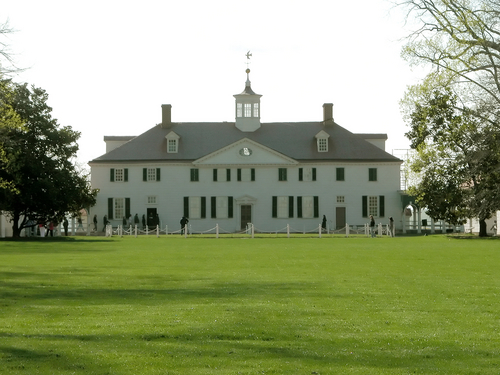
Eldest brother Lawrence was fond of George, and frequently invited him to visit at his Mount Vernon plantation. The property was a work-in-progress, but perhaps its most valuable asset then (other than splendid location) was its neighbor: Lord Fairfax, one of the highest ranking noblemen in the Colonies, and one of the wealthiest. Lawrence was happy to introduce George into the Fairfax circle, and it made a huge impression on the teenager. It provided him with manners to emulate and a lifestyle to dream about.

Washington’s lack of formal education weighed heavily on him, especially when he served in the Virginia House of Burgesses. He was now in the company of some of the best and brightest men in the Colony. He made it his lifelong habit to keep silent as much as possible, speaking only on subjects he knew about. The reticence served him well. His peers grew to like and respect the quiet man of Mount Vernon. When he did rise to speak, it was usually something worth listening to.

General George: The Target of Calumny

By the time of the American Revolution, George Washington was 44 years old, one of the wealthiest planters in Virginia, a former Colonel of the Virginia Militia (highest ranking officer in the American colonies), and was widely regarded. For a while.

George Washington, “swan”

Major General Charles Lee, a Virginian and erstwhile British military officer, was hugely jealous of Washington, and believed that his own experience in the British army far outranked GW. He commented to a fellow General, “a certain great man is most damnably deficient…unless something we do not expect turns up we are lost.”

Even John Adams, ardent patriot, but jealous of GW’s height, frame and demi-god appearance (which GW could do nothing about), once remarked “Washington was a Virginian. This is equivalent to five Talents. Virginian Geese are all Swans.”

John Adams

Most of the time, GW countered criticism by ignoring it, nevertheless it rankled.

POTUS George: The Worst Nightmare

Smart and educated fellows that our founders were, they were nevertheless somewhat naive about “human nature.” They had hoped that the new United States citizens would act in concert for the good of the country rather than sectional or petty needs. They deplored political parties. By the time GW became President, newspapers throughout the colonies had proliferated, (basically the only form of mass communication then), whipping their readers into the usual frenzies of opinion. The founders’ great fear of political parties and factions was coming to pass.

The Political Slings and Arrows

GW had spent the better part of nine years with the American Army. When the War for Independence was finally concluded, GW voluntarily relinquished his command, and happily became “Farmer Washington” once again.

GW liked to dance!

But as the arguably most famous man in the United States, he was inevitably drawn into the realities of forming a workable union of thirteen vastly different colonies. He became a creature of politics, whether he liked it or not.

He was twice elected unanimously to the office of President, the highest honor the country could bestow. But everything he did from this point on, set precedents and all of it was now open for criticism true, false, conjectured, half-truth or plain imaginary.

He was attacked for being monarchial, and too formal in his entertainment, emulating foreign courts. He was attacked for his clothing, his carriage, his dinner service and the price he paid for fish. His foreign and domestic policies were either reviled or revered, depending on who was asked. When GW seemed too much of a “presence”, his advisors were blamed for giving poor advice.

Adding insult to Washington’s true antipathy for parties, was their emergence via two of his most important advisors: fellow Virginian Thomas Jefferson (Sec/State), and former ADC Alexander Hamilton (Sec/Treasury). GW admired and liked them both. But they were perhaps unwittingly, tearing the country apart.

By his second term, criticism of GW included slurs to his character, his abilities and even his military prowess.

Thomas Paine

Former “pen of the Revolution” Thomas Paine was no friend of GW, writing “the world will be puzzled to decide whether you are an apostate or an impostor; whether you have abandoned good principles, or whether you ever had any.”

Benjamin Franklin Bache (grandson of Ben himself), publisher of a popular contemporary newspaper, called him “a Virginia planter, by no means that most eminent, a militia-officer ignorant of war both in theory and useful practice, and a politician certainly not of the first magnitude.”

And those were tame. There were frequently worse.

Vine and fig tree

Washington did not suffer criticism gladly. He was forced to hold his temper, and most of the time, he countered it by ignoring it. This did not make him impervious. He may have ridden out the storms of pernicious poison, but he admitted that the experience had “worn away my mind”.

He could not wait to return to his beloved Mount Vernon and his “vine and fig tree” and a life of retirement and ease, far from the gabbing crowd.

Sources:

Beschloss, Michael – Presidential Courage: Brave Leaders and How They Changed America (1789-1989) – Simon and Schuster, 2007

Chernow, Ron – Washington: A Life – Penguin Press – 2010

Randall, Willard Sterne – George Washington – Galahad Books, 2000

https://www.mountvernon.org/george-washington/

https://www.history.com/this-day-in-history/first-u-s-president-elected

Posted in A POTUS-FLOTUS Blog, George Washington, John Adams | Tagged , , , , , , , , , , , , , , , | 1 Comment

Grover Cleveland and the Abscessed Tooth Decision

This image has an empty alt attribute; its file name is president-cleveland.gif

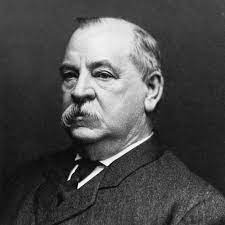
Grover Cleveland always resented media intrusion.

The Return of Cleveland

Just about all historians rate Cleveland’s second go-round (1893-7) as far less successful than his first. Mr. and Mrs. C. returned to the White House with a baby and another on the way. Frances Cleveland was still their media darling, but now as a matron with children, not pestered as much.

Grover Cleveland

The big problem was the economy. The country was in the throes of one of its worst recessions, panics, downturns, or whatever phrases were used in the early ‘90s. The stock market had tumbled. Huge companies were folding. Small businesses were gobbled up by bigger companies, forcing thousands of workers out of jobs and homes. Hundreds of thousands of poor immigrants jammed our cities. Strikes were rampant. Crime was rampant. Farmers, along with the poor, had gravitated to “populism,” demanding free coinage of silver (bi-metalism), certain to lead to huge inflation, anathema to the conservative Cleveland. Times were tough, and hard sacrifices were demanded.

Not long after his second inauguration, in the middle of all the crises-de-jour, Grover Cleveland was bothered by a rough spot on his upper jaw, interfering with his ability to eat. (And for a man whose great joy was gustatory, this was a serious problem.) He put it off as long as possible, but by summer the area had grown and medical attention was essential. The doctor was summoned. Alarmed by his findings, several medical specialists were consulted. A biopsy concluded that the “rough spot” was indeed cancerous – a word fraught with anxiety even today. And all insisted immediate surgery was needed. If it spread (as it was sure to do) it would be fatal.

President Cleveland was only 56. He had come late to marriage and fatherhood, and in 1893 had a young wife, a toddler, and another baby on the way. Most people put GC’s paternal instincts into the grandfatherly category, nevertheless it is a fair assumption that he would enjoy seeing his children grow up.

The story of where and how the surgery plus the custom made prosthetic jaw was done is a terrific story in itself. The creative technology of that time is fascinating, and generally applauded by modern medical people. But the decision for the secrecy is just as interesting, and perhaps apropos today as well.

Grover the Grouchy

Grover Cleveland (1837-1908) was an unlikely candidate for President in 1884. Barely known outside New York, he had risen to the top of the Democratic ticket in only three years.

Unfortunately, a few weeks before election day, a story appeared in an obscure Buffalo newspaper that the perceived “Grover The Good” had fathered a child out-of-wedlock years earlier. It was true. He confessed. He weathered the storm.

This image has an empty alt attribute; its file name is clevelandscandal.jpg
The ”scandal” was widely reported.

But he bitterly resented the intrusion into his private life and that resentment would grow.

A year into his Presidency, his secret engagement was out of the bag! The 49-year old bachelor, gruff, overweight and somewhat coarse in his manners was about to marry his pretty 21-year-old ward, Frances Folsom.

If journalists had been intrusive about his early liaison, they now surrounded the White House like a swarm of bees.

Cleveland fumed. And he fumed even more when the press made Frances their darling, and regularly intruded into the privacy of “Mr. and Mrs.” Cleveland.

The Cleveland wedding.

Ergo, Grover Cleveland neither liked nor trusted reporters.

The Decision

One’s health is about as personal as it gets. And there was no way President Cleveland, who remembered the media circus death-watch for General Grant, was going to permit those “liberties”.

But how to do it without alarming the country? “Cancer” is a word that generates fear even today. If the “ghouls of the press” (his words) made it public, the flailing economy was certain to collapse without his strong and determined leadership.

VP Adlai Stevenson (right) was neither a strong nor experienced leader. He was also a firm bi-metalist, and Cleveland feared the economy would go into free-fall.

This image has an empty alt attribute; its file name is vp-adlaistevenson.jpg

Absolute secrecy was vital. A medical-dental team was organized, each with specific assignments, and each vowing never to divulge the event.

Cleveland contacted E.C. Benedict (left), his long time close friend, whose yacht (right) was sufficient for the task at hand. He asked to “borrow” it for a few days, no questions asked. Permission was given, and no questions asked.

Unfortunately, one of the medical-dental team spilled the beans a few days later, and newspaper reporters converged on the Cleveland summer house in Buzzards Bay, MA. By then, the surgery had been successfully completed, including a few “staged” appearances of Cleveland looking none the worse for wear. Since the oral surgery was performed inside his mouth, there were no facial scars. His closest advisors, including one of his doctors, insisted that the President merely had some “dental work” done to treat a couple of abscessed teeth.

And the President’s “friends” made sure the intrepid reporter-with-the-scoop was quickly and soundly discredited before innuendo, half-truths, gossip and outrageous lies wreaked havoc on the economy.

A Quarter Century Later

This image has an empty alt attribute; its file name is elderlygrovercleveland.jpg
Elderly Grover Cleveland

Grover Cleveland lived to be seventy one, and the father of five. It was not until several years after his death that the “secret” cancerous jaw surgery was made public. The honor of sworn oaths mattered.

There are always differences of opinion about what “the public has a right to know” and what may well be “in the public’s best interest”. A couple of generations later, it would resurface as “loose lips sink ships.”

Cleveland believed there was far more to lose than gain if unfounded opinions of some 2 million people with little education or training in governance or economies were bandied around.

His dying words were, “I have tried so hard to do good.”

Sources:

Algeo, Matthew – The President Is A Sick Man – The Chicago Free Press – 2011

Brodsky, Alyn – Grover Cleveland: A Study in Character – St. Martin’s Press, 2000

Jeffers, H. Paul – An Honest President: The Life and Presidencies of Grover Cleveland – William Morrow – 2000

https://www.whitehouse.gov/about-the-white-house/presidents/grover-cleveland/

https://magicmastsandsturdyships.weebly.com/president-grover-clevelandx27s-secret-surgery-on-the-steam-yacht-oneida.html

Posted in A POTUS-FLOTUS Blog, Grover Cleveland | Tagged , , , , , , , , , , , , , , , | 2 Comments

Woodrow Wilson and Mrs. Peck. And Ellen Wilson

This image has an empty alt attribute; its file name is ellenandwoodrow.jpg
Woodrow and Ellen Wilson

Woodrow Wilson always enjoyed feminine companionship.

Woodrow Wilson and Women in General 

Like many men with high intellect and matching egos, Woodrow Wilson was drawn to the company of women. If they were attractive, intelligent, lively, gentle-natured and content to be a good audience, he was delighted to bask in their admiration.

He was also a devout Presbyterian. His family tree was peppered with ministers, including his own father. He prayed on his knees every night, until his health made it impossible. The teachings of his religion and its morality were of vital importance to him.

Very little is known of Wilson’s adolescence and early manhood vis-a-vis romantic interests. Most historians tend to believe he was generally shy around the opposite sex, believed himself to be “homely,” and if there was any “romance” involved, it was likely cerebral and certainly unfulfilled.

The First Mrs. Wilson

Wilson was 25 when he met Ellen Axson, a 22-year old Presbyterian minister’s daughter, and fell deeply in love. Immediately. He wooed her for three years, mostly by passionate letters, opening up his innermost soul, dreams and hopes.

This image has an empty alt attribute; its file name is ellenwilson.jpg
Ellen Axson Wilson

Woodrow was a brand new college professor, fast-tracked to being one of the top governmental history (political science) experts in the country. Their house was a revolving door of assorted long-term guests, relatives on both sides. Her 10-year-old brother Eddie lived with them from the start. Her other brother Stockton stayed with them on vacations from college. The three Wilson daughters were born within five years. Money was always tight, and Wilson wrote a book a year to augment his sparse salary. He also accepted extra seminars and lecture engagements.

Those extra engagements usually included invitations to other professors’ homes, where WW met many intelligent and scintillating female dinner companions. Ellen was an artistic woman of serious talents, and a serious nature. She shunned the limelight, and witty repartee made her uncomfortable. She encouraged him “go solo” to those engagements. She understood his needs, and at the top of that list, was his dependence on a woman’s nurturing companionship.

This image has an empty alt attribute; its file name is the-wilson-family.jpg
Wilson’s wife and daughters adored him.

She made it a point throughout their 30-year marriage, to seek out his feminine admirers, and make them her friends as well. And she never doubted that Woodrow loved her.

The Rough Time

Some 20 years after they married, Ellen suffered a grievous loss. Her brother Eddie and his wife and baby died in a drowning accident. He was only 31. Ellen, as next of kin, did whatever was needed. She notified family members, arranged for funerals, handled his modest estate, and finally grieved. Like others in her family who were prone to crippling depression, she had generally warded off sadness over the years. This time she could not.

According to her daughter Eleanor McAdoo, her depression went deep, and she retreated into a world of silence. Woodrow could not reach her. He was overcome by her grief, and his own need to comfort her, which he could not do. She had always been his steel magnolia. Now he had no one to comfort him.

Wilson’s physical and emotional health had always been tightly intertwined. He could plunge into a deep abyss if a letter hadn’t come when expected. His body usually paid the price. For years he suffered periodic gastric problems, headaches and a couple of undiagnosed strokes. A quiet and solitary change of scenery, with Ellen’s encouragement, seemed to restore him to his usual productive life.

Bermuda

In early 1907, about a year after Eddie Axson’s death, with Ellen still “not herself,” Woodrow took a solo vacation to Bermuda. The sea air and quiet surroundings were recommended.

This image has an empty alt attribute; its file name is mrs_peck.jpg..jpg
Mary Allen Hulbert Peck

Mary Allen Hulbert Peck was a comfortably situated woman who spent winters in Bermuda “for her health.” A few years Wilson’s junior, she had been widowed several years earlier, and had remarried a well-to-do businessman. That marriage was unhappy. Ergo, Bermuda “for her health.”

This image has an empty alt attribute; its file name is wilson-in-bermuda.jpg
Mary’s guests in Bermuda

Mary was delight and a charmer, and quickly became Bermuda’s premiere “hostess.” On a small island in the off-season, socializing was easy, and an invitation for the then-President of Princeton University was quickly extended. Woodrow found Mary to be wonderful company and a warm friendship ensued, lasting for several years. As always, Woodrow an ardent correspondent, wrote to her often. And returned solo to Bermuda.

Smoke, Fire and Smudge-Pots

The likelihood that anything even remotely akin to “unPresbyterian-like” behavior occurred is difficult to imagine – considering Woodrow. Both he and Mary Peck always insisted that despite their effusive correspondence (common for that time), their relationship was never more than a warm friendship. His marriage to Ellen was always loving and happy, and he would never put that in jeopardy.

Effusive correspondence was common.

Naturally, Woodrow told Ellen about Mrs. Peck, who eventually divorced and re-assumed her widowed name of Hulbert and moved to New York. Ellen characteristically sought opportunities to meet her husband’s dear friend, and even made it a point to introduce her daughters. It would be a rare stretch for the morally pious Woodrow to have his wife and daughters in the company of a woman if it was an immoral relationship. She was even their guest at the White House.

Nevertheless, Ellen commented to a friend that it was the only time in their marriage that her husband had caused her pain.

The apothecary clerk.

Several years later, when WW was a serious political figure, there were the usual gossipy innuendos. Candidate Theodore Roosevelt was advised of the “situation” in 1912, and declined to make it an issue, stating that it would be hard to believe that someone who looked like an apothecary clerk was a Romeo.

And as long as Ellen Wilson lived, their friendship with Mary Peck Hulbert would never seriously harm Woodrow Wilson’s reputation.

Sources:

Heckscher, August – Woodrow Wilson: A Biography – Scribners, 1991

McAdoo, Eleanor Wilson – The Woodrow Wilsons – Macmillan, 1937

Saunders, Frances Wright – Ellen Axson Wilson – University of North Carolina Press – 1985

Weinstein, Edwin A. – Woodrow Wilson: A Medical and Psychological Biography – Princeton University Press, 1981

https://www.americanheritage.com/love-and-guilt-woodrow-wilson-and-mary-hulbert

Posted in American Civil War | 2 Comments

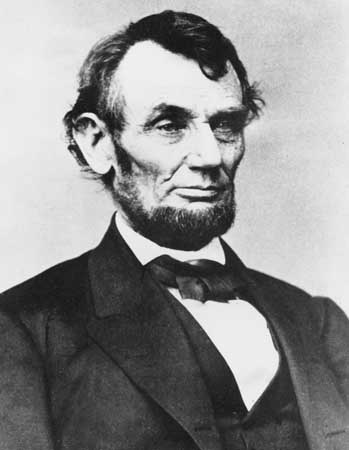
Lincoln: The Deepest Sadness

Abraham Lincoln

“It is hard, hard to have him die.”

Man of Sadness

Most historians agree that Abraham Lincoln, when he wasn’t laughing and telling droll stories, was a generally sad man. He described his upbringing as the “annals of the poor.” His mother died when he was nine. His only sibling died in childbirth when Lincoln was still in his teens. 

While he made friends easily and engaged socially, he still remains elusive. Other than a long-standing close relationship with Joshua Speed, his friendships remain superficial or professional rather than deep bonding. He was, by and large, a solitary soul. His deepest feelings were “conceptual” rather than personal, in the sense that he was distraught over the enormous deaths of the Civil War: but they were people he did not know.

He was nearly thirty-three when he married, partly due to insufficient income, and partly due to his lack of ease with the fair sex. When he married Mary Todd, a well-to-do Kentucky belle, it followed a rocky courtship of misunderstandings. Maybe. The marriage itself was “average” for its time, with the usual ups and downs. Probably. Undoubtedly he cared deeply for her, and was devoted to her welfare and comforts.

This image has an empty alt attribute; its file name is mary-and-boys.jpg
Mary and sons – in better days.

The word used to describe him best, was “abstracted.” In his own world.

The Weight of that World

With most deep thinkers, thoughts and conclusions not only run deep, but usually go through convoluted channels to arrive at whatever conclusions finally surface.

By his own admission, Lincoln was slow to learn, but once learned, the knowledge remained. He was also slow to stray from the middle road. He was always opposed to slavery, but never considered himself an abolitionist. He was a lifelong Whig, slow to embrace the Republican party. His own political inclinations could and would change – if he believed they might be incorrect, or not viable. They were subject to change as the occasions demanded. 

His early months as President are usually considered unsure and uncertain. As he said, events were controlling him, not the other way around. Secession had begun before he took the oath of office; within weeks, it was a fait accompli. He would promote and demote a series of military generals whose accomplishments on paper fell far short of their accomplishments in the field. Totally ill-equipped in military knowledge himself, he needed to become a true Commander-in-Chief. That took time. Meanwhile, fighting a Civil War on many fronts – militarily, politically, industrially, financially and socially, situations and issues were flung at him daily. 

A Lincoln Family etching ca. 1861

Early 1862

This image has an empty alt attribute; its file name is willielincoln2.jpg
Willie Lincoln

The year had started bleakly enough. The Union defeat at Bull Run six months earlier was an eye-opener. The war would not be a few skirmishes and the expected “empty chair.” The casualty list horrified everyone, but compared to what would follow, a mere spat. 

Determined to present the White House (i.e. the presidency) as a continuation of what-should-be, the Lincolns planned a gala affair. There was the usual carping about “don’t you know there’s a war on?” Then there was the unsettling situation with the two youngest Lincoln boys. They had caught cold and were feverish. Their 3-year-old son Eddie had died several years earlier, and both Lincolns were always skittish about their childrens’ health. But the doctors assured them the boys were not seriously ill, and the big-do did not need to be cancelled.

Tad, the youngest son, was eight. He recovered.

Willie, at eleven, was touch and go for several days. He was the apple of both his parents’ eyes: smart, affectionate, warm-hearted, and, it is said, the most like Lincoln. His mother commented that she expected Willie to be the solace of her old age. 

By the time the doctors confirmed that his “cold” had become typhoid fever, it was already too late. Willie was rapidly failing. Both Lincolns kept a vigil at their son’s bedside, but on February 20, he died.

The grieving father entered his secretaries’ office and said, “Well, my boy is gone.” Then he left. 

Willie was laid out in his coffin in the black-draped Green Room of the White House, with the mirrors and windows covered in crepe. Mary Lincoln was so distraught, she could not leave her bed, except to advise the mother of Willie and Tad’s best pals, “not” to send her sons to play with Tad anymore. She could not bear it. 

Despite his own unbearable grief, Lincoln personally brought the two young playmates into the Green Room to say their goodbyes. Tad Lincoln would never see them again. 

This image has an empty alt attribute; its file name is mary-in-mourning.jpg
Mrs. Lincoln wore black for two years.

After a brief service conducted by Rev. Phineas Gurley, Willie’s coffin was placed in a borrowed crypt at Oak Hill Cemetery until such time as the Lincolns returned to Springfield. 

Grieving

Grief comes in many patterns. Some build shrines; some remove all mementos as too painful. Most fall in between. But all parents are devastated when they lose a beloved child.

Mary Lincoln wore her grief, and those deep losses that followed, like a badge of punishment for whatever sins she perceived she might have committed. Her convulsive sobs could be heard throughout the White House for weeks. 

Abraham Lincoln’s grief was internal. He knew that by February 1862 there were already thousands of parents, North and South, who had lost sons. Those parents mourned too. He may have even suspected that many more thousands of sons would lose their lives, and as the war continued, so would the grieving. 

Lincoln could only put aside an hour or two on Thursdays, the day Willie died, and retreated to the privacy of his room to grieve alone. It is also said that on occasion, he sat in quiet contemplation at the borrowed crypt at Oak Hill Cemetery. He considered it the worst blow of his life. “It is hard, hard to have him die.”

Three years later, Willie’s coffin was disinterred, and he returned to Springfield. With his father.

The Lincoln Tomb in Springfield

Sources:

Donald, David H. – Lincoln – Simon & Schuster, 1995

Randall, Ruth Painter, Lincoln’s Sons, Little, Brown, 1955

http://www.abrahamlincolnonline.org/lincoln/education/williedeath.htm

https://rogerjnorton.com/Lincoln68.html

Family: William Wallace Lincoln (1850-1862)

https://www.washingtonpost.com/lifestyle/style/willie-lincolns-death-a-private-agony-for-a-president-facing-a-nation-of-pain/2011/09/29/gIQAv7Z7SL_story.html

Posted in A POTUS-FLOTUS Blog, Abraham Lincoln | 2 Comments

Maria Hester Monroe: The First Daughter Wedding

This image has an empty alt attribute; its file name is jameselizabethmonroe.jpg
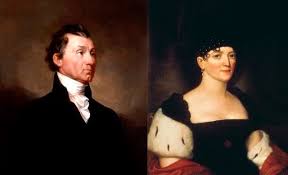
James and Elizabeth Monroe: Parents of the Bride

Maria Hester Monroe was the first daughter of a President to be married in the White House.

Maria Hester

Maria (pronounced Mar-IAH) Hester was born in 1803, seventeen years after her only sibling, Eliza. Due to the difference in their ages, the two were never close.

Also, due to the age difference, Maria was never afforded the aristocratic-style European education that her sister received when her father was serving abroad. The Monroes had returned to America shortly after Maria was born. 

Nevertheless, Maria received a fine American education, and was fourteen when her father was elected President. Washington was no novelty to her; Madison cabinet member James Monroe and his family lived in or near the capital for several years, but remained socially remote. 

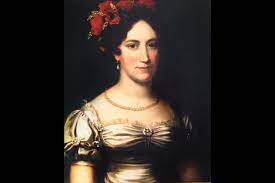
The only likeness of Maria Hester is a conventional head-and-shoulders portrait, which appears to resemble her father. A contemporary account rather uncharitably describes her as “raw boned.” Similar descriptions were said about Thomas Jefferson’s daughter Martha (Patsy), but it alluded to her height, rather than body-build. James Monroe was a tall fellow; Elizabeth Kortright, her mother, was petite.

At seventeen, a common age for marriage in the early nineteenth century, Maria became engaged to marry her cousin Samuel Gouverneur, whose mother was a sister of Elizabeth Monroe. He was twenty one, and serving as a secretary to his Uncle-the-President.

Mother and Sister

James Monroe held a variety of elected and appointed offices during his pre-presidential career. Two decades earlier, he had served as Minister to France during the French Revolution and its aftermath. He took his wife Elizabeth and his little daughter Eliza with him. Then they served in other diplomatic posts on the continent. They were seminal years.

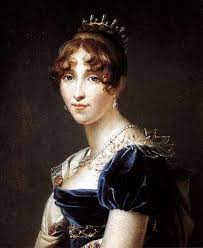
This image has an empty alt attribute; its file name is hortensebeauharnais.jpg
Hortense de Beauharnais

When Eliza was school-aged, she attended a girls’ academy, where she received a superb education – and made a dear friend who she maintained for life: Hortense de Beauharnais, daughter of soon-to-be Empress Josephine, and thus step-daughter of Napoleon. Not long afterwards, Hortense married a younger Bonaparte brother and became Queen of Holland. Longer afterwards, she was known as the mother of Napoleon III.

The Monroes traveled in high level diplomatic circles during a time that etched station, rank, behavior, protocol and manners into the psyches of the Monroe women. Despite their elegant pretensions, once back in the US, they maintained rather secluded lives. Elizabeth Monroe had frail health, always an acceptable excuse for ducking society. Some hinted that she was prone to epileptic seizures. Maybe. Her now married daughter Eliza Hay assumed their social duties.

Eliza Monroe Hay

The Hard Act to Follow

Dolley Madison had been at the social epicenter of Washington for sixteen years. As the wife of the Secretary of State, she had served as a de facto hostess for President Thomas Jefferson. The Madisons also picked up the social slack when the President wanted to duck society.

Dolley Madison

Of course, when the Madisons occupied the White House for their own two terms, the Divine Mrs. M., who never ducked, set the standard and the place for Washington’s social scene. Even after the War of 1812, when fire damaged the White House to a point where the Madisons never lived there again, they “borrowed” a suitable house, and within a week, Dolley was hosting.

She was quick to pay the first call on newcomers, to invite all levels of “brow,” and entertain both lavishly and informally, setting the tone for a republican social scene. Everybody loved her.

Maria Hester: Wedding Woes

The popular “republican” style of society that Dolley Madison espoused did not set well with the senior Monroe women. Rebuilding and refurbishing the fire-damaged building took the better part of two years, and it was several months into his first term before James Monroe and family (which now included 14 year old Maria Hester) were able to move in.

Believing that their elevation to the country’s highest office was akin to the monarchs of Europe and beyond, Mrs. Monroe and Eliza Hay put an abrupt end to paying or returning calls. In the 19th century (and even into the 20th) paying and receiving calls was vital to the political-social scene. Needless to say, the Monroe women were unpopular with their countrymen and women, and positively loathed by foreign diplomats, who expected high level receptions and courtesies. President Monroe was either unable or unwilling to change that situation.

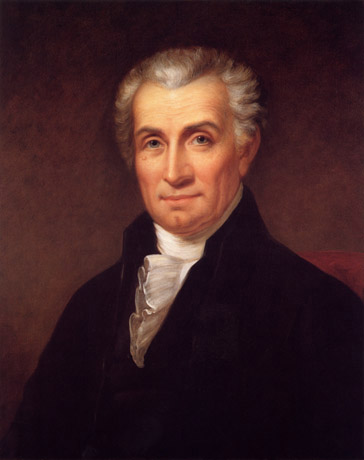
This image has an empty alt attribute; its file name is jamesmonroe.jpg
The President
This image has an empty alt attribute; its file name is mariahestermonroe.jpg
The bride: Maria Hester Monroe Gouverneur

So when Monroe’s younger daughter’s marriage was announced, all of Washington was agog for the big “do,” after all, the White House does make a nice backdrop for a wedding.

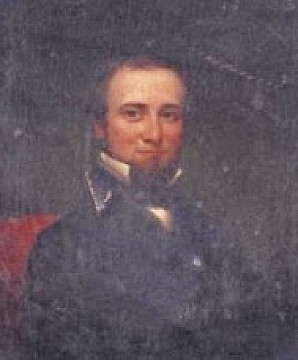
This image has an empty alt attribute; its file name is samuel-l.-gouverneur.jpg
The groom: Samuel L. Gouverneur

But the imperious thirty-something Eliza Hay let it be known that her sister’s marriage would be strictly a private affair and wedding gifts from non-invitees would not be acknowledged. Not even cabinet members (the “official” family) were invited. In all, only forty invitations were issued. If the distaff side of the Monroe family was unpopular before, by this time they were seriously disliked. Louisa Adams, the wife of Secretary of State John Quincy Adams, commented to her diary, regarding Eliza Hay as “so proud and so mean I scarcely ever met such a compound.”

Making the Best of It

Neither Maria Hester nor her fiance, Samuel Gouverneur were consulted about their wishes. Perhaps because of their youth, they were reluctant to cause trouble and the young couple did pretty much as they were told, but…

President Monroe, perhaps trying to please his daughter and his nephew/secretary, hosted two small receptions during the week following the wedding – but most of “social” Washington (including the diplomats and press) was still not included.

Being young, Maria and Sam naturally wanted to make their wedding a special occasion. Many socially and politically inclined folks in Washington agreed with them, and a series of charming events “in honor of” the new couple were hosted for Mr. and Mrs. Samuel Gouverneur, who were delighted to attend.

Private citizens can invite whoever they like.

Sources:

Allgor, Catherine – Parlor Politics – University of Virginia Press – 2000

Unger, Harlow Giles – The Last Founding Father – DeCapo Press, 2009

Wead, Doug – All The Presidents’ Children: Triumph and Tragedy in the Lives of America’s First Families – Atria – 2003

http://www.firstladies.org/blog/first-ladies-never-married-to-presidents-eliza-monroe-hay/

http://www.whitehouseweddings.com/maria-monroe.html

Posted in A POTUS-FLOTUS Blog, James Monroe, Nifty History People | Tagged , , , , , , , , , , , , , , , , , , , , | 7 Comments

Mary Pickersgill and the Star Spangled Banner

Most people today know the story, true or legend or both, of Betsy Ross.

The Original Flag

This image has an empty alt attribute; its file name is betsyross.png
The legendary Betsy Ross
This image has an empty alt attribute; its file name is betsyrossflag.jpg
The original design

In 1776 (or thereabouts) it is said that George Washington himself, or a small delegation from Congress, approached seamstress Betsy Ross of Philadelphia to design and make the flag, which she did. That may be debatable, but her house still stands in Philly, and visitors are always welcome.

Fast Forward Nearly 40 years

By 1812, the USA had rooted and grown. As new states were admitted, the flag had been adjusted accordingly: Fifteen stripes and fifteen stars. But the addition made the flag design unwieldy, and while the original thirteen stripes would remain, only new stars would be added. But that had not been in effect by the War of 1812.

This image has an empty alt attribute; its file name is newssbflag.jpg
The unwieldy 15 stars and stripes

Also by 1812, Baltimore, MD had become the third largest city in the United States, right after Philadelphia and New York. Its port, at the mouth of the Chesapeake Bay, employed thousands of sailors, merchant mariners, support crew and of course, the ships themselves.

This image has an empty alt attribute; its file name is george-armistead.jpg
Maj. George Armistead

With Baltimore a vulnerable target, defending Fort McHenry which guarded its harbor was essential. In 1813, all possible steps were being taken to reinforce it, and prepare for the worst. Major George Armistead was the officer in charge. It was he who commissioned a huge garrison flag, ostensibly for the British army and navy to see it at a great distance.

A government commission was given to Mary Young Pickersgill, a Baltimore seamstress, to design and make the flag.

Mary Young Pickersgill (1776-1857)

Born in Philadelphia in 1776, Mary Young Pickersgill became a Baltimore seamstress/flagmaker. Her mother, widowed when Mary was a baby, was a prominent flagmaker who made flags and ensigns for the Continental Army. She moved to Baltimore when Mary was still a child, and taught her daughter the skills of making flags.

At 19, Mary married merchant John Pickersgill, but was widowed ten years later and never remarried. She set up shop as a maker of “silk standards and cavalry and division colors” for the U.S. Army, Navy and various merchant ships.

Mary Pickersgill in her later years.

By the time of the War of 1812, she and her daughter Caroline were well established at their trade. A delegation from the U.S. Army visited Pickersgill to discuss their requirements: a huge “garrison” flag (30’x42’,) plus a smaller “storm” flag (17’x25’). The commission stated that she would be paid the hefty sum of $574.44 (equivalent of well more than $5000 today). This was a mammoth assignment, much more than two women could handle. She recruited two of her nieces, Eliza and Margaret Young, as well as apprentice Grace Wisher, a free woman of color. Other assistants were engaged temporarily to help in the projects, which may have included her elderly mother. The flags were made and delivered in six weeks.

Making the Flag

The project required more than 400 yards of wool fabric for the stripes and the blue field. The stars were made of cotton. Each stripe was 2-feet wide, and each star was 24-inches from tip to tip. When complete, it weighed more than 50 pounds, and took eleven men to hoist it on the flagpole. 

The fifteen stripes themselves may have been relatively simple to piece together. Once cut into their 2’x42’ pieces, the pieces were stitched together. Labor intensive – but low-tech!

Placing the stars on the blue canton was something else. It required mega-space. Decades later, Caroline Pickersgill wrote that her mother obtained permission from a local brewery to lay the flag out in its malt house, and on her hands and knees, she placed and pinned the stars on the blue canton.

The Star Spangled Banner

The two flags were put aside for a full year. But in 1814, only a few weeks after the burning of Washington, the British began their assault on Baltimore. The battle began in the early morning and lasted throughout a day and night of intense rain, thus it was the “storm” flag that flew over the ramparts. The officers believed the huge, heavy garrison flag would be too soaked to “fly.”

After 25 hours, the rains abated, but after their fierce fighting, the British fleet withdrew. To signal American success, the great garrison flag was hoisted about the fort. 

This image has an empty alt attribute; its file name is ssbtoday.jpg
The original.

It was large enough to be seen eight miles away on a merchant ship carrying a Washington attorney on a business trip to Baltimore. After a sleepless night watching the rockets red glare and bombs bursting in air, Francis Scott Key saw the huge flag waving proudly, and deeply moved, committed his thoughts to paper. Titling his poem “The Defence of Fort McHenry,” with a rhyme and rhythm akin to a popular drinking song called Anachreon in Heaven, he sent the four stanzas to a local newspaper where it was printed and widely circulated.

Within a few weeks, a music publisher printed copies under the title“The Star Spangled Banner.” It became a hit.

The flag itself was displayed throughout the area in an effort to commemorate the successful defense of the fort, and generate continued support for the war. Swatches of the flag were cut away as souvenirs for veterans or other dignitaries. So was one of the fifteen stars. 

This image has an empty alt attribute; its file name is oldssbflag.jpg
The original SSB a century ago.

Epilogue

Mary Pickersgill lived to be 80 years old. She remained in Baltimore, and became a long-time President of the Impartial Female Humane Society, to help destitute women. Her house in Baltimore has become the Star Spangled Banner Flag House and Museum, designated a National Landmark. You can visit it. 

“The Star Spangled Banner” itself eventually found a home with Lt. Col. George Armistead, and remained in his family for decades. His grandson offered it on permanent loan to the Smithsonian Institution in 1912, where its fragile remains are preserved and protected in honored glory. You can see it.

This image has an empty alt attribute; its file name is pickersgill-house-museum.jpg
The Star Spangled House-Museum

The whereabouts of the Storm flag has never been discovered.

The Star Spangled Banner became the country’s national anthem in 1931.

Sources: 

Lord, Walter – The Dawn’s Early Light – W.W. Norton – 1972

https://amhistory.si.edu/starspangledbanner/making-the-flag.aspx

https://www.nps.gov/places/star-spangled-banner-flag-house.htm

Posted in American Civil War | 3 Comments

William McKinley: The Best Career Move

This image has an empty alt attribute; its file name is mckinley-cw-uniform.jpg
Major William McKinley

At the suggestion of General Rutherford B. Hayes, William McKinley decided to study law.

The Hard-Knocks Youth of William McKinley

Born in Niles, raised in the little village of Poland, Ohio, William McKinley, Jr. was the seventh of nine children. His father was a hard working iron monger, and the devout Methodist family struggled financially. Nevertheless, educating their children became uppermost in their minds. As such, after young Billy’s local schooling, the family scraped together enough money to send him to Allegheny College in Pennsylvania. Briefly. Midway through his first semester, he became seriously ill, and had to withdraw, hoping to return at a later date. That never happened.

This image has an empty alt attribute; its file name is young-mckinley-2.jpg
Young William McKinley

When he recovered, the Civil War had just begun in earnest, and young McKinley believed it his duty to enlist. He was eighteen. He served for four years, rising from private to brevet major, and aide to General Rutherford B. Hayes.

Despite McKinley’s strong Methodist upbringing, and his sincere aversion to the vices of camaraderie, i.e. drinking, smoking, swearing, gambling, card playing, dancing, theatre-going and chasing women, he was always perceived as manly and not priggish. The soldiers respected him, and liked him. (As a P.S., in his later years, he was known to have an occasional whiskey, play mild card games, and enjoy the theater and his cigars.)

General Hayes, old enough to be McKinley’s father, saw qualities in him that warranted encouragement, and suggested he might read law once he was discharged from the Army. The two men became good friends for life.

This image has an empty alt attribute; its file name is young-mckinley.jpg

Obviously McKinley recognized a good idea when he heard it, and returned to Poland to study law with Charles Glidden, a local attorney. Realizing that “reading law” might not be sufficient, he borrowed money to go to Albany Law School for a year. He was just as popular with his classmates as he was with his army buddies.

He returned to Poland, and passed the Ohio Bar. His older sister Anna, a school teacher in Canton, suggest that he move there. It was growing rapidly, offering opportunity for a young lawyer just starting out, and a lively social atmosphere. Glidden was encouraging, and suggested he contact a former Judge, George W. Belden, who was considering retirement and sought to partner with a younger attorney.

Canton, OH

McKinley visited his sister in Canton, the seat of Stark County, and liked what he saw. It was a good sized town, poised to grow even larger. Since it was much bigger than Poland, there would be opportunities. He was by nature, a joiner, and in Canton, there would be a wide range of organizations a young man of 23 would find of interest. There was an established Masonic lodge in Canton, and McKinley had already been inducted during the war, albeit in Winchester, VA. There were the usual civic-fraternal organizations: Elks, Moose, Oddfellows, Knights of Pythias. Then, of course, there was the Grand Army of the Republic, veterans all, who would welcome the young “Major.” And of course, his beloved Methodist Church. And the Republican club. All of these groups offered dozens of opportunities, both professionally, socially, and perhaps best of all, a place for a young man.

This image has an empty alt attribute; its file name is old-canton-oh.jpg
Images of Canton after the Civil War

Thus armed with a respectable letter of introduction, William McKinley went to Judge Belden and offered his availability. At least a decade younger than what the aging jurist had sought, he asked McK. for information about himself.

This image has an empty alt attribute; its file name is cw-gar-canton.jpg
Civil war veterans were abundant in Canton.

The Challenge

Happy to oblige, McKinley offered his meager formal education (which to him was not at all meager), his very commendable military service, and his exemplary moral character and willingness to work hard and learn. He was also well acquainted with Congressman Rutherford B. Hayes, likely to become Ohio’s next Governor. That was all well and good, but it was singularly lacking in any legal experience. Perhaps there was something about the young man that appealed to Judge Belden, and he suggested that McKinley take a look at a pending (the next day) case to be tried. It was one of those headache cases that all attorneys have from time to time: complicated, confusing and certain to be lost.

This image has an empty alt attribute; its file name is young-wm-mik.jpg
Young attorney McKinley

Overjoyed at the “opportunity”, the story goes that McKinley accepted the challenge, along with an armful of files, and went back to his rooms. He stayed up all night poring over the case files, familiarizing himself with every detail. The next day (so the story continues), McKinley tried the case in court, and to everyone’s surprise, including the Judge and perhaps himself, he won.

Judge Belden was impressed enough to form a partnership with the young attorney with such limited experience, but so much eagerness and promise.

This image has an empty alt attribute; its file name is belden-grave.jpg

Word of McKinley’s diligence and effort leaving no stone unturned quickly made the rounds of Canton’s legal community.

And Later…

No doubt Judge Belden was a fine mentor for the young attorney, but the partnership did not last very long. Only a year later, the Judge died, leaving McKinley the sole practice. He continued alone for a short time, took on fellow-attorney, and eventually partnered with his brother Abner. But it was Canton itself that made him what he became.

The practice was successful. McKinley-the-joiner, became an active member of all the civic and fraternal organizations, which gained him acquaintances high, low and in-between. Just about everyone liked and admired him.

This image has an empty alt attribute; its file name is youngmckinleys.jpg
The Major and his Missus.

His sister had been right. Canton was a fine town – and within a short time the McKinley parents and other family members moved there.

When WMcK met the woman he was to marry a few years later, he was already a known quantity. Her parents, one of the richest families in town, were delighted at the match, positioning “The Major” for even more legal – and nascent political success.

Sources:

Leech, Margaret – In the Days of McKinley – Harper & Bros., 1959

Morgan, H. Wayne – McKinley and His America – Syracuse University Press, 1964

Philips, Kevin – William McKinley – Times Books, 2003

https://millercenter.org/president/mckinley/life-before-the-presidency

https://www.rbhayes.org/hayes/the-good-colonel-r.b.h.-remembers-the-civil-war/

Posted in A POTUS-FLOTUS Blog, William McKinley | Tagged , , , , , , , , , , , , , | 2 Comments