Corinne: The Long Neglected Roosevelt

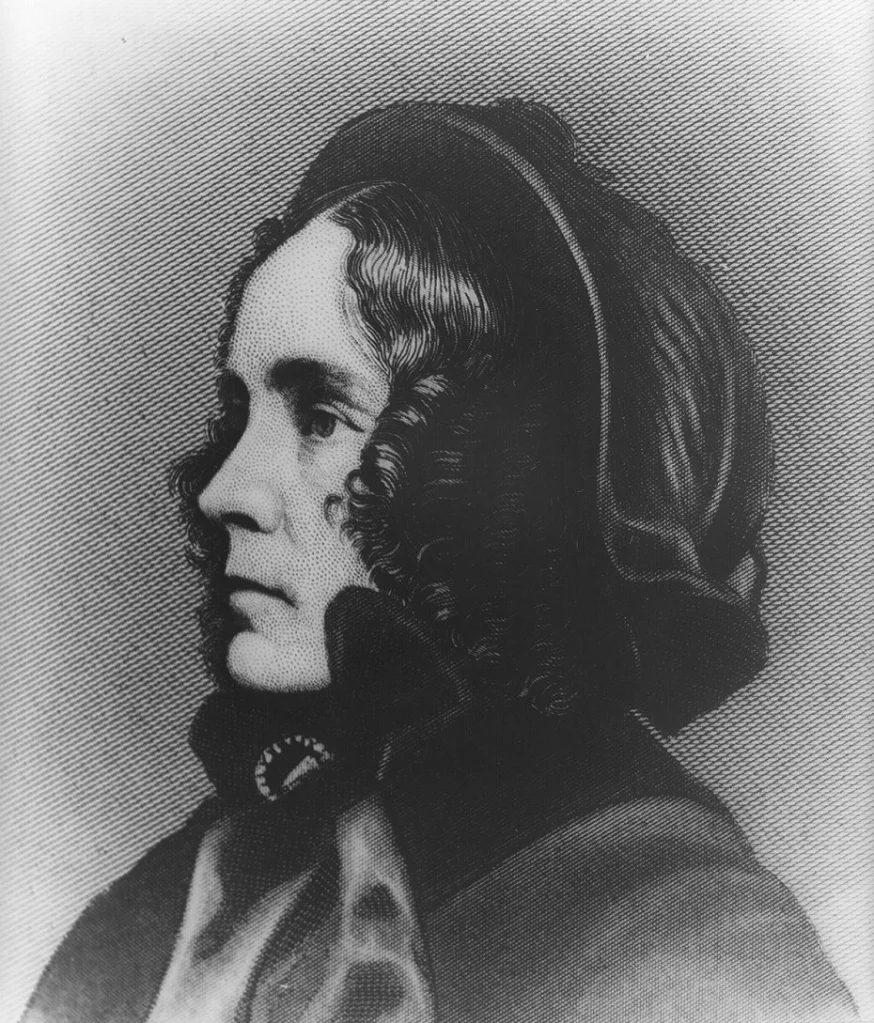
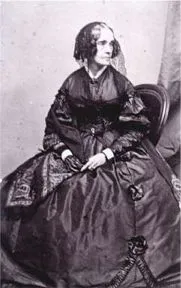
Corinne Roosevelt Robinson

Little Sister Corinne

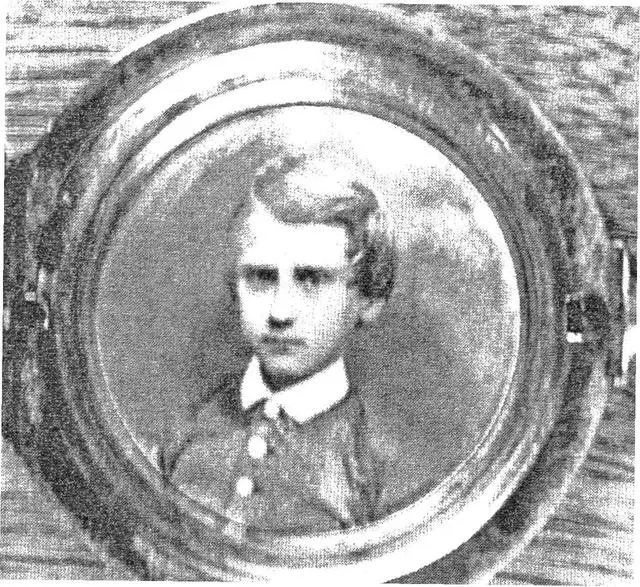
Young Theodore Roosevelt

The iconic Theodore Roosevelt was one of four siblings. The oldest of the four remarkable Roosevelts was Anna (1855-1931), called “Bamie” by her siblings, and “Auntie Bye” by the next generation. Despite an early childhood illness which left her with some spinal deformity, she was a dynamo, both in intelligence and energy. She assumed much of the household management by the time she was sixteen, and never relinquished her “leadership” in the family.

Elliott Roosevelt

Theodore came next, about three years later, followed closely by Elliott. Always considered the best looking and most convivial/likeable among the four, Elliott began a downward trajectory by the time he was twenty. With a substantial inheritance and little motivation or inclination toward a vocation, he became a “sportsman,” with a definite inclination to alcohol. A riding accident with serious injuries added to his problems: a laudanum addiction.

Anna (Bamie) Roosevelt

Not long after Elliott’s birth came Corinne (1861-1933), the baby of the remarkable Roosevelt family.

Practically from birth, she developed a close friendship with Edith Carow, a child of a neighboring family. Some have said that their nannies were close friends and wheeled the baby carriages together.

But while Bamie stood apart as a semi-adult, and both the boys were educated according to their exceptional abilities, Corinne’s education was more circumspect. Just as intelligent as her siblings, she was “a girl,” and her educational needs were adjusted accordingly. Finishing School. Even when the family traveled to Europe, an adolescent (and desperately lonely and homesick) Corinne was “boarded” separately from Theodore and Elliott.  

She was always well read and artistically inclined, and at not-quite thirteen, was a founding member of their Dresden Literary American Club, secretly nicknamed W.A.N.A., which even more secretly stood for “We Are No Asses.” It was then that she began writing poetry.

Young Corinne Roosevelt

Nevertheless a college education was never on the table. A career of any kind was out of the question. She was expected to marry and raise a family. 

What was never unquestioned, however, was her complete devotion to her family, and especially to brother Theodore. 

Douglas Robinson

It was Corinne’s brother Elliott who introduced his little sister to Douglas Robinson. She was eighteen, having made her social “debut;” he was six years her senior. Robinson was half-American (a great-great nephew of James Monroe), but born and raised in Scotland, educated at Oxford, and now returned to his American ties.

He was wealthy, well educated, a financial wizard at property management, and a superb sportsman – which drew him into Elliott’s circle – and he fell in love with Corinne. The Roosevelt family liked Robinson, and encouraged the match. In fact, Corinne Roosevelt was nice looking, athletic, well-read, and indeed marriageable. All the Roosevelts encouraged young marriages, ostensibly to protect them against youthful temptation, it is said. 

Alas, the family failed to consult Corinne. She liked Douglas Robinson pleasantly enough, but was hardly in love with him, nor particularly attracted. To her, he was loud, bullying and bad-tempered. Perhaps most importantly, she did not want to get married – at least not then. She had just begun to enjoy her own autonomy, had several suitors, and was not inclined to give up her freedom.

Douglas Robinson

She hemmed and hawed, and delayed for two years, accompanied by many tears. Robinson was patient enough, but the Roosevelts, including her mother, Mittie Bulloch Roosevelt, pressed somewhat awkwardly, saying that she could “learn to put up with him.”  When they finally married, Corinne was just shy of her 21st birthday, and was said to have spent most of her wedding morning sobbing.

Mrs. Robinson

Corinne and Douglas Robinson had four children and were married for 36 years before Douglas’ death in 1918. It could hardly be termed a happy marriage. Nor could it be termed an unhappy marriage. It was likely stuck in neutral. 

On the positive side, Robinson was an astute businessman with considerable wealth. He was a constant friend to Elliott, who died at 34 of severe alcoholism. He was always a strong supporter of Theodore’s political ambitions. He denied Corinne nothing that money could buy. In fact, his preoccupation with business and making money may have been Corinne’s greatest blessing: he let her do pretty much what she wanted. That included her interest in politics, especially once Theodore rose in prominence.

On the negative side, Corinne may have learned to “put up with him,” but there was never any romance or real love, despite common-for-the-time effusive letters. Plenty of money helped.

Once her children were grown, she began to find her own calling. She had always written poetry.

Corinne: On Her Own

All the Roosevelts (including subsequent generations) were fine writers. And they all loved poetry. Corinne wrote poems as a child. In 1911; when she was fifty, she finally published her first poem in Scribner’s Magazine. The death of Stuart, her youngest son, via a freak accident at Harvard when he was only twenty, had plunged her into an understandable depression, and poetry was her solace.

In 1912 a full volume of her poetry was published by Scribner’s. Additional volumes were published in 1914, 1919, 1924 and 1930. She also wrote and published a memoir, My Brother Theodore Roosevelt, which Scribner’s published in 1924.

Meanwhile, once women had received suffrage, in 1920 Corinne Roosevelt Robinson became the first woman to address the Republican national convention, seconding family friend General Leonard Wood’s nomination in 1920. She was surprisingly good and invitations for public speaking engagements followed, earning a substantial reputation of her own.

Corinne Roosevelt Robinson was the sole survivor of the remarkable Roosevelt siblings. Her health became iffy, complicated by a chronic eye infection that required several surgeries.

In 1933. she died at 71, only weeks before her distant cousin (and husband of Elliott’s daughter Eleanor) took the oath of office that had once been held by Theodore.

Sources:

Caroli, Betty Boyd – The Roosevelt Women

Dalton, Kathleen – Theodore Roosevelt: A Strenuous Life

https://www.theodorerooseveltcenter.org/Learn-About-TR/TR-Encyclopedia/Family-and-Friends/Corinne-Roosevelt-Robinson

https://www.nps.gov/thrb/learn/historyculture/corinneroosevelt.htm

https://peoplepill.com/people/douglas-robinson-jr

Posted in A POTUS-FLOTUS Blog, Nifty History People, Theodore Roosevelt | Tagged , , , , , , , , , , , , , , , , , | 1 Comment

G.P.A. Healy and the Portraits of Presidents

The idea of a poor, starving artist does not apply to George Peter Alexander Healy.

The Young Artist

George Peter Alexander (usually known as G.P.A.) Healy was definitely born poor in 1813 to Irish immigrants in Boston. A bit late to his calling, he was sixteen when he first picked up a brush, but the talent was obvious. His response was immediate. He decided then and there that he would make his living as an artist. 

Fate, luck, and a pleasing personality must never be taken lightly.

While in his teens, Mrs. Harrison Gray Otis, a grand dame of Boston society, commissioned him to paint her portrait. She liked it well enough to circulate his name among other potential clients. Healy also made an important friendship with Jane Stuart, a young woman his own age. She was the youngest daughter of the renowned portraitist Gilbert Stuart, and a serious artist in her own right.

It is Ms. Stuart who introduced young Healy to Thomas Sully, who had made his own reputation with his portrait of Thomas Jefferson, among other notables. Sully noted Healy’s genius immediately and encouraged and critiqued the young man’s work, and advised him to study in Europe.   

Healy inherited the mantle of Gilbert Stuart

In Europe, where he lived on and off for decades, he continued his studies, and his affable manners as well as skill won him many important (and profitable) commissions. George Healy was prolific, in demand from the start, and by the time he was forty, had produced nearly 600 portraits, and had an A-list of clientele.

Painting and Copying Presidents

For more than fifty years after the United States became its own “nation,” prominent people, including its Presidents, had portraits commissioned as the only means of obtaining a likeness. The accuracy depended on the artist’s skills. Photography did not become its own recognized discipline until the late 1840s, when John Quincy Adams became the first POTUS to be photographed. By then, he was an ex-POTUS and an elderly man. 

But portraits were always one-of-one, and when the subject (and sometimes the artist) becomes well known and popular, copies need to be made. Sometimes the original artist made a few copies himself, but many fine artists made comfortable livings by copying the works of others.

George Washington had several portraits painted, notably by Gilbert Stuart, and copied numerous times (including by his daughter Jane). Etchings were made from those paintings. Both John Adams and Thomas Jefferson had also been painted by Stuart, long after their Presidencies, when they were in their elder years. The prolific Charles Willson Peale and his equally prolific and multi-talented family was also responsible for several portraits and copies of early Presidents.

The Healy-Jackson Portrait

King Louis Phillipe of France
The elderly Andrew Jackson

Nevertheless, the very first Presidential portrait that G.P.A. Healy painted from life, was Andrew Jackson, in 1845. The actual commission came from King Louis Philippe of France, who was a long-time admirer of Old Hickory. The King had also become a Healy fan and sent the artist back to the US, all expenses paid.

Jax was ill, seventy-eight, and looked every day of his vigorous and often dangerous life. The sitting was done only a short time before Jackson’s demise, and according to lore, AJ was not an easy subject. He was obviously failing, and posing for a portrait at such a difficult time made him even more irritable than usual. 

But it made Healy’s reputation. He was only 32. 

Becoming Famous, In Demand and Highly Paid

President Polk

Encouraged by the high level commission, Healy arranged to paint a pair of portraits: Sitting President and First Lady, James Knox Polk and Sarah Polk. Polk was a strong admirer and supporter of Old Hickory, and welcomed the artist to the White House for a few days. The result was perhaps one of the most iconic FLOTUS portraits: Sarah Polk in an elegant burgundy velvet gown with a gold tasseled cap. (It has been copied several times.) Polk’s portrait was a traditional pose, and Polk grumbled to his diary regarding the time-consuming and tedious “sitting” for a portrait – a common complaint of several Presidents.

Sarah Polk

While he was spending time in the USA, Healy also managed to paint a likeness of an elderly John Quincy Adams, who grumbled, hoping it would be the last portrait he would sit for. He did not care for it, but his wife said it was an excellent likeness. 

The Posthumous POTUS Portraits

G.P.A. Healy (1813-1894) lived a long and prolific life, said to have painted some 50 or more portraits (or copies) per year. He ping-ponged living between Europe and the USA, where he made his home in Chicago, and was a founding member of its prestigious Art Institute. He also found time to write his memoirs.

Having gained a reputation via his portraits of Presidents Jackson, Polk and J. Q. Adams, he was later commissioned (mostly by the Corcoran Gallery) to paint other Presidential portraits. Congress did not pay for “official” POTUS portraits until the early 20th century. Healy used previous portraits, photographs or etchings to depict Martin Van Buren, John Tyler, Franklin Pierce, Millard Fillmore, James Buchanan, Abraham Lincoln, Ulysses S. Grant and Chester Alan Arthur.

The Peacemakers

Perhaps Healy’s most famous Presidential portrait was The Peacemakers, painted in 1869, depicting the meeting between Lincoln, General Grant, General William T. Sherman, and Admiral David Porter, only weeks before the surrender at Appomattox Court House. It was originally purchased by Robert Todd Lincoln.

It became immediately popular – and the Healy image of Lincoln was the inspiration for his single portrait of Abraham Lincoln – and if one looks closely, his later singleton portrait of Ulysses S. Grant. 

Lincoln
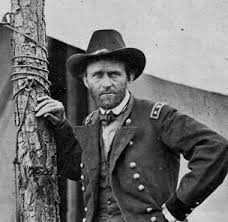
Grant

Eleven Presidents in all. More than any other artist. 

Sources:

Healy, G.P.A. – Reminiscences of a Portrait Painter (reprint) – Forgotten Books, 2015

https://www.whitehousehistory.org/photos/the-peacemakers-by-george-peter-alexander-healy

Posted in A POTUS-FLOTUS Blog, Abraham Lincoln, Andrew Jackson, Chester Arthur, Franklin Pierce, James Buchanan, James K. Polk, John Quincy Adams, John Tyler, Martin Van Buren, Millard Fillmore, Ulysses S. Grant | Tagged , , , , , , , , , , , , , , , , , , , , , , , , , | Leave a comment

General Grant’s No-Exchange Order

Ulysses S. Grant took command of the entire Union Army in early 1864

Hard to Believe, But…

After millenniums of savage butchery, more “civilized” armies faced each other on the most favorable empty grounds they could find and they became battlefields, far from villages and towns and private citizens. If a belligerent was vanquished, the surrender was honorable, and the subdued officers were usually treated with respect for having fought bravely.

To that extent, both soldiers and officers, if captured (whether in battle or surrender), were periodically exchanged. Or ransomed.

There was honor in defeat.

When General Cornwallis surrendered to General Washington at Yorktown, once the salient terms were effected, a magnanimous GW invited his opposing leadership staff to an elegant dinner. After all, officers were gentlemen.

…Even To the American Civil War…

This was a brothers’ war. Families were torn apart blue and gray, and long time friendships were severed. But the exchange standard applied.

When General Ulysses S. Grant rose to prominence at Fort Donelson, along the Cumberland River, he faced an old West Point pal. Now a CSA general, Simon Bolivar Buckner had known USG for two decades. They had been good friends. Despite Grant’s own eponymous “Unconditional Surrender” message, the two adversaries had a cordial half-hour reunion, once their business had been completed.

CSA General Simon Bolivar Buckner

Remembering Buckner’s assistance years earlier when USG was down on his luck, General Grant offered “his purse,” since he knew Buckner would be taken prisoner of war. Buckner was aware of his situation-to-be, but was a man of means, and declined the well meant offer. 

But the point to remember was that Buckner was indeed taken prisoner of war, but later exchanged – and even reassigned to fight again another day – for the Confederate Army. It was customary.

A Long and Deadly War of Numbers

Two years of vicious fighting took place between Grant’s Ft. Donelson victory and his promotion to General of the Army. Thousands upon thousands of Blue/Gray soldiers fought and died. Many languished in prison camps, hoping and waiting for exchange.

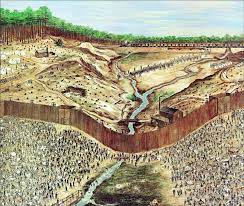
The siege at Petersburg

Ulysses Grant had grown to understand the arithmetic. The North outnumbered the South in population by more than 3 to 1. In financial wealth, perhaps 4 to 1. Union troops could be supplied and replaced far more easily than the Confederates. 

By 1864, desertion in both both armies had become a problem that could not be overlooked. Some soldiers were homesick. Some were scared. Some were battle scarred and drained. Some received pleading letters from their families. They were needed at home. Many young fellows slipped away, usually in twos and threes, to return to their loved ones. 

In the South, it was crucial. The deaths, casualties and desertions could not be replaced.

Grant’s Decision

Both General Grant and President Lincoln had concluded that the war had become one of attrition: Which army could outlast the other. 

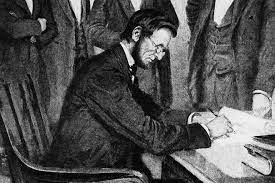
Lincoln signs the Emancipation Proclamation

In the Union Army, with an influx of immigrants and most importantly, the huge numbers of free Blacks and ex-slaves who had enlisted, replacements were available. And it was not only men and munitions, but an almost limitless ability to sustain them with food, medicines, horses and forage, and the essentials of human survival. The South could not match that, and the blockades preventing those essentials had tightened the noose to strangulation point.

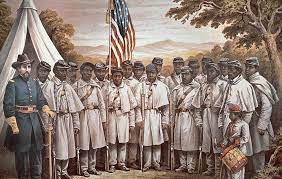
Black soldiers of the Civil War

To insure that trained soldiers could not be re-recruited by the Confederate Army, on August 18, 1864, as a military necessity, Grant ordered that no prisoners of war would be exchanged.  

“It is hard on our men held in Southern prisons not to exchange them, but it is humanity to those left in the ranks to fight our battles… If we commence a system of exchange which liberates all prisoners taken, we will have to fight on until the whole South is exterminated. If we hold those caught they amount to no more than dead men. At this particular time to release all rebel prisoners North would insure Sherman’s defeat and would compromise our safety here.” – Gen. USG

The Back Story

While General Grant’s order to halt prisoner exchange always receives the most publicity, earlier incidents had occurred that presaged that grim order. In late 1862, President Lincoln had made his preliminary Emancipation Proclamation public, opening the door to recruiting free Blacks, runaway slaves and “contraband” into the Union Army – as soldiers, not merely teamsters and ditch diggers.

To Confederates, it rubbed salt into their perceived wounds. In April, 1864, at Ft. Pillow in Tennessee, a Confederate victory, U.S. Colored Troops (as they were called) were given “no quarter.” This meant that no Black Union soldiers were taken as prisoners-of-war. They were either killed, or sold back into slavery. Confederates were twice as vicious facing Black soldiers as they were with other damnyankees. The North was horrified by the blatant brutality.

The infamous Andersonville Prison

Lincoln knew that, but fine lines needed to be tacitly addressed. Making an already horrific war vengeful or retaliatory could not be allowed. He tried valiantly for three years to make the primary purpose “saving the Union,” and knew that by shifting the purpose to one of emancipation, a large part of the Union Army could collapse. Northerners may not have approved of slavery, but many were totally opposed to fighting – or dying, to prevent it.

Northern POW camps were not much better

Meanwhile, in spring, 1863, as he was slogging his way through Vicksburg, General Grant learned first hand to appreciate the value of Black soldiers. They had fought valiantly and successfully in supporting roles at both Port Hudson and Milikens Bend. With honor.

They had earned the public respect of USG.

Sources:

Boller, Paul F., Jr. – Presidential Anecdotes, Oxford University Press, 1981

Chernow, Ron – Grant – Penguin Press, 2017

White, Ronald C. – American Ulysses: A Life of Ulysses S. Grant – Random House, 2016

https://www.nps.gov/pete/learn/historyculture/city-point.htm

https://www.nps.gov/ande/learn/historyculture/grant-and-the-prisoner-exchange.htm

https://www.history.com/topics/american-civil-war/fort-pillow-massacre

Posted in Abraham Lincoln, American Civil War, Nifty History People, Ulysses S. Grant | Tagged , , , , , , , , , , , , , , , , , , , , | 2 Comments

Frances Cleveland: Saturday

Frances Folsom Cleveland was only 21 when she became First Lady.

The Young FLOTUS-To-Be

Frances Folsom (1864-1947) was the total antithesis of her husband, sitting President Grover Cleveland. She was young (he was 49), slim and trim (he weighed in around 300 lbs.), and pretty-with-dimples. His face was usually grouchy – with a walrus-like mustache. 

Frances Folsom was a pretty gal!

In addition to those obvious conditions, the one most likely to raise eyebrows, was that Grover Cleveland was Frances’ legal guardian. He had known her since birth (or before), since he had been the close friend and law partner of her father, Oscar Folsom. When Folsom died, GC, as executor of his very modest estate, became guardian to 11-year-old Frances and her mother. He managed their funds wisely, enabling them to live comfortably. Always engaged in Frances’ upbringing as a devoted “Uncle Cleve,” he arranged for her education at Wells College. 

Once her hems were lowered and her hair pinned up, his attention shifted – although he always joked (if he was capable of joking), that “he was waiting for his wife to grow up.” It was no secret that now-NY Governor Cleveland was Frances’ guardian, so if letters and bouquets were sent to her, or she and her mother were invited to occasional social galas in Albany, no one batted an eye. They were considered “family.” 

Grover Cleveland, non-Adonis

But by the time Frances graduated, and GC had been elected President in 1884, he had already proposed to his ward, and she had accepted. But they agreed to keep it a secret for a while. Frances and her mother spent several months in Europe before the nuptials were held – in the White House.

This placed the pretty, young First Lady on a merry-go-round of fame and paparazzi, 1880’s style.

FLOTUS Receptions

The first FLOTUS

From the very beginning, when Martha Washington joined President George Washington in NYC, her major responsibilities were a) managing and overseeing their home and personal needs, and b) entertaining the new President’s many guests. And their wives, daughters, mothers, sisters and assorted female guests. 

Martha’s “levees”, as they were called, were formal social occasions, not to be confused with smaller dinner parties, usually stag affairs, for GW’s political/governmental associates. Some of the levees were “for ladies only,” but many were “mixed.”

Some quarter century later, FLOTUS Dolley Madison, now ensconced in the White House, upped the ante. Her Wednesday evenings were legendary. Anyone, regardless of social position, so long as they were “properly dressed” and behaved, was welcome.

The incomparable Dolley!

For the next half-century or more, “receptions,” his/hers/or both were a major social function of the Presidency. While many Presidents found them to be time consuming and even irritating, none dared to cancel the event, other than for illness. FLOTUSES, of course, were expected to  enjoy them. In the instance of a POTUS being widowed, or with an “invalid” spouse, a young daughter/niece or other female relative was recruited to stand-in. The young gals usually were delighted by the high-level recognition. 

The President and “Notions”

After the Civil War, women in the workforce quadrupled (not counting farm work or servants). Hundreds of thousands were widows or orphaned daughters. Many suffered the loss of their sweethearts. Many had menfolk who were so badly wounded they no longer could ply their usual trades. Many “marriageable” women remained single because of a shortage of available men.

Meanwhile, there was an industrial sea change: inventions and industry opened doors for women as clerks, secretaries, typists, telephone operators, etc. They had also learned to be vocal and active. They taught on high academic levels. They wrote books and gave lectures. They actually liked it. And they wanted to vote.

Rose Elizabeth Cleveland

For year, while Frances and her mother were in Europe, the bachelor President had his unmarried sister Rose Elizabeth Cleveland serve as his “hostess.” She did so reluctantly, mainly to help her brother. She, after all, had emancipated-female “notions,” which GC claimed “gave him a headache.” 

Grover Cleveland was receptive enough to a woman’s education, but his lines were clearly drawn. He was a conservative, traditional man. A married woman’s place was in the home. Husband and family came first. Women did not work – unless the financial need was dire. And the idea that a wife, HIS wife, might support the nascent-but-growing woman’s suffrage movement was unthinkable! 

GC was a lucky man. His bride did not have “notions”.

Mrs. Cleveland’s Receptions

Frances altered her wedding gown to wear at receptions.

As might be expected, anyone in or around Washington flocked to the White House to meet and shake hands with the pretty new First Lady. It is said that thousands of people, dressed in their best clothes, lined up outside on her “at home” days, happy to stand in line waiting to be presented. 

The young FLOTUS had the energy of youth, and did not mind standing for two or three hours with a perpetual smile on her face. It is reported, however, that sometimes her aching arms and hands needed to be massaged after 2 or 3,000 greetings. 

She held her own receptions twice a week. One of those days was on Saturday afternoon. Perhaps in an effort to minimize her strenuous activities, a White House aide suggested she might give up her Saturday afternoon receptions. 

According to lore, Frances Cleveland replied that Saturday afternoons was the only day that shop girls, office clerks and other gainfully employed women were available to attend.

Her Saturday receptions were not cancelled. Young women continued to attend in droves. Frances continued to have her arms massaged.

It is unknown whether or not she ever had a notion that had it not been for “Uncle Cleve’s” fiscal management and guardianship, she might be one of those “gainfully employed” women herself.

Sources:

Boller, Paul F., Jr. – Presidential Anecdotes, Oxford University Press, 1981

Carpenter, Frank G. – Carp’s Washington – McGraw Hill, 1960

Dunlap, Annette – FRANK: The Story of Frances Folsom Cleveland, America’s Youngest First Lady – Excelsior Editions, 2009

Foster, Feather Schwartz – Mary Lincoln’s Flannel Pajamas and Other Stories From the First Ladies Closet – Koehler Publishing, 2014

https://www.whitehouse.gov/about-the-white-house/first-ladies/frances-folsom-cleveland/

https://www.britannica.com/biography/Grover-Cleveland

Posted in A POTUS-FLOTUS Blog, Grover Cleveland, Nifty History People | Tagged , , , , , , , , , , , , , , , , , , , | Leave a comment

Martha Washington’s Speckled Apron 

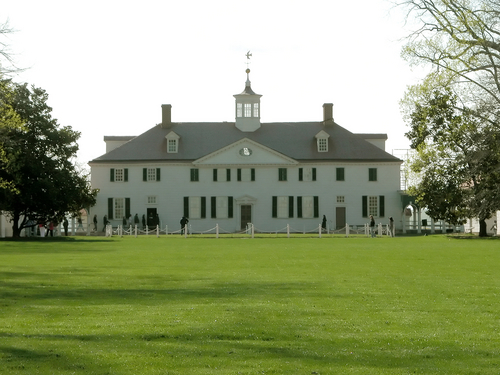
Mrs. Washington had a big house to manage.

Mistress Custis, Mistress Washington

Martha Dandridge (1731-1802) was not born to wealth per se. She was born, very much like George Washington, to a family of gentry. Her father, John Dandridge, owned several hundred acres. This entitled him to a comfortable living, respect from his neighbors, and a seat in the House of Burgesses.

It was not even close to the wealth of Daniel Parke Custis, the man Martha married when she was eighteen. Twice her age, Custis was the heir to nearly 18,000 acres across five separate plantations, fine houses and all the accoutrements of gracious living.

Daniel Parke Custis

Their marriage was a happy one for seven years. They had four children, two died in early childhood. Then Daniel died. At 26, Martha was one of the wealthiest young widows in Virginia, with not only land and a workforce of 300 souls, but investments and the rarest of planter commodities: ready cash.

Several months later, she met Colonel George Washington of the Virginia Militia, who had inherited Mount Vernon from his half-brother. He was ready for a career change, and determined to turn it into a showplace. They found themselves like minded, and once Martha was assured that Washington would be an affectionate stepfather to her children and honest guardian of their estate, they agreed to marry.

Mistress of Mount Vernon

Martha had been the eldest of five surviving children, and was well accustomed to life on a plantation. Her years as Mistress Custis raised the level to mistress of a wealthy Virginia planter. The household goods (silver, porcelain, linen, etc.)  she brought along to Mt. Vernon were some of the finest in the colony.

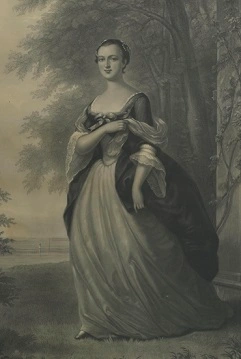
Said to be a young Martha Washington

Young Mrs. W. was no stranger to the work of a plantation wife, and was happy in domestic life. She loved Mt. Vernon from the start, helping to transform it hands-on, into exactly the showplace ex-Col. Washington had envisioned. Her gardens were bountiful, her house furnishings luxurious, and her pride and joy, the kitchen, provided sumptuous meals for their many visitors. 

Run Up To Independence

With a savvy sense of business that became legendary, George Washington was a successful planter who became increasingly aware of the constrictions Great Britain, the Mother Country, was placing on American trade. And taxes.

When Virginia led the “colonies” in declaring non-importation of British goods and encouraging “Buy American”, both Washingtons embraced the concept. Martha no longer purchased fine imported silks, satins and laces, but contented herself with the best “American” cloth she could find. She was a superb needlewoman, and her hands were never idle. Her fancywork was well known to her friends and neighbors.

Aprons

Dry cleaning was more than a century in the future. Laundering was laborious – centered around boiling hot water, harsh lye soap, and plenty of elbow grease. Followed by hot irons. And that was for the “washable stuff.” Naturally, velvets and taffetas, silks and satins, could not be immersed in boiling water. The best that could/might be done, was gentle spot cleaning.

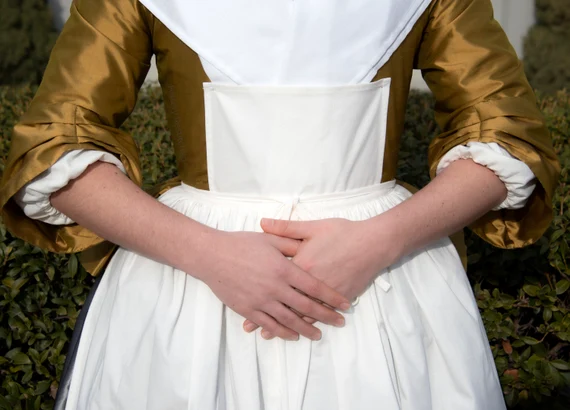
Modern – but in colonial style.

Therefore, the optimum way to care for clothing was to keep from getting it soiled or stained to begin with. Thus aprons. They could be washed and ironed relatively easily. For the daily work around the plantation, they were usually bib, or pinafore style, covering much of the entire gown. For a more social atmosphere, a half-apron might suffice. For a woman of Martha Washington’s social status, it would likely be made of a fine linen. Just as likely, she would have had several of them.

Morristown, New Jersey

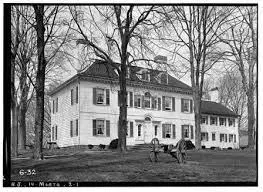
Once the Revolutionary War was underway, General George Washington was Commander-in-Chief. One of his important-but-subtle duties was to recruit financial assistance for the army. It was no secret that the General was one of the wealthiest men in Virginia, and needed to face wealthy patriot-colonists as a peer, which he was. He had been to Morristown earlier, and had “commandeered” the finest house in town as his headquarters, befitting his station.

GW’s HQ in Morristown, NJ

Armies were seasonal then, and the cold and snow sent them into winter quarters. This provided time to tend the wounded, train the soldiers, gather supplies and plan for a spring offensive. Maybe even some fund-raising. He always sent for Martha when he could.

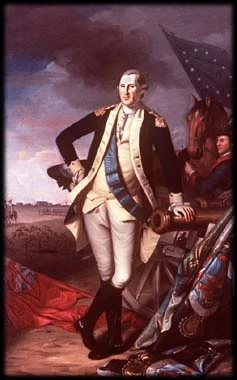
The General

Late in 1779, she arrived.

The Apron and The Message

Naturally several wealthy Morristown women came to call on her, dressed in their finest clothes, befitting their status. Surprisingly, the general’s wife greeted them with a cheerful smile, but wearing a plain homespun brown cloth gown.

Even more surprising to the colonial ladies, she wore a speckled apron. (By the way, this information has repeatedly been included in many old books about Mrs. W.) For the uninitiated, “speckled” cloth, as opposed to fine linen or lace, is a coarse material, possibly an unbleached muslin, more associated with servants rather than a fine lady.

The older Mrs. W.

Nevertheless, Mrs. Washington welcomed her callers, engaged them in pleasant conversation, all the while taking needles from her workbasket, and continuing with her project – knitting socks for the soldiers. It is unknown whether the fine ladies were taken aback by Mrs. W’s plain appearance, but her obvious hospitality and pleasant charm won them over. And her subtle message was not lost on them.

After their tea, she invited them to call on her again. They would do so, and she in turn would call on them during those long winter months of 1780.

But when they called, satins and plumes were left behind. The ladies came ready to work, with their knitting baskets in hand. The fine ladies were now part of the war effort too.

Sources:

Boller, Paul F., Jr. – Presidential Wives, An Anecdotal History, Oxford University Press, 1988

Bourne, Miriam Anne: First Family: George Washington and his Intimate Relations, 1982, New York, NY, W.W. Norton

Brady, Patricia – Martha Washington: An American Life – Viking, 2005

Foster, Feather Schwartz – Mary Lincoln’s Flannel Pajamas and Other Stories from the First Ladies’ Closet – Koehler Publishing, 2016

http://www.mountvernon.org/

https://www.nps.gov/morr/learn/historyculture/ford-mansion-washington-s-headquarters.htm

Posted in A POTUS-FLOTUS Blog, George Washington, Nifty History People | Tagged , , , , , , , , , , , , , , , , | 1 Comment

Al Smith: The “3-P” Loss of 1928

Alfred E. Smith was from the “Sidewalks of New York.”

Al: A Brief Run-Up

Alfred Emanuel Smith (1873-1944) was born to Catholic immigrants in a rough neighborhood on NY’s lower East Side. He identified with his Irish forebears, but in fact, he was a mixed breed. His father was working class, but strong for education, so Al was sent to St. James, a parochial school. In his early teens his father died, and Al was needed to help support the family.

For the next seven years, he worked at the Fulton Fish Market, not far from the Brooklyn Bridge that was under construction. Al would later say, that the Fulton Fish Market was his alma mater. He did some of everything, and learned about life. He was blessed with an outgoing disposition, a cheery smile, and the politician’s gift for remembering names and faces. The Democratic political bigwigs of NY’s Tammany Hall took a liking to him, and by the time he was thirty, Al was elected to the NY State Legislature. 

His fellow legislators viewed the young fellow who spoke with the “dese, dems and doses” of the lower undereducated class, as a Tammany hack. Al was always a flashy dresser, and his fractured pronunciation never changed – but his efforts, diligence, native intelligence, good will and honest devotion to his constituents began to win him grudging support. And then more support. 

It was a horror story!

After the horror of the Triangle Shirtwaist Factory fire in 1911, Al Smith’s name became prominent. He was Vice Chair of a special commission that recommended and implemented dozens of new laws and regulations for worker and workplace safety. His constituents continued to re-elect him by large margins. And he, in turn, would live in their neighborhood for the rest of his life.

More than 150 people died.

By the end of WWI, the street-kid from the Lower East Side was Governor of New York.

The Tenor of the Times 1920s Style

By 1920, the boys had “seen Paree,” and there was no keeping ’em down on the farm. That of course, gave rise to the Roaring 20s, with sea-changes in American morals, goals and dreams and opportunities.

When Prohibition became law of the land, the morally emancipated rejected the piety of their elders, leading to an unintended and seemingly unstoppable wave of crime. That caused the pious ones to double down on their goals, which now included war on the speakeasies and racketeers. 

When Women Suffrage became law of the land, hemlines went up, corsets were trashed, hair got bobbed, lipstick was in every purse, and the gals were ready for a good time, to the consternation of their parents.

When Henry Ford priced his automobile to fit the pocketbook of every worker (around $300), the flivver became as common as a cup of coffee. Cars were everywhere.

Meanwhile the stock market was rising and the good times were rolling.

The Governor and the Aristocrat

New York was the most populous state in the union in the 1920s. Naturally its governor was (and still is) observed closely for higher political office. A NY governor who is re-elected a few times like Al Smith, was a high seed for the Presidency.

He had known the aristocratic Franklin D. Roosevelt of Hyde Park for more than a decade, when FDR served in the State Legislature and then as Asst. Secretary of the Navy. They agreed on many fronts and their relationship was invariably pleasant. Their styles however, were poles apart.

FDR at the 1924 convention

As the Democratic convention of 1924 approached, top-seeded Smith asked polio-stricken Roosevelt to place his name in nomination. FDR, whose jaunty grin belied his obvious pain and cane, actually stole the show as he introduced “The Happy Warrior.” But the convention went to 103 ballots and finally to John W. Davis of WV, who nobody ever heard of – to face incumbent Calvin Coolidge. Davis lost.

The Problems of 1928

Al Smith finally won the next Democratic nomination and was ready for 1928, but faced a formidable opponent: Herbert Hoover, of the impressive resume. 

Al Smith had a better smile!

If Al Smith was a poor-boy-makes-good story, Herbert Hoover was Horatio Alger on steroids. Poor Iowa farm-boy, orphaned by ten and foster raised by family members in Oregon, Hoover worked his way through Stanford University, became a mining engineer, a millionaire by thirty, and had consulting offices in six countries by forty. During WWI, he became a mega-philanthropist whose name was known far and wide. He also served as Secretary of Commerce for eight years.

The election was a no-brainer between the affable Smith, and the reserved Hoover with the stiff collar.

In retrospect, who was happier?

Journalists of the time believed that Smith might have made a decent President, but was defeated by the Three-Ps: Prosperity, Prohibition and Prejudice.

Prosperity was indeed a way of life in 1928, when even newsboys and garage mechanics could dabble in the stock market and double their weekly wages in a month – or less. Nothing succeeds like success.

Prohibition… the fly in the ointment. Hoover was a reluctant “dry” supporter; he had been accustomed to fine wining and dining for decades. But as law of the land, he was bound to support it. Al Smith was a loud and avowed “wet.” He liked a beer. His constituents liked a beer. No two ways about it.

But the Prejudice part. As the 20s continued to roar, the Ku Klux Klan of post-Civil War notoriety had a resurgence. Al Smith was not only an Irishman, but a Catholic, in a country still deeply connected to the Protestant faith and still not crazy about the Irish. Some insisted that if Smith became President, he would be taking orders from the Pope.

And if that wasn’t enough, Al Smith was also picturesque: flashy, undereducated, and a potential embarrassment compared to the cosmopolitan heads of state around the world.

He didn’t have a chance.

Sources:

Stoddard, Henry L. – Presidential Sweepstakes: The Story of Political Conventions and Campaigns – G.P. Putnam’s Sons, 1948

Troy, Gil – See How They Ran: The Changing Role of the Presidential Candidate, Free Press, 1991

ttps://www.newworldencyclopedia.org/entry/Alfred_E._Smith

https://www.dol.gov/general/aboutdol/hallofhonor/2006_smith

https://www.270towin.com/1928_Election/

Posted in Franklin D. Roosevelt, Herbert Hoover, Nifty History People | Tagged , , , , , , , , , , , , , , , , , , , | 2 Comments

George Washington’s Birthplace: Pope’s Creek 

Spoiler Alert: This site is a re-creation. Nevertheless…

The Land Itself…

Pope’s Creek, a beautifully situated tributary of the Potomac River in a still-rural and sparsely populated area of Westmoreland County, in Virginia’s Northern Neck, had been in the Washington family for three generations before George Washington was even born.

The view, then and now

His great-grandfather, John Washington, arrived in 1657, married Anne, the daughter of Nathaniel Pope, who dowered her with 700 acres to start their married life. They planted a self-sustaining kitchen garden, plus acres of corn and wheat, and at least fifteen acres devoted to tobacco, then accepted as currency to trade with Britain for household and luxury goods. Over the next decades, he purchased additional land, including a tract on Little Hunting Creek, which eventually became Mount Vernon.

George’s father, Augustine Washington added still more acreage, and married Mary Ball, a year after his first wife died. George was their first child together. George lived there until he was nearly four, when his family moved briefly to Little Hunting Creek, and then finally to Ferry Farm, where GW spent most of his childhood. 

But wherever they lived, it was on a farm, close to the land, and near a great river. Love of the land and love of the river were entrenched in Washington’s life forever. 

GW: The Mid-Years

Augustine Washington died when GW was eleven. The expected “classical education in London” that was given to his older-by-somewhat half-brothers, Augustine and Lawrence, was now out of the question. The balance of his formal education was spotty, but he trained as a surveyor, a respected (and much needed) profession in the early part of the 18th century. It opened several doors for him.

The earliest portrait of GW

Actual records indicate that by fifteen or so, GW spent time at Pope’s Creek, which had been inherited by his eldest half-brother Augustine, and surveyed a fair portion of that property, where his earliest preserved map was drawn.

GW’s early survey (LOC)

His other half-brother Lawrence had inherited the property at Little Hunting Creek, next door to the powerful (money, title and influence) Fairfax family, and married one of their daughters. GW was a frequent visitor, and another door opened. The Fairfaxes liked the teenager, and invited him to join an expedition to survey the Shenandoah Valley. That led to an appointment as surveyor of Culpeper County. And that led (since he was familiar with those “western” lands) to an assignment with the Virginia Militia to investigate French encroachments on those lands. 

That in turn led to the start of the French and Indian War, GW’s rise in military experience and command.

When Lawrence Washington died, George inherited the Little Hunting Creek property, which his brother had renamed Mount Vernon. 

He returned to Pope’s Creek only once or twice to visit family during the next decades. His “birth house,” then owned by his nephew, burned in 1779.

Remembering George Washington for 250 Years

The next public notice anyone took of George Washington’s birthplace was around 15 years after his death in 1799. His step-grandson George Washington Parke Custis visited the area, and placed a stone marker stating “Here on the 11th of February, 1732, Washington was born.” (Note the calendar change is now February 22). In 1858, the State of Virginia acquired the Pope’s Creek property. 

Meanwhile, when GW’s Centennial was held in 1832, plans began for erecting the Washington Monument in the city that bears his name. It took more than fifty years to complete, punctuated by national strife, civil war, and lack of funds. But in 1882, the War Department took over much of the birthplace site, and in 1896 the Army Corps of Engineers erected a 50-foot stone obelisk (about one-tenth the size of the Washington Monument), to commemorate where (they believed) the original house was located. 

The GW “mini-monument”

As the Bicentennial (1932) of GW’s birth came closer, it was determined that the birthplace required additional dignity and attention. With help from John D. Rockefeller Jr., the Wakefield National Memorial Association was established, including “borrowing” some of the historians, archaeologists, engineers, etc., who were resurrecting and restoring Colonial Williamsburg. 

Archaeological excavations in the area have unearthed some 1700-era tools, glass items, and even a seal with Augustine Washington’s initials. 

The house is a total recreation-ish.

The Engineers moved the obelisk about a half mile away, and built a Colonial-Revival style birth house in 1931, likely considerably finer than the actual house where GW was born, but it represents a typical upper-class house of the time. The bricks were handmade. The furnishings are evocative of the 1730-50 period, but are not from the Washington family. The house is surrounded by a kitchen garden, a recreated colonial kitchen, a weaving room, farm workshop and barn.

Recreation with period pieces

According to The George Washington Birthplace National Monument docents, “Mount Vernon (with its huge pocketbook) is the largest repository of GW owned artifacts. We try to fill in with period pieces.” 

The actual foundation of the birth house was unearthed in 1936, (not far from the Memorial House), reburied for its protection and outlined in oyster shells. The living colonial farm was established in 1968.

And, for your edification, a committee is already in place to determine the plans and priorities for George’s Tricentennial!

The George Washington Birthplace National Monument is run by the National Park Service, and is located about 40 miles from Fredericksburg, VA. It has a nice little visitor center with commemorative displays, book/gift shop – and a really nice 15-minute film.

Best of all – it is FREE. You can throw a few bucks in the jar if you like. 

So if you are in the area, stop by. They are always happy to see you!

Sources:

George Washington Birthplace printed handout from the U.S. Dept. of Interior

https://www.georgewashington.org/childhood.jsp

https://www.mountvernon.org/the-estate-gardens/the-mansion/owners-of-mount-vernon/

Posted in A POTUS-FLOTUS Blog, George Washington | Tagged , , , , , , , , , , , , , , , , , , | 1 Comment

Civil War Grub: Feeding Billy Yank and Johnny Reb 

“An army travels on its belly.” – Napoleon Bonaparte

First…Some Numbers and Perspectives

Sometimes it is difficult to comprehend plain-old numbers. 

Like …more than 1,000,000 Union soldiers who fought in the Civil War – and more than 600,000 Rebels. Jiggling it into a more comprehensible picture: New York City, with the largest population in the country, had about 1 million residents (according to the 1860 census).

Like …a division or a corps vastly outnumbered many of the local populations where fighting took place. With around 80,000 soldiers, the Army of Northern Virginia (CSA) easily dwarfed the 38,000 Richmond residents. And Richmond was the third largest city in the South! (Charleston had around 40,000 – and they both paled in comparison to New Orleans with nearly 170,000.)

Like …Gettysburg, a small crossroad town of 2400. The combined armies had 60 soldiers for every civilian.  

Feeding the boys in blue and gray was a monumental task.

While In Camp…

It was not a problem at first – either side. The quartermaster corps and commissaries had cooks and supply staff, wagons and all the necessary equipment. And food.

Enjoying a meal

Many new recruits came with a modest “care package” from home, whether a sandwich, Mom’s cornbread, or a moveable feast from Delmonico’s. That, of course, did not last long.

The agricultural Southern states were generous in support of their own. Wagons of grain and corn, vegetables, beef, pork and chickens and whatever they could spare were shipped off regularly for the war effort. Whatever difficulties encountered later by their “starving armies” had less to do with supply. It was distribution. There are countless documents regarding badly needed (and expected) foodstuffs rotting in warehouses or train depots, for want of transportation.

The North did not have that problem. With a healthy railroad system and a much fatter pocketbook, food supplies reached their intended recipients regularly. The War Department purchased most of the food, and it was generally decent. There were many young soldiers writing home about gaining weight while in camp. 

Both armies had various sutlers (peddlers) who followed with their wagons of food and sundries available for purchase. And in the North, the Sanitary Commission provided tons of additional supplies, food and otherwise.

Dining al fresco

And, if Johnny Reb and Billy Yank were encamped for any length of time, loving families on both sides could send more corn bread or cookies. 

On The March…

…was more complicated. Both the Union and Confederate Armies were cities on the move. Feeding upwards of 30 or 40 or 50,000 men every day was fraught with difficulties. Soldiers were usually told to pack 3 or 4 days rations, which usually meant some coffee, hardtack (a biscuit-like edible, about the size of a subway tile with or without weevils), cornmeal (mostly in the South), sugar, salt, flour, lard, whatever bacon or ham they might have, corn or beans if available. And perhaps an apple or two. A luxury.

Hardtack could break your teeth.

Fresh water was not always available. Rivers and streams were used to water the animals, for occasional bathing, for laundry, for disposing of waste, and various purposes other than human thirst. This, of course, polluted the drinking water. Even then it was well known that typhoid and typhus, dysentery and cholera were caused by contaminated water. Soldiers sometimes strained their water; some boiled it. Most did not. The thirst outweighed the fear. 

Foraging was a way of life on the march. The best marksmen went after game. Dozens of soldiers North and South periodically descended on plantations or farmhouses, commandeering whatever hogs, chickens or cows were available. They raided storehouses and smokehouses, and dug up vegetables. Some were dispatched to find whatever they could to feed their own small groups of ten or a dozen.

A cook-out.

Then, of course, there were well orchestrated raids on the enemy’s supply line, where cavalry soldiers systematically “liberated” wagons of badly needed foodstuffs.

Jeb Stuart: Liberator of supply wagons

“Living off the land” was a relatively new tactic. Detaching an army from its supply line was verboten in every military manual. Nevertheless, General Ulysses S. Grant cut his supply line at Vicksburg – a lesson learned and perfected by General William T. Sherman on his march to the sea.

Slaking One’s Thirst

Alcohol has been a key ingredient in a soldier’s way of life since Biblical times. Maybe even earlier. Whether it was wine or whisky, beer or hard cider, both Johnny Reb and Billy Yank found ways to fortify themselves with spirits, often to the consternation of their officers and chaplains. The officers, of course, usually had a barrel of something conveniently located, a communal ladle, and an open invitation to their comrades.

The ol’ whiskey barrel

Not every soldier was inclined toward booze. Many of the boys were truly boys – in their early teens, or younger. Some were genuinely religious; some genuinely against drink itself. But there were always those who found a way to confiscate, purchase and in many cases, “distill” one’s own supply.

Alcohol was also a staple of medical practice. With shortages of chloroform or ether, whiskey would do in a pinch to help deaden, or at least lessen, the pain of surgery or amputation, of which there was never a shortage.

But perhaps even more than alcohol, coffee was the Number One drink of choice. It was part of every meal, sometimes in lieu of a meal. Hot was best, but cold coffee frequently sufficed. If sugar was available, it helped, but mostly the soldiers drank it black. It was often swapped between the lines, when Reb pickets were across a stream from the Yanks, and conversation, cigars, coffee – and sometimes newspapers were exchanged.

Union soldiers usually had a ready supply of coffee, but it was very hard on the Rebels, especially in the later years of the war. The boys in gray were resourceful however, and made “fake” coffee, from roasting and boiling whatever was handy – acorns, peanuts, potatoes, grain, peas, chicory, or whatever promised to be hot and palatable. Maybe. And never as good as it was at home.

Sources:

Flagel, Thomas R. – The History Buff’s Guide to the Civil War – Cumberland House, 2003

http://www.fsmitha.com/h3/h42cw-culture.htm

https://ahec.armywarcollege.edu/exhibits/CivilWarImagery/cheney_food.cfm

Posted in American Civil War | Tagged , , , , , , , , , , , , , , , , , | 4 Comments

The Sagamore Hill-Hyde Park Connection: Part II

TR’s Sagamore Hill
FDR’s Hyde Park

Mano a Mano

Theodore Roosevelt’s father (Theodore Sr.) had been a nominal Whig, but once the Republican Party had formed and had promised to be viable, he became a Republican and strong admirer of Abraham Lincoln. President Lincoln and the senior Roosevelt had been pleasantly acquainted, an association always treasured by his namesake son. From a window in New York, two small children watched the momentous funeral cortege of the assassinated President. They were Theodore and Elliott Roosevelt. 

TR Senior

Once he had chosen a political career path, TR took Lincoln as his role model right after his father, “the best man I ever knew.”

James Roosevelt, 4th cousin to TR Sr., had always been a Democrat. He was nominally active politically, but voted Democrat because it was the party of his father and grandfather before him. In the mid-19th century, that was a good enough reason. “Mr. James” as he was called in Hyde Park, never changed his political affiliation – even after he married his second wife, Sara Delano, whose prominent and wealthy father was a staunch Republican. 

“Mister” James

Nevertheless, once a youthful TR entered the political arena, Republican or not, the Hyde Park side of the family were hugely proud of their young cousin. TR was a rising star; someone they could point to with pride.

When their son Franklin was still a young boy, he was brought up to honor and emulate “his Noble Kinsman.”

Role Model and Emulator

By the time FDR was a Harvard student (TR had been an alumnus) his “Noble Kinsman” was already a bona fide hero of the War with Spain, a former Governor of NY, and now, President of the United States, living in the White House. He was also a force of nature with a powerful personality, style, wit and wisdom. 

FDR followed his distant cousin via the newspapers (yesterday’s internet), and adapted some of the President’s affectations. His posture. His manner of speech. And even the prince-nez he wore. Both Roosevelts were nearsighted. When POTUS TR visited Harvard, FDR helped plan the reception and was dee-lighted when TR publicly acknowledged his young cousin. 

FDR patterned his life after the path TR had chosen. After Harvard, he studied law at Columbia University. (TR had attended briefly, was bored, and jumped ship). FDR slept through most of it, managed to pass the NY Bar, and never stayed to get his degree. He was bored, too – a fact not lost on the law firm that hired him. 

When he married his 5th cousin Eleanor, FDR planned a large family, just like his now “uncle.” TR had six children; FDR had six children, too, (although one had died in infancy).

The Roosevelts of Sagamore Hill
The Roosevelts of Hyde Park

Confessing the News to TR

But it was politics that drew FDR, as it had drawn his older cousin. In 1910, when Dutchess Country sought a Democratic candidate for State Senator (certain to lose since the county was traditionally Republican), he leaped at the chance. The State Legislature had been TR’s first step on the ladder.

Young FDR

FDR did not have the opportunity to discuss his candidacy with Uncle Theodore.” TR had been overseas on a two-year hunting safari in Africa, plus a lengthy handshaking tour of Europe. When he returned, FDR’s acceptance was a done deal, but the 29-year-old candidate still had to tell Uncle TR, and he had to do it himself. 

He went to meet TR’s ship on its return, and managed to get a few minutes alone with the former POTUS, and nervously advised him of his decision – and his party affiliation. It had been the party of his deceased father, and filial devotion was never lost on Theodore Roosevelt.

Uncle Theodore

TR, a superb politician and a personally generous man, was happy for his cousin-nephew, and sincerely wished him luck. Political parties were never as important to TR as was the upright character of the candidate. He even understood that FDR could/would not overtly support him in the Bull Moose campaign of 1912, and even sidestepped an invitation to Hyde Park, so as not to embarrass young Franklin.

Two years later, when FDR was offered Uncle Theodore’s old position as Assistant Secretary of the Navy, the young man was thrilled. And grateful that Uncle TR was pleased by the appointment.

Alas, by 1912, some of TR’s now-grown “cubs” began to fester some resentment, believing that Cousin Eleanor’s husband was stealing their thunder, and their right to the legacy. And above all, the Roosevelt name.

Theodore Roosevelt Jr.

TR and FDR had far more commonality than differences in political philosophy and outlook. They had both lost beloved fathers when they were at Harvard. That counted. And while TR may have believed that Franklin had more charm than fire, he also considered him a fine man. The relationship between Theodore Roosevelt and his distant cousin Franklin D. Roosevelt, was never rancorous, and indeed cordial.

FDR Returns the Favor

In 1915, Theodore Roosevelt was involved in a law suit, brought by a NY Republican politician, who believed he had been slandered by the former POTUS. It was a high profile case, reported in newspapers across the country.

Alice Roosevelt Longworth

Both TR and FDR had begun their careers battling corruption within their own chosen parties. While their accomplishments and personal charm were grudgingly acknowledged, their respective party higher-ups and bosses were definitely not crazy about anyone named Roosevelt. 

It was Assistant Secretary of the Navy Franklin D. Roosevelt the Democrat, who voluntarily testified at Uncle Theodore’s court case, providing key evidence to exonerate the cousin-uncle he always admired.

Their bonds were perhaps poised to grow even stronger, had Theodore Roosevelt lived. The older man died in 1919, at only 60.

But ominously darkening family clouds were already on the horizon.

Sources:

Brands, H.W. – Traitor to His Class – Doubleday, 2008

Burns, J.M. and Dunn S. – The Three Roosevelts – Atlantic Monthly Press, 2001

Morris, Edmund – Colonel Roosevelt – Random House -2010

https://www.neh.gov/humanities/2014/septemberoctober/feature/politics-and-war-brought-teddy-roosevelt-and-franklin-delan

Posted in A POTUS-FLOTUS Blog, Franklin D. Roosevelt, Theodore Roosevelt | Tagged , , , , , , , , , , , , , , , , , , , | Leave a comment

Robert Todd Lincoln: The Legacy

Robert Todd Lincoln was just 21 when his father was assassinated.

The Responsibility of Robert

Only hours before Abraham Lincoln’s assassination, the President spent a little time with his oldest son, on leave from the Army following Lee’s surrender at Appomattox, which he had witnessed.

Lincoln and his son had a rare “personal” chat. While the POTUS was making plans for the country, Robert was making plans for his own future. He wanted to return to Harvard (once he was discharged from military service), to finish his law studies, and sought his father’s approval. Lincoln approved. He believed Robert would make a fine lawyer, gain a couple of years “experience” in Illinois, and perhaps, once Lincoln’s second term ended, Lincoln and Son could open a practice, probably in Chicago, a much larger venue than tiny Springfield. 

By midnight, everything had changed.

RTL, about the time of his father’s assassination

Now, at 21, Robert was the man of the Lincoln family. His mother Mary, always emotionally fragile, was completely incapacitated. His kid brother Tad was only twelve, and still babyish with a spotty education. Abraham Lincoln had no brothers or close kin; Mary had long been semi-estranged from her family. 

Knowing his youthful limitations and seeking the kind guidance of Supreme Court Justice David Davis, who had been Lincoln’s close friend for a quarter century, Robert began charting a future course, immediately awash with heavy responsibilities. Asking Judge Davis to handle Lincoln’s estate (AL had never made a will) was the easy part. 

He also knew that returning to Harvard was now out of the question. He would need to “read” law, still a satisfactory path to a legal education. But Robert was a Harvard graduate, had served in the Union Army, and was a young man of good character. And, as the POTUS son-of-Illinois, he had little trouble finding a law firm happy to take him on.

Justice David Davis

Lincoln’s Stuff

Unbeknownst to Robert and Mary – and Judge Davis, Lincoln’s “financial” stuff was a mess. There were several of his monthly paychecks that had never been cashed. Figuring out the whats and how-muches was complicated task; Abraham Lincoln was a poor record keeper. Then there were the surprise bills that had started pouring in from purchases that Mrs. Lincoln had made during her tenure as First Lady. The amount owing was staggering, and had been completely unknown to her husband. It took Judge Davis the better part of two years to settle the estate.

Then there was the serious stuff: Lincoln’s papers. State papers, such as Inaugural Addresses, State of the Union addresses, the “original” Emancipation Proclamation and Gettysburg Address, treaties, formal appointments, etc., naturally belonged in the archives of the country. But there was also a huge amount of personal correspondence, drafts and memoranda, appointment diaries, telegraph messages, letters and war correspondence. There were even documents dating from his law practice, years before the presidency. He had brought many of his personal papers with him.

A private Lincoln letter

“Presidential Libraries” were decades in the future. Personal ephemera belonged to the President – personally.

Now it belonged to Robert – or at least in his care. The old axiom is “when in doubt, don’t.” And since Robert Lincoln did not have to make an immediate decision about the disposition of his father’s “stuff,” he put it in storage in the vault of the National Bank of Bloomington, IL, Judge Davis’ home town. Many years later, they were transferred to the vaults of the US State Department, and finally returned to RTL, and placed in his personal safe.

The mature Robert Lincoln
Lincoln’s Secretaries

During the next decades following Lincoln’s assassination, only a rare few had been given permission (by RTL) to have access to the material, notably John G. Nicolay and John Hay, Lincoln’s devoted secretaries – and now biographers.

Abraham Lincoln II died in his teens.

But as he aged, the matter of final disposition of Abraham Lincoln’s Papers was very much on Robert Lincoln’s mind. He had no legacy-heirs, so to speak. His only son, Abraham Lincoln II, had died as a teenager years earlier. His daughters had married and there were offspring, but they showed little interest in their august heritage. 

May 22, 1922

RTL’s last public appearance

A magnificent edifice to the memory of Abraham Lincoln had recently been built in Washington, DC, and an 80-year-old Robert Todd Lincoln, Abraham Lincoln’s only remaining son, was guest of honor at its dedication. He was a notable person in his own right. His resume included a successful law practice, tenure as Secretary of War, Minister to England and president of the Pullman Company. But he was also a generally reclusive man, whose personal tragedies and traumas left internal scars. It would be his last public appearance.

In the sea of attendees at the Lincoln Memorial dedication was Herbert Putnam, the Librarian of Congress, who had been engaged for nearly twenty years in conversations/correspondence with RTL about providing a final home for the papers at the Library of Congress. The matter had been postponed. And postponed. And still postponed. Finally, in 1919, eight trunks (containing 10,000 manuscripts) were sent to the LOC – for safekeeping, along with many caveats, particularly keeping them from the public.

Herbert Putnam, LOC

Some eight months after the Lincoln Memorial dedication, Robert Lincoln formally agreed to donate the Lincoln Papers (and some other valuables) to the Library of Congress, “for the benefit of all the People,” along with another few caveats. The most important condition was that the material remain sealed for twenty one years after RTL’s death.

Robert Todd Lincoln died on July 26, 1926. He was just shy of his 83rd birthday.

At midnight on July 26, 1947, a large crowd of Lincoln historians waited outside the LOC for the momentous event: Opening the treasure trove of Lincoln documents.

It was the largest donation ever made to the Library of Congress.

Sources:

Emerson, Jason –Giant in the Shadows: The Life of Robert T. Lincoln – Southern Illinois University Press, 2012

Mearns, David C. – The Lincoln Papers: The Story of the Collection – Doubleday & Co. – 1948

https://www.britannica.com/biography/Robert-Todd-Lincoln

https://www.loc.gov/collections/abraham-lincoln-papers/about-this-collection/

https://www.loc.gov/item/n85185518/herbert-putnam-1861-1955/

Posted in A POTUS-FLOTUS Blog, Abraham Lincoln, Nifty History People | Tagged , , , , , , , , , , , , , , , , , , , , , , , , | 1 Comment