Kermit Roosevelt: TR’s Troubled Son

All children inherit varying traits of both parents.

The Second Son

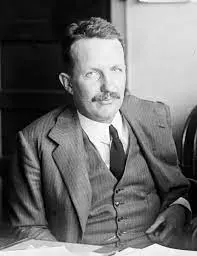
Kermit Roosevelt (1889-1943) was the second son of Theodore Roosevelt and his second wife, Edith Kermit Carow, named him for a great uncle and a brother, who died in infancy. While all TR’s six children inherited parts of his many traits, Kermit was the one most like his mother. He looked like her. He had her sensitivities. He was said to be her favorite (if she admitted to any).

Young Kermit

As a boy, he was smart as a whip, athletic, practical, and like all Roosevelts, a voracious reader, lover of poetry and excellent writer. One could not survive at Sagamore Hill without exceptional literacy. His gift for languages was his own however. While both of his parents had mild linguistic competence, Kermit had a talent for it.

Kermit attended the local grammar school in Oyster Bay, followed by Groton (mandatory for the family boys), and then to Harvard. He had just started Groton when his father became President in 1901.

Edith K. Roosevelt

Throwback Traits

Kermit’s inherent melancholy and predilection for alcohol was also a family trait. 

Edith’s father, Charles Carow, was a source of disappointment and embarrassment to his family. He drank, and subsequently his business efforts failed. Some sources believe that an embarrassed adult-Edith destroyed a fair amount of Carow documents.

Then there was Elliott Roosevelt, TR’s younger brother. He developed a thirst for alcohol while he was still in his teens. It was complicated by a secondary addiction to laudanum. He spent more than a decade in and out of sanitariums, and died at 34. 

While Theodore and Edith had their moods and cares like everyone, Kermit was a different case.

Kermit the Companion

Of all TR’s sons, it was Kermit who also inherited his father’s enthusiasm and dedication to outdoor adventure and natural science. 

In 1909, when his 50-year-old father was “retiring” from the Presidency, he opted on a year-long safari in Africa, under the auspices of the Smithsonian. Kermit, who had just begun his Harvard education, opted to take a year off and join the expedition. It could arguably be said to have been his happiest year. Father and son bonded very closely, and the expedition was successful – and joyful.

Kermit in Africa

Kermit returned to Harvard, plowed through his academics and earned a degree in engineering in 1912. He had just embarked on a career when his father was invited on a trip through an unexplored region of the Amazon. Edith Roosevelt, perhaps fearing for her always too-eager husband’s well-being, pleaded with her sensible, but reluctant son to accompany him.

Having become fluent in Portuguese, Kermit Roosevelt was more than a pleasant companion on what became a difficult and dangerous exploratory expedition. Keeping his melancholy confined to his diary, he became a leader in the expedition, and actually saved his father’s life. TR, seriously ill with malaria, had also gashed his leg to a point that could prove fatal, and insisted the group continue without him. He planned to overdose himself with morphine. Kermit, also ill with malaria, refused to accept that scenario, and oversaw TR’s evacuation on a stretcher until he could be transported to a hospital. 

The First War….and Beyond

After his return Amazon, Kermit married and joined a banking firm in Brazil, where his linguistic skills would be beneficial. But by 1917 when the Great War (as it was then called) erupted in Europe, all four Roosevelt sons were among the first to enlist. Their father lobbied hard to recruit and lead a regiment, but a wiser Woodrow Wilson refused. 

Unlike his three brothers (pictured above) who had some officer training, Kermit had little if any military experience. Nevertheless, he received a voluntary commission from the British government, and was sent to the Middle East, where he quickly learned Arabic, and proved his value, earning the British War Cross. He was also the only Roosevelt son who was not injured – or killed. He returned home, and wrote a well-received book War in the Garden of Eden.

He continued his outdoor exploratory travels through the 1920s, along with founding a steamship company. He also continued to write engaging books (co-authored with his brother Ted) about those adventures. 

But Kermit’s periodic depression and chronic alcoholism had become a part of his daily routine. The Great Depression, which drained his finances, did not help matters. Nevertheless, he continued writing and traveling. And while he was a great worry to his family, his dissipation was under tight wraps – and out of the headlines.

Mature Kermit Roosevelt

The End Is Near

As WWII approached, he (and his two surviving brothers) were eager to serve their country as they had in the First War, even though they were well over age and both Ted and Archie had serious, long-standing war-related injuries. Kermit enlisted with the British Army for a while, but was considered of a liability because of his drinking. He returned home, and descended further into alcoholism.

President FDR reluctantly commissioned Kermit into the US Army, and sent him to a remote outpost in Alaska, to engineer and build defenses. In 1943, after only a few months, he put a bullet in his head.

Kermit Roosevelt was a great lover of poetry. While still at Groton, he “discovered” the poems of Edwin Arlington Robinson and recommended him to his President-father, who agreed with his young son’s assessment. Robinson, eventually a multi-Pulitzer prize winner and frequent Nobel nominee, had written his most famous poem, Richard Cory, still considered a classic today. (Read it!) No doubt Kermit understood the poem better than most.

Edwin A. Robinson

Edith Roosevelt, now past eighty, along with the rest of the world, was told that her son had a heart attack.

Sources:

Hagedorn, Hermann – The Roosevelt Family of Sagamore Hill – Macmillan, 1954

Miller, Candace – The River of Doubt – Random House, 2005

Renehan, Edward J., Jr. – The Lion’s Pride: Theodore Roosevelt and His Family in Peace and War – Oxford University Press, 1998

https://www.shakariconnection.com/kermit-roosevelt-books.html

https://www.nps.gov/people/kermit-roosevelt.htm

Posted in A POTUS-FLOTUS Blog, Nifty History People, Theodore Roosevelt | Tagged , , , , , , , , , , , , , , , | Leave a comment

Abraham Lincoln and The Prince

Spoiler alert: Abraham Lincoln never met Prince Albert or Queen Victoria….but….

The Protocol of Nations

In the earlier days of the country, long before “the hot line” existed, direct communication between heads of state was not considered proper. Written communication (and even most face-to-face conversation) pertaining to diplomatic situations went through the channels of designated intermediaries, i.e. the Secretary of State or ambassador or similar officialdom.

In addition to the proper channels, protocol was rigid. Who was presented first, who entered first, who sat where, right side vs. left side, etc. Lapses of these formalities could create an international incident.

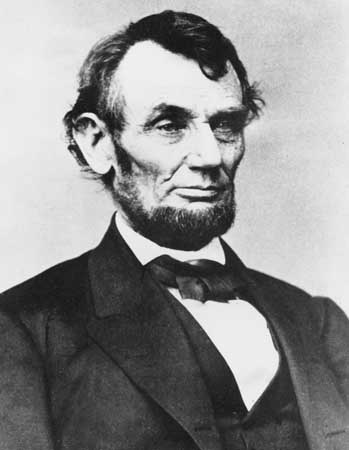
Abraham Lincoln: New President

Abraham Lincoln’s first months as POTUS in 1861 were fraught with crises upon crises, and most historians (and his contemporaries) believe that AL was perhaps not at his most effective in those early days. Several months passed before he began to grow into his new challenges, which seemed to change daily.

When it came to foreign policy, he had little experience, spoke no foreign languages, and his knowledge of the ins-and-outs of diplomacy was still to be learned. For many months he relied on his Secretary of State, William Seward, who had far more expertise in those areas.

Secretary of State Wm. Seward

Prince Albert: Queen Victoria’s Consort

Albert, Prince Consort of England, was a German man, a decade younger than the US President, but he had been given a superb classical education and a background of European protocol. Only twenty when he married the Queen of Great Britain, he was obliged by their constitution to remain above all politics. He also grew into his position – that of advisor to the Queen, and counselor to a succession of Prime Ministers, Foreign Secretaries, and similar high ranking officials – of all parties. Most historians concur, that while Albert was not warmly regarded in his adopted country, the populace had come to respect his considered advice, which was usually excellent.

Prince Albert and Queen Victoria

In personality, the Prince was far more like Jefferson Davis than like Abraham Lincoln. Both were formal in bearing, invariably polite but cool, and generally humorless, narrow and rigid in their ways and opinions.

But in the early days of the American Civil War, while the British people were very much opposed to slavery (which they had abolished decades earlier), they appreciated Southern manners, and most of all, the benefit of American cotton which had become a mainstay of their textile economy.

The Southern Plan

Jefferson Davis was not a stupid man, and realized from the outset that seceding from the Union to form a “new” country was fraught with problems on many levels: economic, transportation, manufacturing, manpower, etc.  Gaining diplomatic recognition would go a long way to alleviate many of those problems.

To initiate some of those plans, James Murray Mason and John Slidell were sent as envoys to Britain and France to press the Confederacy’s case for diplomatic recognition, and to lobby for financial and military support. Both men were widely respected in the South, with solid credentials in foreign affairs. They were also prepared to run the blockade that the Union had immediately put into effect from Maine through the Gulf of Mexico.

Emissaries Mason and Slidell

Cutting to the Chase

It was a complicated scheme, and Union intelligence was well aware of their intentions, as well as the potential diplomatic dangers. After a convoluted path of embarkation plans and vessels, Mason and Slidell finally boarded the RMS Trent, a British mail packet ship, in Havana. They were bound for St. Thomas, and then to England. Captain Charles Wilkes of the USS San Jacinto immediately gave chase.

San Jacinto Capt. Charles Wilkes

According to Prince Albert’s diary on November 28, 1861 “An American warship holds up our mail packet Trent on the high seas and boards her, and removes by force four gentlemen from the Southern States, who were to have gone to London and Paris as envoys. They are carried off to New York. General indignation. The Law Officers declare the act as a breach of international law.”

Lord John Russell, British Foreign Secretary drafted a bellicose memorandum for the British ambassador in Washington, “threating to recall” our man in Washington.” It was tantamount to a declaration of war. A copy was sent to the Prince Consort.

On November 30, desperately ill with only two weeks to live, Prince Albert drafted an amended version for the Queen. It was firm, but lacking in the belligerence of the original. He noted that [the Queen] should have liked to have seen the expression of a hope, that the American captain, did not act under instructions, or, if he did that he misapprehended them, that the United States Government must be fully aware that the British Government could not allow its flag to be insulted, and the security of her mail communications to be placed in jeopardy; and Her Majesty’s Government are unwilling to believe that the United States Government intended wantonly to put an insult upon this country…”

Without knowing it was Prince Albert who suggested this form of response, Abraham Lincoln was like minded in sentiment. Although a relative novice in both foreign relations and maritime law (he would improve with time), he obviously knew it was a definite breach of international law.

Engraving of the Trent “incident”

Seward and Lincoln

Secretary of State Seward, who was far more knowledgeable in those matters that the President, saw a foreign incident as an opportunity to divert attention and possibly even reunite the country.

Lincoln disagreed, claiming “One war at a time.”

Both men agreed however, that the aggressive Captain of the San Jacinto had exceeded his authority, and in due time, quietly permitted Mason and Slidell to be released. No apology, no explanation. And the British government continued to maintain its neutrality.

Lincoln likely never knew that it was Prince Albert who suggested the “plausible out.”

It was the last memo the Prince ever wrote.

He died on December 16.

Sources:

Bough, Richard – Victoria and Albert – St. Martin’s Press, 1996

White, Ronald C. Jr. – Lincoln: A Biography – Random House, 2009

https://millercenter.org/president/abraham-lincoln/key-events

https://www.history.com/topics/american-civil-war/trent-affair

https://www.britannica.com/biography/Albert-Prince-Consort

Posted in American Civil War, Nifty History People | Tagged , , , , , , , , , , , , , , , , , , , | Leave a comment

The Great White Jail

The White House is the finest prison in the world.” Harry S Truman.

The White House Paradox

The White House, or the Executive Mansion, is undoubtedly the finest residence the country has to offer the President of the United States, whoever it is. It is a beautiful structure and magnificently maintained. It is rent-free to the POTUS and family with numerous perks. It is finely furnished. Any repairs are undertaken by the “country.” A multitude of staff polish, dust, sweep, wash and provide the meals, laundry services and personal attention. A President and/or First Lady never has to wash a dish or iron a shirt. (And this doesn’t even count the administrative staff!) Walking distance to the office.

Forty-five Presidents and their families called it home, at least for a while. (George Washington never got to live there, although he helped supervise its construction.)

George and Martha never lived there.

No matter how some of our early POTUSES demurred, they all wanted the position, and certainly deemed it a huge honor and responsibility. Of the first 34 (not counting GW, nor going beyond Eisenhower, and acknowledging the numerical confusion via Grover Cleveland), 11 re-upped for a second term. Two more (Lincoln and McKinley) were elected to a second, but incomplete term. Seven ran again – and lost.  Three others (Van Buren, Fillmore and Theodore Roosevelt) wanted it so badly that they ran again – on a third party ticket. They still lost.

A few others, like John Tyler, Andrew Johnson, Ulysses Grant and even seriously ailing Chester A. Arthur wanted it but were denied their party’s nomination.

Only James K. Polk, James Buchanan and Rutherford B. Hayes willingly said “sayonara” and rode off quietly into the sunset.

Ergo, no matter what was later said, just about all of the above (and those who followed Ike), liked living there.

But once in residence, most of them looked upon the place as a metaphor for the burdens of the Presidency.

The Early Fellows: In Their Own Words

The illustrious George Washington couldn’t wait for his retirement back to Mount Vernon, commenting, I am once more seated under my own vine and fig tree … and hope to spend the remainder of my days in peaceful retirement, making political pursuits yield to the more rational amusement of cultivating the earth. 

Martha Washington, who never lived there but spent eight years in NY and Philadelphia’s temporary Executive Mansions, said …Indeed I think I am more like a state prisoner than anything else.

John Adams wrote documenting the departing George Washington’s comments as “Ay! I am fairly out and you fairly in! See which of us will be the happiest.” John Adams may have thought those exact words when he left the keys to the house for Thomas Jefferson.

John Adams

Even later, ol’ John wrote his son, “No man who ever held the office of president would congratulate a friend on obtaining it.” His son obviously agreed: The four most miserable years of my life were my four years in the presidency. – J.Q. Adams

John Q. Adams

And Jefferson, upon leaving the Executive Mansion wrote a friend, “I am now at that period of life when tranquility, and a retirement from the passions which disturb it, constitute the summum bonum.”

His good friend and later successor, James Monroe claimed “I shall . . . be happy when I can retire beyond their reach in peace to my farm.”

Andrew Jackson, the born-for-storm fellow, conceded, “You must pay the price if you wish to secure the blessings.

Some Later Words of Exhaustion

James K. Polk: “I will soon cease to be a servant and will become a sovereign.” (Actually a dead sovereign, since he only lived a few months after leaving the WH.)

Outgoing President James Buchanan told his successor, Abraham Lincoln: “If you are as happy, my dear sir, on entering this house as I am in leaving it and returning to Wheatland, you are the happiest man in this country.”

Ulysses S. Grant had mixed feelings. “Cheap cigars come in handy; they stifle the odor of cheap politicians.” But FLOTUS Julia Grant LOVED the White House, and cried when she left. “Oh, Ulys, I feel like such a waif.”

Julia Grant
Ulysses S. Grant

One of the most unlikely POTUSes, Chester Alan Arthur did not mince words. “You have no idea how depressing and fatiguing it is to live in the same house where you work.” And, at the end of his term, he is quoted (maybe) as remarking…“there doesn’t seem anything else for an ex-President to do but to go into the country and raise big pumpkins.”

On the day Grover Cleveland left the White House, defeated after his first term, his wife, First Lady Frances Folsom Cleveland told the staff: “I want you to take good care of everything… I want to find everything just as it is now when we move back in exactly four years from today.” Grover Cleveland said nothing, at least not for the record. They mostly lived in a private house in Washington where he could have some privacy.

“I would rather be chief justice of the United States, and enjoy a quieter life…” Wm. Howard Taft

And Coolidge really meant he did not choose to run. “Ten years in Washington is longer than any other man has had it—too long!”

And Even Unto Today

“We must even face the prospect of changing our basic ways of living…” – Jimmy Carter

“From the moment I walked into the White House, it was as if I had no privacy at all.” – Nancy Reagan

“I really loved living in the White House, but I don’t miss it at all.” – Barbara Bush

And finally…. No one sheds tears for anyone lucky enough to live at the White House. – Author/columnist Maureen Dowd

Sources:

Dunlap, Annette – FRANK: The Story of Frances Folsom Cleveland, America’s Youngest First Lady – Excelsior Editions, 2009

Grant, Julia Dent – The Personal Memoirs of Julia Dent Grant: (Mrs. Ulysses S. Grant) – 1975, G.P. Putnam’s Sons

https://www.brainyquote.com/topics/white-house-quotes

https://tjrs.monticello.org/letter/1590

https://www.azquotes.com/author/15324-George_Washington

Posted in A POTUS-FLOTUS Blog, Abraham Lincoln, Calvin Coolidge, Chester Arthur, George Washington, Grover Cleveland, Harry S Truman, James Buchanan, James K. Polk, James Monroe, John Adams, John Quincy Adams, Nifty History People, Thomas Jefferson, Ulysses S. Grant, William Howard Taft | Tagged , , , , , , , , , , , , , , , , , , , , , , | Leave a comment

President Benjamin Harrison: States Man

Benjamin Harrison is one of those post-Civil War presidents with a beard.

A Little More About Ben

For the knowledgeable, Benjamin Harrison (1833-1901) is generally remembered as the grandson of another President – General William Henry Harrison (1773-1841), who is mostly famous for dying a month after taking his Oath of Office. 

Ben, and his Grandfather Wm. Henry Harrison came from a long line of distinguished Harrisons.

And for the lovers of esoteric, Republican Benjamin Harrison is known as the 23rd POTUS sandwich between the non-consecutive terms of Democrat Grover Cleveland, (22 and 24) who forever confuses the numeric order of Presidencies. 

And yes, he did have a beard.

Past that, poor Ben seems to fade into the woodwork. After all, during the last third of the 19th century (or thereabouts), very little “sexy” historical issues and concepts occurred. The country was at peace, and after the Civil War, that was exactly what was wanted. Racism, temperance, women’s rights, labor unions and similar social issues was were backburnered to the lunatic fringe. And nobody really cared, unless you were personally affected. 

It was The Gilded Age, a time that business-as-usual was booming, great fortunes were being made, and, as the old saying goes, “nothing succeeds like success” and all seemed well. The streets were said to have been paved with gold, according to the millions of immigrants who began pouring in, and who were willing to dig for the gold. 

Why Ben?

Between the presidency of Andrew Jackson (1829-1837) and Theodore Roosevelt (1901-09), with the exception of Abraham Lincoln (1861-65), most of the presidents were capable men of good character and background – but colorless and compliant. (Ulysses S. Grant, of course, is somewhat of an exception, but he is known mostly for being GENERAL Grant.) 

Congress, and the Senate in particular, had always considered itself to be the dominant branch of government. After all, they represented “the people” in its broadest form. Candidates for the presidency considered it an honor and privilege, rather than an ambition, per se. Expected to be dignified and “presidential,” candidates held back, and let their supporters promote their cause, and their party’s agenda. 

Benjamin Harrison was just such a candidate. A bland fellow. In fact some considered him a cold fish whose wimpy handshake was not encouraging. He was a struggling lawyer in Indianapolis before the Civil War, and even served as Court Clerk to augment his meager practice. But when he hung a flag out of his office window with an “enlist here” sign, he quickly raised a regiment, and was appointed its commanding officer by the Indiana Governor. He served ably and competently, and befitting the Harrison name. Grandpa WHH had been a General of minor distinction in the War of 1812. Ben became a Brigadier General of minor distinction.

The Harrison house in Indianapolis
Benjamin Harrison’s fortunes changed after the Civil War

But when the war ended, being a lawyer, a Republican, and a Union General were solid credentials for public office, not to mention his illustrious family name. Ben’s law practice improved. The Indiana legislature saw fit to send him to the Senate. And when a Republican candidate was needed to challenge the incumbent Democrat Grover Cleveland, Ben seemed handy enough. They waved the bloody shirt, and he squeaked by. 

He is usually rated as pretty fair, as far as Presidents go. 

The Exceptional Note to his Resume

During his four year, single term as President, six states were added to the Union. 

Discounting the original 13, back in 1789-91, no other President has the distinction of formally creating six new states.

As a sidebar, there hadn’t been a new state added for more than a decade. The balance of party-power in Congress after 1870 was fairly even, and votes were incredibly close. And, (what a surprise) it was politics as usual. The Democrats consistently voted against admitting new states, since the applicants were all from the north and northwest, and likely to tilt Republican. Whatever tight edge the Democrats might/might not hold would be swamped by a much larger majority. But now, with a slim Republican majority in Congress another Republican president safely (but barely) ensconced in the White House, the timing was right for six new states, all expected to send Republican legislators to Washington. Before another mid-term election could take place, their applications for statehood was rushed through.

Those states were: North and South Dakota… The territory of “The Dakotas” was so large, that it made sense to create two states (#39 and 40). They were followed by Washington and Montana (#41 and 42). All became legally a part of the United States in November, 1889. The following July, Idaho and Wyoming (#43 and 44) were admitted as well.

And, as expected, every one of them sent two Republican Senators to the Capital. The Republican majority in the Senate now increased by twelve!

All on President Benjamin Harrison’s watch! It is a record, very unlikely to be equaled.

Epilogue on New States

Six more years passed before another state was admitted: Utah (#45), in 1896, during Grover Cleveland’s second (non-consecutive) term.

Another decade passed before the 46th state (Oklahoma) was admitted in 1907. Theodore Roosevelt’s Administration.

New Mexico and Arizona joined the USA in 1912. They were #47 and 48. William Howard Taft’s administration.

And thus it remained for a half century. Alaska (#49) and Hawaii (#50) did not become part of the United States until 1959, under the Eisenhower administration.

Sources:

Boller, Paul F., Jr. – Presidential Anecdotes, Oxford University Press, 1981

Stoddard, Henry L – As I Knew Them: Presidents and Politics from Grant to Coolidge – Harper & Brothers, 1927

https://www.whitehouse.gov/about-the-white-house/presidents/benjamin-harrison/

https://millercenter.org/president/bharrison/campaigns-and-elections

https://guides.loc.gov/chronicling-america-northern-west-territories

https://millercenter.org/president/bharrison/the-american-franchise

Posted in A POTUS-FLOTUS Blog, Abraham Lincoln, Andrew Jackson, Benjamin Harrison, Dwight D. Eisenhower, Grover Cleveland, Theodore Roosevelt, William Henry Harrison, William Howard Taft | Tagged , , , , , , , , , , , , , , , , , , | 1 Comment

Breaking News All Over Again: A Book Review

The History Behind Today’s Headlines

One of the true lessons of history is the stunned surprise of people today when they are confronted with the similarities of yesterday. What? This happened before? Maybe decades ago? Or centuries ago? How could this be?

Ronald T. Shafer, with an impressive resume as Wall Street Journal editor for a bunch of years, and now retired, is a frequent contributor to the Washington Post. He tackles the incongruities of history with knowledge, a smile, and a delicious sense of ironic humor. His latest book, a compilation of his more recent Washington Post articles, is aptly titled Breaking News All Over Again: The History Behind Today’s Headlines, The conclusion being that history definitely does repeat itself – wearing different clothes.

History is all about concepts. Of course there are specific events or situations, but the nub of it all, if you look closely, are the concepts.

It also helps that author Shafer has a dandy way with words, and tells a great story. 

For instance, vis-a-vis COVID. A pandemic is nothing new. Consider the Black Plague or other diseases that wiped out millions of people centuries ago. A hundred years ago was the so-called “Spanish Flu,” which also wiped out millions, probably wasn’t Spanish, and made Spaniards very angry at the implication that it was. Shafer tells it like it was.

More COVID… like vax and anti-vax. Two hundred and fifty years ago, smallpox, a recurrent plague of its own, with a 30% mortality rate was running rampant in Massachusetts. Abigail Adams bit a fearsome bullet in deciding to have herself – and her four young children – vaccinated. This was not a quick shot in the arm. It required weeks of preparation, and further quarantine. And she underwent the procedure first, so she could be immune and care for the children. If she survived. The decision was hers alone. Her husband was in Philadelphia shepherding a new nation into existence. PS – She survived.

For those who recoil at the nastiness and venom of recent elections, one could look back to the US Centennial election of 1876 and the Hayes-Tilden travesty. It challenged the Electoral Votes, and was played out in full before the entire country. It was also confused and complicated – and was barely “settled” by Inauguration Day. It was also mainly fought by the “bedfellows” of both sides, since both acerbic Samuel Tilden (D-NY), popular vote winner, and genial Rutherford B. Hayes (R-OH) chose to remain out of the fray and out of the path of slung mud. But it’s a dandy of a story! 

How about the Vice President having a final say in certifying the Electoral College votes? Or was it merely a formality? Go back to 1857, and check out a true molehill being whipped into a non-mountain by a man who wasn’t even the Vice President! (The elected VP had died years earlier, and had never been replaced!) Plus the fact that the actual vote, popular and electoral, was never in doubt. 

And there’s a little known story of racism being responsible for nobody actually running for VP as a Democratic candidate in 1840. Incumbent President Martin Van Buren, elected in 1836, was running again. His VP, Richard Mentor Johnson of Kentucky, was summarily dropped from the ticket. Granted those early VPs had an honorable but mostly ceremonial position. It was primarily a geopolitical accommodation, with no heavy lifting. But back in 1811, Johnson had begun a common law marriage with Julia Chinn, a mulatto slave. He could not free her, according to Kentucky law. The fact that the marriage lasted for more than 20 years and was considered reasonably happy, producing two daughters – and the fact that Julia Chinn had died a few years before Johnson became VP… none of this mattered. What did matter was that those two daughters had been lovingly and well brought up, educated, dressed in silks and satins, introduced into polite society and even married white fellows. It was scandalous and not to be tolerated by those few who knew about it. When the time came for the re-election of Van Buren, enough people knew about it to make Johnson a definite liability. He was not on the ticket, and perhaps they believed that ducking a potentially hot subject was more important than an empty office. Nobody was nominated on the Democratic ticket. It didn’t matter anyway. Van Buren lost. But not because of his “unsuitable” Vice President. 

Snubbing between incoming and outgoing Presidents is not new either. Author Shafer focuses on a complicated minuet-gone-wrong between outgoing Andrew Johnson and incoming Ulysses S. Grant, who had grown to loathe each other. And THEY had precedents for that too! POTUS John Adams skipped out of town to avoid his ex-best friend Thomas Jefferson. And his son John Q. dittoed the snub because he loathed Andrew Jackson. 

But one of my favorite Shafer stories concerns commercially-driven holidays. We always hear the complaints that even before Labor Day, Halloween decorations are filling the shelves. And before Halloween is over, Christmas goodies are filling the shelves. Poor Thanksgiving gets lost in the shuffle. This is not new. Abraham Lincoln put the 4th Thursday in November on the calendar as Thanksgiving, but FDR was coerced into moving it up a week – to accommodate the merchants who wanted a week’s “stimulus” for the shoppers. Granted it was still the Depression, but in 1939, the country was torn between which Thanksgiving to celebrate, and it wound up being where you lived. The confusion lasted only one year. It is now and forever (we trust) the 4th Thursday. (And the shelves are still decorated in Merry and Bright right after Halloween!

Read “Breaking News” – you’ll love it! And you might even learn something!est of all – it’s only $10! What a bargain!!

Shafer, Ronald G. – Breaking News All Over Again: The History Behind Today’s Headlines

Paperback ‏ : ‎ 125 pages

ISBN-13 ‏ : ‎ 979-8840421079

Posted in Recommended Reading | Tagged , , , , , , , , | Leave a comment

Martha and Abigail: Habits of Friendship…

Martha Washington and Abigail Adams are arguably the most prominent women of the last quarter of the 18th century.

An Unlikely Friendship

The likelihood that Martha Washington (1731-1802) would even meet Abigail Adams (1744-1818) would have been considered remote in 1770. The distances alone were prohibitive. It could take at least two weeks of hard travel.

The young Martha Washington

Martha Washington, née Dandridge-Custis of Virginia, was nearly fourteen years older than Abigail Adams, née Smith, from Massachusetts. The daughter of a gentleman planter of average pedigree, Martha was brought up to embody the domestic virtues of her generation of women. Her formal education was basic. Reading, writing and ciphering (basic arithmetic). As the oldest in a spread-out family of five surviving siblings, she focused on the necessities of managing a household, herbal gardening and “medicine,” child rearing, supervising servants, and of course, the arts of cooking and handiwork.

Col. George Washington

Abigail Smith Adams was the second daughter of a Congregational minister and his wife, whose distaff “Quincy” pedigree was considered far superior to a mere clergyman. Despite the family’s lack of material wealth, education played an important role. Abigail and her two sisters were permitted access to their father’s considerable library. She made use of the privilege, and was always a voracious reader. Nevertheless, she also learned the womanly skills of hands-on household management.

A young Abigail Adams

When she married John Adams, an attorney nine years her senior, she was barely 20, but he had been attracted to her wit and intelligence years earlier, when she was far too young for the courtship that began in earnest when was she was 18. 

A young John Adams

By Reputation Only…

When shots were fired at Lexington Concord in April 1775, ex-Colonel and now wealthy planter George Washington was appointed by the Continental Congress to take command of its fledgling army – in Massachusetts. There is documented evidence that GW paid a courtesy call on Abigail Adams, and spent a pleasant hour at tea and conversation. The General offered to include Mrs. A’s letters to her Congressional-representative husband in his official correspondence packet.

The likelihood is strong that he may have mentioned that occasion to Mrs. Washington – along with some complimentary words concerning Mrs. Adams. 

In December, 1775, Martha Washington traveled to be with the “General” in Massachusetts, and stayed for several months. While she had become acquainted with Mrs. Adams by reputation, there is no indication that any personal meeting or correspondence took place at that time. 

Fast Forward Fifteen Years

In the mid 1780s, John Adams, who had been representing the new “USA” in Paris, Holland, etc., finally sent for his wife. Abigail, with serious trepidation of ocean travel, bit the dreaded bullet, and joined him abroad. They stayed for the better of 5 years, which made a huge impression on a 40-year-old woman who had never been farther than Boston in her life.

Mr. Vice President Adams

By the end of the decade, many events had transpired, not the least being John Adams’ election as Vice President of that very new “USA,” whose seat was temporarily situated in New York City. By mid-1789, the Adamses, along with President Washington and family, were new NY residents. The two women finally met in person.

Neither Lady Washington (an unofficial title) nor her husband had experience with diplomatic protocol, but since they were both in their late 50s, erring on the side of formality seemed far better than familiarity.

Thus when Lady W. Began hosting her regular “levees” and receptions, Abigail Adams attended every two weeks and had a permanent invitation, and a seat on her right. They exchanged visits and dinners. Their grandchildren played together. They took pleasant excursions together. The friendship continued even after the temporary capital moved to Philadelphia. And when health, family matters or governmental calendars precluded face-to-face conversation, a warm, albeit sporadic correspondence kept them in touch.

An 1861 representation of a Washington reception by Daniel Huntington (LOC)

The Gift and Gist of the Friendship 

Martha Washington was not politically inclined, nor was politics and government considered suitable for feminine conversation – and certainly not at that high level. (Abigail also had other more intellectually minded correspondents to fill those needs.)

While the First and Second Ladies had occasions to converse privately, and possibly exchange mild opinions about events and participants of the 1790s, most of their conversations – and definitely their limited correspondence (usually written in the third person) – centered on their commonalities. Home. Family. Children. Weather. Grandchildren. (Martha, who had lost all four of her children, was now raising two young grandchildren. Abigail was also a grandmother.)

Health, whether their own or that of their family/friends, played a key topic in their correspondence. In those days, poor health was practically synonymous with “will of God,” and a fearful situation.

But perhaps the most important document in their correspondence was when George and Martha Washington retired to Mount Vernon in 1797, and John and Abigail Adams became President and Mrs. Adams…

Abigail was seeking advice, and was somewhat intimidated at the universal acclaim given to Martha Washington as FLOTUS. She admitted that her mind was filled “with an anxious Solicitude least [sic] she should fall far short of her most amiable predecessor…”

Martha replied, noting that while she was flattered, “…with in [sic] yourself you possess a guide more certain than any I can give…the good sence [sic] and judgement for which you are distinguished…

But in the limited amount of extant correspondence between the two women, one thing is certain: they enjoyed a happy regard and esteem for each other, considering the other to be their true friend.

Abigail Adams, correspondent to a wide range of recipients, referred to Martha Washington by saying they lived “in habits of friendship and intimacy.”

Sources:

Brady, Patricia – Martha Washington: An American Life, Viking, 2005

Levin, Phyllis Lee – Abigail Adams – St. Martin’s Press, 1987

https://www.whitehousehistory.org/rules-of-engagement

http://www.Washington papers.org

http://masshist.org

Posted in A POTUS-FLOTUS Blog, George Washington, John Adams | Tagged , , , , , , , , , , , , , , , , , , | 1 Comment

George Washington and the Purloined Packet

Mail delivery during Colonial times was arduous – and long.

Delivering the Mail

Written communication i.e. letters, documents, newspapers, etc., was not nearly as common in early colonial times as it would become in later generations. First of all, literacy. A large percentage of people could not read or write. Secondly, transmitting letters, documents, newspapers, etc., was dependent on an occasional wagon going in the general direction, but primarily on a trustworthy and expert rider on a fast horse.

Then came the common sense genius of Benjamin Franklin (1706-1790), who at 31 was appointed Postmaster of Philadelphia. The pay was minuscule, but there were fringe benefits, particularly the franking privilege: he did not have to pay for his own postage. As a printer and newspaper publisher, this was a huge savings, particularly as his popular Gazette became widely subscribed throughout the colonies. 

An illustration of young Franklin

He was so successful in Philadelphia, that the British government appointed him Postmaster General of the thirteen colonies – a position he held for two decades.

By the early 1770s, as those thirteen colonies were grousing and grumbling and laying the seeds for their eventual independence, appointing Dr. Franklin (by then a world renowned polymath, i.e. genius of all trades) as Postmaster General of the Colonies was a no-brainer. 

He inspected the postal routes in the cities and towns, and engaged the most reliable men to serve as local postmasters, a position of honor and responsibility. Most of them were tavern-keepers whose places of business were along well-traveled routes. They came in frequent contact with the increasing number of citizens en route “elsewhere,” and who would be happy to carry a small packet to a town or village along the way, whether it was North (toward New England) or South (toward Georgia). 

Benjamin Franklin, polymath

Ol’ Ben also sent postal riders out at night, which cut the delivery service from New York to Philadelphia to about two days. It was practically miraculous. 

George Washington, Correspondent

George Washington, both as gentleman planter and General, was an assiduous correspondent. For more than a decade, the proprietor of Mount Vernon corresponded with his “factor,” or agent, in London, conducting the sale of his farm produce and purchasing the worldly goods needed by Mr. and Mrs. W. And both Washingtons maintained a frequent exchange of letters with family members and friends throughout Virginia. 

Once GW became General of the Continental Army, the correspondence was practically unending, demanding the services of several staff officers and aides for copying and filing, and a few (such as Alexander Hamilton) who could compose/draft complete letters for the General. 

The Great General

He wrote frequently to the Continental Congress in Philadelphia, along with several Virginia officials, regarding army matters whether it was in Boston or New York or elsewhere. GW also wrote to several representatives individually, particularly those members of special committees who oversaw specific aspects of the army: finances, recruitment, casualties, housing/feeding/equipping the soldiers plus a jeremiad of his own grousing about everything the army lacked, including discipline. He was always candid in his observations. This was official business.

Then there were strategy/orders letters to his sub-commanders dispatched in various locations. And exchanges with Governors and prominent citizens of sister Colonies. More official business.

Then there was Mount Vernon business. The estate was never far from GW’s heart and mind, and regular letters to his cousin Lund Washington, his plantation manager, are filled with instructions regarding the crops, the fields, the weather, the servants, the tenants… No detail was overlooked. 

Home is where his heart was

There was also voluminous correspondence with his brothers, nephews, his stepson Jack Custis, his in-laws (with whom he had strong ties), his neighbors and personal friends. 

And few packets going to Mt. Vernon failed to include his private letters to Martha, his “dearest.

But no matter the sender or the addressee, mail delivery during Colonial times was arduous – despite the skilled rider and fast horse. And Dr. Franklin’s inventive mind.

Purloining the Packet

In late September 1776, while GW was regrouping his ragtag force in White Plains, NY after a mega-evacuation from Brooklyn Heights, a packet of his correspondence was waylaid. The dispatch rider was careless when he stopped at a public house/post office in Pennsylvania, not far from Philadelphia, but in a district that numbered a large number of Tories – those loyal to the British Crown.

Hancock didn’t get any mail…

Whether by design or plain negligence, the messenger opened his bundle, extracted a particular letter that required forwarding, and stepped outside for a few minutes, leaving the satchel of correspondence on the table. According to John Hancock, who informed GW by fast rider that very day, “…the whole of his Letters were carried off & no person could give any account of them…he [the messenger] is here without a single Letter.”

Hancock, Congress and George Washington feared the worst.

Understandably, the irresponsible dispatch rider was imprisoned. The innkeeper was removed from his office of postmaster. The bartender was questioned at length. And, as expected, the stolen packet found its way to British headquarters, where General Howe and his staff found a treasure trove of “interesting” information, particularly regarding GW’s low estimation of his troops, lack of funds, discord between the “Eastern and Southern Colonists,” and his usual litany of disappointments.

…But Howe did!

Honor Among Generals

About a month after the purloined packet incident, George Washington received a letter from General Howe himself. His fears were confirmed. The British had indeed come into possession of his correspondence. But this particular letter included his unopened letter to Martha Washington, along with a personal note from the British general, stating “I am happy to return it without the least Attempt being made to discover any Part of the Contents.”

They did things that way then.

Sources:

Fraser, Flora – The Washingtons: George and Martha “Join’d by Friendship, Crown’d by Love” – Alfred A. Knopf, 2015

Middlekauff, Robert – Washington’s Revolution: The Making of America’s First Leader – Alfred A. Knopf, 2015

Padover, Saul K. (ed.) – The Washington Papers – Easton Press (reprint), 1985

https://www.history.com/news/us-post-office-benjamin-franklin

https://www.battlefields.org/learn/biographies/william-howe

Posted in A POTUS-FLOTUS Blog, George Washington, Nifty History People | Tagged , , , , , , , , , , , , , , , , , , , , , , | Leave a comment

Ike & Mamie ‘52: The Bathrobe Story

In 1952, Dwight D. Eisenhower was the most famous man in the country – maybe the world.

Ike and Mamie

Ike: Non-War

Dwight David Eisenhower (1890-1969) was called Ike from boyhood. Growing up in Abilene, Kansas, he did farm chores, household chores, schoolwork, athletics and learned to play excellent poker from some of the aging gamblers of the Old West. 

In an agreement with his brother, Ike went to work after high school to pay for Edgar’s education. The deal was that once completed, Edgar would pay for Ike’s schooling. Only he didn’t have to. Ike was accepted at West Point, where the tuition was free, slipping in just barely under the age limit.

Ike was nearly 25 when he graduated mid-class in 1915, stationed in San Antonio Texas where he met Miss Mamie Doud, six years his junior. A year later, they married. 

The young M/M Ike

Ike’s career in the US Army was slow and sloggy for the most part. After World War I, the Army returned to its staffing level of the early 20th century. Then came the Depression. A steady position with a steady salary (no matter how small) was not to be sneezed at. Soldiers were not leaving the military for civilian opportunities. Ergo, there were very few promotions available. 

Nevertheless, Ike and Mamie were transferred nearly every year, partly because his higher-ups took a liking to them, with a benevolent interest in his career. If the Army couldn’t pay/promote him according to his value, the least they could do was teach/train him. They were never disappointed. In every school or training program he attended, Ike excelled.

But by the late 1930s, Ike was nearly 50, and expected to retire no higher than Colonel. 

Mrs. Ike: The War Years

The meteoric rise of Colonel Ike to Five-Star General Ike is well known. But poor Mamie was left behind, and in the four years Ike was overseas, she saw him only once. 

The older M/M Ike

She lived in Washington, in an apartment full of Army wives, and spent most her time worrying about her husband, who was always in harm’s way. According to her own description, she played a four-year game of canasta, or was it mah-jongg? Or both. 

She kept a low profile, being warned of the danger that the slightest hint of Ike’s whereabouts could be disastrous. She shopped for his favorite snacks (tomato soup and crackers), favorite color pajamas (blue), favorite magazines (westerns), and whatever he asked her to get. And when a messenger came with a packet of letters included with Ike’s official dispatches, she in turn, gave him her packet. 

It was lonely for her, and worrier that she was, the always-petite Mamie lost about 20 pounds.

More Non-War

WWII ended in 1945, and the wildly popular and victorious Supreme Commander of the Allied Forces grinned his way in parade after parade in all the major cities in the country. More often than not, Mamie was by his side. She insisted that after their long separation, she would never be parted from her husband for any more than a couple of weeks. He gave her no arguments!

But as might be expected, politics came a-courtin’ – both parties. Ike wasn’t politically inclined and had no affiliations. So he said “thanks, but no thanks.” He always took his orders from the Commander-in-Chief, whoever he was. 

President Truman pleaded with Ike to run for President (as a Democrat, of course), practically offering the position on a platter. He put all the political perks of his office at his disposal. Ike still declined. A few times. 

So he became Army Chief of Staff, then President of Columbia University, wrote the best selling Crusade in Europe and then was assigned Supreme Commander of a recently established NATO. Ike and Mamie even began to look for a house of their own – something they never had. 

The General

A Change of Mind

In 1952 the American people wanted a strong, benevolent leader. At 62, Ike was everybody’s grandpa. He finally declared he was probably a Republican. That cinched it. 

The Eisenhowers

The famous Ike grin, the perfect “I Like Ike” slogan, a cute wife-with-high-heels-and-a-waistline, and they were off and running. Actually they were “training.” Train travel was still the way to go meet-and-greet the public. And this time, MRS. Ike was the big surprise. She was a terrific campaigner. According to several aides, she was not politically inclined, never interfered, and was seldom tired or cranky. As long as she was included in the processions, the waving, the flower receiving, the photo-ops, and the traditional wife-stuff, she was in heaven. 

They whistle-stopped cross-country, waving and smiling, with Ike making a few appropriate remarks from the caboose. People came from miles around! Some still drove horses and buggies. 

September 27: Salisbury, NC

The story goes, that at 5 a.m. the Eisenhowers were asleep, but Ike, always a light sleeper, was awakened as the train slowed down to take on fuel or water in Salisbury. When he looked out the window, he noticed a sizable (and growing) crowd calling for him. Not wanting to disappoint, Ike woke Mamie, (in curlers), and the two put on bathrobes and came outside to wave sleepily to the crowd, who were thrilled to see them. But no photos were taken, and no newspapers printed the event. 

The crowd-pleasing photo!

Later that morning, when his Press Secretary James Hagerty heard the story, he was panicked! The on-board news reporters hadn’t been alerted – and could be fired by their publications for missing such a hot story! 

So Ike and Mamie (some said it was her idea), put bathrobes over their clothes (look closely), her hair tied with a blue ribbon, and they peeked out of the caboose car so the reporters could get the “staged” photo. It was the only picture of its kind taken.

It made all the headlines. 

Sources:

Ambrose, Stephen – Eisenhower: Soldier and President (rev.) – Simon and Schuster, 1991

Eisenhower, Susan – Mrs. Ike – Farrar Straus Giroux, 1996

Lester, David and Lester, Irene – Ike and Mamie – G.P. Putnam, 1981

https://www.eisenhowerfoundation.net/ikes-life/post-war-1945-1951

https://millercenter.org/president/eisenhower

Posted in A POTUS-FLOTUS Blog, Dwight D. Eisenhower, Harry S Truman | Tagged , , , , , , , , , , , , , , , , , , , , , | 2 Comments

Admiral George Dewey: The Boom and the Bust

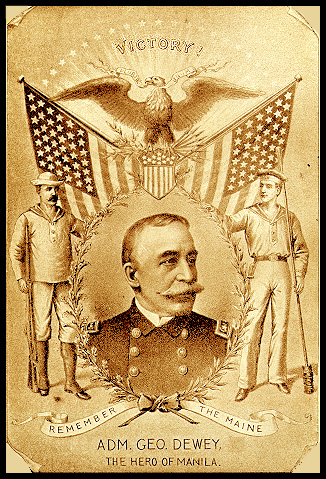
The Hero of Manila Bay was always considered an excellent naval officer.

The Admirable Admiral

George Dewey (1837-1917) was a Vermont man, from a prominent family. He was sent to Norwich University when he was fifteen, and expelled two years later for disciplinary matters, perhaps not uncommon for 15-year-olds. He then was enrolled at a fairly-new Naval Academy at Annapolis, and fared very well.

When he graduated in 1858, he was assigned as executive lieutenant on the USS Mississippi, and as the Civil War began and raged, Dewey served under Admiral David Farragut. By the war’s end, had been promoted to Lt. Commander. 

For the next 30 years, he commanded several ships, including “Old Ironsides,” served as an instructor at the Naval Academy, and held various other high level naval posts. 

The young George Dewey

By 1897, and now a Commodore approaching retirement age, the always aggressive Dewey was put in charge of the Asiatic Squadron. It was a plum post, given in no small part by political effort from the assistant Secretary of the Navy, Theodore Roosevelt – a man young enough to be his son. 

In 1897, events in Cuba, only 90 miles from the US mainland, were reaching a crisis. Cuba was part of the Spanish Empire, and the overlords were considered oppressive to the Cubans, who wanted their independence. While most Americans preferred a hands-off policy with their neighbors, a growing sympathy for freedom lovers was quickly emerging. 

Dispatching Dewey to the Far East was an important move. The jewel of the Spanish Empire was the Philippines. With orders to be vigilant and prepared, Dewey quietly purchased a ship (under private registration) as a supply vessel, and purchased large quantities of coal and other necessities – just in case. 

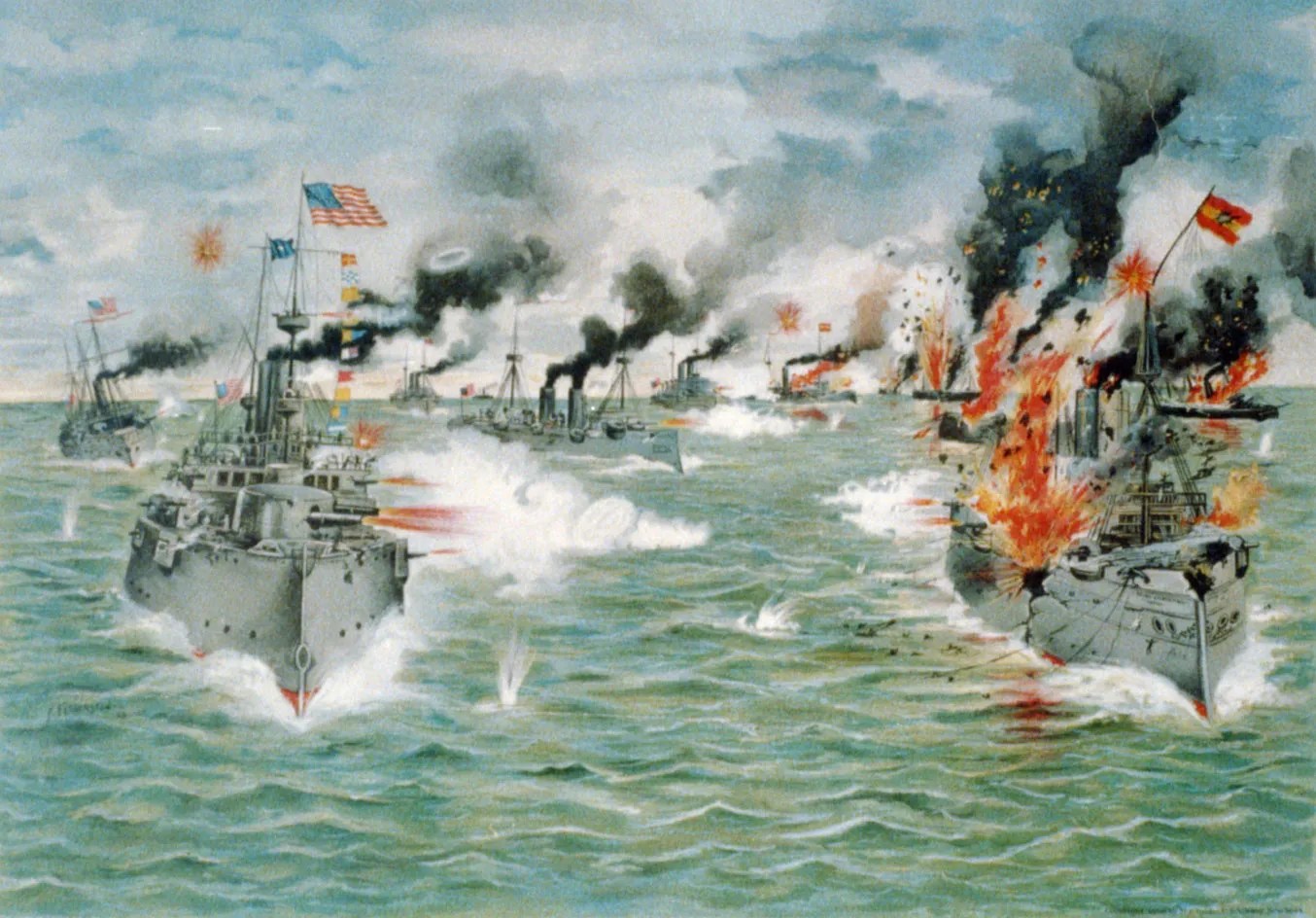
The “in case” came to pass when war between Spain and the USA was declared, and on May 1, 1898, Commodore Dewey sailed into Manila Harbor at dawn, and sank the Spanish fleet. No American sailors were lost. 

Dewey, quickly promoted to Rear Admiral, was a bona fide hero.

The Trappings of a Hero

When he returned to the US in 1899, there hadn’t been a real hero for decades – and certainly not a real NAVAL hero. The entire country went wild for the new Admiral.

The hoopla was somewhat of a surprise to him. Admiral Dewey was definitely an aggressive officer who knew his duty and his duties, but like General Grant, he was also a basically modest man.

Parades down the main thoroughfares in all the big cities was new to him. But he got used to it, and tipped his hat and waved to the crowds.

He was sincerely touched by the banquets in his honor, the presentation trays and swords and silver stuff. A grateful nation also presented him with an opulent house in Washington DC. He was happy to say thank you.

The Dewey Arch was something else. New York City, which does hoopla like none other, went all out, and in 1899 constructed a mammoth arch in Madison Square (23rd Street and Broadway). The finest architects were summoned to design it and build it for Dewey’s Triumphal Parade. Private funds were quickly raised. But the arch was temporary, constructed of plaster-over-wood material, as was common for World’s Fair Exhibitions. Covering it with concrete was to be forthcoming. Once the balance of the money was raised.

The Dewey Arch

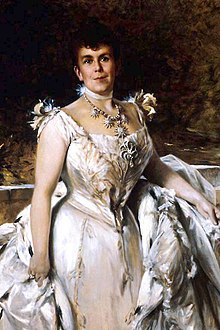
And if all the unexpected pomp and glory was not enough, the 60-year-old Admiral fell in love. He had been a widower for more than a quarter century. His much-younger bride, Mildred McLean Hazen, had been widowed for a decade as well.

The Second Mrs. George Dewey

The Siren Call of Politics

It came as no surprise that Admiral Dewey was wooed toward political office, specifically the Presidency. Republican President McKinley was very popular with no challengers. The Democrats, however, had a large segment that was unhappy with their apparent candidate, the populist William Jennings Bryan, who lost heavily in 1896 and wanted a rematch. The Admiral (non-political though he was) might pose a serious alternative.

After all, there have been men throughout the centuries who made the military-political transition easily. And successfully.

Admiral Dewey said no. He said no several times, acknowledging his complete lack of political qualifications. And interest. He had never even voted in an election. But Democratic bigwigs, desperate for a conservative alternative to Bryan, persisted. Finally, George Dewey agreed to explore his options.

A Foot-in-Mouth Candidate in 1900

Right out of the block, there was an “oops” moment. The Admiral stated publicly that he expected the job of president to be easy, since he would merely follow the laws enacted by the legislative body and “execute the laws of Congress as faithfully as I have always executed the orders of my superiors.”

William Jennings Bryan

Then of course, there was the personal “problem.” Mildred Hazen, the glamorous new Mrs. Dewey, was not only a wealthy socialite, but a Catholic. Many Americans still believed that the Pope would be whispering in the Admiral’s ear. But Dewey’s biggest problem was that he had deeded his new $50,000 mansion (the gift of a grateful nation) over to his new bride.

Candidate Dewey withdrew from politics, and returned to the world he knew much better. The Navy.

And Ever After

The Dewey Arch lasted only a few months before it began to decompose waiting for reasons and money to cover it in concrete. It was torn down.

In 1903, George Dewey was promoted by Act of Congress, to the special rank of Admiral of the Navy, retroactive to 1899. He was and still is the highest ranking Admiral in the USA.

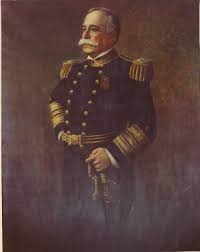
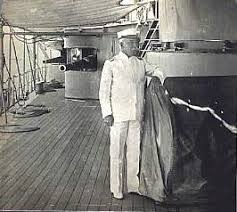
The Admiral

He returned to active duties at the War Department, and served unstintingly for the rest of his life, adding his strong support to the newest technologies, i.e. submarines and naval aviation.

He died at 80, in 1918, and is buried in the Washington Cathedral.

Sources:

Sullivan, Mark – Our Times: The Turn of the Century – Charles Scribner’s Sons, 1927

Traxel, David – 1898: The Tumultuous Year of Victory, Invention, Internal Strife, and Industrial Expansion That Saw the Birth of the American Century – Alfred Knopf, 1998

https://www.history.navy.mil/research/library/research-guides/z-files/zb-files/zb-files-d/dewey-george.html

https://www.politico.com/story/2015/12/admiral-george-dewey-born-dec-26-1837-217104

Posted in Nifty History People, Theodore Roosevelt, William McKinley | Tagged , , , , , , , , , , , , , , , , | 1 Comment

Joseph Jones, James Monroe and General Washington

Hon. Joseph Jones, uncle of James Monroe

The Hon. Joseph Jones

Joseph Jones (1727-1805) practiced the triple professions of many well-to-do Colonial men: planter, attorney, and political office-holder. One can easily list Jefferson, Madison, Jackson, Tyler, and a slew of others in that category.

Born in Westmoreland County VA to a prosperous merchant, young Jones (about five years older than George Washington), had the benefit of a classical education. He was sent to London and became a barrister. Returning to Virginia, he made his home in Fredericksburg, married, started a law practice, and was quickly appointed to several legislative/administrative/judicial positions for the colony. In short, a prominent citizen of comfortable means. 

It was a time of noblesse oblige, and prominent citizens of means in colonial times were expected to serve in Virginia’s House of Burgesses at some point. By the early 1770s, the Burgesses was populated by George Washington, Thomas Jefferson, Patrick Henry, and several of that societal and educational ilk. If Jones hadn’t been acquainted with Washington at an earlier point, he now met him on an equal footing.

Meanwhile…

Jones’ sister Elizabeth had married Spence Monroe, a Westmoreland planter of modest means, and they had five children, one dying in infancy. James was the eldest brother. He was sent to the local school for his rudimentary education – when he wasn’t needed to help on the farm. But both Monroe parents died young, forcing James to leave school at 16 to help support his siblings.

James Monroe, future President

Into that breach came Uncle Joseph Jones, married, but childless. He became a benevolent mentor to all, but particularly to James, who showed the most promise. Jones arranged for him to attend The College of William & Mary in Williamsburg, the colonial capital, and made sure the likely fellow was introduced to the best and brightest who could be helpful to his nephew’s future. 

In 1775, when the British Army fired on Lexington and Concord in far-off Massachusetts, the shot was heard in Virginia, and a seventeen-year-old Monroe and his classmates left school to join the nascent Colonial Army. His earlier acquaintance with now-General George Washington was indeed helpful. 

The famous “Crossing the Delaware” painting – with (maybe) James Monroe

Young James Monroe served bravely and competently, but suffered some severe wounds. Although he managed to recover, and was promoted, officers were expected to recruit their own regiment at their own expense. Monroe could not afford it. 

It was Uncle Joseph Jones who suggested that his bright nephew finish his education by reading law with one of his good friends, then-Governor Thomas Jefferson. Although a half-generation younger, Monroe established his own close friendship with Jefferson. For life. 

The Rest of the War

General George Washington served for the entire duration of the American Revolution: eight years. For two years after Cornwallis’ surrender at Yorktown in 1781, Washington maintained sufficient military forces in appropriate locations to insure that the British actually vacated the premises. While many of his officers left military service to pursue peacetime vocations or properties, Washington believed that a firm hand (his) was still required until the last redcoat was gone.

Congress still met, whether in Philadelphia or Annapolis or Princeton, or wherever it was deemed more efficacious. During those years, Joseph Jones was an elected delegate to that congress, and to the Congress of the Confederation which succeeded it. His nephew James Monroe was also elected to represent Virginia in the Congress of the Confederation. The torch was being passed.

Interestingly Enough…

The Continental Congress (and its successor) had been, and still was, a generally impotent entity. Their members, all worthy and well meant, had limited powers and authority. Perhaps even more crucial to that impotence, was the fact that thirteen erstwhile colonies could not, would not, or even cared about acting in unity. That was especially true regarding money, i.e. taxation for the common good of the entire new United States. Thirteen individual horses going in different directions were trying to pull a single wagon. 

The General

The story of George Washington’s last months at Newburgh, NY has been told and retold numerous times in various ways, but always with the same thrust:

The war was over. A peace treaty had been signed. Some British soldiers opted to remain in the new USA for the infinite opportunities of the available land. Most returned to Great Britain. But the process was a long one, and General GW insisted that his army remain vigilant until the very last soldier had departed.

By late February 1783, the officers were grousing. Most had not been paid in months. Some had not been paid for years. If Congress, always teetering on the brink of bankruptcy, was treating the Army so poorly, what might be in store once they were formally disbanded with no recourse? Rumors abounded that the “traditional” half-pay pensions that had been promised to officers in 1780 might never come to pass.

The Articles were weak and ineffective.

The grumbles became louder, and a meeting was called to discuss plans for officers to march on Philadelphia and demand their due. General Washington, who had always enjoyed their respect and confidence, and who had always been “a faithful friend to the army,”was not invited to the meeting. The upshot was that GW appeared anyway, prepared to read a recent letter he had received from Congress. He took out a pair of spectacles, something his men had never seen, claiming he had grown old and blind in the service of his country. They were deeply moved.

Washington read a lengthy and detailed letter from one of the Congressmen, outlining measures of various import taxes and duties being discussed, demonstrating sincere promise for at least some partial relief of the soldiers’ grievances.

Washington counseled further patience. The officers grumbled, but concurred.

That letter was from the Hon. Joseph Jones, delegate to the Congress of Confederation.

Sources:

Cresson, W.P. – James Monroe – UNC Press, 1946

Fraser, Flora – The Washingtons: George and Martha “Join’d by Friendship, Crown’d by Love” – Alfred A. Knopf, 2015

Unger, Harlow Giles – The Last Founding Father – DeCapo Press, 2009

https://founders.archives.gov/documents/Washington/99-01-02-10732

https://millercenter.org/president/monroe/life-before-the-presidency

Posted in A POTUS-FLOTUS Blog, George Washington, James Monroe, Nifty History People | Tagged , , , , , , , , , , , , , , , , | Leave a comment