The Madisons: His Hat and Her Cushion

The War of 1812 was seminal for James and Dolley Madison.

The Unlikely Commander-in-Chief

James Madison (1751-1836) was one of the most unwarlike men to serve as President of the United States, and thus Commander-in-Chief of the military. Following in the huge footsteps of George Washington, who at 6’2” literally towered over most of his contemporaries, the “great little Madison” as he was called, was anywhere between 5’ and 5’6” (depending on sources you espouse). He was also a slight fellow. No source claims more than 125 pounds. And he was also no youngster. He was past 60, and while he lived to be 85, always considered frail. 

Madison was an intellectual, philosophical man, and likely the best formally educated of all our Founding Fathers. He received the equivalent of a masters degree in political science from the College of New Jersey (Princeton). 

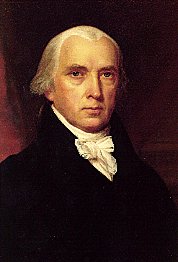
President Madison

When he assumed the Presidency in 1809, there was growing antagonism between the US and its former “mother country” Great Britain. The British were (as usual) engaged in a huge war with France, and the centuries-old enmity between those countries was not helped by Napoleonic ambitions for European domination. The US, in many ways, was caught in those crossfires. 

Madison tried vainly to prevent armed hostilities.

Admiral Cockburn:

Sir George Cockburn (pronounced Co-burn), was not only Admiral of the British Fleet, but a Scottish Baronet of lineage and nobility. He was born in 1772, shortly before the British closed the port of Boston and ignited the American Revolution, and thus only a small boy when General Cornwallis surrendered to George Washington at Yorktown in 1781. 

Adm. George Cockburn

By the 1790s, George Cockburn was one of Admiral Horatio Nelson’s young, promising captains, just as Napoleon was coming to power in France. 

By mid 1814, Napoleon had been forced to Elba, and peace in Europe was potentially at hand, so Cockburn, now in his early 40s, was tasked with spanking King George’s ex-colonies. He had gained a reputation for brutality during his raids on coastal Virginia towns and villages, setting them ablaze and causing heavy casualties. The US had placed a huge price on his head, and reportedly offered $500 for each of his ears. 

Sir George obviously believed that a whirlwind raid on Washington would be just the strike to win praise at home, humiliate the Americans, and maybe recapture its erstwhile territory abroad. And a spiteful spit in the face from John Bull would not be hard to take either. The British fleet sailed into the mouth of the Chesapeake Bay, and marched the rest of the way.

So Why Attack Washington?

There was absolutely no good reason to attack Washington DC in 1814 other than to tweak their former nemesis, the old, dead General whose name was permanently attached to the U.S. capital.

The dear General whose name was attached to the Capital City.

What they wanted was Baltimore, only 40 miles away. In 1814, it was the third largest city in the country with a magnificent port and harbor at the mouth of the Chesapeake, the gateway to the Southern states. It’s industry was thriving. Washington was still a sleepy little village with a few up and coming nice buildings.

President Madison was a good man, albeit no warrior, but his attractive and personable wife Dolley had earned worldwide acclaim as a quintessential hostess, whose parlor and table attracted one and all, high brow and low. It was she who was famous – and had been for more than a decade. 

It was not a huge surprise. The British fleet had been sighted causing havoc in the Chesapeake Bay as far south as North Carolina, and seemed to be making haste for the capital city.  Practically everyone in Washington was evacuating for an imminent attack. Wagons and carriages had been clogging the street for days, carrying residents and officials out of town – with their most prized possessions. 

Dolley Madison was the famous one.

President Madison, guardian of the Declaration of Independence, the Constitution and the Bill of Rights (among other documents), had packed up all the state papers and treasures. He had dispatched them via trustworthy friends and associates to places of safekeeping. 

As Commander-in-Chief, Madison was following in the huge footsteps of President/General George Washington. While none could credit him with great military knowledge or skill, they would not find him wanting in courage. He decided to go to Bladensburg, MD (where actual fighting was taking place) – and rally the troops in person. 

Taking Aim on the White House

When President Madison left for Bladensburg, he had instructed his wife to finish packing up their important belongings, and wait for further word from him. He also had advised her, if necessary, to vacate and meet him at a pre-arranged safe place in Virginia.

Dolley Madison had scheduled a luncheon for August 24. The table had been set and the food prepared. She ran to the roof with her spyglass every hour, hoping to see a rider en route with a message from her husband.

Messengers had been coming for Mrs. Madison all morning – to cancel their luncheon invitations, and offer to take the “Presidentress” to safety. She had declined, pending word from Mr. Madison…. Finally she no longer could remain. The British army, partially led by a British Admiral, was close at hand.

One of the oldest White House images.

The Capitol Building was torched first. Cockburn and his soldiers paraded into Congress, gleefully passed a mock-bill, took a mock-vote, vacated, and proceeded to torch the building. Then they burned what was then the Library of Congress. A new one was built afterwards.

Then they arrived at the White House at 11 p.m. that night. The doors were unlocked and no one was there. But they could smell cooked meats, and having had nothing to eat for twelve hours or more, helped themselves to the party. That included bottles of fine wines, too good to waste. 

Burning the White House 1814

Then they commandeered souvenirs. A mantel filled with ornaments was distributed to the partygoers; one soldier took a sword, another appropriated one of President Madison’s shirts.

Admiral Cockburn personally confiscated Madison’s hat along with a velvet cushion, smirking that it would remind him of Mrs. Madison’s “seat”. After all, she was the most famous woman in America.

Then they set fire to the draperies and the upholstery.

There have been many sources describing the purloined hat and cushion, but alas, there is no indication of where either of them are today.

Sources:

Allgor, Catherine – A Perfect Union – Henry Holt, 20006

Cook, Jane Hampton – The Burning of the White House – Regnery History, 2016

Hugh, Howard – Mr. and Mrs. Madison’s War – Bloomsbury Press, 2012

https://www.nps.gov/people/george-cockburn.htm

https://www.battlefields.org/learn/articles/burning-washington-dc

Posted in A POTUS-FLOTUS Blog, George Washington, James Madison, Nifty History People | Tagged , , , , , , , , , , , , , , , , , | Leave a comment

Julia Tyler and the Princeton Tragedy

The freakish tragedy on the USS Princeton in 1844 claimed dozens of deaths and injuries.

The Pride of the Navy

It had become a fact of government: a strong, well trained and well equipped fleet is essential to maintaining peace as well as war.

After the War of 1812, building and equipping and training a mighty fleet had become not only a priority, but a source of pride for the country. By 1843, spurred by Captain Robert Field Stockton, a well regarded naval veteran, the Navy commissioned the USS Princeton, as its first steam powered man-o-war. Designed primarily by Swedish emigre engineer John Ericsson, it was state of the art: a large and technically sophisticated (for that time), and featured serious (for that time) firepower, which included a huge (for that time) cannon, nicknamed the Peacemaker. The massive guns could fire a 12-inch ball a distance of 5 miles. It was considered the most advanced technology in the world. Captain Stockton was instrumental in its design.

The beautiful USS Princeton

After several testing runs, it was decided that a formal 1844-style grand opening should be held on the Potomac River, with a gala afternoon cruise from the Washington Navy Yard to Mount Vernon. February 28 was the day of choice.

Some 400 guests were invited by Captain Stockton for the outing, to include President John Tyler, members of his cabinet, an array of Congressmen and Senators, an assortment of other notables, including the venerable 76-year-old Dolley Madison. (It was said that no Washington event could possibly be “official” with the Divine Mrs. M.) President Tyler also invited a contingent of family members and personal friends.

It was the hottest ticket in town.

The Private Guests of Honor

President Tyler was a widower. Letitia Christian, his wife of more than 25 years, had died nearly 18 months earlier. Still vigorous and attractive at 53, the POTUS had cast his eye on Miss Julia Gardiner, a charming New Yorker, pretty, sophisticated and very wealthy. She was also thirty years his junior.

Letitia Christian Tyler
Julia Gardiner

Tyler had been discreetly and patiently wooing Miss Gardiner for some months but to little avail. She had suitors aplenty – all old enough to be her father. While she was invariably charming and polite to all, she was not encouraging to any of them. 

Her father, former New York State Senator David Gardiner, naturally found it hard to deny the very potent benefits as well as the legitimate romantic advances of the President of the United States. He was also 15 years older than Julia’s mother, so age was not that big a concern. President Tyler, a very stubborn man when it came to getting his own way, likely believed that Julia’s father might be an important ally in his affaire de couer.

The Outing … and the Accident

It began as a delightful outing, and the weather was obliging. Spring had come early to Washington. The state-of-the-art Princeton was rigged in formal glory, and the big cannon was indeed fired a few times, to the oohs and ahhs of the guests.

Then it was announced that refreshments for the ladies would be served below deck; the gentlemen would be served later. A contingent of women, dressed in their finest gowns and petticoats went below for the buffet. The President’s son-in-law, William Waller went below as well, and began serenading the ladies with his fine baritone voice. President Tyler, as escort to Miss Gardiner, and in respect to his son-in-law, stayed below as well.

Then there was a loud blast, mingled with shouts and shrieks from those above. And calls for a doctor. At the urging of some of the dignitaries, The Peacemaker had been fired again, in salute to Mount Vernon – but this time, it misfired, exploding in metal and shrapnel everywhere. And body parts. And blood. There was widespread hysterics and panic. There were several casualties, including the Secretary of the Navy Thomas Gilmer, and Secretary of State Abel P. Upshur – both long time personal friends of Tyler.

One of the worst accidents of the US Navy

The President raced up on deck, to be warned by a sailor, “Don’t let Miss Gardiner forward, her father is dead.” When Julia heard the news, she fainted, and Tyler carried her back downstairs and placed her on a bunk. He ordered the ship to go ashore at the nearest dock, and summoned a passing steam vessel for emergency aid.

Tyler personally carried his ladylove down the gangplank to the rescue vessel. Midway, Julia recovered from her swoon and flailed about in disoriented shock, nearly knocking them both off the gangplank. The President had all he could do to to steady himself and the woman in his arms.

The Subdued, but Happy Ending

The immediate upshot of the horrible accident was more horror. In addition to the two cabinet secretaries and Julia’s father, four others were killed immediately, including one of Tyler’s personal servants. Twenty others, including Capt. Stockton, were injured. Some very seriously.

The President ordered a formal lying-in-state at the White House for the deceased victims (minus his servant, who was provided for elsewhere). Flags were lowered to half mast, and the White House was draped in mourning cloth.

Tyler was deeply solicitous of Miss Gardiner, sending bouquets and gracious notes, and paying discreet personal calls. Then there were invitations for Julia and her mother and siblings to small private luncheons or teas at the White House.

Julia had always been a daddy’s girl, and now her daddy was dead. The courtly – and still attractive older man, began to look more appealing. A few months later, they married.

Sources:

Anthony, Carl Sferrazza – First Ladies 1789-1961, William Morrow,1990

Cohen, Jared – Accidental Presidents: Eight Men Who Changed America – Simon & Schuster, 2019

Seager, Robert III – And Tyler Too, McGraw Hill, 1963

https://www.historicamerica.org/journal/2021/3/3/the-uss-princeton-and-the-disaster-youve-never-heard-of

https://www.britannica.com/biography/John-Tyler

Posted in A POTUS-FLOTUS Blog, John Tyler, Nifty History People | Tagged , , , , , , , , , , , , , , , , , , , , , , , , , , | Leave a comment

Andrew Jackson: The Big Cheese

President Andrew Jackson was the best known man in the country.

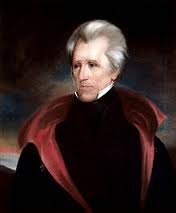
General/President Andrew Jackson

Andrew Jackson (1767-1845) was a wild boy, devoid of blood relatives by his teens, self made into a frontier attorney, further self made into a gambler, speculator, planter, brawler, duelist, legislator, and finally soldier, became a household word after his technically-too-late victory in New Orleans during the war of 1812. But the battle itself had great ingenuity, merit, gallantry, and a victory is a victory. 

For the next dozen years after New Orleans, AJ continually sought a general’s star in the regular Army, to no avail. He returned to political life and appointed office, but again, to little consequence – since his well-known penchant for disregard of regulation and disobedience of orders made him powerful enemies who blocked his desired ends.

The Battle of New Orleans made Jax a Hero

Faults and all however, none could deny that he was charismatic, charming when he chose, and unquestionably a man of great leadership.

When the Presidency missed his lap in 1824, Jax cried “foul,” stamped his feet, complained to anyone who would listen, and plotted for a rematch. He also collected a growing cadre of young enthusiasts who flocked to his banner, prepared to put one of their own “westerners” in the White House by hook or by crook. They needed neither. By 1828, the country had grown enormously, and rough and tumble was rapidly replacing staid and stodgy. Jackson won handily. 

But his eight years in office were a mixed bag. 

Gifting from the Hoi Polloi

It has been a practice (or tradition) for millennia. The lowliest and often the poorest people have given opulent gifts to those who don’t need it: kings, emperors, and assorted big shots.  Whether it is from fear or coercion, in hope of gaining favor or recognition (or forgiveness), or even for sincere affection and loyalty, the lowest of the low have scrimped to provide their very best gifts to the highest of the high.  Sometimes gifts are given for publicity to benefit the giver.

Gifts are not always of high monetary value, although few kings or queens have turned down a jewel for the crown. Sometimes the gift is one of craft or talent or skill, the only thing they have to give. 

When George Washington was General, and later President, gifts of various sorts were commonplace. It was also widely understood that a) GW was a wealthy man and obviously did not need the additional largesse; and b) was an honest man who could/would not have his honesty or integrity impugned. 

Subsequent Presidents have tried to emulate those virtues; some have done it better than others. 

Today there are stringent laws for a POTUS/FLOTUS accepting gifts. Most of our recent heads of state are gracious, and some donate said gift to their presidential library or museum, considering it a gift-of-state. 

Personal gifts, of course, are somewhat different. A President certainly can accept a nifty birthday present from a close relative/friend. When sitting President and Mrs. William Howard Taft celebrated their 25th (Silver) Wedding anniversary, an arsenal of silver trays, urns and related objects were given by some 4,000 guests. Customary then (and “cheesy” today), those objects were displayed for all to see in a special room at the White House. The traffic was heavy.

President and Mrs. Taft

Nominal presents however, i.e. books or flowers, or homemade gifts of craftsmanship or skill, are usually accepted gracefully, and a thank you letter from the POTUS or FLOTUS is something to be treasured. 

Thomas Meacham, Farmer

“Colonel” Thomas Meacham (the “colonel” part was honorary) was a dairy farmer in upstate New York at a time where the completion of the Erie Canal, linking the Hudson River to the Great Lakes, had resulted in enormous prestige and prosperity for the region. Meacham’s property was extensive, and his dairy farm, to include cows, milking facilities and a factory for producing cheese, was said to be the largest in the area.

In 1835, Meacham had a brilliant thought. He would produce the largest wheel of cheese ever made, and send it to President Andrew Jackson in the White House. He believed the associated hoopla would ensure his fame and maybe even his fortune.

The Erie Canal was a boon to the economy.

He built a special structure with hoops and frames lined with cheesecloth, and a press to hold the curd. For days, milk from 100 cows was poured in. The whey was squeezed out every day, and finally an enormous wheel, 4′ in diameter, weighting 1400 pounds was ready.

Of course this enterprise garnered huge publicity. Friends and neighbors came to gawk. Inspired by the clamor, Meacham had a special wagon made and appropriately painted and decorated, hitched eight horses, and carted the cheese to Port Ontario, to be loaded onto a ship bound for Washington – and the White House. Needless to say, the crowds went wild for the spectacle, including cannons, bells and whistles. Everywhere along the way, more crowds came to see the huge cheese. 

Disposing of the Gift

In due course, the half-ton-plus cheese reached President Andrew Jackson, who kept it in the White House vestibule for nearly two years. (Perhaps he wanted it to age. Perhaps it was just too heavy to move.)

But on George Washington’s Birthday in 1837, shortly before Jax was due to retire from office, word went out that free cheese was to available to any and all. Come to the WH and partake! Hundreds of citizens did exactly that. They showed up, knives and forks and knapsacks – to eat cheese, and perhaps take home a souvenir.

The cheese party

Most people know that when a cheese is cut into, it releases a pungent odor from the pent up- gases and microbes now released. And so it was with the Jackson cheese. To no surprise, many guests were overcome by the noxious fumes. Pieces of cheese were ground into the carpets and upholstery. Newly elected POTUS Martin Van Buren had his staff picking out remnants for weeks.

But the penetrating stench of cheese was said to permeate the mansion for many months. Or more.

Sources:

Brands, H.W. – Andrew Jackson: His Life and Times – Doubleday, 2005

James, Marquis – The Life of Andrew Jackson: The Border Captain; Portrait of a President – Bobbs Merrill, 1937

Meacham, Jon – America Lion: Jackson in the White House – Random House, 2008

https://www.whitehouse.gov/about-the-white-house/presidents/andrew-jackson/

https://npg.si.edu/blog/big-cheese-presidential-gifts-mammoth-proportions

Posted in A POTUS-FLOTUS Blog, Andrew Jackson, Nifty History People | Tagged , , , , , , , , , , , , , , , | 2 Comments

The Merrimac: The Two Incarnations

The USS Merrimac of Civil War history is sometimes spelled with a “k”. But I live in the Tidewater Virginia area, where it is always spelled with the “c”.

The Best of Its Kind

When the USS Merrimac was built (1854-5), she was state-of-the-art. Steam powered with screw propellers, fast, sturdy and beautiful, with tall masts and billowing sails. She was one of six brand new frigates commissioned in the early 1850s, and with the others in her class, was named for US Rivers. Hers was the Merrimac River, which flows through New Hampshire, and ends in Merrimac, Massachusetts. 

The beautiful Merrimac

The Merrimac was 275’ in length, and 38.5 abeam, conventionally made of durable live oak wood. She carried 40 new 8” and 10” guns. According to the New York Times, she was “a magnificent specimen of naval architecture,” and “the finest vessel of war of her class that had ever been constructed.” Well, maybe. Then.

She definitely was a beauty as far as looks went. But there were problems. Her screw propellers, which allowed for the steam propulsion, required the engine placed below the water line to protect it from shell fire. She rolled badly, which reduced her ability as a gun platform. The engines themselves were a chronic problem. 

She did see activity for three or four years, including serving as the flagship of the US fleet in the Pacific, but by February, 1860, the Merrimac put in at the Gosport/Norfolk VA Shipyards for substantive repair.

Repair. Elections. Fort Sumter.

The Merrimac was still under repair when Abraham Lincoln was elected President in November 1860, and everyone knew that troubled times were ahead. By his inauguration on March 4 1861, several southern states had either seceded, or were poised to do so within days. 

Gideon Welles, Lincoln’s Secretary of the Navy, with little naval knowledge or experience, rose to his office capably and quickly. One of his first acts was to order the Merrimac to be “shipshape” immediately, and to bring her to Philadelphia, out of harm’s way. The day before the firing on Fort Sumter, Welles ordered that “great vigilance be exercised” to protect Norfolk and the ships/shipyards. And that included their cannon and ammunition.

Gideon Welles

But the “new” Confederate states fired on Ft. Sumter in Charleston Harbor, on April 12, and the Civil War began. Naturally President Lincoln, despite his best angels and intentions, could not permit this act to go unchallenged. He called for 75,000 volunteer soldiers, tripling the Army of the United States. 

Three days later, a wavering State of Virginia declared itself for the Confederacy. And this pushed the US Navy to order the Norfolk Navy Yards be evacuated, razed and burned to prevent it from falling into enemy hands.

Blocking and Firing

During the very shaky days before Ft. Sumter, many naval officers, seamen, longshoremen and mechanics were personally committed to the nascent Confederacy. Some of them hatched a secret plot that if war was declared, they would deliberately scuttle and sink some old decommissioned vessels in the channel to block its entry, preventing any ships from entering – or leaving. On April 20, they did exactly that.

Then, in the early hours of April 21, the remaining naval personnel loyal to the Union, set fire to the entire Navy Yard, including whatever ships remained, to prevent capture. This included the USS Merrimac, which had been unable to leave the blocked port.

This of course was a great loss to the US Navy, since the Merrimac was not only one of their finest and most modern vessels, but boasted 40 serviceable cannons. It was later discovered that inside one of the watertight compartments, there were 2000 ten-pound shells. Nevertheless, they would see her again.

Stephen Mallory

The Make Over

After the fire, Confederate divers learned that the USS Merrimac had only burned to the water line and the hull below was salvageable, repairable and serviceable. They hauled it out of the water, and immediately went to work.

The Virginia

Within a month, the remains of the hull were towed into Norfolk’s only remaining dry dock. Scuttling the damaged part, they rebuilt a new ship. Confederate Secretary of the Navy Stephen Mallory, aware of Union plans to build ironclad vessels, ordered the ex-Merrimac to be turned into an ironclad steamship. It was the only large vessel in the Chesapeake Bay Area, and it was all they had.

The Virginia

Less than a year after the scuttling of the Merrimac, the CSS Virginia emerged as her reincarnation. Funny looking and shaped like a floating barn roof, she was 275’ long, a little more than 51’ abeam, with a deep 21’ draft, which would prove her undoing: difficult to maneuver. But she was tough, covered in 4” overlapping iron plates. She also boasted ten big guns.

On March 7, 1862, the Virginia steamed into Hampton Roads, a large channel where the Chesapeake Bay flows into the Atlantic Ocean. Within hours, she had sunk the USS Congress, and the USS Cumberland. Federal ships rained fire on the Virginia, but the cannonballs literally bounced off her iron hull. Then she turned to attack the Minnesota, but it was growing dark. She would return the next day.

For 24-hours the Virginia was the most important seafaring vessel in the world.

USS Monitor

Nemesis

But during the night, one of the strangest objects ever seen on water sailed into Hampton Roads, mostly guided by the burning flames of the Congress and Cumberland. Sailors said it looked like a cheese box on a raft. It was the Monitor, come to save the day.

For nearly ten hours, the Virginia and the Monitor fired shell after shell at each other, with minimal damage. Finally, with night approaching, the Virginia withdrew. It was a draw.

Scuttling the Virginia

Nevertheless, every other navy in the world was now obsolete. Ironclad was in, wood was out. Two months later, the Virginia was scuttled, this time by the Confederate Navy to prevent it from capture.

Sources:

Catton, Bruce – The Civil War – The Fairfax Press, 1971

Henig, Gerald S. & Niderost, Eric – Civil War Firsts: The Legacies of America’s Bloodiest Conflict – Stackpole Books, 2001

Stokesbury, James L. – A Short History of the Civil War – William Morrow, Co. – 1995

https://www.britannica.com/event/Battle-of-the-Monitor-and-Merrimack

http://civildiscourse-historyblog.com/blog/2015/1/29/a-sunken-house-with-nothing-but-the-roof-above-the-tide-rebuilding-the-css-virginia

Posted in American Civil War, Nifty History People | Tagged , , , , , , , , , , , , , , , , | Leave a comment

Thomas Jefferson: The Honeymoon Trip

Historians and biographers have long explored the enigmatic mind and heart of Thomas Jefferson

And their conclusion is…

Some have claimed he was infuriating, evasive, elusive, complicated, deceptive, double-dealing, inconsistent, disingenuous, close-mouthed, and similar adjectives. And those were his biggest fans!

Thomas Jefferson’s intellectual prowess and happy facility with words are generally unquestioned. But perhaps “closed-mouth” is the universal trait that suits him best – socially. He was a cordial man, a generous and frequent host, the consummate gentleman, with many friends and admirers, and some lifelong friends. But some things remained unshared.

He was always willing to share his thoughts with those he considered peers, but deep emotional feelings seem to be perpetually reserved for himself. A few might sense them, but they would seldom if ever be verbalized, save in the most general terms. 

The Unhappy Little Miss Wayles

Martha Wayles (1748-82) was born at The Forest, in Charles City County, VA, not far from Williamsburg, its then-colonial capital. Her father John Wayles, was a prosperous lawyer, planter, and slave trader with substantial property. Prior to the Revolutionary War, Wayles had become a wealthy man with varied business interests. 

A modern impression of Martha Jefferson (WH Hist. Assoc.)

Her mother was Martha Eppes, also of a prosperous planting family near the Bermuda Hundred, along the Appomattox River. 

She died at 27, only a week after her daughter was born. 

The Widower Wayles married twice more, and both marriages were short-lived. Martha’s first step-mother, Tabitha Cocke had four children during her 10-year marriage, but only one reached maturity. Her surviving daughter Elizabeth became very close to her half-sister Martha. The second step-mother, the widow Elizabeth Lomax Skelton, was married to Wayles for only a year before she died.

Young Martha Wayles was given all the requisite comforts a prosperous planter could provide, and that included a solid education. All indications are that she was well versed in literature and poetry, music and art – as well as the essentials of housewifery.

Nevertheless, raised by two stepmothers, neither of whom seemed to have time for her, it was a lonely childhood.

At 18, perhaps seeking an appropriate exit from a difficult family situation at The Forest, Martha married Bathurst Skelton, a younger brother of her second stepmother’s first husband, one of several convolutions of family intermarriages. A year later, she gave birth to a son John; a year after that, Bathurst died, and she returned to her father’s house with her son, who died as a toddler.

Bathurst Skelton

Sometime in 1768, John Wayles engaged Thomas Jefferson to manage some of his legal affairs. This is the earliest indication of the possible acquaintance between TJ and Martha Wayles Skelton, who eventually became his wife.

Aside from the fact (gleaned from a few contemporaries who remarked about it), Martha was said to be petite, pretty and graceful. She was also musically inclined, particularly adept at the harpsichord. Some said she could sing well. 

Some lore suggests that a couple of would-be suitors for the young Widow Skelton were waiting in the parlor, when they heard a harpsichord and violin playing in the next room, and two voices merging in duet. The gentlemen callers were said to recognize the harmonious blending of voices, and withdrew immediately. Perhaps.

Jefferson The Suitor

At 25, Thomas Jefferson was practicing general law in Virginia, to moderate success. He was also en route to being elected to Virginia’s House of Burgesses the following year. But perhaps his dearest love at that time, was building a home on Monticello, his “little mountain,” not far from Charlottesville. He had inherited the property when his father died a decade earlier, and had always planned to make it his permanent residence.

The restored VA House of Burgesses

When his courtship of Martha Wayles Skelton culminated in their marriage in 1772, the bride-to-be had already inherited considerable property (land and labor) via her natural mother, her late husband, and her father. It is estimated that Martha’s dowry doubled (or more) Jefferson’s own holdings. 

The newlywed home looked nothing like this!

However… John Wayles, while a wealthy man, was also encumbered by many legal entanglements and debts. These would be passed on to his daughter and son-in-law, who assumed their responsibility. It is generally conjectured that these debts and legal suits were the beginnings of Jefferson’s lifelong financial problems.

The Wedding Journey

Theirs was a traditional wedding and happy occasion at the Wayles plantation on January 1, 1772. The newlyweds were anxious to start their life together at the new house Jefferson was building on his Little Mountain in the Blue Ridge. They set out as early as possible for the long trip of more than 100 miles.

The South Pavilion, the earliest “Monticello” brick building.

Virginia may be a southern state, but it has very defined seasons. Winters may be shorter, but they can be just as cold and snowy.

En route, the snow began, and did not stop. In fact, it became a blizzard, severe enough to force the Jeffersons to abandon their carriage, and travel the rest of the way on horseback, taking only their essentials.

It was very late when the exhausted couple arrived at the property of one of Jefferson’s neighbors, specifically a two-room brick house built for his overseer. It was unoccupied, and the couple needed shelter for the night…

The following day, they pressed on to Monticello – itself only a small two-room building – then! Jefferson family lore relates that a half-bottle of wine, found on a shelf behind some books, had to serve the newlyweds both for fire and supper…

Martha Jefferson Randolph

The wine was shared, and Mr. and Mrs. Jefferson clung together to warm themselves. They were young and in love. Their daughter Martha (always called Patsy) was born September 27th, 1772, nine months after the pair set up housekeeping in what we know today as the South Pavilion. It is still there.

Sources:

Ellis, Joseph – American Sphinx: The Character of Thomas Jefferson – Alfred A. Knopf, 1997

Halliday, E.M. – Understanding Thomas Jefferson – Harper Collins, 2001

Randolph, Sarah N. – The Domestic Life of Thomas Jefferson – Thomas Jefferson Memorial Foundation, 1947

https://www.loc.gov/collections/thomas-jefferson-papers/articles-and-essays/american-sphinx-the-contraditions-of-thomas-jefferson/

https://www.monticello.org/research-education/blog/a-winter-wedding-and-a-snowy-slog/

https://www.whitehouse.gov/about-the-white-house/first-families/martha-wayles-skelton-jefferson/

Posted in A POTUS-FLOTUS Blog, Nifty History People, Thomas Jefferson | Tagged , , , , , , , , , , , , , , , , , | 1 Comment

James Monroe, The Decorator

Nothing in James Monroe’s upbringing indicated his latent taste in the decorative arts.

JM: Orphaned Boy

James Monroe (1758-1831), Virginia born to a middle class planting family, was orphaned by the time he was 16. Into that parentless breach stepped his prominent and benevolent uncle Joseph Jones, with no children of his own. He became in loco parentis for the rest of his life and duly sent him to the College of William and Mary. A year later, when the shots were fired at Lexington and Concord, MA, young James, along with his entire class, immediately rushed to enlist in the Virginia Volunteer Infantry.

He was tall, athletic, smart, brave, and a superb rider – talents that quickly came to the attention of his fellow Virginian, General George Washington, who commissioned him Lieutenant and utilized him regularly as a scout. 

JM: Wounded Soldier

During the Battle of Trenton in December, 1776 (where the Hessians were surprised), Lt. Monroe fought well, but was badly wounded by a musket ball in the arm that severed an artery. Once recovered, he rejoined the Continentals, in time for action at Brandywine Creek, Valley Forge and Monmouth, and became Lt. Col. at twenty. 

Only a legend, but Monroe crosses the Delaware with General Washington

He returned to Virginia with a letter of commendation from General Washington and vague promises for monetary aid and a new regiment to command. Neither panned out. With a recommendation from his uncle, he met then-Governor Thomas Jefferson who liked young Monroe, urged him to read law, and became a friend for life.

TJ: Monroe’s lifelong friend

“It’s Who You Know and Where You Go…”

With close acquaintance with several high-placed fellows, James Monroe’s rise in Virginia political/social circles was rapid. He was elected to the State Legislature and various other posts, including VA governor, and as a delegate to the Constitutional Convention.

In 1794, James Monroe was appointed (by GW) as Minister to France, serving in Paris during France’s Reign of Terror. His tenure lasted only two years, but in those dangerous and turbulent times, he a) “saved” the wife of the Marquis de Lafayette from the guillotine, and b) became enchanted with the best that Paris had to offer in the way of design and exquisite architecture, art and craft. And decor.

A later trip, this time to England, Spain, and more importantly, to France to negotiate the Louisiana Purchase Treaty, further exposed the Monroes to the finest things in the Empire. 

Collecting Stuff

The Monroes had purchased the estate now called Ashlawn-Highland in Albemarle Country, VA, only minutes (today) from Jefferson’s Monticello, and made it their permanent residence in 1799. Naturally, having seen the elegant taste of Monticello on numerous occasions, Monroe had developed a liking for the same. 

Ash Lawn today

He availed himself of the opportunity to purchase many fine pieces of furniture in Europe, many from the “old aristocracy.” His cordial acquaintance with Napoleon’s family (his young daughter Eliza was best friends with Josephine’s daughter Hortense), led to the acquisition of the finest quality items – and access to the expert tradesmen and merchants who made/sold them.

Rebuilding the White House

In the early years of the White House (pre War of 1812), the First Occupants were expected to bring their own personal furniture, although the draperies, carpeting and lighting were usually underwritten by the government. The Adamses, only there for a few months, brought little that wasn’t necessary.

Jefferson, who loved all things domestic, was surprisingly sparing fixing up his White House “house.” He saved his best attention for Monticello. The Madisons had been gradually accumulating some fine pieces, along with the drapes and carpets and chandeliers – until the summer of 1814. 

But once the WH had been set ablaze by British soldiers, it was unfit for habitation for three years. The basic structure-shell was sound, but between flame, smoke and water damage, the entire innards needed rebuilding.

It wasn’t until the fall of 1817 that Monroe (elected in 1816) could move in. He brought some of his own furniture; a few pieces remain at Ash Lawn or in the WH today. But the “saloons” as they called the three main downstairs audience rooms needed to be properly adorned.

Part of the 83-piece suite ordered by Monroe

His Taste…

President Monroe’s A-list of vendors came in handy, not only for furniture, but for the candelabra, crystal, ornaments, silver and porcelain items to grace the surroundings. And he chose the style of France – during the Napoleonic Empire. After Waterloo, a host of both aristocratic and Napoleonic items had become available and affordable.

There was his high-backed secretary with many secret compartments, chairs, tables and a magnificent clock, likely from the waning days of Louis XVI.

Monroe’s (reproduced) desk

In particular, he arranged to purchase an 83-piece suite of furnishing made specifically for the Oval (now the Blue) Room, some of which is still there. He also ordered the large gilt and mirrored “Monroe Plateau” that permanently graces the State Dining Room. 

The famous Monroe Plateau

According to the White House Historical Association, James Monroe oversaw the interior decoration himself. There is little evidence of any input pointing to Elizabeth Monroe’s tastes or suggestions. 

Documentation is sketchy about Mrs. Monroe, but there is general conjecture that her health was problematic (some have suggested epileptic seizures), to account for her inactivity in public life and society. 

Elizabeth Monroe

Following strict European head-of-state custom, Mrs. Monroe declined to return calls. This did not set well with the style of Dolley Madison “democracy,” so WH callers dwindled precipitously. And while the Monroe’s daughter Eliza Hay assumed much distaff responsibilities, she was heartily disliked for her imperious manners. 

240 Years Later

For decades, most Presidents and First Ladies continued to bring what they had, accept what remained in the WH, and try to live within the decoration allowances periodically proscribed by Congress. 

But in the early 1960s, First Lady Jacqueline Kennedy undertook to restore the White House public areas – and Monroe’s decor was the benchmark. His tasteful influence and some reproduced furnishings are still there.

Sources: 

Seale, William H. – The President’s House – The White House Historical Association, 1986

Unger, Harlow Giles – The Last Founding Father – DeCapo Press, 2009

https://www.jfklibrary.org/learn/about-jfk/jfk-in-history/the-white-house-restoration

https://potus-geeks.livejournal.com/1495735.html?

Posted in A POTUS-FLOTUS Blog, George Washington, James Monroe, Nifty History People, Thomas Jefferson | Tagged , , , , , , , , , , , , , , , , , , , , , , , , , , , , , | 1 Comment

John Tyler: Entitlements

The Whig Party was a brand new national entity in 1840.

John Tyler

…And Tyler Who?

The Whig Party, originally formed around 1836, was an amalgam of sectional and factional differences, basically centered on their dislike for President Andrew Jackson, whether it be his policies or his personality. Knowing they were bound to lose in ‘36, they fielded four different Presidential candidates, depending on geography. Their reasoning was that perhaps a “front runner” might appear for 1840.

William H. Harrison

That front runner did appear, in the person of aging General William Henry Harrison of modest War of 1812 fame. His victory at Tippecanoe was “out west” – in the Ohio Territory – and could be considered mere skirmishes at that. Nevertheless, victory is victory, and Harrison’s name (and family history) was a known quantity. He was also very happy to accept the nomination.

The choice for Vice President was a headache for the new Whigs. There were some who believed the position itself was superfluous, and indeed it was a tack-on during the Constitutional Convention. Very little was known of our “founders” intentions regarding the VP, and besides, they were all dead. James Madison, last of them to die (in 1836), left a treasure in his annotated diaries of the Convention, but it had yet to be purchased/published by the government, and was thus unavailable for research. 

Then of course, the Democrats had nominated President Martin Van Buren for a second term – with NO Vice President on the ticket. The sitting VP, Richard M. Johnson, had become heartily scorned for his scandalous personal life, and no other candidate was forthcoming. 

Martin Van Buren

Despite the fact that the aristocratic Harrison was born only a few miles from Tyler in Virginia, he had spent his adult years “out west,” and was considered a “westerner.” The Whigs needed an easterner, and preferably a southerner, to balance the Whig ticket. Ergo “Tippecanoe and Tyler too.” It had a ring to it.

So What Was the Problem?

Nobody wanted to be Vice President, despite the honor and the sumptuous $5000/year salary (the average man made $500/year). But the position had no real purpose other than to preside over the Senate. Any politician with even a smattering of ambition knew it was a dead-end route to oblivion. 

John Tyler, at 50, enjoyed a fine upbringing and education. An attorney, like his father, who had been Virginia’s Governor, he had acquired substantial property, fair wealth and prominence in his native state. And, like his father, he had been a states-rights Jeffersonian Democrat forever. 

Andrew Jackson

But he developed a strong antipathy to Andrew Jackson, and indeed, was considered a maverick. By 1836, he was persuaded to run for his Senate seat on the Whig ticket (which he won), making him an on-paper-at-least Whig, and somewhat beholden to the party. This, of course, sowed distrust among the Whigs. Would he support their platform on a national bank, internal improvements and higher tariffs?

But they obviously didn’t care. After all, nobody expected William Henry Harrison to die.

But He Did…

William Henry Harrison, POTUS for exactly one month, died. He was 68, and while his health had been good, 1840s medicine could not successfully treat his pneumonia – or perhaps cholera.

Interestingly enough, Harrison’s cabinet, solid Whigs all, recognized that Harrison was failing rapidly about a week before his demise. When they met, they also recognized that Vice President Tyler might be called to fulfill his term. They drafted a letter to the Vice President, advising him of the imminent situation, and once WHH breathed his last, dispatched a fast rider to Tyler’s home in Williamsburg, VA with the news.

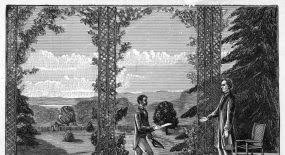
Early illustration of Tyler receiving the news

Tyler immediately left for Washington, anxious to demonstrate his effectiveness in his new (and unsought) position. There were six cabinet positions then: State, Treasury, War, Navy, Attorney General and Postmaster General. Under Harrison’s administration (and in line with Whig policy), each member had one vote, and that included the vote of the President. The cabinet expected that policy to continue.

Tyler had other ideas, and first and foremost was the way he was to be addressed.

Entitlement

There was no question about the Constitution’s clause regarding the Vice Presidency: in the event of “vacancy” the tasks of the President would devolve upon the Vice President. The big question however, was what they would “call” the new VPOTUS-turned-POTUS. Everyone in a prominent position requires a “title” of some kind.

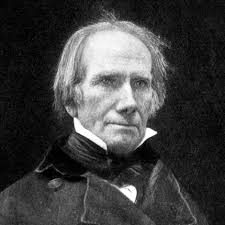
This image has an empty alt attribute; its file name is henry-clay.jpg
Henry Clay expected to call the shots.

The Cabinet and other members of Congress leaned toward calling the new Chief Executive “the Vice President acting as President.” Perhaps they would call him “Acting President.” Tyler’s adversaries called him “His Accidency.” Some even called him “Usurper.”

Even though he readily agreed to take the formal Oath of Office and speak to a special joint session of Congress, his critics were not mollified.

Accident or not, the new President was not the pushover many (including the towering figure of Henry Clay) had expected. He believed that if the “powers and duties of the President” fell to him, he should “be” the President. That included the Presidential salary and the privileges and perks of living in the White House.

For the rest of his term, any letter addressed to Tyler in any way other than as President would be returned to the sender unopened. His stubbornness/courage set a precedent that would be carried through for 125 years, through the deaths of Taylor, Lincoln, Garfield, McKinley, Harding, Franklin D. Roosevelt and Kennedy.

Daniel Webster

From the outset, Tyler firmly announced to his cabinet that he would do things his way, saying “I am the President, and I shall be held responsible for my administration. I shall be pleased to avail myself of your counsel and advice. But I can never consent to being dictated to as to what I shall or shall not do.” Then he added, “When you think otherwise, your resignations will be accepted.”

In six months, with the lone exception of Secretary of State Daniel Webster, his cabinet all resigned.

Sources:

Cohen, Jared – Accidental Presidents: Eight Men Who Changed America – Simon & Schuster, 2019

Craypol, Edward P. – John Tyler: The Accidental President – UNC Press, 2006

Seager, Robert III – And Tyler Too, McGraw Hill, 1963

https://www.whitehouse.gov/about-the-white-house/presidents/john-tyler/

https://www.whitehousehistory.org/john-tyler-and-presidential-succession

Posted in A POTUS-FLOTUS Blog, Andrew Jackson, John Tyler, Nifty History People, William Henry Harrison | Tagged , , , , , , , , , , , , , , , , , , , | 1 Comment

Zachary Taylor: Surprisingly Electable


Nothing in his 60+ years prepared Zachary Taylor to be President. 

ZT: A Brief Background

Zachary Taylor (1784-1850) was born to a fine old Virginia family, but the rugged individual type. They moved to the western part of Kentucky when Zachary was still a boy. Independence and ruggedness was a family trait that found a lifelong home in young Taylor. He was happy to leave formal schooling behind for the opportunities of the frontier military life. His commission was signed by President Thomas Jefferson.

As a young officer with instinctive albeit limited military training, he rose in the ranks. Basically unobtrusive, he invariably did his duty quickly and to everyone’s satisfaction. He rose even higher in rank.

Along the way, he acquired a reputation for carelessness of dress and personal habits. His soubriquet “Old Rough and Ready,”suited him. He married Margaret Mackall Smith, and she and their children followed along, from pillar to post. Army life suited them both.

This image has an empty alt attribute; its file name is general-zach.jpg
General Taylor

As they aged and their savings grew, they purchased a fair sized plantation not far from Baton Rouge LA, and expected to make it their home for the rest of their lives. 

Then came the War with Mexico

In 1846-7, the US was engaged in a war with Mexico, part of the fall-out from the independence and annexation of Texas. Democrat President James K. Polk, a non-military fellow, was an armchair political general, who tended to micromanage the war from Washington – some 3000 miles away. At least that’s what his (many) political enemies said – and his two main generals nodded in agreement.

Taylor, and his rival general, Winfield Scott were poles apart in appearance, manner, style, and practically everything. Taylor, around 5’7”, stocky and disheveled, paled in comparison to Scott, who at 6’5” towered over just about everyone, and presented himself like a flagship of an armada.

General Winfield Scott

Zachary Taylor, now past 60, was never perceived as a strong strategist or tactician, but most believed him to be a solid and competent leader. He won the battle of Monterrey at great cost. It was one of the bloodiest battles in that war, resulting in enormous (for that time) casualties. The losses horrified General Taylor, who organized a truce for a few weeks so both sides could tend to the wounded and rest their exhausted forces.

Polk was furious! He was looking to end the war quickly through complete victory – and perhaps a major land grab. 

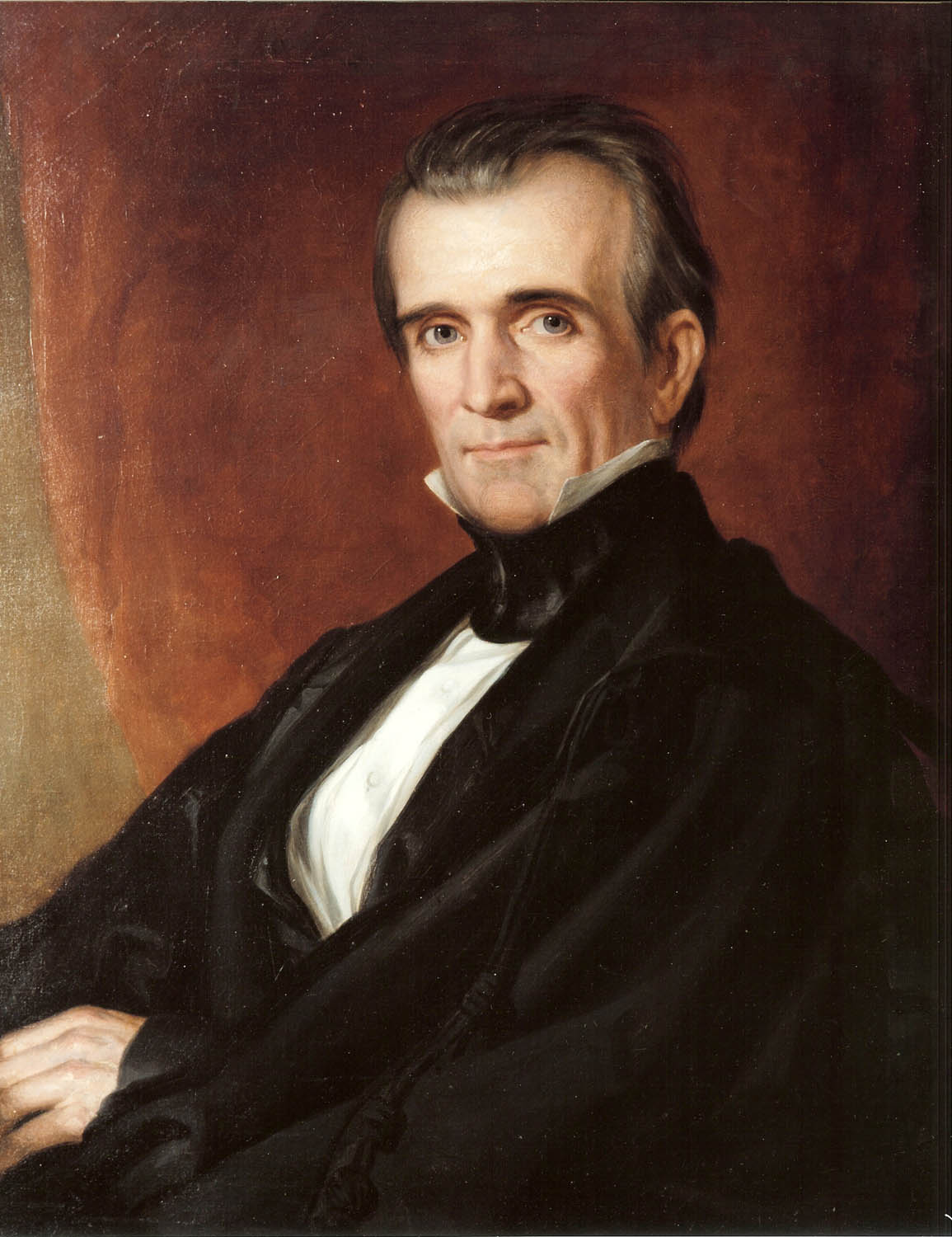
POTUS Polk, CinC

He “punished” General Taylor by transferring 10,000 of his best troops over to General Winfield Scott, leaving the former with a weak force of only 5,000. Then he sent Taylor to Buena Vista, a small town of relatively no importance.

Buena Vista was indeed a small town, but the young Mexican General Santa Ana did not seem to care. He had a large force – nearly 20,000 – and was anxious to make a glorious name for himself. Four-to-one odds in his favor promised an easy route to glory. But nobody told Zachary Taylor.

Becoming Electable

With his much smaller force, Taylor’s “David” managed to out-maneuver and out-general his Mexican “Goliath”, and achieve a stunning victory that Winfield Scott was yet to equal, and even the implacable President Polk could not deny.

The newspapers went wild for their latest hero! This not-so-young newcomer to the public eye was starting to look very promising. Medals were struck and souvenirs were produced. All sorts of stories about Taylor began circulating, most of them centering on his dedication to his soldiers, and his own modest behavior.

ZT: Hero of the day!

Problem was, Taylor was completely non-political, and admitted that he had never voted, let alone favored a political party. He had no affiliations. And no ambition. That was not going to stop the Whigs, who were in a quandary.

Jacksonian Democrat Polk had pledged himself from the outset to a single term and there appeared to be a long list of wannabes for their party’s nomination. Including Winfield Scott – maybe.

But who would be the choice of the Whigs, a newer and cobbled-together assortment of sectional factions? Henry Clay, their formidable standard bearer, was nearly seventy, and had already lost three times. If he were again nominated, it would be another losing election.

Henry Clay – lost 3x

They needed someone agreeable to Southern interests. Taylor was a Southerner – and a slave owner. Hmm. They needed someone agreeable to Northern interests. Taylor was opposed to the annexation of Texas, the spread of slavery, and favored honest treatment of the natives. Hmmm. He was also a bona fide war hero. And he couldn’t stand Polk. Aha! Electable.

You’ve Gotta Be Kidding

The Whigs had only won a single election – in 1840, their maiden voyage. (They had fielded a few sectional candidates in 1836, hoping to winnow out a front-runner.) The front-runner of 1836, a somewhat washed-up William Henry Harrison, a military general of modest distinction from the War of 1812, was even longer in the tooth than Taylor. But he won.

Their candidate in 1844, Henry Clay, a political giant of longstanding national accomplishments, lost badly – to James Knox Polk, an unknown ex-Tennessee congressman.

The Whig politicians (minus an aging and grumbling Henry Clay) knew their best chance was with another military hero. It would be Taylor…. Or another loss.

When the Mexican War ended in February 1848, the politicians shifted into high gear, sending delegations and emissaries to the General, dangling the Presidency. Taylor’s only ambition a was to retire to his plantation in Louisiana, surrounded by his children and grandchildren, where he and his wife Margaret could live out the remainder of their days. Quietly.

He was flattered, but no thanks. He wasn’t really a Whig. He didn’t want to be President. He didn’t want to be anywhere near Washington. 

In fact, when the old General was finally coerced to accept, he signed on stating, “I am a Whig, but not an ultra-Whig.”

Sources:

Cohen, Jared – Accidental Presidents: Eight Men Who Changed America – Simon & Schuster, 2019

Eisenhower, John S.D. – Zachary Taylor – Times Books, 2008

https://www.britannica.com/event/Battle-of-Monterrey-1846

https://dp.la/exhibitions/outsiders-president-elections/military-hero-president/zachary-taylor

Posted in A POTUS-FLOTUS Blog, James K. Polk, Nifty History People, Zachary Taylor | Tagged , , , , , , , , , , , , , , , , , , , , , , | Leave a comment

Abigail Adams: Tea With the General

Abigail Adams was never one to mince words.

Mrs. A. The Outspoken

Most historians concur that Abigail Smith Adams (1744-1818) was a woman far ahead of her time. Born to a Congregationalist minister and his better-pedigreed wife, the Smiths were well regarded and middle class; certainly not wealthy or well-propertied. Diligence, hard work, patience and forbearance were some of their highest virtues.

Abigail Smith was a sickly youngster, but availed herself of her father’s excellent library. In a day when most women woman were barely literate past some scripture and writing their names, Abigail was a rare scholar. 

She certainly knew her scriptures, but she also knew Latin and some Greek, opening the doors to the classic histories and literature. This included political theory. And, even more rare, she was openly vocal in expressing her opinions. Those opinions included an abhorrence of slavery and a growing impatience with the relationship of the Massachusetts Colony with Great Britain, the mother country. She also had strong feelings regarding the lesser regard men paid to women.

The devoted couple

She met her true soul mate in John Adams, nine years her senior, who espoused the same virtues and opinions. He also appreciated a find mind when he found it, and if that mind lodged in the body of a (gasp) woman, sobeit. He welcomed her input, and invariably credited her as his best and wisest advisor.

Adams and Washington

It was actually John Adams who helped promote George Washington into fame and glory. In the fall of 1774, the First Continental Congress assembled in Philadelphia to discuss grievances and alternatives regarding the American Colonies and Great Britain. Adams (MA) and Washington (VA) had been elected as delegates from their respective states. 

They got on amiably, and dined together on several occasions. Adams, an attorney by profession and a voluminous talker by nature, usually dominated the conversation. Washington, an ex-militia colonel and current wealthy planter whose lack of formal education made him reticent by nature, mostly listened. 

In April, 1775, the Battles of Concord and Lexington in Massachusetts demanded a Second Continental Congress, and both Adams and Washington were re-elected as delegates. Forming a Continental Army to defend against invading British soldiers was on everyone’s agenda. 

It was John Adams who nominated George Washington to be its General. Wealthy Bostonian John Hancock had expected the position, but Adams, reasoning that Virginia was the largest and wealthiest of the colonies, believed strongly that a Virginian should be at the head of it. Also, the ex-colonel had spent eight years in the Virginia militia – far longer than anyone else. In June, Congress commissioned George Washington as commander-in-chief, and the Virginian departed for Massachusetts immediately. He did not return to his beloved Mount Vernon plantation for eight years. 

The General

The General: A Visit to Braintree

In addition to the multiple responsibilities of the new General-in-Chief, there was one more: that of politician and quasi-statesman. It was essential for the General to be in close touch with the movers, shakers, and well-moneyed citizens wherever he was positioned. They needed to sign on to the cause of independence, heart, soul and purse. Who better than one of the foremost citizens of Virginia to advocate to their pockets? Washington’s years as a delegate to the Colony’s House of Burgesses prepared him nicely for the “statesman” role. 

With John was spending most of his time in Philadelphia, their modest house-farm in Braintree was the permanent residence for Abigail and her four small children under ten. She maintained it herself, with no outside help other than a couple of farm hands (in season), and perhaps a day-girl from time to time to help with the heavy work. 

Between the housework and cooking, the children and their basic schooling, the day-to-day farm care, the sewing and handwork projects, and mild socializing with neighbors, mostly at church services, Abigail had little time for herself. About the only personal pleasure she truly enjoyed was her correspondence with her husband. They wrote to each other often, usually diary-style, since postal services were spotty. Delegate Adams was never shy in praising his wife for her intelligence and insightful observations, and all who knew him in Philadelphia were aware of her virtues.

So when General Washington asked to pay a personal visit, likely as a courtesy to his fellow delegate, Mrs. A. was delighted for the honor of his company. According to Mt. Vernon records, the General came to tea, and they exchanged pleasant conversation for an hour. At the end of the visit, Washington asked Mrs. Adams if there was anything he could do for her. 

Aye, there was, according to Mrs. Adams. The correspondence between her and her husband were ties that truly bound them together, and perhaps the General might expedite a small packet of letters. He agreed, offering to include them in his official correspondence with Congress, which was always sent via personal courier. 

The Adams’ were voluminous correspondents.

So What Did She Think?

While John Adams was favorably impressed with him, his wife was not disposed to think highly of George Washington – a Virginia aristocrat and slave holder – far from her own comfort zone.

But after meeting him, she wrote to John saying “I was struck with General Washington. You had prepaired [sic] me to entertain a favorable opinion of him, but I thought the one half was not told me.” She added and that his appointment was received with “universal satisfaction.” Dignity with ease, and complacency, the Gentleman and Soldier look agreably [sic] blended in him.”

First Lady Abigail Adams

Abigail Adams would have many more opportunities to observe (and assess) President Washington in later years. That opinion would only grow and strengthen. When he died in 1799, the now-First Lady insisted that their guests wear proper mourning, and later wrote to her sister Elizabeth “Never before has this country been call’d to lament the loss of so distinguished & illustrious a character; the death of one man has made mourners of a whole nation.”

Sources:

Levin, Phyllis Lee – Abigail Adams – St. Martin’s Press, 1987

Massachusetts Historical Society – Letters from Abigail to John Adams, 13-14 July, 1776

https://www.mountvernon.org/library/digitalhistory/digital-encyclopedia/article/abigail-adams/

https://www.mountvernon.org/library/digitalhistory/digital-encyclopedia/article/john-adams/

https://www.womenshistory.org/education-resources/biographies/abigail-adams

Posted in A POTUS-FLOTUS Blog, George Washington, John Adams, Nifty History People | Tagged , , , , , , , , , , , , , , | Leave a comment

The Death of Jack Custis

Martha Washington lost all four of her children.

Martha’s Kids

In 1750, eighteen year old Martha Dandridge married Daniel Parke Custis, twice her age, and one of the wealthiest planters in Virginia. They had sincerely liked each other, and the marriage was happy for seven years.

Daniel Parke Custis

Then Daniel died.

During those seven years, Martha and Daniel had four children. Daniel Parke Custis, Jr. and Frances Parke Custis both died as toddlers.

Little more than a year after Daniel’s death, she married George Washington. They had no children together.

The Step-Father

George Washington, colonel of the Virginia Militia and soon-to-be planter, was just shy of 27 when he he married the Widow Custis, mother of two young children.

An imagined (1849) painting of the Washington wedding.

John Parke Custis (Jack) and Martha Parke Custis (Patsy) were only four and two, and knew no other father than George Washington. They called him “Father.” He was happy to be guardian, and custodian of their large inheritance.

Washington was a conscientious parent, providing the children with the best of everything – whether it was education, health treatments or the accoutrements of wealthy life. 

Always sensitive to his own lack of formal education, GW naturally wished to furnish those opportunities to his stepson. Once Jack was of schooling age, he sought the finest tutors available. Jack was warmhearted and affectionate, but a halfhearted and indifferent student. His tutors despaired. Jack routinely promised to acquit himself more diligently, but bottom line, he was no scholar. George despaired.

Patsy Custis was different. Young ladies were usually tutored at home by their mothers, and Martha was a superb example. But early in puberty, Patsy’s epileptic seizures appeared with growing frequency and intensity. Washington loved his stepdaughter and spared no expense in engaging the best doctors, sometimes from miles away, and trying every panacea that might prove helpful. But in the 1770s, treatments were unknown. Patsy died at seventeen. Martha was devastated. So was her stepfather. 

The Marriage of Jack

Jack Custis

When Jack was seventeen, he was being tutored in Annapolis, preparing to attend Kings College in New York (today’s Columbia University). He had absolutely no interest or acumen for college, but his ever-hopeful stepfather insisted it was in his best interest. Meanwhile, Jack met 15-year-old Eleanor (Nelly) Calvert, and the two youngsters fell in love. In the 1770s, 15 and 17 were still considered “too young,” but 16 and 18 were considered young, but marriageable.

Nelly Calvert

George Washington had met and liked the Calverts. He was charmed by Nelly, and tentatively agreed to their “courtship,” pending a) that Jack try Kings College and give it a chance; and b) that Nelly come to Mount Vernon and meet Mrs. W. 

Jack went to New York, hated it, and lasted one semester. Nelly went to Mt. Vernon, loved it and charmed Martha. She also bonded affectionately with Patsy only days before her death. Nelly’s warm devotion to the grieving mother endeared her, and a grudging agreement from both families (because of their youth) led to their marriage in early 1774. 

Hopeful that marriage and “responsibilities” would help mature his immature stepson, George Washington released a portion of his Custis inheritance to young Jack. The newlyweds moved into the old Custis “White House” in New Kent Country – about 100 miles from Mt. Vernon.

Jack, Father of Girls…..

In 1775, shortly after George Washington had been named General of the Continental Army and dispatched to Boston, Nelly and Jack gave birth to an unnamed daughter, who died shortly after birth.

Then with annual regularity, came Elizabeth “Eliza” Parke Custis, Martha “Patsy” Parke Custis, and Eleanor “Nelly” Parke Custis.

In 1780, Nelly gave birth to unnamed twin girls, who lived only three weeks.

Then finally, Jack and Nelly had their seventh child: a son, named George Washington (Wash) Parke Custis, born in April, 1781.

Between his responsibilities as husband and father, and dutiful son to a doting mother, Jack Custis was persuaded not to enlist in the Continental Army. His stepfather believed that at twenty, he was still needed more at home.

Jack-in-the-Army

The General

In mid-1775, now-General Washington was sent to Massachusetts to “make” an Army. When he urged his wife Martha to come for “winter quarters,” he knew it would be hard on her. Jack and Nelly had recently lost their first born, and were staying at Mount Vernon with Martha. They were glad to accompany Mrs. W. on her journey. With her son and daughter-in-law as escorts on a trip that took several weeks, it was a comfort to all – especially to General Washington.

For most of the Revolutionary War years, Jack devoted his time and efforts to his beloved Nelly (thus the seven children in quick succession), his newly acquired plantation less than 20 miles from Mt. Vernon, and services in the House of Burgesses. For his stepfather, having Jack near Martha was one less care on his plate.

But in 1781, British troops had planted themselves firmly in the South, working their way into Virginia. Even though Jack Custis was still a sitting member of the House of Burgesses, he desired to join the army. General Washington relented, and as a civilian, (some say observer, some say volunteer) Jack joined the American troops in Yorktown, where British General Charles Cornwallis was facing a much larger enemy than he had expected.

Jack was assigned as an aide to General Lafayette and finally, on September 28, 1781, Cornwallis formally surrendered, effectively ending the hostilities, although the war technically dragged on for two more years.

Ah, but the sad part…

At the time of the surrender, Jack Custis was ill. Whether it was typhoid or malaria or cholera, it was a common camp fever. He was taken to Eltham, the home of his uncle Burwell Bassett, widower of Martha’s sister Anna. Nelly Custis and Martha Washington had been summoned to his side. As Jack neared death, George Washington made a “flying trip” to be with the stepson he had raised since early childhood.

Jack Custis died on November 5. He was just shy of his 27th birthday. He left three small daughters and a 6-month old son.

Sources:

Bourne, Miriam Anne, First Family: George Washington and his Intimate Relations, W.W. Norton & Co., 1982

Fraser, Flora – The Washingtons: George and Martha “Join’d by Friendship, Crown’d by Love” – Alfred A. Knopf, 2015

Randall, Willard Sterne – George Washington: A Life – Galahad Books, 2006

http://www.mountvernon.org/

https://www.battlefields.org/learn/biographies/john-parke-custis

https://www.mountvernon.org/library/digitalhistory/digital-encyclopedia/article/john-parke-custis/


Posted in A POTUS-FLOTUS Blog, George Washington, Nifty History People | Tagged , , , , , , , , , , , , , , , , , , , , , , , , | Leave a comment