

Money, Corruption, Business, Reconstruction, Immigration…
The thirty years leading to the Twentieth Century presented opportunities and problems our Founders would have never imagined! Railroads were crisscrossing the country in a week. Industry was booming. New inventions like electric light and the telephone, the typewriter and the elevator made cities rise high. And new jobs were created that had never been heard of before!

General, and now President Ulysses S. Grant was arguably the most famous person in the country if not the world when he was elected in 1868. Millard Fillmore, Franklin Pierce and Andrew Johnson were still living. (Buchanan had died shortly before the election). Pierce died a year later, and would have been no help anyway. The once-genial New Hampshire man was now a cranky alcoholic. Millard Fillmore died a year after Pierce.
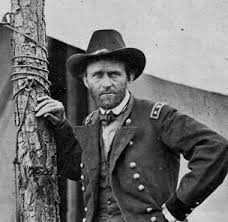
That left Andrew Johnson, a man who Grant heartily disliked. During Johnson’s turbulent administration, he had courted the Hero of Appomattox assiduously, hoping to win his support. Grant obliged pleasantly at first, believing that a smooth transition was essential. The relationship soured quickly, and politics aside and personalities aside, Grant resented that he (and his post-war office as General in Chief) was being used to bolster the unpopular Johnson.

When Johnson died in 1875, Grant spent the rest of his second term with no living former President, not that he gave it a thought. Both his terms were fraught with scandals and corruption – some leading to the President himself, via close personal ties. (USG was always an honest man, and slimy money in his pocket was anathema.) Nevertheless, despite some genuine achievements, his administration was tainted, and he retired under clouds. He opted out of active political campaigning for his successor and focused on his round-the-world tour for two years. But he did provide a gracious, quiet White House dinner for the incoming President.
Rutherford B. Hayes, his successor, was an Ohio Republican of a reform-liberal (rather than spoils-system-patronage) sort, winning in a suspiciously corrupt election. He insisted on a squeaky-clean one-term administration. He vowed to remove troops from “unreconstructed” states (which he did), and banned spirits in the White House which gained him even more notoriety. He was decent enough, but none too popular; reformers seldom are. His White House was definitely squeaky-clean – but no fun. He returned to Ohio and devoted himself to veterans’ affairs and education pursuits and opportunities.

When Grant returned from his long vacation, he discovered he was more popular than ever, especially among the politicians. Only 58, in need of a job and an income, he was coerced to become a candidate for another presidential term in 1880. He reluctantly agreed – and lost in a long, surprising nominating convention.
James G. Garfield, another Ohioan of modest repute, was the surprise nominee, along with New Yorker Chester Arthur – of no repute. Garfield, POTUS for a brief 6-months fraught with political headaches, had an additional headache he did not expect: ex-President USG, his rival for the nomination. It was complicated, and neither the POTUS nor the “ex” were happy. Then Garfield was assassinated, and Chet Arthur finished the term, surprising most with his administrative abilities. But by the time his term ended, Grant was on his deathbed. So was Arthur.
The Only Democrat…
Between the failed administration of James Buchanan and the three-way election in 1912 that elected Woodrow Wilson, there had been only one Democratic President in 65 years! (Andrew Johnson doesn’t really count, despite his lifelong association as a Dem; both he and Lincoln were elected on the “Union” ticket.)
Interestingly enough, the five long decades dominated by Republican administrations, are essentially lopsided numbers. The actual elections were remarkably close! In some, the popular vote actually went to the Democrats; but the electoral vote was heavily Republican. The populous Northern cities “waved the bloody shirt”… i.e. responsible for the Civil War. Somebody had to take the blame. “Not all Democrats were Confederates of course, but all Confederates were Democrats”. The Solid South voted as one. And lost.
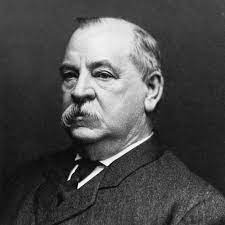
Grover Cleveland won two non-consecutive terms (1885-9 and 1893-7) separated by Benjamin Harrison, of famous name-lineage, limpid personality and fairly decent accomplishments. Cleveland, a upstate-New Yorker, might have availed himself of Hayes’ experience, particularly since the conservative Democrat was always widely supported by the GOP. But he did not. The gruff, business attorney from Buffalo steered a straight business policy and never veered otherwise. And Hayes was happy in retirement.

Of course, since the “sandwiched” Cleveland-Harrison-Cleveland elections meant that the ex-presidents actually campaigned against each other twice, any serious camaraderie other than good manners, would have been difficult.
When Ohioan William McKinley led the Republican ticket in 1896 and in 1900, he faced 36-year-old William Jennings Bryan, an unlikely and unknown populist-leaning midwestern Democrat, who campaigned vigorously on a radical “free silver” monetary policy. By that time, former President Rutherford B. Hayes, long time and close friend and mentor of McKinley, had died.
The Democratic platform of that time was far to the left of even the mainstream Democrats, and positively petrified most of the Republicans. McKinley benefited from not only from the nod of Benjamin Harrison, but from a benignly “quiet” Grover Cleveland, who much preferred the genial and sound-money Republican candidate.

After the scowly Cleveland and the icy Harrison, McKinley was a popular man and President. The country won a mercifully brief war with Spain. The bi-metal “free silver” issued had dissolved, and McKinley was a shoo-in for reelection. William Jennings Bryan opted to try again, and ex-POTUS Cleveland opted to keep a benign distance again.
William McKinley was elected to a second term – with even a bigger majority!
Sources:
Ackerman, Kenneth D. – The Dark Horse: The Surprise Election and Political Murder of President James A. Garfield. Carroll & Graf Publishers, 2003
Chernow, Ron – Grant – Penguin Press, 2017
Jeffers, H.Paul – An Honest President: The Life and Presidencies of Grover Cleveland – William Morrow, 2000
Rehnquist, William H. – Centennial Crisis: The Disputed Crisis of 1876 – Knopf, 2004
https://www.whitehousehistory.org/bios/ulysses-s-grant
 Presidential History Blog