

Thanksgiving has been a beloved national holiday since Abraham Lincoln’s time.
Even Earlier…
Of course, American Thanksgiving days have been celebrated in various forms since the earliest colonists first arrived. The Pilgrims have co-opted it of course, but there are some intrepid Virginians who insists that they were the first – by a whole year. No matter…
Between 1620 (or so) and 1863, Thanksgiving days were widely declared and enjoyed, but on a “state” or “local” level. But there is no doubt that Abraham Lincoln was the one who gave Thanksgiving Day its federal status.
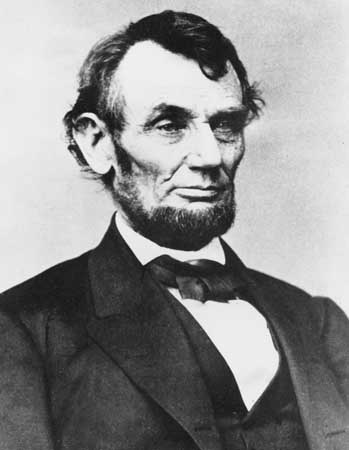
He was also the one who gave it its place on the calendar: the last Thursday in November.
Into the 20th Century
With the end of the Civil War, the nation enjoyed a rush of invention and industry previously unheard of. Railroads now crisscrossed the country, compressing months of travel into days. Telegraphs, cables and telephones connected people in minutes. The elevator and electric light enabled a workforce more comfort – and the ability for businesses to keep longer hours if they chose. And by the end of the 19th century, a newfangled contraption called a horseless carriage was poised to change the world even more than the railroad.
With fortunes to be made, new immigrants to pluck the gold-paved streets, and more and more items available to market, the great mercantile department store establishments were prospering across the country. Wanamaker’s. Macy’s. Gimbel’s. Marshall Field’s. Hudson’s.

And in the 1870s, a talented newspaper artist was about to change Christmas itself. The various European legends of St. Nicholas, was popularized in the 18-teens by Clement Moore’s poem A Visit From Saint Nicholas. Now Thomas Nast turned the “little elf” into the beloved Santa Claus we know today. Red suit, portly physique, and a merry ho-ho-ho. The people were crazy about Santa. The emerging and incredibly powerful “advertising” trade loved him even more.

By the end of the First World War and the start of the booming 1920s, the compression of time, space, and distances, plus prosperity morphed Thanksgiving and New Year’s into “The Holidays.”
With more money in the pockets of the average citizen, no time or effort was wasted promoting “The Holidays.” By the mid-1920s, Thanksgiving Day parades were sponsored by the Great Merchants. The bands played, batons were twirled, enormous balloons were flown… and each Department Store added its own brand of hoopla. But every one of those parades ended with Santa Claus… kicking off The Holiday Season. Shop early. Spend money. Ho-ho-ho.
A Calendar Problem…

Thanksgiving Day has no official date, like the 4th of July. Or New Year’s Day on January 1. As the last Thursday in November, the actual dates vary from year to year. And every so often, the month of November has FIVE Thursdays.
In 1939, November had FIVE Thursdays.
It had been a bad year, and worsening. The Great Depression had not ended. The economy was still troublesome. Herr Hitler had been swallowing up large chunks of Europe, and in September, marched into Poland. That was the last straw for several Western European countries. The Second World War was officially “on.” Meanwhile, in the USA, while precious few liked the German dictator, who was making everyone extremely nervous, huge swaths of the population were ranting about keeping us neutral and not getting involved in another foreign war (with valid reasons). Another huge swath was ranting that the country cannot stand still and let ex-corporal Schickelgruber dictate his brutal world order (also valid reasons).
Needless to say, the Great Merchants were worried about “the holiday season,” and feared that their biggest opportunity to show even a small profit would be lost by “losing a week” of Xmas shopping sales.
As a trade organization, they asked President Roosevelt to move Thanksgiving Day back a week, allowing more time for shopping and boosting the economy. It seemed reasonable and the POTUS was amenable. But it created another huge problem:
Confusion and Planning
The small town merchants across the country were panicked. Their “success” of seasonal shopping depended on overflow from the Big Merchants – and they could never match the discounts and specials the big guys peddled. The FDR Library has an impassioned letter from the President of Adams’ Hats, a retailer with branches in nearly every mid-sized town in the country. He feared that with extra shopping time, the average citizens would not be as likely to turn to the mom-and-pop stores of middle America.

Then there were the calendar printers. It was a big business – and they planned their projects years in advance. The average citizens planned their time off well in advance. Companies large and small planned their employees’ holiday schedules well in advance. And the parties…
Schools and colleges were in turmoil. They planned their vacation schedules – and even more importantly, their athletic programs and schedules, years in advance!
Add to the mix the “traditionalists” who wanted Thanksgiving as it had been for nearly eighty years. It had become a very political hot potato.
So in 1939, there were basically two Thanksgiving Days. It was left to the individual states to decide which date they wanted and act accordingly. The upshot was that 22 states opted for the earlier date, 23 for the later date, and three states actually sanctioned two Thanksgiving Days. Pick your own.
Later On
In 1940, the muddle over Thanksgiving Day was still muddled and embattled. And divided. And the world situation was getting no better. But in 1941, the consensus was that Thanksgiving Day would be the FOURTH Thursday in November. Period. Enough time to shop. Enough time for the calendar makers to go to press. Enough time for the colleges to fix their football schedules. And small businesses seemed to be chugging along.
But only a couple of weeks after Thanksgiving ‘41, the world changed for Americans. No one was an isolationist anymore.
Sources:
Davis, Kenneth – FDR: The War President 1940-43 – Random House, 2000
Freidel, Frank – A Rendezvous With Destiny – Little, Brown & Co, 1990
Shafer, Ronald G. – Breaking News All Over Again: The History Behind Today’s Headlines, 2022
https://www.washingtonpost.com/history/2021/11/24/franskgiving-fdr-moved-thanksgiving/
 Presidential History Blog