
The Civil War could have been fought 3x over in the time it took for Grant’s Tomb to be erected.
We Love New York
Choosing New York City to be the site of Grant’s final resting place was not difficult. Grant was born and raised mostly in Ohio, but that location was never on his “eternity” agenda. Galena, IL, where he lived for less than a year, clamored for his earthly remains, but was so remote, and Illinois truly “belonged to Lincoln.” West Point was Grant’s natural preference, but there was a deal breaker: They would not accept women (then) and what mattered most to USG, was that his beloved wife Julia lay beside him forever.

New York was home to the Grants for the last five years of his life, and for the rest of hers. They loved living in New York, having the Vanderbilts as neighbors, with access to all the wonderments that make NYC the Big Apple – even then. In addition, despite the financial and medical heartbreaks that consumed Grant’s last year, New Yorkers had rallied to their beloved General with open arms.
Within 24 hours of his death, the Mayor William Russell Grace sent letters to nearly 100 wealthy and prominent New Yorkers suggesting that a National Monument, i.e. final resting place be established, and invited them to a meeting a few days later.
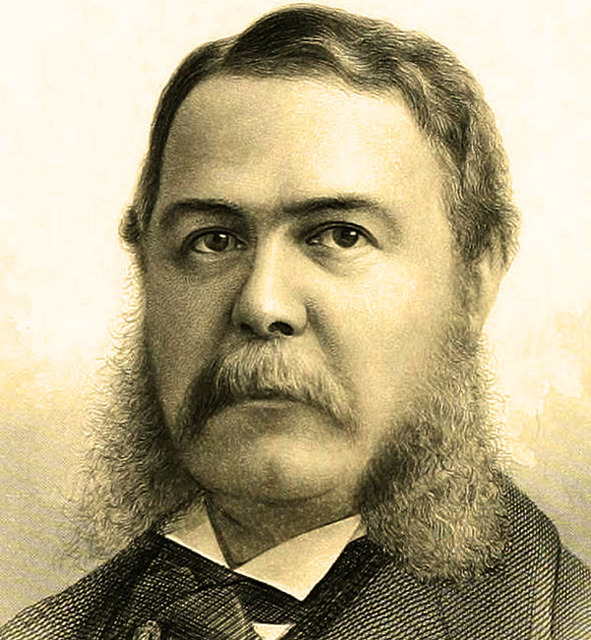
Eighty-five prominent New Yorkers attended that meeting, subscribed to the Grant Monument Association and elected former President Chester Alan Arthur, a New Yorker, to serve as chairman. Within 24-hours Western Union sent a check for $1000 to get the project rolling.
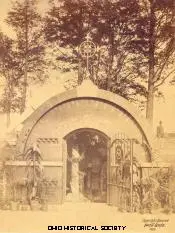
Grant’s Tomb at a Snail’s Pace
Ex-President Arthur died within the year, and ex-NY Governor Alonzo Cornell assumed the responsibilities of leadership. Richard T. Greener was named as its Secretary. He had been the first Black graduate of Harvard University, and subsequently the first Dean of Howard University’s Law School.

Within the first year contributions were received amounting to around $100,000 – about 10% of their estimated goal. But there were no designs. No plans. Very little of anything “concrete.” People were grumbling, reluctant to sign on to something so nebulous. This was reflected the second year: only $10,000 dribbled in.
Meanwhile, as with all projects then and now, there was the usual carping. People moaned about the choice of New York City – with its deep pockets and expected tourism. They wanted the General to spend eternity in Washington. So the gist was “you want it in New York, let New York pay for it.”

Julia Grant (and the couple’s grown children), knowing of USG’s preferences, reiterated their desire to make New York their forever home. Julia added in a letter, that she planned to live in NYC for the rest of her days, and having his resting place nearby for frequent visits would be a comfort to her.
That helped.
But other than determining that Riverside Park was to be the site, years passed with still no real progress. The contributions were drying up.
Finally, nearly three years after Grant’s death, the committee held a worldwide competition for architectural firms to submit proposals and designs. The deadlines had to be revised three times. Sixty-five entries were received, two thirds of which were international.
John H. Duncan: The Winning Architect
The committee winnowed the entries down to a sizeable five, and in 1890, five years after Grant’s death, John H. Duncan was finally selected to design the great structure. He had made his reputation in 1883, designing the Revolutionary War Centennial Monuments in Newburgh, NY. Money rolled in again, and eventually some 90,000 contributions were received.

According to David M. Kahn, a former curator of Grant’s Tomb, Duncan voiced his design’s objective: “to produce a monumental structure that should be unmistakably a tomb of military character,” the epitome of reverence and respect. While the designs were based primarily on mausoleums from antiquity, it would have its own distinctive American style.
The 90’ square lower portion adorned with Doric columns, is capped by a cornice and parapet. The upper portion is crowned by a cupola 72′ in diameter, topped with a stepped pyramid. The completed structure in Riverside Park rises 280’ above the Hudson River. It was designed to be (and still is) the largest mausoleum in North America.
Etched on the stone facade, are Grant’s words to the 1868 Republican nominating committee, and also the last words of Grant’s Memoirs: “Let Us Have Peace.”
So in 1890, with an architectural firm in place and designs submitted, budgeted and approved, the Grant Monument Association began to move forward. Ground was broken on April 27 (Grant’s birthday) 1891, and the cornerstone was laid by President Benjamin Harrison on April 27, 1892.
The dedication ceremony featured a parade of 55,000, observed by an estimated 1 million, was held on April 27, 1897, Grant’s 75th birthday.
The mausoleum itself is a large, basically empty area, with murals of USG’s military achievements adorning the upper walls. Sculptures of his key aides were commissioned as part of Depression-Era WPA projects and inserted appropriately.

The focal point however, is Grant’s sarcophagus – and the abutting matching one of his wife Julia, who died in 1902, and placed there shortly afterward.
The Roller Coaster of History
Ulysses S. Grant’s reputation, both as general and president, has yo-yoed drastically during the 140 since his death. For many years he was relegated to the bottom tier of Presidents, his failures outweighing his accomplishments. The tomb’s shameful neglect: disrepair, filth, weeds and trash reflected that disdain. There were rumors that the Grant descendants want him moved.
But during the past few decades, the importance and stature of General Grant has been reevaluated and resurrected. We are happy to note that Grant’s Tomb has had the substantial makeover it needed – and richly deserves.
Go see it. It’s free.
Sources:
Flood, Charles Bracelen – Grant’s Final Victory: Ulysses S. Grant’s Heroic Last Year – 2012, DaCapo Press
Goldhurst, Richard – Many Are the Hearts – 1975, Reader’s Digest Press
Kahn, David (January 1980). General Grant National Memorial Historical Resource Study. Manhattan Cites
https://magazine.columbia.edu/article/battle-grants-tomb
https://www.nps.gov/places/mausoleum.htm
 Presidential History Blog