

Gideon Pillow was first and foremost a “political” general of massive pretensions.
The Stuffed Pillow
Gideon Pillow (1806-78) was born and raised to a prosperous and well-connected Tennessee family. He attended the University of Nashville, became an attorney, and went on to establish a successful law practice, acquire substantial land holdings, became a close friend of future POTUS James K. Polk (not a law partner, as some sources claim), and developed a keen interest in military service. Ergo, he joined the Tennessee Militia in 1833, and was appointed Brigadier General.
He managed to help secure Polk’s nomination as Democratic presidential candidate in 1844, but alienated several other supporters by exaggerating his influence and/or accomplishment to the detriment of others. The overweening ego was a lifelong character trait filled with chickens that came home to roost.
When the War with Mexico began in 1846, President Polk named Pillow as a Brigadier of Volunteers, where he served with both future POTUS Zachary Taylor (1848) and Presidential Candidate General Winfield Scott (1852), both of whom loathed him. True to character, Pillow claimed credit for actions that a) were not substantive, and b) unquestionably insubordinate. Scott, another unshrinking violet, wrote that Pillow was “the only person I have ever known who was wholly indifferent in the choice between truth and falsehood, honesty and dishonesty.”

Accusations, denials and brouhahas followed, the upshot being that Pillow, while not legally prosecuted or generally damaged, was returned to his private law practice and land holdings. Some said he became one of the wealthiest men in Tennessee. He also continued his political activity, and was even considered for the Vice Presidency in 1852 and 1856.
The Civil War: The Return of Pillow
While Gideon Pillow may have been lukewarm about secession per se (as were many bigwigs in CSA), he nevertheless enlisted for service in the Confederate Army, which was always in need of experienced military leaders. Pillow was made a Brigadier General, under the command of Generals Leonidas Polk and Albert Sidney Johnston.

By early 1862, Pillow was assigned to Fort Donelson, along the Cumberland River in Tennessee. It was a new fort – and a large one. It would be a prize. It held 17,000 CSA soldiers, commanded by three generals.
General John Floyd was “senior” – but was a completely political general. He had been Governor of Virginia, and Secretary of War in President James Buchanan’s cabinet. Any active military experience he had was minuscule.

General Pillow’s appointment to the Fort was welcomed by Floyd, since Pillow had seen battlefield service in Mexico, and actually knew about fighting. Floyd was happy to defer to his authority.
The third in the General Triumvirate, was a younger fellow, Simon Bolivar Buckner, a West Point graduate, and much lower in seniority. He had known General Pillow in Mexico, and disliked him intensely.

Nevertheless, Pillow was senior, and Buckner was a good soldier.
Grant and Donelson
On February 6, 1862, Union Brigadier General Ulysses S. Grant took Ft. Henry, only twelve miles away on the Tennessee River. It was practically an effortless accomplishment. That fort was small, poorly designed, and easy pickings.
Ft. Donelson was different, although its generals concurred that because of its vulnerable location, evacuation would be preferable to the siege that was certain to follow.
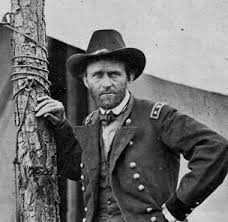
A week after taking Ft. Henry, Grant began an assault on Donelson. His forces were initially repulsed by the Confederates, but when Pillow inexplicably withdrew his troops to provision them for what he believed would be an evacuation, their gains were lost.
Meanwhile, Grant surrounded three sides of the exposed fort, and as expected, prepared for an assault or a siege.
The Generals’ Flight Plans
Whether the three Confederate generals believed that Ft. Donelson would be besieged or surrendered, the upshot was that the night before the “unconditional surrender” they had a parley, to discuss their options. Evacuating themselves was high on the list.
General Floyd was certain that his own life was in serious danger. It was not unreasonable. He had been a Virginia governor and a cabinet member. He had taken loyalty oaths to the USA. If captured, he could be tried (and convicted) of treason: a hanging offense. He opted to slip away under cover of darkness, siphoned off a unit of escorts and proceeded to do exactly that.
Gideon Pillow, true to his character defects, supposed himself to be too great a prize for the Union, and considered his escape essential to the rebel’s cause. He too siphoned off a unit of escorts and departed.
That left Buckner in charge.
Grant and Buckner
When General Buckner contacted the Union forces for “terms,” Ulysses S. Grant gained his everlasting nickname, and a time was set for the formal “Unconditional Surrender”.
The opposing generals were old friends dating back twenty years to West Point. They renewed the friendship during the War in Mexico. Some years later, when USG fell on hard times in the California-Oregon Territory and showed up in New York, disgraced and broke, it was Buckner who helped him return to his beloved wife and children in St. Louis.
Once their business-at-hand was completed, Grant and Bucker made time for a half-hour personal chat to catch up, as it were. It was during those informal talks, that USG learned about the ”flight plans” of Buckner’s superior officers.
Buckner had a poor opinion of General Pillow; Grant was none too fond of him either. Both of them had known him in Mexico and regarded him as a blowhard as well as a poor military leader.
The conversation is reported to the effect that USG would probably have let Pillow escape, since “he was more valuable to the Union cause by remaining with the CSA.” Then he told Buckner, “If I knew that you were in charge, I would have waited for reinforcements.”
Sources:
Grant, Ulysses S. – Personal Memoirs of Ulysses S. Grant – World Publishing (reprinted) 1952
McFeely, William S. – Grant: A Biography – W.W. Norton, 1981
http://www.claremont.org/crb/basicpage/classics-review-the-personal-memoirs-
https://www.battlefields.org/learn/biographies/gideon-j-pillow
https://www.battlefields.org/learn/biographies/simon-b-buckner
 Presidential History Blog