

The Western Woman
Despite her birth and early girlhood in Iowa, Lou Henry (1874-1944) spent most of her growing-up years in California when it was still considered the “Wild West.”
Her father, Charles Henry, was a middle class banker, and Lou was exposed to all the accoutrements of town life. A nice house, nice clothes, good education, good exposure to whatever the town had to offer in the way of culture.
Her father was also an ardent outdoorsman, and Lou was his companion on camping trips, fishing trips, riding any animal that would tolerate a passenger, climbing trees and fences, shooting a gun, building a fire, and any activities that fostered the love of the great outdoors.
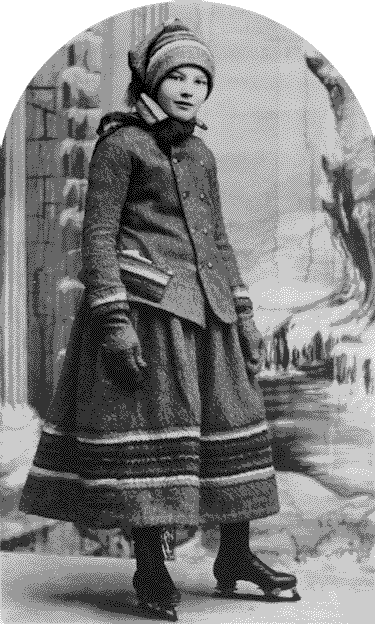
She was also a tall woman – around 5’9” at maturity – and an excellent athlete. For a girl. It was still the Victorian Age, and the role of women was firmly embedded in tradition. Still, she skated, biked, played baseball (sometimes with the boys) and tennis. And all in long skirts.
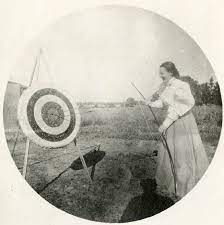
While Lou always focused on her academic studies, athletics and sports ranked next. In school, she loved the gymnasium exercises of marching, drilling with Indian clubs and ribbons and wands, but preferred the actual sports and teams. As a student at Stanford University, she was president of the Stanford Women’s Athletic Association in her senior year.
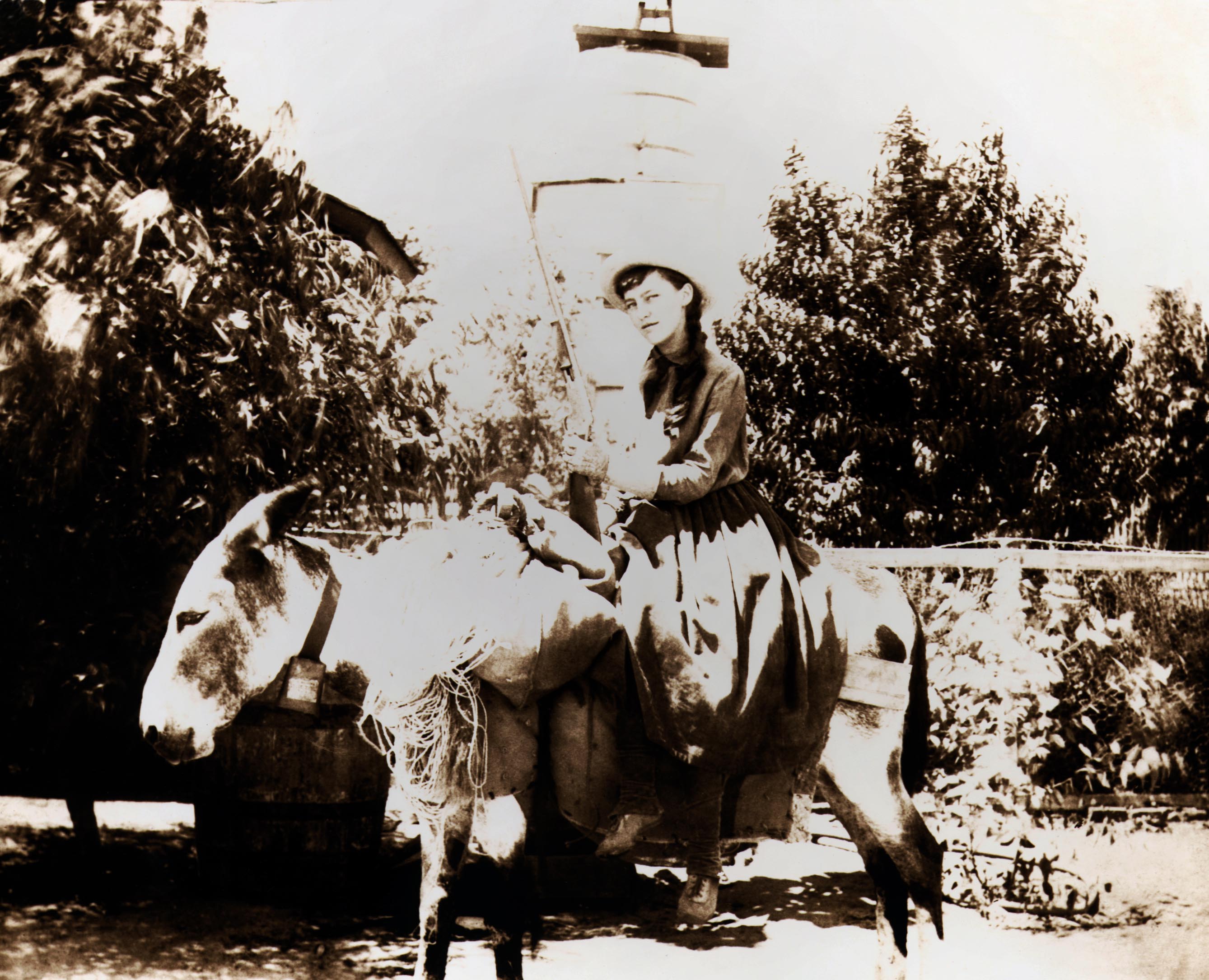
Nevertheless, she would always be representative of woman-in-transition. While her administrative and executive skills were excellent, and her natural leadership was obvious to all who knew her, Lou never lost her regard for the traditional “norm.”
Always a consensus builder, she might not think out of the box completely – but she was a firm believer in enlarging the box, as it were, and working from within.
The National Amateur Athletic Federation
When Lou and Herbert Hoover returned to the US, after spending two decades abroad in various exotic locales, they were wealthy, philanthropic, well-known on an international scale, and poised to assume positions of substance in their native country.
It became apparent to many, particularly in the military, that an appalling number of men were failing the requirements for military service in The Great War – for physical fitness deficiency. Thus the National Amateur Athletic Federation was created in 1922 to address that situation, In the early 1920s, there were limited resources for sports, and the NAAF encouraged activity for all, rather than just the most talented athletes. One of their key issues was that in time every man, woman and child be included in recreational sport activities.
They also determined that athletics for men and women were developing differently, and they voted to establish two separate sections: boys and girls (i.e. men and women).
When the NAAF was founded, it tapped Lou Henry Hoover, already active in the newly created Girl Scouts, as its only female Vice President, to spearhead the NAAF’s Women’s Division.
The Women’s Division
Women’s sports in the 1920s were a holdover from the Victorian age. Educators, physical instructors and physicians were concerned that stressing competitive sport for girls and women might lead to training, regimens and competition (i.e. the popularity of the Olympics) that were too strenuous. Or dangerous. Some women’s phys ed organizations protested women varsity teams entirely.
According to Jan Beran’s essay in Lou Henry Hoover: Essays on a Busy Life, Mrs. Hoover noted in an article from the New York Herald on March 25, 1923, “The World War showed a vast and appalling number of physical defects among the young men of the nation and it follows as a corollary that a large percentage of young women are likewise handicapped. Much of this can be corrected by proper exercise and I believe full opportunity for reasonable physical development should be afforded.”
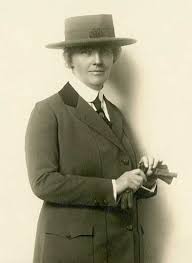
As VP of the NAAF, Lou chaired a Conference on Athletics and Physical Education for Women and Girls in spring, 1923, attended by more than 300 women high school and college physical education teachers nationwide. The agenda included the physical capacity of females and the availability of recreational sport for them. They were unanimous in supporting the the concept of providing more opportunities for girls and women to participate. The challenge was identifying the problems and correcting them properly.
It was a unique position. New standards were needed to govern the conduct of competitive female sports, including demanding practice times and schedules, time away from school and financial gain from the sport. Then there was a lack of physical/medical examinations, disregard of the athletes’ well being, long seasons, rivalries, spectator behavior, and involvement of only an elite portion of talented students.
While it may seem archaic to modern women today, back then, Mrs. Hoover led the consensus for the Women’s Division to provide opportunity for every girl and woman to participate in quality instructional physical education and recreational programs, believing that the female sex could enjoy “greater joy and recreation in wholesome participation than in the intensive competition that aims at championship and records.” And that included having women administrators, coaches and referees.
Mrs. Hoover, Facilitator
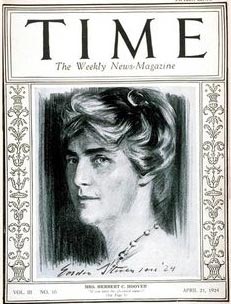
Lou Hoover actively chaired the Women’s Division of the NAAF for five years, until her husband was elected President in 1928. Always modest, and considering her role to be a consensus-builder, she said, “I feel I am but a bit of mechanism in a scheme for carrying out your [the Women’s Division] wishes. If the success attends our various deliberations that we wish, I feel that all congratulations and credit must be attended to you.”
It was the way she was. And it was the way it was…then.
Sources:
Mayer, Dale C. (Ed.) – Lou Henry Hoover: Essays on a Busy Life – High Plains Publishing Company, 1994.
Pryor, Dr. Helen B. – Lou Henry Hoover: Gallant First Lady – Dodd Mead, 1969
https://hoover.archives.gov/hoovers/first-lady-lou-henry-hoover
Frontiers: A Journal of Women Studies Vol. 3, No. 1 (Spring, 1978), pp. 1-7 (7 pages) Published By: University of Nebraska Press
 Presidential History Blog
Reblogged this on Dave Loves History.
Incredible story. She improved the health and condition of American soldiers and let people, especially young girls, that it was okay for them to participate in sports. Not only that, but women also took on leadership roles as coaches and referees.