
It wasn’t a shoo-in by any means.
The USA in 1864

The Civil War had begun its fourth year. Casualties were huge,with seemingly no end in sight.
Nobody was happy. Nobody was winning. But it was not an election year in the South. When Lincoln issued yet another conscription call, there were open revolts in various Northern cities. Always an astute judge of the people’s pulse, Lincoln expected to be re-nominated, but very likely to lose the election.
The Union’s Political Maneuvering
Nothing seemed to be working in Lincoln’s favor, and he knew it. The Republicans were badly split between the “radicals,” screaming for vengeance for all the misery, the abolitionists, who were screaming for equal-everything for the former slaves, and the peace-lovers who wanted things the way they used to be – and that included the nullification of the Emancipation Proclamation. Lincoln was always a moderate, desperately trying to find an acceptable middle ground.
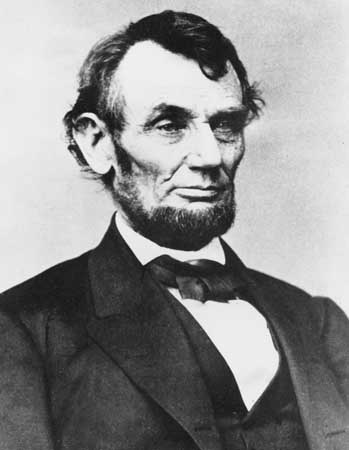
Even so, by early summer, Lincoln believed he could be the last President of the United States.
Under his active leadership, two important changes were made within the party. First, since even the name “Republican” had become anathema, the party temporarily changed itself to the “Union” party with no question about what the party (and its candidate) believed to be the essence of the election.

Secondly, the second spot on the ticket would not go to likeable but ineffective VP Hannibal Hamlin of Maine. The position itself was insignificant, but the geopolitical implications were huge. Maine was small and safely a “Union” state, as was the rest of New England, thus it brought little to the “Union” table. But by 1864, Tennessee had suffered devastating fighting, and the state, always deeply divided, was poised to rejoin the Union. Maybe. Lincoln believed it was worth something politically. Andrew Johnson, a lifelong Democrat, was the only Southern Senator who did not resign his seat at the outset of the Civil War. He had also done yeoman service for the Union cause.
It was a compromise that Lincoln believed was worth it.

The Democrats Pick Their Winner

If the Republicans were badly split in 1864, the Democrats were a shambles of factions, lumped into two main categories: the War-Democrats and the Copperheads.
The War Democrats wanted the Union preserved and reunited. Fight the war. Win it. With or without slavery. They were happy to pull the issue off the table if it made things easier.
The Peace Democrats, or Copperheads, as they were nicknamed for the head of pennies they crafted into buttons, wanted peace at any price. That meant the Confederate states could leave the Union (or not), they could be re-accepted back into the Union (with or without minimal oath and other requirements), and they could keep their slaves, and those who had been freed would be returned to their bondage.
Both sides had been clamoring their policies since the start.
Now, with the Republicans in shambles, all they needed was a winning candidate.
George McClellan

General George McClellan was one of the best known figures of the Civil War. A Philadelphia patrician upbringing, an honor student at West Point, a fine engineer, and later a railroad president, McClellan had a strong resume. Once the war began, he re-enlisted in the Union Army as a general, won a couple of petty skirmishes in western Virginia about the same time as the “great skedaddle” of Bull Run demoralized the troops, and was put in charge of the Army of the Potomac.
“Little Mac” as he was called, was unquestionably a superb military organizer, and he duly began whipping the army into shape. He equipped them, fed them, drilled them, marched them, paraded them, reviewed them and truly loved them. They in turn loved him. He made them proud of themselves. Lincoln, his cabinet and congress became impatient. Mac did everything except “fight” with them.
After nearly two years of losses, near-losses and/or not-wins, plus a super ego-cum-mouth that alienated his “superiors,” Lincoln finally dismissed him.
McClellan returned to his home “awaiting further orders” that never came. He was also a discontent. And a Democrat. Democratic party bigwigs made a beeline for the McClellan house.
George Pendelton
On-again-off-again young (in his thirties) Congressman George Pendelton was an Ohioan, firmly opposed to fighting the Civil War, and later firmly opposed to Emancipation and the 13th 14th and 15th amendments. Entrenched in the Copperhead faction of the Democratic party, he was fast becoming one of its top spokesmen, making him a viable candidate for the Vice Presidency (still a geopolitical accommodation).
At the Democratic convention, the Pendelton-Copperhead faction rammed through a platform generally denouncing the War as a failure, and proposing to end everything, reverting to how it was in early 1860. But if the South wished to secede peacefully with slavery intact, that could be made possible.
McClellan Says No
Almost immediately after being named the Democratic candidate, McClellan publicly repudiated the peace plank of its platform and pledged to continue the war effort – but to do a better job of it than Lincoln.
After all, McClellan was first and foremost a soldier and general, and had led the Union’s military efforts. He stressed his strong commitment (after victory) to “the restoration of the Union in all its integrity” and his firm belief that the huge number of Union casualties and other sacrifices should not have been in vain. It would be a deal breaker.
The Democratic party leaders wanted McClellan.
The Upshot
Within a month, the Lincoln-Johnson ticket received the welcome news of General Sherman’s devastating, but almost-bloodless march through the South. Lincoln also was generous in granting military leave so the soldiers could go home to vote.
Lincoln-Johnson won with about 55% of the popular vote – and more than 90% of the electoral vote. The soldier vote was overwhelmingly for their Commander-in-Chief. He loved them too.
Sources:
Beschloss, Michael R. – Presidential Courage: Brave Leaders and How They Changed America 1789-1989 – 2008
Waugh, John C. – Re-Electing Lincoln: 1864 – Crown Publishing 1997
https://www.ushistory.org/Us/34e.asp
https://www.lib.niu.edu/1996/iht319615.html
https://www.battlefields.org/learn/biographies/george-b-mcclellan
 Presidential History Blog