New York can boast being home to ELEVEN Vice Presidents!
The Old Guys…
In the early days of our country, a geopolitical balance between the President and Vice President was considered important – at least in vote-getting accommodation. With only a handful of states, long distances between them, and only rudimentary communication and transportation, it is easy to understand “regional” balance.
Our first two VPs, (John Adams and Thomas Jefferson) were unquestionably political heavyweights, and the Vice Presidency was considered a stepping stone to the top job. Then came the first New Yorker.
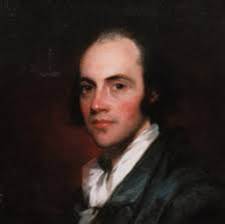
Aaron Burr (Jefferson 1) … a New York fellow and Princeton graduate of genuine talents and questionable character. His main contribution was the need for the 12th amendment (voting separately for POTUS and VP) and the demotion of an already insignificant position to one totally marginalized.

George Clinton (Jefferson 2/Madison 1) a mid-state New Yorker and 7-times Governor and old pal of George Washington. But by the time he was elected VP, he was nearly seventy and well past his prime. Some said he was senile. Maybe. Nobody really cared – but they still elected him twice!!
Daniel Tompkins (Monroe 1&2) – Arguably one of the most obscure of the old gents, mid-state New Yorker Dan was a man of great promise and energy, who performed capably as NY’s Governor during the War of 1812. When he was nominated, everybody was pleased. But he fought an ongoing battle with the bottle, and lost. Conspicuously. He barely showed up for his minimal duties, and nobody really noticed. Too bad. He could-a been a contender!

Martin Van Buren (Jackson 2) – was a mid-state fellow and arguably our first “professional” politician. He was good enough for Jax to “groom him” for a Presidential term on his own – and the last VP to immediately move on up for a hundred and fifty years (until GHW Bush).
The Middle Victorians
If geopolitical accommodation was important prior to the Civil War, it became essential afterwards. Before the War, the executive office was delicately balanced North-South. After the War, it was North – and Midwest.
Millard Fillmore (Taylor) – was from upstate, near Buffalo, a farm boy turned so-so attorney and Congressman. As the country neared the cataclysmic differences of the 1850s, the slave owning Taylor needed a Northern (but non-abolitionist) running mate. Nobody really knew/cared much about Fillmore. Besides, Congress was considered the “important” branch of government. Then Taylor died, and the country learned enough about Fillmore not to elect him on his own.

When William Wheeler (1819-87/Hayes) was elected VP, he was a non-important upstate NY Congressman from a little village nobody ever heard of. Nobody ever heard of Wheeler either, and that included Hayes, who famously remarked, “I am ashamed to say this, but who is Wheeler?” He was a lonely fellow, widowed with no children or close family. When he retired as VPOTUS, he went back to his village, and the country by and large said, “who was Wheeler?”
Chester Alan Arthur (Garfield) was one of the most unlikely VPs. He never held elected office and was considered a political hack and minion of the boss system. An “adopted” New Yorker from childhood (born in Vermont), as a young man and competent attorney, he gravitated to the Big Apple and thrived in the political boss system. As an accommodation to the NY political boss, dark horse James Garfield tapped dark horse Chet Arthur (perhaps #4 or #5 on his list) as VP. When Garfield was assassinated, Chet became POTUS, and did a fair job of it – better than expected.
Levi P. Morton (1824-1920/B. Harrison) was another New England born but adopted New Yorker, self-made after the Civil War, when there were great fortunes to be had. He made a sizeable one. Almost as a pastime, he became involved in politics, mostly the ceremonial part (as opposed to substantive). He served ably as the Ambassador to France under both Garfield and Arthur. In 1888, he was nominated and elected VP under Benjamin Harrison, a position that suited him. He lived to be 96, one of our longest living Veeps.

And Into the 20th Century
The huge strides in transportation and communication made the country much smaller at the turn of the 20th century. Geopolitical needs became more of a tradition than a necessity for a good fifty years into the century. Then the VP position became substantive.
Theodore Roosevelt (McKinley 2) was well on his way to superstardom (war hero and Governor of NY) by the time of McKinley’s second election. The Vice Presidency was never on his bucket list. Two unrelated and undervalued reasons: 1. McKinley’s VP Garret Hobart, a close friend, well-respected by Congress, was a shoo-in for McKinley’s second nomination. But he died, and death is always an acceptable “excuse.” 2. Gov. TR’s huge appetite for action and accomplishment was giving the NY political bosses agita. They did not wish to harm him – but they wanted him out of NY. TR bit the bullet “for the party’s sake” and the rest became history.

James S. Sherman (Taft) was another upstate New York attorney of middling repute, but primarily of the “old guard” rather than “progressive” ilk. No relation to the General, he nevertheless served competently in Congress, and was nominated to run with Taft in ’08, since nobody really cared about the second spot. They even coerced him to run again with Taft in ’12, but he was dying and knew it. In fact, he died shortly before election day – and they couldn’t reprint the ballots, so some 3.5 million Americans voted for a dead guy to be VP!
More than 60 years later, another New Yorker was nominated and confirmed, but not actually elected. It was more of a valedictory Lifetime Achievement award for Nelson Rockefeller (Ford), whose forty years of public service included 4 terms as NY Governor. He of famous name and mighty pockets served ably, and elected or not, we are glad to have had him in our country’s history.

Sources:
http://www.senate.gov/artandhistory/history/common/briefing/Vice_President.ht
Barzman, Sol – Madmen & Geniuses: The Vice-Presidents of the United States – Follett Publishing, 1974
Young, Donald – The History & Dilemma of the Vice Presidency: American Roulette – Holt, Rinehart and Winston, 1972
 Presidential History Blog
That’s quite a record. I’d never thought about it.