

Theodore Roosevelt knew the power of conceptual spot-on images and phrases.
TR: The Social Conscience
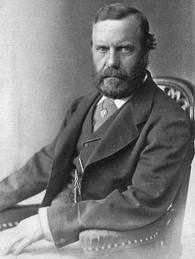
Theodore Roosevelt, Senior
Theodore Roosevelt (1858-1919) was born into a socially conscious family. They were prominent and wealthy, with a strong sense of noblesse oblige. Roosevelt Senior served on countless boards of charitable organizations, not only gratis, but with huge chunks of his time and personal funds. The moral lesson was not lost on his young son.
Shortly after TR graduated Harvard, he embraced politics as a way to be of service. He chose the Republican party as his vehicle; it was the party of Abraham Lincoln, his idol.
As a young NY Assemblyman, he had the opportunity to associate with social classes far different than his upbringing. He also personally observed the plights of the impoverished, which in New York City’s 1880s, centered around millions of immigrants who had begun to flood our shores. TR’s father had died some years earlier, but the moral lessons still remained.
Labor, Management, Strikes and Violence

President TR
In 1902, the chasm between management and labor had been deepening for decades. Theodore Roosevelt had become President following the assassination of William McKinley, but there was nothing in the Constitution – or other regulatory law – that permitted the government to intervene in what was considered private industry. By the 1870s, the widening differences between the needs of labor (better wages, better working conditions) and the philosophies of management (it was cheaper to replace) had evolved into budding labor unions, with actual strikes and violence, which were becoming strong, disruptive, and occasionally deadly.

Labor strikes became violent.
In the early fall of 1902, organized anthracite coal miners in Pennsylvania had limped along for years, gaining only minuscule concessions from the mine owners. With their ranks swelled by unskilled immigrant labor from various countries and speaking various languages, their labor union had grown stronger. They voted to strike. Coal was arguably the chief fuel for millions of people in the east. Without coal, innocent people would suffer in the winter. Some would die.
Theodore Roosevelt was an active man and president. Patience was an effort sometimes. He ached to help resolve the situation to gain concessions from all concerned. About the only thing he could do “presidentially,” was to suggest arbitration and/or facilitate separate meetings with some of the mine owners and managers, and ditto with a delegation of miners and their representatives.
John Mitchell, Miner

John Mitchell, UMW President
John Mitchell (1870-1919) was orphaned at a very young age, and went to work in the mines when he was ten. In his teens when the nascent Union of Mine Workers was born, he became active. By 1898, he was its president. For the ensuing ten years of his presidency, the membership rose from 30,000 to 300,000.
Mitchell was an unlikely union leader. He was soft spoken. He eschewed rabble-rousing. His approach was pragmatic, and indeed, conservative. He was amenable to the give-and-take. He never sought any concessions that were not a) needed, b) warranted and most of all c) attainable. He was even known to concede his most precious goal of “union recognition,” in order to achieve a 10% raise for the miners.
When he met President Roosevelt, the two men saw eye-to-eye. TR liked him.
Facilitating the Arbitration
Facilitating a gradual meeting of minds between management and labor was exactly the kind of challenge that TR relished. Like his idol, Abraham Lincoln, TR always believed in a middle ground “third” route to bridge gaps.
By October, the threat of a prolonged strike was becoming an emergency. With no coal, millions of families would be without heat. Many would freeze to death.

Carroll D. Wright, Negotiator
He named Carroll D. Wright, a skilled and able negotiator as his labor commissioner. Wright held a series of separate meetings with the owners and labor representatives. He culled their demands and concerns carefully, prepared a comprehensive report, and recommended arbitration. Both sides were amenable.
Ah, but…
While the mine owners were agreeable to arbitration, they categorically refused to include representatives from the United Mine Workers in the discussion. Not even in the same room! And that was non-negotiable.
Sociology: A New Science
While the philosophy of a social conscience has been around since ancient times, and while it began to take shape in the early 19th century, it had finally taken root by the early 20th century, once the Industrial Revolution had changed the lives of mankind. Sociology made a systematic methodological international comparison of social institutions, specifically between labor and management, and the haves and have-nots on many fronts.
But while the early sociologists argued and differed about the causes and methods and various outcomes and/or “cures,” one thing remained: sociology itself. It had become respectable. Most people accepted its purpose to gain in-depth, scientific understanding of social worlds and human behavior.
Upshot and Resolution
As the strike dragged on, neither side giving much way, save a general lukewarm concession to accept arbitration, so long as no representative of the labor union was included. They would permit Mitchell to be present only as a “spokesman” for the workers.

E.E. Clark, “secret” union leader.
A commission was named, to include a military engineer, a mining engineer, a judge, an expert in the coal business, and an “eminent sociologist.” Mitchell asked the President if he might include two other representatives: a Catholic clergyman (since so many miners were of that faith), and E. E. Clark, head of the railway conductors’ union, (under the heading of “eminent sociologist”). “Management” was amenable, to the President’s immense relief.

Tenniel’s famous illustration.
Roosevelt was always a conceptual thinker and voracious reader, and undoubtedly aware of Lewis Carroll’s famous Alice Through the Looking-Glass and its delightful fanciful characters. He later wrote of “the mixture of relief and amusement” he felt, when he thoroughly grasped the fact that the operators “would rather have anarchy than Tweedledum, but if I called it Tweedledee they would accept it with rapture.”
There seems to be a lesson here.
Sources:
Brands, H.W .- TR: The Last Romantic – 1997, Basic Books
Morris, Edmund – Theodore Rex – 2002, Random House
 Presidential History Blog