

Both George Meade and Ulysses Grant were West Pointers, and share a singular coincidental date in history.
Meade and Grant: Common Bonds
George Meade (1815-72), Pennsylvanian, came from a military family. His father was a naval officer, but died when his son was thirteen, leaving the family nearly impoverished. Young Meade entered West Point (for the free education) at sixteen, graduated mid-class and fulfilled his military obligations for a brief time. Never truly enjoying a military life, he resigned to pursue a career in civil engineering. But in 1842, he re-enlisted in the army, served as a junior officer in the War with Mexico, and spent the next decade in the Army Corps of Topographical Engineers, where he earned distinction.
Then came the Civil War, and Meade was named Brigadier General of a Pennsylvania Volunteer unit, with a glowing recommendation from Governor Andrew Curtin. He served under General George McClellan, saw action (and wounds) on the Peninsula.
Ulysses S. Grant (1822-85), Ohioan, came from a non-military middle-class family. When he entered West Point, it was because his father insisted. Like Meade, Grant never wanted a military life. He also graduated mid-class, remained in the army for about ten years, never especially happy, and finally resigned when his drinking bouts became too noticeable. He spent another ten years floundering badly, with very little to show for his efforts.
Then came the Civil War, and Grant re-enlisted, being named Colonel in an Illinois Volunteer Militia, via Congressman Elihu Washburne. Reinstatement and promotion to Brigadier General followed swiftly. All Grant’s action prior to 1864 was in the “western” theater.
A Stunning Coincidence
Practically no one expected a four-year war to ensue. Absolutely no one foresaw the humongous casualties.
To everyone’s surprise, and perhaps even his own, Grant was a brilliant strategist, and planned and executed hard-won victories in the West. His were practically the only victories the Union could claim for nearly two years, while the list of losses and lost opportunities were many.


Lincoln, a non-military man, despaired at ever finding the right General for the Army of the Potomac. Despite huge forces, and despite supplies and armaments and the stuff armies need, there was little, if anything to show for it.
Lincoln went through eight generals. He had inherited an elderly General Winfield Scott (who subsequently retired). He had appointed Generals Irvin McDowell (Bull Run), George McClellan (Peninsula), John Pope (Second Bull Run), George McClellan again (Antietam), Ambrose Burnside (Fredericksburg), and Joseph Hooker (Chancellorsville). All were disappointments – and that included Henry Halleck, who was named General-in-Chief for about a year and a half. Lincoln considered him little more than a clerk.

By the time he finally appointed George Meade as General of the Army of the Potomac in 1863, it was practically in desperation. Several other generals had seniority. Lincoln himself was iffy about him. But after the debacle at Chancellorsville, where “Fighting Joe” Hooker was badly out-generaled by Robert E. Lee and Stonewall Jackson, Lincoln had to do something, so Meade it was.

Meade was stunned. He had been an able corps commander, but had not attracted particular attention.
Meanwhile, Ulysses S. Grant had attracted plenty of attention, but he was mired (literally) in an unenviable and seemingly impossible position, trying to take the last remaining Confederate stronghold on the Mississippi River: Vicksburg.
The Singular Date, The Dual Victories
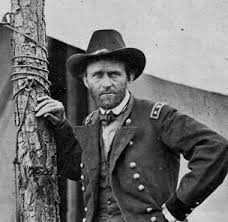
The ongoing slog and siege of Vicksburg, Mississippi was well known by July, 1863. It had been going on for months.
The battle in Gettysburg PA was a complete surprise to everyone, including all participants. Neither Union nor Confederate armies planned it, and they actually bumped into each other by accident. Meade, now General of the Army of the Potomac, had been in that position for all of three days.
But in another three days, between July 1-3, and with unbearable battlefield casualties, the Union Army could finally claim a victory.
And on July 4, two thousand miles away, Confederate forces in Vicksburg finally surrendered – to preclude the casualties that were sure to follow.
In Washington, Independence Day was wildly celebrated: bands played, churches prayed, banners waved and hosannas were sung. Finally.
Nevertheless…

George Meade had done the very best he could do at Gettysburg. His exhausted army slogged its way back to Virginia. Lincoln was furious! He had expected Meade to give chase to Lee’s exhausted army, also slogging its way back to Virginia. It could have ended the war.
He thought to replace Meade, but he had no one, so Meade remained.
Grant, of course, was now a serious hero! He was dispatched to Tennessee, where Chattanooga and places surrounding were in need of a serious hero! Actually, what they needed was someone who could clearly see and direct what was needed: where, when and how – and in what order. Grant was very good at that. By March 1864, Lincoln sent for him and made him General of the Army. Everybody. Period.
Grant’s Plan
Lincoln had finally found the right General; one he could rely upon to do what was needed – without “political” oversight. Grant had never been to Washington before, but his good friend William T. Sherman had, and very strongly advised USG not to make DC his HQ. It did not take Grant long to concur. Assigning command of the Western Armies to Sherman, he told Lincoln that he planned to make his headquarters with the Army of the Potomac.
Some days later, General George Meade was advised that General Grant was coming to see him. The two men had never met, but Meade was not surprised. He expected to be relieved of his command, and was prepared.
But to Meade’s astonishment, Grant wished him to remain as General of the Army of the Potomac. Grant traveled and camped with him, and the two co-operated satisfactorily. Meade retained his own command and title for the rest of the war.
They made it work.
Sources:
Grant, Ulysses S. – Personal Memoirs of Ulysses S. Grant – World Publishing (reprinted) 1952
McFeely, William S. – Grant: A Biography – W.W. Norton, 1981
https://www.history.com/topics/american-civil-war/george-g-meade
https://www.battlefields.org/learn/civil-war/battles/vicksburg
 Presidential History Blog

Reblogged this on Dave Loves History.
Brilliant. Good window on this aspect a historical crucible, and important personalities. I recommend to all. When I was growing up, our family vacationed every summer at Barnegat Light, NJ, whose iconic lighthouse had been designed and built by George Meade after the war.
Reblogged this on Practically Historical.