
How Andrew Jackson managed to live to be seventy-eight is a wonderment, considering his dreadful health.
AJ: The Young Frontier Boy

Said to be a portrait of young Andrew Jackson.
Andrew Jackson (1767-1845) was a posthumous boy; his father died only weeks before Andy was born. Raised in the remote Waxhaw area between North and South Carolina (both states are still battling for claiming rights), he was brought up by his mother, two older brothers and a few assorted relatives. Always an indifferent student, he much preferred hunting and games to schoolwork.
In 1779, as the American Revolution came to southern shores, the three Jackson brothers “enlisted” in the American army. At only twelve, Andrew was used as a messenger, since he was a superb rider, knew the trails and paths, and possessed a daredevil spirit. He was caught.
When a British officer told him to “clean his boots,” the arrogant Andrew refused, and the officer slashed him with his sword, scarring his face, his hand and mostly his soul. Then they threw him in jail, where fetid and unsanitary conditions spawned immediate disease. Andrew contracted smallpox, which may have weakened his system.
AJ: The Duelist
No question about it, Andrew Jackson was a hothead (“born for the storm, and calm does not suit me”) and the young lawyer-plus-planter-plus-speculator-plus-business owner had married (gasp, horrors!) a divorcee, a rare occurrence in 18th century Tennessee. The circumstances and details of Rachel Donelson Robard’s divorce and remarriage then and now, are murky.
From the start, Jackson would have as many enemies as supporters, and those enemies soon learned that the quickest way to Jackson’s spleen was to comment on Mrs. Jackson. Insults were traded, challenges demanded, and duels fought. Some were averted, but Jax would carry two bullets in his body for decades – from said duels.
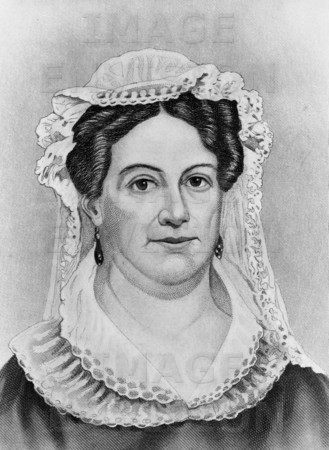
One of the few likenesses ever made of Rachel Jackson, the love of the General’s life.
One bullet was in the arm, where it festered regularly and gave him chronic pain. In those days before x-rays, anesthesia and basic antisepsis, removal of a deep bullet wound could often be worse than the wound itself. This bullet would not be removed until Jackson was in the White House, a quarter century later.
A second bullet, which he took to his grave, was considered inoperable. It lodged in his chest, near his lung and his heart. It suppurated frequently, causing serious pulmonary problems including a bloody sputum that could take weeks to subside.
Then, of course, there was lead poisoning. But they didn’t know anything about that.
AJ: The Warrior General

When Andrew Jackson became General of the Tennessee Militia, he found his true calling and never practiced law again.
Andrew Jackson was “elected” politically as General of the Tennessee militia – a circumstance that changed his life forever. It was his true calling, and from that time forward, he never practiced law again.
During the War of 1812, the Indian tribes in “the West” (meaning west of the original thirteen colonies) were allied for and against the Americans. The Creek Indians in particular, were fearsome warriors, but they met their match in a fearsome Jackson.
Indian fighting in the eighteen-teens, was harsh and rugged, qualities that earned Jax the “Old Hickory” nickname. The malarial fevers and dysentery associated with swampy woods and outdoor survival found a home in Jackson’s skinny-as-a-rail body. His digestive tract was permanently damaged. In New Orleans, when a huge banquet had been prepared in his honor, he barely ate a bite. Even in the White House, the aging President (now in his sixties) ate only sparingly and blandly.
Malaria, typhoid, typhus and dysentery are notoriously recurring diseases, and they flared up regularly with Jackson. There were times when more dead than alive, he limped his way back to Nashville, where Rachel Jackson would tenderly nurse him back to health.
Andrew Jackson’s Medical Care
Frontier doctors did their best of course, but they had little formal training, and absolutely no knowledge of sanitation. The most common treatments for any number of ailments were poultices, plasters and “bleeding.” Jackson’s vein would be opened and a considerable amount of blood would be released. This was supposed to balance the “humours” (whatever that meant), but it likely did more harm than good, further weakening the scrawny man.
Jackson was a firm believer in bleeding, so much so that he bled himself periodically. He opened a vein with his penknife (unsterilized, of course), and expected a cure. More likely his own warm bed, nourishing food and Rachel’s devoted care helped more.
The common treatment for the malarial fevers and agues, was calomel – a potion containing huge amounts of mercury. They didn’t know anything about that either, and Jackson took large doses of it for years
AJ: More Health Issues

One of the last portraits Andrew Jackson ever sat for.
If Jackson’s chronic fevers, infections from old wounds, turbulent tummy problems and abysmal medical treatment weren’t bad enough, he was plagued by badly rotted teeth.
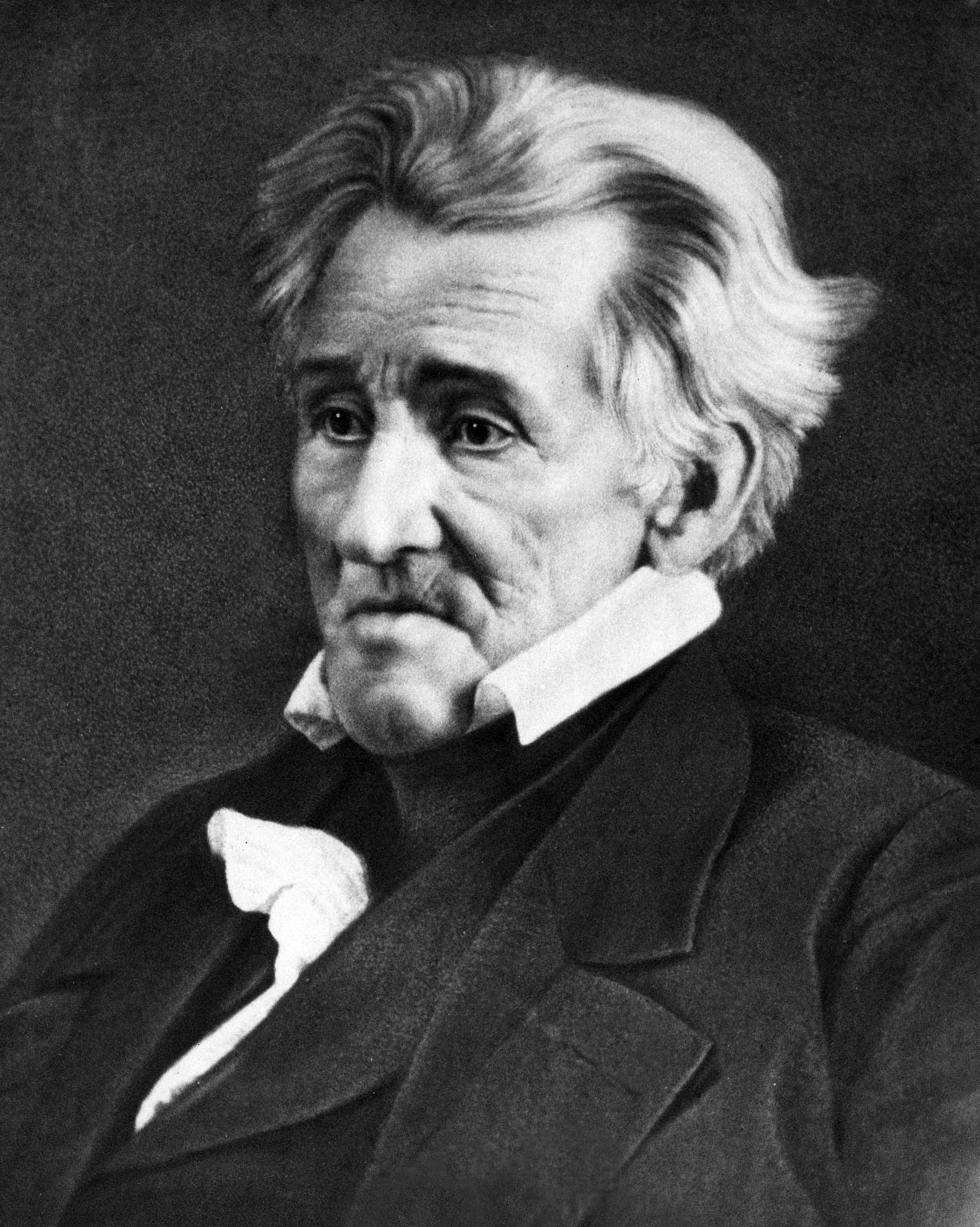
Photography had just been invented shortly before Andrew Jackson’s death in 1845. This is the only known photograph of the old man.
Dentistry in the early 19th century was not its own profession. Barbers still yanked teeth; doctors sometimes yanked teeth. Most of the time, the crumbling tooth fell out on its own. Jackson’s decaying teeth, unsurprisingly, caused him severe headaches, which in turn further irritated his delicate stomach.
Add to all his physical woes, was the fact that his presidential and post-presidential years were sorrowful ones. His beloved Rachel had died only weeks before his inauguration in 1829. He was lonely for her, and despite dozens of Donelson nieces and nephews, some wards, foster children and an adopted son, he had no blood relatives. Every one of his kin was gone when he was still in his teens.
Toothless, wrinkled, plagued by years of physical punishment to his body, and suspected incremental lead and/or mercury poisoning, the man “made for a storm” finally expired.
He was seventy-eight.
Sources:
Burstein, Andrew – The Passions of Andrew Jackson – Borzoi/Knopf, 2003
Marx, Rudolph, M.D. – The Health of the Presidents – 1960 – G.P. Putnam’s Sons
Meacham, Jon – America Lion: Jackson in the White House – Random House, 2008

 Presidential History Blog
Amazing story. I knew some of this, but wonder how he survived so long. Then, of course, his actions in the White House are still an embarrassment to polite company. Are you doing all the presidents now? sd
Reblogged this on Lenora's Culture Center and Foray into History.
my class is learning about our us presidents and I did not know about this at all
I’m glad you were able to learn more. I wish they taught American history better these days.
Enjoyed this very much; excellent read. I love history; all of it.
History should never be watered down, forgotten, or pigeon holed
to fit a current-day popular narrative. It was as it was.
We need to quit trying to place our modern-day
existence into 18th century facts of life, believes, and moral
compasses of the time. The reality is, none of us know or can
truly relate to extended past period in our history.
It is so concerning to me that pieces like this will never
be apart of a classroom history for our youth to give a better understanding of the man and the environment of his youth that influenced and shaped his adult life and ultimately the affect (positive and negative) it may have played upon our country’s history.
The only tragedy is if you don’t progress as a society. We need to accept the bad and
appreciate the good of our past ,and move forward united. We can only do that by knowing and teaching “all”dimensions of our great country’s history. 🇺🇸
I am writing a book on the dental health of the presidents which include interviews with their dentists, interview with Richard Nixon, etc. It is not so much about dental procedures as it is about the character and personality of the president while sitting as a patient, Very interesting and sometimes bizarre anecdotes. I was a history major at the University of Pennsylvania before attending dental school and have managed over the past 40 years to incorporate both passions.
Pingback: January 8th: How President Jackson Became America’s Hero – Historic Moments Today